Lenses are the most expensive per-liter cargo a photographer owns: a telephoto can outvalue the bodies it serves, it fails to water and fungus rather than to shock alone, and it spends its life moving — so lens cases, telephoto cradles, micro cases and the format family around them are their own engineering discipline, at unit costs from $2.20 at MOQ 500. This guide covers the lens-case category specifically: the sealed-chamber standard that protects optics between shoots, the hard-soft hybrid formats that answer travel and site duty, telephoto and cine-glass cradling, micro cases for cards and batteries, and the format-fit methodology that makes a custom case measurably better than the generic foam cut everyone has already owned.
The manufacturer reference is QUANZHOU JUNYUAN BAGS: custom waterproof bag production since 2014, 4,950 m² SGS-verified facility, 7 lines, 149 machines, 137 staff, 200,000 pieces monthly. MOQ 500 per design splittable across the lens-case family, samples 6–10 working days, bulk 35–50 days, AQL 2.5 inspection, 30/70 T/T, FOB Xiamen, shipping to 100+ countries, with facility claims verified by SGS.
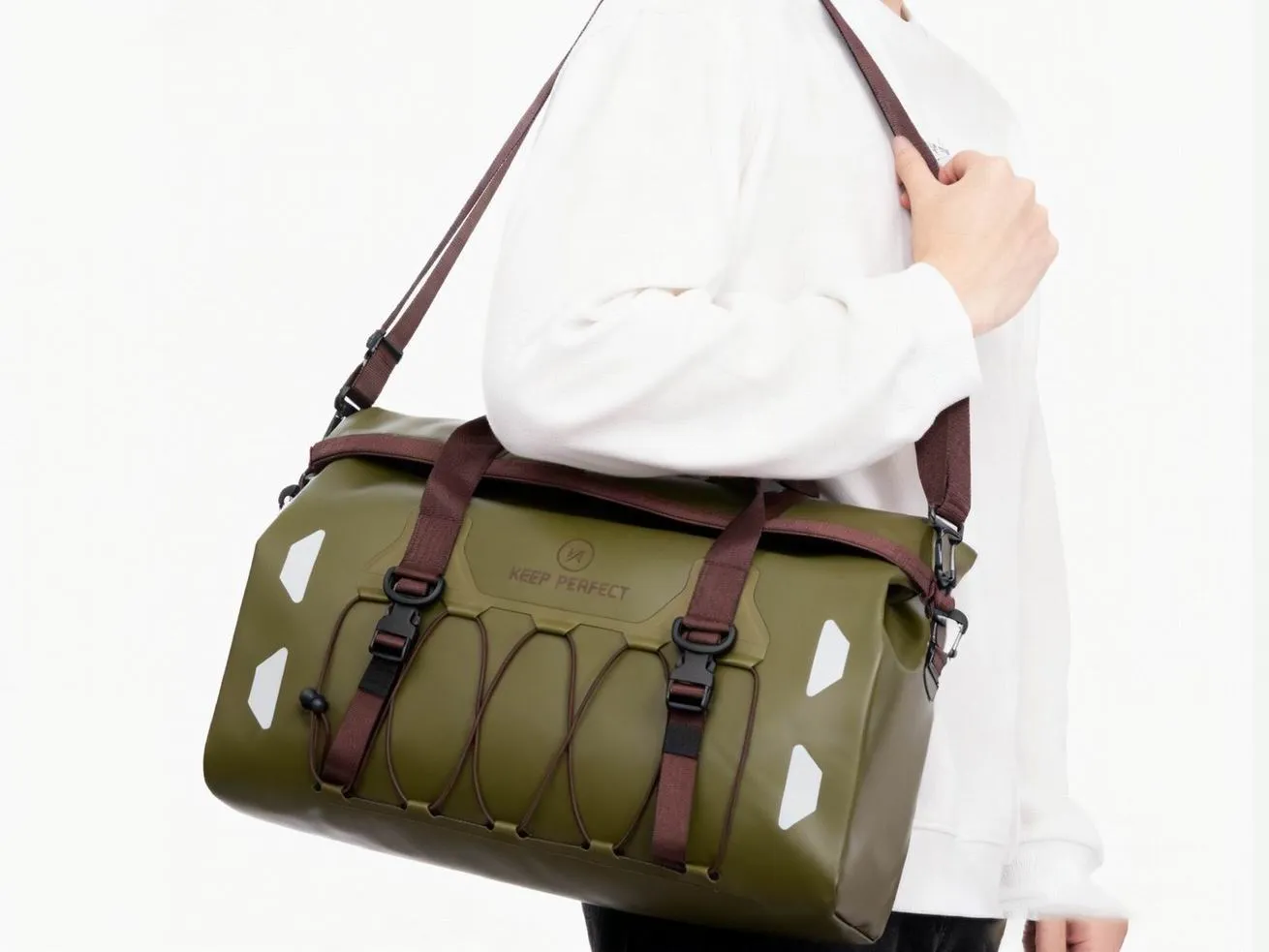
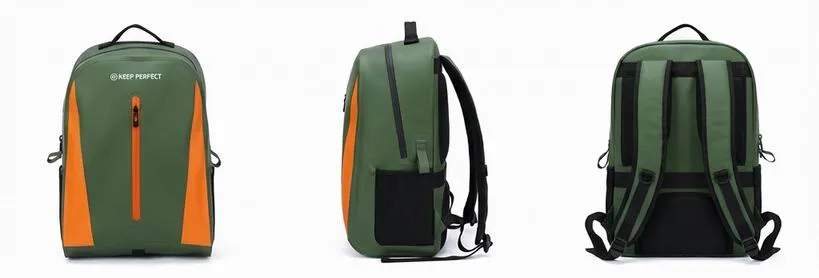
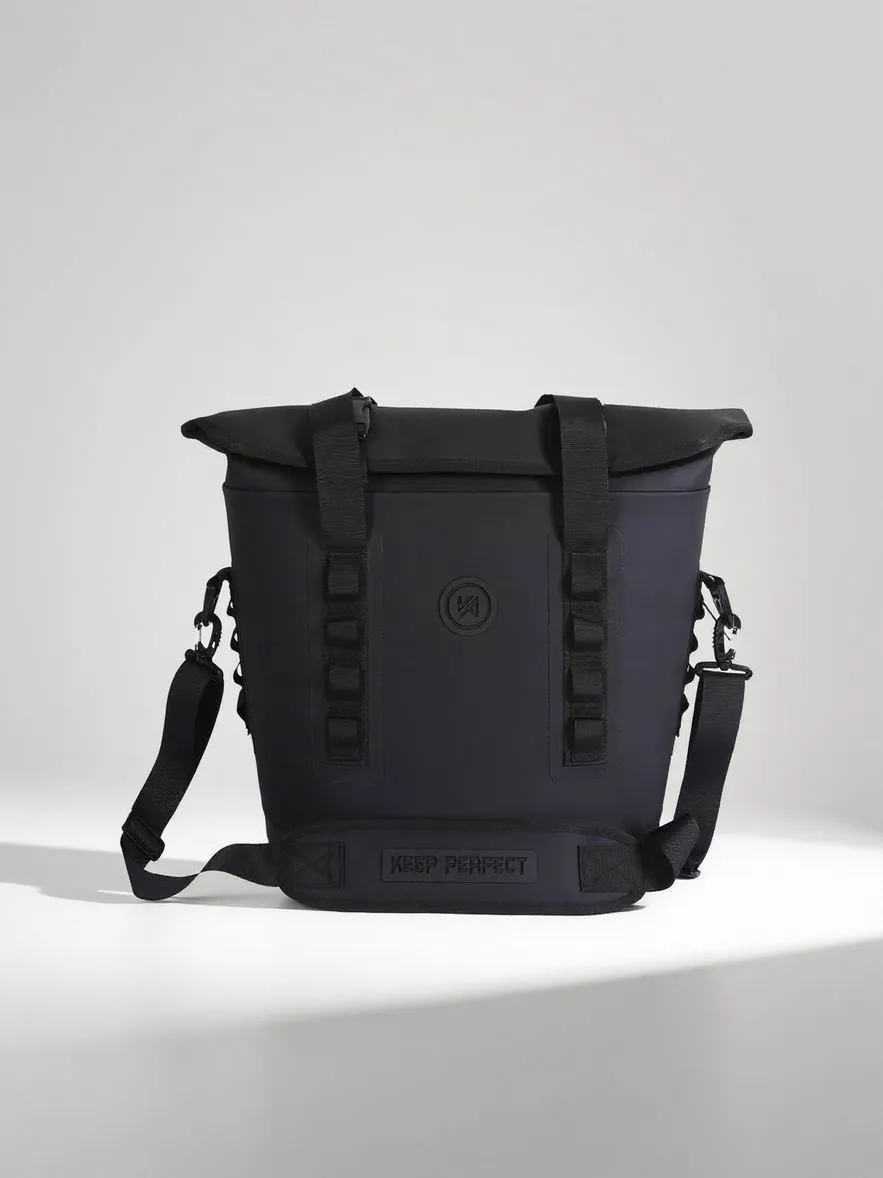
Why lens protection is its own discipline
Waterproof lens cases protect a cargo category unlike any other in the bag world: lenses are optically sensitive to moisture in ways bodies are not — fungal growth on internal elements is permanent, coating damage is warranty-fatal, and the failure is often invisible until it is expensive. A lens case therefore answers three duty bands at once: water exclusion (the sealed perimeter), climate management (the humidity-chamber discipline our camera equipment guide specifies), and cradle geometry (impact decoupling that never presses glass against fabric). The camera bag formats around the cases — backpacks, totes, slings — are covered as systems in the equipment guide; this guide goes one level down, into the case engineering that keeps each lens alive through its working life. The economics justify the focus: a mid-range telephoto’s repair invoice exceeds the entire custom case fleet, and a fungus event on pro glass exceeds the whole program plus the order it came from.
The buyer insight behind the category’s growth: photographers who upgraded bodies twice are still buying generic foam cases for the glass — the last unsolved link in an otherwise optimized kit.
The lens-case format family
| Format | Fits | Duty profile | Unit cost (500+) |
|---|---|---|---|
| Single-lens cases | Prime to mid-zoom, 70–200mm class | Sealed chamber + cradle, belt- or pack-mount | $2.20–$4.80 |
| Telephoto cradles | 300mm f/2.8 to 600mm class | Suspended rig, shell band, harness carry | $6.40–$12.80 |
| Multi-bay organizers | 3–6 lens working sets | Modular sealed bays, one-motion access | $4.20–$8.60 |
| Micro cases | Cards, batteries, filters, drives | Pocketable sealed chambers | $1.20–$2.60 |
| Cine-glass formats | Cine primes, follow-focus kits | Hard-soft hybrid, precision interiors | $8.20–$15.40 |
The family splits by cargo scale: single-lens cases are the daily drivers — belt- and pack-mounted sealed chambers that a working shooter opens hundreds of times a season; multi-bay organizers carry the working set with each lens in its own sealed pocket, the modular discipline the packing-organizer methodology formalizes; telephoto cradles are the engineering-heavy end, suspending payloads that can exceed two kilograms of precision glass; micro cases run the small-cargo discipline our small electronics guide documents; cine formats extend everything to film-set duty, the production channel our event industry guide covers for crew programs.
The sealed-chamber standard for optics
A lens chamber is sealed to a different purpose than a phone pouch: the enemy is not the splash of one afternoon but the humidity of every afternoon between shoots. The standard has four elements. First, the perimeter: welded-seam construction with gasketed closures — the seam science our construction methods guide documents, applied at case scale. Second, the interior atmosphere: non-outgassing laminated liners that do not feed vapor into the sealed space, paired with desiccant-and-indicator pockets sized to the chamber volume — the visible-humidity discipline the equipment guide makes standard. Third, the cradle: closed-cell suspension that grips the hood ring and clears both front element and mount, so no load path ever crosses the glass. Fourth, the access cycle: closures rated for thousands of one-hand operations, because a case that is hard to open quietly stops being used and quietly stops protecting. Chamber-sealed builds run $0.60–$1.40 above generic foamed equivalents at volume — the cheapest climate control in photography.
Hard-soft hybrid engineering
Hard-soft hybrid cases answer the format tension every lens buyer eventually hits: hard shells protect but do not pack, soft shells pack but do not protect. The hybrid pattern takes a stiffened structural frame — molded or laminated panels at the impact zones — and wraps it in a welded waterproof soft shell, delivering crush resistance where drops land and packable flexibility everywhere else, the same hybrid architecture our electronics transport guide applies to fragile cargo generally. Lens-duty specifics: frame stiffness tuned so the case protects the lens in a packed bin without transferring bin loads to the glass; a waterproof exterior that survives the same transit chain as the shooter’s luggage; and interiors that reconfigure without tools, because a lens kit changes with the assignment. Hybrids add $1.20–$2.80 over pure soft builds at MOQ 500 and are the fastest-growing format in the category — the upgrade path from the generic foam cut.
Telephoto cradles: suspending two kilograms of glass
Telephoto lens protection is a load-engineering problem: a 300mm f/2.8 or 600mm-class lens concentrates extreme value in a long, narrow payload that hates both shock and its own weight. The cradle engineering: full-length suspension that carries the lens at the barrel’s strongest rings — never at the hood or the mount — with end-impact decoupling at both extremes of the travel axis, the same end-load discipline our load stress testing guide applies to strap systems. The shell band runs splash-to-downpour for field work and submersion-class for boat and surf approaches, the banding our IPX rating guide maps. Harness carry matters as much as the shell: a two-kilogram-plus payload demands the hip-transfer discipline our trekking builds guide documents, because a telephoto case carried on one shoulder for a season is a physiotherapy invoice waiting to co-brand the lens repair one.
Wildlife and sports shooters — the cradle’s core buyers — run the harshest duty cycle in photography: pre-dawn humidity, all-day weather, vehicle transport and the long walk-ins our destination shoots guide documents. Cradle programs split single-lens and multi-glass formats against one MOQ basis.
Micro cases: cards, batteries, filters
The smallest formats carry the assignment’s most irreplaceable cargo: memory cards are the shoot itself, batteries are the day’s energy budget, and filters are precision optics in pocket scale. Micro cases run the sealed-chamber standard at miniature — gasketed closures, clear windows for content ID, and interior slots that present cards label-up, the small-format discipline our small electronics cases guide specifies. The photographer-relevant details: a card slot that does not eject its contents when the case is dropped, battery terminals isolated by pocket geometry, and belt or strap mounts that keep the media wallet reachable while the camera is working. Micro formats run $1.20–$2.60 at MOQ 500 and are the category’s reorder engine — every working shooter eventually owns several, and branded micro cases travel into other photographers’ hands, the quiet referral our promotional programs guide values.
Format-fit: measuring beats cutting foam
The custom case’s core advantage over the generic foam cut is fit engineering: foam absorbs the lens’s shape after the fact, while a patterned case is built around the lens’s measured reality — barrel diameter, hood diameter, length with hood reversed, weight, control placement. The methodology is the photographed-load-out discipline our industrial guide documents for tool programs: the buyer sends the glass list, the factory patterns each bay to the actual dimensions, and the golden sample — the 6–10 working-day, $60–$150 protocol credited against bulk — validates with the real lenses on the buyer’s bench. The measurable outcomes: one-motion access (the lens clears the bay without re-aiming), zero migration under transit, and closure cycles rated in the thousands rather than the dozens. The full sample-to-bulk chain is documented.
- Measure: barrel and hood diameters, length both ways, weight — the case is patterned to the real glass
- Cradle: load paths at the barrel rings only, end decoupling both axes
- Chamber: non-outgassing liners, desiccant-indicator pairs, gasketed closure
- Validate: golden sample with the actual lenses, one-motion access confirmed
Lens-case program economics at MOQ 500
| Program element | Unit cost adder | Notes |
|---|---|---|
| Sealed chamber (vs generic foam) | +$0.60–$1.40 | The climate control that foam is not |
| Hard-soft hybrid frame | +$1.20–$2.80 | Crush protection that still packs |
| Telephoto suspension rig | +$2.40–$4.60 | Two-kilogram glass carried at its rings |
| Desiccant + indicator pair | +$0.15–$0.30 | Visible humidity management |
| Brand print/embroidery | +$0.15–$0.35 | Retail-grade finish for brand channels |
A representative fleet program lands at $2.20–$12.80 per unit slot at MOQ 500: micro cases at the entry band, single-lens and multi-bay formats in the middle, telephoto and cine builds at the top — one order, one golden-sample standard, mixed freely against the basis, the split discipline our MOQ guide documents. The buyer math that closes programs: the fleet costs less than one lens service.
Who orders lens-case programs
Camera brands order branded case lines as product-line accessories — the private-label path our white label comparison guide documents — retailing alongside the glass they protect. Rental houses order fleet formats with batch-coded identity: the rental counter’s case is inventory control that travels, and the durability standard our durability prediction guide quantifies determines the fleet’s replacement calendar. Studios and shooter collectives pool orders across rosters; workshops and photo tours brand the micro-case tier as take-home kit, the participant economics our tourism channel guide covers. And the individual market routes through the brands’ retail — which is why brand programs order at MOQ 500 with confidence: the format family sells through every channel it enters.
Storage-season duty and the bench protocol
Lenses spend more stored than shooting, and the storage season is where the sealed chamber earns its keep quietly: a glass cabinet in a humid climate is a fungus incubator, and the off-season camera closet — dry in winter, damp through spring — cycles optics through condensation the same way a cold-to-warm transit does. The storage protocol the chamber enables: lenses cased with fresh desiccant, indicators checked monthly, chambers stored off exterior walls where temperature swings condense moisture. The durability science behind the schedule — how laminates and closures age through exactly these cycles — is quantified in our durability prediction guide, and the practical takeaway orders the program for you: a $0.15 desiccant-indicator pair read monthly is the cheapest lens-maintenance routine in photography, versus a fungal re-elementing job that starts where the warranty ends. Fleet buyers institutionalize the protocol — the case carries a recharge calendar on its printed card — and the batch-coding line on every case keeps roster glass matched to roster chambers through seasons of shuffling.
Vehicle and two-wheel duty for location glass
A growing share of lens transport happens on two wheels and in open vehicles: the moto-commuting shooter in the tropics, the safari rack, the bike-camping wildlife run — duty profiles where vibration and weather stack rather than alternate. The build answers both: vibration decoupling in the cradle (closed-cell suspension tuned for sustained buzz rather than single shocks, an extension of the end-load engineering this guide has specified), and the weather band of the monsoon tropics — sustained rain at speed, which tests closures differently than walking-pace weather. The bike-touring formats our cycling guide documents supply the mounting discipline: rack- and frame-compatible hard-points that carry case systems without converting them into projectiles, with quick-release interfaces for the walk-away moment. Two-wheel lens programs are the crossover buyer’s natural split against the same MOQ basis — street chambers for the commute, cradle format for the assignments.
Serviceability, liners and the long life
A lens case is a service platform or it is disposable, and the difference is specified at the pattern stage: replaceable interior liners (the wear item in any chamber system — a swapped liner renews the case at a fraction of replacement), closure tracks designed for cleaning rather than sealing against their own grit, and desiccant pockets that recharge from standard media rather than proprietary packs. The maintenance economics mirror the industrial fleet logic our work-site guide applies: specified builds run seasons on maintenance calendars while disposable foam cases are replaced on failure calendars, and the two curves cross inside the first year. Buyers who ask the serviceability question at the artwork stage get it engineered in; buyers who do not discover it at liner-wear time, when the answer is a new case. The fleet version of the same logic — rental houses and brand accessory lines — runs the replacement-ratio economics our tourism retail channels document, and the serviceable build shifts the ratio in the buyer’s favor every season it runs.
Spec your lens-case program
- Glass list first: every format patterned to measured lenses, not generic sizes
- Chamber standard: welded perimeter, gasketed closure, non-outgassing liners, desiccant-indicator
- Format mix: micro + single-lens + multi-bay + cradle slots against one 500-unit basis
- Band per use: splash for studio and street, downpour for field, submersion for approaches
- Carry honest: harness and hip transfer where payload exceeds two kilograms
- Calendar: golden sample on the buyer’s bench, bulk 35–50 days at AQL 2.5
Frequently Asked Questions
Q1. What is a waterproof lens case?
A sealed-chamber case built to the optics standard: welded perimeter, gasketed closure, non-outgassing liners, desiccant-indicator pairs and a cradle geometry that never lets glass carry load — engineered for the humidity between shoots, not just the splash during them.
Q2. What is the MOQ for custom lens cases?
MOQ 500 per design, splittable across the lens-case family — micro cases, single-lens chambers, multi-bay organizers and telephoto cradles mix against one 500-unit basis.
Q3. How much do custom waterproof lens cases cost?
Micro cases $1.20–$2.60, single-lens cases $2.20–$4.80, multi-bay organizers $4.20–$8.60, telephoto cradles $6.40–$12.80, cine formats $8.20–$15.40 at MOQ 500. Sealed chambers add $0.60–$1.40 over generic foam builds.
Q4. Are hard cases or soft cases better for lenses?
The hybrid: a stiffened structural frame at the impact zones wrapped in a welded waterproof soft shell — crush protection where drops land, packable flexibility everywhere else, at a $1.20–$2.80 adder over pure soft builds.
Q5. How do lens cases prevent fungus?
Sealed chambers with non-outgassing interiors and desiccant-indicator pairs keep humidity off the elements between shoots — fungal growth on internal glass is permanent, and the chamber is the only place it can be prevented.
Q6. Can telephoto lenses really be carried safely in soft-shell cases?
Yes — cradle engineering carries the lens at its barrel rings with end-impact decoupling both axes, suspending payloads above two kilograms the way strap systems suspend loads: at engineered points, never at glass.
Q7. What lenses fit custom multi-bay organizers?
Whatever the glass list says: each bay is patterned to the measured lens — barrel and hood diameters, length with hood reversed — so a 3–6 lens working set gets one-motion access with zero transit migration.
Q8. Do memory cards need waterproof cases?
Cards are the assignment itself: micro cases with gasketed closures, label-up slot geometry and drop-retention pockets protect the shoot’s only irreplaceable cargo at $1.20–$2.60 per unit.
Q9. How is a custom case better than cutting foam?
Fit engineering: the case is patterned to the lens’s measured reality rather than absorbing its shape after the fact — one-motion access, rated closure cycles in the thousands, and load paths that never cross glass.
Q10. What closure types do lens cases use?
Gasketed zip variants rated for thousands of one-hand cycles, roll-top seals for submersion-band field builds, and compression buckles for bay lids — the ladder our IPX rating guide bands by exposure class. Each band is fixed by the IEC 60529 enclosure code, which sets the depth, duration and test method behind the number.
Q11. Are lens cases suitable for cine and film glass?
Yes — cine formats extend the sealed-chamber and cradle standards to production duty: precision interiors, follow-focus kit organization and the hard-soft hybrid frame, from $8.20 at MOQ 500.
Q12. Do camera brands order custom lens cases as accessories?
Yes — branded case lines retail alongside the glass they protect, produced under the private-label paths our white label comparison guide documents, the standard product-line accessory play.
Q13. Can rental houses order fleet lens cases?
Yes — batch-coded fleet formats run as traveling inventory control, with the durability standard determining the replacement calendar; rental duty is the hardest use cycle in the category.
Q14. How fast are lens-case samples produced?
6–10 working days per configuration at $60–$150 per design, credited against bulk — validated on the buyer’s bench with the actual glass before golden-sample sign-off.
Q15. What is the bulk timeline for lens-case orders?
35–50 days after golden-sample approval at AQL 2.5 inspection, FOB Xiamen or DDP, with the format-fit patterns frozen at the approved sample.
Q16. Can one order mix every lens-case format?
Yes and it usually does: the fleet math runs micro cases, working-set bays and one or two cradle slots against a single MOQ 500 basis — the whole program costs less than one lens service.
People Also Ask
What are waterproof lens cases?
Sealed-chamber cases engineered for optics: welded perimeters, gasketed closures, non-outgassing liners and cradle geometry — climate control and impact protection for glass that generic foam cutting never provides.
How much do custom camera cases cost?
From $1.20 for micro cases to $12.80 for telephoto cradles at MOQ 500, with sealed-chamber engineering at +$0.60–$1.40 over foam equivalents.
Are hard or soft cases better for camera lenses?
Hybrids win: structural frames at impact zones inside welded waterproof shells — crush protection that still packs, the fastest-growing format in the category.
How do photographers prevent lens fungus?
Sealed chambers with desiccant-indicator pairs and non-outgassing interiors keep humidity off internal elements between shoots — fungus is permanent, prevention is a $0.15 chamber feature.
What case fits a 600mm telephoto?
A purpose-built cradle: full-length suspension at the barrel rings, end decoupling both axes, harness carry for two-kilogram-plus payloads — from $6.40 at MOQ 500.
Are custom cases worth it over generic foam?
Fit engineering delivers one-motion access, rated closures and honest load paths — and the full custom fleet costs less than a single lens service invoice.