Custom imprint dry bags are the quiet overperformer of branded merchandise: a $2.40–$4.20 imprinted 10L dry bag at MOQ 500 carries a logo through beaches, boats, gyms and vacations for three to five years — a cost per impression measured in fractions of a cent, in a format recipients keep instead of discard. That retention math is why promotional waterproof bags have migrated from conference swag to the center of serious corporate gifting: event organizers buy them as functional giveaways, brands buy them as gift-with-purchase, and marketing teams buy them precisely because the product outlives the campaign. This guide covers the design side end to end — imprint methods on welded TPU, format selection by program type, artwork engineering, pricing at MOQ 500, compliance, and the calendar logistics that make promotional deadlines.
The reference manufacturer is QUANZHOU JUNYUAN BAGS: custom waterproof bag production since 2014, 4,950 m² SGS-verified facility, 7 lines, 149 machines, 137 staff, 200,000 pieces monthly. MOQ 500 per design splittable across formats and colors, samples 6–10 working days, bulk 35–50 days, AQL 2.5 inspection, 30/70 T/T, FOB Xiamen, delivery to 100+ countries.
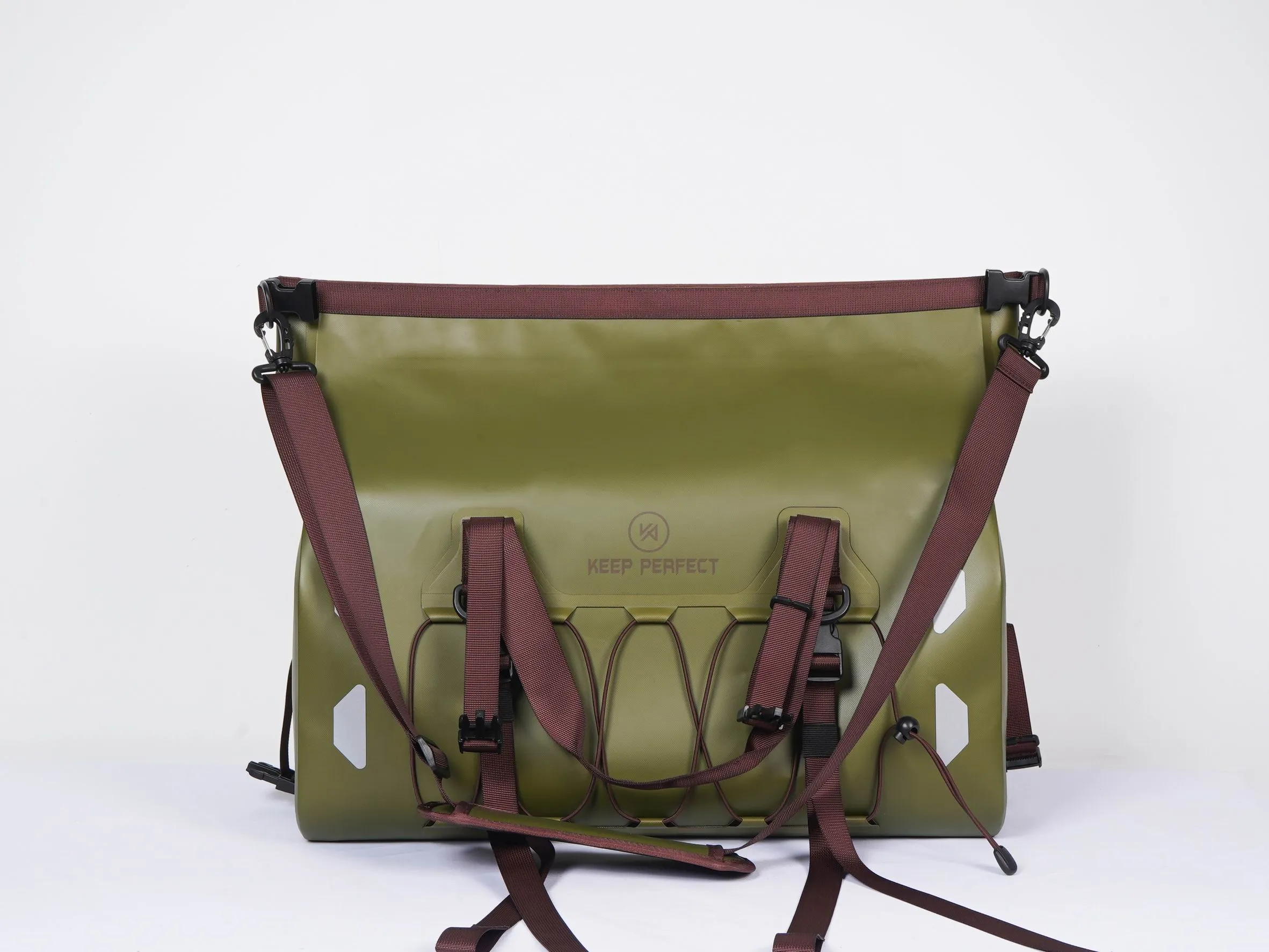
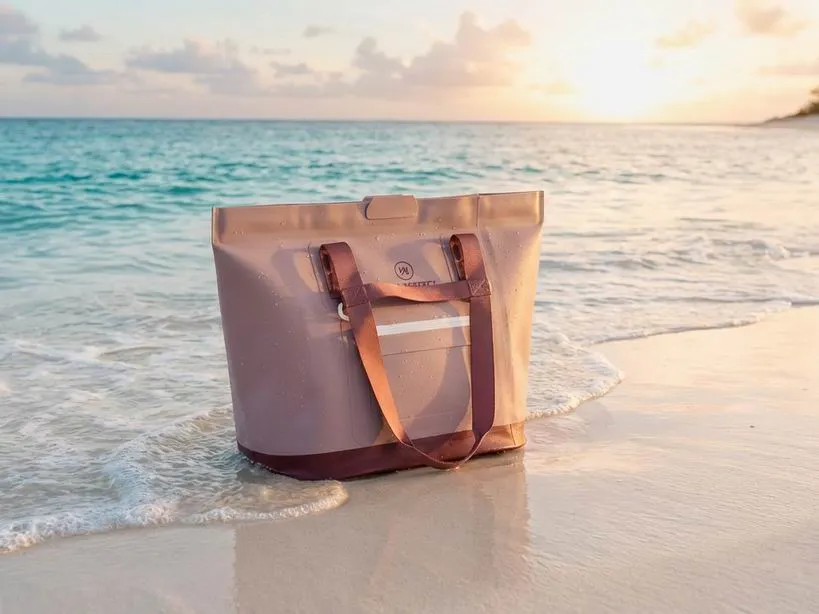
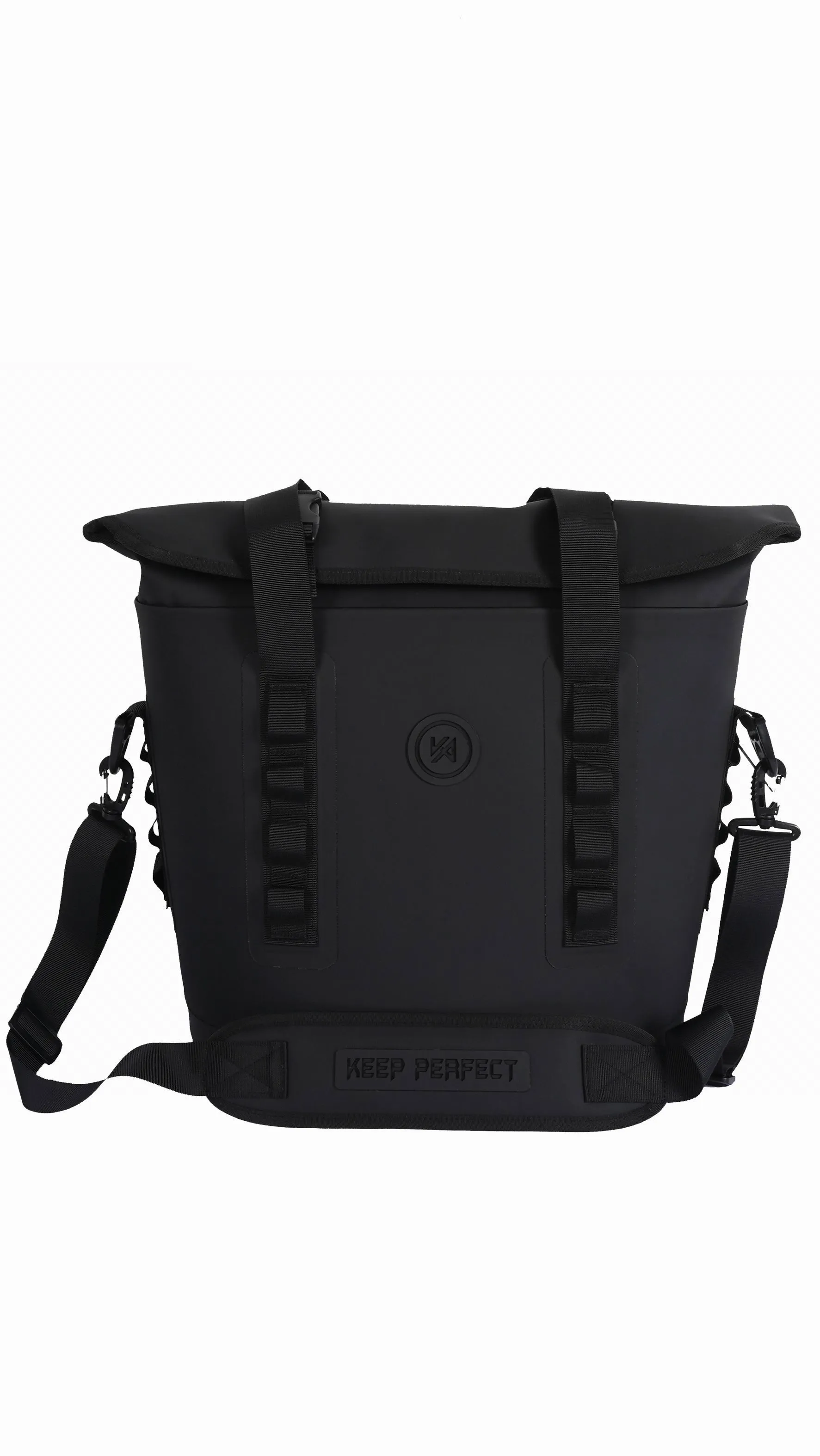
Why imprinted dry bags outperform typical merchandise
The custom imprint dry bags niche has quietly become the highest-retention corner of the promotional catalog — promotional waterproof gear bags outlive every pen, tee and lanyard in the same order. The promotional products industry measures everything by retention — how long the item stays in the recipient’s life — and waterproof bags sit at the top of the retention curve because they solve a recurring problem: keeping phones, wallets and kit dry at the beach, on the boat, at the pool, in the rain. The comparison table that matters to a marketing budget: a branded pen lives weeks and survives no context; a branded T-shirt lives months but is worn selectively; an imprinted dry bag lives years and travels — every beach photo and boat day is a brand impression at zero marginal cost. The industry’s own retention research is tracked by the Promotional Products Association International, and the category’s economics follow from it.
| Merchandise format | Typical life | Cost per unit (branded) | Retention context |
|---|---|---|---|
| Branded pen | Weeks | $0.30–$0.80 | Drawers and landfill |
| Logo T-shirt | Months, selective wear | $3.50–$6.00 | Weekend rotation |
| Event lanyard | Days | $0.40–$1.00 | The event itself |
| Imprinted 10L dry bag | 3–5 years | $2.40–$4.20 | Beaches, boats, gyms, vacations |
| Waterproof phone pouch | 2–4 years | $0.85–$1.60 | Daily carry near water |
Read the last two rows against the third: promotional waterproof formats cost barely more than a shirt and outlive it by an order of magnitude — which is the entire pitch of the category.
Imprint methods on dry bags: how branding meets welded TPU
Dry bags are welded TPU-laminated constructions, which rules out embroidery (needle perforations defeat the weld) and governs which imprint methods carry the material. The working set: screen printing (the value standard — spot colors on welded film, 3+ season life when inks are matched to the film), heat transfer full-color (photo-grade graphics, gradients and photographic logos), full-wrap printing (the entire tube becomes the billboard, the highest-impact option on the water), and welded label frames for woven or PVC patches where a dimensional look is wanted. The method-by-method comparison with cost bands is in our logo options guide.
- Screen print: 1–4 spot colors, the promotional value standard, +$0.12–$0.20 per position
- Heat transfer full-color: photo-grade art, gradients, +$0.25–$0.45
- Full-wrap print: the whole tube as canvas; the event-brand statement piece
- Welded label frame: woven patch look on film, +$0.18–$0.30
- Variable data: per-unit names or numbers at setup — the personalization multiplier
One engineering note that separates promotional-grade from fashion-grade: print adhesion on TPU film depends on ink chemistry matched to the film grade. Prints that peel in season two are a supplier problem, not a method problem — ask for the adhesion test record with the sample.
Format selection by program type
| Program | Format | Qty range | Imprint strategy |
|---|---|---|---|
| Conference & trade show | Phone pouch + 5L dry bag | 1,000–5,000 | Full-color logo, both sides, variable lanyard colors |
| Corporate retreat & incentive | 10–20L dry bag | 500–2,000 | Full-wrap print, event date, quality-grade build |
| Beach & sports events | 5–10L dry bag + pouch | 1,000–10,000 | Bold single-color logo, sponsor wall |
| Gift-with-purchase (retail) | 10L dry bag matched to product | 1,000–5,000 | Brand family Pantone match |
| Employee onboarding kits | Pouch + tote + dry bag set | 500–1,500 | Woven label, understated, premium grade |
| Charity runs & triathlons | Phone armband + pouch | 2,000–10,000 | Event branding, bib-number variable data |
| Marine & travel brands (GWP) | 20L dry bag | 500–2,000 | Hull-graphics style, brand colors |
The pattern: pouches buy reach (lowest unit cost, highest quantity), dry bags buy retention (years of daily-adjacent use), and the two together cover an event’s full audience spectrum from volunteer to VIP. The pouch program specifically — sizing, window engineering and event use cases — is covered in our custom waterproof pouch guide.
Artwork engineering: what survives translation to film
Artwork that looks finished on screen routinely fails on welded film, and the failures are predictable: small text below 8 pt fills in with ink spread on TPU; fine gradients band at screen-print economics; logos designed for white paper disappear on saturated brand-color bags; and seam allowances — the weld lines run through the canvas, so art needs safe zones the way bottle labels do. The workable checklist: vector art (AI/SVG/PDF), one imprint position per panel with 10 mm safe zones from welds and closure, text at 8 pt or larger, and a contrast plan for the chosen bag color. The file-side preparation in full — formats, resolution, color spaces and the pre-press proof loop — is in our design files submission guide.
The Pantone question: brand consistency across formats
Corporate programs live and die by brand standards, and the waterproof category answers with Delta E ≤2 Pantone matching across film, fabric, print ink and hardware coating — the dry bag, the pouch and the tote read as one family on the event table. The practical guide to specifying color in this medium, including where recycled films constrain palette and how to build the color card for a mixed-format program, is our Pantone matching guide. For promotional specifically, the extra rule: match the bag color to the dominant environment it will be photographed in — brand-color bags on brand-color event backdrops compound in social amplification.
Pricing: what promotional programs cost at MOQ 500
| Program line | Unit cost (500+) | Notes |
|---|---|---|
| 5L imprinted dry bag | $2.40–$3.20 | The event volume standard |
| 10L imprinted dry bag | $2.90–$4.20 | Retention sweet spot |
| 20L dry bag, full-wrap print | $4.60–$6.40 | Premium GWP format |
| Phone pouch, dual imprint | $0.85–$1.60 | Reach multiplier |
| Screen print per position | +$0.12–$0.20 | Setup $50–$120 per color, credited at bulk |
| Full-color heat transfer | +$0.25–$0.45 | Photo-grade artwork |
Against promotional industry benchmarks for branded merchandise with comparable retention, these numbers are the reason the category has grown: a 10L imprinted dry bag at $2.90–$4.20 lands below a branded polo and above nothing that lasts as long. Program-level cost mechanics — freight allocation, duty and the landed-cost math for gifting programs — are in the cost breakdown guide, and the MOQ split strategies that let one 500-unit order cover a three-format event kit are in the MOQ guide.
Compliance: the corporate procurement screen
Promotional waterproof bags pass through corporate procurement, which raises the compliance bar beyond consumer retail: CPSIA documentation for US programs (the bag is a handled consumer product), REACH for EU, and the certificates must arrive with the goods, not after the PO. Our material stack is specified to pass both regimes as standard, with the certificate architecture mapped in the REACH and CPSIA compliance guide. One promotional-specific note: programs aimed at children’s events (school runs, youth sports) add the breakaway-lanyard requirement on pouch formats and stricter small-parts documentation — worth specifying at inquiry, not discovering at customs.
The calendar: promotional deadlines in reverse
Promotional programs run against immovable dates — the conference, the race, the product launch — so the buying calendar runs backward from the event: bulk needs 35–50 days after golden-sample approval, sea freight adds 4–6 weeks, and event warehousing wants goods a week early. The safe shape: inquiry and sampling 4 months out, golden sample 3 months out, bulk in production 10 weeks out, goods landed a month before the event. The classic failure is the event team that starts sourcing 6 weeks out — the options then are air freight (which erases the unit economics) or catalog stock (which erases the brand fit). Reorders of established designs ship in 30–35 days, which makes last year’s event this year’s fast lane — a planning pattern developed in our seasonal wholesale planning guide.
White-label versus branded-build: the sourcing paths
Promotional buyers arrive through three sourcing doors, and choosing the right one saves both money and calendar. The standard custom build — your artwork on a program engineered for your event — is the full-control path: format, grade, color and imprint all follow the brief. The white-label path takes proven retail-grade designs with your branding applied, skipping development time for programs where the calendar has already compressed: launch in 2–3 weeks from artwork approval, at MOQ 500 with zero development cost. The private-label path sits between them — established platform silhouettes adapted to your colorway, label set and feature mix, which is where most recurring annual programs settle after their first successful event. The trade-off structure across the three — control, speed, unit cost and exclusivity — is laid out in our white-label versus private-label comparison.
A practical note for agencies sourcing on behalf of end clients: the white-label path is also the cleanest structure for multi-client reselling, because the platform designs are unbranded by definition and your imprint is the only mark on the product. Agency programs at volume run the same MOQ 500 with splits assigned per client order.
Measuring the program: what promotional waterproof bags deliver
The metrics that matter in promotional are reach, retention and amplification — and the waterproof format contributes to all three in measurable ways. Reach is straightforward quantity math at the unit costs above. Retention shows up in follow-up surveys and repeat-event brand recall: bags in active use years later are self-reporting metrics, which is why event teams photograph the bag-in-use shots their attendees post. Amplification is the compounding channel: every beach photograph and boat video that contains the bag is organic brand media, and unlike apparel, the waterproof bag photographs in exactly the contexts where its function is aspirational. Programs that want the amplification effect deliberately design for it — higher-contrast imprints, brand-color bodies, and the full-wrap statement format on the flagship SKU.
The internal reporting frame we recommend to marketing teams: track cost per retained unit rather than cost per distributed unit, and the category’s numbers reorganize the merchandising hierarchy on their own. A $3.20 bag in active use for three years outperforms a $0.60 lanyard in the trash by any honest metric a CFO recognizes. The brand-building layer of that reporting — how merchandise programs compound into brand equity — connects to the private-label and brand-building frameworks in our private label guide.
Case patterns: three promotional programs that worked
| Program | Kit | Qty | The mechanic |
|---|---|---|---|
| National sales conference | Pouch + 10L dry bag | 1,200 | Pouch at check-in, dry bag as the closing-night gift; the bag outlived the fiscal year |
| Coastal charity triathlon | Armband + variable-number pouch | 4,000 | Bib numbers printed per unit; volunteers reused bags at next year’s event |
| Premium GWP with marine product | 20L full-wrap dry bag | 800 | Bag color-matched to product line; UGC beach photos carried the logo into organic reach |
The shared thread: each program used the format’s survival as the mechanism — the merchandise carried the brand precisely because it kept working after the event. That is the design brief for promotional waterproof bags in one sentence, and it is why the format selection and imprint quality decisions matter more than quantity.
Designing the program: the promotional briefing sheet
- Event and date: what the bag must survive, and when it must land
- Audience: attendees, staff, VIPs — and which gets which format
- Brand assets: logo files, Pantone references, art safe zones
- Imprint ambition: spot logo, full-color, or full-wrap statement
- Personalization: variable data per unit — names, numbers, boat names
- Compliance markets: US, EU, children’s programs flagged
- Quantity ladder: core order plus the reorder trigger quantity
- Budget band: per-unit landed target from procurement
Send those eight lines and the quotation returns in 24–48 hours: format recommendation, imprint plan, Pantone strategy, a costed program at MOQ 500 with free splits, and the production calendar mapped backward from your event date. QUANZHOU JUNYUAN BAGS — imprinted dry bags and promotional waterproof programs since 2014, 4,950 m² SGS-verified facility, 7 lines, 149 machines, 137 staff, 200,000 pieces monthly, samples 6–10 working days, bulk 35–50 days, AQL 2.5, 30/70 T/T, FOB Xiamen, 100+ countries. The production chain from first inquiry runs from sampling into bulk; the corporate gifting strategy layer is in our corporate gifting guide, and the trade-show activation playbook in the trade show strategies guide.
Frequently Asked Questions
Q1. How much do custom imprint dry bags cost?
At MOQ 500: 5L bags $2.40–$3.20, 10L $2.90–$4.20, 20L $4.60–$6.40; screen printing adds $0.12–$0.20 per position, full-color transfer $0.25–$0.45. The 10L at $2.90–$4.20 is the promotional sweet spot.
Q2. What is the minimum order for imprinted dry bags?
MOQ 500 per design, splittable across formats, sizes and colors — a pouch-plus-dry-bag event kit is one 500-unit order, not two MOQs.
Q3. Which imprint method is best for dry bags?
Screen print for 1–4 color logos (the value standard), full-color heat transfer for photographic artwork, full-wrap printing for maximum impact. Embroidery does not suit welded TPU — needle holes defeat the waterproofing.
Q4. How long do imprinted dry bags last?
Three to five years of regular use with inks matched to the film grade — the retention period that makes the cost-per-impression math work for promotional programs.
Q5. Can I print different names on each bag?
Yes — variable-data printing runs at setup: per-unit names, bib numbers or boat names. It is the highest-converting personalization option in the category.
Q6. Are imprinted dry bags good event merchandise?
They anchor the top of the retention curve: the bag survives the event and carries the logo through years of beaches, boats and gyms. Pairs with phone pouches for reach at the low end of the audience.
Q7. What artwork do I need to provide?
Vector files (AI/SVG/PDF), text at 8 pt or larger, 10 mm safe zones from welds and closure, and a contrast plan against the bag color. The full pre-press checklist is in our design files guide.
Q8. Can the bags match our Pantone brand colors?
Yes — Delta E ≤2 matching across film, fabric, ink and hardware, so the dry bag, pouch and tote read as one product family on the event table.
Q9. Do promotional waterproof bags need compliance certificates?
For corporate and US programs: CPSIA documentation arrives with the goods; REACH for EU. Children’s events add breakaway lanyards and small-parts documentation on pouch formats.
Q10. How fast can promotional dry bags be produced?
Samples 6–10 working days, bulk 35–50 days after golden-sample approval, sea freight 4–6 weeks. Plan inquiries 4 months out from the event; reorders of established designs ship in 30–35 days.
Q11. What is the difference between a promotional dry bag and a retail one?
Grade and imprint economics: promotional builds optimize unit cost at volume with clean single-position branding; retail builds add retail packaging, richer finishing and multi-zone branding. Same factory lines, different build sheets.
Q12. Can I split my order across dry bags and phone pouches?
Yes — MOQ 500 splits freely across formats: the standard event kit runs pouches for reach, 5–10L dry bags for retention, from one production calendar.
Q13. Are imprinted dry bags environmentally better than other merch?
A bag kept for 3–5 years beats disposable merch on waste-per-impression, and recycled TPU and rPET fabric options exist for sustainability-mandated programs — ask for the recycled-film palette at inquiry.
Q14. What size dry bag works best for corporate events?
10L for conference and retreat programs (the retention sweet spot), 5L for high-quantity giveaways, 20L full-wrap for premium gift-with-purchase. The capacity mapping is in our dry bag sizing guide.
Q15. Can we get samples before committing the event budget?
Yes — samples in 6–10 working days at $60–$150 per configuration, all fees credited against the bulk order. Bring the sample to the event-planning meeting; the retention argument sells itself in hand.
Q16. Do you supply certificates for corporate procurement?
Yes — CPSIA and REACH documentation ships with the goods, and the certificate architecture (material, finished-product and surveillance testing) is documented in our compliance guide.
People Also Ask
What are imprinted dry bags?
Welded waterproof dry bags with logos applied by screen print, heat transfer or full-wrap printing — the branded-merchandise format that survives the event and carries the logo for 3–5 years of beach, boat and gym use.
How much does branded merchandise cost per impression?
A $2.90–$4.20 imprinted 10L dry bag used weekly for three years lands well under a hundredth of a cent per impression — the retention math that promotional buyers compare against pens, lanyards and shirts.
What is the best corporate event giveaway?
Functional beats decorative at the top of the retention curve: waterproof phone pouches for reach and imprinted dry bags for years of daily-adjacent use, split from one MOQ 500 order.
Can you print logos on waterproof bags?
Yes — screen print, full-color heat transfer and full-wrap printing on welded TPU, with Delta E ≤2 Pantone matching. Embroidery works only on fabric panels, never on film.
How early should I order branded bags for an event?
Four months out: sampling 4 months before, golden sample at 3, bulk in production 10 weeks out, goods landed a month early. Inside 6 weeks the options narrow to air freight or catalog stock.
Are promotional waterproof bags a good GWP?
Among the best: a gift-with-purchase dry bag at $4.60–$6.40 (20L, full-wrap) has a perceived value of $25–$40, survives for years, and photographs in every customer beach picture the brand never pays for.