Yes — you can order custom waterproof bags in your exact brand color: the film itself is tinted to your Pantone solid-coated reference at the laminating line, held to a Delta-E tolerance of ≤1.5 under D65 lighting, at the standard MOQ of 500 bags with a lab-dip color proof in your hands within 48–72 hours. Color on a waterproof bag is not dye on cotton — it is pigment dispersed in molten TPU or PVC film, then laminated to fabric, so the matching happens at the polymer stage and cannot be corrected afterward. That single fact drives everything in this guide: where the color lives, which Pantone book to reference, what tolerances are physically achievable on film (ΔE 1.0–1.5 is excellent; ΔE 2.0 is the commercial limit per ISO/CIE color-difference methodology), and how to write a color specification a factory can actually hold across reorders.
The data below is production-floor practice at QUANZHOU JUNYUAN BAGS — customizing waterproof bags since 2014 in a 4,950 m² SGS-verified partner facility with 7 lines, 149 machines, 137 staff and 200,000 pieces of monthly capacity. Every custom color order gets a lab-dip drawdown card archived for 3 years, a measured ΔE report on the pre-production sample, and AQL 2.5 inspection where color drift is a major defect. Sampling runs 6–10 working days, bulk 35–50 days, payment 30/70 T/T, FOB Xiamen.
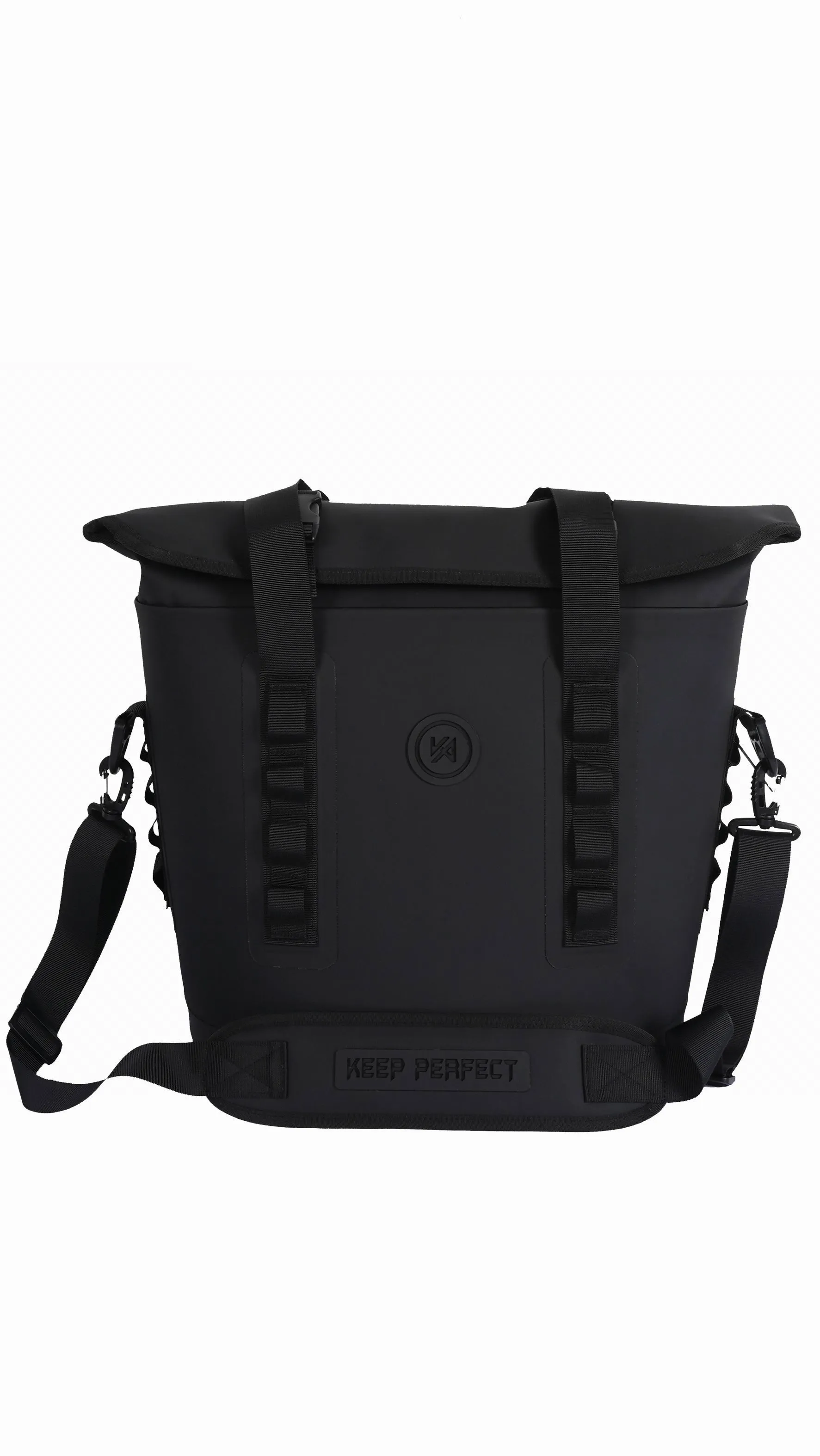
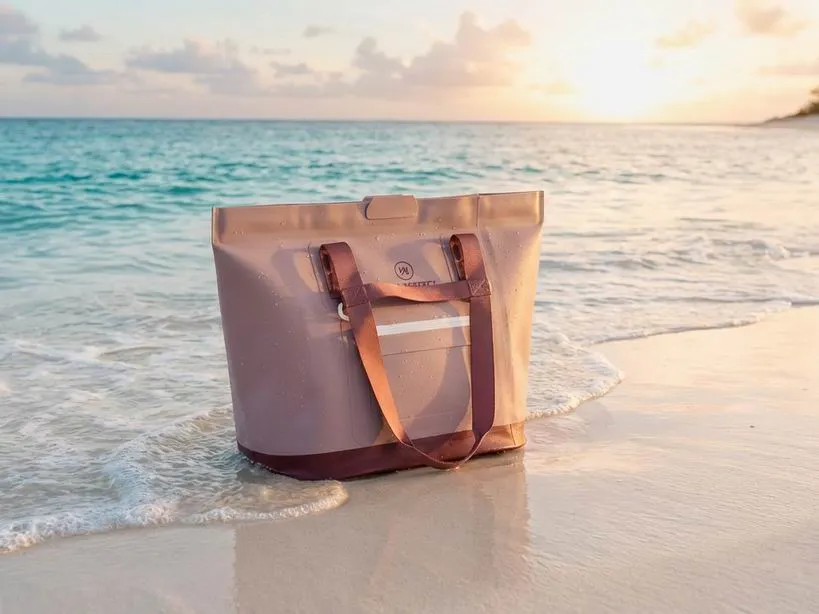
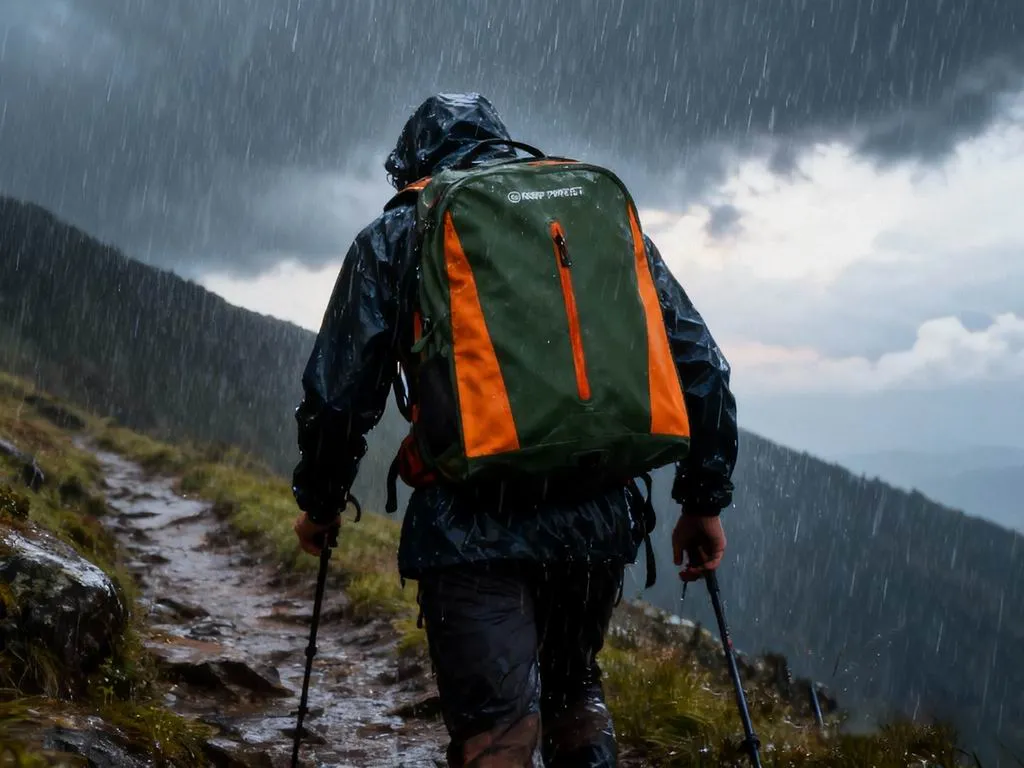
Where the color actually lives on a waterproof bag
A waterproof bag has three colorable layers, and buyers routinely specify the wrong one. The film — the 0.15–0.50 mm TPU or PVC coating that makes the bag waterproof — carries the dominant visible color, tinted in-line while the polymer is molten. The base fabric (210D–840D nylon or polyester) shows at edges, interiors and unlaminated panels, and is piece-dyed to a separate reference. Trims — webbing, zippers, buckles, thread — come from component suppliers with their own color cards.
The practical consequence: a complete custom color specification is three references, not one. Film to Pantone 2935 C, lining fabric to 2935 C textile equivalent, webbing to the nearest stock tape color or custom-dyed at 3,000-yard minimum. Projects that specify only one Pantone number and assume "everything will match" are the source of the classic complaint — bag body perfect, straps visibly off.
- Film layer: pigmented in molten polymer at the laminating line; dominant color; ΔE ≤1.5 achievable.
- Base fabric: piece-dyed by the textile mill; visible at interior and edges; separate lab dip required.
- Trims: webbing/zippers/buckles from stock color cards; custom trim dyeing adds 10–15 days and yardage minimums.
- Print/ink layer: logo inks matched separately — see our guide to custom logo methods on waterproof bags.
Which Pantone book to reference — and why buyers get this wrong
Pantone sells different books for different materials, and the numbers are not interchangeable. Solid Coated (the "C" series) is printed ink on gloss paper — the universal reference for film tinting and print inks, and the one your factory expects. Textile (TCX/TPG) references dyed cotton, closest to what your lining fabric can hold. Plastics references exist but are rarely stocked by Asian laminators.
The failure mode is specifying a TCX textile number for a film color. TCX 19-4052 and 2935 C are near-neighbors on screen but their Lab coordinates differ by ΔE 3–4 — far beyond tolerance. The rule is simple: one Pantone Solid Coated number for every film and ink color, TCX only for dyed textile components, and physical chips — never screen colors — as the master reference. Pantone's own documentation is explicit that on-screen values are approximations; a $20 chip ends the argument permanently.
If you only have a hex code from your brand guide, convert it to the nearest Pantone Solid Coated chip first (any printer or the Pantone online converter does this), then send us the chip number. Hex-to-film direct matching introduces monitor calibration error on both ends and routinely lands at ΔE 4+.
Film tinting at the laminating line: the physics of the match
Film color is set by dispersing pigment masterbatch into molten TPU or PVC before extrusion. The laminator blends masterbatch at 2–6% by weight, extrudes a test film, measures it against your chip on a spectrophotometer under D65 illumination, and adjusts the blend until the drawdown reads within tolerance. That drawdown card — a physical strip of your actual film — is the master that production is held to.
Three physical constraints buyers should know. First, film thickness shifts perceived color: a 0.20 mm film reads lighter than a 0.50 mm film of identical pigment load because light passes through less polymer, so drawdowns must be made at your specified gauge. Second, the base fabric shows through translucent films — the same blue film over white nylon versus black nylon reads ΔE 2 apart, which is why we produce drawdowns on your actual base fabric. Third, gloss level changes perception: matte films read roughly half a shade darker than gloss of the same formula.
| Variable | Effect on color | Control method |
|---|---|---|
| Film gauge | Thinner film reads lighter (ΔE 0.5–1.5 per 0.15 mm) | Drawdown made at production gauge |
| Base fabric tint | Shows through translucent film, shifts hue | Drawdown laminated to actual base fabric |
| Surface finish | Matte reads ~0.5 shade darker than gloss | Finish fixed on the spec sheet, not chosen later |
| Viewing light | Metamerism under retail LED vs daylight | Pass/fail judged under D65 light booth only |
| Batch drift | Pigment lots vary between runs | Reorder matched to archived drawdown card (3-year file) |
Delta-E tolerances: what is achievable and what to specify
Delta-E (CIEDE2000) is the number that turns "close enough" into a contract. ΔE 1.0 is the threshold where a trained observer under controlled light starts to notice a difference; ΔE 2.0 is visible to most observers; ΔE 3.0+ is obvious to anyone. On pigmented waterproof film, production reality is this: ΔE ≤1.0 is achievable on light and mid tones with a cooperative laminator, ΔE ≤1.5 is the professional standard across the full color range, and ΔE ≤2.0 is the correct contractual limit for deep saturated colors (dark reds, deep purples) where film tinting physics get difficult.
Write the tolerance into your purchase order with the measurement protocol attached: instrument (spectrophotometer, 45/0 or d/8 geometry), illuminant D65, observer 10°, measurement on the film surface of a finished bag panel, 5-point average. A tolerance without a protocol is unenforceable — the factory will measure under fluorescent shop light with a phone app and declare victory.
| Delta-E band | Visual meaning | Commercial use |
|---|---|---|
| ΔE ≤ 1.0 | Difference invisible to most observers | Premium brand programs, hero SKUs |
| ΔE 1.0–1.5 | Trained eye notices under controlled light | Standard spec — what we hold by default |
| ΔE 1.5–2.0 | Visible side-by-side, acceptable solo | Deep saturated colors, value-tier orders |
| ΔE 2.0–3.0 | Clearly different adjacent | Reject at standard AQL inspection |
| ΔE > 3.0 | Different color, full stop | Automatic reject, remake at factory cost |
The lab-dip approval workflow: 48–72 hours to a yes
The color approval sequence on a custom order runs on a fixed clock. Day 1: you send the Pantone chip number plus a physical reference if you have one (a competitor bag, a swatch, a printed card — anything physical beats anything digital). Days 2–3: the laminator produces two to three drawdown variants bracketing your target and courier photos plus measured ΔE values the same day, physical cards following by courier. Day 4–5: you approve one variant in writing, and that approved drawdown becomes the production master archived in both our file and yours.
Two disciplines keep this fast. Approve from physical cards under north-window daylight or a light booth, not from phone photos — screens and cameras shift blues and reds unpredictably. And approve a range, not a point: writing "approved, hold ΔE ≤1.5 to this card" gives production a legal target; approving only "this exact card" invites an argument at inspection when lot variation lands at 1.8.
Color approval runs in parallel with structural sampling, so it adds zero days to the 6–10 working day sample timeline described in our sampling process guide. It only becomes a bottleneck when buyers iterate past two rounds of drawdowns — each extra round costs 3–4 days.
Two-tone and multi-color designs: panels, contrast trims and interior pops
Most custom color programs are not one color — they are a body color plus a contrast panel, a pop interior, or brand-colored trims. Each additional film color is a separate drawdown and a separate match, with the same MOQ applying to the design, not per color. A navy body with an orange pocket panel at 500 pieces is one SKU and one MOQ; five colorways of the same bag is five SKUs at 500 each.
The cost reality of multi-color designs is in cutting efficiency, not tinting. Pigment setup is a fixed laminator charge ($150–$300 per custom color, typically waived at 1,000+ pieces), but each panel color needs its own material lot, and cutting markers lose 4–8% efficiency when two film lots must be nested together. On a 500-piece run of a two-tone backpack that inefficiency adds $0.20–$0.45 per unit.
The interior pop is the highest-value color move in the category: a hi-vis orange or yellow lining inside a dark bag is both a brand signature and a functional feature (you can actually find your gear). It costs one extra drawdown and nothing else, because the interior is the reverse side of the same laminated material — the back of the film can be tinted a different color from the face at no extra lamination pass.
Color consistency across reorders: the 3-year drawdown archive
The first order is the easy one. The reorder eighteen months later — after your laminator changed pigment suppliers and your original merchandiser moved jobs — is where color programs die. Our control is unglamorous and effective: every approved drawdown card is archived for 3 years with its measured Lab values, film formula, gauge, base fabric lot and laminator batch code. A reorder starts by pulling that card and re-matching to it, not to your memory of the color.
Expect ΔE 1.0–2.0 between production years even with perfect process, because pigment lots and base-fabric dye lots drift independently. For programs where reorder consistency matters — team programs, corporate uniform gear, retail lines — the mitigation is volume: ordering 12–18 months of demand in one run costs less than the color-management overhead of three small runs, and our reorder streamlining guide covers the scheduling math.
Light-fastness is the other long-horizon color risk. Budget films use pigment systems that fade a full shade after 200 hours of UV; we specify light-fastness grade 4+ pigments (xenon-arc tested per ISO 105-B02) as standard, which hold color past 500 hours of direct sun exposure — the difference between a beach bag that looks new in year two and one that looks bleached by August.
Special finishes: matte, gloss, translucent, metallic and iridescent films
Beyond flat color, film finish is a customization dimension most buyers discover late. Matte finish is the current premium default — it reads technical, hides scuffs, and photographs without hotspots. Gloss reads sporty and shows color saturation best but telegraphs every scratch. Translucent tinted film (smoke grey, tinted clear) shows the contents and suits waterproof pouches where users want to verify contents at a glance.
Metallic and pearlescent films use mica or aluminum-effect pigments and run $0.30–$0.60 per bag over standard film cost; they match to a physical sample rather than a Pantone chip because effect pigments are angle-dependent. Iridescent/photoluminescent films exist for fashion programs but carry 1,000+ piece film minimums from the laminator. All effect films are harder to print on — surface energy and texture reduce ink adhesion — so logo method should be confirmed against the finish at sampling, using the adhesion specs in our logo methods guide.
- Matte: premium default, hides scuffs, best for corporate and outdoor programs.
- Gloss: maximum saturation, sporty, shows abrasion.
- Translucent tint: contents visible — popular for organizer pouches and stadium-compliant clear bags.
- Metallic/pearl: +$0.30–$0.60/unit, matched to physical sample, not a Pantone chip.
- Print compatibility: confirm logo adhesion on effect films at sampling stage.
Cost impact of custom color: the real numbers at MOQ 500
Custom color is one of the cheapest customization levers. At 500 pieces: custom film tinting adds a one-time $150–$300 laminator setup (waived at 1,000+), plus $0.10–$0.25 per bag for masterbatch pigment cost on saturated colors (light tints add almost nothing). Custom-dyed lining fabric adds $0.15–$0.35 per bag. Custom-dyed webbing triggers a 3,000-yard mill minimum — about $180–$260 total, or $0.36–$0.52 per bag at 500 pieces.
Compare that to the alternatives buyers consider: using a stock film color costs nothing extra but lands you in the same five colors as every competitor; a full custom print (all-over pattern) costs $0.80–$1.50 per bag in printing. For most brand programs, custom film color at $0.10–$0.25 per unit is the single highest-ROI differentiation available in the category — the bag itself becomes the brand asset before any logo is applied.
| Customization | One-time cost | Unit cost at 500 pcs | Notes |
|---|---|---|---|
| Custom film tint | $150–$300 setup (waived ≥1,000) | +$0.10–$0.25 | Highest-ROI branding lever |
| Custom lining dye | $80–$150 lab dip | +$0.15–$0.35 | Separate textile lab dip |
| Custom webbing dye | 3,000-yard mill minimum | +$0.36–$0.52 | Often replaced by nearest stock color |
| Effect film (metallic) | $200–$400 setup | +$0.30–$0.60 | Sample-matched, not Pantone |
| All-over custom print | $60–$120 screen/plate | +$0.80–$1.50 | Alternative to tinted film |
How color quality is enforced at inspection
Color drift is classified as a major defect under our AQL 2.5 inspection, measured — not eyeballed. The inspector pulls samples per the AQL table, measures film color against your approved drawdown card on a spectrophotometer under D65, and any reading beyond your contracted ΔE fails the lot. Panel-to-panel consistency within a bag (body vs pocket) is checked under the same booth, because two films each individually "in tolerance" can still mismatch when sewn adjacent.
Third-party inspection (SGS, TÜV, QIMA) can attend any order at buyer cost — typically $200–$350 per inspection day — and receives the same drawdown card and protocol. For a deeper look at how sampling plans and defect classes work on bag production, see our AQL sampling buyer's guide. Color is also re-verified after aging: the QC protocol includes a 24-hour 60°C heat age on one sample per lot to catch pigment systems that shift post-lamination.
The documentation you receive: measured ΔE report per production lot, photos of the measurement setup, retained reference samples from the bulk run, and the archived drawdown card number — everything needed to hold the next reorder to the same standard without starting the argument over.
Common color-matching failures and how to prevent them
Five failures account for nearly every color dispute we see in the category. Specifying from screen instead of a chip (ΔE 4+ baked in from day one). Approving from phone photos under mixed lighting. Forgetting that film gauge changes the reading, so the approved thin sample doesn't match the thicker bulk material. Letting the factory substitute the base fabric without re-doing the drawdown. And mixing Pantone books — TCX for film, or coated numbers for uncoated textile references.
- Send a Pantone Solid Coated chip number for every film and ink color; TCX only for dyed textiles.
- Approve physical drawdown cards under consistent lighting, and approve with a ΔE range attached.
- Fix the film gauge and base fabric before the drawdown is made — both move the color.
- Archive the approved card on both sides and reference its number in the purchase order.
- Write the measurement protocol into the PO — instrument, D65, 5-point average, tolerance.
Follow those five and color stops being a risk item. Programs that run this way — including corporate gifting lines like the ones in our corporate gifting guide — routinely hold ΔE ≤1.5 across years of reorders without a single color claim.
Start your custom color project
The starting package is three items: your Pantone Solid Coated chip numbers (or a physical color reference), your target bag style or a reference sample, and your approximate quantity. Within 48–72 hours you have drawdown photos with measured ΔE values; within 6–10 working days a full sample in your color with your logo, built on the production line by the same team that runs bulk.
QUANZHOU JUNYUAN BAGS — customizing waterproof bags since 2014, 4,950 m² SGS-verified facility, 7 lines, 149 machines, 137 staff, 200,000 pieces monthly. MOQ 500 per design, bulk 35–50 days, 30/70 T/T, FOB Xiamen, shipping to 100+ countries. For the factory-side view of how an approved color becomes a bulk run, our production team documents every stage. Send your chip numbers through the inquiry form and the color process starts this week.
Frequently Asked Questions
Q1. Can you match any Pantone color on waterproof film?
Yes — any Pantone Solid Coated reference can be matched on TPU or PVC film at Delta-E ≤1.5 under D65 lighting. Deep saturated colors (dark reds, purples) are held to ΔE ≤2.0 because film-tinting physics limit the gamut. You approve a physical drawdown card before production.
Q2. What does custom color cost at 500 pieces?
A one-time laminator setup of $150–$300 (waived at 1,000+ pieces) plus $0.10–$0.25 per bag for saturated pigment loads. Custom-dyed lining adds $0.15–$0.35 per bag. It is the cheapest high-impact branding option in the category.
Q3. Should I send a Pantone C or TCX number?
Pantone Solid Coated (C series) for film and print inks. TCX textile numbers only for dyed fabric components like lining. The books use different color spaces — a TCX number specified for film lands ΔE 3–4 off target.
Q4. Can I just send a hex code or a photo of the color?
You can start the conversation with one, but production matching requires a Pantone chip or physical reference. Hex codes depend on monitor calibration at both ends and routinely produce ΔE 4+ errors. Convert hex to the nearest Pantone Solid Coated chip first.
Q5. What is a drawdown card?
A physical strip of your actual film — correct pigment, correct gauge, laminated to your actual base fabric — produced by the laminator for approval before bulk. It becomes the master reference production is held to, and we archive it for 3 years for reorders.
Q6. How accurate is the match, in numbers?
Standard spec is Delta-E ≤1.5 measured with a spectrophotometer under D65 illumination, 10° observer, 5-point average on the finished panel. ΔE 1.0 is the threshold where a trained eye starts noticing difference; 1.5 is below what customers can detect in normal use.
Q7. Can the inside and outside be different colors?
Yes — the face and back of the film can be tinted different colors in one lamination pass at no extra charge. A dark body with a hi-vis orange interior is one of the most popular configurations: brand look outside, find-your-gear function inside.
Q8. Does film thickness affect the color?
Yes — a 0.20 mm film reads visibly lighter than 0.50 mm of the same pigment formula because light passes through less polymer. Drawdowns are always made at your production gauge, which is why the spec sheet must fix thickness before color approval.
Q9. Will the color fade in the sun?
We specify light-fastness grade 4+ pigments tested per ISO 105-B02 xenon-arc exposure, holding color past 500 hours of direct sun. Budget films using grade 2–3 pigments fade a full shade within a season — always ask for the light-fastness grade.
Q10. Can you match a competitor bag's color?
Yes — send the physical bag and we read it on a spectrophotometer, then match the film to the measured Lab values. Physical references are actually better than Pantone chips for matching because they show the exact film, gauge and finish combination.
Q11. How many colors can one design use?
Technically unlimited, practically two to three film colors per design. Each additional color is a separate drawdown and material lot, adding $0.20–$0.45 per unit in cutting inefficiency. MOQ 500 applies per design/colorway, not per panel color.
Q12. What happens if bulk color fails inspection?
Color beyond contracted Delta-E is a major defect under AQL 2.5 — the lot fails, and re-production or a negotiated concession is at factory cost. Measurement protocol (instrument, D65, tolerance) is written into the purchase order so there is no argument about method.
Q13. How long does color approval take?
Drawdown variants ship 48–72 hours after we receive your chip number. One approval round is typical; each additional iteration costs 3–4 days. Color approval runs parallel to structural sampling, so it adds zero days to the 6–10 day sample timeline.
Q14. Do you offer matte and gloss versions of the same color?
Yes — the same pigment formula on matte versus gloss film reads about half a shade different (matte appears darker), so we produce the drawdown on your chosen finish. Matte is the current premium default; gloss maximizes saturation.
Q15. Is there a minimum order for a custom color?
The standard MOQ 500 pieces per design applies — custom color does not raise it. The laminator's pigment setup charge ($150–$300) is the only color-specific threshold, waived at 1,000+ pieces.
People Also Ask
Can you custom color a waterproof bag?
Yes — the waterproof film itself is tinted to your Pantone reference at the laminating line, matched to Delta-E ≤1.5 at MOQ 500, with a physical drawdown card for approval before production.
How much does Pantone matching cost for bags?
A one-time $150–$300 laminator setup (waived at 1,000+ pieces) plus $0.10–$0.25 per bag for saturated colors — the cheapest high-impact customization available.
What Delta-E tolerance should I specify?
Delta-E ≤1.5 under D65 lighting is the professional standard for waterproof film; ≤1.0 for premium programs, ≤2.0 for deep saturated colors. Always attach the measurement protocol to the PO.
Why does my sample look different from production?
Usually film gauge or base fabric changed between sample and bulk, or approval was done from a screen photo. Fix gauge and fabric before the drawdown, and approve physical cards under consistent light.
Can waterproof bags be made in brand colors?
Yes — film, lining and trims can all be brand-colored. Film tinting at MOQ 500 is the core move; interior pop colors come free as the reverse side of the same film.