Yes — you can get custom waterproof bags with your logo, and the four production-ready methods are screen printing ($0.30–$0.90 per logo), heat-transfer printing ($0.60–$1.50), molded TPU/PVC patches ($0.60–$1.20) and embroidery on woven panels or patches ($1.50–$3.00), all at an MOQ of 500 bags with samples in 6–10 working days. The method you choose is not a cosmetic decision: on a welded waterproof shell, the wrong process either leaks (needle holes through film) or peels (ink on a low-energy surface) within one season. Independent adhesion testing per AATCC evaluation procedures shows that correctly specified screen prints on TPU laminate survive 50+ wash-equivalent abrasion cycles, while a badly cured print fails at cycle 8–12. This guide gives you the decision matrix, the placement rules, the file specs and the cost bands so your branding survives as long as the bag itself.
Everything below comes from production reality at QUANZHOU JUNYUAN BAGS — a custom waterproof bag specialist operating since 2014 with a 4,950 m² SGS-verified partner facility, 7 production lines, 149 machines, 137 staff and a monthly capacity of 200,000 pieces. We run all four branding methods in-house at MOQ 500, hold color to a Delta-E tolerance of ≤1.5 against your Pantone solid-coated reference, and inspect every logo lot under AQL 2.5 major / 4.0 minor before DDP shipment to 100+ countries. Bulk lead time runs 35–50 days after golden-sample approval, with 30% T/T deposit and 70% against B/L copy.
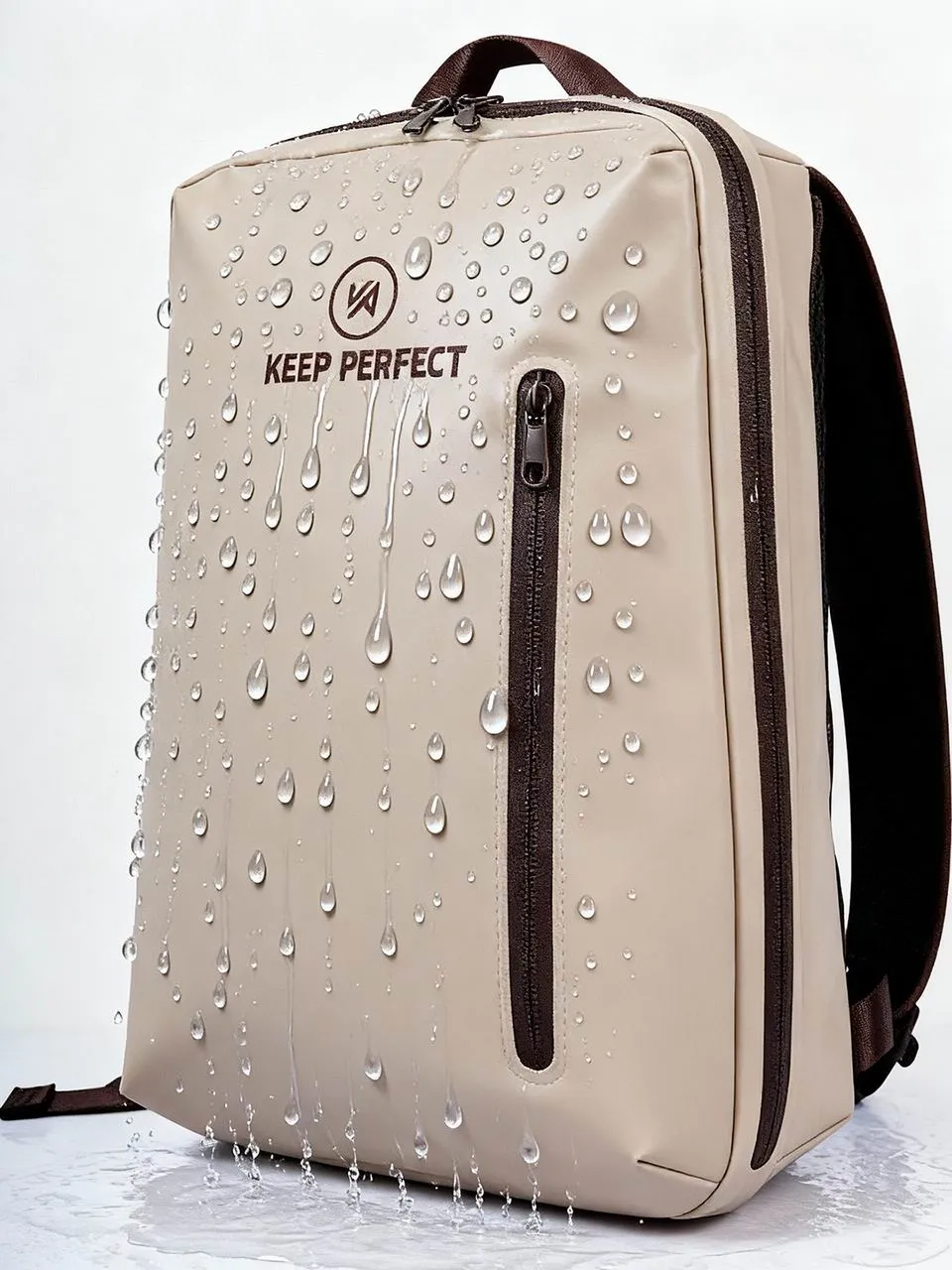
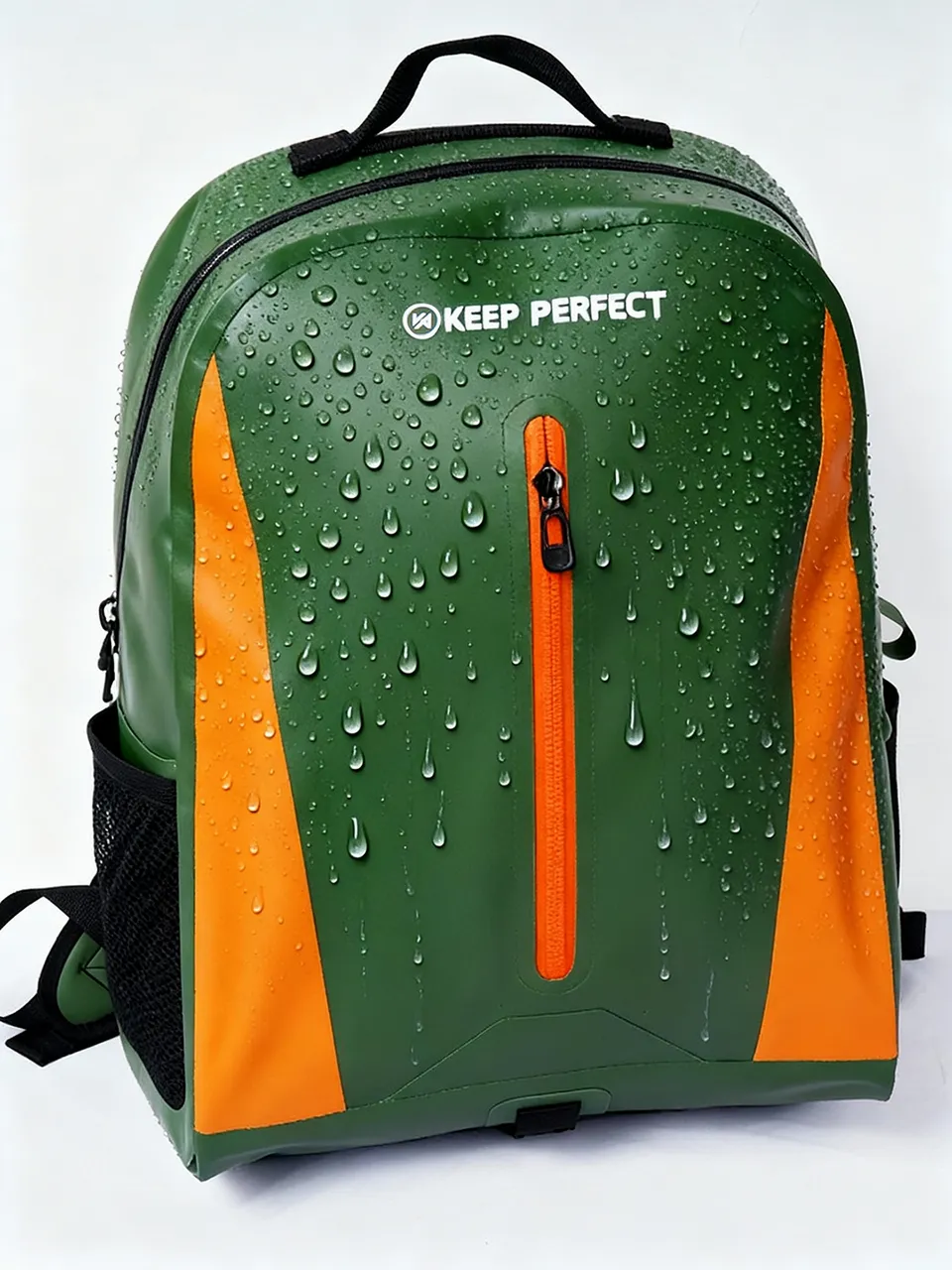
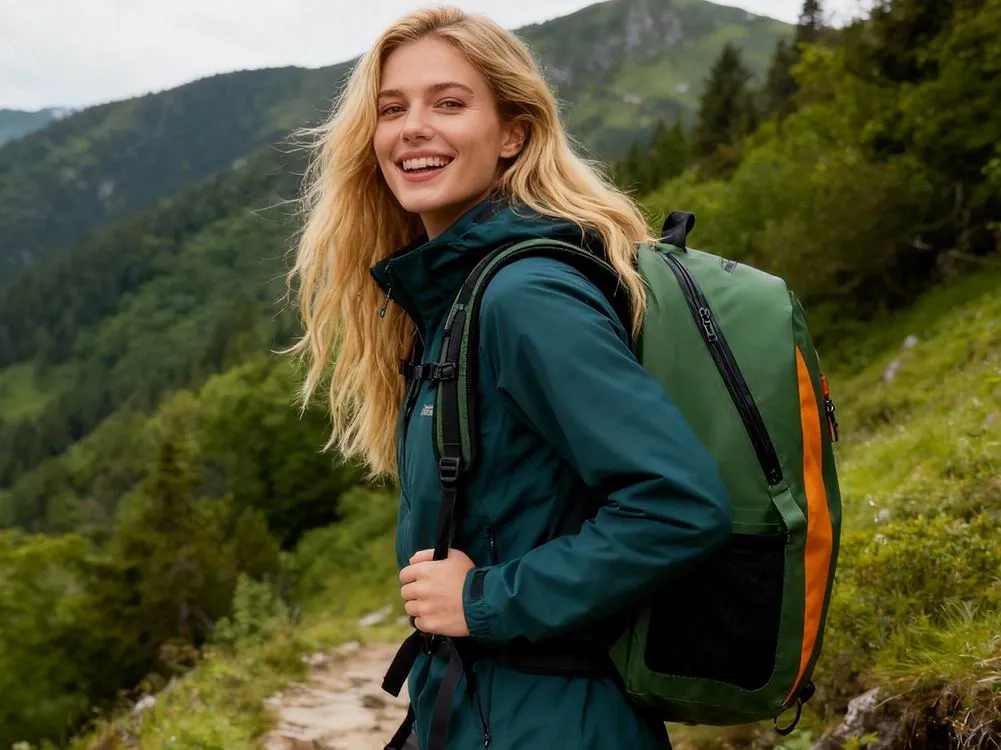
Can I get custom waterproof bags with my logo — the direct answer
Yes, and the practical question is not "can it be done" but "which process survives your use case." A waterproof bag is a laminated technical product: the shell is TPU or PVC film bonded to fabric, the seams are high-frequency welded, and the surface energy of the film is far lower than cotton canvas. Any logo method must therefore answer three engineering questions — does it puncture the film, does it bond to a low-energy surface, and does it flex without cracking when the bag folds or rolls.
Of the four mainstream methods, three are film-safe by construction: screen printing deposits ink on the surface, heat transfer bonds a printed film carrier, and a molded patch is welded or stitched onto a reinforcement panel. Embroidery is the exception — a needle passing through a waterproof film creates a leak path, so embroidery is only ever applied to woven panels, webbing or a separate patch that is then attached to the bag. Buyers who skip this distinction are the source of the classic warranty claim: a beautiful embroidered logo surrounded by a damp interior.
The commercial answer is equally direct. Logo application adds $0.30–$3.00 per bag depending on method, size and color count; it does not change the MOQ (500 pieces per design), and it adds zero to 3 days to the production schedule because printing and patch welding happen in-line before final assembly. Your logo file, approved sew-out or print proof, and a signed golden sample are the three gates between artwork and bulk.
Screen printing on TPU and PVC shells
Screen printing is the volume workhorse for custom logo waterproof bags: 1–4 spot colors, sharp edges, the lowest unit cost, and excellent opacity on dark shells. On TPU-laminated nylon we print with flexible polyurethane-based inks cured at 80–100°C — high enough to crosslink the ink, low enough to avoid shrinking the laminate. On PVC shells we use vinyl inks with a slower conveyor cure. A well-cured PU ink film stretches with the substrate to roughly 150% elongation before micro-cracking, which is why ink chemistry matters more than the press itself.
The two failure modes to specify against are adhesion and cure. Adhesion is verified by a cross-hatch tape test (ISO 2409 class 0–1 acceptance); cure is verified by a rub test — 50 double-rubs with a dry cotton cloth and 20 with an IPA-wetted cloth, no transfer. We log both results per lot. Screen size is limited by the printable flat zone on the bag: on most 20–30 L backpacks that zone is 120 × 180 mm on the upper front panel.
| Parameter | Specification | Why it matters |
|---|---|---|
| Colors | 1–4 spot colors, Pantone-matched | Each color = one screen, one setup charge |
| Ink system | Flexible PU ink (TPU) / vinyl ink (PVC) | Wrong ink cracks at first fold |
| Cure window | 80–100°C, 60–90 s conveyor | Undercure = rub-off; overcure = film shrink |
| Max print area | 120 × 180 mm typical front panel | Defined by flat zone between welds |
| Unit cost at 500 pcs | $0.30–$0.90 per logo | Cheapest method at volume |
| Adhesion spec | ISO 2409 class 0–1, IPA rub 20 cycles | Verified per production lot |
Screen printing is the right default for logos with flat spot colors, medium detail and quantities of 500–10,000. It is the wrong choice for photographic gradients (use heat transfer) and for logos wider than the flat zone (use a patch).
Heat-transfer printing for full-color and gradient logos
Heat transfer is the answer when your logo has gradients, photography or more than four colors. The artwork is printed in reverse onto a PET carrier film using digital or offset transfer inks, then bonded to the bag shell at 150–170°C for 10–15 seconds under 3–4 bar pressure. The carrier peels away and leaves a flexible, full-color film logo with no hand feel. Modern PU-based transfer films stretch with TPU laminate and pass the same 50-cycle abrasion protocol as screen ink.
Two specifications protect quality. First, resolution: supply artwork at 300 DPI minimum at final size; below that, small text fills in. Second, press window: on heat-sensitive thin films (below 0.35 mm TPU) we drop to 140°C and extend dwell time to avoid laminate gloss marks — a parameter your factory should record on the production sheet, not improvise on the line.
Unit cost at 500 pieces runs $0.60–$1.50 per logo depending on size and whether the design needs a white underbase on dark shells. Digital transfers carry no screen setup, so heat transfer beats screen printing on cost below roughly 3 colors at small runs, and it is the only practical method for full-color mascots, flags or photographic artwork. For reference on color-managed file preparation, the Adobe documentation on print color management covers ICC profiles and spot-to-process conversion in practical terms.
Molded TPU and PVC patches for a premium 3D mark
A molded rubber patch is the premium option: your logo is cast in soft PVC or TPU with raised 2D or 3D relief, then high-frequency welded or stitched onto a reinforcement panel on the bag. The result is the tactile, technical look buyers associate with premium outdoor brands, and it is effectively indestructible — the patch is the same polymer family as the shell, so it flexes, abrades and ages at the same rate. Cost runs $0.60–$1.20 per patch plus a one-time mold charge of $80–$150 per design.
The attachment method is the engineering decision. HF-welding a TPU patch onto a TPU shell creates a homogeneous bond with no holes — the preferred route on IPX6/IPX7 bags. Stitching is acceptable only when the patch sits on a webbing strap or a double-layer reinforcement panel where the needle path never reaches the waterproof cavity. We default to welded attachment and specify stitch-on only with the buyer's written sign-off on the waterproofing implication.
- 2D patch: flat surface, up to 4 colors, sharpest fine text, lowest mold cost.
- 3D patch: sculpted relief, best tactile premium feel, minimum line width 0.8 mm.
- Size band: 40 × 40 mm to 90 × 60 mm typical; larger patches resist flex cracking poorly.
- Attachment: HF-welded (no holes, IPX-safe) or stitched on webbing only.
- Mold lead time: 5–7 days, reusable for all reorders at no extra charge.
Embroidery on waterproof bags: where it works and where it leaks
Embroidery delivers the classic corporate look — stitched thread, dimensional texture, perceived value — and it is the method buyers ask for most and misapply most. A sewing needle punches 8–12 holes per centimeter through whatever it stitches. Through a waterproof film, that is a leak. Therefore embroidery on a custom waterproof bag is limited to three safe zones: woven fabric panels (canvas or woven nylon trims), webbing straps, and embroidered patches that are heat-sealed or stitched onto reinforcement zones clear of the waterproof cavity.
When a client insists on the embroidered aesthetic on a welded shell, the production answer is an embroidered patch with a heat-activated TPU backing, bonded exactly like a heat transfer. You keep the stitched look; the film keeps its integrity. Thread choice matters outdoors: we specify 100% polyester embroidery thread (not rayon) for UV and mildew resistance, at a stitch density of 4–5 lines/mm for clean small text down to 5 mm cap height.
Cost for embroidered elements runs $1.50–$3.00 per position depending on stitch count (priced per 1,000 stitches), with free logo digitizing on orders over 500 pieces. Durability is excellent — thread outlasts ink by years in UV exposure — so for woven-panel products like tote handles and canvas trims, embroidery is often the lifetime-value winner even at 3–5× the screen-print price.
Logo placement rules on welded waterproof shells
Placement is constrained by construction. A welded bag has seams, fold lines, flex zones and abrasion zones, and each one is a bad home for a logo. The upper front panel — flat, above the main closure line, away from shoulder-strap attachment points — is the default premium position. The base panel is the worst: it drags on the ground and any print there is abraded within months. Logos on roll-top closure bands crack from repeated folding; logos across welded seams peel at the weld edge.
| Position | Verdict | Reason |
|---|---|---|
| Upper front panel | Best — default | Flat, visible, low flex, low abrasion |
| Front pocket face | Good | Flat zone; check pocket gusset clearance |
| Webbing strap | Good for patches/embroidery | No film to puncture; high wear but replaceable |
| Roll-top closure band | Avoid | Folds every use — print cracks, patch distorts |
| Base panel | Avoid | Ground abrasion destroys any mark in months |
| Across welded seams | Avoid | Weld edge is a stress line; adhesion fails there |
Size discipline matters as much as position. A front-panel mark at 80–120 mm wide reads as technical and premium; the same logo at 200 mm reads as a promotional giveaway. On 5–10 L pouches, cap the mark at 60–80 mm. We place a paper template at final size on the sample photos for your approval before any screen or mold is made.
Color matching: Pantone references and Delta-E tolerance
Brand color is a measurable specification, not a hope. Supply your logo colors as Pantone solid-coated references, and we match inks and patch polymers to a Delta-E tolerance of ≤1.5 measured under D65 lighting — below the threshold at which a trained eye can reliably spot a difference. For printed films, color is verified on the actual shell material, because the same ink reads differently on white TPU, black TPU and PVC.
Two realities to plan around. First, dark shells: a light ink on black TPU needs an underbase layer or it shifts toward grey — we flag this at proof stage, not after 500 bags. Second, batch-to-batch drift: film lots vary slightly in base tint, so reorders are matched against your archived golden sample and the original drawdown card we keep on file for 3 years. Color-fastness of the print itself is tested to ISO 105 wet-crocking grade 4 minimum and light-fastness grade 4 after 40 hours of xenon exposure, with results on your QC report.
Artwork file requirements that avoid a week of back-and-forth
The single biggest delay in logo orders is bad artwork. Vector files (AI, EPS or PDF with outlined fonts) are the production standard: they scale to any print size without loss and let us separate spot colors cleanly. Raster files (PNG, JPG, PSD) are acceptable only for heat transfer, at 300 DPI at final size on a transparent background. A logo pulled from a website at 72 DPI cannot be rescued — redrawing it costs 1–3 days and $30–$60.
- Preferred: AI / EPS / PDF vector, fonts outlined, colors as Pantone solid-coated.
- Acceptable for transfer: PNG/TIFF, 300 DPI at final size, transparent background.
- Not usable: screenshots, 72 DPI web images, Word/PowerPoint exports, photos of printed items.
- Text minimum: 5 mm cap height for print, 4 mm for embroidery (simplification may be needed).
- Color count: confirm final spot-color count — each color adds a screen and a setup.
We return a digital proof within 24 hours showing the logo at final size on a render of your bag, with dimensions, color callouts and placement marked. Nothing goes to screen, mold or needle until that proof is signed. For teams preparing print files in-house, Adobe's print-production guides cover outlining fonts and spot-color setup in Illustrator step by step.
Cost comparison: method, quantity and total branding budget
Branding cost is a small line with an outsized effect on perceived value. At 500 pieces, a one-color screen print adds roughly $0.30–$0.50 per bag; the same logo as a 3D patch adds $0.90–$1.20 plus the $80–$150 mold. Heat transfer sits between at $0.60–$1.50 with no setup. Embroidery is the premium line at $1.50–$3.00. All four scale down 20–40% at 3,000+ pieces as setups amortize.
| Method | Unit cost @500 | Setup | Best for | Durability |
|---|---|---|---|---|
| Screen print (1 color) | $0.30–$0.50 | $20–$40/screen | Flat spot-color logos, volume | 50+ abrasion cycles |
| Screen print (2–4 color) | $0.50–$0.90 | $20–$40/screen/color | Multi-color brand marks | 50+ abrasion cycles |
| Heat transfer | $0.60–$1.50 | $0 (digital) | Full color, gradients, photos | 50+ abrasion cycles |
| TPU/PVC patch | $0.60–$1.20 | $80–$150 mold | Premium 3D technical look | Lifetime of the bag |
| Embroidery (panel/patch) | $1.50–$3.00 | $0 (digitizing free 500+) | Corporate premium feel | Best UV/thread life |
Budget rule of thumb: keep total branding (logo + woven label + hangtag) under 8–10% of your target landed cost. On a $6.00 bag, a $0.45 print plus $0.12 woven label plus $0.08 hangtag is well inside budget; a $2.80 embroidery position is a deliberate premium positioning choice, not a default.
Durability testing: how we verify a logo survives
Every branding method ships with a test protocol, and buyers should write these into the purchase order. Prints and transfers are tested for adhesion (cross-hatch tape, ISO 2409 class 0–1), rub resistance (50 dry / 20 IPA double-rubs), and flex endurance (5,000 folds on a flex tester with no cracking). Patches are tested for bond strength — a welded TPU patch must exceed 35 N/5 cm peel, the same bar as a structural seam. Embroidered elements are wash-tested 25 cycles at 30°C with no puckering or thread fade beyond grade 4.
Field correlation matters more than lab elegance. Our return-rate data across logo-program shipments shows branding-related defects below 0.5% when the above gates are enforced, versus 3–6% in program histories buyers share with us from suppliers who skip cure verification. Final random inspection follows AQL 2.5 major / 4.0 minor, and a misregistered, cracked or peeling logo is classified as a major defect. Third-party verification by SGS inspection services is welcomed on any lot.
Sampling and approval workflow before bulk production
The path from artwork to bulk runs through four gates, and compressing them is how programs fail. Gate 1 is the digital proof (24 hours): size, position and colors on your bag render. Gate 2 is the physical strike-off — an actual print, transfer, patch or sew-out on your shell material, couriered to you or photographed under D65 light (2–4 days). Gate 3 is the golden sample: a complete bag with final logo, materials and construction (6–10 working days). Gate 4 is your written approval, which freezes the spec for bulk.
Keep the golden sample. It is the arbitration standard if bulk deviates — color, placement, print quality all trace back to it. We archive a duplicate golden sample plus your drawdown cards and digitizing files for 3 years, so reorders at month 18 match the original run without re-approval cycles. Sampling fees ($60–$150 depending on method) are credited against the bulk order.
MOQ, lead time and pricing for logo waterproof bag orders
Commercial terms for custom logo waterproof bags are identical to any custom program at our production facility: MOQ 500 pieces per design, samples in 6–10 working days, bulk in 35–50 days after golden-sample approval. Branding adds nothing to the MOQ and at most 2–3 days to the schedule, because printing and patch welding run in-line. Payment is 30% T/T deposit, 70% against B/L copy; FOB Xiamen or DDP to 100+ countries with landed cost fixed up front.
| Order band | Base bag (20 L TPU) | Logo add-on (screen, 1 color) | Lead time |
|---|---|---|---|
| 500 pcs (MOQ) | $4.50–$8.50 | +$0.30–$0.50 | 35–50 days |
| 1,000–2,999 pcs | $3.80–$7.20 | +$0.25–$0.45 | 40–50 days |
| 3,000–4,999 pcs | $3.20–$6.10 | +$0.22–$0.40 | 45–55 days |
| 5,000+ pcs | $2.70–$5.20 | +$0.18–$0.35 | 50–65 days |
First-order advice: start at 500 with one logo position and one color, validate the sell-through, then scale. Reorders run 25–35 days because screens, molds and digitizing files are archived. For the manufacturer-side view of capacity, equipment and audit criteria, Our guides on MOQ structure, what sampling looks like step by step, Pantone color matching for shells, design file preparation and building a private-label waterproof brand.
Frequently Asked Questions
Q1. Can I get custom waterproof bags with my logo?
Yes. We apply your logo by screen printing, heat transfer, molded TPU/PVC patch or embroidery (on panels and patches) at MOQ 500 bags, with samples in 6–10 working days and bulk in 35–50 days. Send a vector file and Pantone references and we return a digital proof within 24 hours.
Q2. Which logo method is most durable on a waterproof bag?
A welded TPU patch is effectively lifetime-permanent — it is the same polymer as the shell. Correctly cured screen print and heat transfer survive 50+ abrasion cycles and years of use. Embroidery on woven panels outlasts all inks in UV exposure but must never be stitched through waterproof film.
Q3. Does adding a logo increase the MOQ?
No. MOQ stays 500 pieces per design regardless of logo method, color count or number of positions. Setup charges apply per screen ($20–$40) or per patch mold ($80–$150), not per bag beyond the unit add-on.
Q4. Can you embroider directly onto a waterproof shell?
No — needle holes through TPU or PVC film create leak paths. Embroidery goes on woven panels, webbing straps, or an embroidered patch with a heat-sealed backing that bonds to the shell like a transfer, preserving the IPX rating.
Q5. What file format should I send for my logo?
Vector AI, EPS or PDF with fonts outlined and Pantone solid-coated color callouts. For heat transfer only, a 300 DPI PNG/TIFF at final size on a transparent background is acceptable. Web-resolution 72 DPI images cannot be used.
Q6. How much does logo printing add per bag?
Screen print $0.30–$0.90, heat transfer $0.60–$1.50, molded patch $0.60–$1.20 plus an $80–$150 mold, embroidery $1.50–$3.00. At 3,000+ pieces these drop 20–40%.
Q7. How do you match my brand colors exactly?
We match to your Pantone solid-coated references at Delta-E ≤1.5 under D65 lighting, verified on the actual shell material. Prints are tested to ISO 105 wet-crocking grade 4 and light-fastness grade 4 after 40 hours xenon exposure.
Q8. Where should the logo go on a waterproof backpack?
The upper front panel is the default premium position — flat, visible, low flex. Avoid the base panel (abrasion), the roll-top band (folding cracks prints) and any placement across welded seams. Front marks should be 80–120 mm wide.
Q9. Can I see a physical sample of my logo before bulk?
Yes — the workflow is digital proof in 24 hours, physical strike-off in 2–4 days, then a full golden sample in 6–10 working days. Bulk starts only after your written golden-sample approval, and sampling fees are credited against the order.
Q10. What waterproof rating do custom logo bags reach?
Logo application does not change the rating when film-safe methods are used: IPX6 for sustained spray, IPX7 for 30-minute 1 m submersion with welded roll-top construction. Stitched-through branding would void the rating, which is why we weld or bond, never needle the film.
Q11. Do reorders need new screens or molds?
No. Screens, patch molds and digitizing files are archived for 3 years along with your golden sample and drawdown cards, so reorders run 25–35 days and match the original run.
Q12. Can you print multi-color or photographic logos?
Yes — heat-transfer printing handles unlimited colors, gradients and photography at $0.60–$1.50 per logo with no screen setup. Screen printing is limited to 1–4 flat spot colors.
Q13. What certifications back the factory?
The program runs under BSCI, ISO 9001:2015, CE, CPC and RoHS, with REACH SVHC and Prop 65 screening available for EU and US-bound orders. Third-party SGS or BV inspection is welcomed on any lot.
Q14. Do you offer DDP shipping with logo orders?
Yes — DDP to 100+ countries covering freight, duty and clearance at a fixed landed price. For a 500-piece sea shipment to the US or EU, DDP typically adds 22–32% over FOB.
People Also Ask
Can I put my logo on a dry bag?
Yes — dry bags accept screen print, heat transfer or welded patches on the flat panel below the closure. The print zone is specified before sampling so the logo clears the roll-top fold lines.
Is screen printing waterproof?
Correctly cured PU-based screen ink bonds to the film surface and is water-fast for the life of the print; it is verified by ISO 2409 cross-hatch and IPA rub tests. The ink sits on the surface, so it never compromises the shell's waterproofing.
How long does custom logo production take?
Sampling 6–10 working days, bulk 35–50 days after golden-sample approval, reorders 25–35 days. Logo application itself adds only 2–3 days because printing runs in-line with production.
What is the minimum order for custom logo bags?
500 pieces per design at QUANZHOU JUNYUAN BAGS. Below 500 the fixed costs of screens, molds and line setup push unit pricing up sharply, which is why 500 is the economic floor.
Printed vs patched logo — which looks more premium?
Patches read as technical-premium (3D relief, outdoor-brand aesthetic); prints read as clean and minimal. Corporate gifting programs often choose embroidery on panels for the classic stitched feel. All three are durable when correctly specified.