Private label is the fastest route from a brand idea to a shelf-ready product, and the most misunderstood. Buyers hear it as "put my logo on your bag," and that reading produces a branded commodity — indistinguishable from every other branded commodity except for a mark, competing on price, defended by nothing. The stronger reading is closer to the truth of what manufacturing actually allows: private label is a specification you own. The geometry, the material system, the hardware, the color architecture, the branding treatment, the packaging and the compliance file are all yours to define, and the factory’s capability is the instrument you play them on.
This guide covers how to build a waterproof bag brand on a factory’s capability: which products to start with, how branding methods differ in cost and durability, how packaging and compliance carry the brand, what the economics actually look like at launch, and how to hold quality consistent across reorders so the brand means something in year three. The production baseline at QUANZHOU JUNYUAN BAGS — custom waterproof bag production since 2014, 4,950 m² SGS-verified facility — is MOQ 500 pieces per style, sampling in 6–10 working days and bulk in 35–50 days, FOB Xiamen.
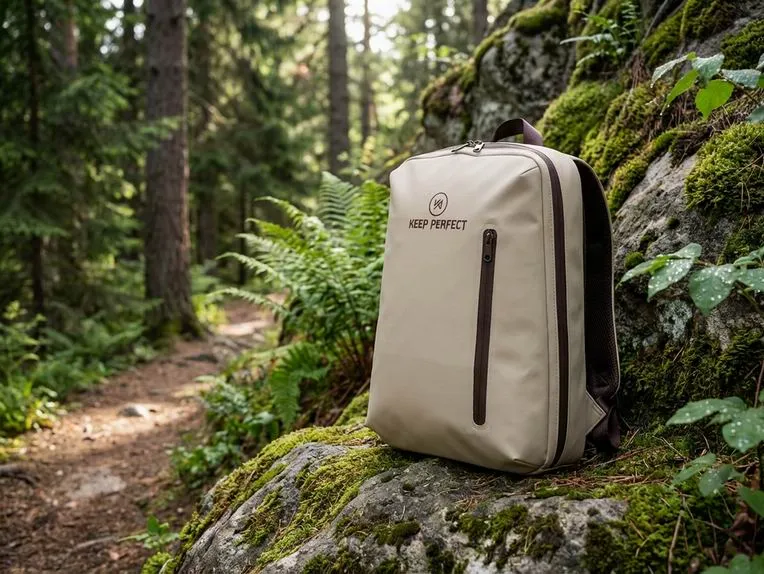
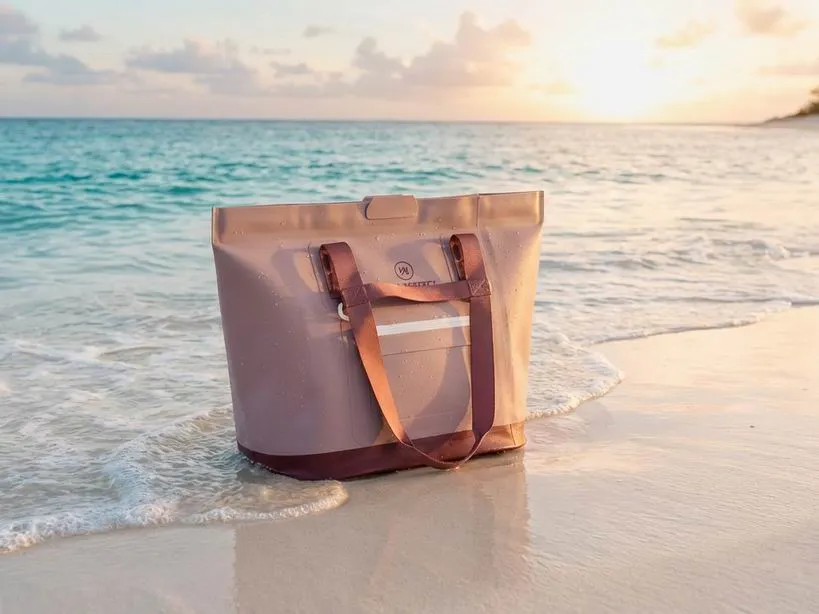
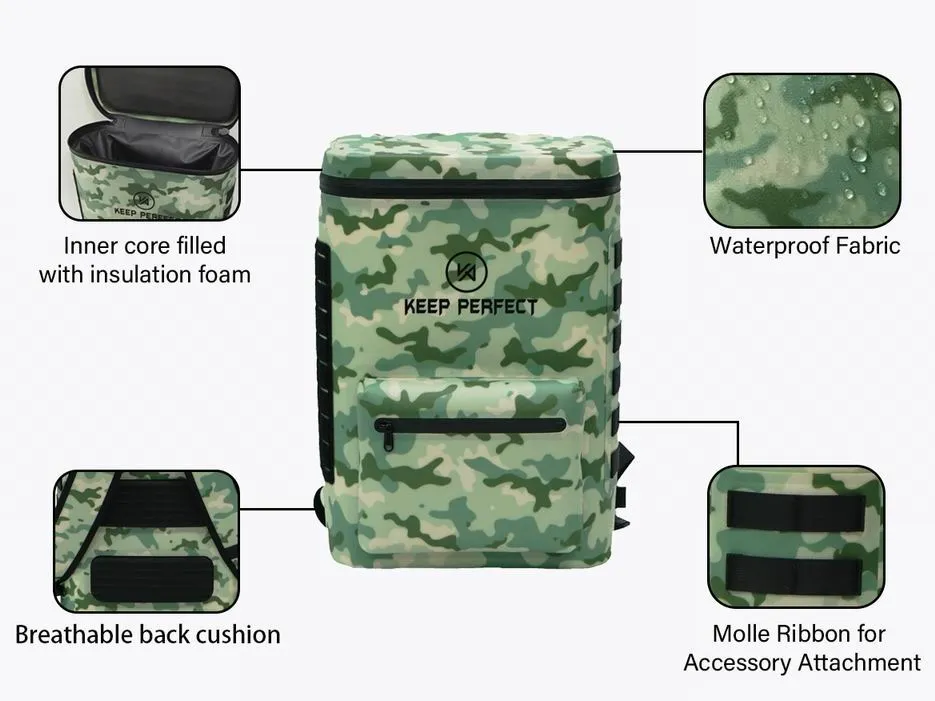
What private label actually means in waterproof manufacturing
This is what brand building on a factory’s capability actually looks like: private label waterproof bags are manufactured to the buyer’s specification and sold under the buyer’s brand. The factory does not sell the same unit to anyone else under its own name, and the buyer owns the design decisions. That ownership is what separates it from white label, where an existing product is rebadged and the only variable is the mark, and from a stock program with decoration added, where the geometry and materials were fixed years before the brand existed. All three are legitimate; they sit at very different points on the control-versus-speed curve.
The distinctions matter commercially. White label launches fastest and differentiates least. Stock-with-decoration is the honest answer for small budgets and validates demand cheaply. True private label takes longer — sampling, tooling, material selection — and produces a product no competitor can buy, which is the only durable defense in a category where the waterproof claim itself is widely available. Our private label versus white label comparison lays out the trade-off in full, and the OEM versus ODM guide explains where the design authorship sits in each model.
Choosing your first three products: the assortment question
Three products is the right opening assortment for most waterproof brands: enough to look like a range, few enough to fund at minimum quantities without mortgaging the business. The selection should follow a logic a customer can see — one hero product that defines the brand, one volume product at a lower price point that drives trial, and one accessory or specialty item that demonstrates depth. A dry bag as hero, a lightweight packable backpack as volume, and a waterproof tote or organizer as the specialist is a common and workable shape.
Two constraints shape the choice more than taste does. First, material commonality: three products cut from the same laminate family share a material purchase, which lowers the effective minimum per style and lets a program pool upstream fabric commitments — the structure described in the MOQ guide. Second, process commonality: products built on the same welding and taping processes share fixtures and operator skill, which stabilizes quality and shortens sampling. A first assortment that respects both constraints launches faster and costs less than three unrelated products, and looks more coherent on the shelf, which is not a coincidence.
Branding methods compared: which one fits which product
| Method | Best on | Durability | Cost position | Minimum impact |
|---|---|---|---|---|
| Heat transfer | Coated and laminated panels | Good, flex-resistant | Low | Low setup, fast |
| Screen print | Flat panels, simple marks | Very good | Low per unit | Per-color setup |
| Silicone / PVC patch | Backpacks, technical styles | Excellent, dimensional | Mid | Mold cost |
| Embroidery | Woven panels, unstructured areas | Excellent | Mid-high | Digitizing fee |
| Woven label | Webbing, interior, seam insertion | Excellent | Low-mid | Loom minimum |
| Molded hardware | Buckles, pulls, zipper garages | Excellent, premium signal | High | Tooling cost |
The selection is not only aesthetic. Waterproof materials resist some methods: a smooth TPU laminate takes heat transfer beautifully and takes embroidery badly, because needle perforation creates leak paths unless the area is subsequently taped or the panel is designed as a non-critical zone. Placement therefore interacts with performance engineering — a mark placed over a welded seam or a high-flex region will fail earlier than the bag around it. Our logo options guide covers each method against specific material systems.
The strongest private label programs use two methods in deliberate combination: a durable structural mark — a woven label on the webbing or a molded buckle — plus a decorative mark on the main panel. The structural mark does the brand-recognition work at distance and over years; the decorative mark carries the visual identity. Brands that use one method tend to choose it for appearance and discover its durability later; brands that use two have already decided which one is the signature and which one is the decoration.
Packaging as the first brand touchpoint
For a private label brand, packaging is not logistics; it is the first piece of marketing the customer physically touches, and it is specified months before the launch it supports. The decisions stack: individual polybag (plain, printed or recycled), hangtag (stock card or printed brand card), insert card (care instructions, brand story, warranty registration), retail box or header card if the channel is shelf, and the master carton spec that determines how the product arrives and how it is stored. Each has its own printer, its own minimum and its own lead time.
The sequencing rule is simple and routinely violated: packaging artwork must be approved alongside the product sample, not after production starts, because printed packaging runs on the printer’s queue rather than the factory’s. A program that finishes its bags in week ten and discovers in week eleven that its retail boxes are three weeks out has converted a packaging decision into a launch delay. The retail packaging guide covers the specification in detail, and our lead-time guide places packaging on the critical path where it belongs.
Compliance and labeling: what must be on the product
| Requirement | Where it applies | What it means for the brand |
|---|---|---|
| Fiber content label | Textile products, US and EU | Material composition stated accurately |
| Country of origin | All imports | Sewn or assembled in, declared permanently |
| Care instructions | Most textile markets | Cleaning method that suits the material |
| CPSIA (children’s items) | US, under-12 products | Lead and phthalate testing, tracking label |
| REACH (EU) | EU chemical substances | Restricted substance compliance declaration |
| Barcode (GTIN) | Retail and marketplaces | Brand-owned numbering, not supplier-assigned |
Compliance is a brand asset, not paperwork. A brand whose labels are correct, whose origin declaration is permanent and accurate, and whose restricted-substance file is documented can sell into retail channels and marketplaces that reject brands without one — and survives the random audit that ends the ones that cannot. Getting a brand-owned barcode is the clearest example: a GTIN issued to your company, obtained through GS1, identifies your products permanently and is required by most retail and marketplace channels. Using a supplier’s code borrows an identity you do not own.
Material-specific compliance deserves its own line in the plan: PVC-free claims, recycled content claims and any performance rating printed on the product or packaging must all be supported by documentation, because an unsupported claim is a liability in most markets. Our REACH and CPSIA compliance guide details what testing supports which claim, and the third-party testing guide explains how to commission the evidence independently.
The economics: what a private label program costs at launch
A three-product launch at 500 pieces per style is a real investment, and the shape of it should be understood before the first quotation arrives. Manufacturing cost per unit varies by construction — a simple roll-top dry bag lands at a fraction of a multi-panel welded backpack — but the non-unit costs are what surprise first-time brand builders: sampling across three styles, tooling or fixture adaptation, branding setup (screen, mold, digitizing or plate), packaging print runs with their own minimums, compliance testing, freight, duty and the photography and copy that make the product sellable.
The arithmetic that matters is landed cost per unit against retail price, and the rule of thumb across outdoor categories is a landed cost at roughly a quarter to a third of retail for a healthy brand margin after channel fees, marketing and returns. Work that ratio backwards before choosing products: a retail target of $79 needs landed cost near $20–26, which immediately rules out some constructions and validates others. Our cost breakdown guide itemizes every line, and the pricing strategy guide carries the same numbers through to retail positioning.
Building differentiation beyond the logo
A logo is not a differentiation strategy, because a logo can be applied to anything. What cannot be copied quickly is a specification: a closure system the brand uses across the range, a signature colorway that is dyed to the brand’s number, a harness geometry that fits a particular use better than competitors, a wet-dry interior layout customers learn to look for, or a material choice — recycled laminate, PVC-free construction — that carries an argument rather than a feature. Differentiation is what makes the second purchase a brand decision rather than a price decision.
The practical route to it is to pick one element and own it across the range. A brand that uses the same roll-top closure geometry, the same buckle family and the same interior organization across all three opening products looks like a system after six months and can extend it credibly for years. A brand that picks three unrelated products with unrelated details looks like a catalog. The design-side literature supports this: our collaborative design guide shows how a signature element is developed with the factory rather than drawn in isolation, and the concept-to-production walkthrough traces one through to tooling.
Working with the factory as a brand partner
The relationship that produces a durable private label program is not transactional. A brand partner holds the specification file — the approved sample, the measurement sheet, the material callouts, the branding placement drawing, the test evidence — so the fifth reorder matches the first without a re-sampling cycle. It flags material obsolescence before it forces a substitution. It quotes the price curve honestly at 500, 2,000 and 10,000 so the brand can plan rather than renegotiate. And it tells the brand when a requested change will cost quality, which no transactional supplier will do.
What the brand owes in return is clarity and commitment: complete briefs, decisions made on schedule, feedback consolidated rather than dribbled, and honest volume forecasts. The brands that get the best factory behavior are not the biggest; they are the ones whose forecasts are accurate enough to plan against. In practice this means sharing an annual quantity ambition even when the first order is small — the single most valuable piece of information a new brand can give a factory, because it converts a one-off into a program in the factory’s planning.
Quality consistency across reorders: protecting the brand
A brand is a promise about the next unit, and the next unit is where private label programs either compound or erode. Three mechanisms protect consistency. The retained reference sample: the approved pre-production unit, photographed and measured, held by both sides as the physical standard. The specification file: materials called out by supplier and code, not by description, so a substitution cannot happen silently. And the inspection standard: AQL level, defect classification and leak-test method written into the order, so every lot is judged against the same document.
Reorder discipline closes the loop. Reorders should be placed against the specification file with an explicit line: "match reference sample ID X, revision Y." Any change — even an improvement — requires a new revision number and a new reference unit, because an unrecorded improvement in 2027 becomes an unexplained inconsistency in 2028 when the old reference is still on file. Our reorder process guide documents the workflow, and the AQL guide defines how each lot is measured against the standard.
Scaling the line: from three products to a range
The second year’s assortment should extend the system rather than invent a new one. The natural expansions are size extensions of proven products (a hero dry bag in 10L and 30L after the 20L sells), material-tier extensions (a premium version of the hero in a heavier laminate with molded hardware), and use-case extensions driven by customer feedback rather than by trend. Each of these reuses tooling families, material runs and operator knowledge, so each is cheaper and faster than the launch products were — which is the compounding advantage of having built a system.
The discipline that prevents range bloat is a kill rule: products that miss their sell-through target within two seasons are retired, and the capital goes to extensions of what works. Brands fail more often from too many products than from too few, because every additional style fragments the material buy, splits the reorder quantity and dilutes the specification file that made consistency possible. A tight range of eight products that all share a system outsells twenty unrelated ones in almost every category we have watched.
Channel readiness: retail, marketplace and direct
Each channel asks different things of a private label program, and the answers have to be built into the product months before launch. Retail buyers require compliance files, barcodes, case-pack quantities that match their distribution, and packaging that survives the shelf and displays without staff intervention. Marketplaces require photography standards, listing copy, barcode registration and packaging that survives parcel handling without additional protection. Direct-to-consumer shifts the requirement toward unboxing experience and toward packaging that is presentable without a retail box.
The structural implication is to decide the primary channel before finalizing packaging, because the same product cannot be optimally packaged for all three simultaneously — a shelf-ready retail box is wasted cost in a parcel channel, and a mailer-friendly polybag loses the shelf. Most successful brands pick one primary channel for the first year, build packaging for it precisely, and adapt later. Our dropshipping guide covers the parcel-first case, and the logistics guide covers the freight and duty planning both channels share.
The 90-day launch sequence
| Phase | Window | Deliverables |
|---|---|---|
| Define | Days 1–15 | Three-product assortment, material direction, retail price targets |
| Specify | Days 15–30 | Dimensioned drawings, branding artwork, packaging brief, compliance list |
| Sample | Days 30–65 | Prototypes, revisions, confirmation samples, test evidence |
| Lock | Days 65–75 | Approved reference units, packaging proofs, barcodes, production order |
| Produce | Days 75–120 | Bulk production, inspection, retail packaging, documentation |
| Launch | Days 120–160 | Freight, customs, channel setup, photography, go-live |
Read the sequence as a dependency chain rather than a schedule: nothing in the Lock phase can begin before the Sample phase produces approved units, and nothing in Launch can begin before Lock produces barcodes and a production order. Programs slip because a phase is entered before its inputs exist — most commonly packaging, which is specified after the bags are already in production and then queues behind a printer. Front-loading packaging and compliance into the Specify phase is the highest-leverage change most first-time brand builders can make.
The sequence also shows why the first order is the cheapest place to learn. Everything in it — the assortment logic, the branding durability, the packaging fit, the compliance file, the factory’s communication — produces information that makes the second program measurably better, and the second program is where the brand actually starts to compound. Our own program runs on the same calendar: MOQ 500 per style, sampling in 6–10 working days, bulk in 35–50 days, FOB Xiamen, with sample cost credited against production — and our production team documents the full chain from first brief to shelf.
Frequently Asked Questions
Q1. What is private label in waterproof bag manufacturing?
A product manufactured to the buyer’s specification and sold under the buyer’s brand. The buyer owns the design decisions — geometry, materials, hardware, branding, packaging — and the factory supplies the capability.
Q2. How is private label different from white label?
White label rebadges an existing product, so the mark is the only variable. Private label specifies the product, which takes longer but produces something competitors cannot buy. The difference is control versus speed.
Q3. How many products should a new waterproof brand launch with?
Three — one hero that defines the brand, one lower-priced volume driver, one specialty item that demonstrates depth. Choose them to share materials and welding processes so minimums pool and quality stabilizes.
Q4. Which branding method works best on waterproof materials?
Heat transfer and screen print on smooth TPU laminates, silicone or PVC patches on technical styles, woven labels on webbing, molded hardware for a premium signal. Avoid embroidery through critical waterproof panels — needle holes create leak paths.
Q5. Do I need my own barcode?
Yes for retail and most marketplaces. A GTIN issued to your company through GS1 identifies your products permanently; using a supplier’s code borrows an identity you do not own and blocks channel access.
Q6. What compliance labels are required?
Fiber content, country of origin and care instructions in most textile markets; CPSIA testing and tracking labels for children’s products in the US; REACH declarations for the EU. Performance and material claims need supporting documentation.
Q7. How much does a three-product private label launch cost?
Unit manufacturing plus sampling, tooling, branding setup, packaging print runs with their own minimums, compliance testing, freight, duty and launch content. Model landed cost at roughly a quarter to a third of your retail target.
Q8. When should packaging be specified?
With the product sample, not after production starts. Printed packaging runs on the printer’s queue, so late specification is one of the most common causes of launch delay.
Q9. How do I keep reorders consistent with my first order?
Hold a retained reference sample, a specification file naming materials by supplier and code, and a written inspection standard. Reorders reference the sample ID and revision; any change gets a new revision and a new reference unit.
Q10. Can I start smaller than 500 pieces per style?
The honest alternatives are a stock bag with custom branding at genuinely low minimums, or a trial run at a transparent surcharge. Full custom engineering below the industry floor means uncontrolled production without validation.
Q11. How do I differentiate beyond a logo?
Own one element across the range — a closure system, a signature colorway, a harness geometry, an interior layout, or a material argument like recycled or PVC-free. Systems are hard to copy; marks are not.
Q12. Should I package differently for retail versus online?
Yes — retail needs shelf-ready boxes and case packs, marketplaces need parcel-survivable packaging, direct-to-consumer needs an unboxing experience. Pick one primary channel for year one and package for it precisely.
Q13. What should I share with my factory beyond the order?
An annual quantity ambition, even when the first order is small. Accurate forecasts convert a one-off into a program in the factory’s planning, which is what earns priority scheduling and honest pricing.
Q14. How do I expand the range in year two?
Extend the system: size extensions of proven products, material-tier upgrades, and use-case additions driven by customer feedback. Retire products that miss sell-through within two seasons.
Q15. Is a wide range better than a tight one?
Almost never. Every extra style fragments the material buy, splits reorder quantity and dilutes the specification file. Eight products sharing a system outsell twenty unrelated ones in most categories.
Q16. What is the single most common mistake in private label launches?
Entering a phase before its inputs exist — usually specifying packaging after production starts, or claiming a rating without commissioning the test that supports it. Both convert planning gaps into launch delays or liability.
People Also Ask
What does private label mean for bags?
A bag made to your specification and sold under your brand. You own the geometry, materials, hardware, branding and packaging decisions; the factory provides the manufacturing capability to execute them.
Is private label the same as white label?
No. White label puts your mark on an existing product; private label defines the product itself. White label is faster to launch, private label is far harder for competitors to copy.
How do I start a waterproof bag brand?
Choose a three-product assortment sharing materials and processes, specify drawings and artwork, sample and test, approve reference units, lock packaging and barcodes, then produce and launch — roughly a 150-day sequence.
What is the minimum order for a private label bag program?
Five hundred pieces per style is the industry’s honest floor for welded waterproof construction. Stock bags with custom branding carry much lower minimums and are the realistic path for validating demand first.
Do I need compliance testing to sell waterproof bags?
You need origin, fiber content and care labeling in most markets, CPSIA for children’s products in the US, REACH declarations for the EU, and documentation for any performance or material claim you print.
How do I protect my brand’s quality over time?
Retain a signed reference sample, hold a specification file naming materials by supplier code, require written inspection standards on every order, and assign a new revision number to any change.