OEM means the factory builds your design — you supply the tech pack and own everything, development takes 2–4 weeks and $300–$1,500 in sampling and pattern work, but every design right is yours. ODM means you adapt the factory's existing platform — faster (samples in 6–10 days), cheaper (zero development cost), but the underlying design stays the factory's IP and competitors can buy the same silhouette. For waterproof bags specifically the choice hinges on one technical reality: welded construction requires custom tooling for every unique panel shape ($80–$400 per weld die), so full OEM costs more here than in cut-and-sew categories, while ODM platforms with proven weld dies carry near-zero entry cost. This guide puts real 2026 numbers on both paths — development cost, tooling, lead time, IP, MOQ 500 either way — so you can choose with a spreadsheet instead of a guess.
Both models run daily at QUANZHOU JUNYUAN BAGS — operating since 2014 from a 4,950 m² SGS-verified partner facility with 7 production lines, 149 machines, 137 staff and 200,000 pieces of monthly capacity. Roughly 60% of our custom programs are ODM adaptations, 40% full OEM developments, and many brands run both: ODM to launch fast, OEM for the hero SKU. MOQ 500 per design, bulk 35–50 days, 30/70 T/T, FOB Xiamen — identical on both tracks. Both tracks run under the same documented quality management system, built on ISO 9001 principles.
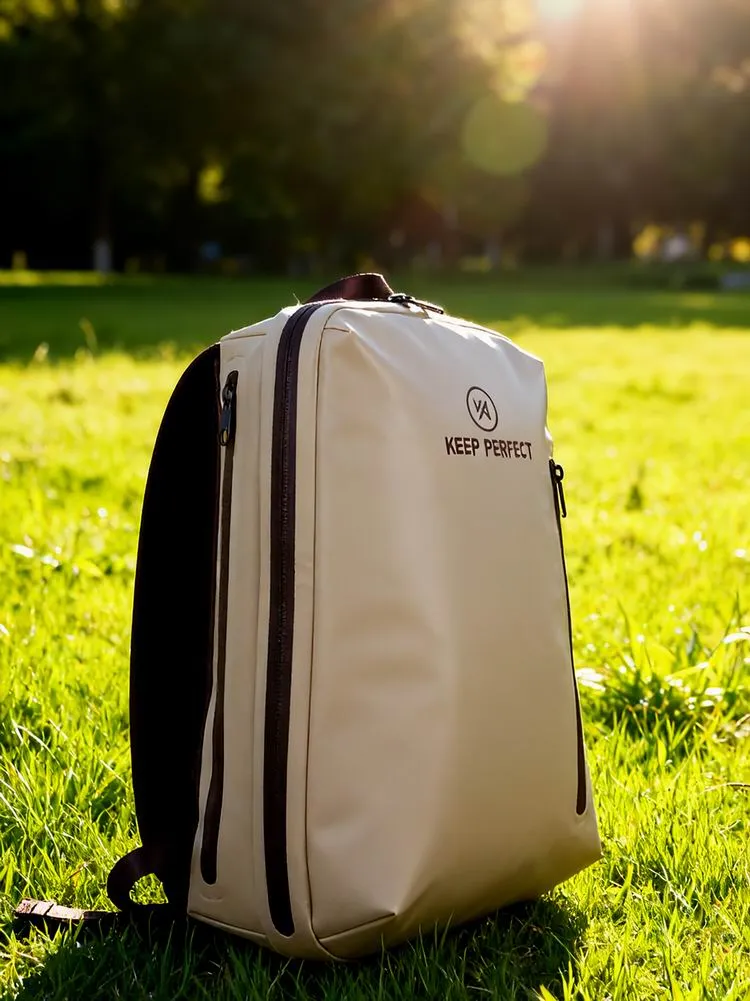
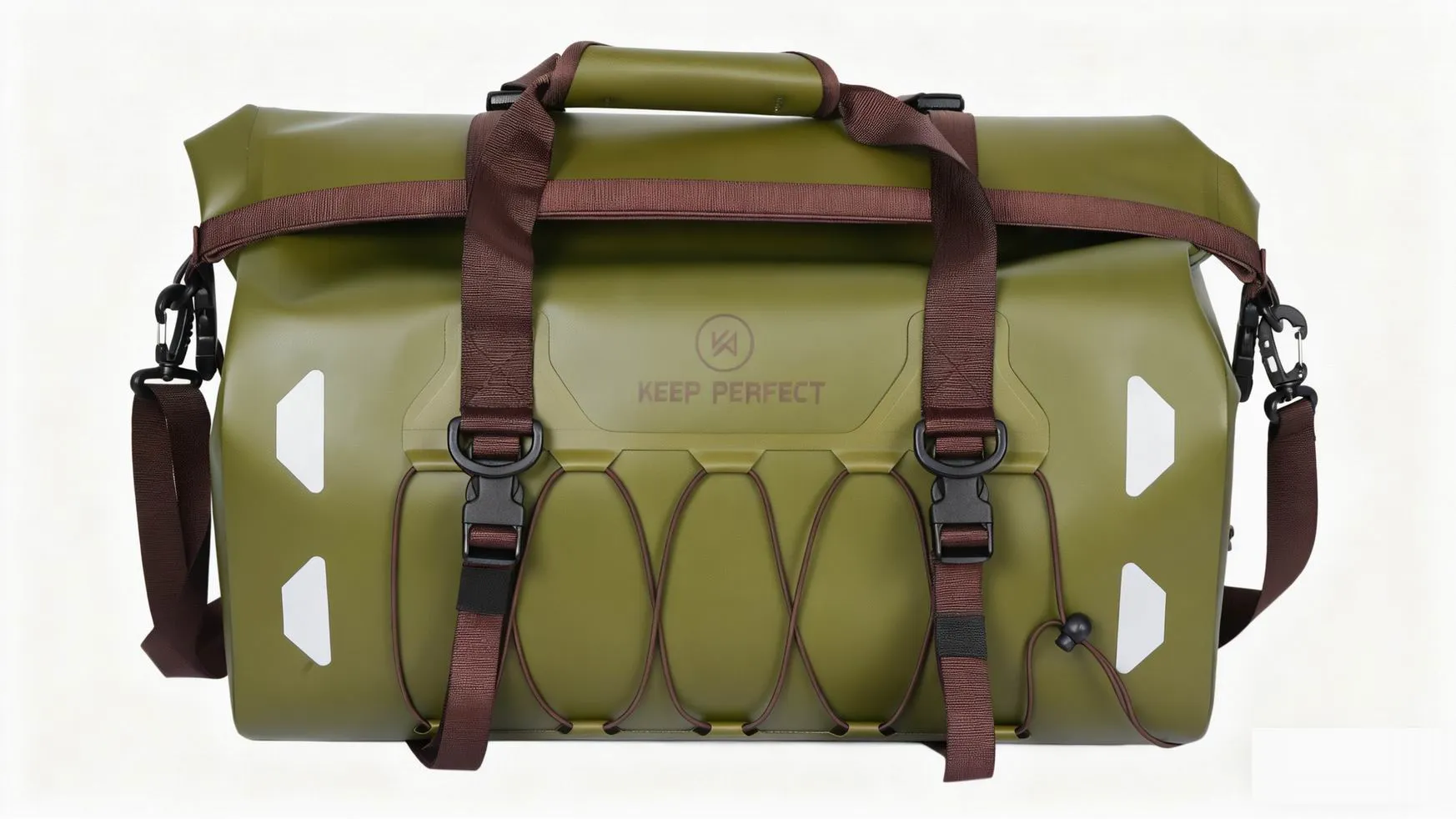
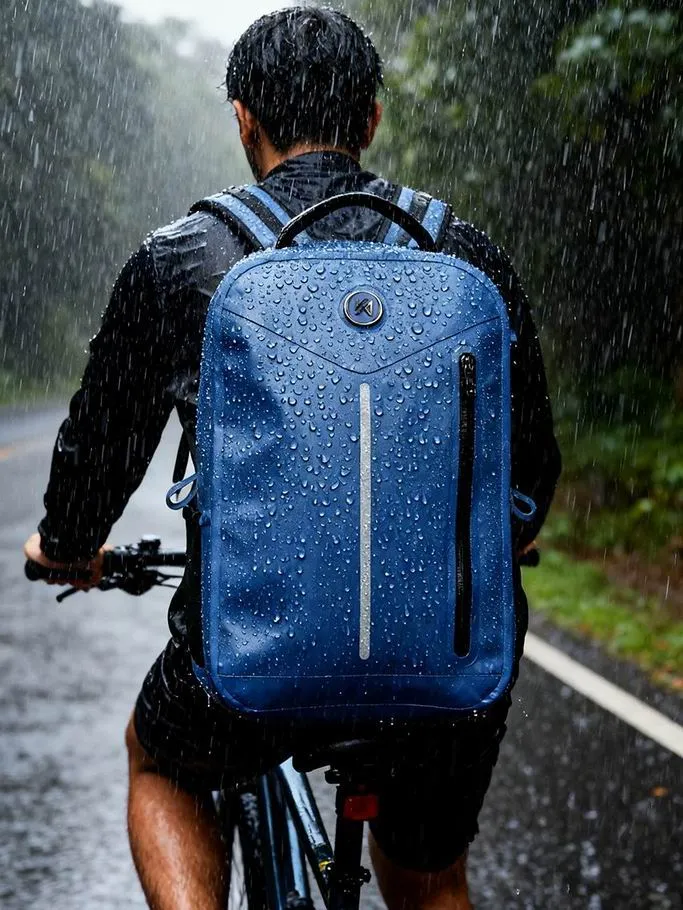
OEM vs ODM in one honest paragraph each
OEM (Original Equipment Manufacturing): you are the designer. You deliver a tech pack — dimensions, materials, construction details, artwork, bill of materials — and the factory engineers patterns, cuts weld dies, samples and produces exactly that. You own the pattern, the design and the tooling you paid for. The factory is your production arm. Development cost runs $300–$1,500 per style and 2–4 weeks before first sample, but the product is uniquely yours and defensible.
ODM (Original Design Manufacturing): the factory is the designer. You browse a catalog of platform designs whose patterns, weld dies and material specs already exist, then customize color, fabric weight, size, branding and features within the platform's structure. First samples ship in 6–10 working days with zero development cost. The trade: the platform design remains factory IP, and nothing stops a competitor from customizing the same silhouette — your differentiation lives in color, branding, materials and channel, not in the shape itself.
The industry quietly runs on ODM. Walk any outdoor trade show and you will see the same roll-top platforms under fifteen brand names, differentiated by film color, patch shape and pocket configuration. That is not cheating — it is how the category reaches retail price points. The strategic question is never "ODM or OEM forever" but "which SKUs justify OEM investment."
The waterproof-bag-specific cost difference: weld dies
In ordinary cut-and-sew bags, OEM development is mostly pattern-making labor. Waterproof bags add a hard tooling layer: every unique welded panel shape needs a machined weld die — a brass or aluminum electrode that shapes the high-frequency weld. A simple dry bag needs 3–5 dies ($240–$600); a structured backpack with shaped back panel, pockets and base needs 8–15 dies ($800–$2,500). These are one-time costs, yours to keep, but they make full OEM meaningfully more expensive here than in sewn categories.
ODM platforms carry amortized dies: the factory cut them years ago for the platform, so your customization inherits proven tooling at zero cost. This is why ODM sampling is 6–10 days while OEM first samples run 2–4 weeks — the OEM clock is mostly die machining and pattern iteration, not sewing. It is also why ODM platforms weld reliably from unit one: the dies have tens of thousands of cycles of process refinement behind them.
| Cost element | OEM (your design) | ODM (factory platform) |
|---|---|---|
| Pattern development | $150–$600 per style | $0 — exists |
| Weld dies | $240–$2,500 per style (yours) | $0 — amortized |
| First sample cost | $100–$300 per iteration | $60–$150, usually credited |
| First sample time | 2–4 weeks | 6–10 working days |
| Design IP | Yours | Factory's; you own your branding |
| MOQ | 500 per design | 500 per design/colorway |
Lead time compared: concept to container on both tracks
The timeline gap is entirely in development; production is identical. OEM: tech pack review 2–3 days, pattern and die work 2–3 weeks, first sample, one to three revision rounds at 7–12 days each (most OEM styles need two), then golden sample, then bulk 35–50 days. Realistic concept-to-ship on a first OEM style: 3.5–5 months. ODM: platform selection and customization spec 1–3 days, sample 6–10 working days, usually one revision, then the same 35–50 day bulk. Concept-to-ship: 2–2.5 months.
Reorders compress everything. Once an OEM style has a golden sample and archived dies, reorders skip development entirely — sample-free, straight to bulk at 35–50 days, sometimes 30 for repeat configurations. ODM reorders behave the same. The development penalty is paid once per style, which is why experienced buyers amortize OEM investment across multi-year SKU lifecycles rather than judging it against the first order alone.
| Phase | OEM first style | ODM first order | Reorder (both) |
|---|---|---|---|
| Development | 2–4 weeks | — | — |
| Sampling | 2–3 rounds, 2–5 weeks | 1–2 rounds, 1–3 weeks | Skip or 1 confirm sample |
| Bulk production | 35–50 days | 35–50 days | 30–50 days |
| Total concept-to-ship | 3.5–5 months | 2–2.5 months | 5–8 weeks |
IP ownership and the question buyers forget to ask
On OEM, the IP answer is clean: your tech pack, your pattern, your dies (you paid for them), your design. Register the design in your key markets if it is genuinely novel — China design patents cost a few hundred dollars and are the enforcement currency that actually matters at the source. Our OEM agreements assign all design rights and tooling ownership to the buyer explicitly, in writing, before pattern work starts.
On ODM, ask the question most buyers skip: what exactly do I own? The honest answer is your branding layer — logo, colorway choices, any unique components you tooled — while the platform pattern stays with the factory. That is usually fine; fashion and outdoor categories run on shared silhouettes. It is not fine if your entire pitch is a unique shape. Also ask whether your customization can be locked: many factories (us included) will agree in writing not to offer your specific colorway-plus-branding configuration to direct competitors in your channel — a middle layer of protection short of full design exclusivity.
Full platform exclusivity — buying out an ODM silhouette for your exclusive use — is negotiable on volume commitments (typically 10,000+ pieces annually) and priced as a tooling-plus-opportunity fee. For a related comparison of branding-layer models, see our private label vs white label breakdown.
Quality risk compared: where each model fails
ODM failure modes are selection failures: choosing a platform whose materials or construction don't match your use case (a light-duty pouch platform sold as an expedition dry bag), or over-customizing a platform past its engineering envelope — adding 40% more volume to a pattern changes weld stress distribution, and a good factory will refuse rather than ship a failure. The platform's proven dies and process mean quality risk at production is genuinely low.
OEM failure modes are development failures: an untested seam geometry that welds in the sample room but peels at cycle 5,000 in the field; a spec that names a fabric but not a laminate process; tolerances never written down. The mitigation is test discipline at golden-sample stage — hydrostatic head, weld peel strength (we log ≥8 N/25mm on TPU weld seams), cyclic flex testing — before bulk is authorized. Our AQL inspection guide covers how those tests roll into bulk QC under AQL 2.5.
Neither model is inherently higher quality. ODM inherits proven engineering; OEM done with proper validation equals or exceeds it. The dangerous quadrant is OEM done cheap: skipping test rounds to save $400 in sampling, then discovering weld failures in a 5,000-piece shipment. That specific saving has bankrupted more than one first-time importer.
Decision matrix: five questions that pick your model
Strip away the theory and the choice reduces to five questions about your business. Answer them honestly and the model picks itself.
- Is your differentiation the product itself or the brand/channel? Brand and channel → ODM. Product innovation → OEM.
- What is your launch deadline? Under 3 months → ODM, no debate. 5+ months of runway → OEM viable.
- What is your development budget? Under $1,000 per style → ODM. $2,000–$5,000 per style with a multi-year SKU plan → OEM.
- What volume do you forecast per SKU annually? Under 2,000 pieces → ODM almost always. 5,000+ → OEM economics start winning.
- Does your market reward novelty (crowdfunding, premium DTC) or reliability (retail, promo, team programs)? Novelty → OEM. Reliability → ODM.
The portfolio answer most scaling brands land on: ODM for 60–80% of the line (fast, safe, margin-protecting), OEM for the one or two hero SKUs that carry the brand story. Launch the hero with the campaign, let ODM platforms fill the catalog and fund the next development cycle.
The hybrid path: modified ODM as a stepping stone
Between the poles sits the most-used and least-discussed option: modified ODM. Take a factory platform and change one structural element — a different pocket layout, an added laptop sleeve, resized dimensions within 15–20% of the platform, a hybrid closure. You inherit most of the proven tooling, pay for only the new dies your modification needs ($80–$400 typically), and land samples in 2–3 weeks instead of 4.
Modified ODM suits the brand that has validated a market with pure ODM and now needs visible differentiation without full OEM risk. The pattern iterations are small, the weld engineering is mostly proven, and the SKU still gets to market in under 3 months. A large share of what looks like "OEM" on retail shelves is actually this.
Plan the progression explicitly with your factory: ODM year one to validate, modified ODM year two on the winning silhouettes, full OEM year three on the hero. Factories plan capacity around buyers with roadmaps like this — and a stated roadmap changes your pricing conversation more than any negotiation tactic, because a three-year plan is worth more than a 5% discount fight.
What the factory needs from you on each track
OEM readiness means a real tech pack: dimensioned drawings, material callouts with weights and coatings (e.g. 420D nylon, 0.35 mm TPU double-sided laminated), construction details (weld widths, stitch specs where hybrid), artwork files per our logo application specs, and a target FOB price. Missing any of these turns development into paid guesswork. If you cannot produce a tech pack, our concept-to-production guide and design file submission guide walk the document structure, and our engineering team can build the tech pack with you from a reference sample or sketches — the collaborative design model.
ODM readiness means decisions, not documents: platform selection, your Pantone film colors per our color matching guide, logo method and placement, feature toggles (pocket options, valve, strap configuration), and packaging. A buyer who can make those five decisions in one email thread gets a sample in 6–10 days; one who discovers preferences through four sample rounds gets one in six weeks.
- OEM inputs: tech pack, artwork, target price, test requirements, timeline.
- ODM inputs: platform choice, colors, logo, feature toggles, packaging.
- Both: written approval discipline — golden sample sign-off before bulk, always.
- Both: one decision-maker on your side. Committees add two weeks per round.
Run both tracks with one factory
QUANZHOU JUNYUAN BAGS runs OEM development, ODM platforms and modified ODM in the same facility — 4,950 m², SGS-verified, 7 lines, 149 machines, 137 staff, 200,000 pieces monthly since 2014. The same welding teams and AQL 2.5 QC protocol cover all three tracks, and reorders on either model run 30–50 days with archived tooling and drawdown cards.
MOQ 500 per design, samples 6–10 working days (ODM) or 2–4 weeks (OEM development), bulk 35–50 days, 30/70 T/T, FOB Xiamen, 100+ countries served. Send your tech pack for an OEM quote, or ask for the platform catalog and have an ODM sample moving this week — the inquiry form reaches an engineer, not a bot. For the factory-side view of either track, our production team shows the full process.
Frequently Asked Questions
Q1. What is the difference between OEM and ODM waterproof bags?
OEM: the factory builds your design from your tech pack — you own the pattern and tooling, development takes 2–4 weeks and $300–$1,500. ODM: you customize the factory's existing platform designs with your colors and branding — samples in 6–10 days, zero development cost, but the platform design stays factory IP.
Q2. Which is cheaper, OEM or ODM?
ODM is cheaper to launch: no pattern development ($150–$600), no weld dies ($240–$2,500), lower sampling cost. OEM unit prices in bulk are similar — the difference is the one-time development investment, which amortizes to under $0.50 per unit only above roughly 5,000 pieces per style.
Q3. How long does OEM development take for a waterproof bag?
Plan 2–4 weeks to first sample (pattern plus weld die machining), one to three revision rounds at 7–12 days each, then 35–50 days bulk. Realistic concept-to-ship on a first OEM style is 3.5–5 months.
Q4. Can a competitor buy the same ODM design I sell?
The same platform silhouette, yes — that is the ODM trade. Your colorway, branding and materials differentiate you, and factories will typically agree in writing not to replicate your exact configuration for direct competitors in your channel. Full platform exclusivity is negotiable at 10,000+ pieces annually.
Q5. Who owns the weld dies on an OEM project?
You do — dies are invoiced as your tooling, documented in the agreement, and released to you on request. They stay archived at the factory for production use, which is standard practice, but ownership and portability are yours in writing.
Q6. Is ODM quality worse than OEM?
No — ODM platforms are usually the most reliable products a factory makes, because their dies and processes have been refined over tens of thousands of units. Quality failures come from mis-selecting a platform for your use case, or from OEM development that skips validation testing.
Q7. What is modified ODM?
A factory platform with one structural change — resized dimensions, different pocket layout, added compartment. You pay only for the new dies your change requires ($80–$400), keep most proven tooling, and sample in 2–3 weeks. It is the standard stepping stone between pure ODM and full OEM.
Q8. What do I need to provide for an OEM project?
A tech pack: dimensioned drawings, material and coating specs, construction details, artwork files, target FOB price and test requirements. If you cannot produce one, factories with engineering teams (including us) can build it with you from reference samples or sketches.
Q9. Can I start ODM and switch to OEM later?
That is the recommended path: validate the market on ODM platforms, then invest OEM development budget in the silhouettes that actually sold. Your ODM sales data tells you exactly which SKU deserves the $2,000–$5,000 development investment.
Q10. Does MOQ differ between OEM and ODM?
No — MOQ 500 per design on both tracks. Development cost is what differs, not order minimums. Below 500, neither model is economic for welded waterproof construction.
Q11. How do I protect my OEM design?
Written IP assignment in the manufacturing agreement, tooling ownership documented, and design registration in key markets — China design patents (a few hundred dollars) are the practical enforcement tool at the manufacturing source. NDAs with serious factories are standard; enforceability comes from the contract quality, not the NDA label.
Q12. What tests should an OEM waterproof bag pass before bulk?
Hydrostatic head on the laminate, weld peel strength (we log ≥8 N/25mm on TPU seams), cyclic flex on stress points, and a full submersion test on the golden sample. These roll into bulk QC under AQL 2.5 inspection.
Q13. Why is OEM more expensive for waterproof bags than regular bags?
Welded construction needs a machined weld die ($80–$400) for every unique panel shape — 3–5 dies for a dry bag, 8–15 for a structured backpack. Cut-and-sew categories have no equivalent tooling layer.
Q14. Can one factory handle both my OEM and ODM lines?
Yes — and it is the efficient setup: one QC protocol, one shipping relationship, one payment history. About 60% of our programs are ODM adaptations and 40% OEM developments, frequently for the same clients.
Q15. What happens to my OEM dies and patterns if I change factories?
They are your property. On a documented OEM program, dies, patterns and archived drawdown cards transfer to you or your new factory on request — this is exactly why tooling ownership must be written into the manufacturing agreement before development starts. Buyers who skip that clause discover at exit that their "own" design is effectively hostage. We put the clause in by default because it costs us nothing and it is the honest structure: you paid for the tooling, you own the tooling.
People Also Ask
Is OEM or ODM better for a new bag brand?
ODM for most new brands: zero development cost, samples in 6–10 days, launch in ~2 months. Reserve OEM for hero SKUs once sales data shows which silhouettes deserve the $2,000–$5,000 development investment.
How much does it cost to develop a custom waterproof bag (OEM)?
$300–$1,500 per style in pattern work, sampling and weld dies, with dies running $240–$2,500 depending on panel complexity. Concept-to-ship takes 3.5–5 months on a first style.
Do ODM products have quality problems?
ODM platforms are typically the most reliable items a factory makes — proven dies, refined processes, thousands of units of history. Quality risk comes from choosing the wrong platform for your use case, not from the ODM model itself.
Can I get exclusivity on an ODM design?
Configuration exclusivity (your colorway + branding) is usually granted in writing at normal volumes; full platform exclusivity is negotiable at 10,000+ pieces annually, priced as tooling plus opportunity cost.
What is the MOQ for OEM waterproof bags?
MOQ 500 per design — the same as ODM. The difference between the models is one-time development cost and timeline, not order minimums.