White label means buying a factory's finished stock product and adding your label — fastest (2–3 weeks to market), cheapest entry, but the product itself is identical to every other buyer's. Private label means the factory builds the product to your specification — your colors, materials, features and branding — at MOQ 500 with 6–10 day sampling, giving you a product competitors cannot simply re-order. In waterproof bags the practical line is this: white label gets you a logo on a stock dry bag at $0.30–$0.50 per unit in branding cost; private label gets you a Pantone-matched, feature-specified product at $3.20–$14.50 FOB that builds real brand equity. The choice maps to your channel and ambition, and this guide prices both paths with 2026 production numbers. For the broader context of how branding models fit manufacturing models, our OEM vs ODM comparison is the companion read.
Both models run at volume at QUANZHOU JUNYUAN BAGS — producing waterproof bags since 2014 in a 4,950 m² SGS-verified partner facility with 7 lines, 149 machines, 137 staff and 200,000 pieces of monthly capacity. White label programs ship from stock platforms with buyer branding; private label programs run the full custom pipeline at MOQ 500, samples in 6–10 working days, bulk 35–50 days, 30/70 T/T, FOB Xiamen, 100+ countries served.
Definitions without the marketing fog
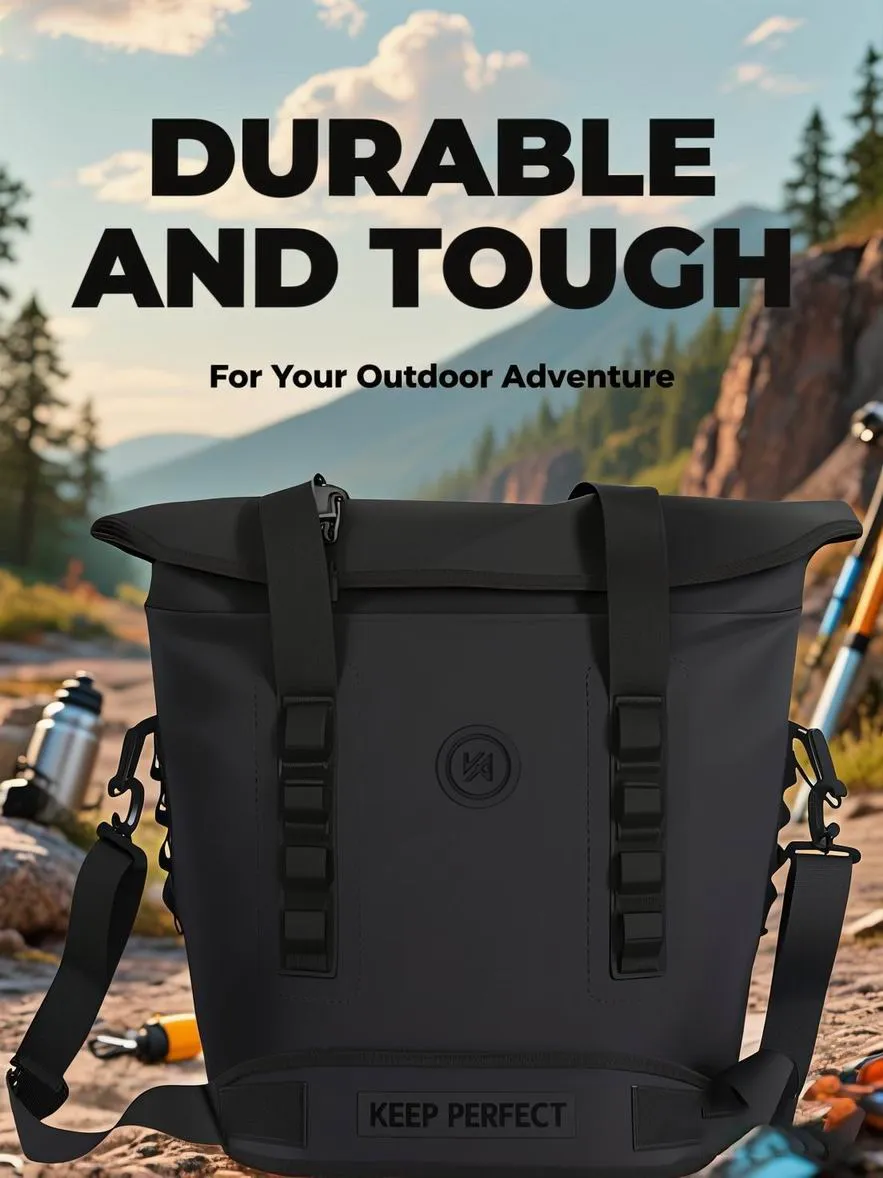
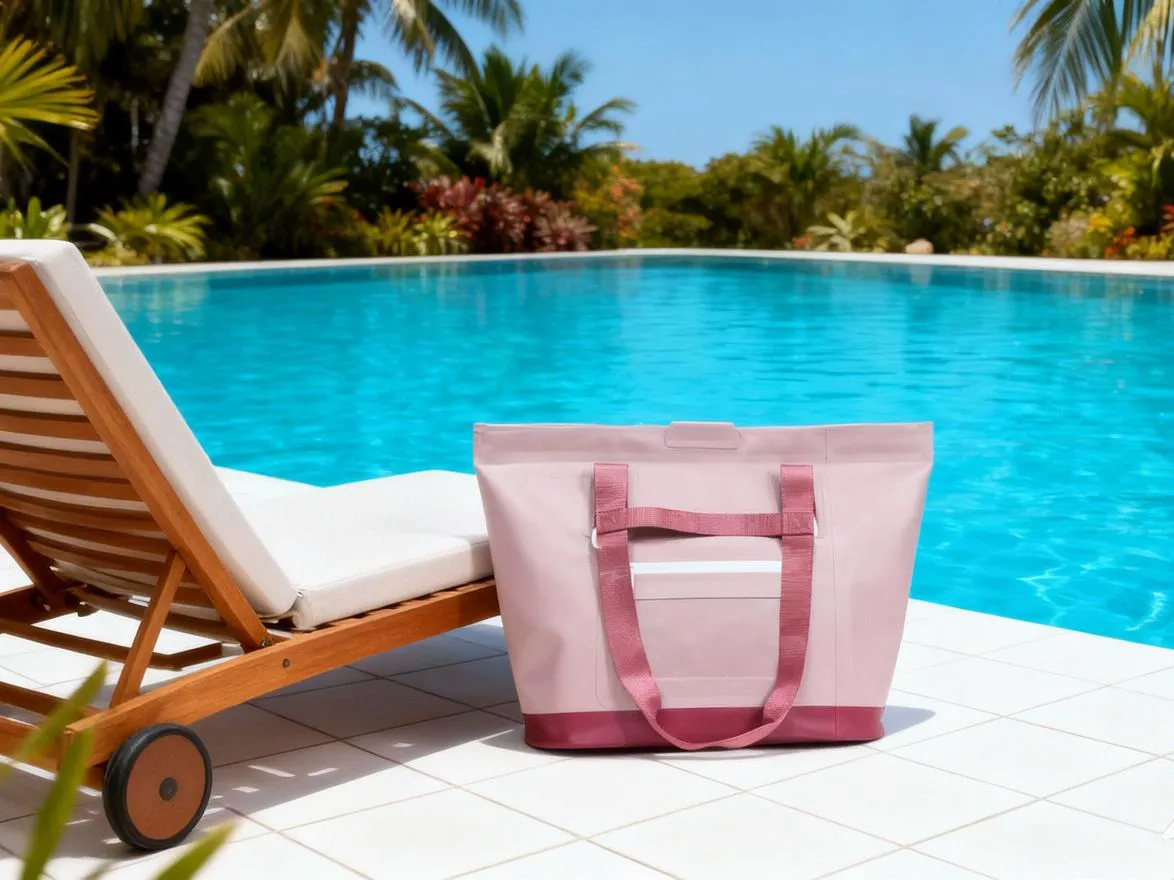
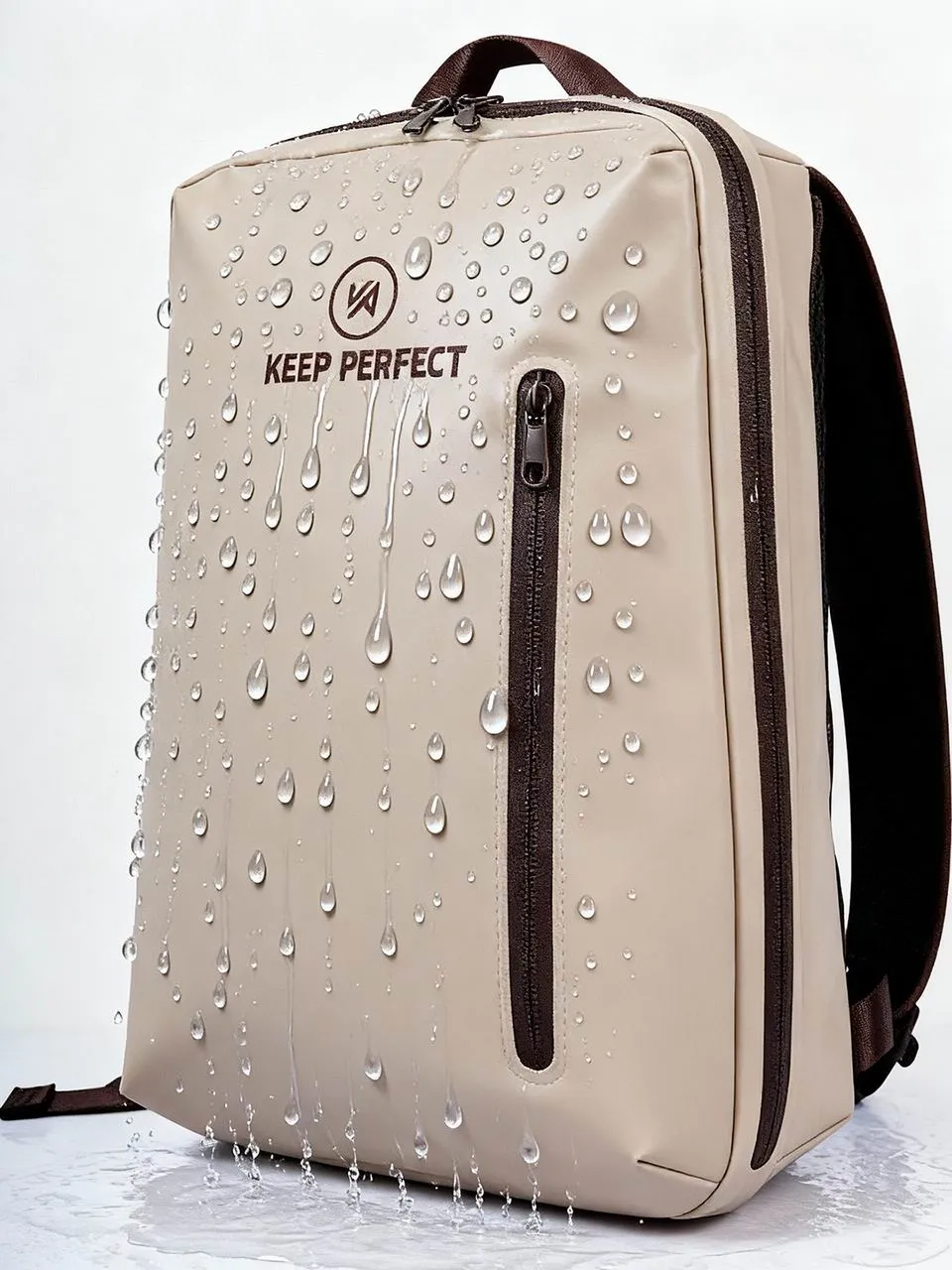
White label: the factory produces a standardized product continuously, holds it (or its components) in stock, and sells the identical item to multiple buyers. Your brand enters at the surface — a printed logo, a woven label, branded packaging. You control the brand layer; you control nothing whatsoever about the product layer. The bag a competitor receives is the very same bag, different ink.
Private label: the factory produces to your specification — a product that does not exist until you define it. Film tinted to your Pantone, fabric weight you select, dimensions you set, features you choose, branding integrated into construction (molded patches, branded zipper pulls, custom linings). The specification is your property; a competitor cannot phone the factory and order "the same one." Between the poles sits what the industry calls "modified white label" — a stock platform with one or two custom elements — which is where most successful brands actually start.
The confusion between the two costs buyers real money. Sellers marketing "white label with full customization" are describing private label with stock-platform pricing, and the gap between those expectations surfaces at reorder time, when the buyer who thought they owned a product discovers they own only a logo position.
Customization depth compared, layer by layer
| Product layer | White label | Private label |
|---|---|---|
| Film/fabric color | Stock colors only (5–8 options) | Any Pantone, Delta-E ≤1.5 |
| Material spec | Fixed (factory standard) | Your choice: PVC, TPU 420D–840D, gauge |
| Dimensions/capacity | Fixed platform sizes | Any dimension, new patterns at OEM level |
| Features | Platform standard | Pockets, valves, sleeves, closures to spec |
| Branding | Print/label on surface | Print, patch, embroidery, branded hardware, woven-in |
| Packaging | Sticker/insert on stock box | Full retail program: printed polybag, hangtags, boxes |
| IP ownership | None — factory product | Your spec; tooling yours at OEM level |
Read the table as a map of where brands die. White label brands die in the rows where they have no control: a competitor undercuts with the identical product, and the only lever left is price. Private label brands survive because differentiation lives in the product itself — the color, the feature set, the hand-feel — where copying requires the competitor to invest what you invested.
The color row deserves emphasis because it is the cheapest defensible move. A custom Pantone film color at $0.10–$0.25 per unit per our color matching economics makes your product photograph differently, shelve differently and review differently — the single highest-ROI step from white label toward private label.
Cost and MOQ: the real 2026 numbers
White label economics: stock dry bags and backpacks with your printed logo run $2.80–$8.50 FOB depending on type, at the same MOQ 500 but with zero development cost — the factory is finishing stock, not building product. Add $0.30–$0.50 per unit for a one-color print and $0.20–$0.40 for stock-box branding. Total entry for a first order can sit under $1,500. That is the genuine appeal: market testing with almost no capital at risk.
Private label economics: MOQ 500 per design, FOB $3.20–$14.50 by product type per our full cost breakdown, plus one-time setup costs — custom color $150–$300 (waived at 1,000+), molds and screens $80–$300, sampling $60–$150 credited against bulk. A realistic first private label order of a 25 L backpack: 500 × $7.80 + $600 in setups ≈ $4,500 all-in. That is 3× the white label entry ticket, buying a product that is actually yours.
| Dimension | White label | Private label |
|---|---|---|
| Typical MOQ | 500 pcs (stock, no setup) | 500 pcs per design |
| 25 L backpack FOB | $5.50–$8.50 | $6.80–$9.50 (custom spec) |
| Branding cost/unit | $0.30–$0.90 | $0.60–$2.50 (integrated) |
| One-time setup | $0–$100 | $300–$750 |
| First-order all-in (500 pcs) | $1,650–$4,900 | $4,400–$5,400 |
| Time to market | 2–3 weeks | 6–10 weeks |
Margin and defensibility: why the cheap entry can cost the brand
Run the retail math on a $24.99 dry bag. White label: landed cost $5.20, marketplace fees and ads $7.80, contribution $11.99 — until a competitor lists the identical bag at $22.99 with the same reviews structure, because the product is the same and the comparison is instant. Price follows the floor. Private label: landed cost $6.40, same fees, contribution $10.79 — but the comparison set is different. Your Pantone colorway, your valve placement and your pocket layout do not appear in the competitor's listing, so the price comparison is yours to frame. Differentiated products hold price; undifferentiated products donate margin to the marketplace algorithm.
The review asset point is underrated. On marketplaces, reviews attach to the listing, not the product — but when the identical white label product appears under ten seller accounts, review-building becomes a shared, polluted asset. Your 2,000 reviews legitimize the product; the factory's next white label customer rides them with a cloned listing. Private label reviews compound on a product only you sell.
None of this makes white label wrong. It makes white label a tool with a defined job: validating demand, learning a channel, generating cash flow to fund the private label transition. Brands that stay white label past validation are running a promotions business, not building a product company.
Time to market and the validation sequence
White label speed is real: select from stock, approve a logo proof in 24–48 hours, and branded units ship in 2–3 weeks including production finishing. For a seasonal window — summer beach programs, festival merchandise, a corporate event with a hard date — white label is often the only model that fits the calendar.
Private label runs 6–10 weeks spec-to-ship: 24–48 hour quotation, 6–10 working day sampling per our sampling timeline, one revision round, then 35–50 days bulk. Programs that need both speed and differentiation use the sequenced play: launch white label in week 3 to catch the season and validate price points, run private label development in parallel, and swap the listing to the custom product in week 10 with reviews and ranking intact. The marketplace never sees a gap; the product underneath becomes defensible.
A related acceleration: modified white label — a stock platform with one custom element, usually film color or a pocket change — ships in 4–5 weeks at a $150–$400 setup cost and closes half the defensibility gap at a third of the private label timeline. It is the underused middle path, and factories with deep platform catalogs can map it in one conversation.
Which model for which channel
| Channel | Recommended model | Why |
|---|---|---|
| Amazon/marketplace launch | White label → private label swap | Validate with speed, defend with product |
| Corporate gifting / events | White label or modified | Hard dates, logo-centric, price-driven |
| DTC brand site | Private label | Your site, your story — product must carry it |
| Retail chains | Private label | Buyers demand exclusivity and spec sheets |
| Team/organization programs | Modified white label | Custom color + logo, mid timeline, mid MOQ |
| Crowdfunding | Private label (OEM level) | Backers fund novelty — stock products get exposed |
Two rows deserve notes. Retail chains: a chain buyer's first filter is "can any of my competitors order this exact product" — white label fails that filter in the first meeting, and retail private label programs also demand compliance documentation (REACH, Prop 65, CPSIA where applicable) that only spec-controlled production can certify. Crowdfunding: backer communities reverse-image-search products within hours of launch, and a white label product presented as an innovation is a campaign-ending comment thread.
Compliance, certification and who owns the paperwork
White label compliance is inherited: the factory's existing test reports cover the stock product, and your brand rides on them. That works for general sales but breaks when a retailer or marketplace asks for certification in your brand's name — stock reports name the factory's product code, and re-testing a stock product for your brand runs $400–$1,200 per standard if the paperwork must show your SKU.
Private label compliance is built-in: the product is specified by you, so material certifications (REACH SVHC, Prop 65 phthalate screening, food-contact grades for cooler liners per FDA material guidance) are selected at spec stage and tested against your SKU from the start. For regulated channels — children's products under CPSIA, EU retail under REACH — private label is usually the only compliant path at audit depth.
The practical question to ask any white label supplier: "Whose name is on the test report, and can I get a copy before ordering?" The practical question for private label: "Which standards does my channel require, and are they in the spec sheet?" Our compliance and regulatory guide maps the standards by market.
The transition playbook: white label today, private label next quarter
The brands that scale follow a repeatable sequence. Phase one (weeks 1–4): launch white label on the target channel, one or two SKUs, learning price elasticity and review velocity with under $2,000 at risk. Phase two (weeks 4–10): use the sales data to specify the private label product — the winning size gets custom color, the most-requested feature gets engineered in, the branding upgrades to integrated methods. Phase three (week 10+): swap listings, retire the stock product, and reorder the custom SKU at scale pricing.
- Validate: white label, 500 units, learn the channel with entry models around $1,400–$2,000.
- Specify: sales data picks the size, color and features — not preference.
- Sample: 6–10 days, $60–$150 credited against bulk.
- Swap: listing continuity preserved, product defensibility acquired.
- Scale: reorder at 1,000–3,000 pieces, 8–24% unit savings per the quantity curve.
Run the sequence with one factory and the transition costs almost nothing: the white label stock product and the private label custom product share materials, lines and QC, so the swap introduces no new supplier risk. For the factory-side mechanics of how a validated product becomes a repeating bulk program, our production team documents the pipeline.
Start on either path
White label inquiry: browse the platform catalog, pick your models, send your logo — branded stock ships in 2–3 weeks at MOQ 500 with zero setup cost and zero development timeline. Private label inquiry: send your spec or reference sample, receive a full engineered quotation within 24–48 hours, sample in hand in 2–3 weeks, bulk 35–50 days after approval at MOQ 500.
QUANZHOU JUNYUAN BAGS — both models under one roof since 2014: 4,950 m² SGS-verified facility, 7 lines, 149 machines, 137 staff, 200,000 pieces monthly. 30/70 T/T, FOB Xiamen, 100+ countries. Tell us your channel and timeline, and we will tell you honestly which model fits — including when the honest answer is the cheaper one. Twelve years of watching brands launch both ways says the model matters less than the honesty of the sales data you choose it with.
Frequently Asked Questions
Q1. What is the difference between private label and white label bags?
White label: a factory's stock product with your logo added — identical units sell to multiple buyers. Private label: a product built to your specification (colors, materials, features, branding) — the spec is yours and competitors cannot reorder it. White label is faster and cheaper to enter; private label builds defensible brand equity.
Q2. Which is cheaper to start, white label or private label?
White label: entry orders from roughly $1,650 at MOQ 500 with near-zero setup. Private label: a realistic first order runs $4,400–$5,400 all-in at MOQ 500 plus $300–$750 in one-time setups — buying you a product that is actually yours.
Q3. How long does each model take to reach market?
White label: 2–3 weeks including logo finishing. Private label: 6–10 weeks — 24–48 hour quotation, 6–10 day sampling, one revision, 35–50 days bulk. The sequenced play (launch white label, swap to private label in week 10) gets both speed and defensibility.
Q4. Can I switch from white label to private label later?
Yes — that is the recommended path. Validate demand and price points with a white label entry order, then specify the custom product from real sales data and swap the listing. Done with one factory, the transition adds no new supplier risk.
Q5. Do I own the design on a private label product?
Your specification is yours: colors, dimensions, features and branding. At full OEM level (custom patterns, your weld dies), the design and tooling are documented as your property. Platform-based private label shares the base pattern with the factory while your configuration stays exclusive by agreement.
Q6. Why do competitors sell a bag identical to mine?
You are on a white label product — the factory sells the same stock unit to every buyer. The only exits are price (a race down) or differentiation: custom color, features and integrated branding, i.e. moving to private label.
Q7. What is modified white label?
A stock platform with one custom element — usually Pantone-matched film color or a pocket change. It ships in 4–5 weeks at $150–$400 setup, closing half the defensibility gap at a third of full private label cost and timeline.
Q8. Which model do retail chains require?
Private label, effectively: chain buyers filter out any product a competitor can reorder, and retail compliance documentation (REACH, Prop 65, CPSIA) requires spec-controlled production with SKU-named test reports that stock products rarely have.
Q9. Is white label good enough for corporate gifts?
Yes — gifting is logo-centric, date-driven and price-sensitive, which is exactly white label's profile. Add a custom film color (modified white label) if the budget allows: recipients notice color, and it costs $0.10–$0.25 per unit.
Q10. What compliance paperwork comes with each model?
White label: inherited factory test reports on the stock product code. Private label: standards selected at spec stage and tested against your SKU — required for CPSIA children's products, EU REACH retail audits, and any channel demanding brand-named certification.
Q11. Can I get custom packaging on white label?
Partial — sticker or insert branding on stock packaging. Full retail packaging (printed polybag, hangtags, custom boxes) is a private label feature, adding $0.45–$2.60 per unit depending on spec.
Q12. What margins should I expect on each model?
White label dry bags: landed $5.20, retail $22–25, contribution ~$12 before ads — until identical listings compress price. Private label: landed $6.40, same retail, ~$10.80 contribution that holds because the product does not appear in competitors' comparison sets.
Q13. Does private label require OEM development?
No — platform-based private label (custom colors, materials and features on a proven base) needs no pattern development. Full OEM — new patterns and dies — is the deep end of private label, for hero SKUs and crowdfunding-grade novelty.
Q14. How do I choose between the two for Amazon?
Launch white label for speed and validation, then swap to private label at 8–12 weeks with reviews intact. Amazon rewards listing continuity; the product underneath can upgrade without resetting rank.
Q15. Can I mix both models in one product line?
Yes — and most mature brands do exactly that. Hero SKUs and retail-facing products run private label for defensibility and compliance; promotional items, event giveaways and channel-test SKUs run white label for speed and capital efficiency. The split typically settles around 70% private label by revenue and 30% white label by unit count. Running both with one factory keeps QC, payment terms and shipping consolidated, and lets you shift a SKU between models as its role in the line changes.
People Also Ask
Is private label better than white label?
For brand building, yes — private label gives you a product competitors cannot reorder, at MOQ 500 and 6–10 week timelines. For speed and validation, white label wins: 2–3 weeks to market with a $1,400–$2,000 entry order. Most scaling brands use both in sequence.
What is white label manufacturing?
A factory produces a standardized product and sells the identical item to multiple buyers, who add their own logo and packaging. You control the brand layer; the product layer is shared with every other buyer of the same stock item.
How much does private label manufacturing cost?
For waterproof bags: MOQ 500 per design, $3.20–$14.50 FOB per unit by type, plus $300–$750 one-time setups (color, molds, screens, sampling). A realistic first order of a 25 L custom backpack: about $4,500 all-in.
Can anyone sell the same white label product?
Yes — that is the defining trade-off. The factory sells the identical stock unit to all buyers; your only exclusivity is your logo placement. Differentiation requires moving to custom color, features or full private label.
What is the minimum order for private label bags?
500 pieces per design is the standard MOQ for custom waterproof bag production — the threshold where film tinting, weld-die setup and line changeover amortize economically. Stock programs skip development cost, so entry orders land around $1,650–$4,900 at the same MOQ 500.