Sampling is the stage that decides whether a custom waterproof bag program becomes a product or becomes an argument. It is also the most misunderstood stage, because buyers arrive expecting a sample to be a small version of the order — one bag, made quickly, to look at — when in a welded waterproof program it is something closer to an engineering proof: fixture built, weld parameters developed, seam validation run, branding applied, packaging tested. What you hold at the end of the first round is not a preview; it is evidence that the design can be repeated five hundred times without drifting.
This guide walks the sampling process round by round — what each round is for, what it realistically costs, what to inspect when the box arrives, how revisions work, when to escalate, and how to reach approval in two rounds instead of four. QUANZHOU JUNYUAN BAGS: custom waterproof bag production since 2014, 4,950 m² SGS-verified facility, MOQ 500 pieces per style. Our sampling runs 6–10 working days per round, and sample cost is credited against the bulk order once it is placed — because a sample is the first step of the order, not a separate business.
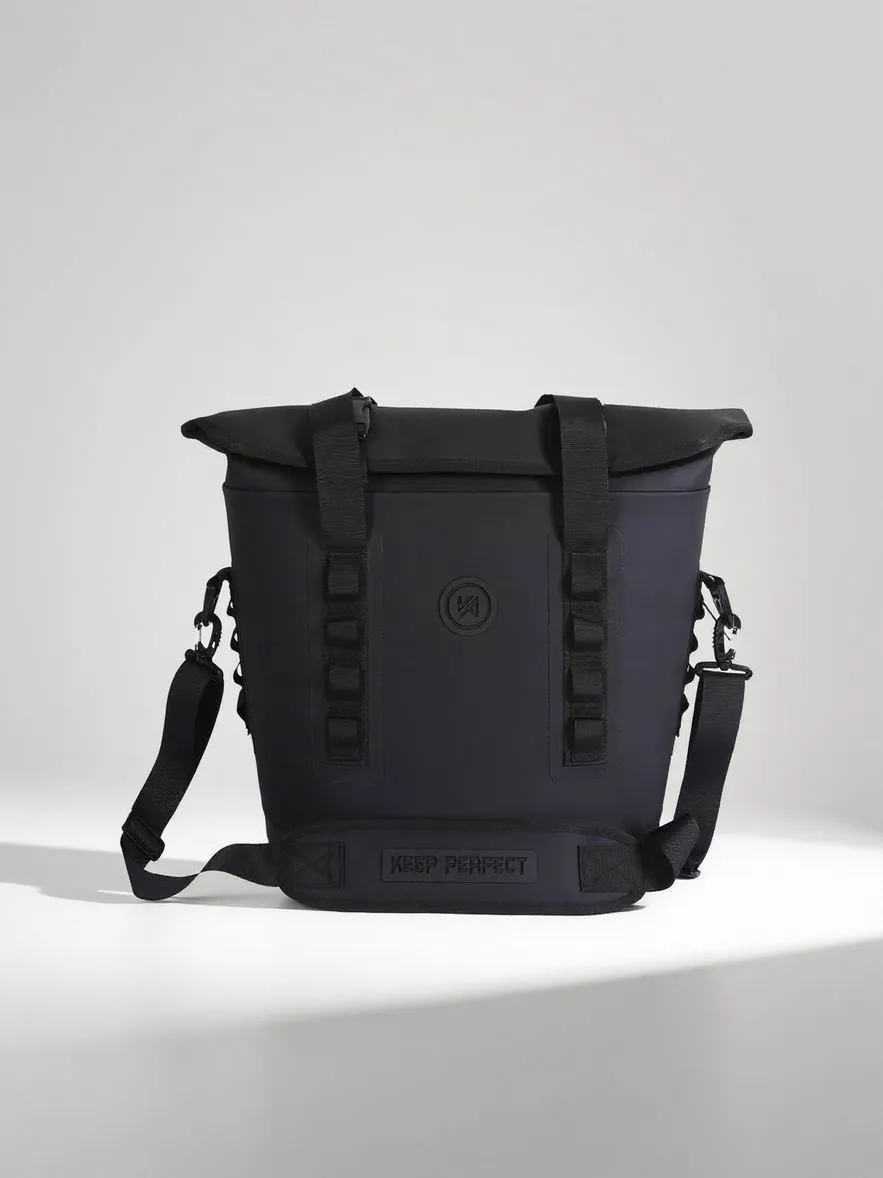
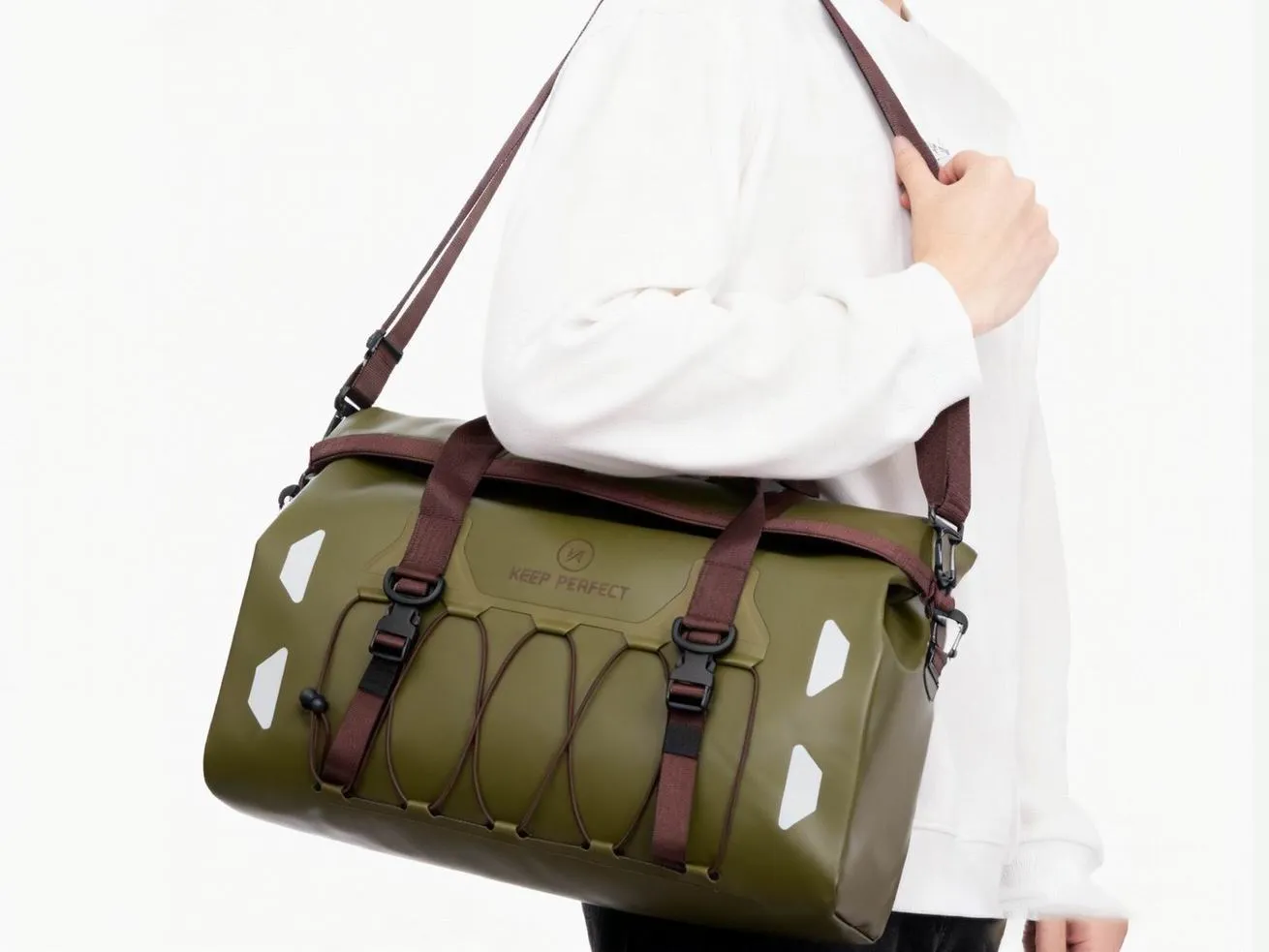
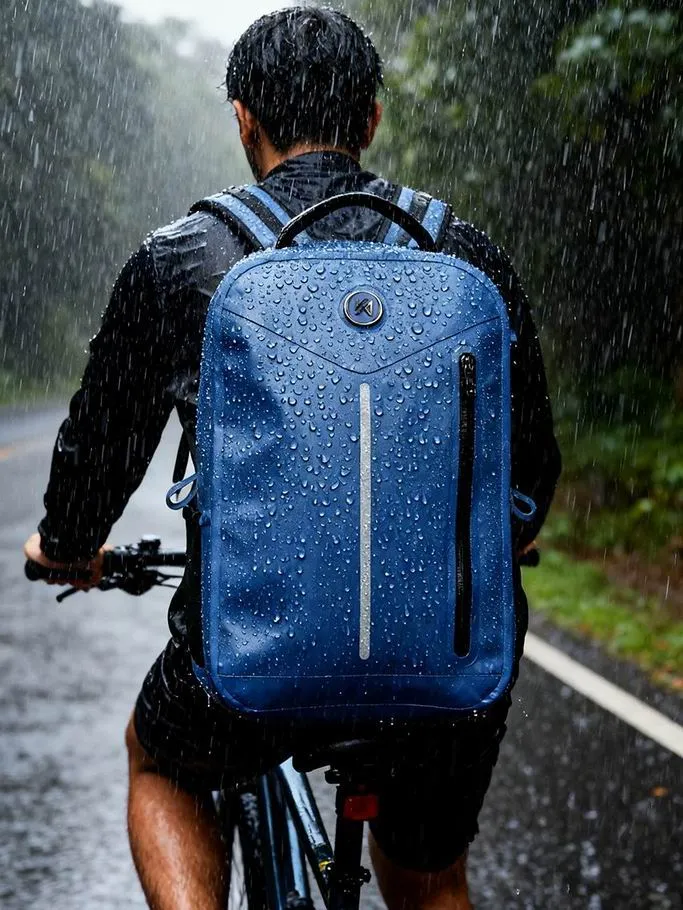
What a waterproof sample actually is
Most buyers enter custom waterproof bag sampling expecting a small version of the order, and prototype approval is the gate that ends it. In a sewn-bag program, a sample is mostly a cutting and sewing exercise: the pattern is made, panels are cut, a machinist assembles one unit, and the result tells you whether the design looks right. In a waterproof program, that work is only the second half. The first half is process development: the welding window for the chosen laminate must be found — temperature, pressure, dwell time and cooling — and held inside a narrow band where the seam fuses without scorching or under-bonding. A fixture must be built or adapted to hold that geometry. Tape width, temperature and roller pressure must be set for any sewn-taped seams. Only then does a unit get assembled.
This is why waterproof samples cost more and take longer than buyers expect from other categories, and why the cost is not padding. The parameter development done for your sample is reused for your production run — the settings sheet that comes out of sampling is the document the line runs against. Our HF welding guide explains the window in process terms, and the seam integrity testing guide explains how the resulting seam is verified. A sample without that verification behind it is a photograph of a bag, not a proof.
Round one: the prototype — what it is for and what it is not
The first round exists to answer structural questions, not aesthetic ones. Does the geometry work — does the roll-top close with the specified number of rolls, does the harness sit where the pattern intended, does the stated volume actually hold what it claims? Does the material behave — does the chosen laminate weld cleanly at the specified film thickness, does it crease acceptably at the fold points, does the coating show stress whitening? Do the closures function — does the specified zipper track smoothly, do the buckles release under load, does the valve seat? Those are the questions round one answers.
What round one is not for is final appearance. Color will be close but may not be the production dye lot; branding may be applied by a placeholder method if the production artwork is not yet approved; stitching and trimming will be competent but not cosmetically finished. Buyers who evaluate round one as a finished retail product request changes that would have resolved themselves, and burn a round doing it. Evaluate round one against a written criteria list — dimensions, function, material behavior, seam integrity — and save appearance judgment for round two.
Round two: the confirmation sample
Ask for the ingress evidence with the sample: any rating quoted should be supported by a report against the IEC 60529 test code, and where the claim carries retail risk, corroborated by an accredited laboratory such as SGS.
Round two is where the product becomes the product. Production-intent materials in the correct colorway, the real branding method applied from approved vector artwork, final hardware, correct thread and tape, and the packaging spec applied if retail packaging is part of the program. Round two should be indistinguishable from what will arrive in bulk, and if it is not, the buyer should ask why before approving. Any difference between the confirmation sample and the production plan is a difference that will show up five hundred times.
Round two is also where validation evidence is delivered: weld peel test results, leak-test method and outcome, and — if the program specifies a rating — the submersion or spray test that supports it. Buyers should receive that evidence with the sample, not on request. If a claim like IPX7 or IPX8 appears in the design brief, the confirmation sample is the unit it is tested against, and the IPX rating guide explains what the numbers do and do not mean. A supplier who cannot say how the sample was tested is telling you the claim is decorative.
Round three and beyond: what repeated rounds are telling you
A third round is normal when the design is genuinely complex, when the brief changed, or when a material substitution became necessary. A fourth round is almost always a process problem rather than a product problem: the brief was never fully decided, or the buyer is using samples to explore aesthetics that should have been settled before sampling began, or the factory is not capturing feedback precisely and each round fixes one thing while breaking another. Diagnosing which of those three is happening is more valuable than ordering another round.
The fix differs by diagnosis. Undecided brief: stop sampling and reconvene on a written spec — a week of decision-making is cheaper than a month of rounds. Aesthetic exploration: render the options digitally or approve a material swatch board instead of building units. Factory drift: demand a written change log — each round must list what changed from the previous one and what was verified — because a factory that cannot produce that log will keep re-breaking the same detail. Serious programs treat the change log as a deliverable equal to the sample itself.
What sampling costs and why it is credited
Sample pricing sits at two to five times unit production cost, and the multiple is honest because of the fixed-cost structure behind it: engineering time, fixture setup, one-off material cutting from a partial roll, hand assembly outside the line’s rhythm, and validation testing on a handful of units. A factory charging unit price for samples is either absorbing a loss to win the order — which means the relationship starts with an unpriced debt — or not doing the engineering, which means the sample tells you nothing about production.
Credit against bulk is the industry’s fair structure: the sample fee is credited against the production invoice once the order is placed, so the buyer pays for engineering once and the factory is not paid twice for work it reuses. Confirm the credit in writing — amount, whether it applies to one round or all rounds, and whether it survives if the order is delayed. Shipping is normally separate and buyer-borne via courier account or prepaid freight. The cost breakdown guide places sample cost inside the full program economics, where it is small relative to the decisions it protects.
How to inspect a sample: the checklist that catches real problems
- Dimensions against the spec drawing, filled and empty — a bag that measures correctly empty can deform under load.
- Volume check by water displacement or measured fill — stated liters are frequently optimistic across the industry.
- Every seam: visual uniformity of the weld, no scorching, no unbonded sections, no pinholes at terminations.
- Taped seams: full coverage over the stitch line, no lifted ends, no adhesive squeeze-out onto the face fabric.
- Leak test: fill, submerge or spray per the agreed method, then examine the interior and the seam lines.
- Hardware under load: buckles, ladder locks, strap adjusters and zipper pulls cycled ten times each.
- Roll-top function: roll count to seal, closure feel, and whether the seal holds after a drop test.
- Branding: placement against the approved drawing, color match, edge definition, and adhesion after flexing.
- Interior: liner orientation, pocket geometry, wet-dry separation if specified, and finishing of raw edges.
- Packaging: does the unit fit the specified carton and retail box, and does it arrive uncreased?
Run the checklist on the sample the day it arrives, not the day before the approval deadline. Photograph every finding, annotate the images, and send one consolidated feedback document rather than a thread of separate messages — consolidation is what makes a revision land in one round instead of two. Buyers who send feedback in a single numbered list consistently approve faster than buyers who send it in eleven emails, and the difference is weeks on the calendar described in the lead-time guide.
The pre-production sample and why it is not optional
The confirmation sample approves the design; the pre-production sample approves the process. Built on the production line, with production tooling, production materials from the bulk lot, and by line operators rather than sample technicians, it is the last checkpoint before cutting begins. It catches the failure mode that ruins programs: a design that can be made by a skilled technician in a sample room but not by a line at rate, or a material that behaves differently from the bulk roll than from the sample remnant.
Skip it only when the style is an exact repeat of a previously produced unit with unchanged materials — and even then, a first-piece check at line start is standard. For any new style, the pre-production sample costs one to three days and protects a 35–50 day production block and the entire order value. Its output should be a signed first-article record: the unit photographed, measured and tested, retained as the physical reference for the AQL inspection that will later judge the lot.
Sample approval as a contractual moment
Approval is not a formality; it is the reference point the whole order is measured against. Once a buyer signs off on a unit, that unit — ideally retained and photographed from six angles, with its measurements and test results written down — becomes the standard for production, for in-process checks and for final inspection. Any change requested after approval is a change to that standard, and it carries both cost and calendar consequences, because tooling, materials or parameters may have to be redeveloped.
Write the approval down: reference sample ID, date, revision number, materials called out, branding method, test evidence attached, and an explicit statement that production will match this unit. Then freeze the specification. The discipline that separates smooth programs from painful ones is not technical brilliance — it is the willingness to decide, record the decision, and hold it. Buyers who keep improving after approval do not get a better product; they get a later one, and usually a more expensive one.
When to escalate: signals that the program is off the rails
| Signal | What it usually means | What to do |
|---|---|---|
| Sample misses multiple spec dimensions | Pattern not built to the drawing | Request dimensioned measurement sheet |
| Weld appearance inconsistent seam to seam | Parameters not yet stable | Ask for peel-test data before approving |
| Same defect reappears after revision | Feedback not captured in writing | Demand a round-over-round change log |
| No test evidence offered with sample | Validation not performed | Specify method and require results |
| Material differs from approved swatch | Substitution without notice | Stop and confirm before next round |
| Dates slip without explanation | Queue or capacity problem | Ask for the actual line slot |
Two of those six are serious enough to stop the program: unexplained material substitution and missing validation. A substitution made silently — a different laminate, a different tape, a different zipper — invalidates everything the sample proves, because waterproof performance is a property of the exact material system, not of the shape. Missing validation means the waterproof claim has no evidence behind it at any stage. Both are worth a direct conversation rather than a revision request.
The healthy counter-signals are equally recognizable: a factory that sends measurements rather than opinions, that volunteers what it could not achieve and why, that asks for decisions rather than waiting for complaints, and that tells you which of your choices are driving cost or calendar. Those behaviors predict the production experience far better than the sample itself does.
Getting to approval in two rounds: the buyer’s side of the work
Two-round approval is achievable on most programs, and it is almost entirely determined by what the buyer does before the first sample is built. Arrive with a dimensioned drawing rather than a reference photo. Specify materials precisely — base fabric, coating or laminate, film thickness, denier — or explicitly accept the factory’s stock recommendation, which is faster than a vague preference. Decide the branding method and supply vector artwork before sampling starts. State the performance requirement in testable terms — submersion depth and duration, spray test, hydrostatic head — not in adjectives.
Then hold the spec. The most common cause of a fourth round is not a difficult design; it is a buyer who approves the structure in round one and then begins refining the aesthetic in round three, after tooling and parameters are set. Decide aesthetics before sampling — through renders, swatch boards and reference units — and use sampling to confirm engineering. Our design-file guide and the concept-to-production walkthrough both front-load exactly those decisions, and buyers who follow them routinely approve in two rounds.
Special cases: complex geometries, custom hardware and retail packaging
Three situations legitimately extend sampling. Complex geometries — molded back panels, three-dimensional welded structures, integrated frames — may require a soft tooling or mock-up stage before the first real sample, adding one to three weeks and a separate cost line. Custom hardware — molded buckles, branded zipper pulls, proprietary valves — must be tooled and molded before it can be assembled into a sample, so the hardware timeline often runs ahead of and parallel to the bag sample. Retail packaging — printed boxes, header cards, inserts — needs its own artwork approval and print proof, and should be sampled as a packed unit rather than approved on paper.
In all three, the discipline is the same: identify the longest-lead component at the start and put it on its own track, because the program finishes when the slowest component arrives, not when the bag is ready. The retail packaging guide covers the third case in detail. For custom closures specifically, treat the component as a tested subsystem — a waterproof zipper or valve is qualified, not merely installed — and expect its qualification to run alongside the bag sample rather than inside it.
From approved sample to production order
Approval triggers four parallel actions: material procurement converts from quotation to purchase order against the bulk lot, tooling is finalized and scheduled, the production slot is booked against the factory’s calendar, and the quality plan is written — AQL level, defect classification, leak-test method and sample size, inspection timing. Buyers who treat approval as "wait for the factory to come back with a date" lose a week or more inside those four actions, because each of them can start the day the sample is signed.
Then the order is placed against the terms already agreed: MOQ 500 per style, price at the agreed quantity tier, deposit to release materials, and the delivery window measured from approval and deposit rather than from order placement — the distinction matters, and writing it correctly removes the most common payment-to-delivery dispute in custom importing. Our own sequence runs sampling in 6–10 working days, bulk in 35–50 days, FOB Xiamen, with sample cost credited against the production invoice; our production team documents the same chain end to end, and the testing standards guide defines the methods every claim is measured against.
Frequently Asked Questions
Q1. How long does custom waterproof bag sampling take?
Six to ten working days for a first welded sample and four to seven for each revision. Programs that need three rounds should plan twenty-five to thirty working days for sampling alone.
Q2. Why do waterproof samples cost two to five times unit price?
Because of the fixed costs behind them: engineering time, fixture setup, one-off cutting from a partial roll, hand assembly outside the line rhythm, and validation testing. That work is reused for production, which is why sample cost is credited against the bulk order.
Q3. Is the sample fee credited against my bulk order?
Yes, in a standard program — confirm the amount in writing, whether it covers one round or all rounds, and whether the credit survives if the order is delayed. Courier shipping is normally separate and buyer-borne.
Q4. What is the difference between a confirmation sample and a pre-production sample?
The confirmation sample approves the design and is usually built by sample technicians. The pre-production sample is built on the production line, with production tooling and bulk-lot materials, by line operators — it approves the process.
Q5. Should I test the sample myself?
Yes. Run a written checklist on arrival: dimensions, volume, seam uniformity, leak test, hardware cycling, branding adhesion and packaging fit. Photograph findings and send one consolidated numbered feedback document.
Q6. How many sample rounds is normal?
One to three. A fourth round usually signals a process problem — an undecided brief, aesthetic exploration that should have happened earlier, or a factory not capturing feedback in writing — rather than a difficult product.
Q7. What should I check about the weld on a sample?
Visual uniformity along the full seam, no scorching or discoloration, no unbonded sections, and no pinholes at seam terminations or corners. Ask for peel-test data rather than relying on appearance alone.
Q8. Can I change the design after approving the sample?
Technically yes, but approval sets the production standard. Changes after approval can require redeveloped tooling or parameters, and carry both cost and calendar consequences — freeze the spec and record it.
Q9. What if the factory substitutes a different material?
Stop and confirm before proceeding. Waterproof performance is a property of the exact material system, so a silent substitution invalidates what the sample proves. Unexplained substitution is one of two signals serious enough to pause a program.
Q10. Do I get test evidence with my sample?
You should. Weld peel results, leak-test method and outcome, and — if a rating is claimed — the submersion or spray test supporting it should arrive with the confirmation sample, not on request.
Q11. What is a first-article record and why does it matter?
The signed, photographed, measured and tested pre-production unit, retained as the physical reference for final AQL inspection. It converts "matches the sample" from an opinion into a document.
Q12. How do I avoid needing four sample rounds?
Decide aesthetics before sampling using renders, swatch boards and reference units; supply a dimensioned drawing and vector artwork; specify materials precisely; state performance in testable terms. Then hold the spec.
Q13. Does custom hardware delay sampling?
Yes — molded buckles, branded pulls and proprietary valves must be tooled before they can be assembled into a sample. Track the longest-lead component on its own schedule; the program finishes when it arrives.
Q14. Is retail packaging sampled too?
It should be. Approve a packed unit rather than a paper proof, so carton fit, box fit and creasing are validated before the bulk print run is committed.
Q15. What happens immediately after I approve?
Four parallel actions: material purchase order against the bulk lot, tooling finalization, production slot booking, and the written quality plan. All four can start the day the sample is signed.
Q16. Should the delivery window run from approval or from order placement?
From approval and deposit. Writing it that way removes the most common payment-to-delivery dispute in custom importing and gives both sides one unambiguous start date.
People Also Ask
What is a sample in custom bag manufacturing?
A physical prototype built to prove that a design can be produced repeatedly — in waterproof programs that includes fixture setup, weld parameter development and seam validation, not just one assembled unit.
How much do custom bag samples cost?
Typically two to five times unit production cost, reflecting engineering, tooling and validation rather than materials. Reputable factories credit the sample fee against the bulk order once it is placed.
How many samples should I order before bulk?
One prototype, one confirmation sample with production-intent materials and branding, and one pre-production sample built on the line. Three units, three distinct purposes.
Can I skip sampling and go straight to bulk?
Only for an exact repeat of a previously produced style with unchanged materials. For any new design, skipping sampling means discovering process problems across five hundred units instead of one.
What is a pre-production sample?
A unit built on the production line with production tooling and bulk-lot materials by line operators. It proves the process, not just the design, and becomes the retained reference for inspection.
How do I know if my sample is good enough to approve?
When it matches the dimensioned drawing, passes the agreed leak and seam tests, carries the real branding from approved artwork, and is built from production-intent materials — with test evidence attached.