The IPX code on a waterproof bag compresses an entire laboratory test regime into two characters — IPX4 means it survived splashing water from any direction, IPX7 means it survived 30 minutes fully submerged at one meter, and the difference between those two lines is the difference between a bag that must not be dropped in the water and one that can be. Yet most product pages quote the codes without the conditions, most buyers choose by bigger-number-is-better intuition, and both habits cause expensive mistakes: overbuying closure engineering that the use case never demands, or underbuying protection that the first wave over the rail exposes. This guide decodes the full IPX rating system as it applies to waterproof bags — every level, what each certifies, what none of them certify, and how to map a rating to a real program.
The ratings matter to us as a manufacturer because they are the contract language of custom waterproof bag production: QUANZHOU JUNYUAN BAGS, producing custom waterproof bags since 2014 in a 4,950 m² SGS-verified facility with 7 lines, 149 machines, 137 staff and 200,000 pieces monthly. MOQ 500 per design, samples 6–10 working days, bulk 35–50 days, AQL 2.5 inspection, 30/70 T/T, FOB Xiamen, delivery to 100+ countries.
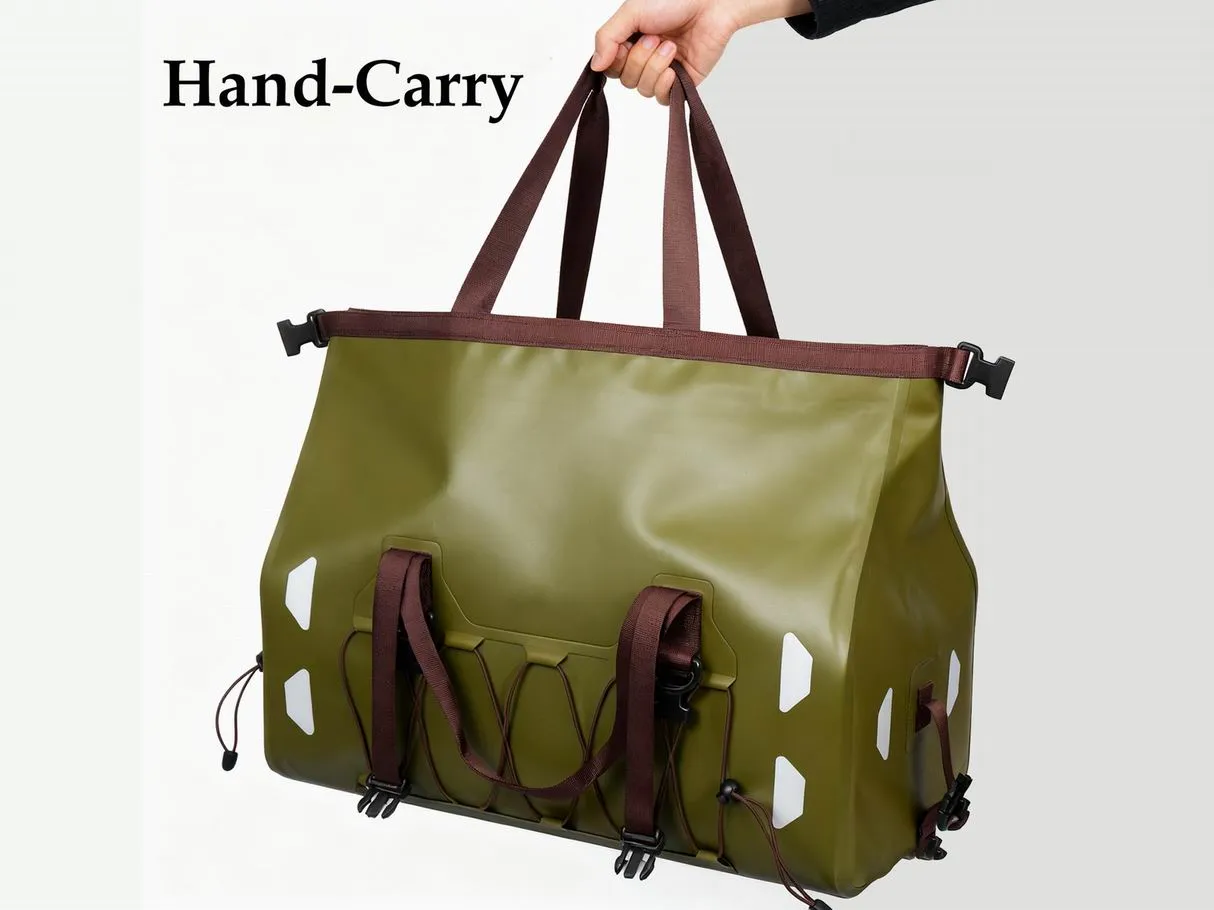
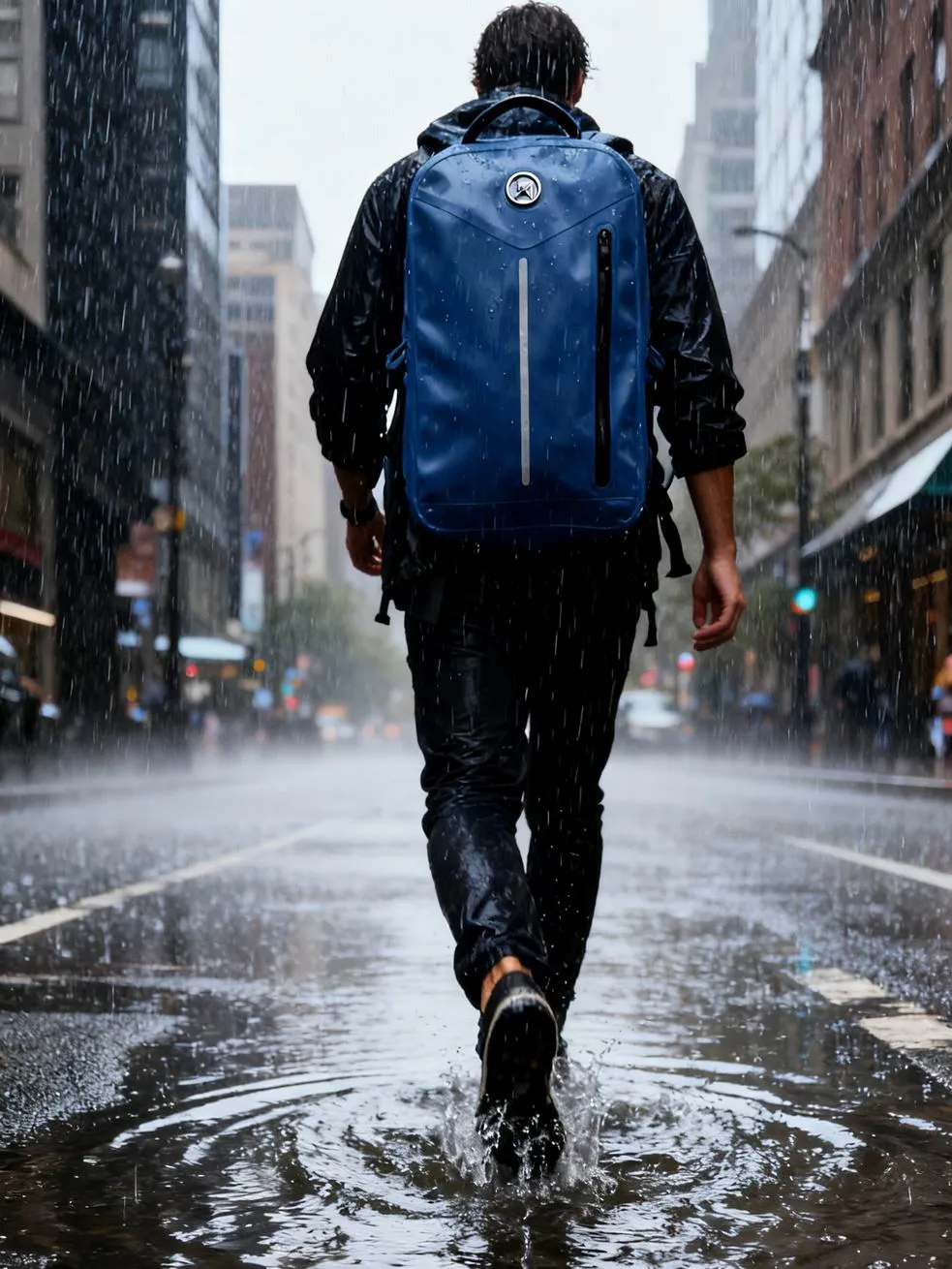
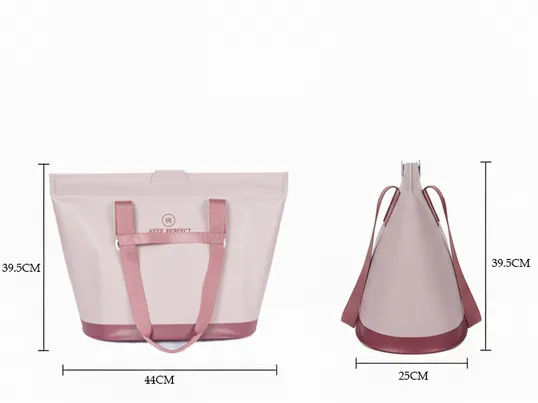
Where the IP code comes from and how to read it
The IPX rating system is the shared language of water protection — and reading IPX7 waterproof bags correctly starts with understanding what the standard does and does not promise. IP stands for Ingress Protection, and the system is defined by IEC 60529, the international standard published by the International Electrotechnical Commission. The full code is two digits: the first rates protection against solid ingress (dust and particles), the second rates protection against water. A bag marked IP67 is dust-tight and immersion-rated; IPX7 uses the X as an explicit "not rated or not tested" placeholder for the dust digit — it is not a zero, and it is not a gap in quality. Soft bags are almost always quoted IPX-something because the dust regime was designed for electrical enclosures, not textile products; where dust and grit resistance matters for bags, it is specified through other tests, which we cover below.
One structural fact does more explaining than any table: each water digit is a separate test, not a rung on a single ladder. A product is tested to the specific regime for each digit and may hold several simultaneously. That is why serious spec sheets quote all applicable levels — and why "IPX9 beats IPX8 beats IPX7" is not a safe reading, a nuance we develop in the comparison of the two submersion ratings in our IPX7 vs IPX8 deep dive.
The full water ladder: IPX0 through IPX9K
| Code | Test regime | Real-world equivalent | Typical bag formats |
|---|---|---|---|
| IPX0 | No protection tested | A decorative bag | Fashion totes |
| IPX1–2 | Vertical drips; tilted drips 15° | Light rain, careful carrying | Coated fashion bags |
| IPX3 | Spraying water at 60° arc | Rain while walking | commuter fabrics |
| IPX4 | Splashing from any direction | Storm rain, boat spray | Water-resistant zippers |
| IPX5 | 6.3 mm jet, 30 kPa | Garden hose nozzle | Premium zippered packs |
| IPX6 | 12.5 mm jet, 100 kPa | Deck wash, heavy surf spray | Welded duffels |
| IPX7 | Immersion, 1 m, 30 min | Dropped overboard | Roll-top dry bags |
| IPX8 | Continuous immersion, declared | Sustained soak, depth rated | Airtight-zip bags |
| IPX9K | High-temp high-pressure jets | Industrial washdown | Specialty cases |
The ladder splits into three practical bands for bag buyers: splash protection (IPX1–4), jet protection (IPX5–6) and submersion (IPX7 and above). Almost every purchasing error happens at the band boundaries — a customer who buys an IPX4 bag and meets a wave, or pays IPX8 money for beach duty. Match the band to the threat, and the digit within the band is fine-tuning.
What the code does not tell you
- Duration beyond the test: IPX7 certifies 30 minutes, once, as tested — not an afternoon in the surf
- Floatation: no IP digit certifies that a sealed bag floats; the trapped air column does that, and load decides
- Closure aging: the rating belongs to the closure as manufactured; zippers wear, welds age, snaps loosen
- User error immunity: a half-rolled IPX7 bag is an unrated bag — the rating assumes correct closure
- Chemical resistance: sunscreen, DEET, chlorine and fuel attack TPU films outside any IP regime
- Fabric spray performance: hydrostatic head, a separate millimeter figure, governs spray-through behavior below the submersion ratings
That last point deserves a sentence more because it is the most common cross-code confusion: a fabric with a 10,000 mm hydrostatic head sounds impressive, but stitched construction leaks at the needle holes regardless of the fabric number, and a welded bag with a modest film passes IPX7 that the sewn wonder-fabric never could. The two systems answer different questions — we untangle them fully in the hydrostatic head explainer.
The three bands in program terms: splash, jet, submersion
Splash band (IPX1–IPX4) covers the daily-urban world: commuters, campus, gym, travel between taxi and lobby. The bag meets rain, not waves. Here a good coated fabric and water-resistant zippers carry the program, and paying for welded submersion construction is dead money. Jet band (IPX5–IPX6) covers exposure with pressure behind it: motorcycle rain at speed, deck wash from a fire hose rinse, open-boat spray in weather. The step up from splash to jet is a construction step — welded seams and real flap engineering over the zips. Submersion band (IPX7 and above) is binary: the bag goes in the water, and only roll-top or airtight-zip construction passes honestly.
The cheapest procurement discipline in the category is writing one sentence before browsing: "In the worst realistic day, how does this bag meet water?" Answer it honestly and the band picks itself; the digit choice then follows from duration and depth. Programs that skip the sentence buy by spec-sheet adrenaline and pay for it either in claims or in unspent engineering.
How custom waterproof bags achieve each rating
Ratings are architecture, and ours map cleanly onto the ladder. Splash-band bags run coated fabrics with water-resistant zippers — sewn construction is acceptable at IPX4 because the rating tests the finished item as a system with the rain it will meet. Jet-band bags add welded seams and engineered flaps; no stitched seam survives a 100 kPa jet at the needle holes. Submersion formats are 100% welded — RF-welded TPU-laminated bodies with roll-top closures for IPX7, airtight zippers for IPX8 — with stitching allowed only above the closure line. The closure is the rated component; the fabric is the given. The construction methods behind each band are detailed in our stitched, welded and bonded construction guide.
Choosing a rating for a custom program: the matrix
| Program | Worst realistic water event | Band | Spec |
|---|---|---|---|
| Campus & commute line | Rain between buildings | Splash | IPX4, coated + WR zippers |
| Gym & pool accessories | Wet gear, locker splash | Splash | IPX4, easy-clean interior |
| Motorcycle luggage | Monsoon riding at speed | Jet | IPX6, welded, flap zips |
| Charter & deck crew gear | Deck wash, wave spray | Jet | IPX6, welded + lash points |
| Paddle & watersports fleet | Bag goes overboard | Submersion | IPX7 roll-top |
| Dive-adjacent & electronics | Sustained soak, depth | Submersion | IPX8 airtight zip, declared conditions |
| Beach & resort retail | Sand, splash, quick dunk | Splash–submersion | IPX7 pouches, the impulse SKU |
| Industrial washdown | High-pressure cleaning | IPX9K class | Specialty welded cases |
When a program spans bands — a travel line that meets rain in the city and boats on holiday — the layered answer beats the compromise product: an IPX6 duffel for the bulk kit with IPX7 dry bags inside for the valuable layer. Concentrating submersion money on the cargo that needs it is usually the cheapest total program, a pattern developed in our dry bag sizing guide.
Reading supplier claims: the verification toolkit
The IP system is easy to quote and expensive to fake, which makes it a fast credibility filter. The screens that work, in escalation order: ask for the declared conditions behind any IPX8 claim (a factory sends depth and duration, a middleman sends adjectives); ask for the test method on IPX7 (the IEC 60529 dunk protocol, sampled per production lot — our standard practice with records attached to each QC file); and for high-stakes programs, commission third-party verification, typically $300–$800 per configuration as a one-time cost. The report architecture to request and the accreditation marks that matter are mapped in our third-party testing labs guide.
Watch for the numerology too: "IPX7.5", "IPX9-level", and ratings printed with a trademark symbol instead of a standard reference are all signs that marketing wrote the spec sheet. The system has no half steps, and every legitimate code traces back to a published test.
Beyond IP: the tests a serious program adds
The IP ladder answers one question — water ingress on day one. Real programs ask more of their bags, and the test stack that fills the gaps runs alongside IP, not inside it: accelerated aging for years-of-UV durability prediction, environmental cycling for heat and humidity survival, load stress on straps and anchors, and closure durability testing for the zipper systems that carry jet-band protection. Each maps to a field-failure family that IP never touches, and each has a dedicated guide in our testing library — start with accelerated aging tests and the temperature and humidity testing guide for the full picture.
Ratings in your product copy: writing claims that hold
There is a copy pattern that sells and survives scrutiny: state the rating, state the conditions, name the closure. "IPX7 (1 m / 30 min, IEC 60529), roll-top welded closure, dunk-tested per lot" is a claim a procurement officer can verify and an AI-shopping assistant can fact-check against the published standard — increasingly where product discovery happens. "Ultra waterproof, military-grade IPX8-level protection" is a claim that quietly disappears from AI-generated answers and invites marketplace takedowns. The full spectrum of rating language that holds up — and what it does for conversions — is part of the brand-side playbook in the custom waterproof bag manufacturing guide.
Cost of protection: what each band adds to a program
| Band | Construction needed | Unit cost impact (MOQ 500) | Where the money goes |
|---|---|---|---|
| Splash IPX4 | Coated fabric + WR zipper | Baseline | Fabric coating quality |
| Jet IPX6 | Welded seams, flapped zips | +15–35% over splash | Welding labor, flap engineering |
| Submersion IPX7 | Full weld + roll-top | $2.90–$6.40 dry bags | TPU lamination, weld coverage |
| Submersion IPX8 | Airtight zipper systems | $8.20–$14.50 | The engineered zipper component |
The economics reward band-matching rather than over-specification: the money not spent on an unnecessary airtight zipper funds print quality, packaging or a second size — real merchandising advantages — while under-specification costs claims, returns and reviews. The complete cost mechanics from the buyer side are in our cost breakdown guide.
Rating misconceptions that cost real money
| Misconception | What the standard actually says | The cost of believing it |
|---|---|---|
| "IPX8 covers IPX7 automatically" | Separate tests with separate protocols; dual claims need both runs documented | A beach program that skips dunk testing and meets a wave |
| "Higher digit = tougher bag" | Digits rate water tests only — nothing about fabric, sewing or hardware | An IPX8 copy that fails at the strap anchors in week two |
| "IPX4 means waterproof" | It means splash-tested; submersion is a different test world | A commuter bag that goes over the ferry rail with a laptop inside |
| "The rating lasts the product life" | It applies to the closure as manufactured; zippers and snaps age | Rental fleets that never schedule closure inspection |
| "DWR coating adds an IP digit" | DWR is a surface treatment, unrated by IP entirely | Paying submersion money for a finish that washes out in a season |
| "All lab certificates are equal" | Look for the standard reference, declared conditions and lot traceability | Marketing certificates that fail a procurement screen at the worst moment |
Every row in that table has a purchase order behind it somewhere — usually discovered at the claim stage, which is the most expensive stage at which to learn a rating. The pattern that prevents all six: write the water sentence, match the band, demand the conditions, and treat the certificate as a document to be read rather than a logo to be collected. Five minutes of spec-sheet discipline against this table is the cheapest insurance the waterproof category sells.
The one-page cheat sheet
- IPX4 — rain and splash; the commute standard
- IPX6 — jets and deck wash; the welded-construction threshold
- IPX7 — 30 minutes at 1 meter; the roll-top dry bag benchmark
- IPX8 — continuous immersion at declared conditions; demand the numbers
- X in first position — dust not rated; normal for soft bags
- Any code without conditions — ask, or assume nothing was tested
Print that list, pin it over the spec-sheet pile, and most rating decisions make themselves. When a program sits between two lines on the list, the tie-breaker is the cargo question: what rides inside, and what does it cost to get wet?
Spec the rating, not the number
Bring us the worst realistic water event and the cargo list, and the rating recommendation comes back in 24–48 hours with the quotation at MOQ 500: closure architecture, declared test conditions written for your product copy, and the layered option where it beats the single-format answer. QUANZHOU JUNYUAN BAGS — custom waterproof bags since 2014, 4,950 m² SGS-verified facility, 7 lines, 149 machines, 137 staff, 200,000 pieces monthly, samples 6–10 working days, bulk 35–50 days, AQL 2.5, 30/70 T/T, FOB Xiamen, 100+ countries. The production path from first inquiry is walked through.
Frequently Asked Questions
Q1. What does IPX mean on a waterproof bag?
Ingress Protection, water digit: the second character of the IEC 60529 IP code rates water protection on a published test ladder. IPX4 means splash-tested, IPX7 means submerged 30 minutes at 1 meter with a dry interior.
Q2. What is the highest waterproof rating?
For consumer bags, IPX8 — continuous immersion under manufacturer-declared conditions. IPX9K exists for high-temperature jet washdowns on rigid enclosures and is rarely meaningful for soft luggage.
Q3. Is IPX7 or IPX8 better?
They are different tests, not a quality ladder: IPX7 is the fixed 30-minute/1-meter benchmark; IPX8 covers continuous immersion at conditions the manufacturer declares and tests to. Neither automatically outperforms the other outside its tested envelope.
Q4. Why do bags say IPX instead of IP67?
The X is a "not tested" placeholder for the dust digit, which is normal for soft textile products — the dust regime was written for electrical enclosures. The water digit after the X carries the rating.
Q5. What IPX rating do I need for everyday rain?
IPX4: splashing water from any direction covers storm rain on a commute. Anything beyond it is overbuying for the splash band unless jets or submersion enter the picture.
Q6. What rating survives a drop in the water?
IPX7 at minimum: the test is literally 30 minutes of submersion at 1 meter. Roll-top welded dry bags are the standard architecture that passes honestly.
Q7. Can a zippered bag be IPX7?
Not credibly for rated submersion — zipper docks weep under sustained immersion. Zippered construction is honest to IPX6 (jets); submersion belongs to roll-top or airtight-zip welds.
Q8. What does a bare "IPX8" claim mean?
Nothing usable by itself: IPX8 conditions are declared by the manufacturer. A credible claim reads like "IPX8, 2 m / 24 h, tested" — depth, duration and protocol stated.
Q9. Does a higher IPX rating mean better quality?
It means a harder water test was passed, not better sewing, fabric or hardware. A perfectly made IPX4 commuter bag is better quality than a marginal IPX8 copy — rating and quality are separate axes.
Q10. Do IPX ratings expire?
The rating applies to the product as tested. Zippers wear, snap arms loosen, TPU films age under UV — so closure care and realistic replacement cycles matter more than the printed code over a long life.
Q11. What is IPX9K?
A high-temperature, high-pressure jet test designed for vehicle and industrial components. Legitimate for specialty washdown cases, marketing numerology when printed on consumer luggage.
Q12. How do manufacturers test IPX7?
The IEC 60529 dunk method: submerge to 1 meter for 30 minutes and inspect for ingress. We sample from every production lot with the record attached to the lot’s QC file at AQL 2.5.
Q13. Does IPX4 cover machine washing?
No — and machine washing is out of spec for most waterproof bags regardless of rating: agitation stresses welds and coatings. Rinse, wipe, air dry.
Q14. What rating should beach bags have?
Splash-to-quick-dunk: IPX7 small dry bags and pouches are the standard beach retail answer because sand and spray with the occasional wave qualify as submersion risk at pocket prices.
Q15. Can I ask a supplier for rating proof?
Yes, and you should: declared conditions for IPX8, test method and lot records for IPX7, third-party verification for high-stakes programs. The response quality separates factories from traders in one email.
Q16. Do waterproof ratings cover sunscreen and chlorine exposure?
No — chemical attack on TPU films sits outside the IP regime entirely. Rinse after exposure and spec a chemically resistant film for tropical program markets.
People Also Ask
What is the difference between waterproof and water-resistant?
Water-resistant matches the splash band (IPX1–IPX4): rain and splashing. Waterproof, used honestly, means submersion-tested: IPX7 or above. The middle jet band (IPX5–6) is where marketing language gets fuzzy — check the code, not the adjective.
Is IPX7 good for the beach?
Yes — more than enough. Beach exposure is spray, splashes and the occasional dunk, all inside IPX7’s tested envelope with headroom.
What does IPX4 mean in practice?
It survived splashing water from any angle: storm rain while walking, boat spray, poolside splashes. It did not survive submersion, and it was not tested for jets.
Can you swim with IPX8 bags?
Swimming and snorkeling yes, within the declared conditions on the specific product. Depth and duration vary by declaration — check the numbers before diving deep with gear inside.
Why do waterproof bags say "not for diving"?
Declared conditions: consumer submersion ratings stop at shallow depths for short durations. Diving adds pressure far beyond the tested envelope, so honest labels draw the line.
What IP rating is waterproof enough for a phone pouch?
IPX8 is standard for sealed phone pouches — the small sealed volume and dual snap closures test to deep submersion ratings, typically declared around 20 meters for 30 minutes.