Custom dry bags run from 5L (phone, wallet, keys) to 40L (multi-day expedition kit), cost $2.90–$6.40 per unit at MOQ 500 depending on size and spec, and the right size run for most branded programs is 10L + 20L — the two capacities that cover day-use and full-kit customers between them. Sizing is the decision that determines whether your dry bag gets used daily or donated: too small and it cannot hold the kit that motivated the purchase; too big and it stays home. This guide gives you the real load charts, the weight and price ladder, the closure options by size, and the size-run strategy that makes a custom dry bag program sell through.
We manufacture custom dry bags in every capacity from 2L pouches to 60L expedition haulers at QUANZHOU JUNYUAN BAGS — custom waterproof bag production since 2014, 4,950 m² SGS-verified facility, 7 lines, 149 machines, 137 staff, 200,000 pieces monthly. MOQ 500 per design (splittable across sizes), samples 6–10 working days, bulk 35–50 days, AQL 2.5 inspection, 30/70 T/T, FOB Xiamen, shipping to 100+ countries.
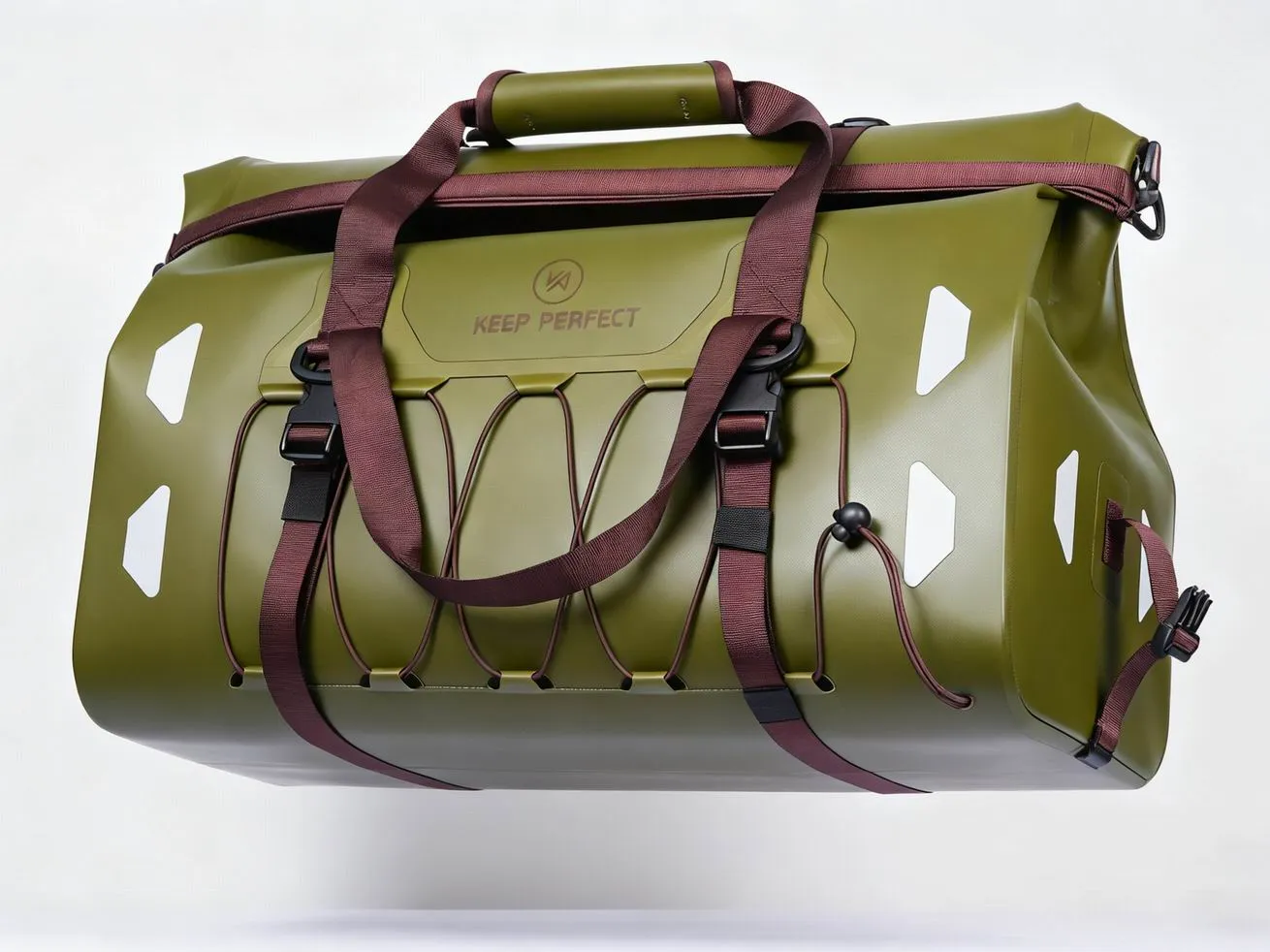
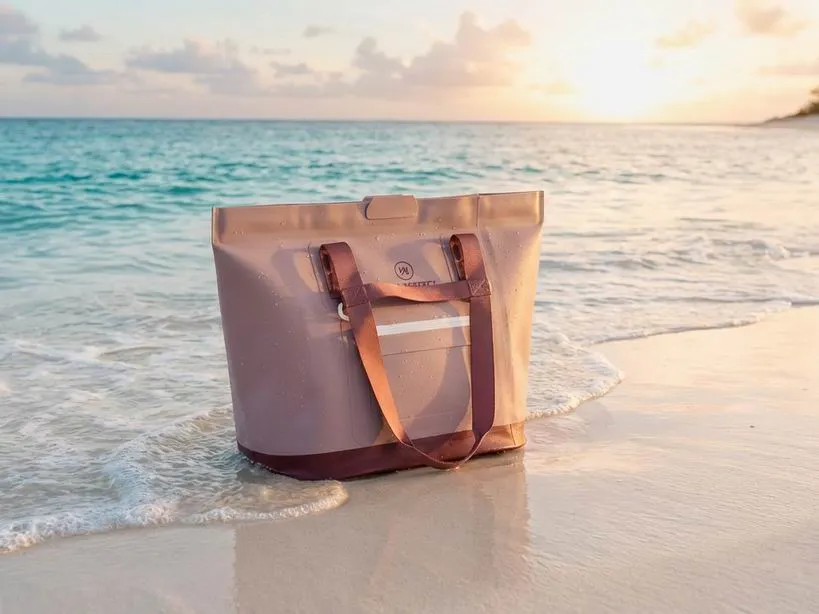
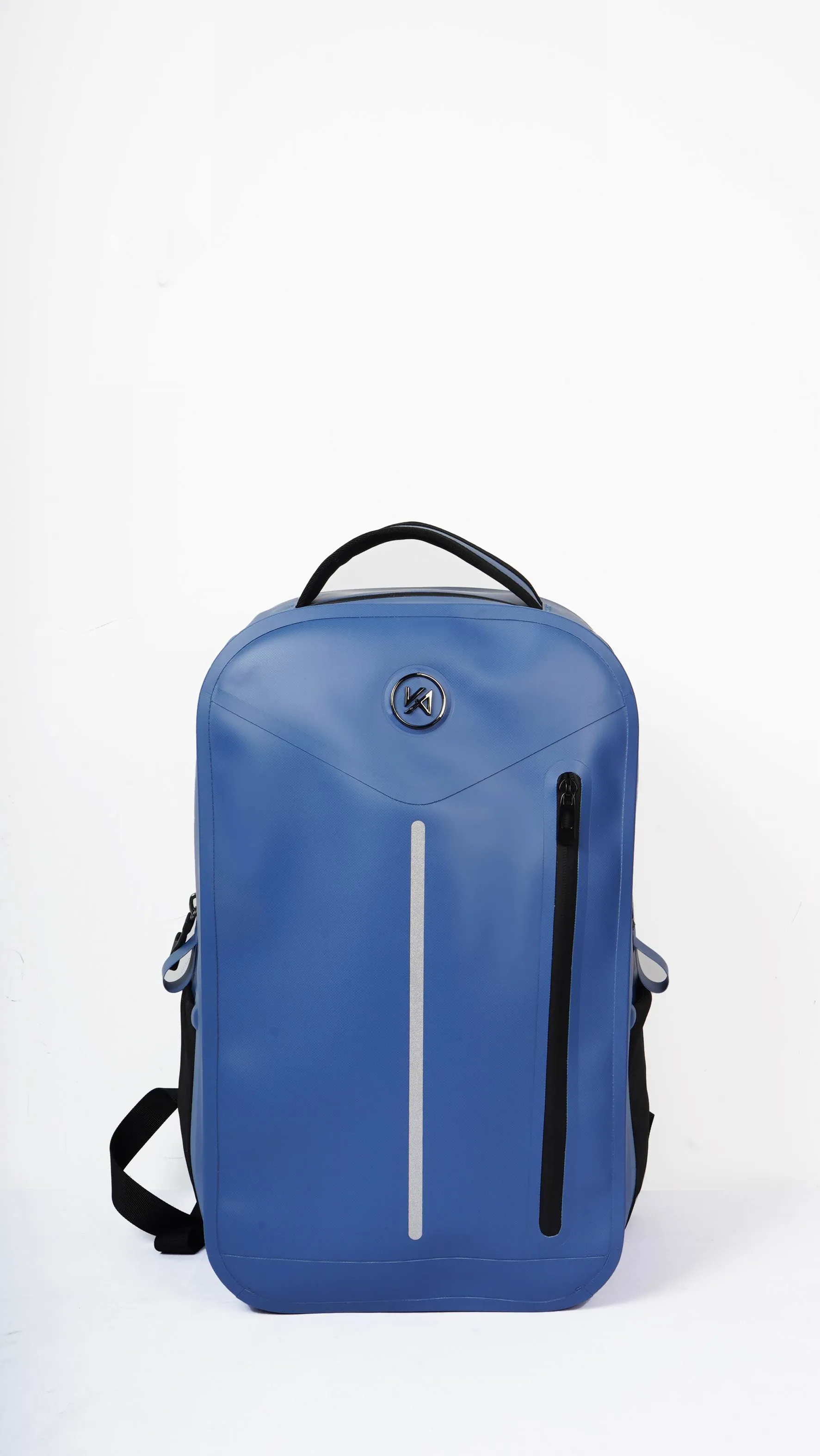
The five standard capacities — and what actually fits
Liters are abstract; load charts are not. Here is what each standard capacity physically holds, tested with real kit rather than marketing claims:
| Capacity | What fits (real loads) | Best programs | Unit price (500+) |
|---|---|---|---|
| 5L | Phone, wallet, keys, small camera, snack, compact rain shell | Events, giveaways, SUP/kayak day users | $2.90–$3.60 |
| 10L | Above + towel, change of clothes, 1L bottle | Gyms, swim clubs, day paddlers, beach | $3.40–$4.20 |
| 20L | Full day kit: clothes, towel, lunch, electronics, jacket | Resorts, tours, boat days, festivals | $3.90–$4.90 |
| 30L | Overnight kit: + sleeping bag (compressed), cook kit | Camping, overnight paddling, motorcycle | $4.60–$5.70 |
| 40L | Multi-day: sleep system, 3 days clothing, food bag | Expeditions, rafting, motorcycle touring | $5.40–$6.40 |
Two sizing truths from twelve years of production data. First, the 20L is the single best-selling capacity worldwide — it is the smallest size that holds a complete day kit and the largest that still carries comfortably by its shoulder strap. Second, customers consistently overestimate what they need: given a free choice, first-time buyers pick 30L and end up using it as a half-empty 20L. Programs that lead with 20L and offer 10L as the compact option outsell programs led by 30L+ by a wide margin.
Dimensions, roll-down and the "usable capacity" caveat
Published liters assume three full rolls of the closure — the fold that creates the watertight seal. A 20L dry bag’s flat dimensions are roughly 28 × 58 cm, but roll only twice and you have an 18L bag that leaks. When speccing custom dry bags, state capacity as sealed capacity (after three rolls) in your product content, and brief customers accordingly: "fill to the marked line, roll three times, clip" — the single instruction that prevents 90% of "my dry bag leaked" complaints.
- 5L: ~18 × 40 cm flat; sealed height ~28 cm — sling-strap or belt-loop carry
- 10L: ~23 × 46 cm flat; sealed ~34 cm — single shoulder strap standard
- 20L: ~28 × 58 cm flat; sealed ~42 cm — single or backpack straps
- 30L: ~32 × 65 cm flat; sealed ~48 cm — backpack straps recommended
- 40L: ~36 × 72 cm flat; sealed ~55 cm — backpack straps + grab handles
Custom dimensions are available beyond the standard five — tube-diameter and height both adjust in 1 cm increments. Non-standard dimensions do not change the MOQ 500, but they do require a dedicated sample round (6–10 working days) to validate roll-down geometry and strap anchoring.
Fabric weight by capacity: where 500D beats 250D
Fabric denier should scale with capacity and use case, because load and abrasion scale together. Light 250D–420D TPU-laminated fabric suits 5–10L day bags where carried weight matters; 500D is the all-round standard for 10–30L; 500D with an 840D reinforced base panel is the right call for 30L+ expedition formats that get dragged onto rafts, truck beds and rocky shores.
| Capacity | Recommended fabric | Bag weight | Abrasion rating (Martindale) |
|---|---|---|---|
| 5–10L day use | 420D × 0.35 mm TPU | 220–320 g | 12,000+ cycles |
| 10–20L all-round | 500D × 0.5 mm TPU | 380–520 g | 20,000+ cycles |
| 30–40L expedition | 500D + 840D base | 620–850 g | 30,000+ cycles (base) |
| Ultralight programs | 70D ripstop × TPU | 95–160 g | 6,000 cycles — day use only |
The ultralight row deserves a warning: 70D ripstop dry bags are genuinely waterproof and wonderfully light, but they are summit-pack and travel-organizer products, not drag-across-granite products. Brands that sell ultralight bags into expedition use create their own warranty queue. Match fabric to the honest use case — the full material comparison is in our manufacturing guide.
Closures, straps and windows: options that change by size
The roll-top closure is universal, but everything attached to it changes with capacity. Strap configuration is the big one: a single sling strap works to 10L, becomes uncomfortable at 20L under full load, and is a genuine mistake at 30L+ where backpack straps are required. Buckles scale too — 25 mm acetal to 10L, 38 mm from 20L up. D-ring lash points matter more as size grows: a 40L bag on a raft or motorcycle needs four to six external attachment points, not two.
- Clear phone-window strip — popular at 5–10L for paddle sports (+$0.22–$0.38); skip it at 30L+ where the window becomes the failure point
- Air-release valve — compression aid for 20L+ packing (+$0.45–$0.70); lets users purge air after rolling
- Internal organizer pocket — worthwhile at 20L+ (+$0.30–$0.55); pointless at 5L
- Reflective print — safety feature for marine programs at any size (+$0.15–$0.30)
- Shoulder-strap padding — mandatory above 20L (+$0.40–$0.65); marketing fluff below it
Every option is priced per position and can be mixed within one production run — a program can ship its 10L with a window and its 20L without, on the same PO and the same MOQ 500 split.
Sizing your size run: the program strategy
How you split the MOQ 500 across sizes determines sell-through. Twelve years of reorder data across event, retail, hospitality and marine programs converges on a consistent pattern: the 10L and 20L together move 75–85% of units in consumer-facing programs, with 5L strong in promotional/event contexts and 30L+ reserved for genuinely expedition-oriented audiences.
| Program type | Recommended split (500 pcs) | Rationale |
|---|---|---|
| Retail brand launch | 10L ×200 / 20L ×200 / 30L ×100 | Covers the demand curve; tests 30L cheaply |
| Event / promotional | 5L ×250 / 10L ×250 | Low unit cost, universal fit, max logo visibility |
| Resort / tour operator | 10L ×150 / 20L ×250 / 30L ×100 | Day-kit focus; 20L is the rental-fleet anchor |
| Paddle-sports specialist | 10L ×150 / 20L ×200 / 40L ×150 | Real expedition users; 40L earns its place |
| Motorcycle accessories | 20L ×200 / 30L ×200 / 40L ×100 | Riders pack for the bike, not the back |
First-order splits are hypotheses; reorder data turns them into knowledge. Programs that track size-level sell-through on season one reorder with splits tuned to their actual demand — the 30–35 day reorder cycle in our reorder process guide makes that iteration fast.
Printing and branding by size
Print area scales with the tube, and design should be specced per size rather than shrunk uniformly. A 20L tube offers a print field of roughly 24 × 30 cm — room for a logo, a brand line and a pattern element. A 5L offers 14 × 20 cm — logo only, and it reads better for it. Screen printing runs $0.30–$0.90 per color per position; full-coverage sublimation-style prints (all-over patterns, camo, photographic) run $0.85–$1.60 per bag but transform the product from "dry bag with a logo" into a genuinely designed object.
For multi-size programs, we produce the artwork plate set per size as part of sampling — your logo scales correctly on every capacity, colors match across sizes at Delta E ≤2, and the set photographs as a coherent family. Method options and durability data are in the logo options guide; color control in the Pantone matching guide.
The three sizing mistakes that kill programs
- Leading with the wrong hero size. A resort that leads with 30L sells half the units of one that leads with 20L — the customer buying for a beach day walks away from expedition sizing. Anchor the range at the use case, not at the impressive end.
- Quoting flat dimensions as capacity. "58 cm tall" is not 20L after roll-down; customers who learn this post-purchase leave the reviews you do not want. Publish sealed capacity and the roll-three-times instruction.
- One strap spec across all sizes. A single sling on a loaded 30L bag is a returns generator. Strap spec must scale with capacity — it is a $0.40–$0.65 decision that defines whether the bag gets used.
All three are completely free to avoid at the spec stage. Our sampling process exists to catch exactly these mistakes: you load the sample with the real kit, roll it, carry it for a day — and the size decision makes itself. Samples take 6–10 working days, cost $60–$150, and credit in full against the bulk order.
Which industries buy which sizes
Size demand is industry-specific, and matching your size run to your channel is the cheapest demand-forecasting you will ever do. The patterns from our production history:
| Industry / channel | Hero sizes | Why |
|---|---|---|
| Marine & boating retail | 10L, 20L, 30L | Deck storage constraints; splash-to-immersion exposure |
| Kayak & paddle outfitters | 10L, 20L, 40L | Hatch geometry; multi-day touring splits |
| Resort & hospitality | 5L, 10L, 20L | Guest day-use; amenity economics favor smaller |
| Corporate events & promo | 5L, 10L | Unit cost + universal fit + logo visibility |
| Motorcycle accessories | 20L, 30L, 40L | Rack-mounted; riders pack for the bike |
| Outdoor retail (general) | 10L, 20L | The demand curve peaks; long tail stays home |
| Fishing & angling | 10L, 20L | Tackle and catch separation; boat-deck durability |
If your channel spans several of these (a brand selling both marine retail and events), run the split that matches your primary channel and let the secondary channel ride on the same stock — a 10L with your logo works equally on a paddleboard and a conference tote table. The alternative, channel-specific SKUs on a first order, fragments the MOQ 500 into quantities too thin to learn from.
Quality checkpoints that matter specifically on dry bags
Dry bags are the simplest waterproof format, which makes their failure points easy to enumerate and easy to test. Every production run of ours passes this battery, and your receiving inspection can replicate it with nothing more exotic than a bathtub:
- Seam weld integrity — pull test on every batch sample to ≥150 N; a weld that peels by hand fails everything downstream
- Immersion test per design — filled, sealed, submerged 30 minutes at 1 m; the interior paper towel tells the truth
- Buckle and strap anchoring — 500-cycle pull at rated load; the anchor bartack is where cheap dry bags die
- Roll-top stiffness — the closure strip must hold a tight roll; under-spec stiffeners produce bags that unroll themselves
- Print adhesion — cross-hatch tape test after flexing; prints that crack at the roll line look tired within a month
- Valve function (where fitted) — 1,000 actuation cycles with no leak path; valves are the first ingress point when they fail
AQL 2.5 final inspection covers the batch statistics; third-party inspection (SGS, BV, TÜV) is welcome at $200–$350 per man-day for buyers who want independent verification. The full QC philosophy is in our manufacturing guide.
Spec your custom dry bag size run
QUANZHOU JUNYUAN BAGS — custom dry bags from 2L pouches to 60L haulers since 2014, produced in our 4,950 m² SGS-verified facility (7 lines, 149 machines, 137 staff, 200,000 pieces monthly). MOQ 500 per design with free splits across sizes and colors, samples 6–10 working days, bulk 35–50 days, AQL 2.5 inspection, 30/70 T/T, FOB Xiamen, delivery to 100+ countries. See the full journey from inquiry to delivery.
Tell us your audience and use case through the inquiry form — we reply within 24–48 hours with a recommended size run, strap and closure spec, and a quotation at MOQ 500. If you are still deciding between dry bags and duffel formats for your program, our duffel vs dry bag comparison settles it; for rating questions, the IPX rating explainer defines what your spec sheet should claim.
Frequently Asked Questions
Q1. What size dry bag do I need for a day at the beach?
20L holds a full beach day kit — towels, change of clothes, sunscreen, electronics, snacks — with room to roll the closure three times. 10L works for minimalist solo trips; families should look at 30L.
Q2. What is the most popular custom dry bag size?
20L is the global best-seller: the smallest size that holds a complete day kit and the largest that still carries comfortably. The 10L + 20L pair covers 75–85% of consumer program demand.
Q3. How much do custom dry bags cost?
At MOQ 500: 5L $2.90–$3.60, 10L $3.40–$4.20, 20L $3.90–$4.90, 30L $4.60–$5.70, 40L $5.40–$6.40. Printing, valves, windows and straps price separately per position.
Q4. What is the minimum order for custom dry bags?
MOQ 500 per design, splittable freely across sizes and colors — a 10L/20L/30L split of 200/200/100 is the standard retail-launch configuration.
Q5. How is dry bag capacity measured?
Sealed capacity: the volume remaining after rolling the closure three times, which is what creates the watertight seal. Flat-dimension liters overstate usable space by 15–25% — always spec and publish sealed capacity.
Q6. Can I get a dry bag in a custom size?
Yes — tube diameter and height adjust in 1 cm increments beyond the standard 5/10/20/30/40L. Custom dimensions keep MOQ 500 but require a sample round (6–10 days) to validate roll geometry and strap anchoring.
Q7. What fabric should a 20L dry bag use?
500D with 0.5 mm TPU lamination is the all-round standard (20,000+ Martindale cycles, ~450 g). Ultralight 70D suits travel organizers; expedition 30L+ formats want an 840D base panel.
Q8. Do bigger dry bags need backpack straps?
Yes — above 20L under real loads, a single sling strap becomes a returns complaint. 20L works with a padded sling; 30L and 40L need proper backpack straps plus grab handles and four to six external lash points for raft or motorcycle mounting.
Q9. Can I print my logo on every size?
Yes — screen print $0.30–$0.90 per color per position, or full-coverage prints at $0.85–$1.60. We produce scaled plate sets per size so the logo proportions stay correct across the whole size run.
Q10. What is an air-release valve and do I need it?
A one-way valve (+$0.45–$0.70) that lets users purge trapped air after rolling — useful at 20L+ for tight packing, pointless at 5–10L. It slightly reduces maximum immersion depth, so expedition programs sometimes skip it.
Q11. How long does custom dry bag production take?
Samples 6–10 working days, bulk production 35–50 days after golden-sample approval, sea freight 4–6 weeks to most markets. Reorders of established designs skip sampling entirely and ship in 30–35 days.
Q12. Are your dry bags really waterproof?
Yes — high-frequency welded seams (no needle holes), TPU lamination, and roll-top closures verified to IPX7 (30 minutes at 1 m immersion, dry interior) per design. Seam strength ≥150 N is tested per material lot, and every batch ships with AQL 2.5 final inspection.
Q13. Can each size have a different color?
Yes — the MOQ 500 splits across colors as freely as sizes. Many programs run a signature brand color in the hero 20L and neutrals elsewhere; Pantone matching holds at Delta E ≤2 across all sizes and all fabric batches.
Q14. What programs work best for 5L dry bags?
Events, promotions and giveaways: the lowest unit cost ($2.90–$3.60), universal usefulness (phone/wallet/keys), and a print field that puts your logo in every beach and boat photo.
Q15. Should I split my first order across sizes or commit to one?
Split it. First-order splits are demand experiments: the 200/200/100 configuration across 10L/20L/30L tells you your channel’s real size curve in one season, at zero extra tooling cost. Committing all 500 to a single size bets the whole program on a guess — the size-level sell-through data from a split first order is exactly what tunes the season-two reorder into a winner.
People Also Ask
How many liters is a good dry bag?
For day use, 20L is the sweet spot — it holds a towel, change of clothes, electronics and lunch with room to seal properly. Minimalist solo users manage with 10L; overnight trips need 30L; expeditions 40L.
What fits in a 10L dry bag?
A phone, wallet, keys, compact towel, light change of clothes, 1L bottle and a snack — a minimalist day kit. It will not hold a full beach or camera kit; that is 20L territory.
Is a 5L dry bag big enough?
For valuables-only protection (phone, wallet, keys, small camera) yes — that is exactly what 5L is designed for. For clothes or towels, no; step up to 10L or 20L.
How do you close a dry bag properly?
Fill to the marked line (never above), squeeze out excess air, roll the top down tightly at least three times, then clip the buckle. Two rolls is a splash guard; three rolls is the watertight seal the liter rating assumes.
What size dry bag for kayaking?
Day paddling: 10–20L for spare layers, lunch and safety kit. Multi-day touring: 30–40L for camp kit, split across two smaller bags rather than one giant tube — they pack into kayak hatches far better.
Do dry bags float?
Yes — a properly sealed dry bag traps air and floats, which is a genuine safety feature for paddling and boating. The trapped air is also why you should not over-compress before sealing: the air pocket is the flotation.