A reorder of an existing custom waterproof bag takes about 30–35 days from PO to shipment — versus 60–90 days for the first order — because everything that made the first order slow is already done: patterns exist, weld dies are machined and archived, the golden sample hangs in the QC room, film colors are matched to archived drawdown cards, and materials have known suppliers and lead times. The buyers who capture this speed are the ones who treat the first order as infrastructure-building: every artifact it created (dies, samples, cards, supplier relationships) is a reorder accelerator. This guide shows the reorder timeline stage by stage, the four disciplines that keep repeat quality identical to the approved original, and the planning math that turns reorders from emergency firefighting into a boring, profitable routine — the same materials-requirements logic formalized in ISO 9001 production planning frameworks.
Reorder programs are the core of our repeat business at QUANZHOU JUNYUAN BAGS — producing custom waterproof bags since 2014 in a 4,950 m² SGS-verified partner facility with 7 lines, 149 machines, 137 staff and 200,000 pieces monthly. Archived tooling and drawdown cards are held for 3 years per client. MOQ 500 per reorder (mixed colorways of an existing design allowed), bulk 30–50 days, 30/70 T/T, FOB Xiamen.

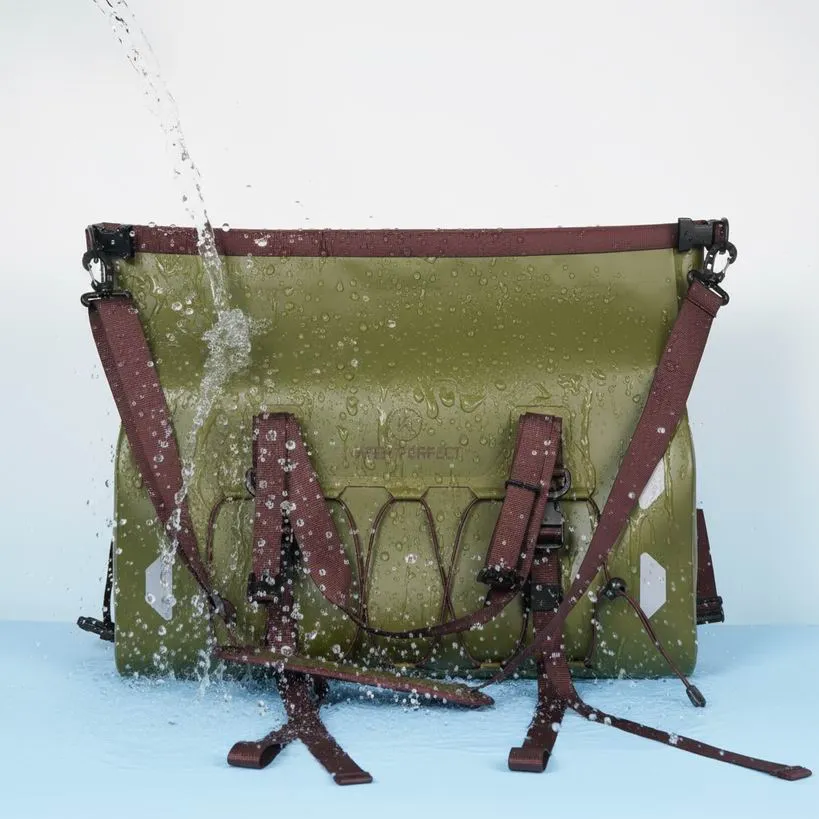
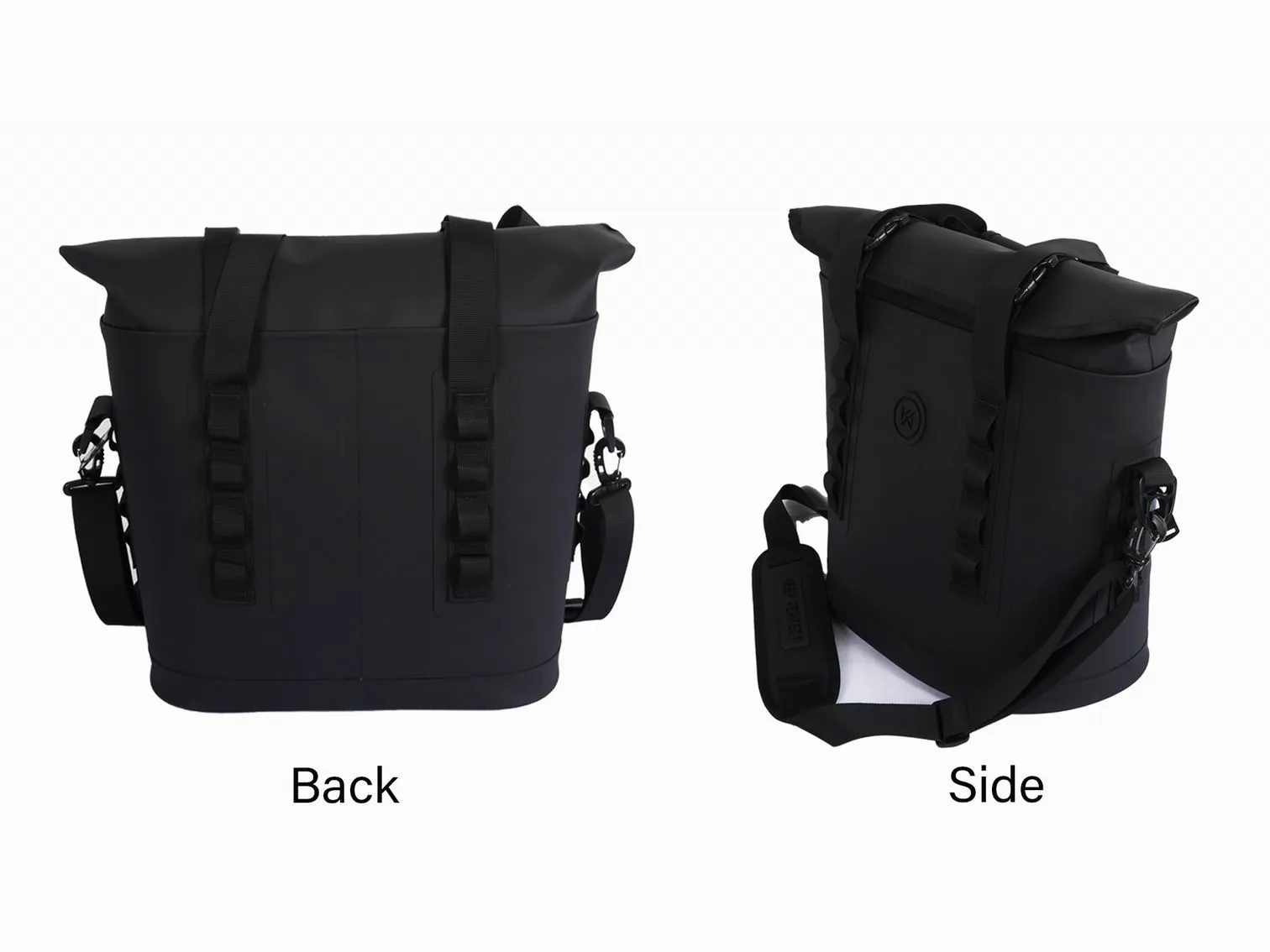
Why reorders are twice as fast: the infrastructure you already bought
The reorder process is where custom-bag economics flip: the one-time engineering is already paid for, so repeat orders run faster, cheaper and safer than the first. A first custom order spends 60–70% of its calendar on one-time work: pattern development, die machining, color drawdowns, sample rounds, spec negotiations. A reorder skips all of it. Your weld dies sit archived on our tool wall (aluminum and brass, cataloged by client and style, held 3 years). Your golden sample — the signed, measured unit you approved — hangs in the QC room with its spec sheet. Your film color is an archived drawdown card with measured Lab values, so the laminator re-matches to a physical master, not to memory. Your material suppliers, hardware sources and print screens are on file with their lead times.
| First-order phase | First order | Reorder | Why it disappears |
|---|---|---|---|
| Development & sampling | 2–6 weeks | 0 days | Dies machined, golden sample approved |
| Color matching | 3–7 days | 1 day | Archived drawdown card, re-match to master |
| Material sourcing | 1–2 weeks | 3–5 days | Known suppliers, standing specs |
| Production | 35–50 days | 30–35 days | Proven process sheets, trained operators |
| Total PO-to-ship | 60–90 days | 30–35 days | — |
The speed has a quality corollary that matters more: repeat production runs on a process that has already produced your product correctly, with the same dies, the same weld parameters logged on the process sheet, and often the same line operators. First-order quality is validated; reorder quality is rehearsed. Defect rates on reorders run measurably below first runs for exactly this reason.
The 30-day reorder timeline, stage by stage
Day 0: PO issued with the style code and golden-sample reference number — one line that locks the entire spec. Days 1–5: materials procurement against the archived BOM (film lamination is the long-lead item; stock programs hold your film on standing reservation at volume). Days 4–8: cutting and die mounting from the tool archive. Days 8–28: welding, assembly, branding — a rehearsed line running a known product at full speed. Days 28–30: AQL 2.5 inspection against the golden sample, balance payment against B/L copy, container loading.
Two accelerants available on reorders only. Rolling forecast: share a 90-day demand estimate and we pre-laminate your film and pre-position hardware, cutting days 1–5 out of the critical path — effective timeline drops to 25–28 days. And split shipments: at 1,000+ pieces, a partial air shipment (100–300 units, $3.50–$6.50/unit) bridges stockouts while the ocean balance follows — the standard play for marketplace sellers who cannot afford a ranking gap.
The one thing that does not accelerate: changes. Any modification — new colorway, moved pocket, upgraded zipper — converts the "reorder" into a mini-development with sampling rounds. The discipline: freeze the design between orders, batch changes into deliberate revision cycles, and never let a "quick tweak" ride along on a replenishment PO. Tweak-riders are how 30-day reorders become 60-day surprises.
Keeping reorder quality identical: the four disciplines
Discipline one: the golden sample is the spec. Not the tech pack, not the photos — the physical signed sample in the QC room. Inspectors check reorder units against it directly, and any "improvement" the line wants to make must be approved by you in writing first (unrequested improvements are unauthorized changes wearing a friendly hat). Discipline two: material lot verification. Film and fabric lots drift between production years; reorders verify the new lot against the archived drawdown card and fabric swatch before cutting, with measured ΔE reported on color-critical items.
Discipline three: process-sheet lock. Weld temperature, dwell time and pressure for your product are logged from the approved run and reloaded for the reorder — not re-dialed by operator feel. This is the difference between a factory with process discipline and one with talented improvisers; both make good first samples, only one makes identical thousandth units. Discipline four: change control in writing. Any supplier substitution (a buckle model discontinued, a webbing mill changed) triggers a written engineering-change notice with photos for your approval before production, not a surprise in the container.
- Golden sample physically present at QC during your reorder run
- New material lots verified against archived drawdown cards (ΔE reported)
- Weld parameters reloaded from the logged process sheet, not re-dialed
- Written approval required for any substitution or "improvement"
- AQL 2.5 inspection against the golden sample before balance payment
Reorder pricing: why repeats should cost less, and how to lock it
First-order pricing carries one-time costs invisibly: setup amortization, process learning, sample logistics. Reorders should price 3–8% lower at the same quantity — and more at volume steps (8–12% at 1,000 pieces, 18–24% at 3,000, per the quantity curve in our cost breakdown). If your reorder quotes at first-order prices, ask which one-time costs are being re-charged; legitimate re-quotes happen only on material-index moves (resin, freight) or spec changes.
Price-lock mechanics for programs: annual pricing agreements lock FOB for 12 months against a volume commitment, with a symmetric raw-material reopener (±10% band on resin index) — you get budget certainty, the factory gets demand visibility, and both sides stop renegotiating quarterly. For growing brands the agreement also reserves line capacity: your reorder slots into a guaranteed production window instead of competing with the general queue in peak season (May–August for outdoor categories).
One honest counter-note: do not squeeze reorder pricing below the quality floor. The first thing a squeezed line does is shave weld dwell time and QC attention — the two line items that protect your review ratings. A 2% price win that costs a star on your listing is the most expensive discount in the business. Negotiate the quantity curve and the annual lock; leave the process budget alone.
Inventory planning: the reorder trigger math
The reorder trigger formula: reorder when stock cover (units on hand ÷ daily velocity) drops to your total replenishment lead time plus safety stock. With a 35-day production-plus-ocean cycle and 10 days of safety, that is 45 days of cover. Example: 20 units/day velocity, trigger at 900 units on hand. Sellers who reorder by panic ("two weeks of stock left") pay the air-freight tax ($3.50–$6.50/unit) that planning would have avoided entirely.
| Daily velocity | 45-day trigger point | Suggested reorder qty | Cycle |
|---|---|---|---|
| 5 units/day | 225 units | 500 (MOQ) | ~100 days of stock |
| 15 units/day | 675 units | 750–1,000 | ~60 days of stock |
| 30 units/day | 1,350 units | 1,500 | ~50 days of stock |
| 80 units/day | 3,600 units | 3,000 (split ship) | ~38 days of stock |
Seasonal categories need the forward-looking version: compute velocity from the season you are ordering into, not the season you are in. A beach-program reorder triggered in March should use June velocity — the spreadsheet error that empties warehouses in July. For marketplace sellers, layer in the ranking cost of stockouts: a 2-week out-of-stock can cost 30–50% of organic rank, which is why the split-shipment air bridge exists even though it pains the unit economics.
From reorder to program: the rolling-forecast relationship
The mature end-state is a rolling program: you share a 90-day forecast monthly (accurate to ±30% is plenty), we hold film and hardware positions against it, production slots are reserved, and reorders become a one-line PO with a 25–28 day cycle. Annual pricing locks the cost line. Capacity reservation guarantees the calendar. Both sides stop spending time on quotation theater and spend it on the product line instead.
Programs also unlock the small freedoms that compound: mixed-colorway reorders within the 500-piece MOQ (your three colors, one PO), packaging refreshes without re-sampling (printed polybag artwork swaps are pre-production, not product changes), and scheduled quality reviews where the golden sample itself is re-validated annually against current production. The program structure is how a $4,000 first order becomes a $200,000 annual account without the buyer adding procurement staff.
Start a program conversation after your second successful reorder — that is when both sides have the data (velocity, defect rates, true lead times) to set honest terms. Earlier than that, the forecast is a guess; later than that, you have been leaving cycle-time and pricing on the table.
The hidden risks that only appear on reorder three
First orders get management attention; reorder three gets autopilot — and autopilot is where programs drift. The four slow-motion failures: material creep (a film lot 0.02 mm thinner each year until the product feels different and nobody knows why), process drift (a new line leader re-dials weld parameters by feel because the process sheet was never formally reloaded), spec erosion (each side quietly tolerates a small deviation until the product no longer matches the listing photos), and archive decay (the golden sample fades or gets misplaced, and the standard becomes an argument).
The countermeasures are calendar items, not inspections: an annual golden-sample revalidation (fresh production unit measured against the archived master, both retained), a written spec-freeze confirmation with each reorder PO ("no changes from style code X rev B"), and material-lot certificates attached to each shipment so thickness and composition drift show up in a spreadsheet rather than in customer reviews. Programs that run these three habits hold product identity across years; programs that skip them discover drift at 400 units in a warehouse, with a listing that no longer describes the product.
This is also the honest argument for the factory-side archive being bilateral: keep your own set — your half of the golden sample, your drawdown card copies, your process-sheet summary. Factory archives are reliable, but ownership of the standard is what makes the standard enforceable. The buyers with the strongest multi-year programs are not the ones who trust least; they are the ones whose trust is filed and dated.
Switching factories mid-program: what transfers and what dies
Sometimes the reorder question is really a switching question — price pressure, capacity failure, or a relationship that has run its course. What transfers cleanly: your tech pack and drawings, your test reports (they name materials, not factories), your retained golden sample half, and your color drawdown cards. What must be rebuilt: weld dies ($240–$2,500 per style, unless you documented die ownership and can collect them), process parameters (the new factory re-dials from the sample, 1–2 sampling rounds), and the informal knowledge a long relationship accumulates — the operator who knows your closure likes 2 extra seconds of dwell.
Budget a switching cost of $500–$1,800 per style and 4–6 weeks of pipeline time, and never switch on price alone mid-season: the transition quarter always costs more than the annual saving it was meant to capture. The clean switching protocol: run the new factory in parallel on one style (a sampling round plus a 500-piece validation order), hold the old relationship warm until validation passes, then migrate the program deliberately. Buyers who switch by ultimatum learn the difference between a supplier and a system the hard way.
The preventive frame is better: document ownership of everything at program start — dies, patterns, samples, cards — in the manufacturing agreement. Buyers who do this may never use the clause; the clause existing changes how the relationship runs. It is the reorder-program equivalent of insurance: invisible when things go well, decisive when they do not.
Trigger your next reorder
Existing clients: send your style code and quantity — a proforma invoice returns within 24 hours referencing your golden sample and archived spec, and production slots confirm within 48. If your stock cover is under 45 days, say so; the split-shipment air bridge gets planned at PO stage, not in the panic week.
QUANZHOU JUNYUAN BAGS — reorder programs since 2014, with client tooling and drawdown archives held 3 years: 4,950 m² SGS-verified facility, 7 lines, 149 machines, 137 staff, 200,000 pieces monthly. Reorder MOQ 500 (mixed colorways OK), 30–35 days, 30/70 T/T, FOB Xiamen, 100+ countries. For the production-side view of a repeat run, our production team shows the pipeline your reorder travels.
Frequently Asked Questions
Q1. How long does a reorder of custom waterproof bags take?
About 30–35 days PO-to-shipment versus 60–90 days for a first order — weld dies, patterns, golden samples and color masters are already archived. With a rolling 90-day forecast on file (materials pre-positioned), the cycle compresses to 25–28 days.
Q2. What is the MOQ for reorders?
MOQ 500 pieces, same as first orders — but reorders can mix colorways of an existing design within the 500, since tooling and specs already exist. New designs or design changes carry their own MOQ and sampling cycle.
Q3. Should reorder pricing be lower than the first order?
Yes — 3–8% at the same quantity, because one-time setup and learning costs are behind you; 8–24% lower at volume steps (1,000 / 3,000 pieces). Legitimate re-quotes come only from material-index moves or spec changes.
Q4. How do you keep reorder quality identical to the approved sample?
Four disciplines: the physical golden sample is the inspection standard, new material lots are verified against archived drawdown cards, weld parameters reload from the logged process sheet, and any substitution requires your written approval before production.
Q5. How long do you keep client tooling and samples?
Three years minimum — weld dies cataloged by client and style, golden samples in the QC room, drawdown cards with measured Lab values. Programs with annual activity keep archives indefinitely.
Q6. When should I trigger a reorder?
When stock cover drops to replenishment lead time plus safety stock: with a 35-day cycle and 10 days safety, reorder at 45 days of cover. At 20 units/day that is 900 units on hand. Panic reordering is just air freight with extra steps.
Q7. Can I change something small on a reorder?
You can — but any change converts the reorder into a mini-development with sampling: new colorway, moved pocket, different hardware each trigger proof rounds and add 2–4 weeks. Freeze designs between orders and batch changes into deliberate revision cycles.
Q8. What is a rolling forecast program?
You share a 90-day demand estimate monthly (±30% accuracy is fine); we pre-position film and hardware, reserve line capacity, and your reorders run 25–28 days on one-line POs. Annual pricing locks with a symmetric material reopener complete the structure.
Q9. Can a reorder be split between air and sea freight?
Yes — at 1,000+ pieces, a 100–300 unit air bridge ($3.50–$6.50/unit) covers the stockout window while the ocean balance follows. Standard play for marketplace sellers protecting ranking through replenishment gaps.
Q10. Do reorders need new samples?
No for identical specs — the golden sample is the standard. A confirmation sample (one unit from the reorder run, couriered for your file) is available free at 1,000+ pieces if your quality process requires lot-level verification.
Q11. What happens if a component is discontinued between orders?
You get a written engineering-change notice with photos of the proposed substitute before production — never a surprise in the container. Named-brand hardware (YKK, Duraflex) has stable supply; generic components are where discontinuations live, one more reason to spec by name.
Q12. Can I lock pricing for a year?
Yes — annual pricing agreements against a volume commitment, with a symmetric raw-material reopener (±10% resin-index band). You get budget certainty and reserved capacity; we get demand visibility. Renegotiation theater ends for both sides.
Q13. How do I reorder if my original contact left?
The archive survives personnel: style code, golden sample, dies, drawdown cards and process sheets are all cataloged by client account, not by individual. Any of our project engineers can reconstruct your full spec from the style code in one working day.
Q14. What is the fastest possible reorder?
Stock-configuration repeat with rolling forecast on file: 25–28 days PO-to-ship. Add a 100–300 unit air bridge and effective shelf-replenishment is 7–10 days. Emergency velocity is a program feature, not a favor — it is built in advance.
People Also Ask
How long does it take to reorder custom bags from a factory?
About 30–35 days versus 60–90 for the first order — tooling, golden samples and color masters already exist. Rolling-forecast programs with pre-positioned materials compress to 25–28 days.
Do factories keep your molds and samples?
Serious factories archive weld dies, golden samples and color drawdown cards by client account — we hold them 3 years minimum, indefinitely for active programs. The archive is what makes 30-day reorders and identical repeat quality possible.
How do I avoid stockouts between production runs?
Reorder at 45 days of stock cover (35-day cycle plus 10 days safety), use rolling 90-day forecasts so materials are pre-positioned, and keep a split-shipment air bridge option for bridging gaps on fast movers.
Is it cheaper to reorder from the same factory?
Yes — reorders skip development and setup, pricing 3–8% below first orders at equal quantity and 18–24% below at 3,000 pieces. Switching factories restarts development, sampling and validation costs from zero.
What should a reorder PO include?
Style code, golden-sample reference number, quantity and colorway split, packaging spec if changed, and requested ship date. One line of references locks the entire archived spec — that is the point of the system.