Photography gear fails wet in three ways at once: water kills electronics instantly, moisture fogs and fungus-kills optics slowly, and grit seizes mechanisms in between — so working photographers, production houses, rental fleets and camera brands buy waterproof programs specified around body-and-lens kits, drones and media duty, at unit costs from $3.40 at MOQ 500. This guide covers the photography category end to end: camera backpacks and sling systems, lens and accessory cases, drone and gimbal transport, media-crew wrangler builds, the moisture-vs-water distinction that governs optic protection, impact architecture that waterproofing must not omit, and the program patterns that make custom builds cheaper than the repair invoices they prevent.
The manufacturer reference is QUANZHOU JUNYUAN BAGS: custom waterproof bag production since 2014, 4,950 m² SGS-verified facility, 7 lines, 149 machines, 137 staff, 200,000 pieces monthly. MOQ 500 per design splittable across the photography family, samples 6–10 working days, bulk 35–50 days, AQL 2.5 inspection, 30/70 T/T, FOB Xiamen, shipping to 100+ countries.
Water and moisture: two different enemies
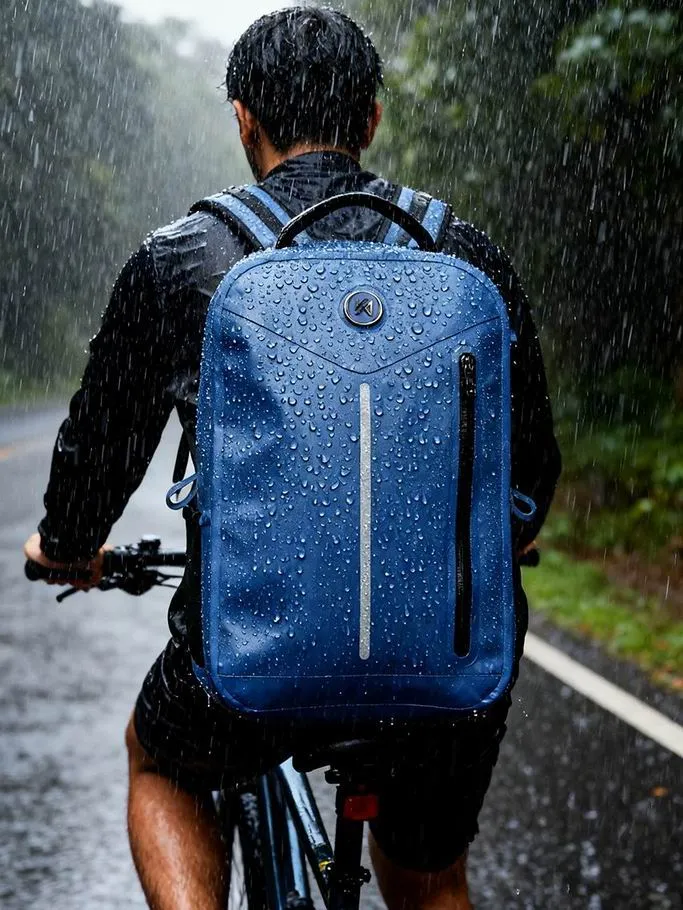
Waterproof camera bags are engineered against two failure modes that buyers habitually confuse. Water — rain, spray, immersion — kills electronics in one event and is stopped by the shell: welded seams, waterproof closures, the ingress-protection ladder our IPX rating guide maps band by band. Moisture — ambient humidity, condensation cycles, tropical air — is the slower assassin: it fogs internal elements, feeds lens fungus that etches coatings permanently, and corrodes contacts over months. Moisture defense is a sealed-chamber problem rather than a fabric problem: dry-access interiors with gasketed closures, desiccant pockets sized to hold a full indicator load, and materials that do not outgas vapor into the optic chamber. A bag that stops rain but breathes humidity into the lens space has solved half the brief — which is why photography builds specify the interior with the same rigor as the shell. The ingress codes behind those ratings are published by the International Electrotechnical Commission, which gives "splash-proof" and "immersion-proof" a testable definition rather than a negotiated one.
The condensation event deserves its own line: moving gear from cold exteriors to warm interiors drops dew onto every surface. Sealed chambers buffer the transition, letting the glass acclimate inside a dry envelope instead of fogging in the open — the difference between a bag and a case.
The photography program channels
| Channel | Primary formats | Defining duty | Unit cost (500+) |
|---|---|---|---|
| Working photographers | Camera backpacks, sling systems, lens cases | Weather + impact + fast access | $4.20–$9.80 |
| Drone & gimbal operators | Transport cases, FPV kits | Submersion-class shells, prop protection | $5.90–$11.20 |
| Media & production crews | Wrangler totes, media cases | Site duty, run-and-gun access | $3.40–$7.20 |
| Brands & rental fleets | Branded line cases, rental kits | Presentation + fleet durability | $4.60–$10.40 |
Working shooters buy the access-to-protection ratio: a wedding shooter in a drizzle needs one-hand flap access that still seals; a landscape shooter in a downpour accepts slower roll-top access for full submersion-class closure. Drone operators buy the hardest brief in the category — flight gear into field sites, salt air at the coast, and prop-and-gimbal impact protection that coexists with welded waterproof shells, the same dual-protection architecture our tech bag guide documents for electronics generally. Media crews buy wrangler builds that keep cards, batteries, drives and gaffer kit dry through site runs — the site-duty logic the production channel of our event industry guide covers. Brands and rental houses buy fleet durability with presentation: the rental counter’s kit is the brand’s storefront.
The camera backpack: protection plus access
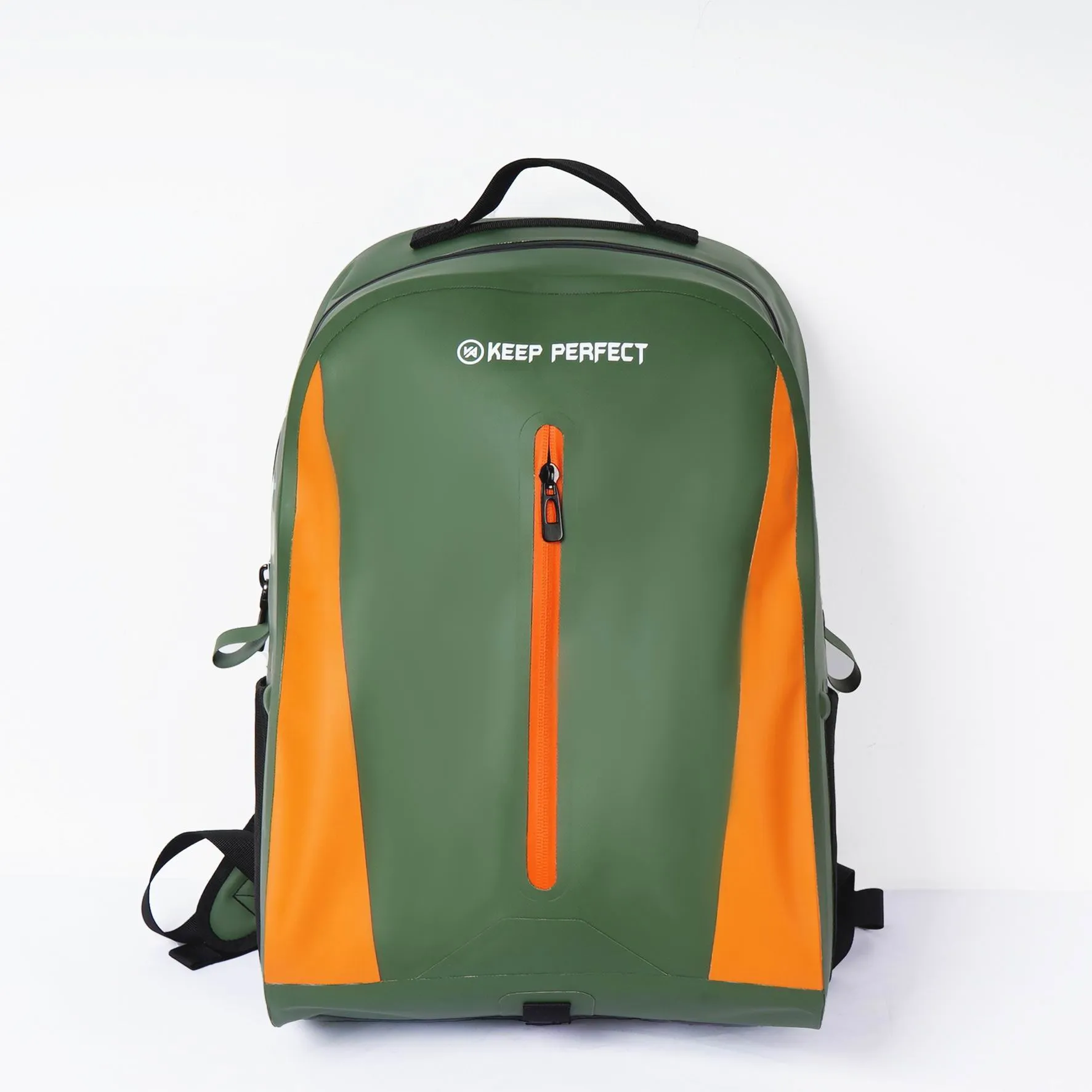
The camera backpack is the category’s workhorse and its hardest engineering problem, because it must do three things at once: keep water out, absorb impact, and deliver gear to hand in seconds. The shell runs the splash-to-downpour band — 500D TPU-laminated body, welded seams, storm-flapped zippers or roll-top closures — the same fabric discipline our waterproof backpack guide applies to the general category. The interior is where photography diverges: suspended padded dividers that decouple glass from shell impacts (the 15–25mm suspension architecture our tech bag guide specifies for laptops), configurable partitions sized to the actual kit list, and lens cradles that grip hoods rather than press glass against fabric. Access is the third axis: side-entry compartments for run-and-gun, rear-clamshell openings for safe changes on wet ground, and the harness discipline — hip-belt load transfer, the strap engineering our load stress testing guide measures — that a 12-kilogram kit demands.
The moisture layer completes the build: sealed internal chambers for bodies and glass, desiccant pocket at every chamber, and a rain-day protocol printed into the design — flap-over closures, drain channels at the base, nothing that pools.
Lens and accessory cases: the sealed-chamber standard
Lens cases are where moisture defense is won or lost, because glass spends its storage life there. The specification: welded-perimeter chambers with gasketed closures, non-outgassing interior materials (the laminated foams and liners that do not shed vapor into the optic space), cradle geometry that grips the hood and clears the front element, and a desiccant-and-indicator pair visible without opening. Accessory micro-cases run the same discipline for cards, batteries and drives — media is the assignment itself, and a wet card is a lost wedding. The pouch engineering that protects small electronics through water and touch use is documented in our small electronics cases guide, whose optical-window and closure standards apply to the photographer’s belt kit identically. Lens and micro formats run $3.40–$6.80 at MOQ 500, and they reorder on a consumables calendar — the highest repeat rate in the category.
Drone and gimbal transport: the submersion-class edge
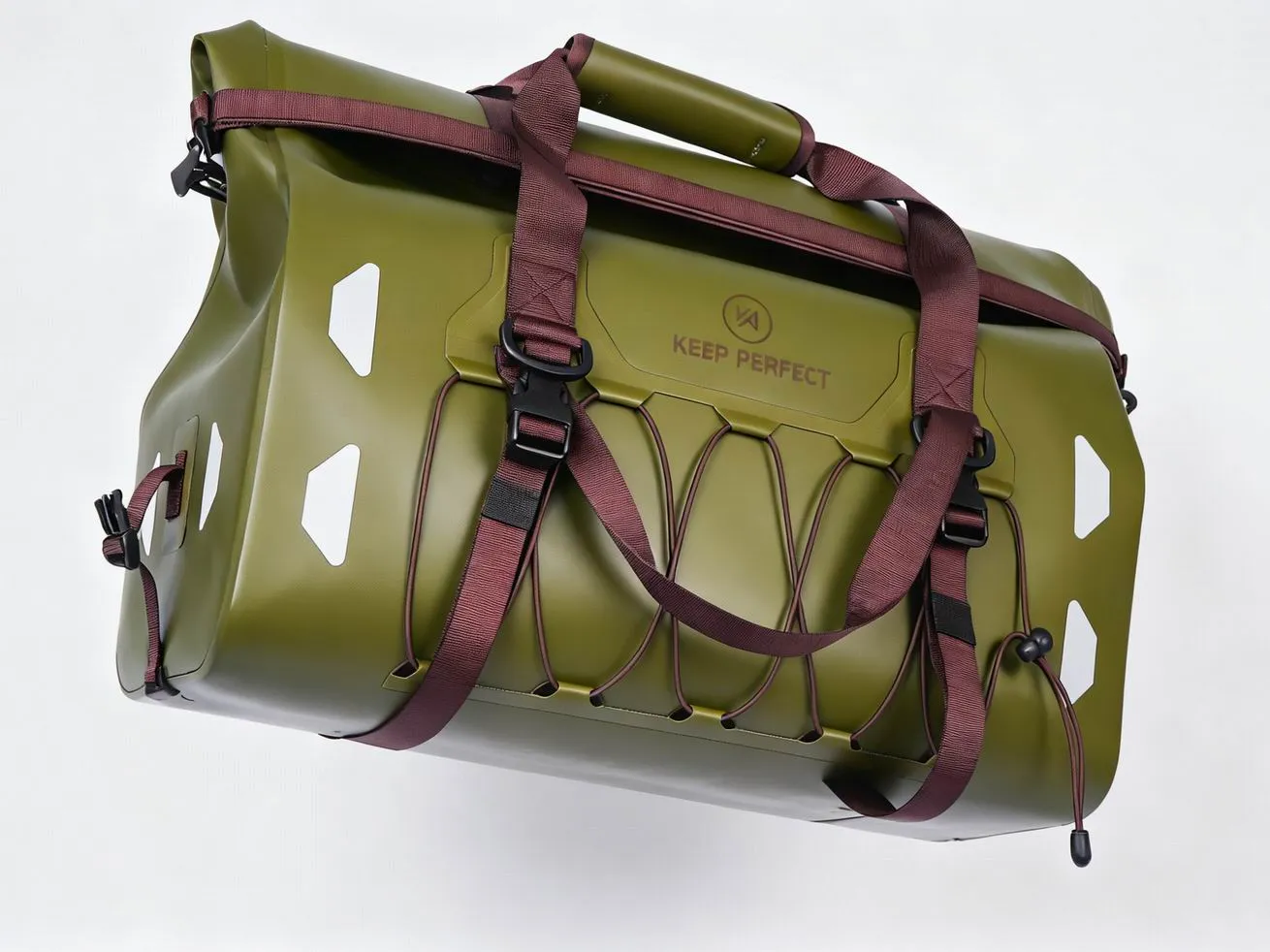
Drone duty pushes the category to its hardest corner: flight kits ride in trucks, boats and backpacks to locations where weather is the subject, and the case must deliver submersion-class water protection coexisting with impact-rated cradling for airframes, gimbals and controllers. The build pattern: welded hard-soft hybrid shells (a stiffened base for prop integrity, a soft waterproof upper for weight), form-cut suspension that locks arms and controllers against transit shock, sealed accessory chambers for batteries and props, and shoulder or backpack carry engineered for the field approach — the carry discipline our kayaking guide documents for wet-approach work. Coast and marine shooters add salt-air hardware and UV-stable faces, the marine materials ladder in our marine industry guide. Drone and gimbal builds run $5.90–$11.20 at MOQ 500.
The regulatory note travels with the kit: flight batteries carry transport rules that vary by carrier, and the case’s battery chambers are specified to the packaging discipline airlines accept — a detail worth confirming in writing at the artwork stage.
Impact architecture: waterproofing is not protection
The category’s most expensive confusion is treating a waterproof shell as camera protection. Water rating keeps the rain out; it does nothing for the tripod leg that lands on the pack. Photography builds therefore specify two independent systems: the waterproof shell described above, and an impact architecture underneath — closed-cell suspension, cradled partitions, reinforced base plates that spread point loads, and corner protection at the drop statistics’ favorite zones. The dual-protection logic is the core argument of our electronics protection guide, and the camera version simply tunes the numbers: glass survives what laptops cannot, and the suspension specs rise accordingly. A bag with either system alone is half a product; the specification conversation at the factory should name both systems explicitly, because "waterproof camera bag" is not a protection claim until the impact layer is in the pattern.
Optical windows and quick-access engineering
Modern shooting runs through screens — camera LCDs, drone controllers, phone rigs — and the window engineering decides whether the seal opens in the field. The standard is optical-grade TPU at the thickness that balances touch sensitivity with clarity (the 0.18mm optical window our phone pouch guide documents), sized generously around the device it serves, with anti-glare finish for daylight review. Quick-access flaps add the one-hand discipline: magnetic or buckle closures that a gloved or occupied hand can open, storm-flapped so the access point is not the leak point, and geometry that lets the camera rotate to shooting position without leaving the shelter of the flap. The window-and-flap engineering is where photography builds earn their custom premium — it is precisely the feature retail bags standardize poorly.
Program patterns: who orders photography builds
| Buyer type | Typical program | Order shape |
|---|---|---|
| Working photographers | Personal kit: backpack + lens cases | 500-unit runs via brand channels |
| Production & media houses | Crew wrangler builds, media cases | 500–1,500 units, season calendars |
| Camera & drone brands | Branded line, retail packaging | 500–5,000 units, product cycles |
| Rental fleets | Rental kit cases, fleet identity | 500–2,000 units, replacement ratios |
The brand channel is the category’s quiet engine: camera and drone brands order custom-branded protection as product-line accessories, where the case is part of the purchase experience — the private-label path our private label vs white label guide compares for exactly this buyer. Rental fleets order durability with identity: a rental counter’s branded case is advertising that travels with every shoot it serves. The crossover with destination and travel shooting — the assignment side of the category — is covered in our destination shoots guide, and the dedicated lens-case formats in our lens cases guide.
Photography program economics at MOQ 500
| Program element | Unit cost adder | Notes |
|---|---|---|
| Suspended divider system (vs flat pads) | +$0.90–$1.80 | The impact layer glass demands |
| Optical TPU window + anti-glare | +$0.30–$0.60 | Touch-through screen operation |
| Hard-soft hybrid shell (drone builds) | +$1.20–$2.40 | Prop-safe base, waterproof upper |
| Desiccant + indicator chambers | +$0.15–$0.30 | Moisture defense made visible |
| Brand print/embroidery, 1–2 colors | +$0.15–$0.35 | Retail-grade finish for brand channels |
A representative working-photographer backpack program lands at $6.80–$9.80 per unit at MOQ 500: welded 500D shell, suspended divider interior, optical window pocket, moisture chambers with indicator visibility. The repair-math case writes itself: one fogged element service exceeds the fleet premium, and a water-killed body exceeds the entire order.
Sampling against real glass
Photography samples validate against the actual kit, not a stand-in: the buyer’s own body, two representative lenses, the controller, the laptop. The protocol is the golden-sample standard — 6–10 working days per configuration at $60–$150, credited against bulk — with two category-specific tests: the spray-and-access drill (open, swap lens, close, all inside thirty seconds of drizzle) and the condensation run (cold glass into the warm case, inspected for fog at the chamber window). The production chain from golden sample to bulk readiness is documented, and bulk runs 35–50 days at AQL 2.5 with the interior configuration frozen at the approved sample.
The wedding and event shooting segment
Wedding and event shooters are the category’s highest-access-pressure buyers: outdoor ceremonies run on fixed schedules in delivered weather, and the shooter works a two-body, four-lens kit through a six-hour day with no second chance at any frame. The segment’s build pattern is the fast-access hybrid — a sling or belt-mounted system for the working pair of bodies and lenses, backed by a sealed roller or backpack for the reserve glass and the media wallet. The critical spec detail is the media chain: cards move from camera to wallet to backup drive on a rhythm, and every hop is a water event — the wallet therefore runs the sealed-chamber discipline this guide has already specified, sized to the shooter’s actual card count, with a bright interior so a black card in a dark chamber is never lost to the day. Wedding programs frequently order per-lead: a studio with three shooters runs three identical kits against one 500-unit order with room for the season’s replacement cycle, the per-department split pattern the event crew channel uses in our event industry guide.
Maintenance and service life
Waterproof camera cases are service items with protocols, not purchases with luck. The shell maintenance is simple — rinse salt and grit off, dry shaded, inspect the closure tracks for sand — and the chamber protocol is the one that matters: recharge or replace desiccant on the calendar the indicator defines, and re-indicate after every heavy-exposure day. Closure service life follows cycles rather than years: storm-flapped zipers are rated in thousands of operations, roll-top stiffeners flex-fail eventually, and both are replaceable at the pattern level — a maintenance note worth requesting at the artwork stage. The realistic service math: a specified build carries daily for four to six shooting years where a retail hybrid fails inside two, which is why rental fleets — the hardest users in the category — standardize on custom programs and reorder on replacement ratios rather than on failure.
Spec your photography program
- Shell band: splash-to-downpour for run-and-gun, submersion-class for marine and drone duty
- Impact layer: suspended dividers, cradle partitions, reinforced base — named in the pattern
- Moisture defense: sealed chambers, desiccant + indicator pairs, non-outgassing interiors
- Access: optical windows, one-hand flaps, side or clamshell entry per shooting style
- Kit-fit: interiors patterned to the actual gear list, frozen at golden sample
- Calendar: sample before the season, bulk before the first assignment window
Frequently Asked Questions
Q1. What makes a camera bag waterproof rather than water-resistant?
Welded or taped seams, waterproof-rated closures — storm-flapped zippers or roll-tops — and a laminated shell, banded on the IPX ladder our rating guide documents. Water-resistant fabric alone is a coating claim, not a system.
Q2. What is the MOQ for custom waterproof camera bags?
MOQ 500 per design, splittable across the photography family — backpacks, lens cases, micro-cases and drone builds mix against one 500-unit basis.
Q3. How much do custom waterproof camera bags cost?
Working backpacks $6.80–$9.80, lens cases $3.40–$6.80, wrangler builds $3.40–$7.20, drone transport $5.90–$11.20 at MOQ 500. Suspended divider systems add $0.90–$1.80, optical windows $0.30–$0.60.
Q4. Does a waterproof bag protect cameras from drops?
Only if the impact layer is specified too: suspended dividers, cradle partitions and reinforced bases absorb shock while the shell keeps water out. The two systems are engineered separately — our electronics protection guide documents the dual-system architecture.
Q5. How do waterproof bags prevent lens fungus?
Sealed chambers built from non-outgassing materials, gasketed closures and desiccant-with-indicator pairs keep ambient humidity off the glass — moisture defense is an interior engineering discipline, not a shell property.
Q6. Can you shoot through the bag windows?
Yes — optical-grade TPU windows at touch-responsive thickness pass touchscreen operation and daylight review; the window engineering our phone pouch guide documents is the same standard applied to camera LCD pockets.
Q7. Are there waterproof bags for drones and gimbals?
Yes — hard-soft hybrid shells with welded waterproof uppers, form-cut suspension for arms and controllers, sealed battery chambers and field-carry systems rated for wet-approach locations. Drone builds run $5.90–$11.20 at MOQ 500.
Q8. How fast can photographers access gear in the rain?
One-hand flaps and side-entry compartments deliver body-to-hand in seconds under storm-flapped protection — the spray-and-access drill is a standard sample validation: open, swap, close inside thirty seconds of drizzle.
Q9. Can media and memory cards stay dry on site?
Sealed micro-cases with gasketed closures protect cards, drives and batteries — media is the assignment, and the micro-case formats run the moisture discipline our small electronics guide documents.
Q10. Do camera brands order custom protection as accessories?
Yes — branded case lines ship as product-line accessories with retail-grade finish, the private-label channel our white label comparison guide covers for exactly this buyer.
Q11. What fabrics are used for waterproof camera bags?
500D TPU-laminated bodies with welded seams for the shell band, closed-cell suspension and non-outgassing laminates inside, reinforced base plates under the glass — denier follows duty, the ladder in our backpack guide.
Q12. How do I test a camera bag sample properly?
Load your actual kit, run the spray-and-access drill, and do the condensation test — cold glass into the warm chamber, inspected for fog. Samples run 6–10 working days at $60–$150, credited against bulk.
Q13. What is the production timeline for camera bag orders?
35–50 days after golden-sample approval at AQL 2.5 inspection, with the interior configuration frozen at the approved sample — the full chain is documented step by step in the production guide.
Q14. Can one order mix backpacks, lens cases and drone builds?
Yes — the MOQ 500 basis splits across the whole photography family on one production calendar with one golden-sample standard.
Q15. Are rental fleets a fit for custom programs?
Rental counters order durability with identity: branded fleet cases that survive rotation cycles while advertising the brand on every shoot — 500–2,000-unit programs on replacement ratios.
Q16. How do we start a photography program?
Send the gear list, the shooting conditions and the access style — the quotation returns in 24–48 hours, samples follow in 6–10 working days patterned to the actual kit.
Q17. How long do waterproof camera cases last?
Daily-carry service life runs four to six shooting years for specified builds, with closure tracks and desiccant on maintenance calendars — rental fleets, the hardest users in the category, reorder on replacement ratios rather than failures.
People Also Ask
What is a waterproof camera bag?
A two-system case: a welded waterproof shell against rain and immersion, plus an impact architecture of suspended dividers and cradle partitions — with sealed moisture chambers defending glass against humidity and fungus between shoots.
Are waterproof camera bags worth it?
One fogged element service or water-killed body exceeds a whole custom fleet — and moisture defense prevents the slow fungus failure that shell bags miss entirely.
Can drones fly in rain with waterproof bags?
Flight rules aside, the transport case is what gets the kit to the location dry: submersion-class welded shells with prop-safe suspension for boats, trucks and wet approaches.
How do photographers keep lenses dry in humidity?
Sealed chambers, non-outgassing interiors and desiccant-indicator pairs — a condensation protocol that buffers cold-to-warm transitions instead of letting glass fog in the open.
What does a custom camera bag cost at wholesale?
From $3.40 for lens cases to $11.20 for drone transport builds at MOQ 500, with the suspended-division impact layer at +$0.90–$1.80.
Do camera brands sell custom waterproof cases?
Yes — branded protection lines are standard product-line accessories, produced on the private-label model our white label comparison guide documents.