A custom waterproof laptop bag is really two protection systems in one product: a water management system (splash-band fabric, sealed seams, water-resistant zippers) and an impact management system (suspended sleeve, floating floor, padded walls) — and the expensive mistakes happen when a quotation delivers one and assumes the other. The device riding inside costs $800–$3,000, which reorganizes every spec decision: a $6 saving on the build becomes a $1,500 warranty claim the first time the bag meets a curb. This guide covers the complete spec for custom waterproof laptop bags and tech backpacks — the suspension engineering, the water band, materials, organizer design, program pricing at MOQ 500, and the briefing language that gets electronics protection taken seriously by the factory.
Working reference: QUANZHOU JUNYUAN BAGS, custom waterproof bag production since 2014 from a 4,950 m² SGS-verified facility running 7 lines, 149 machines and 137 staff at 200,000 pieces monthly. MOQ 500 per design, samples 6–10 working days, bulk 35–50 days, AQL 2.5 inspection, 30/70 T/T, FOB Xiamen, shipping to 100+ countries.
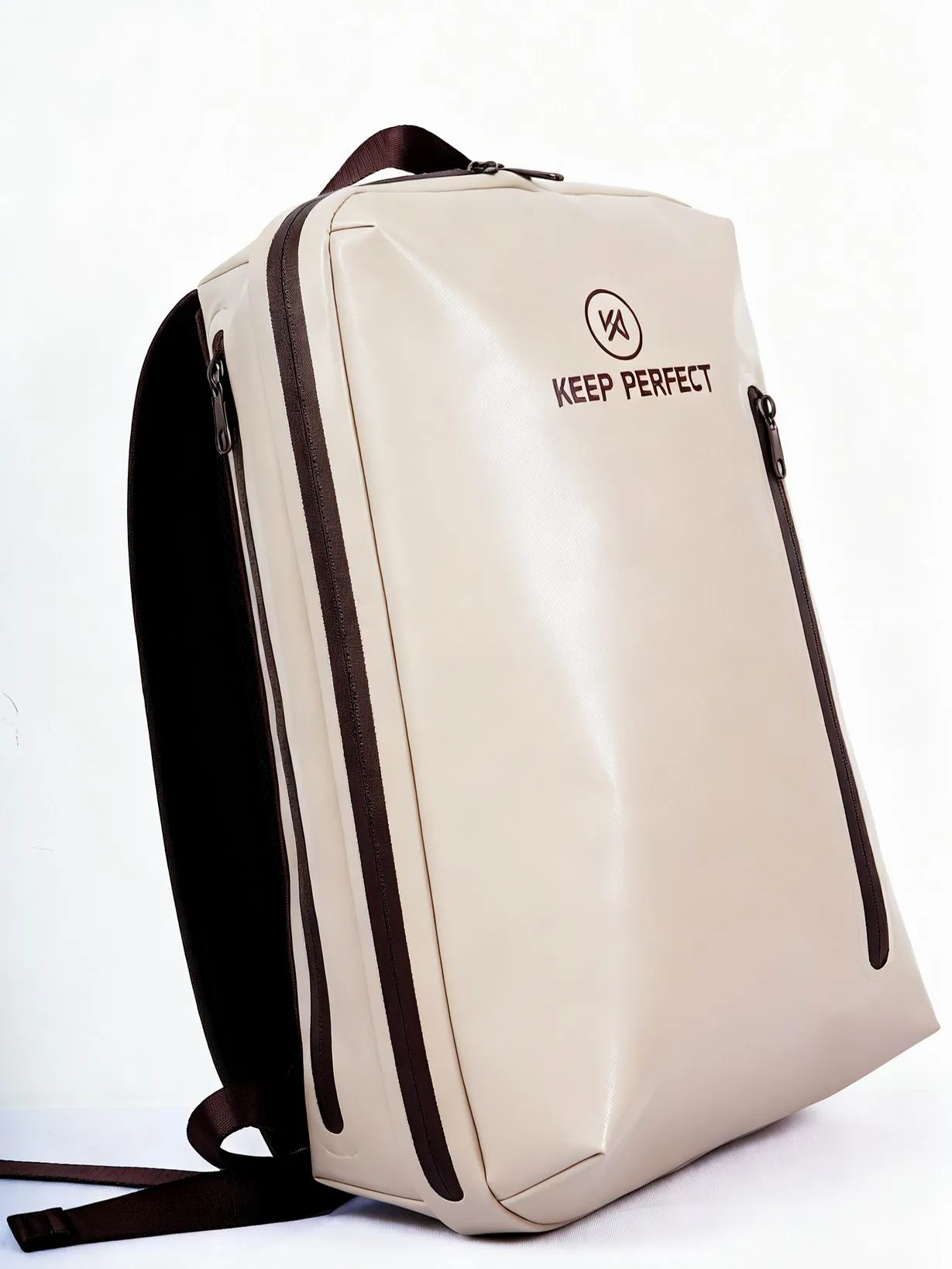
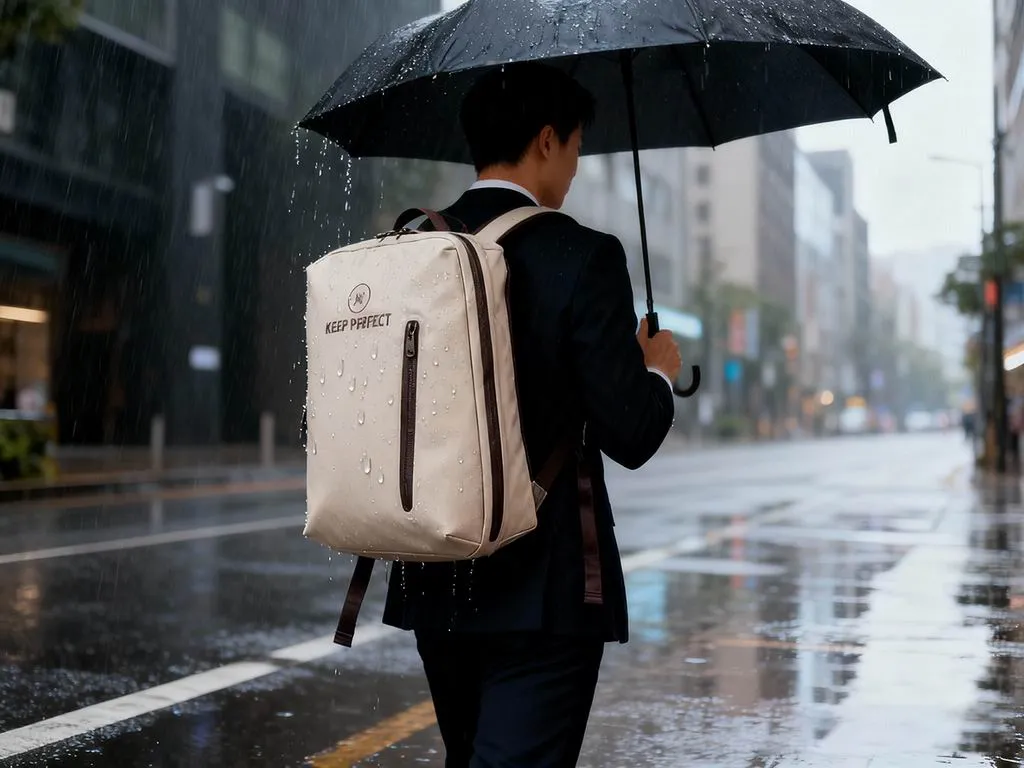
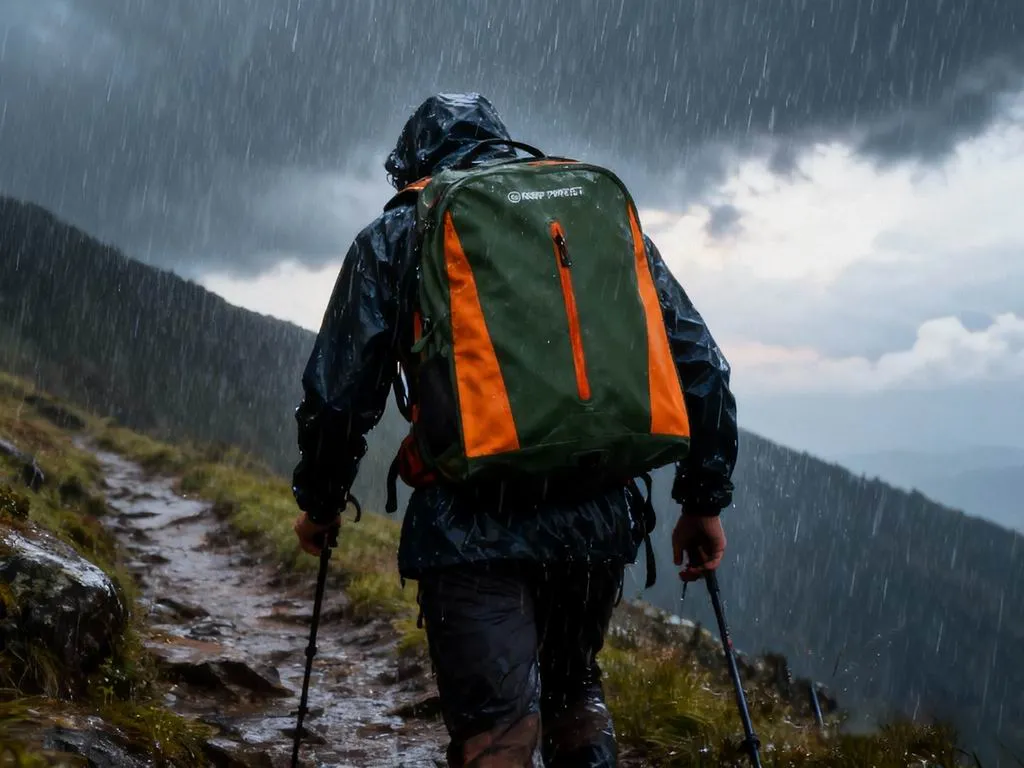
The threat model: what actually kills laptops in bags
A custom waterproof laptop bag is two protection systems in one shell — water management and impact management — and waterproof tech backpacks that engineer both separately are the ones that survive three-year fleet audits. Electronics fail in transit through four mechanisms, in order of frequency: impact (the bag set down hard, dropped, or knocked off a seat — the shock travels through a bottom-resting device), liquid (rain during transit, spilled coffee in the overhead bin, wet umbrella in the same compartment), compression (the bag wedged under feet or crammed in a full rack, loading the screen), and grit (dust and sand working into ports and keyboards through loose closures). A serious tech backpack answers all four: impact through suspension, liquid through the water band, compression through structured walls, grit through engineered closures. The buyer’s shorthand for testing all of it: the device must survive the worst realistic commute day, not the average one.
| Threat | Mechanism | Engineering answer | Cost impact |
|---|---|---|---|
| Impact | Shock through base contact | Suspended sleeve + floating floor | +$0.60–$1.20 |
| Rain & splash | Water during transit | Splash band: coated body, WR zips, taped seams | +$0.40–$0.90 |
| Compression | Rack and footwell loads | Structured padded walls | +$0.50–$1.10 |
| Grit & dust | Port and keyboard ingress | Engineered closures, sealed organizer | +$0.20–$0.40 |
Sum the column: proper electronics protection adds $1.70–$3.60 to a build — the cheapest insurance attached to a four-figure device, and the line items a $4.99 catalog backpack quietly omits.
The suspended sleeve: the feature that defines the category
The difference between a laptop compartment and a laptop pocket is engineering: a pocket holds the device against the bag floor, transferring every set-down shock directly to the hardware; a suspended sleeve hangs the device 15–25 mm above the floor inside padded walls, so the impact path dies in foam instead of in the SSD. The spec language that matters: "suspended, padded sleeve with floating bottom, sized to device + 5 mm" — and the question that separates serious manufacturers: which devices does the quotation size the sleeve for, with cases on? A build sized for a bare 14-inch laptop fails the first customer who carries a 16-inch in a case, and returns follow.
- Suspension: device floor clearance 15–25 mm, four-sided padded walls
- Sizing: device dimensions plus case thickness plus 5 mm insertion slack
- Access: side-entry sleeves for commute security; top-entry for organization-first builds
- Secondary devices: tablet sleeve and document slip in the same architecture
- Fleece or tricot lining: screen-face contact material — scratch protection is part of water protection’s neighborhood
The sleeve is also where the two protection systems meet: in premium builds the sleeve becomes its own sealed sub-compartment — a welded TPU liner with a water-resistant top seal — so the electronics ride inside a second hull. That architecture is what allows a splash-band outer bag to make an honest claim about electronics safety, and it is the design pattern behind our electronics transport solutions.
The water band for tech programs: what the rating must be
Tech backpacks live in the splash band — the commute is rain between buildings, the taxi rank, the bike lane in drizzle — and IPX4 with coated fabric, water-resistant zippers and taped seams is the honest rating for that duty. Two upgrades earn their cost by use case: the jet band (IPX6, welded seams, flapped zippers) for cycling and motorcycle commuters who meet weather at speed, and the sealed sub-compartment or IPX8 sleeve insert for programs whose customers carry the bag through storms with irreplaceable data inside. The full rating logic is in our IPX rating system explainer, and the insert strategy — an IPX8 pouch riding inside a splash-band pack — is specified in our custom waterproof pouch guide.
One honest note on over-buying: fully submersion-rated laptop packs exist but serve a narrow niche (paddling professionals, field researchers). For the commuter market, submersion construction adds weight, kills organization and costs money the use case never collects. Match the band to the threat model and spend the savings on suspension.
Materials for tech builds
The material stack for laptop bags optimizes for clean structure and water management rather than trail abrasion: 600D–900D polyester with PU coating as the standard (dimensional stability keeps the sleeve geometry true through wet cycles), TPU-laminated panels for the jet-band and hybrid builds, and coated ripstop weaves where weight matters — the ripstop grid logic is in our ripstop technology guide. Interior materials are spec decisions, not afterthoughts: tricot-lined sleeves, closed-cell foam walls, and moisture-wicking back panels against the condensation problem that sealed backs create — the physics and the channel designs that solve it are covered in the anti-condensation design guide.
Organization: the spec that sells the bag
Tech backpacks are organization products that happen to be waterproof, and the spec sheet proves it: a dedicated sleeve architecture (laptop, tablet, documents), a cable and accessory system (elastic loops, zip pockets, a key leash), a quick-access phone or transit-card pocket positioned for one-handed reach, a bottle pocket that does not share a seam wall with the electronics compartment, and — the feature that converts at retail — a false-bottom or dedicated power bank pocket with a cable pass-through to charge in place. None of this is exotic; all of it is deliberate, and a quotation that lists "multiple pockets" instead of naming the organizer architecture has not engineered this product.
| Organizer zone | Spec | Retail story |
|---|---|---|
| Laptop sleeve | Suspended, floating floor, side entry | "Drop-tested protection" |
| Tablet + documents | Fleece-lined dual slip | Work-plus-personal separation |
| Cable system | Loops, zip pockets, key leash | "No more cable spaghetti" |
| Quick-access pocket | One-hand transit card reach | The daily-touch feature |
| Power bank pocket | Cable pass-through, false bottom | Charge-in-place conversion |
Who orders custom waterproof laptop bags
| Program | Configuration | Qty | The logic |
|---|---|---|---|
| Corporate IT & onboarding kits | 22L splash-band, company branding | 500–3,000 | Uniform device protection at fleet pricing |
| Universities & schools | CPSIA-grade 20–25L with sleeve | 1,000–5,000 | Student programs; compliance-grade build |
| Tech brand GWP & bundling | Format matched to product, co-brand | 1,000–10,000 | The bag sells the ecosystem |
| Distribution & field service | Jet-band 25L + tablet suspenders | 500–2,000 | Devices in weather, all day |
| B2B reseller private label | Full family: 18/22/28L | 1,000–4,000 | Retail line across the size curve |
| Conference & events | Simplified 18L with branding | 1,000–5,000 | The functional premium over swag |
The corporate onboarding row deserves emphasis: IT departments buying device protection at fleet scale are the anchor customer of this category, and the build that wins them is the one whose quotation reads like a protection spec — named sleeve architecture, named water band, named test evidence. The education variant carries the CPSIA children’s-product requirements documented in our compliance testing guide.
Tech bag program economics at MOQ 500
| Build | Band | Unit cost (500+) | Typical retail | Channel |
|---|---|---|---|---|
| 18L event/compact build | IPX4 | $4.80–$6.40 | $29–$49 | Events, GWP |
| 22L commuter, full organizer | IPX4 | $5.60–$7.80 | $45–$79 | Corporate IT, retail |
| 25L cycling/jet band | IPX6 | $7.60–$9.90 | $69–$109 | Cycle retail, field service |
| 22L with sealed sub-compartment | IPX4 + IPX8 liner | $7.20–$9.40 | $79–$119 | Premium, data-critical |
Read the margin column against the device column: a $45–$79 retail band protecting an $800–$3,000 device sells itself on arithmetic, and the corporate fleet buyer pays the retail-band logic 500 units at a time. MOQ 500 splits across the family — a launch line of 250 commuters, 150 compacts and 100 jet-band cycling builds is one order and one calendar. Full cost mechanics are in the cost breakdown guide.
Branding the corporate tech bag
Tech bags are carried into offices and meetings, which raises the branding bar from "visible" to "presentable": tonal embroidery on fabric zones, debossed logo plates for the premium tier, full-panel prints for the consumer-retail tier, and — the corporate favorite — a discreet exterior logo with a full-brand interior print (the user sees the brand every day; the meeting room sees a clean bag). Pantone matching at Delta E ≤2 keeps a mixed-format fleet reading as one family. Method selection with cost bands is in our logo options guide.
Testing and evidence: what tech buyers should demand
The procurement screens that work for this category: drop-test evidence for the loaded sleeve (the factory’s suspension builds are tested with weighted loads, and the honest answer includes the height), water-band verification per the IPX ladder, load-stress records on strap anchors for the daily-weight duty cycle, and the CPSIA/REACH documentation for the markets in play. The load-path test regime is in our load stress testing guide, and the third-party lab architecture — what to send, what to read, what to file — is in the third-party testing labs guide.
Sampling: the drop test on your own device
The tech-bag sample session is the most convincing five minutes in this category: load the sleeve with the actual device (or a same-weight surrogate for the brave), drop the closed bag from desk height, and check the suspension’s story — then walk it through a garden-hose spray and open it dry. Samples run 6–10 working days at $60–$150, credited against bulk, and the golden sample becomes the AQL 2.5 reference for production. What to verify on the sample: sleeve sizing with cases on, zipper action with gloves (winter commutes), cable pass-through function, and the back-panel comfort loaded. The full protocol is in our sampling guide.
Common spec mistakes — and their device price tags
- Floor-contact sleeves: the $0.60 suspension saving that turns one set-down into a warranty claim
- Shared wall bottle pockets: condensation and cap leaks migrate through the seam into the sleeve zone — spec separated walls
- Bare-device sizing: a sleeve sized without case tolerance generates the return cycle
- Submersion overbuy: jet money spent on office commutes buys weight, not protection
- Adjective organizers: "multiple pockets" without architecture means the cable spaghetti shipped anyway
- Skipped drop test: a suspension spec without test evidence is a hope, not an engineering claim
The device-mix question: fleets are not uniform
Corporate programs order for mixed device fleets — 13-inch ultrabooks for sales, 16-inch workstations for engineering, tablets for field crews — and the sleeve architecture has three ways to answer. The sized-family route builds 18L, 22L and 28L formats around each device class, which the MOQ split covers in one order. The universal-suspension route builds one sleeve sized to the largest fleet device with an adjustable false bottom for smaller machines, which trades precision for SKU simplicity. The insert route builds one 22L chassis with swappable sized sleeves — the IT-department favorite, because devices turn over every three years and the chassis does not. The decision belongs in the briefing sheet’s device line, not in the factory’s default, and it is worth an explicit conversation at quotation: the wrong route shows up as either over-built small sizes or under-protected large ones.
The refresh-cycle economics matter beyond the sleeve: device fleets turn over on a 3–4 year cadence, and a program built around the insert architecture survives the refresh with a reorder of sleeves instead of a full bag program — a total-cost-of-ownership argument that wins procurement conversations on its own.
The briefing sheet for tech bag programs
- Devices: the exact models and case habits the sleeve must fit
- Threat model: commute profile — station-to-office, bike, motorcycle, field
- Band: splash standard, jet for speed exposure, sealed liner for data-critical
- Organizer priorities: the three features the users complain about today
- Branding tier: discreet corporate, full-panel consumer, or interior-brand play
- Markets and compliance: US/EU, education programs flagged for CPSIA
- Retail band: the price tier the program must land in
- Calendar: the onboarding or launch date the goods must beat
Send those eight lines and the reply returns in 24–48 hours: a sleeve architecture sized to your device list, the water band with test references, a costed build at MOQ 500, and a sampling plan. QUANZHOU JUNYUAN BAGS — custom waterproof tech bags since 2014, 4,950 m² SGS-verified facility, 7 lines, 149 machines, 137 staff, 200,000 pieces monthly, samples 6–10 working days, bulk 35–50 days, AQL 2.5, 30/70 T/T, FOB Xiamen, 100+ countries. The production chain from first inquiry is, and the complete manufacturing reference is the manufacturing guide.
Frequently Asked Questions
Q1. Are waterproof laptop bags worth it?
Against the device column, the math is one-directional: $1.70–$3.60 of protection engineering (suspension, band, structure) safeguarding an $800–$3,000 laptop through years of weather. The bag is the cheapest component in the system it protects.
Q2. Can a laptop bag be fully waterproof?
The outer bag reaches splash band (IPX4) or jet band (IPX6) honestly; full submersion protection for the device comes from a sealed sub-compartment — a welded TPU liner sleeve — or an IPX8 insert, which is how premium builds make honest claims about electronics.
Q3. How much do custom waterproof laptop bags cost?
At MOQ 500: compact 18L builds $4.80–$6.40, the standard 22L commuter $5.60–$7.80, jet-band 25L $7.60–$9.90, and the sealed-liner premium $7.20–$9.40. Retail lands $29–$119 across the family.
Q4. What is the minimum order?
MOQ 500 per design, splittable across sizes, colors and bands — a three-format launch line ships as one order and one production calendar.
Q5. What size laptop bag do I need?
Size the sleeve to the device list, not the bag to the torso: device dimensions plus case thickness plus 5 mm. Program-standard builds fit 16-inch machines in cases; bare-device sizing is the classic return generator.
Q6. How does a suspended sleeve work?
The device hangs 15–25 mm above the bag floor inside four-sided padded walls, so set-down and drop shocks die in the foam instead of traveling through the hardware. It is the single feature that separates laptop bags from bags with laptop pockets.
Q7. Are these bags good for cycling commutes?
The jet-band builds are: welded seams and flapped water-resistant zippers survive weather at cycling speed, plus structured walls for rack duty. Add the reflective options and the load-stress-rated anchors for daily riding.
Q8. Can I charge my device inside the bag?
On builds with the power bank pocket and cable pass-through, yes — a false-bottom accessory pocket feeds a cable through a grommeted channel to the sleeve. It is the retail-conversion feature of the category.
Q9. Do the bags protect against drops?
The suspension builds are drop-tested loaded: sleeve architecture plus padded structure is designed to survive desk-height drops of a sleeved device. Ask for the test height in the quotation — an honest manufacturer states it.
Q10. What materials are used?
600D–900D polyester PU-coated as the standard, TPU-laminated panels for jet-band and hybrid builds, tricot-lined sleeves, closed-cell foam walls, and moisture-wicking back panels against sealed-back condensation.
Q11. Can we brand them for corporate programs?
Yes — tonal embroidery, debossed plates, full-panel prints or the corporate-favorite discreet-outside/full-interior branding. Pantone matching at Delta E ≤2 across a mixed-format fleet.
Q12. Do school programs need special compliance?
Yes: products for children 12 and under run the CPSIA children’s regime — third-party testing at a CPSC-accepted lab, a Children’s Product Certificate, tracking labels. Our education builds run that stack as standard.
Q13. How long does production take?
Samples 6–10 working days, bulk 35–50 days after golden-sample approval, sea freight 4–6 weeks. Corporate onboarding cycles should sample a quarter ahead; reorders ship in 30–35 days.
Q14. Can I get samples first?
Yes — $60–$150 per configuration in 6–10 working days, all fees credited against the bulk order. The tech-bag sample session is the best test in the category: drop it loaded, spray it, open it dry.
Q15. What testing evidence should we require?
Drop-test data on the loaded sleeve, water-band verification, load-stress records on anchors, and CPSIA/REACH documentation for the markets. A spec without test references is a hope, not an engineering claim.
Q16. Do you make matching smaller cases?
Yes — the family extends to tablet sleeves, cable pouches and IPX8 sealed inserts, all splittable within the same MOQ 500 program as the parent bag.
People Also Ask
Can rain damage a laptop in a backpack?
Through a splash-rated bag in good condition, no — that is what the band certifies. The risk paths are the bargain bag’s soaked seam, the unzipped compartment in a downpour, and the wet umbrella sharing the sleeve. A proper build closes all three.
What is the best waterproof laptop backpack?
The one engineered as two systems: a splash-or-jet-band shell (coated fabric, water-resistant zips) plus a suspended, floating-floor sleeve. Brand names vary; the architecture is the answer — and the drop-test evidence is the proof.
Are laptop backpacks waterproof or water-resistant?
Most are water-resistant (splash band, IPX4); honest full-waterproof claims for the device require jet-band construction or a sealed liner sleeve. Check which band the quotation names — the words are not the spec.
How do I protect my laptop from rain daily?
A splash-band bag with taped seams and a water-resistant zipper, sized so the device rides suspended, plus the habit of zipping fully home. Cyclists and motorcyclists move up to the jet band.
What does a suspended laptop sleeve mean?
The device hangs above the bag floor inside padded walls — typically 15–25 mm of clearance — so shocks from set-downs and drops are absorbed by the structure rather than transferred to the hardware.
Do I need a rain cover for a laptop backpack?
Not for splash-band duty; for sustained downpours a stowable cover adds belt-and-suspenders security over the harness zone. Jet-band welded builds with flapped zippers generally skip the cover entirely.