No industry works its waterproof bags harder than marine and boating: salt spray, deck wash, tropical UV, wet storage and a customer base that measures value in seasons, not months — which is why personalized waterproof boat bags are a program purchase, not a merchandise afterthought. Charter fleets need branded dry bags that survive guests and salt; marinas need retail and amenity SKUs that sell at the fuel dock; boatyards and service crews need duffels that carry tools through washdowns; boat brands need gift-with-purchase kits that keep the logo on the water for years. This guide maps every marine buyer type to the formats, specs and program economics that work on the water — at MOQ 500, with the saltwater-grade construction that separates marine-grade from fashion-grade.
QUANZHOU JUNYUAN BAGS manufactures custom waterproof bags for marine programs since 2014 — 4,950 m² SGS-verified facility, 7 lines, 149 machines, 137 staff, 200,000 pieces monthly. MOQ 500 per design splittable across formats, samples 6–10 working days, bulk 35–50 days, AQL 2.5 inspection, 30/70 T/T, FOB Xiamen, delivery to 100+ countries.
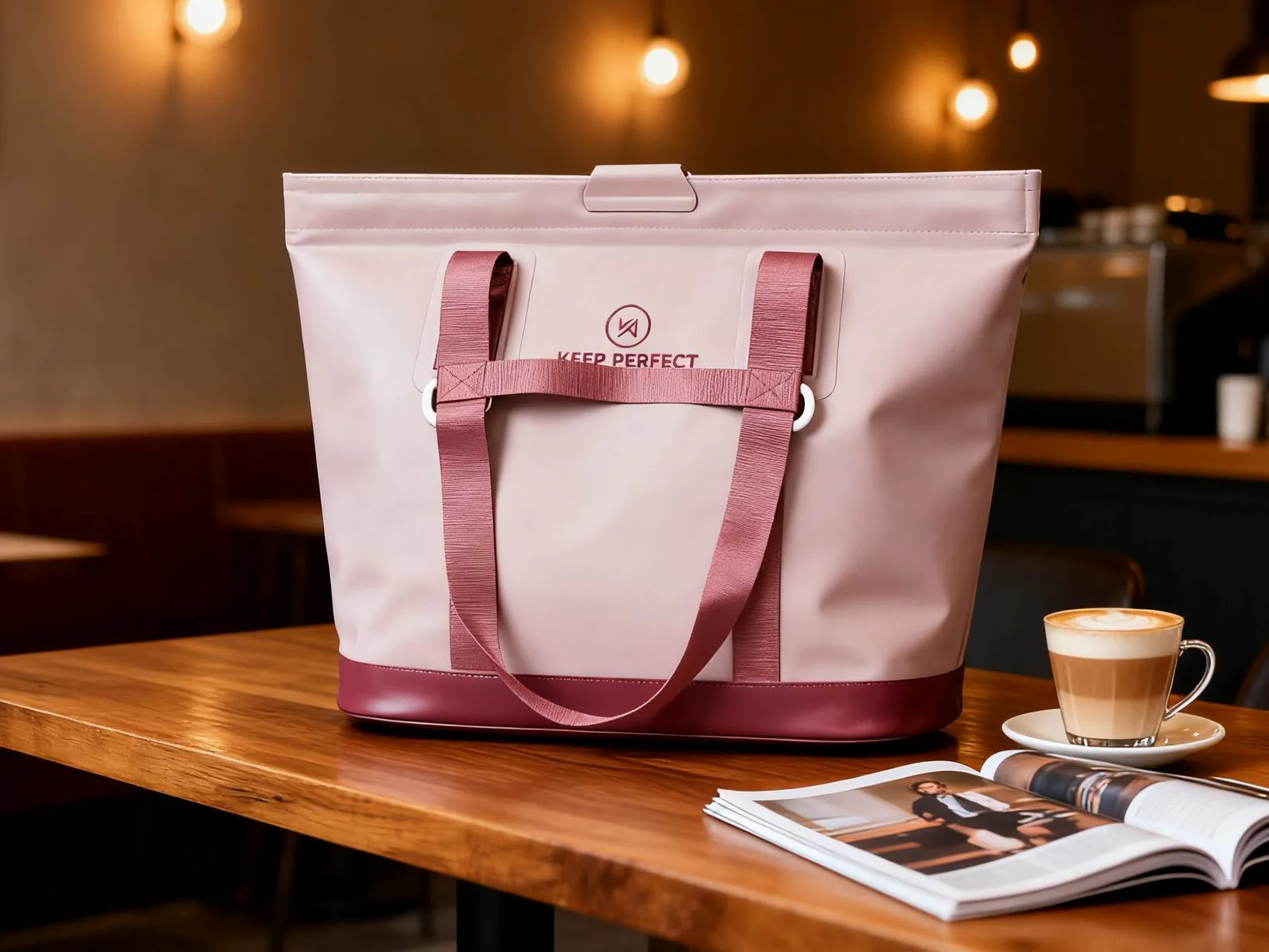
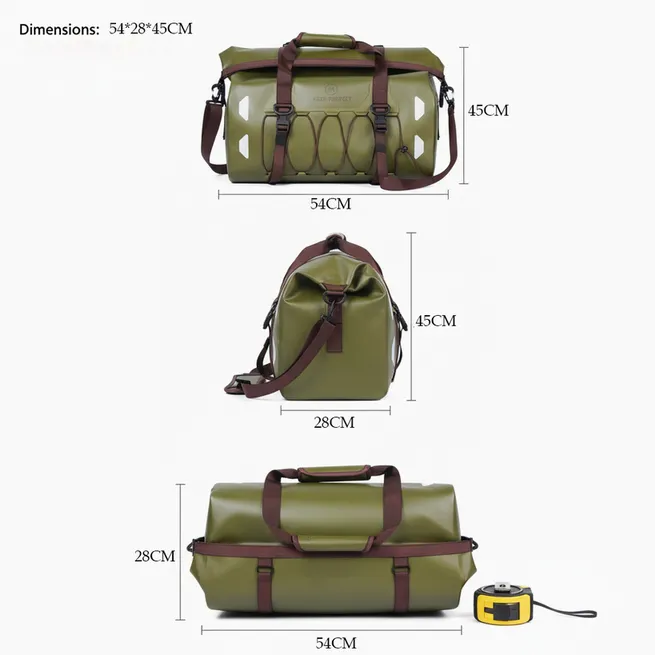
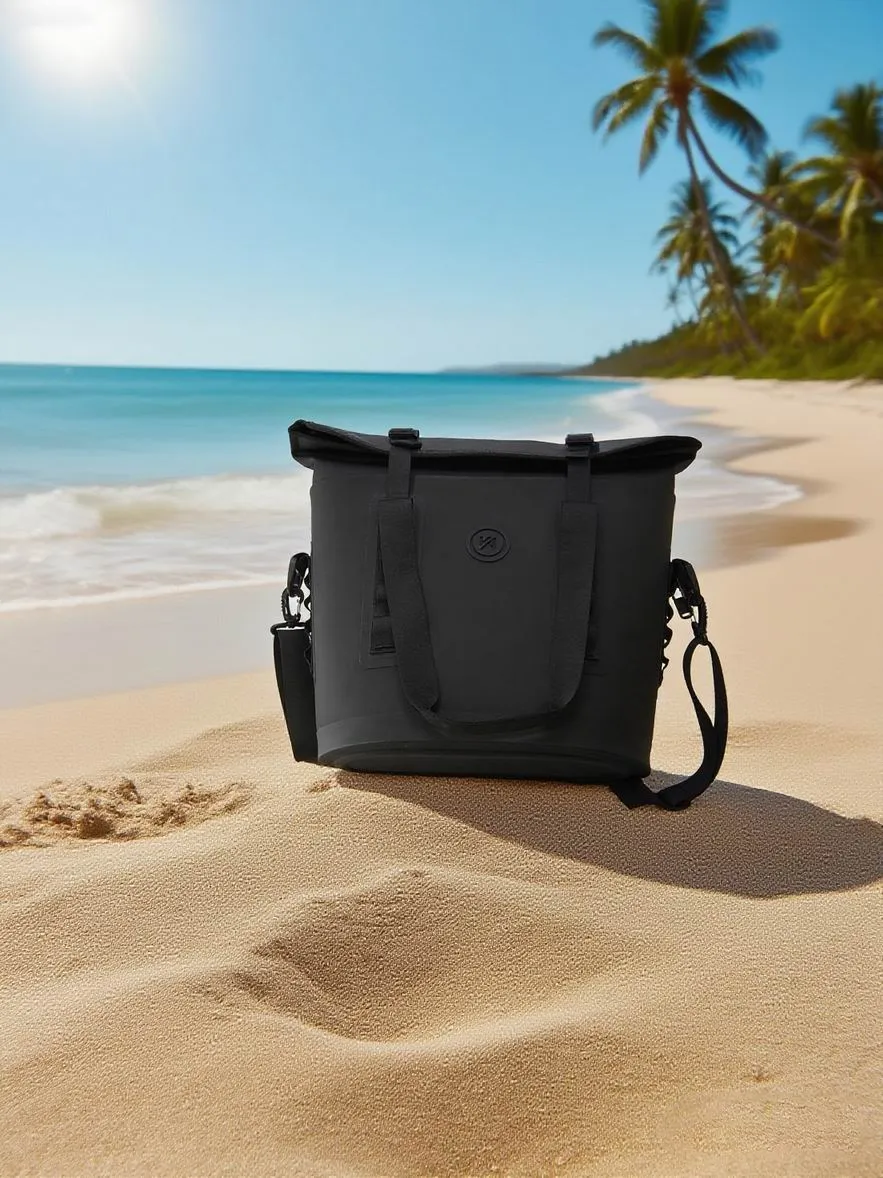
What makes a bag marine-grade: the saltwater spec
Marine buyers searching for personalized waterproof boat bags are really specifying marine waterproof bags that survive salt, sun and boarding abuse — the personalization is the second conversation. Marine duty destroys ordinary waterproof bags through four mechanisms, and the marine spec answers each one. Salt: hygroscopic crystals work into zippers, buckles and fabric coatings, so every closure must rinse clean and every metal component must be saltwater-rated. UV: a season of tropical sun embrittles standard TPU film, so marine builds specify UV-stabilized films and solution-dyed fabrics that hold color where ordinary prints chalk out. Mildew: wet storage is the norm on boats, so antimicrobial interior treatments and quick-drain mesh pockets keep a stowed bag from becoming a science project. Abrasion: decks, rails and non-slip surfaces are the hardest surfaces a bag meets daily, so base panels step up in denier and reinforcement.
| Failure mode | Standard bag | Marine-grade spec | What it buys |
|---|---|---|---|
| Salt in closures | Zips corrode by month two | Salt-rated hardware, rinse-through designs | A fleet season instead of a summer |
| UV embrittlement | Film cracks within a season | UV-stabilized TPU, solution-dyed fabric | Color and welds that hold year-over-year |
| Mildew in storage | Interior smells by July | Antimicrobial treatment, drain grommets | Guest-facing bags that stay presentable |
| Deck abrasion | Base wears through | 840D reinforced base panels | Rental-fleet life cycles |
| Constant spray | Splash rating overmatched | IPX6 minimum, IPX7 for overboard risk | Rating matched to real exposure |
The rating band for boats: IPX6 for spray-and-wash duty, IPX7 for anything that can go over the rail. The full logic of matching protection band to exposure is in our IPX rating system explainer.
The marine buyer map: who orders what
| Marine buyer | Program | Typical formats | Qty range |
|---|---|---|---|
| Charter & day-trip fleets | Guest kits + retail | IPX7 dry bags 10–20L, pouches | 500–3,000 |
| Sailing schools & clubs | Member gear + regatta kit | Dry bags, wet/dry separation totes | 500–1,500 |
| Marinas & fuel docks | Retail wall + amenity | Pouches, totes, cooler bags | 500–2,000 |
| Boatyards & service crews | Work uniform kit | Tool duffels, splash-rated packs | 500–1,000 |
| Boat builders & brands | Gift-with-purchase, dealer kits | Branded dry bags, document cases | 1,000–5,000 |
| Boat tour operators | Excursion kit + upsell retail | Boat bags, phone pouches, totes | 1,000–4,000 |
| Water taxi & ferry operators | Passenger amenity | Pouches, seat-back splash packs | 1,000–3,000 |
One pattern repeats across every row: marine programs buy bags that carry the brand through an experience — the charter guest who used the dry bag all week buys one at the dock shop before flying home. That is why the retail SKU and the operational SKU are usually the same design in two grades, split from a single MOQ 500 order. The island-hopping and boat-tour variant of that retail logic is developed in our boat tour programs guide.
Charter fleet programs: the flagship use case
A charter fleet runs the hardest cost-benefit analysis in the category: guest-facing quality against guest-proof durability. The working answer our fleet programs converge on: IPX7 roll-top dry bags in 10L and 20L, in fleet colors, screen-printed with the operator logo and the boat name, plus a phone pouch per guest position. The economics: at MOQ 500 the fleet program lands at $3.40–$4.90 per dry bag, survives 3–5 seasons of weekly rental cycles, and — the quiet revenue — sells at the dock for $25–$35 with the guests who watched it work all week. A bag that costs the fleet under $5 becomes a $30 retail sale and a walking billboard on every subsequent vacation photo.
The spec details that make fleets work: rolled-flat storage between charters, care wording printed on the bag for guests (roll three times — the two-cent fix that eliminates most field "leaks"), grommets for hanging drip-dry, and a numbered panel option for inventory control across the fleet. Rental-fleet durability economics and replacement-cycle planning are the same discipline we document in the warranty and return-rate analysis.
Marina retail and amenity: what sells at the dock
The dock shop is a low-dwell, high-impulse retail environment, and its best-sellers follow: phone pouches at $10–$15 (the customer is already carrying a wet phone), 5–10L dry bags at $20–$30 (beach-kit insurance), insulated cooler totes at $35–$50 (the ice-and-drinks run), and the 40L+ mothership duffel for the customer who forgot theirs. Branded with the marina or the town, these SKUs carry the highest margins in marine retail because the buying context does the selling. The cooler-tote crossover in particular over-indexes at marinas — the insulated-plus-waterproof hybrid is covered in our cooler bag guide.
- Dock-shop core four: phone pouch, 10L dry bag, cooler tote, 40L duffel — one MOQ 500 split covers the wall
- Price points: $10–$50 impulse band; margin multiples of 5–10× at MOQ 500 pricing
- Branding: marina name, town landmark, or boat-brand co-branding all convert at retail
- Seasonality: order for the season opening; reorders ship in 30–35 days for mid-season replenishment
Boatyard and service crew kit: work-grade waterproofing
The service side of the industry buys differently: tool duffels and packs that ride in open boats to job sites, splash-rated document cases for surveys and manifests, and crew totes that go through washdowns weekly. The spec skews IPX6 jet-band with reinforced bases — service gear meets deck wash and pressure rinsing, not immersion — and the branding doubles as crew uniform. Repair-visit gift options exist here too: the boatyard that hands a branded pouch back with every serviced boat buys measurable repeat-customer goodwill for under $2 a unit. The industrial duty-cycle cousin of this program — construction and utility crews — is mapped in our industrial applications guide.
Personalization and branding on the water
Personalized waterproof boat bags carry branding through environments that destroy it — which makes method choice a spec decision, not a style decision. Screen print holds on welded TPU for 3+ seasons when ink is matched to the film; full-wrap prints photograph beautifully and suit retail; embroidery belongs only on the fabric upper panels above the roll line (never on film); welded label frames carry woven patches where stitching cannot go; and hull-graphics-style vinyl transfers suit the boat-brand look. Pantone matching holds at Delta E ≤2 across the program, so the fleet bag, the retail bag and the crew kit read as one family — the method-by-method comparison is in our logo options guide.
The personalization pattern that outperforms everything else in marine: name the boat. A "S/V Meridian" print on a guest dry bag turns a fleet consumable into a keepsake — charter programs report guests asking to buy the bag with their boat’s name on it at disembarkation, at full retail. Variable-data printing on welded film is a standard option at setup, and the margins on sentiment are the best in the category.
Salt, sun and storage: the care program fleets run
Marine-grade bags live longest under a written care rhythm, and fleets that operationalize it cut replacement cycles measurably: fresh-water rinse of closures and hardware after salt exposure; bags dried and stored unrolled and hanging, not stuffed wet in a locker; zippers (on jet-band formats) flushed and lubricated monthly in season; and an annual UV inspection that retires films before they fail in a guest’s hands. The care print goes on the bag — we include it as standard — because the cheapest warranty program in marine is a crew that closes and rinses the bags correctly. The aging science behind the annual inspection — how UV and humidity actually consume films over years — is documented in our accelerated aging tests guide.
Marine program economics at MOQ 500
| Marine SKU | Spec | Unit cost (500+) | Retail band | Notes |
|---|---|---|---|---|
| Phone pouch, branded | IPX8 dual-snap, lanyard | $0.85–$1.60 | $10–$15 | The dock-shop starter |
| Dry bag 10–20L | IPX7 roll-top, UV film | $3.40–$4.90 | $25–$35 | Fleet + retail dual-use |
| Dry bag 40L | IPX7, backpack straps | $5.40–$6.40 | $45–$60 | The mothership SKU |
| Cooler tote 20–30L | Insulated + waterproof | $4.80–$7.20 | $35–$50 | Highest dock-shop margin |
| Jet-band tool duffel | IPX6, 840D base | $6.40–$9.80 | — | Crew kit, not retail |
| Document/survey case | IPX8, letter format | $2.40–$3.80 | $20–$30 | Surveyors, brokers, crews |
The MOQ 500 splits freely across this table: a marina launch typically runs 200 dry bags, 150 pouches, 100 cooler totes and 50 document cases from one order and one production calendar. Program-level cost mechanics — freight, duty, packaging — are mapped in the cost breakdown guide.
Sizing the fleet: capacity planning for boat programs
Boat bag sizing follows the vessel and the trip length: pocket-sized 5L for personals on day charters, 10–20L for a guest’s day kit, 40L for weekend and liveaboard kit, and the layered approach for expedition and multi-day programs. The capacity-per-format mapping — what actually fits at each liter count — is in our dry bag sizing guide. For sail-specific programs, the sail-race and yacht-cruising format choices are covered in the sailing and yachting guide, and for the consumer side of fishing programs, the fishing equipment guide maps tackle-side formats.
Sampling: the soak test before the season
Marine programs sample with a purpose: before committing fleet budget, the sample bag goes overboard. Our recommendation is literal — take the sample out on the boat, load it with a towel and a phone (in a pouch), roll it, throw it in the water for an afternoon, and see what comes back dry. Two samples in different formats cost $120–$300 total, arrive in 6–10 working days, and both sample fees credit in full against the bulk order. What to check on a marine sample specifically — UV film grade, salt-rated hardware, weld bead uniformity, grommet setting, print adhesion on film — is covered in our sampling guide.
Common mistakes in marine bag programs
- Fashion-grade buys: non-UV film chalking out mid-season is the most common first-order mistake in the industry
- Under-rating the exposure: splash-rated bags on boats that ship green water over the rail need IPX7, not a marketing upgrade
- Metal hardware shortcuts: unrated buckles corrode and stain the boat and the brand
- Wet locker storage: no drain design plus no care print equals mildew claims by August
- One-size fleets: guests and crew need different formats; a single-SKU fleet buys complaints
- Missing the retail mirror: every operational SKU is a retail SKU in a second grade — leaving that money on the dock
Season calendars and delivery logistics for island markets
Marine programs run against hard seasonal gates, and the delivery math has to respect them: bulk lands 35–50 days after golden-sample approval, sea freight adds 4–6 weeks to most markets, and island and coastal destinations add transshipment legs that reward planning over expediting. The pattern that works: sample in autumn, approve before the new year, bulk on the water in January, goods on the dock a month before opening day — with the reorder trigger placed at mid-season peak so the 30–35 day replenishment window for established designs lands before the final push. Programs that order in spring learn the expensive version of this arithmetic. Freight documentation, duty classification and retail-ready packaging are quoted alongside the goods so the landed number at inquiry is the paid number at delivery — the full import-side picture is in our international shipping and logistics guide.
Spec your marine program
Bring three facts — your operation type (fleet, marina, yard, brand), your worst realistic water event, and your season calendar — and the quotation returns in 24–48 hours: format recommendations, the marine spec sheet (UV film, salt hardware, antimicrobial interior), branding plan, and a costed program at MOQ 500 with free splits. QUANZHOU JUNYUAN BAGS — marine-grade custom waterproof bags since 2014, 4,950 m² SGS-verified facility, 7 lines, 149 machines, 137 staff, 200,000 pieces monthly, samples 6–10 working days, bulk 35–50 days, AQL 2.5, 30/70 T/T, FOB Xiamen, 100+ countries. The full production chain from first inquiry is, and the complete manufacturing picture is in the manufacturing guide.
Frequently Asked Questions
Q1. What makes a waterproof bag suitable for marine use?
Four upgrades over standard: UV-stabilized TPU film that survives a season of sun, salt-rated hardware that rinses clean, antimicrobial interior treatment for wet storage, and reinforcement on base panels for deck abrasion. The rating band is IPX6 for spray duty, IPX7 for overboard risk.
Q2. How much do personalized waterproof boat bags cost?
At MOQ 500: phone pouches $0.85–$1.60, 10–20L dry bags $3.40–$4.90, 40L dry bags $5.40–$6.40, cooler totes $4.80–$7.20, crew-grade IPX6 duffels $6.40–$9.80. Printing included per position; splits across formats are free within the 500.
Q3. What is the minimum order for boat bags?
MOQ 500 per design, splittable across formats, sizes and colors — a typical marina launch runs four SKUs from one 500-unit order.
Q4. How long do marine waterproof bags last?
Marine-grade IPX7 dry bags in fleet service run 3–5 seasons with the care rhythm (fresh-water rinse, dry-hang storage, annual UV inspection). Fashion-grade equivalents chalk out mid-season — the film is the difference.
Q5. Can we put the boat name on each bag?
Yes — variable-data printing on welded film is a standard option, and it is the highest-converting personalization in marine: guests buy the bag with their charter boat’s name at full retail.
Q6. Which bag format works best for charter fleets?
The IPX7 roll-top dry bag at 10L and 20L in fleet colors, plus one phone pouch per guest position. Under $5 per unit at volume, survives guests and salt, retails at the dock for $25–$35.
Q7. Are the bags saltwater-proof?
Salt water is water — the IPX7 submersion rating applies. What salt specifically attacks is hardware and closures, which is why the marine spec uses salt-rated components and rinse-through designs.
Q8. Can charter guests buy the fleet bags?
Yes, and they do: the retail-mirror strategy runs the same design in a second grade on the dock shop wall. The bag guests watched work all week sells itself at disembarkation.
Q9. Do you make cooler bags for boats?
Yes — insulated waterproof totes at $4.80–$7.20 (MOQ 500) are the highest-margin dock-shop SKU: the ice-and-drinks run is a universal boat errand.
Q10. What rating do boatyard crew bags need?
IPX6 jet-band: service gear meets deck wash and pressure rinsing rather than immersion. Reinforced 840D bases and splash-rated document cases complete the crew kit.
Q11. How should boat bags be stored on board?
Unrolled, dry, hanging — never stuffed wet in a locker. Grommets and drain designs support drip-dry storage; the care print that tells crew this goes on every unit we build.
Q12. Can I get samples before ordering a fleet program?
Yes — samples in 6–10 working days at $60–$150 each, all fees credited against the bulk order. The marine sample test is the best in the industry: throw it overboard for an afternoon and inspect the towel.
Q13. What branding methods work on boat bags?
Screen print and full-wrap prints on welded TPU (3+ season life), embroidery on fabric panels above the roll line only, welded label frames for patches, and hull-graphics-style transfers for boat-brand looks. Pantone matching at Delta E ≤2 across the program.
Q14. Do marine bags need special testing?
Beyond the IP rating: UV aging prediction and salt-exposure cycling are the two tests that matter on the water, and environmental heat-humidity testing for tropical fleets. Lab-test architecture is in our third-party testing guide.
Q15. How fast can a marine program be produced?
Samples 6–10 working days, bulk 35–50 days after golden-sample approval, sea freight 4–6 weeks — order against the season calendar, with reorders of established designs shipping in 30–35 days for mid-season replenishment.
Q16. Can marinas co-brand with boat manufacturers?
Yes — dual-logo programs are standard, and dealer-kit configurations for boat brands (branded dry bags and document cases as delivery gifts) are a common OEM pattern at 1,000–5,000 units.
People Also Ask
What is a boat bag?
A waterproof bag engineered for marine duty: IPX6–IPX7 rated, salt-rated hardware, UV-stabilized film and drain-friendly storage. In program terms, the fleet kit, retail SKU and crew gear that carry a marine brand through the season.
What size dry bag do I need for a boat?
5–10L for personals on day trips, 10–20L for a guest day kit, 40L for weekend and liveaboard kit. Charter fleets standardize on 10L and 20L plus a phone pouch per position.
Do dry bags work on boats?
They are the native format: roll-top IPX7 bags float when sealed, shrug off deck wash, rinse clean of salt, and stow flat. Professional crews and charter guests both run them.
How do I keep my boat bag from mildewing?
Rinse closures and hardware with fresh water, dry the bag hanging and unrolled, never store wet in a sealed locker, and spec antimicrobial interior treatment plus drain grommets at ordering.
Can you put a logo on a waterproof boat bag?
Yes — screen print, full-wrap print, welded label frames and embroidery on fabric panels all apply, with 3+ season print life on welded TPU when inks are matched to the film.
Are boat bags worth buying at the marina shop?
The ones worth buying are the ones you watched work: marina-branded dry bags, phone pouches and cooler totes retail at $10–$50 with the buying context doing the selling — the highest-margin wall in marine retail.