Construction and utility work destroys ordinary bags in weeks: mud, concrete wash water, hydraulic fluid, road salt and rain hit the same bag in one shift — so contractors, utility companies, infrastructure operators and industrial suppliers buy waterproof programs specified for jobsite duty, at unit costs from $2.10 at MOQ 500. This guide covers the industrial waterproof category end to end: tool totes and bucket organizers, document and drawing cases, crew backpacks, hi-vis and reflective builds, the closure systems that work in gloves, chemical and washdown ratings, and the load engineering that decides whether a bag survives its second year on the truck.
The manufacturer reference is QUANZHOU JUNYUAN BAGS: custom waterproof bag production since 2014, 4,950 m² SGS-verified facility, 7 lines, 149 machines, 137 staff, 200,000 pieces monthly. MOQ 500 per design splittable across the industrial family, samples 6–10 working days, bulk 35–50 days, AQL 2.5 inspection, 30/70 T/T, FOB Xiamen, shipping to 100+ countries.
Why industrial buyers specify instead of shop
Industrial waterproof bags are procurement items, not retail purchases: the buyer is a safety manager, procurement lead or site supervisor replacing a consumable failure with a specified asset. The retail bag fails on jobsites for predictable reasons — sewn seams wick mud water into tool trays, polyester straps tear at the truck-bed lift, black fabric disappears in traffic zones. The industrial answer is the same move the oil and gas sector makes in our oil and gas applications guide: write the environment into the specification and let the factory engineer to it. Construction and utility programs order the same way — by segment, duty rating and volume calendar.
The economics justify the discipline. A crew of 30 runs 30 to 45 bag positions across tool transport, documents and personal kits; replacing $15 retail duffels twice a year costs more per position than one specified $6 industrial build that lasts four seasons. The specification conversation — not the price list — is where the savings live.
The three work zones and what each one orders
| Work zone | Primary formats | Defining duty | Unit cost (500+) |
|---|---|---|---|
| Construction sites | Tool totes, bucket organizers, drawing cases | Mud, concrete wash, drops | $2.10–$6.80 |
| Utility crews (power, water, telecom) | Crew backpacks, document cases, hi-vis builds | Traffic zones, weather, night work | $3.20–$7.90 |
| Trades and maintenance | Trade kits, parts totes, service bags | Chemical splash, daily truck cycle | $2.40–$5.90 |
Construction buys volume in tool transport: totes and organizers that move from truck to workface through mud and demolition dust, with drawing and permit cases protecting the paperwork that keeps the site legal. Utility crews buy visibility and weather: backpacks and cases in hi-vis colorways with reflective trim, specified for roadside work under traffic — the hi-vis discipline our reflective materials guide covers in full. Trades buy chemical tolerance and the daily truck cycle: service bags that live in vehicle cabs through summer heat and winter salt, opened in gloves, carried up ladders.
The industrial spec ladder: splash, washdown, immersion
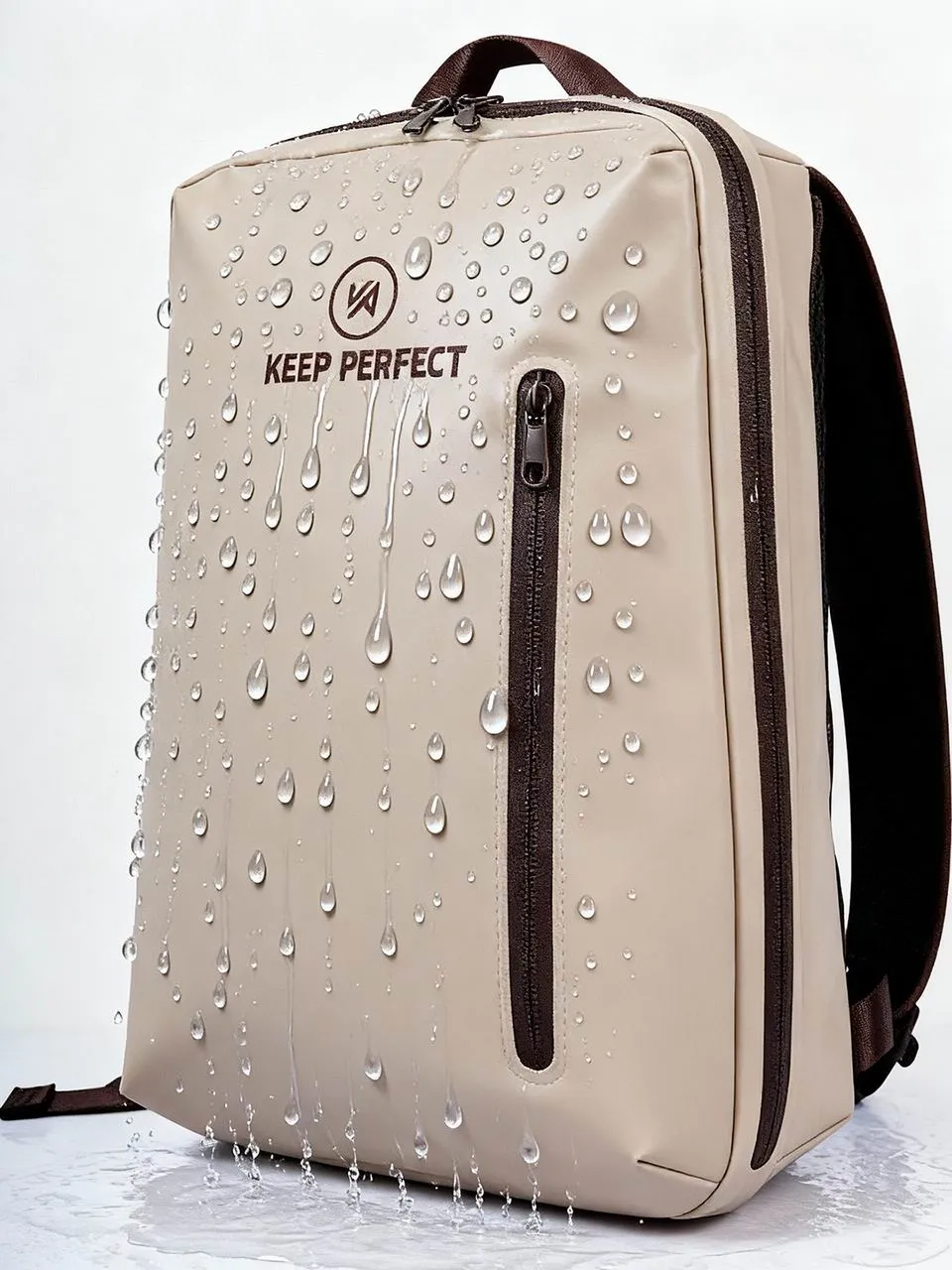
Industrial water exposure runs in three bands, and the build follows the band. Splash duty — rain, wet surfaces, hose overspray — takes welded-seam shells in 500D–840D laminated fabric with water-resistant closures; this is the majority of crew kits and totes. Washdown duty adds sealed-seam construction rated for direct hose pressure, the standard for food-plant-adjacent trades, concrete washout zones and any bag hosed clean between sites. Immersion duty — bags that go down into manholes, culverts and watercourse work — takes roll-top or welded-closure builds in the submersion class our IPX rating guide maps. The pricing follows the band: splash builds run $2.10–$4.20, washdown $3.80–$6.80, immersion-rated crew builds $5.90–$7.90 at MOQ 500.
The common error is over-spec: paying immersion money for a tote that will never see water below the rim. The ladder exists so programs buy the band the duty demands, and split the MOQ across a family — splash totes at volume, a smaller immersion-rated line for the crews that need it.
Material engineering for jobsite abuse
The industrial fabric decision starts at denier and ends at lamination. Bodies run 500D for light duty and 840D for tool transport — the difference shows up as abrasion life on concrete, gravel and truck beds, the failure mode our load stress testing guide measures in cycles rather than years. Lamination is where the waterproofing lives: TPU-laminated faces resist the hydraulic fluids, greases and de-icing salts that delaminate cheap coatings, the chemistry ladder documented in our chemical resistance guide. Base reinforcement — doubled fabric under the tool mass, bar-tacked stress points, molded or welded feet that keep the base off wet ground — separates the builds that survive their warranty from the builds that beat it.
UV stability matters more on trucks than on trails: a service bag living behind a cab window takes more sun-hours per year than a weekend hiking pack. UV-stable lamination and pigments, the polymer science in our UV resistance guide, keep the shell from embrittling before the hardware wears out.
Closures that work in gloves
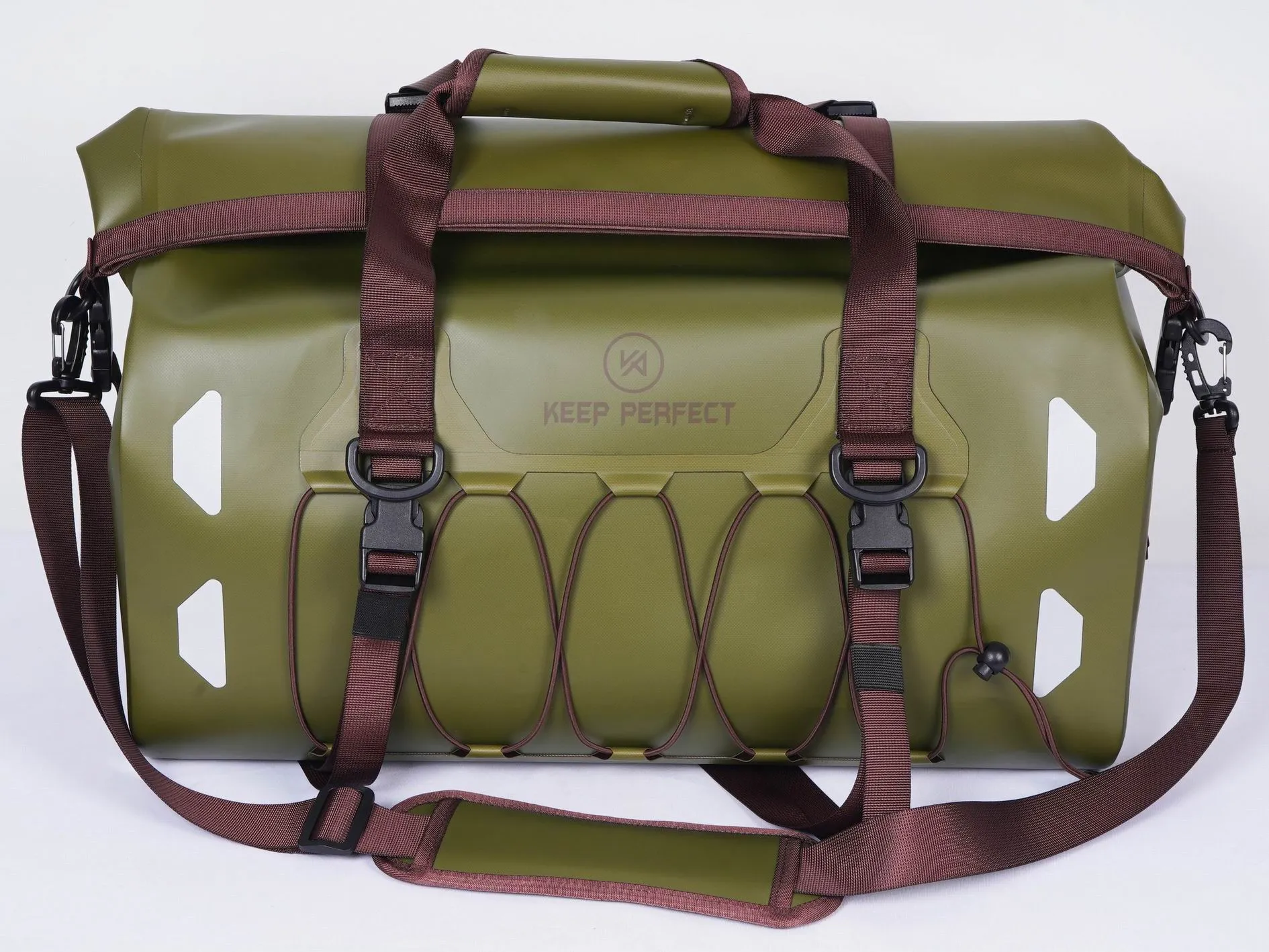
A closure that needs bare fingers is a closure a jobsite cannot use eight months of the year. Industrial programs specify accordingly: oversized zipper pulls sized for work gloves, roll-top seals that close with a single gloved swipe, compression buckles rated for one-handed operation at arm’s length on a ladder. The test protocol is field-simple — a gloved technician opening and closing the loaded bag in cold weather — and it is the test that eliminates more catalog options than any water column figure. Zipper variants add the flaps and storm guards that keep the slider path clear of mud, the same flapped discipline the hiking category applies in our trekking builds guide.
- Zippers: #8 and #10 gauges with double-sewn storm flaps — the gauge is the service life
- Roll-tops: 3–4 folds with stiffened edges for gloved closure, the immersion-class choice
- Buckles: side-release in acetal for glove operation, rated well above carry weight
- Drawcords: barrel-lock styles for soft totes, specified only in splash duty
Hi-vis and reflective: the safety specification
Utility and roadside work makes the bag part of the worker’s visibility envelope, and programs buy to the safety standard rather than to taste. The reference is ANSI/ISEA 107, the US high-visibility standard that governs worker garments and by extension the equipment around them (OSHA’s roadwork visibility guidance applies the same logic). Practical specification: fluorescent yellow-green or orange-red body panels, 360-degree retroreflective trim at defined widths, and a design that keeps reflective bands unbroken by pockets and webbing. The cost adder is modest — $0.30–$0.60 per unit at volume — against the liability math of an unmarked bag in a traffic zone. Hi-vis builds price at $3.20–$7.90 at MOQ 500, with the reflective integration engineering covered in our reflective integration guide.
Tool organization: the interior architecture
A tool tote is an organization system that happens to be waterproof. The interior specification drives crew adoption more than any exterior feature: loop-lined walls that accept hook tool straps, tiered pockets sized to the tool inventory rather than to a generic chart, compression walls that keep drills and drivers from migrating, and a base tray that survives standing on. The specification conversation starts from the tool list — the buyer photographs the crew’s actual load-out, and the factory patterns the interior to it, the same golden-sample discipline our sampling guide documents. Custom interiors cost less than buyers expect: interior tiering adds $0.40–$1.10 per unit at volume, against the daily time cost of a crew digging through a single-cavity tote.
Document and drawing protection on the permit chain
Every industrial site runs on paper that must stay dry: permits, drawings, inspection sheets, signed tickets. Wet paperwork is not a hygiene problem — it is a compliance failure; a rain-ruined permit can idle a site and a smudged inspection signature fails an audit. Document cases are the quiet segment of industrial programs: A3 and A4 drawing cases with stiffened waterproof shells, permit wallets carried on the person, and batch-coded cases that keep each subcontractor’s paperwork separate on multi-crew sites. The construction documentation duty parallels the freight-document logic in our logistics guide — the wet document costs more than the dry one ever did. Document formats run $2.10–$4.60 at MOQ 500, frequently split into the same order as tool totes.
Program patterns: who orders what
| Buyer type | Typical program | Order shape |
|---|---|---|
| General contractors | Tool totes + document cases per crew | 200–800 units, seasonal reorders |
| Utility companies | Hi-vis crew kits + immersion-rated line kits | 500–2,000 units, multi-year frameworks |
| Industrial suppliers | Branded trade kits for resale | 500–5,000 units, catalog cycles |
| Facility/maintenance | Washdown service bags, parts totes | 500–1,500 units, replacement calendars |
Contractors order by crew count and season: the spring mobilization buys the year’s fleet, and the reorder comes from the replacement calendar rather than from failure. Utilities order the most disciplined builds — hi-vis shells, immersion-rated line kits for below-grade work, multi-year framework pricing — because the procurement is safety-adjacent and auditable. Suppliers and MRO buyers run branded programs where the bag carries the brand into every jobsite their customer works; the retail-mirror logic our promotional programs guide documents for corporate buyers applies to trade brands identically.
Cost engineering at MOQ 500
| Program element | Unit cost adder | Notes |
|---|---|---|
| 840D TPU-laminated body (vs 500D) | +$0.50–$0.90 | Doubles abrasion life on concrete |
| Hi-vis colorway + 360° reflective | +$0.30–$0.60 | ANSI-aligned trim placement |
| Custom interior tiering | +$0.40–$1.10 | Patterned to photographed tool load-out |
| Base reinforcement + welded feet | +$0.25–$0.45 | Wet-ground and truck-bed duty |
| Logo, 1–2 colors | +$0.10–$0.25 | Screen or heat transfer at volume |
A representative utility crew program lands at $4.20–$6.80 per unit at MOQ 500: 840D splash or washdown body, hi-vis shell, tiered interior, branded. The same program at retail-consumer pricing buys less specification for more money — the procurement case writes itself when the quote line shows duty rating, reflective compliance and load rating instead of a brand name.
Sampling and field validation
Industrial samples earn their fee because the validation is field work: the tool tote runs a full week on an active site, the crew backpack runs a utility rotation including night work, the document case lives through a rain week against real permits. The protocol is the golden-sample standard our sampling guide documents — 6–10 working days per configuration at $60–$150, credited against bulk — with two industrial additions: photograph the tool load-out before the sample brief, and run the gloved-closure test in the coldest conditions the program will see. Bulk follows in 35–50 days at AQL 2.5 inspection, the same chain-of-accountability our production team maps step by step.
Winter and extreme-weather duty
The industrial year has a second season that catalog bags never survive: freeze-thaw. Winter duty hits a bag three ways — the fabric stiffens below −10°C until an unengineered fold cracks the lamination, road-salt brine attacks cheap coatings for months on end, and gloved hands lose the dexterity that consumer closures assume. Winter-specified industrial builds answer each: low-temperature-flexible TPU laminations rated for freeze-thaw cycling (the polymer spec the accelerated-aging science in our aging prediction guide tests for), brine-tolerant face materials, and the glove-first closure hardware this guide has already specified. Utility programs in snowbelt regions order the winter variant of the same crew kit — the pattern identical, the materials ladder shifted one band up — as a split line against the same MOQ 500 basis. The result is a fleet that opens in February the way it opened in September, which is the entire point of specifying rather than shopping.
Spec your industrial program
- Duty band per format: splash for totes, washdown for hosed-clean builds, immersion for below-grade kits
- Body fabric: 500D light duty / 840D tool transport, TPU lamination for fluid resistance
- Visibility: hi-vis panels + 360° reflective where traffic or night work exists
- Closures: glove-sized pulls, one-hand buckles, flapped zippers
- Interior: tiered to the photographed tool load-out, loop-lined for straps
- Volume calendar: fleet order + replacement ratio, one production calendar at MOQ 500
Frequently Asked Questions
Q1. What makes a bag industrial grade rather than just waterproof?
Duty engineering beyond the water rating: 500D–840D laminated bodies, bar-tacked load paths, glove-operable closures, chemical tolerance for jobsite fluids and — where relevant — hi-vis shells with 360° reflective trim to safety-standard placement. The water rating is the entry ticket, not the spec.
Q2. What is the MOQ for custom industrial waterproof bags?
MOQ 500 per design, splittable across the industrial family — a program can mix tool totes, crew backpacks, document cases and hi-vis builds against the same 500-unit basis.
Q3. How much do industrial waterproof bags cost?
Splash-band totes from $2.10, washdown builds $3.80–$6.80, immersion-rated crew kits $5.90–$7.90 at MOQ 500. Hi-vis adds $0.30–$0.60, custom interior tiering $0.40–$1.10, reinforcement and branding at the adders listed above.
Q4. Can bags be made hi-vis compliant for roadside utility work?
Yes — fluorescent yellow-green or orange-red panels with retroreflective trim placed to ANSI/ISEA 107 logic, keeping bands unbroken across the body. The visibility spec is designed with the bag, not printed onto it after.
Q5. Are industrial bags chemical resistant?
The TPU-laminated builds resist the jobsite fluid list — hydraulic fluid, grease, diesel splash, de-icing salts, concrete wash water. For dedicated chemical-duty programs the specification follows the fluid list, the ladder covered in our chemical resistance guide.
Q6. How long do industrial waterproof bags last?
Specified builds run 3–5 site seasons in daily truck-cycle duty; over-specifying the band extends life further but wastes budget. The load-path and abrasion testing behind those numbers is documented in our load stress testing guide.
Q7. What closure types work with work gloves?
Oversized zipper pulls, roll-top seals with stiffened edges, side-release buckles in acetal and barrel-lock drawcords — all specified for one-hand gloved operation. The field test is opening the loaded bag in the coldest conditions the program will see.
Q8. Can we get custom interior organization for our tool load-out?
Yes — send photographs of the actual crew load-out and the interior is patterned to it: tiered pockets sized to the tools, loop-lined walls for hook straps, compression walls against tool migration. Interior tiering adds $0.40–$1.10 per unit at volume.
Q9. Do you make drawing and permit document cases?
Yes — A3 and A4 stiffened waterproof drawing cases, permit wallets and batch-coded multi-crew cases. Wet paperwork is a compliance failure, not a hygiene issue, and the case segment prices from $2.10 at MOQ 500.
Q10. How fast are industrial samples produced?
6–10 working days per configuration at $60–$150 per design, credited against the bulk order. Industrial validation is field work: run the sample through a real site week before approval.
Q11. What is the production time for bulk industrial orders?
35–50 days after golden-sample approval at AQL 2.5 inspection, FOB Xiamen or DDP to door, shipping to 100+ countries.
Q12. Can one order cover multiple crews and formats?
Yes — the MOQ 500 basis splits across the family: tool totes, crew kits, document cases and hi-vis builds on one production calendar with batch coding per crew type.
Q13. Are the bags washable for site hygiene protocols?
Washdown-band builds take direct hose pressure and wipe-clean TPU faces; sealed-seam construction leaves no soil traps. Food-plant-adjacent trades get the same liner chemistry documented in our food delivery guide.
Q14. What fabrics are used for industrial waterproof bags?
500D and 840D polyester or nylon bodies with TPU lamination, UV-stable pigments for truck-cab exposure, doubled base fabric with welded feet. Denier follows duty: light service in 500D, tool transport in 840D.
Q15. How do we start an industrial program?
Send the tool load-out photographs, the duty bands per format and the fleet count — a quotation returns in 24–48 hours, samples follow in 6–10 working days, and the golden-sample standard carries into bulk production.
Q16. Do you supply industrial distributors and MRO catalogs?
Yes — branded trade-kit programs for resale run the same MOQ 500 with tiered pricing across catalog cycles, batch-coded for inventory traceability.
Q17. Can bags survive freeze-thaw winter duty?
Winter-spec builds use low-temperature-flexible TPU laminations rated for freeze-thaw cycling and brine-tolerant faces — snowbelt utilities run them as a split line on the same MOQ 500 basis, opening in February the way they opened in September.
Q18. What accessories mount on industrial builds?
D-rings for scaffold lanyards, MOLLE-compatible loop fields for tool pods, truck-bed tie-down tabs and removable shoulder slings — all specified at the pattern stage, not added after, so the load ratings stay honest.
People Also Ask
What is an industrial waterproof bag?
A work bag engineered past the water rating: 500D–840D laminated bodies, bar-tacked load paths, glove-operable closures, chemical tolerance for jobsite fluids and optional hi-vis shells with reflective trim — specified by duty band, not bought by brand.
How much do custom work bags cost at wholesale?
From $2.10 for splash-band totes to $7.90 for immersion-rated crew kits at MOQ 500, with hi-vis at +$0.30–$0.60 and custom interior tiering at +$0.40–$1.10 per unit.
Are waterproof tool bags worth it for construction crews?
The arithmetic favors them: one $6 specified tote outlasts four $15 retail duffels on mud, concrete wash and truck-cycle duty — and a wet permit or a lost tool costs more than the fleet.
What does hi-vis mean for bags and equipment?
Fluorescent body panels with 360° retroreflective trim placed to ANSI/ISEA 107 logic, so the bag extends the worker’s visibility envelope in traffic zones and night work.
Can waterproof bags handle hydraulic fluid and grease?
TPU-laminated builds resist the jobsite fluid list — hydraulic fluid, diesel splash, de-icing salt, concrete wash water — the resistance ladder our chemical resistance guide documents.
How long do industrial waterproof bags last on site?
3–5 site seasons in daily truck-cycle duty for correctly banded builds; the load-path and abrasion testing behind that figure is covered in our load stress testing guide.