Oil and gas is the environment where waterproof stops being a convenience category and becomes personal protective equipment: crews work offshore in salt spray, on well sites in drilling fluids, around hydrocarbons and chemical treatments that destroy ordinary bags in weeks — so the industry buys hi-vis, chemical-resistant, fleet-managed waterproof programs where a failed bag can mean lost work, a safety finding, or a dropped tool at height, at unit costs from $3.40 at MOQ 500. This guide covers the full oil and gas program: the three operating contexts (offshore, field service, refinery and terminal), the chemical-resistance specification that defines the category, hi-vis and safety integration, fleet management economics, and the procurement standards of an industry that audits everything.
The manufacturer reference is QUANZHOU JUNYUAN BAGS: custom waterproof bag production since 2014, 4,950 m² SGS-verified facility, 7 lines, 149 machines, 137 staff, 200,000 pieces monthly. MOQ 500 per design splittable across the oil and gas family, samples 6–10 working days, bulk 35–50 days, AQL 2.5 inspection, 30/70 T/T, FOB Xiamen, shipping to 100+ countries.

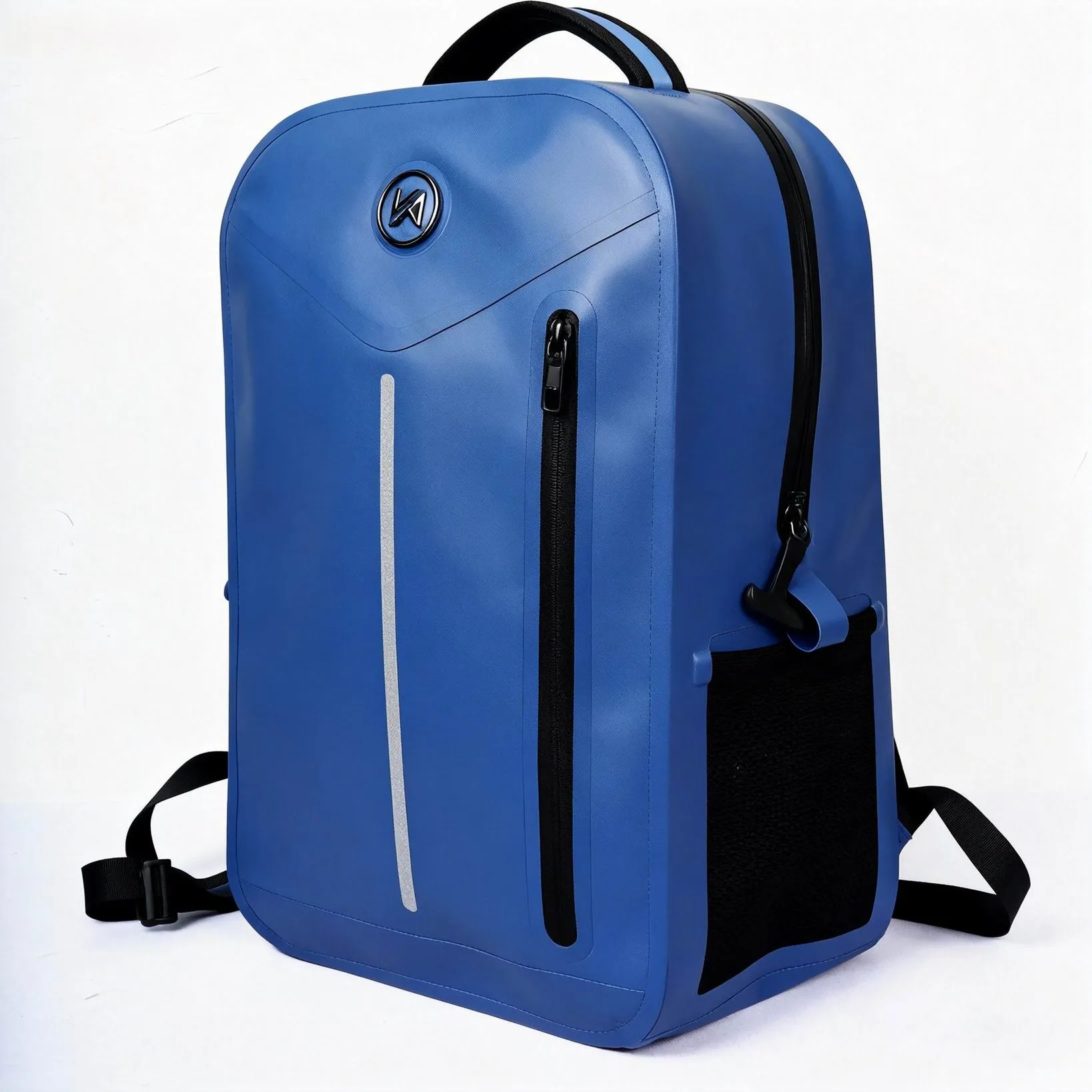
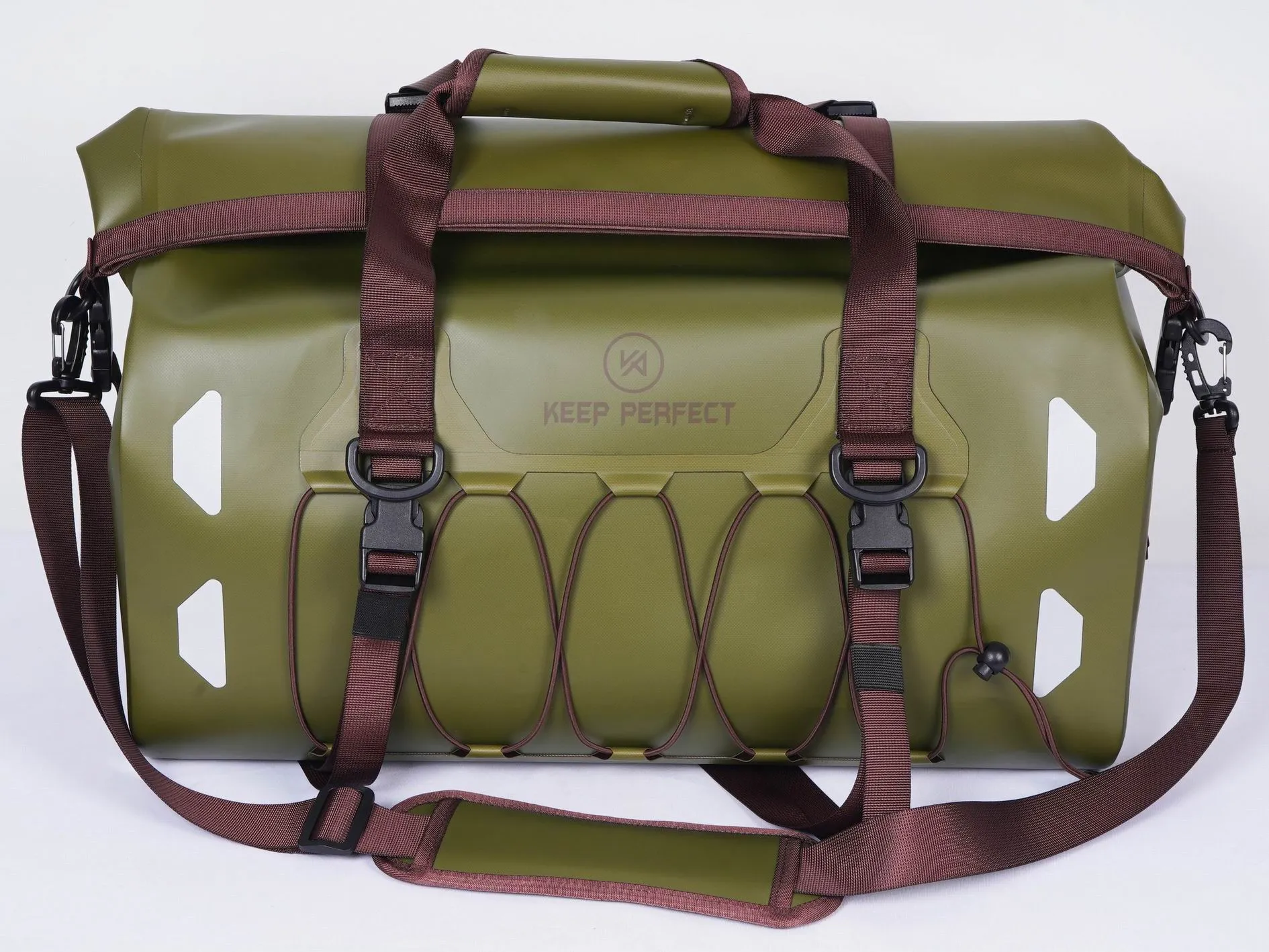
Why oil and gas buys a different bag entirely
Oil gas industry bags face hydrocarbons, salt and impact in the same shift — and offshore crew bags must survive all three for weeks without resupply. The oil and gas work environment attacks ordinary bags from three directions at once: hydrocarbons and treatment chemicals that swell and crack standard coatings (the material science in our chemical resistance guide — oil, solvent and saltwater are the three aggressors this category names in its title for a reason), salt-laden offshore air that corrodes hardware and embrittles film, and a safety regime in which every item on a worksite is inspected, color-managed and traceable. A bag that would last three years in an office lasts weeks on a rig floor. The industry’s answer is the same answer it gives to every equipment question: specification. Hi-vis colors per site safety policy, chemical-rated materials matched to the fluids on site, and fleet-managed issue cycles — the bag is site equipment with a serial number, not a personal purchase.
The stakes are operational, not just financial: a crew bag that fails in the rain strands PPE documentation and radios; a tool bag that gives out at height is a dropped-object incident; a sample bag that reacts with produced water has contaminated the sample it carried. Every major operator’s dropped-object prevention and chemical-hygiene programs touch bag selection, which is why this industry’s buyers arrive with specification documents, not product searches.
The three operating contexts
| Context | Formats | Defining exposure | Unit cost (500+) |
|---|---|---|---|
| Offshore platforms & vessels | Crew bags, kit duffels, document cases | Salt spray, heli-deck weather, 24/7 humidity | $3.40–$8.50 |
| Field service & well sites | Tool bags, instrument cases, sample bags | Drilling fluids, hydrocarbons, mud and weather | $3.90–$9.80 |
| Refineries & terminals | Turnaround totes, hi-vis carriers, PPE kits | Process chemicals, steam, washdown | $3.40–$8.50 |
Offshore duty is the salt-and-weather extreme: crew-change logistics move personal kit and work gear through heli-ports and supply boats, and everything aboard lives in corrosive salt air. Field service is the chemical extreme: tool and instrument transport through drilling mud, completion fluids and produced-water splash. Refinery and terminal duty adds process-chemical exposure and the washdown regimes that kill ordinary zippers. The overlaps are hi-vis safety management, chemical-rated materials and fleet issue — the differences are format and chemical profile, which the specification must name.
The chemical-resistance specification
Chemical resistance is the entry ticket for this industry, and the honest specification is fluid-specific: a material rated against saltwater is not rated against xylene; a coating that shrugs off drilling mud may not survive a completion-fluid splash. The engineering approach is the chemical-environment ladder in our chemical resistance guide — TPU film families chosen against the site’s actual fluid list, with the chemical-transparency expectations our manufacturing transparency guide documents for buyers who want to see what they are specifying. Two practical rules from field experience: rate the bag to the worst fluid it will meet, not the average one; and spec the closures and hardware to the same standard as the fabric, because a chemical-resistant body with a corroding zipper is a bag that fails at the opening.
- Fluid-specific rating: the bag is specified against the site’s chemical list, not a generic "chemical-resistant" label
- Hardware to the same standard: salt-rated and non-reactive hardware — the zipper is the first failure point
- Closure discipline under gloves: field-closure hardware operable in work gloves is a usability safety requirement
- Rated, not claimed: immersion and exposure test documentation in the compliance pack
Hi-vis and the site safety system
Hi-vis in oil and gas is not a color preference; it is site safety policy. Operators and contractors manage worksite visibility per safety standards (high-visibility color and retroreflective requirements in the ANSI/ISEA 107 family for North American sites, ISO 20471 for others), and the bag fleet is part of that system: hi-vis bodies for anything that moves around a worksite, retroreflective banding engineered rather than stuck on, and the visibility architecture our reflective materials guide documents. The fleet-management layer follows: color-coding by crew function or area authority (the site’s permit system in fabric), serial-numbered issue for inspection traceability, and lot-coded production so an audit can trace any bag to its batch — traceability that our batch-coding and AQL 2.5 records supply as standard.
Tool and instrument transport
Tool and instrument transport is the segment’s technical core: torque wrenches, calibration instruments, gauges and testing kits move between sites in cases that must protect both the equipment and its calibration. The engineering is dual, the same architecture our tech protection guide applies to electronics: shock management (padded or fitted interiors that keep delicate instruments from rattling) layered with moisture and chemical protection (sealed, rated materials that keep calibration-sensitive equipment out of the wet and the fluids). The dropped-object dimension adds a specification most industries never think about: closure and strap systems rated so a bag carried at height does not become the incident. Load-cycled strap engineering — tested to the methodologies in our load stress testing guide — is not optional in this environment; it is the difference between equipment transport and a dropped-object report.
Sample transport: the chain of custody
Oil and gas samples — produced water, drilling fluids, crude samples for assay — travel under chain-of-custody discipline, and the transport container is part of the chain: chemically inert liner materials that do not contaminate the sample (a reactive bag is an invalidated assay), sealed closures that survive vehicle transport between site and lab, and labeling surfaces that keep sample identification legible through weather. Our chemical-rated builds cover the common produced-fluid profiles, with liner chemistry specified against the assay program’s requirements, and the documentation expectations — material declarations showing liner inertness — are standard in our compliance pack. Sample programs buy at per-crew scale (each sampling team issued a set) with consumable liner replacements, a volume pattern that fits the MOQ 500 structure with room for the chemical-certification programs across a season.
Fleet management: the issue-cycle economics
The industry’s buying pattern is fleet issue: personal kit bags issued per crew member, tool and instrument cases issued per team, and everything on a managed replacement cycle with inspections at turnaround. The economics of specified gear versus retail substitution compound quickly at fleet scale: a chemical-rated, hi-vis, fleet-spec bag at $4–$9 on an 18–24 month cycle costs less per month than replacing retail bags quarterly — before counting the safety-program value of standardized, inspectable, traceable equipment. A 200-crew field program is a 500-unit order with float stock; offshore programs add crew-change logistics to the delivery planning, with goods staged to the heli-port and supply-vessel calendar rather than a doorstep. Rotation reorders of established designs ride the 30–35 day window; the full cost mechanics including the volume ladder are in the cost breakdown guide.
Procurement standards: the audit environment
Oil and gas procurement is the most audit-intensive buyer in this category: supplier evaluations, factory evidence, material test documentation, and lot traceability that must survive a worksite audit trail. Our documentation pack is built for this environment — SGS-verified facility records, material test reports to the relevant chemical and flammability standards, AQL 2.5 inspection records, batch coding, and social-compliance documentation for the operator-vendor requirements that sit on top of it all. The regulatory map in our compliance guide covers the general regimes; the industry-specific layer is the operator’s own vendor management, which our quality system and export experience are structured to answer. Programs should plan the documentation review at golden-sample stage — before bulk, when specification changes are still cheap.
Oil and gas program economics at MOQ 500
| Program line | Unit cost (500+) | Cycle | Program pattern |
|---|---|---|---|
| Hi-vis crew kit bag | $3.40–$5.90 | 18–24 months | Per-crew issue + float |
| Chemical-rated tool bag | $3.90–$6.80 | 12–18 months | Per-team issue |
| Instrument case | $5.90–$9.80 | Instrument lifecycle | Per-instrument fleet |
| Sample transport bag | $4.60–$8.50 | Crew-change rotation | Per-sampling team + liners |
| Document/device case | $2.40–$4.90 | 24 months | Per-supervisor issue |
The MOQ 500 splits across the site family: a field program’s crew bags, tool bags and instrument cases run as one order with chemical-spec tiering. Offshore staging consolidates one shipment to the heli-port calendar rather than drip delivery.
Sampling: the site-conditions test
Oil and gas samples prove themselves on site or they do not count: the crew bag through a hitch including weather and chemical splash, the tool bag through real site transport with load, the sample bag through the actual produced-fluid profile with assay verification after transport, the instrument case through the vehicle miles between sites. Closures get tested in work gloves, hi-vis gets checked under site lighting, hardware gets inspected after salt or chemical exposure. Samples run 6–10 working days at $60–$150 per configuration, credited against bulk, with the golden sample becoming the AQL 2.5 reference — and for this industry, the chemical-exposure documentation of the sample stage feeds directly into the audit pack. The full protocol is in our sampling guide.
Common mistakes in oil and gas bag programs
- Generic "chemical-resistant" buys: the label means nothing without the fluid list — rate to the worst fluid, not the average
- Fabric-first thinking: hardware and closures fail first in salt and chemical environments; spec them equal
- Hi-vis without retroreflective engineering: stick-on tape peels and the site safety audit finds it
- Retail substitution at fleet scale: quarterly replacement of cheap bags costs more than managed issue cycles with inspections
- Untraceable issue: a bag without serial and lot coding cannot answer an audit — traceability is part of the safety system
- Forgetting the dropped-object standard: closures and straps carried at height must be rated, or the bag is the incident
The energy procurement calendar
Oil and gas buying runs on the industry’s rhythms: turnaround seasons (when maintenance fleets scale up and equipment refreshes), drilling program starts, and offshore crew-cycle planning. The production math — samples 6–10 working days, bulk 35–50 days, freight 4–6 weeks, plus staging to vessel or heli-port calendars — means a spring turnaround season orders in winter, and a drilling program’s equipment list starts sampling at program approval. Contract-service companies with multi-operator portfolios smooth the calendar by consolidating fleet needs across contracts into batch orders at MOQ scale — the same consolidation discipline our reorder process guide documents. The operators who plan the calendar buy sea freight and full QC windows; the ones who order at turnaround-minus-two-weeks buy air freight and compressed inspections, at energy-industry freight rates.
Spec your oil and gas program
Bring four facts — your operating context (offshore, field, refinery), your site fluid list for chemical rating, your safety standards (hi-vis and visibility requirements), and your fleet scale and cycle — and the quotation returns in 24–48 hours: chemical-rated material spec against your fluid list, hi-vis engineering to your safety standard, and a costed fleet program at MOQ 500 with audit-ready documentation. QUANZHOU JUNYUAN BAGS — industrial-grade custom waterproof bags since 2014, 4,950 m² SGS-verified facility, 7 lines, 149 machines, 137 staff, 200,000 pieces monthly, samples 6–10 working days, bulk 35–50 days, AQL 2.5, 30/70 T/T, FOB Xiamen, 100+ countries. The production chain from first inquiry runs from sampling into bulk; the adjacent industrial specifications are in our industrial workers guide and tactical applications guide, and the complete manufacturing reference is the manufacturing guide.
Frequently Asked Questions
Q1. What bags do oil and gas field crews use?
Hi-vis, chemical-rated waterproof kit bags: TPU materials rated against the site fluid list, salt-rated hardware, glove-operable closures, serial-numbered for inspection traceability — $3.40–$8.50 at MOQ 500 on 18–24 month issue cycles.
Q2. How much do oil and gas industry bags cost?
At MOQ 500: hi-vis crew kit bags $3.40–$5.90, chemical-rated tool bags $3.90–$6.80, instrument cases $5.90–$9.80, sample transport bags $4.60–$8.50, document and device cases $2.40–$4.90.
Q3. What is the minimum order for industrial waterproof bags?
MOQ 500 per design, splittable across the site family — crew bags, tool bags, instrument cases and document cases as one order with chemical-spec tiering.
Q4. Are waterproof bags chemical resistant?
Ours are rated, not labeled: materials specified against the site’s actual fluid list — hydrocarbons, drilling fluids, completion fluids, produced water — because a generic "chemical-resistant" claim means nothing without the specific fluid rating.
Q5. Why do oil and gas sites require hi-vis bags?
Site safety policy: worksite visibility runs under ANSI/ISEA 107-family or ISO 20471 standards, and the bag fleet is part of the system — hi-vis bodies, engineered retroreflective banding, and color-coding by crew function or area authority.
Q6. Can bags be traced for audits?
Yes — serial-numbered issue and lot-coded production mean any bag answers to its batch, with AQL 2.5 inspection records and SGS-verified facility documentation in the compliance pack.
Q7. What makes a good tool bag for well sites?
Dual protection: padded or fitted interiors against shock and rattle, sealed chemical-rated materials against fluids and weather, plus closures and straps rated for carried loads — because at height, the bag must not be the dropped-object incident.
Q8. How do you transport oil and gas samples?
In chemically inert, sealed transport bags: liner materials that do not react with the sample (a reactive bag invalidates the assay), closures rated for vehicle transport, and labeling surfaces that survive weather for chain-of-custody integrity.
Q9. How long do industrial fleet bags last?
18–24 months of site duty for chemical-rated crew bags, 12–18 for high-abrasion tool bags — versus weeks for retail bags in the same environments. The economics are monthly cost per issued unit, not unit price.
Q10. Do offshore crews need different bags than land crews?
The offshore premium is salt: salt-air corrosion drives hardware spec (non-reactive, salt-rated fittings), and heli-deck and supply-boat logistics drive staging. The chemical profile differs too — offshore duty adds production-chemical exposure to the weather.
Q11. What documentation do energy buyers require?
The full audit pack: supplier evaluation evidence, factory records, material test reports, batch traceability, AQL inspection trails and social-compliance documentation — our export pack is structured for operator vendor-management systems.
Q12. Can one order cover multiple sites and contractors?
Yes — tiered designs on one production calendar: hi-vis standards per site policy, chemical specs per fluid list, with batch coding that answers each site’s audit separately.
Q13. How fast can a fleet program be produced?
Samples 6–10 working days, bulk 35–50 days after golden-sample approval, freight 4–6 weeks plus staging to vessel or heli-port calendars. Turnaround-season equipment orders in winter; program starts sample at approval.
Q14. What closures work with work gloves?
Fleet-spec hardware: oversized pulls, positive-locking buckles and wide-mouth openings engineered for gloved operation — a closure that needs bare hands is a usability safety failure on site.
Q15. Are instrument cases waterproof and padded?
Yes — the dual-engineering build: fitted or padded interiors protecting calibration-sensitive instruments from shock, sealed rated materials protecting them from moisture and chemical splash, at $5.90–$9.80 per case.
Q16. How do I test a site bag before bulk?
Run it on site: the crew bag through a full hitch, the tool bag through loaded transport, the sample bag through the real fluid profile with assay verification, closures in gloves, hardware after salt and chemical exposure — 6–10 working days per sample, fees credited against bulk.
Q17. Do renewable energy sites need the same spec?
The offshore wind and solar segments buy the same architecture with adjusted fluid lists: salt duty dominates offshore wind, and solar field service adds dust and washdown exposure. The specification logic is identical — rate to the site’s actual environment.
Q18. Can bags integrate with permit-to-work systems?
Yes — color-coding by area authority, serial-coded issue and lot-coded batches let the bag fleet support permit discipline: the audit can read who carried what where from the bag coding alone.
People Also Ask
What is a chemical-resistant bag?
A bag whose materials carry a specific rating against a named fluid list — hydrocarbons, solvents, brines, treatment chemicals — rather than a generic label. The rating is documented; the label alone means nothing on a worksite.
Why do oil workers use hi-vis bags?
Because worksite visibility is a managed safety system — hi-vis bodies and retroreflective banding make the bag fleet part of the site’s visibility standard, and color-coding encodes crew function and area authority.
How do you carry tools in the rain on industrial sites?
In sealed chemical-rated tool bags with gloved-operable closures and rated strap systems — built for the fluids on site and the load in the bag, which is why industrial sites specify rather than improvise.
What bags survive saltwater and oil?
TPU-film constructions with salt-rated hardware and fluid-specific chemical ratings — the materials that survive offshore air and produced-fluid splash are a documented specification, not a marketing tier.
Can waterproof bags be PPE-adjacent?
They live inside the PPE system: hi-vis per site standards, traceable by serial and lot, inspectable on issue cycles — a bag the safety audit can account for is part of the program; a random duffel is a finding.
How are crew bags managed on platforms?
Fleet issue: serial-numbered bags per crew member, inspections at turnaround, replacement on managed cycles, and staging through heli-port and supply-vessel logistics — the bag is site equipment, not luggage.