Custom waterproof bags for military, law-enforcement and tactical programs cost $6.80–$14.50 per unit at MOQ 500, built on 1000D Cordura-class nylon with TPU lamination, welded seams rated to IPX7, MOLLE/PALS webbing integration and subdued or IR-compliant branding — with every batch documented to lot level for procurement audit trails. The tactical requirement is the extreme version of every other industry’s: the bag must keep mission-critical kit dry through river crossings and monsoon field ops, survive abrasion that destroys consumer gear in weeks, and carry unit identity without compromising signature discipline. This guide covers construction standards, camouflage and IR considerations, testing protocols and the procurement paperwork that institutional buyers require.
We manufacture tactical programs for defense contractors, law-enforcement units, security firms and tactical-gear brands at QUANZHOU JUNYUAN BAGS — custom waterproof bag production since 2014, 4,950 m² SGS-verified facility, 7 lines, 149 machines, 137 staff, 200,000 pieces monthly. MOQ 500 per design, samples 6–10 working days, bulk 35–50 days, AQL 2.5 with third-party inspection welcome, 30/70 T/T, FOB Xiamen, export documentation to 100+ countries.
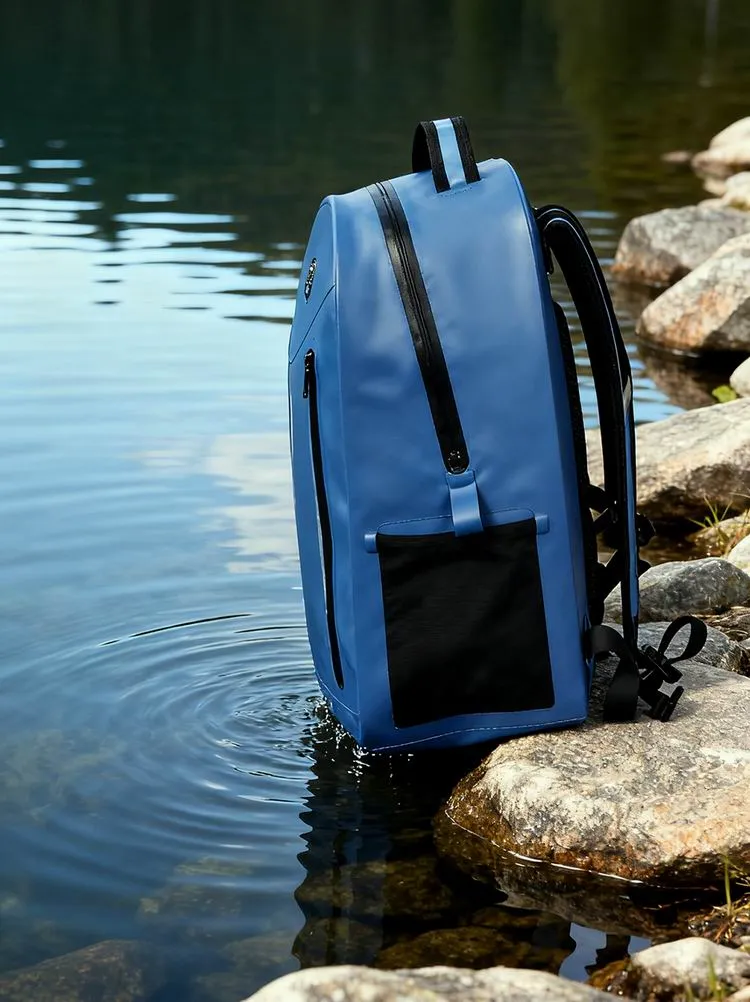
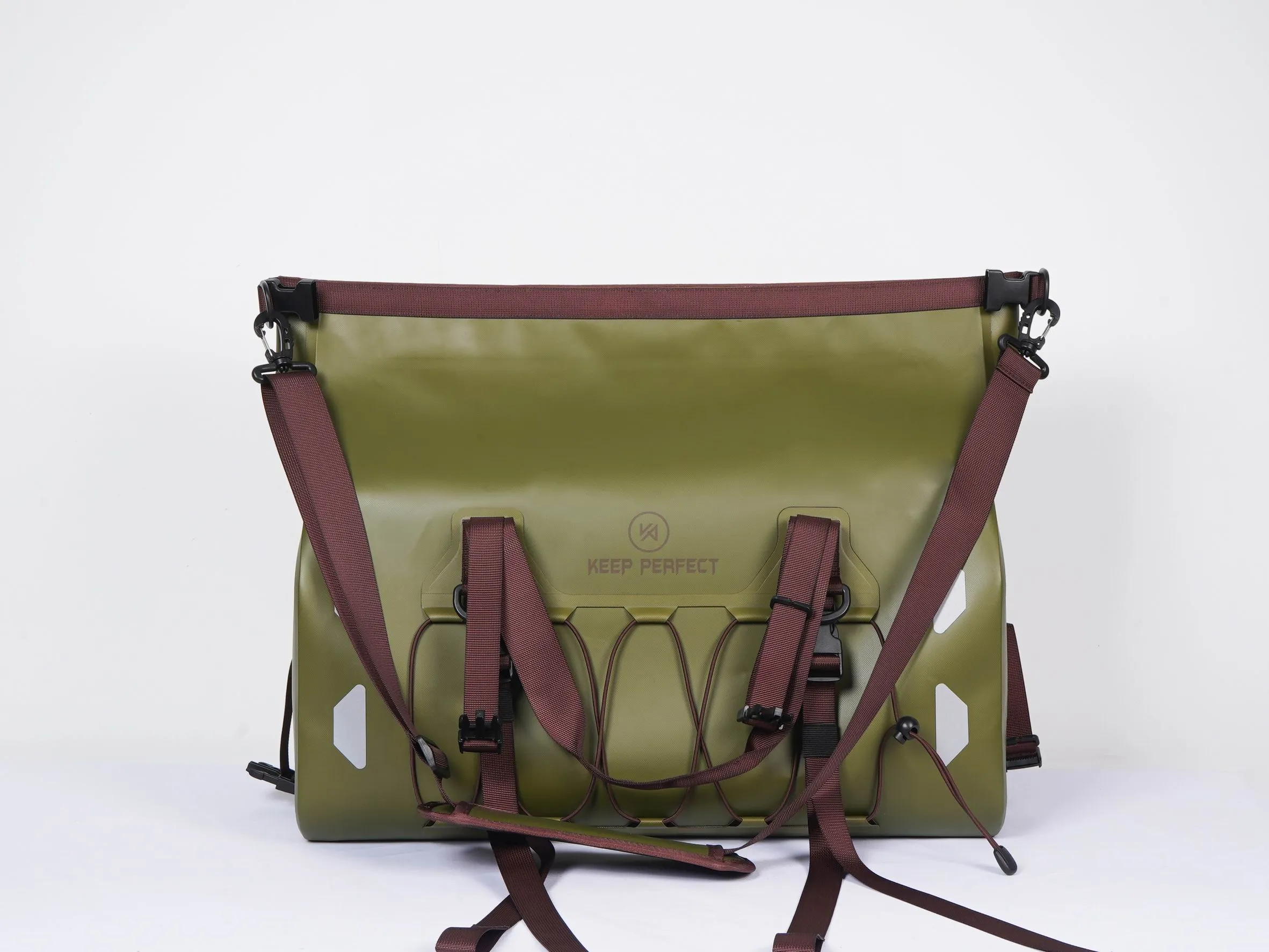
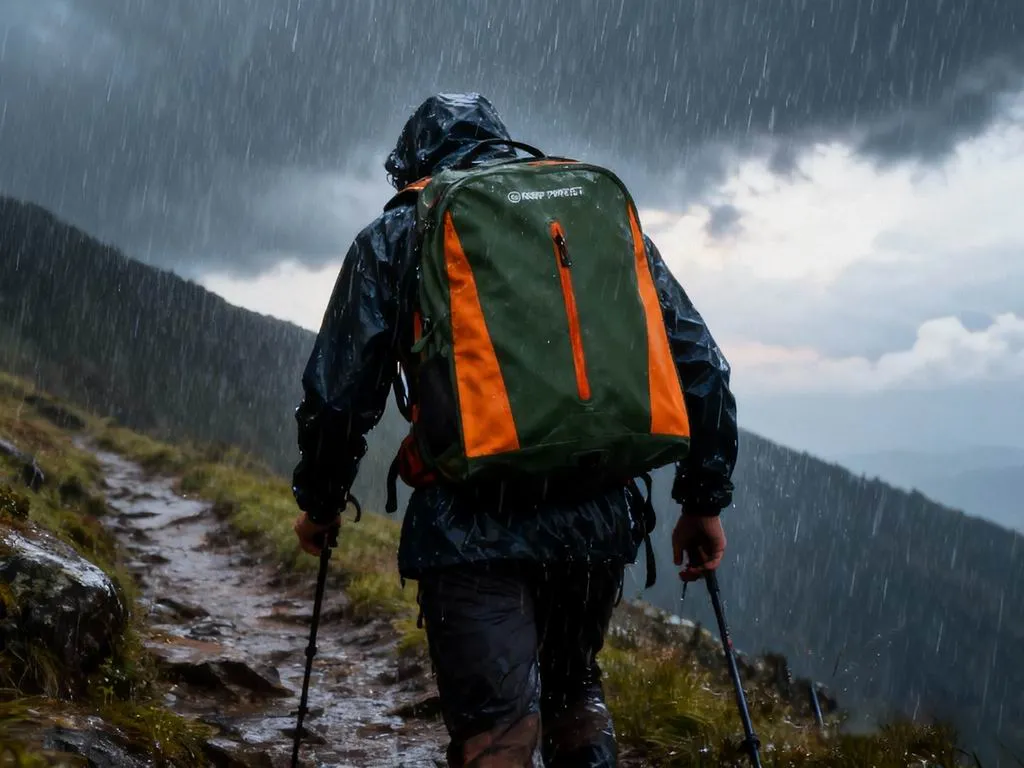
What "tactical grade" actually means in a waterproof bag
Buyers sourcing custom waterproof bags for defense duty arrive with the strictest spec culture in the industry — tactical bags inherit MIL-spec discipline that consumer builds never see. Tactical buyers use the word "military grade" loosely; the construction standards behind it are specific. A genuine tactical waterproof bag combines: 1000D (or 500D where weight matters) high-tenacity nylon with 0.5 mm TPU lamination; high-frequency welded seams on all wet-zone construction; bartacked load points rated to 150+ kg; ITW Nexus or equivalent acetal hardware; and YKK #10 AquaGuard zippers where zippered access is required. Each element exists because a specific field failure mode — abrasion, seam weep, hardware snap, zipper flood — has ended missions and lives in institutional memory.
| Component | Consumer spec | Tactical spec | Why it matters in the field |
|---|---|---|---|
| Shell fabric | 210D–420D polyester | 500D–1000D HT nylon | Abrasion from rock, vehicle decks, drag |
| Seams | Stitched + tape | HF-welded | Immersion integrity; no needle-hole weep |
| Zippers | #5 coil | #10 AquaGuard or roll-top | Sand, mud, one-handed gloved operation |
| Hardware | Zinc alloy | Acetal / 316 SS | Cold-crack and corrosion resistance |
| Webbing | 25 mm PP | 38–50 mm mil-spec nylon | Load carriage without stretch or rot |
| IP rating | IPX4 splash | IPX7 immersion | River crossings, surf zones, monsoon |
The honest engineering tradeoff is weight: a full 1000D IPX7 pack runs 30–45% heavier than its consumer equivalent. Programs that need both protection and mobility typically split the loadout — IPX7 roll-tops for the wet-critical kit (comms, medical, sleep system) inside or alongside a lighter 500D patrol pack. We build both formats and can engineer them as an integrated system.
Camouflage, IR compliance and signature management
Camouflage on a waterproof bag is a materials problem before it is an aesthetics one. Printed patterns must survive UV, abrasion and repeated flexing without cracking; the durable answer is solution-dyed or transfer-printed base fabric laminated with matte TPU (gloss lamination creates an IR and visual signature of its own). We hold or can source the common pattern families — MultiCam-class woodland, desert, arctic, and solid subdued colors (coyote, ranger green, black, foliage) — with Pantone-referenced color control between batches, because a resupply batch that does not match the issue batch is a uniform-discipline problem.
For units with formal IR-reflectance requirements, the fabric and print system must be specified against near-infrared reflectance targets so the bag reads consistently with issue uniforms under night-vision devices. This is a testable, documentable property — we produce lab verification through third-party textile labs when the procurement specification calls for it. Branding follows signature discipline: tonal embroidery, subdued woven labels, laser-cut hook-and-loop panels for removable unit patches, and no high-contrast logos anywhere on the exterior.
MOLLE, modularity and mission configuration
MOLLE/PALS webbing turns a bag from a container into a platform. Tactical programs spec webbing in 25 mm mil-spec nylon bartacked at 38 mm intervals per the PALS standard — the dimension discipline that makes third-party pouches actually fit. Common configurations we produce: full MOLLE front and side panels on patrol packs, MOLLE strips on dry bags for external lashing, interior loop fields for Velcro-backed organizers, and detachable shoulder/waist systems that convert a dry bag into a carries-like-a-pack format.
- Patrol pack, 25–35L — 500D/1000D, welded main compartment, MOLLE panels, hydration routing: $9.80–$14.50
- Roll-top dry bag, 10–40L — IPX7, lash points, optional MOLLE strip: $6.80–$9.40
- Kit/duffel, 60–90L — deployment bag format, lockable zips, drag handles: $11.20–$15.80
- Medical/IFAK waterproof pouch — IPX7, hi-viz interior, tear-open access: $5.40–$7.60
- Comms/electronics case — padded, IPX7, window options for device operation: $6.20–$8.90
Unit-level customization is standard practice: embroidered unit crests (tonal or full color for rear-echelon issue), numbered bags for accountability, and name-tape hook-and-loop fields. Split the MOQ 500 across sizes or colorways — a battalion run of 4 bag types × 125 pieces is routine.
Testing and documentation institutional buyers require
Tactical procurement runs on paper as much as product. Our standard documentation pack for institutional buyers includes: material certificates (fabric tenacity, lamination bond strength), seam-strength test reports (≥150 N per ISO 13935-2), hydrostatic head results (≥5,000 mm wet zones), IP-rating verification (immersion testing to IEC 60529 method), colorfastness reports (UV, rubbing, seawater), and lot-level traceability — every production batch coded so a field failure can be traced to a material lot and a production week.
| Test | Method | Tactical threshold | Report |
|---|---|---|---|
| Seam strength | ISO 13935-2 | ≥150 N | Per material lot |
| Hydrostatic head | ISO 811 | ≥5,000 mm | Per batch |
| Immersion (IPX7) | IEC 60529 | 30 min at 1 m, dry interior | Per design |
| Abrasion | Martindale ISO 12947 | ≥20,000 cycles (1000D) | Per fabric |
| Cold flex | ISO 7854 | No cracking at −20°C | Per laminate |
| Colorfastness to seawater | ISO 105-E02 | Grade 4+ | Per colorway |
Third-party inspection (SGS, BV, TÜV) is welcomed at buyer cost ($200–$350 per man-day), and for government-adjacent contracts we support sealed-sample procedures: the approved golden sample is sealed, photographed and held as the acceptance reference for every delivery wave. The full QC philosophy is in our manufacturing guide; regulatory documentation (REACH, Prop 65 where applicable) is mapped in the compliance guide.
Who buys tactical waterproof bags (and who we will not supply)
The buyer landscape spans defense contractors building kit programs, national and regional law-enforcement units, private security firms, search-and-rescue organizations, tactical and outdoor brands serving the enthusiast market, and film/industrial customers needing rugged wet-environment kit. Each segment has its own spec culture — SAR wants hi-viz and reflectivity where military wants subdued; law enforcement wants badge-compatible identification panels; brands want retail-grade finish with tactical credibility.
We are a commercial manufacturer, not a defense prime: we produce bags and soft goods, full stop. We do not produce anything designed to carry weapons as its primary function, we decline programs intended for sanctioned entities or conflict-zone end users, and we require standard end-use declarations on government-adjacent orders. Within those boundaries, twelve years of institutional programs say the model works: rigorous spec, documented testing, lot traceability, and delivery on the calendar the program office planned around.
Procurement mechanics: quotes, tenders and delivery
Institutional purchasing has its own rhythm and we speak it: formal quotations with itemized BOM-level specs, HS codes and incoterms; bid samples inside the standard 6–10 working day window; production slots reserved against tender award dates where the contracting office provides a timeline; delivery in scheduled waves for unit-level distribution. Payment follows 30/70 T/T as standard, with government purchase-order terms (net-30 against shipping documents) accommodated for established institutional accounts.
Export paperwork is part of the product for tactical buyers: commercial invoice with full spec description, packing list to carton level, certificate of origin, and end-user documentation support where the contracting office requires it. Programs resupplying across multiple years benefit from the annual-agreement structure in our reorder process guide — locked pricing, pre-positioned materials, 30–35 day delivery waves, and batch-color verification against the original issue run.
Common failure modes we engineer against
- Seam weep at fold points — welded seams that flex repeatedly at the same line can micro-crack; we radius fold lines and validate with 10,000-cycle flex testing
- Zipper failure in sand — #10 AquaGuard with oversized pulls; roll-top closures for true sand/surf environments
- Webbing rot in tropics — mil-spec nylon webbing with anti-mildew treatment; PP webbing is a false economy at 60% of the lifespan
- Camo delamination — transfer-print + matte TPU lamination, bond strength tested per lot; screen-printed camo on laminate cracks within a season
- Hardware cold-crack — acetal rated to −40°C; zinc alloy fails in winter ops and corrodes in salt air
- Batch color drift on resupply — Pantone-referenced dye lots with strike-off retention, so year-3 resupply matches year-1 issue
Every failure mode on this list was learned from a real field report, not a lab hypothetical. That is the compounding value of twelve years of institutional programs: the failure library is already built into the spec you receive on day one.
Loadout planning: matching formats to mission profiles
The most common procurement error in tactical programs is buying one bag type for every mission. Field reality demands a layered loadout, and the cost difference between "right bag per layer" and "one big bag everywhere" is small against the capability difference. Three reference loadouts from programs we have supplied:
| Mission profile | Core wet protection | Carry platform | Specialist pouches | Per-operator cost |
|---|---|---|---|---|
| Maritime/riverine ops | 40L IPX7 roll-top ×2 | 500D patrol pack 30L | Comms case, IFAK pouch | $28–$36 |
| Urban patrol / LE | 10L dry bag (sensitive kit) | 1000D patrol pack 28L | Document pouch, IFAK | $22–$29 |
| Deployment / expedition | 90L deployment duffel | 500D pack 35L | Comms, IFAK, admin pouch ×2 | $34–$44 |
The layering principle: wet-critical kit (electronics, medical, sleep system) lives in IPX7 dry bags regardless of the outer pack’s own rating, because zippers and wear points eventually compromise any pack shell. The outer pack provides carriage and organization; the dry bags provide the guarantee. This belt-and-suspenders architecture costs $7–$12 more per operator than relying on the pack alone, and it is the difference between "water resistant until proven otherwise" and "dry, verified by immersion test".
Case patterns from real tactical programs
| Program | Qty | Spec | Outcome |
|---|---|---|---|
| Coastal law-enforcement unit | 600 | IPX7 patrol pack + 10L dry bag, subdued tonal crests | Delivered in 2 waves; year-2 resupply matched issue colors |
| SAR organization, mountainous region | 800 | Hi-viz 500D packs, reflective panels, IFAK pouches | Zero seam failures through two winter seasons |
| Tactical-gear brand (retail) | 3,500 | Private-label dry bag line, 4 sizes × 3 colorways | Sell-through 82% season 1; reorders every 4 months |
The institutional pattern: first orders establish the spec and the test protocol; from the second order the program runs on 30–35 day waves with batch-color verification and lot-level traceability maintained across years. The brand pattern is different but equally repeatable: tactical credibility (welded construction, real IPX7 verification, mil-spec components) is what separates retail winners from the aliexpress-grade dry bags that flood the enthusiast market — and it is exactly the positioning mapped in our private label guide.
Climate-specific engineering: arctic, desert, jungle, maritime
A tactical bag procured for "general use" often means "fails everywhere eventually". Climate-specific spec choices make the difference, and they cost little when decided at the spec stage:
| Climate | Primary threats | Spec responses |
|---|---|---|
| Arctic / winter | Cold-crack, frozen zippers, brittle hardware | TPU rated −40°C cold flex; oversized zipper pulls for gloved hands; acetal (never zinc) hardware |
| Desert | Sand ingress, UV degradation, heat softening | Roll-top closures over zippers; UV-stabilized coatings grade 4+; light-color options to cut solar gain |
| Jungle / tropic | Mildew, rot, constant saturation | Anti-mildew webbing treatment; fully welded construction (stitched thread rots); fast-drain mesh options |
| Maritime | Salt corrosion, immersion, UV | 316 SS or acetal hardware; IPX7 minimum; seawater colorfastness grade 4+; hi-viz options for man-overboard visibility |
Multi-climate units (expeditionary forces, international SAR teams, global security firms) should spec to the harshest environment in their operating envelope rather than compromise across all of them — a bag that survives maritime ops survives everything milder, while a temperate spec dies in the tropics within a season. The procurement quantities usually allow both: split the MOQ 500 across two climate-optimized variants rather than fielding one compromise that underperforms everywhere. This is the conversation our program engineers have in the first 24–48 hours after your inquiry lands.
Specify your program
QUANZHOU JUNYUAN BAGS — tactical and institutional waterproof bag programs since 2014, produced in our 4,950 m² SGS-verified facility (7 lines, 149 machines, 137 staff, 200,000 pieces monthly). MOQ 500 per design (splits across sizes, patterns and unit colorways), samples 6–10 working days, bulk 35–50 days, AQL 2.5 with third-party inspection welcome, 30/70 T/T, FOB Xiamen, export documentation to 100+ countries. See how institutional programs run from first inquiry.
Send your requirement — format, capacity, environment, pattern family, branding discipline, documentation needs — through the inquiry form. A program engineer (not a sales bot) replies within 24–48 hours with a spec proposal, test plan and quotation. For units comparing build-to-spec against adapted-platform procurement, our OEM vs ODM guide maps both paths.
Frequently Asked Questions
Q1. What is the MOQ for tactical waterproof bags?
MOQ is 500 pieces per design, splittable across sizes, camo patterns and unit colorways — a 4-type battalion run of 125 pieces each is routine.
Q2. How much do tactical waterproof bags cost?
Dry bags $6.80–$9.40, medical/IFAK pouches $5.40–$7.60, comms cases $6.20–$8.90, patrol packs $9.80–$14.50, deployment duffels $11.20–$15.80 — all at MOQ 500 with full documentation.
Q3. What IP rating can you build to?
IPX7 (30 minutes at 1 meter immersion, dry interior) is the standard tactical wet-zone rating, verified to IEC 60529 method per design. Roll-top dry bag formats can exceed this; zippered formats use #10 AquaGuard.
Q4. Can you print MultiCam-style camouflage?
Yes — common pattern families (woodland, desert, arctic) plus solid subdued colors, produced as transfer-printed base fabric with matte TPU lamination and Pantone-referenced batch control. We do not use licensed trademarked patterns without authorization.
Q5. Do you support IR-compliance requirements?
Yes — fabric and print systems can be specified against near-infrared reflectance targets with third-party lab verification when the procurement specification formally requires it.
Q6. What fabrics do you use for tactical bags?
500D and 1000D high-tenacity nylon with 0.5 mm TPU lamination, mil-spec nylon webbing, acetal or 316 stainless hardware, #10 AquaGuard zippers. Material certificates ship with every order.
Q7. Can unit crests and patches be added?
Yes — tonal or full-color embroidery, subdued woven labels, and laser-cut hook-and-loop panels for removable unit patches. Numbered bags for accountability are standard practice.
Q8. What testing documentation do you provide?
Seam strength (ISO 13935-2 ≥150 N), hydrostatic head (ISO 811 ≥5,000 mm), IPX7 immersion verification, Martindale abrasion, cold flex, colorfastness — reported per lot with batch-level traceability.
Q9. How long does a tactical program take?
Bid samples 6–10 working days, bulk 35–50 days after approval, sea freight 4–6 weeks. Annual agreements deliver repeat waves in 30–35 days with locked pricing.
Q10. Do you accept third-party inspection?
Yes — SGS, BV, TÜV at buyer cost ($200–$350 per man-day), and sealed-sample acceptance procedures for government-adjacent contracts.
Q11. Are there programs you decline?
Yes — we produce bags and soft goods only: nothing designed to carry weapons as its primary function, no sanctioned entities, no conflict-zone end users. End-use declarations are standard on government-adjacent orders.
Q12. Can MOLLE panels be added to dry bags?
Yes — MOLLE strips for external lashing and pouch attachment, interior loop fields for Velcro organizers, and convertible carry systems that turn a dry bag into a pack format.
Q13. What payment terms do institutional buyers get?
30/70 T/T standard; government purchase-order terms (net-30 against shipping documents) accommodated for established institutional accounts. Full export documentation included.
Q14. Will resupply batches match the original issue?
Yes — Pantone-referenced dye lots with retained strike-offs, so year-3 resupply matches year-1 issue. Batch-color verification is part of the annual-agreement protocol.
Q15. Can you produce hi-viz versions for SAR and emergency services?
Yes — hi-viz shells (international orange, rescue yellow) with engineered reflective panel layouts are standard SAR spec, frequently combined with IPX7 welded construction for water-rescue teams. The reflective geometry is designed to remain visible in every state the bag is actually found in: worn on a back, dragged across rock, or floating in moving water.
Q16. How do we start if we only have a capability requirement, not a design?
Send the requirement in plain language — operating environment, capacity, carry method, expected threats. Our engineers translate it into a spec proposal with format options and a test plan inside 48 hours; the 6–10 day sample then makes it physical for your evaluation board to test hard before any commitment.
People Also Ask
What makes a bag truly waterproof for field use?
High-frequency welded seams (no needle holes), TPU-laminated high-tenacity fabric, and a roll-top or AquaGuard-zip closure rated IPX7 — verified by 30-minute immersion at 1 meter with a dry interior, not by marketing language.
Are dry bags used by the military?
Yes — roll-top dry bags in 10–40L are standard wet-protection for comms kit, medical supplies and sleep systems in amphibious and wet-field operations, typically rated IPX7 with lash points for external carriage.
What is MOLLE webbing on a bag?
MOLLE/PALS is 25 mm webbing bartacked at 38 mm intervals — the dimension standard that lets compatible pouches and accessories attach securely. It turns a bag from a container into a configurable load platform.
How much weight can a tactical waterproof bag carry?
Load points bartacked to 150+ kg ratings and 38–50 mm mil-spec webbing handle 20–35 kg working loads in patrol-pack formats; deployment duffels with drag handles handle 40+ kg ground movement.
Can tactical bags be customized with unit logos?
Yes — embroidered unit crests (tonal for field discipline, full color for rear-echelon), woven labels, removable hook-and-loop patch panels and individual numbering are standard unit-level customization at MOQ 500.
What is the difference between 500D and 1000D fabric?
Denier measures fiber thickness: 1000D offers maximum abrasion resistance for high-wear formats; 500D cuts weight by roughly 30% with still-tactical durability. Most programs mix both — 1000D base panels, 500D body.