The custom waterproof backpack is the most-ordered format we produce — and the most commonly mis-specified, because "waterproof backpack" spans three genuinely different products: a splash-rated commuter pack (IPX4, $4.20–$6.80 at MOQ 500), a jet-rated welded trekking pack (IPX6, $7.20–$9.80), and a submersion-rated roll-top paddling pack (IPX7, $5.90–$8.50). Ordering the wrong one is a five-figure mistake delivered in a container. This guide walks the full buying decision for brands, importers and program managers: how to match rating to use case, choose materials and closures, structure the laptop-or-gear question, read supplier quotations, and brief a manufacturer so the sample that arrives is the pack you actually imagined.
The reference manufacturer throughout is us — QUANZHOU JUNYUAN BAGS, custom waterproof bag production since 2014, 4,950 m² SGS-verified facility, 7 lines, 149 machines, 137 staff, 200,000 pieces monthly. MOQ 500 per design, samples 6–10 working days, bulk 35–50 days, AQL 2.5 inspection, 30/70 T/T, FOB Xiamen, shipping to 100+ countries.
Step one: which "waterproof" your program actually needs
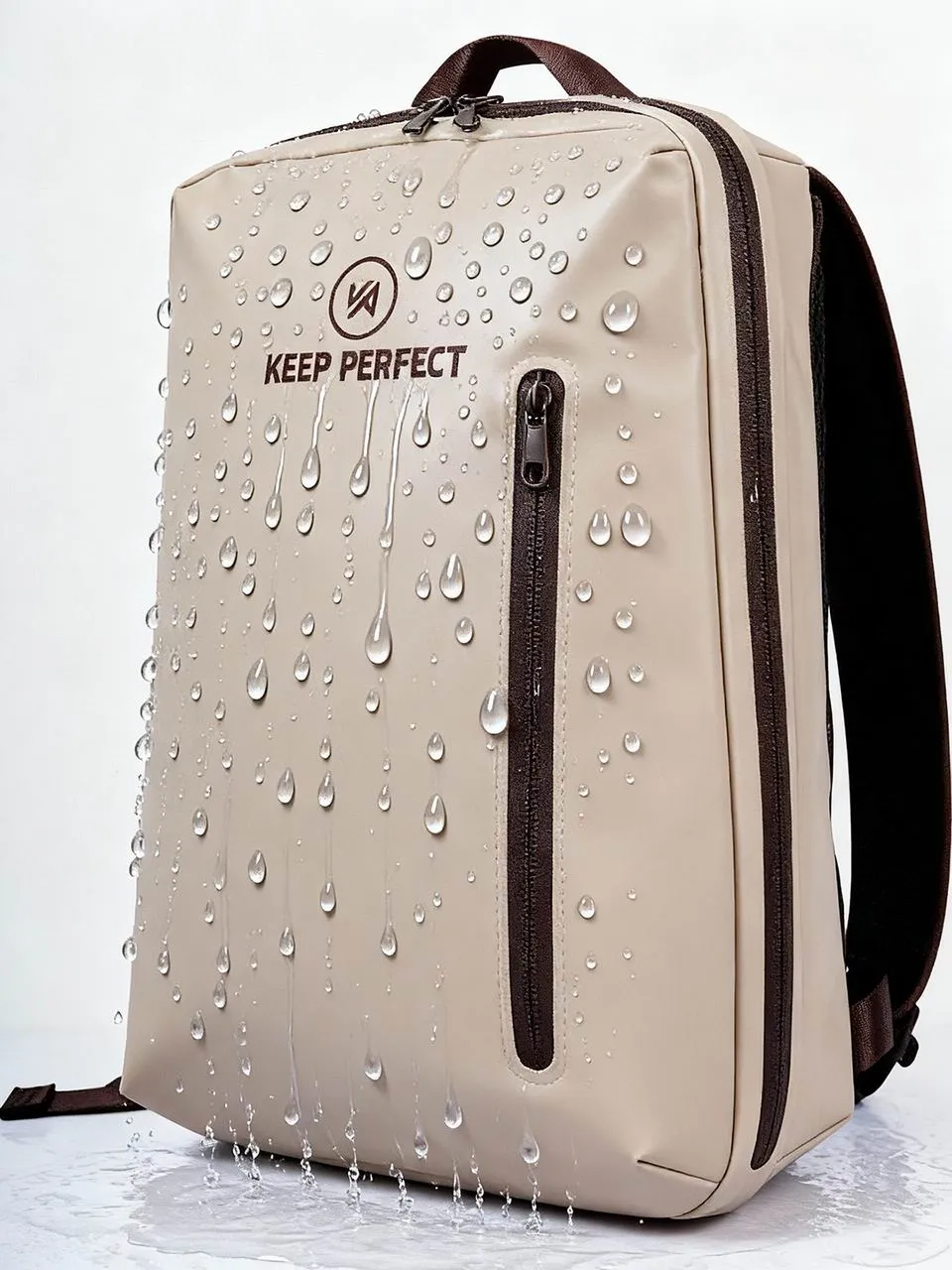
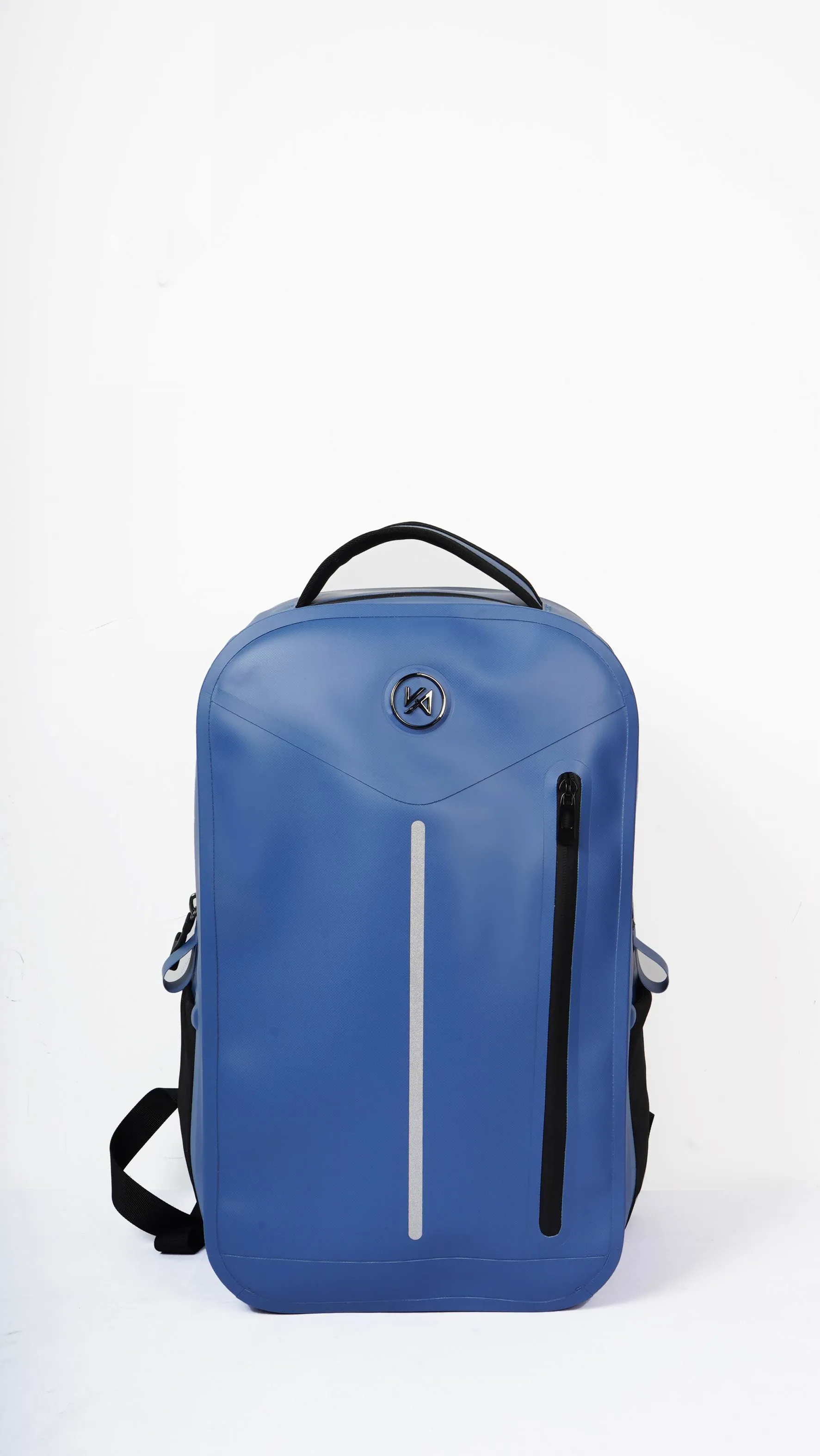
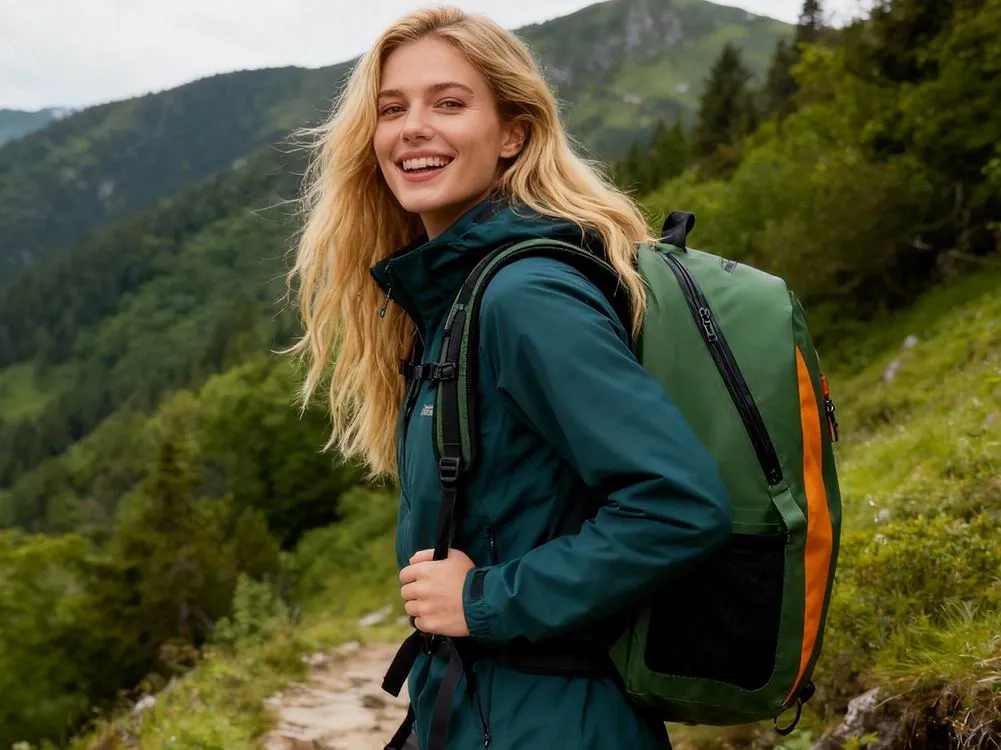
Every waterproof backpack buying decision starts with one honest sentence: how does this pack meet water in the worst realistic week of its life? The answer sorts the program into one of three bands, and the band decides the construction — not the catalog photo. A commuter pack that meets rain between the station and the office needs splash protection (IPX4): coated fabric, water-resistant zippers, sewn construction that passes testing as a system. A trail pack that meets monsoon rain at hiking speed or a deck wash needs jet protection (IPX6): welded seams, engineered zipper flaps. A paddling pack that goes overboard needs submersion (IPX7): full weld, roll-top closure, no zipper anywhere in the design. The full logic of the rating ladder is in our IPX rating system explainer.
| Band | Worst realistic event | Construction | Unit cost (MOQ 500) |
|---|---|---|---|
| Splash IPX4 | Rain, station-to-office | Coated fabric + WR zippers, sewn | $4.20–$6.80 |
| Jet IPX6 | Storm at speed, deck wash | Welded seams + flapped zips | $7.20–$9.80 |
| Submersion IPX7 | Bag goes overboard | Full weld + roll-top, no zipper | $5.90–$8.50 |
Note the counterintuitive price line: submersion-rated roll-tops cost less than jet-rated zippered packs, because a roll-top closure is simpler than a properly engineered waterproof zipper system. Buyers who assume "more waterproof = more money" systematically overpay for the middle band when their use case lives in the third.
Formats: the four backpack silhouettes that matter
Within the bands, four silhouettes cover virtually every custom waterproof backpack program. The commuter pack (18–28L): laptop suspension, organization, clean branding panels, splash band. The trekking pack (25–40L): load-carrying structure, hip belts, jet band, reinforced base. The roll-top paddling pack (20–35L): welded tube, submersion band, stows flat, doubles as a dry bag on the water. The utility hybrid (20–30L): organizer-heavy work pack for trades, delivery and service fleets — usually splash-to-jet band with visibility options. Capacity planning within each silhouette follows the same liter-to-kit logic as our dry bag sizing guide.
- Commuter 18–28L: the volume SKU; laptop protection is the spec decision that matters
- Trekking 25–40L: structure and load paths dominate; welded seams above IPX6
- Roll-top paddle 20–35L: the only honest submersion backpack; simplest construction
- Utility hybrid 20–30L: fleets and trades; hi-vis and organization over maximum rating
Materials: what the fabric names mean for your program
The fabric decision is three decisions stacked: fiber, coating, and construction. On fiber, polyester and nylon both work — polyester resists UV and hydrolysis better, nylon abrases better before coating; the honest comparison is in our nylon vs polyester guide. On coating, the choice runs from PU coatings (economical, spray band) through TPU lamination (flexible, weldable, the submersion standard) to silicone-treated nylons (premium ultralight) — the coating family landscape is mapped in our DWR, PU and silicone coatings explainer. On construction, denier count rules durability: the number that tells you whether a pack survives rental fleets is decoded in the denier rating guide, and the ripstop grid that stops small tears from becoming big ones is covered in the ripstop technology guide.
The buying translation: for a commuter program, 600D polyester with PU coating and WR zippers is the value standard. For trekking, 420D nylon TPU-laminated with welded seams. For paddling, 500D polyester TPU film, full weld. Anything fancier should trace to a use case, not a spec-sheet ambition.
Closures: the component that decides the rating
The closure is the rated component of any waterproof backpack — the fabric is the given, the closure is the claim. Water-resistant coil zippers with storm flaps carry the splash band honestly. Genuine AquaGuard-class zippers with welded flaps reach the jet band. Roll-top closures own the submersion band. The engineering behind each — including why a zippered pack can never honestly claim IPX7 — is in our closures guide, and the deepest dive on the top of the zipper range is the IPX8 zipper technology page. When a quotation lists a zipper by brand class rather than by tested performance, ask for the closure’s rating evidence — the component is where budget quietly disappears.
The laptop question: protection changes the whole spec
If the program carries laptops — commuters, students, digital nomads — the pack gains a suspended, padded sleeve with a floating bottom (the laptop never touches the pack floor where impacts land), and the water plan shifts: electronics must survive the splash band with certainty, which is where honest manufacturers spec the sleeve as its own sealed sub-compartment or pair the pack with an IPX8 sleeve insert. The dedicated deep-dive on this whole decision tree is our laptop and tech protection guide. The buying rule: "waterproof" and "padded" are separate engineering problems — a quotation that treats the laptop sleeve as a fabric pocket has not understood the program.
Branding: the canvas decisions
Backpacks offer the largest branding canvas in the category: front panel, side panels, zipper pulls, woven label, embroidery zone and full-wrap print all live on one product. The method selection follows construction: embroidery belongs on fabric zones (never on TPU film — needle holes defeat waterproofing), prints and transfers carry the film zones, and reflective logo options serve the commuter and utility programs where visibility is a feature. Pantone matching holds at Delta E ≤2 across all methods so the pack reads as one product family with your other formats. The method-by-method comparison with cost bands is in our logo options guide, and program-wide color strategy in the Pantone matching guide.
Reading a supplier quotation: the line items that matter
| Quotation line | What honest looks like | Red flag |
|---|---|---|
| Closure spec | Named class + tested performance band | "Quality waterproof zipper" (unspecified) |
| Seam construction | Welded (state method) or sewn-and-taped, matched to band | Sewn seams quoted for submersion use |
| Fabric spec | Fiber, denier, coating type, e.g. "420D nylon TPU" | "Waterproof fabric" (no numbers) |
| Testing | In-house per lot + third-party on request | No test protocol mentioned |
| MOQ and splits | 500 with free splits across sizes/colors | Splits priced as separate MOQs |
| QC standard | AQL 2.5 with golden-sample reference | "Inspected before shipping" (no standard) |
| Payment & terms | 30/70 T/T, FOB named port | 100% prepayment pressure |
Two structural checks before price even enters the conversation: is the supplier a manufacturer or a trading company (ask for the factory audit record — our SGS-verified status is the standard form of evidence), and does the quotation describe a product or describe adjectives. The OEM-versus-trading-company question and how each changes your program is laid out in our OEM vs ODM model guide.
Sampling: the week that saves the container
Sampling runs 6–10 working days at $60–$150 per configuration, all fees credited against the bulk order, and the golden sample you approve becomes the AQL 2.5 inspection reference for production — which makes it the single most valuable week in the buying calendar. What to check on a backpack sample specifically: load the pack to rated weight and check the strap anchors and hip belt transfer; roll or zip the closure twenty times and feel for consistency; dunk-test submersion builds in a basin with paper inside; verify the laptop sleeve suspension with a real device; and compare print color to the Pantone reference under daylight. The full sampling protocol — including what to photograph for the QC file — is in our sampling guide.
Custom waterproof backpack economics at MOQ 500
| Program build | Band | Unit cost (500+) | Typical retail | Margin multiple |
|---|---|---|---|---|
| Commuter 22L, laptop sleeve | IPX4 | $4.20–$6.80 | $35–$65 | 6–10× |
| Trekking 35L, hip belt | IPX6 | $7.20–$9.80 | $69–$120 | 8–12× |
| Roll-top paddle 30L | IPX7 | $5.90–$8.50 | $45–$85 | 7–9× |
| Utility hybrid 25L, hi-vis | IPX5–6 | $6.20–$8.90 | — | Fleet/school channels |
MOQ 500 splits freely across builds — a mixed first order of 200 commuters, 150 trekkers and 150 roll-tops is one production calendar, and the family launches as a line rather than a SKU. The complete cost mechanics from tooling to landed freight are in the cost breakdown guide, and volume-step pricing beyond 2,000 units is covered there as well.
Compliance and certification: what crosses borders
Backpack programs that cross borders need the compliance stack quoted alongside the goods: CPSIA for the US consumer market, REACH for the EU, and the documentation trail that proves both. The certificate architecture to request — material certificates versus finished-product testing versus surveillance testing — and the budget lines ($300–$800 per configuration) are mapped in our REACH and CPSIA compliance guide. For programs sold through European outdoor retail, the broader certification landscape is in the global market certification guide.
Common buying mistakes — and their price tags
- Overbuying the rating: a submersion pack for a commute program is dead money in the closure — and a heavier pack
- Underbuying the closure: splash zippers on a trail program generate the claims that define a brand’s reviews
- Laptop sleeve as afterthought: an unpadded, floor-contact sleeve turns one drop into a warranty case
- Adjective quotations: "premium waterproof fabric" with no fiber, denier or coating numbers cannot be inspected against
- Skip-the-sample pressure: bulk against a drawing instead of a golden sample has no QC reference — walk away
- One-SKU lines: backpack customers self-select into bands; a single-format line abandons two-thirds of the demand curve
Stock versus custom: the decision in numbers
Every waterproof backpack buyer faces the fork early: source ready-made packs from a catalog, or commission a custom build. The numbers frame it cleanly. Catalog sourcing delivers in 2–3 weeks at low quantities but offers no exclusivity, fixed colorways and a closure you did not choose — workable for testing demand, weak for building a brand. Custom production at MOQ 500 delivers your silhouette, your Pantone, your closure spec and your branding for $4.20–$9.80 ex-works, in 35–50 days, with every component matched to your use case band. The crossover is faster than most buyers assume: at a $45–$65 retail band, the custom program’s margin multiple repays the MOQ within the first sell-through of a 500-unit order, and the second reorder — which ships in 30–35 days from approved designs — is pure compounding.
The hybrid path our programs use when calendar pressure is real: a small catalog-sourced test batch to validate the price point and the market, ordered in parallel with custom sampling, so the factory order releases the week the test data confirms demand. The catalog batch sells the concept; the custom run builds the brand — and neither step waits on the other. The MOQ mechanics in full, including split strategies and volume pricing steps, are in our MOQ guide.
The briefing sheet: ten lines that get an accurate quote in 24 hours
- Use case: the worst realistic water event in one sentence
- Band: splash / jet / submersion — or ask us to recommend
- Silhouette and volume: e.g. commuter 22L, trekking 35L
- Laptop: yes/no, and which devices must fit
- Features: hip belt, bottle pockets, lash points, hi-vis
- Branding: methods and zones, with artwork stage
- Colors: Pantone references, and how many within the MOQ split
- Target retail: the price band the program must land in
- Compliance markets: US, EU, both
- Calendar: the date the goods must reach the dock
Send those ten lines and the reply returns in 24–48 hours: a build recommendation with the closure and fabric specified by name, declared test conditions in writing, and a costed quotation at MOQ 500. QUANZHOU JUNYUAN BAGS — custom waterproof backpacks since 2014, 4,950 m² SGS-verified facility, 7 lines, 149 machines, 137 staff, 200,000 pieces monthly, samples 6–10 working days, bulk 35–50 days, AQL 2.5, 30/70 T/T, FOB Xiamen, 100+ countries. The full production walkthrough from first inquiry is, and the complete manufacturing reference is the manufacturing guide.
Frequently Asked Questions
Q1. How much does a custom waterproof backpack cost?
At MOQ 500: splash-band commuter packs $4.20–$6.80, jet-band welded trekking packs $7.20–$9.80, submersion-rated roll-top packs $5.90–$8.50. Laptop suspension, branding and packaging add to the build sheet, not the surprises.
Q2. What is the minimum order for custom waterproof backpacks?
MOQ 500 per design, freely splittable across sizes, colors and formats — a mixed line of commuters, trekkers and roll-tops is one 500-unit order and one production calendar.
Q3. What does waterproof mean for a backpack?
It should mean a tested band: IPX4 splash (rain), IPX6 jet (storm at speed, deck wash) or IPX7 submersion (overboard). Ask which band the quotation claims and what evidence backs it — the word alone is not a spec.
Q4. Can a zippered backpack be fully waterproof?
To IPX6 with genuine water-resistant zippers and welded flaps — honest for storms and washdowns. For submersion, no: zipper docks weep under sustained immersion. Roll-top construction owns IPX7.
Q5. Which fabric is best for a waterproof backpack?
Match the band: 600D polyester/PU for splash, 420D nylon TPU-laminated and welded for jet, 500D polyester TPU film full-weld for submersion. Fiber, denier and coating should all appear by name on the quotation.
Q6. Can I get a waterproof backpack with a laptop compartment?
Yes — spec a suspended, padded sleeve with a floating bottom, and treat electronics protection as its own problem: a sealed sub-compartment or an IPX8 sleeve insert for certainty in the splash band.
Q7. Are custom waterproof backpacks more expensive than regular ones?
Moderately, in the splash band — the coating and zippers are the premium. In the submersion band a roll-top pack can cost less than a premium fashion backpack, because the construction is simpler.
Q8. How long does production take?
Samples 6–10 working days, bulk 35–50 days after golden-sample approval, sea freight 4–6 weeks to most markets. Reorders of approved designs ship in 30–35 days.
Q9. What is the difference between OEM and ODM for backpacks?
OEM builds your design on your spec; ODM adapts a proven manufacturer platform with your branding. ODM is faster and cheaper to launch; OEM is the path when your design is the differentiation. Our guide covers the decision in depth.
Q10. Can I order backpacks with different colors in one MOQ?
Yes — the 500 splits across colors, sizes and formats freely. Color-matched Pantone references hold at Delta E ≤2 across the family.
Q11. What testing should I require from a supplier?
In-house IPX verification sampled per production lot with records, load-stress testing on straps and anchors, and third-party verification on request — $300–$800 per configuration for the high-stakes programs.
Q12. Do waterproof backpacks work for hiking?
The jet-band builds do: welded seams, flapped zippers, reinforced bases and proper load suspension. The submersion roll-top format also excels on river crossings — pick by whether the pack meets rain or the water itself.
Q13. How do I verify a waterproof backpack supplier?
Ask for factory verification (SGS audit record), named component specs, declared test conditions, lot-level QC records and the golden-sample protocol. The response quality separates manufacturers from traders in one email.
Q14. What size waterproof backpack should I order?
18–28L for commuting and student programs, 25–40L for trekking, 20–35L for paddling. Match the volume to the kit list of the worst realistic day, not the catalog average.
Q15. Can I put my logo on a waterproof backpack?
Yes — embroidery on fabric zones, prints and transfers on film zones, woven labels, reflective logos for commuter and utility programs. The largest branding canvas in the waterproof category.
Q16. Are waterproof backpacks good for school programs?
Yes — the splash band fits school duty exactly: rain between buildings, wet lockers, spilled bottles. Spec the laptop sleeve if devices ride inside, and CPSIA compliance for the US market.
People Also Ask
Are waterproof backpacks worth it?
In the right band, yes: a splash-rated commuter pack protects electronics through years of weather for under $7 at MOQ 500. Outside the band — submersion duty for a zippered pack — the money buys a claim that fails on the first wave.
What is the best waterproof backpack material?
There is no single best — there is band-matching: 600D polyester/PU for splash, 420D nylon TPU welded for jet, 500D polyester TPU full-weld for submersion. A fabric spec without fiber, denier and coating is not a spec.
Can you swim with a waterproof backpack?
Only the IPX7 roll-top builds — and even then the pack is rated for submersion, not for lap-swimming loads. For paddling, a sealed roll-top floats; for swimming with gear, tow it.
Why do waterproof backpacks have two zippers?
Storm-flap engineering: a water-resistant main closure behind a protective flap, sometimes doubled. The layered design slows spray path progression — it is the honest architecture of the splash and jet bands.
Do waterproof backpacks sweat inside?
Fully sealed packs can condense with humid contents — which is why quality builds spec ventilated back panels on commuter formats and anti-condensation design on sealed formats. Moisture from the user is a different problem from water from outside.
How much should I pay for a custom waterproof backpack program?
Landed program cost at MOQ 500 lands around $1.40–$2.20 per unit above the ex-works build once freight, duty and packaging are allocated — budget the program, not the unit, using the full cost breakdown.