Ask where a waterproof bag leaks, and the answer is almost never the fabric. Panels are welded or coated to hydrostatic ratings the bag will never see in service; the failure concentrates at the one seam the user opens every day — the closure. The closure is the shortest seal line on the bag and the most stressed: flexed thousands of times, loaded by hands instead of water, contaminated by sand, sunscreen and snack crumbs, and judged by a user who expects it to work as easily as a household zipper while sealing like a hatch.
Three closure families dominate the category — the roll-top, the waterproof zipper, and a supporting cast of dry-suit zippers, clamp seals and purge valves — and each wins somewhere for reasons that are mechanical, not marketing. This guide explains how each actually seals, where each fails, and how to specify the right one. QUANZHOU JUNYUAN BAGS: custom waterproof bag production since 2014, 4,950 m² SGS-verified facility. We build every closure family in-house across 200,000 pieces monthly — which is why this comparison has no favorite.
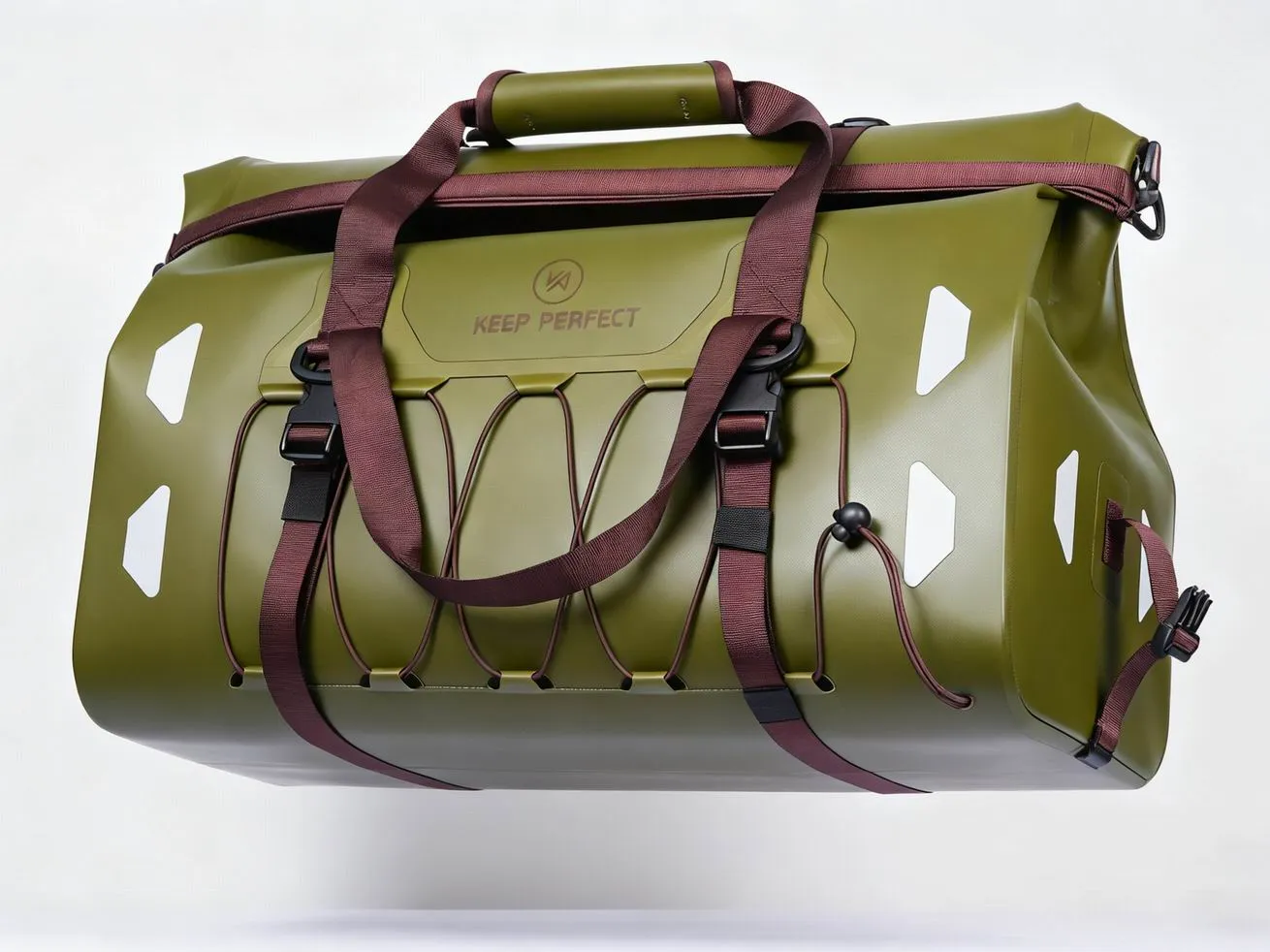
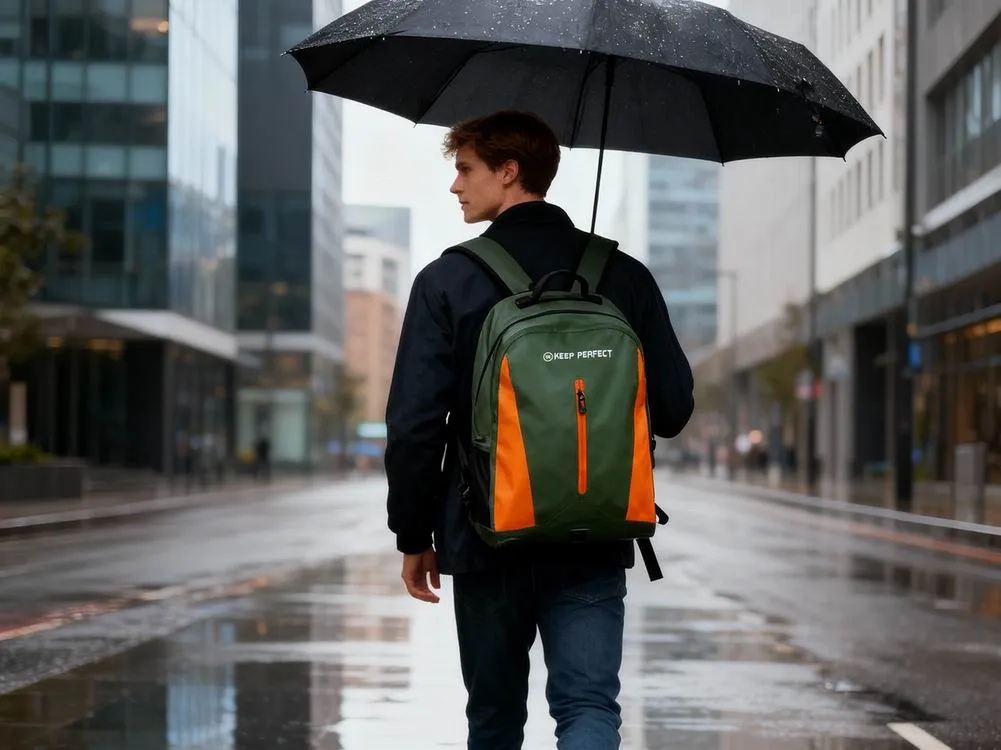
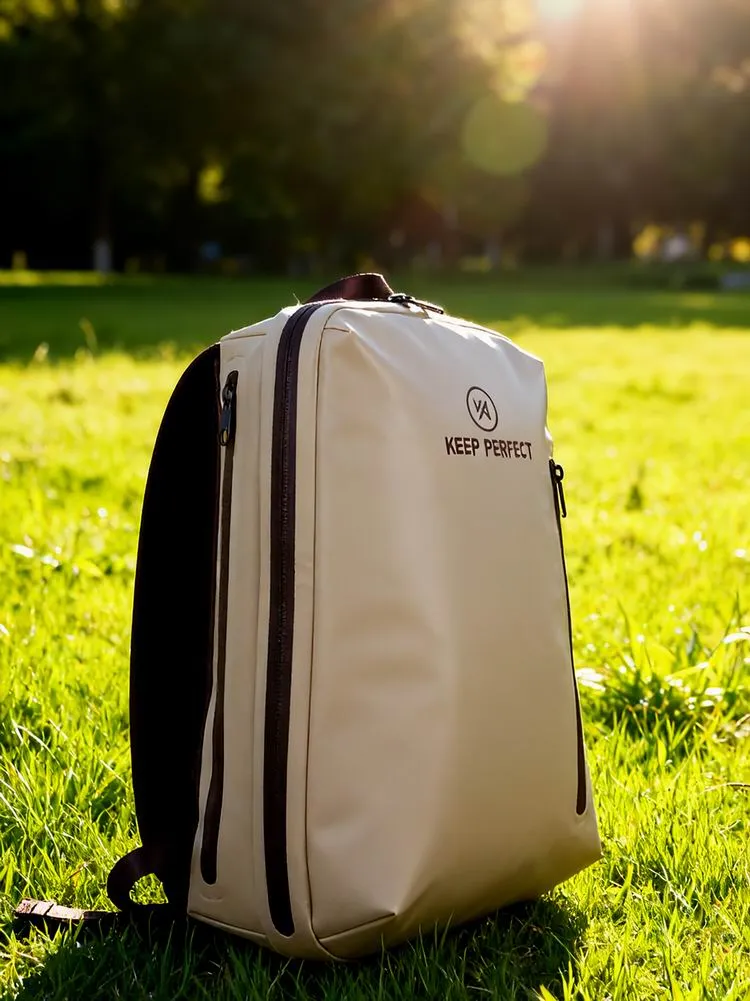
The closure problem: why the opening is the leak
A waterproof bag is a pressure vessel in reverse: it must keep outside pressure — immersion, rain driven at speed, wave slap — from pushing water across a seal line. The welded body seams are permanent: factory-controlled, tested once, never disturbed. The closure is different in kind. It is a seal that must open and re-seal on demand, in the field, by a user with cold hands, wearing gloves, in a hurry. Every requirement that makes a seal easy to open — low force, smooth motion, wide mouth — fights the requirements that make it watertight: contact pressure, precise alignment, long engagement length. Closure engineering is the art of resolving that fight, and each closure family resolves it differently.
The rating on the hangtag is a property of the closure, not the bag. A dry bag body holding 10,000mm hydrostatic head is irrelevant if the roll-top is rolled twice instead of three times; an IPX8 zipper bag is IPX8 only while the slider sits fully parked at the closed stop. The IPX7 versus IPX8 guide defines what those immersion ratings actually test, and the pattern to hold onto is this: the certification tests the closure as much as the bag, which is why two bags of identical fabric can carry ratings three levels apart. The codes themselves are defined in IEC 60529, published by the International Electrotechnical Commission, and the depth and duration a rating claims are the two variables that standard fixes.
The roll-top: friction, folds and engineered simplicity
The roll-top seals by converting a flat opening into a compressed spiral. Stiffened lips — usually a plastic stay sewn or welded into each side of the mouth — are pressed together, rolled down three or more turns, and buckled at the ends. Water crossing the seal must traverse the full width of every rolled layer against the contact pressure of the roll, a path so long and so constricted that capillary flow stalls. The mechanism has no teeth, no slider, no lubricant — nothing to jam, nothing to wear at a point, nothing a grain of sand can permanently defeat. Sand in a roll-top brushes out; sand in a zipper is a service event.
The roll-top’s failure modes are human, not mechanical: under-rolling (two turns instead of three, and the seal path shortens below the safety margin), over-stuffing (a mouth stretched into a curve cannot close flat, and the unclosed channel leaks immediately), and buckle-side folding (rolling toward the wrong face, which loads the stays backward). This is why roll-top instructions are printed on the bag itself and why three turns is the industry minimum with four specified for immersion duty. The full design geometry — stay stiffness, mouth width, fold direction, buckle placement — is mapped in our roll-top closure design guide. The summary: the roll-top is the highest-integrity, lowest-cost, slowest-access closure in the category, and its only real enemy is a hurried user.
The waterproof zipper: one motion, three compromises
The waterproof zipper seals by pressing two interlocking or opposing sealing faces together along a toothed track: TPU-coated coil zippers whose coils overlap under tension, and tooth-type waterproof zippers whose profiled teeth clamp a sealing membrane. The user experience is the selling point — one motion, glove-friendly, wide-mouth access, no rolling discipline required. For a commuter backpack opened twenty times a day, or a camera bag where a missed roll costs a lens, that access speed is a feature worth paying for.
The price arrives as three compromises. First, force and feel: waterproof zippers run stiff, especially tooth types, and the stiffness is the seal — the contact pressure is what the user feels as resistance. Second, contamination and care: the sealing faces must stay clean and periodically lubricated with the manufacturer’s wax or silicone; grit worn across a sealing face cuts the membrane, and the cut leaks from then on. Third, service life asymmetry: the bag body outlives the zipper, and zipper replacement on a welded waterproof bag is a factory operation, not a tailor’s job. Our waterproof zipper technology guide covers the coil-versus-tooth engineering, and the zipper durability testing guide the cycle and pull-strength numbers. The honest ceiling matters most: consumer waterproof zippers typically rate to IPX7-equivalent spray and brief-immersion duty; the bag that must genuinely submerge belongs to the roll-top or the dry-suit zipper.
The heavy end: dry-suit zippers, clamp seals and valves
Above the consumer zipper sits a tier of closures borrowed from survival equipment. The dry-suit zipper — brass or plastic gas-tight teeth that mechanically lock under high contact pressure — is the only zipper family honestly rated for repeated submersion, and it carries the suit’s habits with it: high closing force, mandatory lubrication, careful storage uncreased, and a price that can exceed the rest of the bag’s hardware combined. Clamp and rail seals — the interlocking channel strips familiar from freezer bags, scaled up — appear on waterproof phone pouches and document cases, where a double track and a firm thumb-press deliver genuine IPX8 sealing at pouch sizes, though the sealing force per centimeter grows impractical beyond small openings.
The supporting cast completes the system. Purge valves are not closures but pressure managers: a one-way membrane that lets air escape a roll-top bag so it compresses around its contents, or equalizes a sealed case against altitude and temperature swings — the valves and air-release guide covers their selection and failure modes. And the humble buckle on a roll-top is a closure component, not an accessory: it holds the roll against unwinding, and its placement determines whether the roll forms a clean spiral or a leaking dog-leg. The hardware selection guide treats buckle engineering in full.
The decision matrix: matching closure to use
Closure selection reduces to three questions asked in order. What is the water exposure — rain and splash, brief accidental immersion, or routine submersion? How many times per day is the bag opened — a few times on the water, or twenty times on a commute? And who operates it — a trained user who will roll four turns and wax a zipper, or the general public? The matrix below maps the honest answers; every cell is a program we have built.
| Closure family | Honest water rating | Access speed | User discipline | Relative cost | Signature use |
|---|---|---|---|---|---|
| Roll-top | IPX7-8 when rolled to spec | Slow (roll + buckle) | Moderate (3-4 turns) | Lowest | Dry bags, paddle sports, expedition |
| Coil waterproof zipper | IPX4-6 spray/rain | Fastest | Low (keep clean, wax) | Medium | Commuter backpacks, daily carry |
| Tooth waterproof zipper | IPX6-7 brief immersion | Fast | Moderate (lubricate) | High | Camera, bikepacking, technical packs |
| Dry-suit zipper | IPX8 repeated submersion | Slow and stiff | High (wax, store flat) | Highest | Dive, rescue, survival equipment |
| Clamp/rail seal | IPX8 at pouch scale | Fast at small sizes | Moderate (press full track) | Low | Phone pouches, document cases |
The mismatches are predictable and expensive. A roll-top on a commuter backpack produces users who roll once and lose laptops to rain; a coil zipper on a kayak dry bag produces a wet sleeping bag on day two. The right closure is the one whose failure mode the user will not trigger — and when the use spans two cells, the professional answer is two closures: a roll-top main compartment for the sleep-critical gear and a zippered quick pocket for the phone, a split that shows up constantly in our kayak dry bag programs.
Care and service life: the closure owns the warranty
Warranty data across the category tells a consistent story: the bag body almost never comes back, and the closure almost always does. Each family carries its own care contract, and the brands that print it on the product cut their return rates measurably. The roll-top’s contract is operational: roll three to four turns, do not over-stuff the mouth, rinse sand and salt from the sealing lips, and store the bag unrolled so the stays keep their shape and the coating is not held in a permanent crease. The waterproof zipper’s contract is maintenance: rinse after salt exposure, brush grit from the track, wax or silicone the sealing faces on the manufacturer’s schedule, park the slider fully at the stop, and store the bag with the zipper open so the sealing faces are not held compressed.
The service-life numbers deserve honesty in the product literature. A roll-top in decent materials outlasts the bag’s coating — ten years of weekend use is routine, and the failure that finally arrives is the body delaminating, not the closure. A consumer waterproof zipper is a wear item with a service life measured in thousands of cycles: two to five years of daily commuting before the sealing faces polish and the rating quietly degrades. The professional zipper families cost more upfront and last longer, but no zipper outlasts a roll-top. Specifying against this asymmetry is legitimate design: a ten-year expedition bag takes a roll-top, a three-year commuter pack takes the zipper its users will actually close.
Hybrid closures and the engineering of the opening
The most capable waterproof bags increasingly treat the closure as two systems with two jobs. The common pattern pairs a roll-top main compartment — carrying the immersion rating for the sleep-critical and hypothermia-critical contents — with a zippered quick-access pocket for phone, keys and snacks, each pocket honestly rated for splash rather than submersion and positioned high on the bag. Variants multiply from there: roll-tops with a zippered expansion gusset inside the roll, zipper-main bags with a storm flap that converts splash duty to driving-rain duty, and duffel-style bags whose U-shaped dry-suit zipper opening delivers suitcase access at submersion ratings — the premium configuration for dive and rescue gear.
The engineering detail that separates good hybrids from marketing hybrids is rating honesty per opening. A bag with one IPX7 roll-top and two IPX4 pockets is not an IPX7 bag in the user’s understanding, and the product page that does not say so manufactures warranty claims. The disciplined specification names a rating per opening, prints a map of the openings in the product literature, and designs the low-rated pockets so their failure annoys rather than destroys: drainage grommets at the pocket floor, and a liner seam that keeps pocket water out of the main compartment. That last detail — an internal moisture barrier between the splash pocket and the rated compartment — is the single most requested feature in our custom hybrid programs, and the cheapest insurance in the closure catalog.
Testing the seal: how closures are verified
Closure claims survive only with test discipline, and the verification ladder has three rungs. Design validation: the closure prototype goes through the immersion protocol it will be sold against — IPX7’s thirty minutes at one meter, IPX8’s agreed depth and duration — with the closure operated by the test protocol’s specified number of open-close cycles first, because a seal that only works fresh out of the box is a warranty claim in waiting. Production verification: every closure line runs leak sampling — inflation-and-submersion or vacuum-box tests on pulled units — with the closure exercised before testing, and the defect classified as critical in the AQL scheme. Endurance correlation: cycle testing on the closure alone, tracked in the zipper durability protocols for zippers and roll-flex protocols for roll-top materials, so the seal at cycle five thousand is a designed number, not a hope. Each rung should also name the method it is run to: the water-resistance and cycle-test methods quoted on a closure report are published by ASTM International, and the edition is what separates a measurement from an opinion.
The specification lines a buyer should insist on follow directly: the rating named as a test standard with depth and duration, not an adjective; the closure operation count in the test protocol; the production leak-test method and sample rate; and the user instructions printed on the product, because a roll-top without its three-turn instruction is a leak with a hangtag. Five lines make any closure claim auditable — and a factory that welds, tests and ships 200,000 closures monthly at these protocols, sampling in 6–10 working days, bulk 35–50 days, FOB Xiamen, SGS-verified, is documented end to end.
Frequently Asked Questions
Q1. Why do waterproof bags leak at the closure instead of the fabric?
Fabric panels are welded or coated to permanent, factory-tested ratings. The closure is a seal that must open and re-seal daily by a user in the field — flexed, contaminated and hurried. Every leak statistic in the category concentrates on that moving seal line.
Q2. How many times should a roll-top be rolled?
Three turns minimum, four for immersion duty. Under-rolling shortens the seal path below its safety margin, and a mouth stretched by over-stuffing cannot close flat — both are user failures the design cannot forgive.
Q3. Are waterproof zippers actually submersible?
Consumer waterproof zippers are honestly rated for spray, rain and brief accidental immersion (roughly IPX4-7 depending on type). For repeated submersion, only dry-suit-grade gas-tight zippers or roll-tops carry the rating.
Q4. Why are waterproof zippers so stiff?
The stiffness is the seal — the resistance you feel is the contact pressure pressing the sealing faces together. A waterproof zipper that glides like a household coil is not sealing like a waterproof one.
Q5. How do I maintain a waterproof zipper?
Keep the sealing faces clean of grit and salt, and lubricate periodically with the manufacturer’s wax or silicone stick. Grit dragged across a sealing face cuts the membrane, and the cut leaks permanently.
Q6. What is a dry-suit zipper and when is it worth it?
A gas-tight, mechanically locking zipper rated for repeated submersion, with high closing force and mandatory lubrication. Worth it for dive, rescue and survival equipment — overkill in cost and stiffness for everything drier.
Q7. What does a purge valve do on a dry bag?
It manages air, not water: a one-way membrane lets trapped air escape so the bag compresses around its contents, or equalizes pressure against altitude and temperature swings. It is a pressure accessory, not a closure.
Q8. Can a leaking waterproof zipper be repaired?
The zipper itself, no — a cut sealing membrane does not heal. Replacement is possible but is a factory operation on a welded bag, not a tailor’s job. This service-life asymmetry belongs in the purchase decision.
Q9. Roll-top or zipper for a commuter backpack?
Zipper — opened twenty times daily, the roll discipline fails and the bag gets used open. Choose a tooth-type waterproof zipper for rain duty, and keep sleep-critical electronics in an inner dry pouch as insurance.
Q10. Roll-top or zipper for kayaking?
Roll-top, rolled three to four turns. Wet environments with splash and capsize risk are exactly the roll-top’s design case, and sand — the zipper’s enemy — brushes out of a roll-top.
Q11. How are closures tested in production?
Design validation runs the rated immersion protocol on cycled closures; production runs inflation-submersion or vacuum-box leak tests on sampled units as critical defects; endurance cycle testing tracks the seal over thousands of operations.
Q12. What closure specification lines should go on a purchase order?
The rating as a test standard with depth and duration; the open-close cycle count in the test protocol; the production leak-test method and sample rate; and user instructions printed on the product itself.
People Also Ask
Which is more waterproof, a roll-top or a zipper?
A properly rolled roll-top (three to four turns) out-seals any consumer waterproof zipper and suits immersion duty. Waterproof zippers trade sealing margin for access speed — the right choice depends on whether the bag faces submersion or just rain.
How does a roll-top closure keep water out?
Pressing stiffened mouth lips together and rolling three-plus turns forces any intruding water to traverse every compressed layer against the roll’s contact pressure — a path too long and constricted for capillary flow to complete.
Why did my waterproof bag leak at the zipper?
The three usual causes: grit or salt cutting the sealing faces, skipped lubrication letting the faces wear, or a slider not fully parked at the closed stop. Waterproof zippers need cleaning and waxing; a cut membrane cannot be repaired, only replaced.
What IP rating does a waterproof zipper bag have?
Consumer waterproof zipper bags typically rate IPX4-6 for spray and rain, with tooth-type zippers reaching brief-immersion IPX7 territory. Genuine repeated-submersion IPX8 belongs to dry-suit zippers, roll-tops and clamp-seal pouches.
How many times do you fold a dry bag?
Three folds minimum, four for immersion. The seal depends on the full rolled length, so two casual turns shorten the path below the safety margin — and over-stuffing the mouth prevents a flat close entirely.
Can sand ruin a waterproof bag closure?
In a zipper, yes — grains dragged across the sealing faces cut the membrane permanently. In a roll-top, no — sand brushes off the flat sealing lips. This single difference decides closure choice for beach and paddle use.