Seal a dry bag and you seal in the air. Roll the top on a bag packed in a warm room and the trapped air turns it into a balloon — bulky, uncompressible, buoyant in all the wrong ways, and straining every seam. Fly a sealed case to altitude or leave it in a cold hold and the pressure differential either inflates it against its closure or crushes it inward. Waterproof valves exist to solve exactly this: devices that move air (and sometimes water vapor) across a sealed boundary in one or both directions while passing no liquid water in either.
They are small, cheap and quietly decisive — a two-dollar component that changes how a bag packs, floats and survives transport. They are also a penetration in a waterproof shell, which makes them a leak path that must be engineered and tested like any other. This guide covers the valve families, the membrane physics, the placement rules, the failure modes and the test protocols. Every submersion rating quoted here traces to the IEC 60529 enclosure code, which fixes the depth, duration and method behind the number. QUANZHOU JUNYUAN BAGS: custom waterproof bag production since 2014, 4,950 m² SGS-verified facility. We weld and validate valve systems across our dry bag and case programs — and we test every valve seat as the leak path it is.
The trapped-air problem: why sealed bags need to breathe
Three distinct physics problems share one solution family. The packing problem: a roll-top dry bag closed at sea level holds the air that was inside at closing — on a 20-liter bag packed loosely, that can be five or more liters of dead volume the user then carries, and no amount of knee-pressure squeezing moves it past a good seal. The altitude problem: a bag sealed in a valley and carried to a 3,000-meter pass experiences roughly a thirty percent pressure drop outside; the internal air pushes out against the closure with real force, hunting for the weakest seal point. The temperature problem: a sealed case packed warm and flown in a cold cargo hold develops negative pressure that sucks inward on every seal — the classic mechanism by which "waterproof" cases ingest moisture on aircraft, because a pressure differential across a marginal seal will find it.
Each problem has the same shape: air must cross the boundary, water must not. The valve is the engineered answer, and which valve depends on which problem dominates. A packable dry bag wants one-way air release for compression. An expedition bag crossing altitude wants two-way equalization without liquid ingress. A waterproof electronics case wants continuous breathing plus vapor management — the condensation physics of that last case is covered in our anti-condensation design guide.
Valve anatomy: umbrella, duckbill and membrane
Three mechanical families cover nearly every valve on a waterproof bag. The umbrella valve: a small elastomer disc shaped like its name, seated over a port; internal pressure lifts the disc edge and air escapes, external pressure presses it tighter onto the seat. Simple, one-way, tolerant of dirty environments, and the standard purge valve on compression dry bags. The duckbill valve: an elastomer sleeve pinched flat at its exit; internal pressure opens the slit, external pressure closes it. Cheaper, more compact, slightly less consistent in cracking pressure, common on budget compression sacks. Neither passes liquid water outward at meaningful rates in bag service — both are air devices.
The third family is different in kind: the ePTFE membrane vent. Expanded PTFE is a microporous film whose pores — fractions of a micron — pass air and water vapor freely but block liquid water by surface tension, in both directions, continuously. An ePTFE vent needs no pressure threshold to open; it equalizes all the time, which makes it the right answer for sealed cases, electronics housings and altitude-exposed bags. Its enemy is contamination: oils and surfactants lower the water-entry pressure of the pores, and a membrane touched by sunscreen or detergent can begin passing liquid. Oleophobic membrane grades exist for exactly this exposure and belong in the specification for any consumer-facing product.
One-way purge valves: the compression system
The purge-valve dry bag is a packing system, not just a bag with a hole in it. The workflow: pack, close the roll-top per instruction, then kneel or press the bag so internal air exits through the valve — the bag collapses around its contents and stays collapsed because the valve admits nothing back. The volume recovered is real: on soft goods, purge compression typically reclaims twenty to forty percent of packed volume, which on an expedition manifest is the difference between one bag and two. Some systems add compression straps so the squeezed state is held mechanically and the valve only does the air work.
Design details decide whether the system delights or annoys. Cracking pressure — the force needed to open the valve — must be low enough to vent under body pressure but high enough that the bag does not self-deflate under its own contents’ weight in the pack; valve makers tune this in the elastomer durometer and disc geometry, and it should be verified in sampling, not assumed. The valve cap matters more than it looks: a tethered screw or flip cap protects the seat from dirt and gives a positive backup seal for immersion duty, and an untethered cap is a lost cap. And the base flange — the ring welded or clamped to the bag body — is the actual leak path; the membrane or disc almost never fails, the seat does, which is why the weld protocol for the flange belongs in the same test regime as any body seam.
Two-way equalization: altitude, temperature and the case problem
Bags and cases that travel by air, cross mountain ranges, or ship through uncontrolled holds need two-way equalization, and the ePTFE vent is the standard instrument. The sizing variable is airflow rate: the membrane area must pass air fast enough to track the pressure changes of a flight descent or a fast weather swing without meaningful differential building up. Vent manufacturers publish airflow-versus-area curves, and the engineering is a lookup, not an experiment: case volume, worst-case pressure slew rate, and a safety factor select the membrane diameter. Under-sizing a vent is the quiet failure — the case still flexes against its latches and seals on every flight, fatiguing exactly the components the vent was meant to protect.
Two placement rules govern equalization vents. Keep them high: a vent at the top of the case breathes air; a vent at the bottom sits in any water the case rests in, and while the membrane blocks liquid, prolonged submersion of a contaminated membrane is a risk with no upside. Keep them cleanable and shielded: a vent recessed behind a baffle or grille survives baggage handling and keeps fingers and labels off the membrane, because every adhesive sticker slapped over a vent by a logistics clerk converts a breathing case back into a pressure vessel. These are the details our electronics and recording bag guide treats as standard for equipment cases.
Placement, welding and the leak-path discipline
A valve is a hole in a waterproof shell plus a promise. Where the hole goes and how the promise is welded are manufacturing decisions with field consequences. Placement on dry bags clusters in two schools: low on the body (air rises through the contents and exits fully as the bag is compressed from the top) versus on the upper body near the closure (protected from abrasion and standing water, easier to operate, but traps a residual air pocket below). The low-placement school wins on compression efficiency; the high-placement school wins on durability and immersion margin — and the choice should be made per product duty, not per factory habit.
The seat weld is where valve programs live or die. TPU-body bags take a TPU-flanged valve welded with the same RF or hot-air processes as the body seams — same parameter discipline, same per-lot first-article peel verification described in our welding process guide. Clamped (two-part threaded) valve seats suit rigid or semi-rigid shells and allow valve replacement, at the cost of a gasket that ages and must be specified with the shell material’s compression-set behavior in mind. Either way, the valve seat is a critical defect category: every production batch leak-tests valve-equipped units with the valve submerged and cycled, because a valve that seals statically can still weep after fifty actuations.
Failure modes: how valves actually leak
Valve failures cluster into five recurring entries, and the warranty data says the valve mechanism is rarely the culprit. Seat weld fatigue: the flange weld flexes with every compression cycle and eventually micro-cracks — accelerated by placing the valve on a high-flex zone of the body. Contamination of elastomer valves: sand or fabric lint lodged under an umbrella disc holds it open a fraction of a millimeter, enough to weep under immersion; the tethered cap exists precisely for this. Membrane contamination: surfactants, oils and solvents lower ePTFE’s water-entry pressure, and the membrane that passed the lab test fails after a season of sunscreen and seawater — oleophobic grades and user rinse instructions are the countermeasures. Cold stiffening: elastomer valves harden at low temperature and their cracking pressure drifts, which matters for winter and altitude duty and belongs in the validation protocol. And cap loss: the untethered cap that vanishes in week two, removing the backup seal the immersion rating quietly assumed.
| Failure mode | Root cause | Field signature | Design countermeasure |
|---|---|---|---|
| Seat weld fatigue | Valve on high-flex zone | Slow weep at flange after months | Low-flex placement + per-lot peel test |
| Disc contamination | Sand/lint under umbrella | Leak that rinses away | Tethered cap + rinse instruction |
| Membrane fouling | Oils/surfactants on ePTFE | Ingress after chemical exposure | Oleophobic membrane grade |
| Cold drift | Elastomer stiffening | Winter-only seepage | Cold-soak validation cycle |
| Cap loss | Untethered design | Immersion leak at valve | Tethered cap as standard |
The maintenance contract is short enough to print on the product: rinse the valve with fresh water after sand or salt exposure, never poke the membrane with tools, keep solvents and insect repellent away from the vent, and check the cap is seated before immersion. Four lines that prevent the majority of valve-related returns.
Selection by product duty: a routing guide
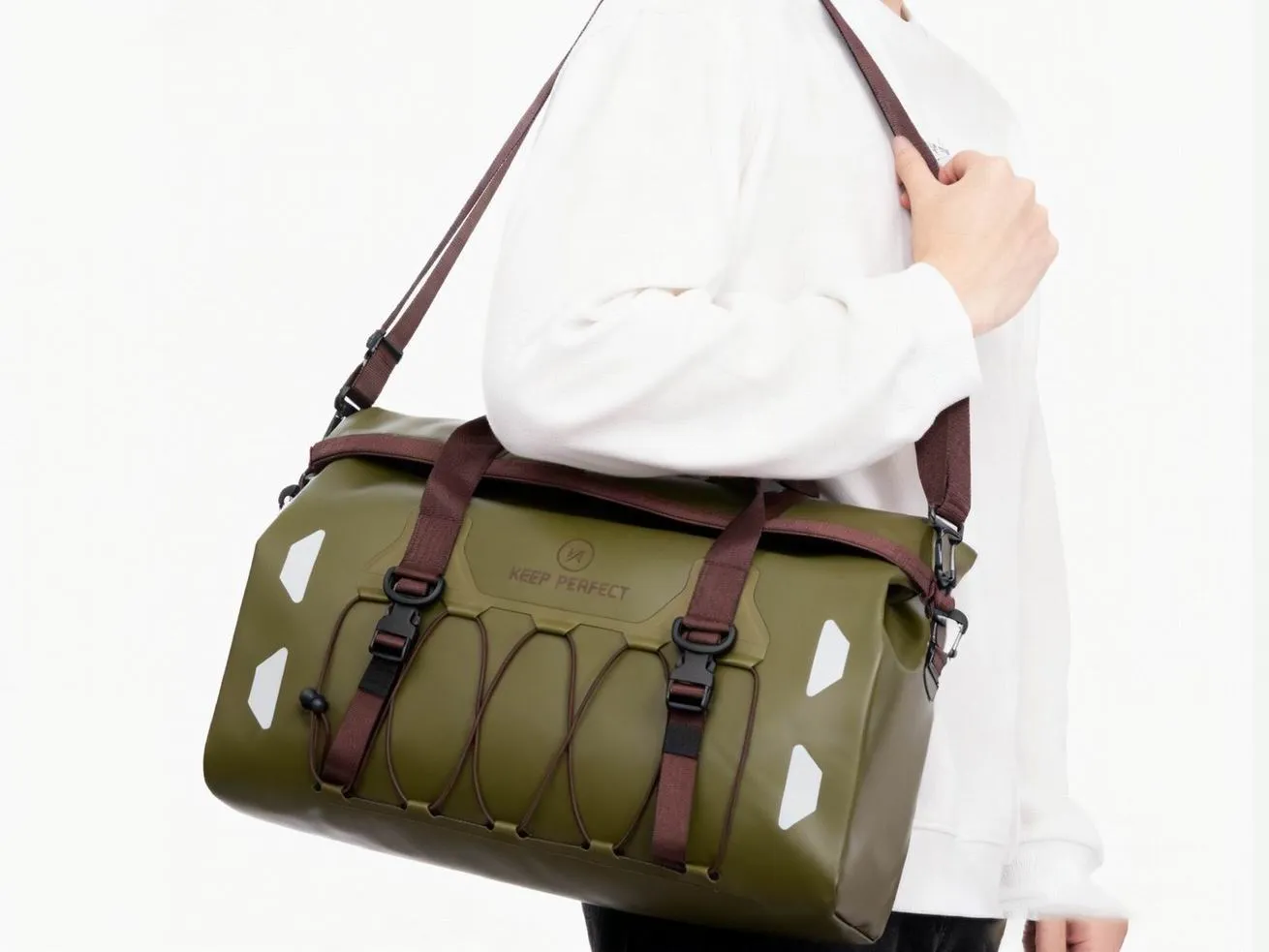
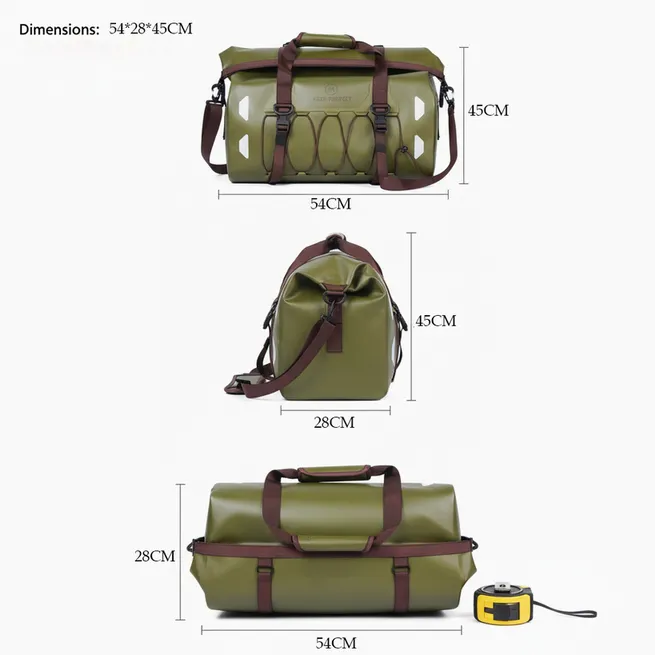
Valve selection follows the product’s life story, and the routing is cleaner than the catalog suggests. Compression dry bags for paddle sports and bikepacking: one-way umbrella purge, low placement if immersion margin allows, tethered cap, because the user compresses daily and rinses rarely. Expedition and travel duffels that fly: two-way ePTFE equalization, high and shielded, because the bag sees cargo holds and mountain passes more often than rivers. Electronics and instrument cases: ePTFE sized generously from the airflow curves, oleophobic grade, recessed behind a baffle, because the contents are unforgiving and the case must breathe continuously. Budget compression sacks: duckbill valves keep the bill of materials honest where the use is occasional and the immersion rating is modest.
The no-valve decision deserves equal respect. A simple kayak dry bag used at one altitude, rolled by a trained user who can burp the bag manually before the final turns, gains nothing from a valve but cost and a leak path — and many of our highest-volume dry bag programs ship valve-free for exactly that reason, year after year, without a single valve-related claim to investigate. The routing question is never "does this bag deserve a valve" but "which pressure problem does this bag actually meet." Bags that meet none should carry no penetration at all, and the manual burp — pressing air out through the mouth before the final turn — documented in the roll-top closure guide remains the zero-cost compression system every user already owns and every trained guide already teaches.
The valve specification: six lines
The guide compresses to six specification lines. One: the problem is named — packing compression, altitude equalization or case breathing — because the valve family follows the physics. Two: the family is matched — one-way umbrella or duckbill for compression dry bags, two-way ePTFE for equalization and electronics, oleophobic grades for consumer exposure. Three: the flow rate is sized — membrane area from the manufacturer’s airflow curves against case volume and pressure slew, never guessed. Four: the placement is deliberate — low body for compression efficiency or high body for immersion margin, recessed and shielded, never on a high-flex zone. Five: the seat is a critical weld — per-lot first-article verification and batch leak testing with the valve cycled and submerged. Six: the care contract is printed — rinse, no tools, no solvents, cap seated. Six lines from a factory welding and validating valve systems at 200,000 pieces monthly — sampling in 6–10 working days, bulk 35–50 days, FOB Xiamen, SGS-verified — documented end to end. The closure these valves partner with is engineered in our roll-top closure design guide.
Frequently Asked Questions
Q1. What does a purge valve do on a dry bag?
It lets trapped air escape one way so the bag compresses around its contents after closing. Purge compression typically reclaims twenty to forty percent of packed volume — the difference between one expedition bag and two.
Q2. How does a waterproof valve keep water out?
Two mechanisms: elastomer umbrella or duckbill valves that open only under internal pressure and clamp shut against external pressure, or ePTFE membranes whose sub-micron pores pass air and vapor but block liquid water by surface tension.
Q3. What is an ePTFE vent?
Expanded PTFE — a microporous membrane that breathes air and water vapor continuously in both directions while blocking liquid water. It is the standard equalization device for sealed cases, electronics housings and altitude-exposed bags.
Q4. Why did my dry bag inflate like a balloon on the mountain?
You sealed warm low-altitude air inside; at altitude the external pressure dropped and the internal air expanded against the closure. A two-way ePTFE vent or a brief re-open at altitude solves it.
Q5. Can a purge valve leak?
The valve mechanism rarely does; the seat weld and contamination do. Sand under the disc holds it open a fraction of a millimeter, and fatigued flange welds weep after months of flexing — both are why valves get their own leak-test protocol.
Q6. Where should the valve be placed on a dry bag?
Low on the body for maximum compression (air rises through contents and exits fully), or high on the body for abrasion protection and immersion margin. The choice follows the product’s duty, and never a high-flex zone.
Q7. Do valves work in cold weather?
Elastomer valves stiffen in the cold and their opening pressure drifts — winter-duty valves should be validated with a cold-soak cycle. ePTFE membranes are largely temperature-insensitive and preferred for extreme cold.
Q8. Why do sealed cases get moisture inside after flights?
Negative pressure: a case packed warm and flown cold sucks inward on every seal, and marginal seals ingest humid air. A properly sized ePTFE equalization vent prevents the differential from ever forming.
Q9. Can I poke or clean a membrane vent with a tool?
Never — tools puncture or foul the membrane. Rinse with fresh water only, keep solvents and insect repellent away, and never cover the vent with stickers or labels.
Q10. What is cracking pressure in a purge valve?
The internal pressure at which the valve opens to vent. It must be low enough to release air under body-pressure packing but high enough that the bag does not self-deflate under its own contents — tuned in the elastomer and verified in sampling.
Q11. Should the valve cap be tethered?
Yes — an untethered cap is a lost cap, and the cap is the backup seal the immersion rating quietly assumes. Tethered caps also keep dirt off the valve seat between uses.
Q12. One-way or two-way valve for a kayak dry bag?
One-way purge for compression duty — you want air out and nothing back, and the bag spends its life at one altitude. Two-way ePTFE suits travel and expedition bags that fly or cross passes. Many expedition programs spec both roles into different bags.
People Also Ask
What is the valve on a dry bag for?
Air management: a one-way purge valve lets trapped air escape so the bag compresses around its contents, reclaiming twenty to forty percent of packed volume. Two-way membrane vents instead equalize pressure for altitude and temperature swings.
Do dry bag valves let water in?
Correctly specified and maintained, no. Elastomer purge valves clamp shut against external pressure, and ePTFE membranes block liquid by surface tension. Leaks trace to seat-weld fatigue, sand contamination, or chemical fouling — all preventable by design and rinsing.
How does a purge valve work?
Internal pressure lifts an elastomer umbrella disc or opens a duckbill slit, letting air out; external pressure presses the element tighter onto its seat, sealing. The valve passes air one way only — out — so the compressed bag stays compressed.
Why is my waterproof bag puffing up?
Trapped air from closing in warm or low-altitude conditions, then exposure to colder or higher environments. Kneel the air out through the purge valve if fitted, or briefly reopen and re-close at the new environment to equalize.
What is a breathable waterproof membrane vent?
An ePTFE vent — a microporous film passing air and vapor continuously in both directions while blocking liquid water. Used on sealed cases, electronics housings and expedition bags to prevent pressure stress on seals and latches.
How do I maintain a dry bag valve?
Rinse with fresh water after sand or salt, never poke the membrane with tools, keep solvents and repellents away from the vent, and confirm the tethered cap is seated before immersion. Four habits that prevent most valve returns.