The waterproof zipper is the category’s most misunderstood component. Buyers expect household-zipper glide with hatch-grade sealing; physics offers a trade: every gram of sealing pressure is felt as resistance in the pull, every hour of immersion rating is paid for in stiffness, cost and maintenance. Yet when the product brief calls for daily one-motion access at genuine water ratings — camera bags, bikepacking packs, commuter backpacks that see real rain — no other closure family comes close, and the technology behind it deserves a precise explanation.
This guide opens up waterproof zipper technology: the two construction families and how each seals, what IPX ratings on a zipper actually certify, the lubrication and care contract, the failure modes that end zipper life, and the specification lines that keep a zipper-equipped program honest. QUANZHOU JUNYUAN BAGS: custom waterproof bag production since 2014, 4,950 m² SGS-verified facility. We install waterproof zippers across our technical bag programs and test them as the critical component they are — the overview context lives in our closure systems guide.
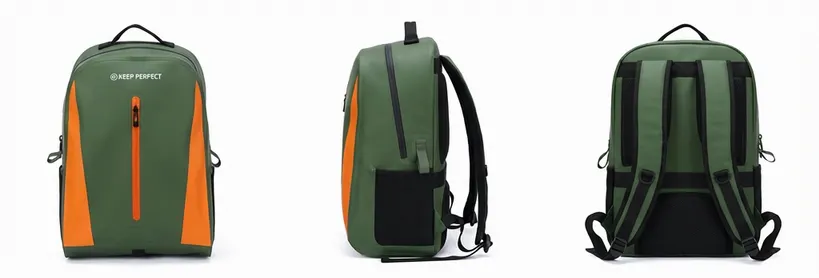
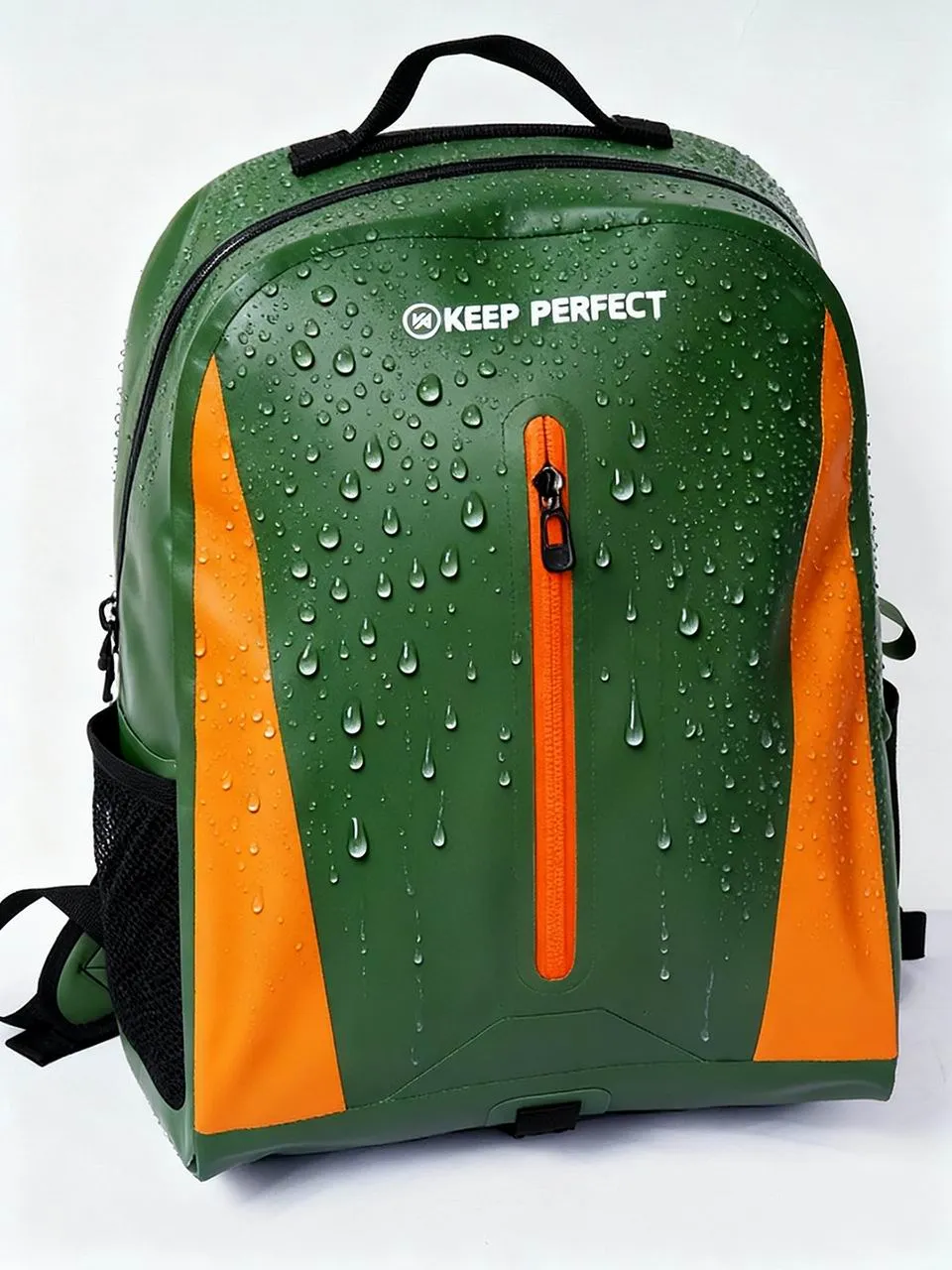
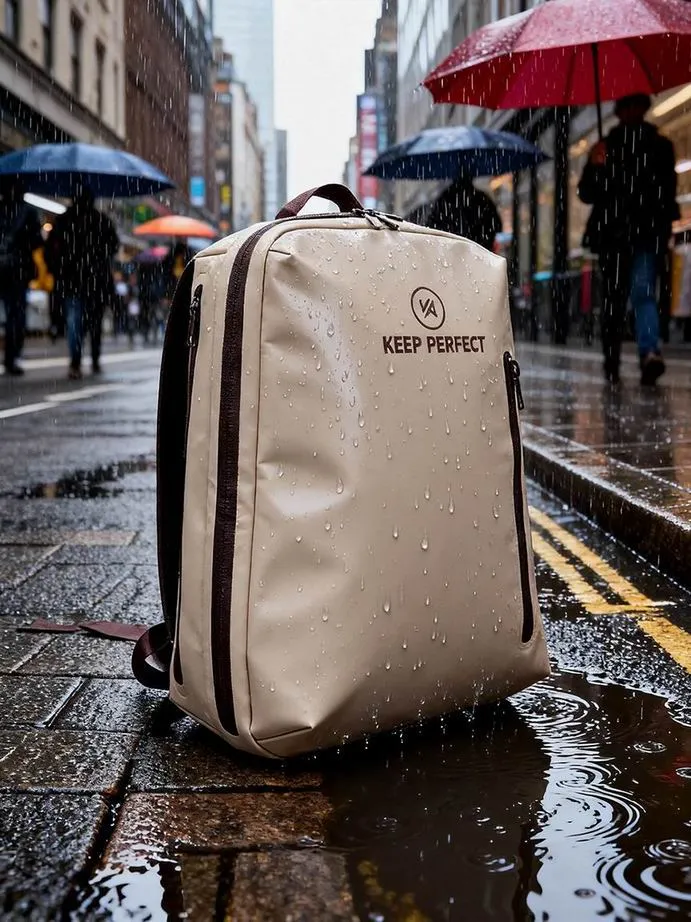
Two families: coil and tooth construction
Every waterproof zipper on a bag belongs to one of two construction families, and the families seal by different physics. The coil family — dominated by the woven TPU-coated spiral zipper — runs a standard nylon coil whose tape is laminated with a TPU film; when closed, the two film faces press together across the coil’s crown, and the coil tension holds the contact. Sealing is a surface-press mechanism: broad, compliant, forgiving of minor contamination, and limited in pressure capacity. The tooth family — the profiled-element waterproof zipper — molds individual teeth from engineering plastic with interlocking sealing faces, often with a dedicated sealing lip or membrane clamped between the elements. Sealing is a line-clamp mechanism: higher contact pressure concentrated on a precise line, better immersion performance, and a much harder pull.
| Property | Coil waterproof zipper | Tooth waterproof zipper |
|---|---|---|
| Sealing mechanism | TPU film faces pressed by coil tension | Profiled teeth clamping a sealing line |
| Honest rating band | IPX4-6 spray and rain | IPX6-7 brief immersion |
| Pull force | Moderate | High |
| Glove friendliness | Good | Fair |
| Contamination tolerance | Good (broad faces) | Poor (precision line) |
| Unit cost | Medium | High |
| Signature use | Commuter and day packs | Camera, bikepacking, technical |
The naming confusion costs programs money: suppliers label both families "waterproof zipper" with the same word and different worlds behind it. The specification must name the construction family and the maker’s series, because within each family the spread is as wide as between them — a premium coil out-seals a budget tooth, and a name-brand tooth zipper carries test data an anonymous one only imitates the look of.
What an IPX rating on a zipper actually means
An IP rating belongs to a tested assembly, not a component — and this distinction dissolves most of the mythology. The ladder itself is defined by the IEC 60529 enclosure code, which sets the depth, duration and test method each band must survive. When a zipper maker rates a series, the rating describes the zipper tested on a rigid frame under laboratory conditions: new, lubricated, cycled a specified number of times, closed by a technician. The same zipper sewn into a bag inherits a fraction of that performance, because the bag adds everything the frame did not have: fabric tension distorting the track, curved paths stressing the teeth, a slider parked by a hurried user, and months of contamination. This is why a bag built with an IPX8-rated zipper is not automatically an IPX8 bag — the assembly must earn its own rating, and the IPX7 versus IPX8 guide details what the immersion protocols actually demand.
The end-stop is where ratings quietly live and die. Both families seal along the track but rely on a molded or welded stop — the parking garage of the slider — to close the final gap where the two tape ends meet. A slider backed off five millimeters opens a channel no track quality can compensate, and field leak reports trace to un-parked sliders with embarrassing regularity. Good designs make the parked state tactile and visible: a garage the slider clicks into, a contrasting stop color, sometimes a flap that only closes when the slider is home. When specifying, ask for the rating protocol’s cycle count: a zipper rated after fifty cycles tells you about a new bag; one rated after two thousand tells you about the product’s second year.
The stiffness trade: why sealing pressure is felt
Users read waterproof-zipper stiffness as a defect; it is the working principle. The pull force of a waterproof zipper decomposes into the ordinary meshing resistance plus the force needed to compress the sealing faces — and the second term is the rating. Tooth zippers feel hardest because their sealing line demands high local pressure; coil zippers spread lower pressure across broad film faces and glide easier at lower ratings. Design can soften the experience without surrendering the seal: longer tracks that spread the pressure budget, lubrication that cuts friction without reducing contact force, puller geometry that gives fingers mechanical advantage, and two-slider configurations that split a long opening into manageable runs.
The honest product decision is choosing where on the glide-seal curve the user lives. A commuter opening a backpack twenty times a day will forgive a mid-band seal and punish a hard pull; a photographer wading a river will forgive the pull and punish the leak. What no design can do is max both axes, and product pages that promise "butter-smooth, fully submersible" are describing a zipper that does not exist. Our product teams spec the curve explicitly — target rating band, maximum pull force in Newtons measured on the finished bag, slider count — and the sampling protocol verifies both numbers before bulk, because a zipper that meets rating but defeats the user fails the product as surely as one that leaks.
Lubrication and care: the maintenance contract
Waterproof zippers ship with a maintenance contract, and programs that hide it in a leaflet inherit the returns. The contract has four clauses. Clean: rinse the track after sand, salt or mud exposure — grit left in the track is dragged across the sealing faces on the next cycle and cuts them. Lubricate: apply the maker’s wax or silicone stick to the sealing faces and teeth on a use-based schedule — monthly for daily users, before and after any immersion trip — because lubricant is both friction control and a sacrificial contamination barrier. Park: close the slider fully into its stop every time, and never store the bag with the slider mid-track under tension. Store open: for long storage, leave the zipper open so the sealing faces are not held compressed into a permanent set that ages the seal.
The lubricant itself is specified, not improvised: the zipper maker’s own wax or silicone preparation, because household oils and petroleum greases swell the TPU films and degrade the exact faces they were meant to protect. Care instructions belong on the product or its hangtag in four lines — the rinse, the wax, the park, the store-open — and the brands that print them there cut zipper-related returns measurably. The durability dimension, including the cycle and pull-strength test numbers behind these habits, is covered in our zipper durability testing guide.
Failure modes: how waterproof zippers die
Five failure modes account for nearly every waterproof-zipper field death, and each has a known address. Sealing-face cuts: grit dragged across the film or membrane slices it, and the cut leaks from then on — the most common mode, and the least repairable. Tooth or coil damage: a hard bend at a tight radius cracks profiled teeth or kinks coil, destroying the track’s geometry at one point — the bag still closes, but the point weeps. Slider wear: the slider’s internal channels widen over thousands of cycles, contact pressure drops, and the seal fades gradually enough that the user blames everything else first. Tape weld or stitch failure: the joint between zipper tape and bag shell ages under flex, and the leak path forms beside the track rather than through it — a manufacturing-physics problem covered in our seam sealing guide. And corrosion: salt exposure on any metallic slider component, slowly seizing the pull.
The repair reality must shape the purchase decision: a damaged waterproof zipper is replaced, not repaired, and replacement on a welded waterproof bag is factory surgery — the old track must be cut out and a new one welded in, often costing a large fraction of the bag’s value. Programs that expect hard duty should spec replaceable-track architectures (zipper garages and clamped tape channels) or accept the zipper as a wear component with a defined service life — two to five years of daily use being the honest consumer band. The service-life asymmetry between bag body and closure is a design input, not a surprise.
The professional tier: dry-suit and gas-tight zippers
Above the consumer families sits the professional tier — the gas-tight zippers developed for survival suits and dry suits, where the closure must hold against repeated submersion, sometimes against breathing-gas mixtures, at any temperature the ocean offers. Two constructions dominate: brass-tooth gas-tight zippers, whose precisely machined teeth interlock against a continuous sealing profile and tolerate decades of service with lubrication; and plastic-tooth equivalents that trade some longevity for lighter weight, lower cost and no corrosion. Both share the tier’s signatures: a pull force that surprises first-time users, a mandatory wax discipline, a strict storage rule (fully closed, uncreased, supported), and a unit price that can exceed the rest of the bag’s hardware combined.
The applications justify the tier precisely because their failure modes are unforgiving: dive and rescue equipment where a leaking closure is a safety event, not a warranty claim; expedition duffels that ride open boats for weeks; electronics transport for broadcast and scientific teams working in genuine weather. For bag programs, the specification questions change shape at this tier — replacement policy (dry-suit zippers are designed to be replaced and the bag should be architected for it), cold-flex validation, and the maker’s own test documentation, which at this tier is extensive and worth demanding. The closure systems overview places this tier against the roll-top alternative: at genuine repeated-submersion duty, the choice is between the highest-cost zipper made and the simplest closure ever devised, and the correct answer is usually decided by access frequency, not budget.
Installation architecture: where zipper programs succeed
A waterproof zipper performs as installed, not as manufactured, and the installation details decide the field outcome. Track path geometry comes first: waterproof zippers want gentle curves — tight radii crack profiled teeth and pucker coil tape, so corner radii are specified (typically 50mm and above for tooth types) and the pattern is drafted around them. Tape tension is second: the track must be welded or sewn at neutral tension, because a track installed under fabric pull is pre-loaded toward opening at every curve. The garage — the molded or fabric housing at the closed end — is third: it protects the parked slider, guarantees full closure against the stop, and sheds water off the end junction, and it is the single highest-value piece of hardware in the assembly.
The tape-to-shell joint is the fourth detail and the least visible. Welded attachment suits TPU-laminate shells and puts the joint in the same process family as the body seams; sewn-and-taped attachment suits PU-coated and lightweight shells, with the tape covering the needle path — the full joint physics sits in our seam sealing guide. Either way, the joint ages under flex beside the track, and its endurance belongs in the validation protocol: immersion after flex cycling, not just immersion new. Programs that validate the zipper and ignore its installation discover the omission at the first warranty review, one leaking end-garage at a time.
The waterproof zipper specification: six lines
The guide compresses to six specification lines. One: the family is named — coil or tooth, maker and series — because "waterproof zipper" is a category, not a component. Two: the rating is assembly-rated — the bag, not the frame, tested to the claimed IPX level after a stated cycle count, with depth and duration on the document. Three: the pull is budgeted — maximum pull force in Newtons on the finished bag, slider count and puller geometry specified for the actual user. Four: the end-stop is engineered — a tactile, visible parking garage, because the last five millimeters carry the rating. Five: the care contract is printed — rinse, wax, park, store-open, in four lines on the product, with the maker’s lubricant named. Six: the service life is declared — cycle rating, replacement architecture, and the honest two-to-five-year consumer band in the product literature. Six lines, executed by a factory installing waterproof zippers at 200,000 pieces monthly — sampling in 6–10 working days, bulk 35–50 days, FOB Xiamen, SGS-verified — documented end to end.
Frequently Asked Questions
Q1. How does a waterproof zipper actually seal?
Two mechanisms: coil zippers press TPU-laminated tape faces together under coil tension (surface-press), while tooth zippers clamp a sealing line between profiled plastic elements (line-clamp). Both convert slider travel into sealing contact pressure.
Q2. What is the difference between coil and tooth waterproof zippers?
Coil types seal broader at lower pressure — easier pull, honest IPX4-6 spray/rain band. Tooth types seal harder on a precision line — stiffer pull, IPX6-7 brief-immersion band, higher cost. The choice maps to exposure and access frequency.
Q3. Are IPX8-rated zippers really submersible?
The component rating is earned new and lubricated on a rigid test frame. The bag assembly inherits a fraction of it — fabric tension, curves and user behavior all tax the seal — so the finished bag must be rated as an assembly, not assumed from the zipper’s label.
Q4. Why is my waterproof zipper so stiff?
The stiffness is the seal — pull force includes the work of compressing the sealing faces. Lubrication with the maker’s wax restores glide without reducing contact pressure; a waterproof zipper that glides like a household coil is not sealing like one.
Q5. How often should I lubricate a waterproof zipper?
Monthly for daily-use bags, and before and after any immersion trip — with the zipper maker’s own wax or silicone preparation. Household oils and petroleum greases swell TPU films and damage the sealing faces.
Q6. Can a cut waterproof zipper sealing face be repaired?
No — a cut membrane or film does not heal, and the zipper must be replaced. On a welded waterproof bag, replacement is factory surgery, which is why hard-duty programs spec replaceable-track architectures or declare a service life.
Q7. Why did my waterproof zipper bag leak at the end of the track?
The slider was not fully parked. The molded end-stop closes the final gap where the tape ends meet, and a slider backed off a few millimeters opens a channel no track quality can compensate. Park until it clicks.
Q8. How long does a waterproof zipper last?
Two to five years of daily consumer use is the honest band — the sealing faces polish and the slider widens over thousands of cycles. The bag body typically outlives the closure, which is why service life belongs in the product literature.
Q9. Coil or tooth zipper for a camera bag?
Tooth — the line-clamp seal handles brief immersion and wet-field duty, and access frequency is moderate. Spec a two-slider run for the long opening, and budget the stiffer pull as part of the protection story.
Q10. Coil or tooth zipper for a commuter backpack?
Coil — twenty open-close cycles a day reward the easier pull, and the honest exposure is rain and splash, not immersion. Keep the lubrication schedule on the hangtag.
Q11. Do waterproof zippers work with gloves?
Coil types reasonably well; tooth types fairly — the harder pull and precise parking demand more dexterity. Oversized pullers and zipper garages that accept a gloved slider are cheap design features with outsized winter value.
Q12. What should go on a waterproof zipper specification?
Family and maker series; assembly-level IPX rating with cycle count, depth and duration; maximum pull force in Newtons on the finished bag; end-stop design; lubricant and care schedule; and declared cycle life with replacement architecture.
People Also Ask
How do waterproof zippers work?
By converting slider travel into sealing pressure: coil zippers press TPU film faces together under coil tension, tooth zippers clamp a precision sealing line between profiled elements. The stiffness in the pull is the sealing pressure at work.
Are waterproof zippers fully submersible?
Consumer waterproof zippers honestly rate for spray, rain and brief immersion (roughly IPX4-7 by family). Repeated genuine submersion belongs to dry-suit-grade gas-tight zippers — a different component at many times the cost.
Why do waterproof zippers need lubrication?
The maker’s wax or silicone cuts friction across the sealing faces without reducing contact pressure, and acts as a sacrificial barrier against grit. Skip it and the faces polish, the pull hardens, and the seal fades.
What is the best waterproof zipper for bags?
Match family to duty: coil for daily-access rain-duty bags, tooth for technical bags facing brief immersion, dry-suit zippers for true submersion equipment. Then specify the assembly-level rating, not the component label.
Can you replace a waterproof zipper on a bag?
Yes, but it is factory surgery on a welded bag — the old track is cut out and a new one welded in, often at a large fraction of the bag’s value. Hard-duty programs should spec replaceable-track architectures at design time.
Why does my waterproof zipper leak at one point?
A cut sealing face from dragged grit, a cracked tooth or kinked coil from a hard bend, or a worn slider dropping contact pressure. All three are point failures — the track still closes, but the point weeps, and replacement is the fix.