Music festivals are mud-and-rain businesses: the stage goes up regardless of forecast, the campsite runs three days without resupply, and sixty thousand fans carry their day in whatever bag they brought — so festival brands, promoters, merch companies, touring acts and camp outfitters buy waterproof programs across fan packs, campsite dry bags, crew kits and merchandise, at unit costs from $1.40 at MOQ 500. This guide covers the music-event category from the festival side: attendee-facing gear and its retail economics, campsite survival duty, artist and touring crew builds, the merch tent’s weatherproof line, and the collaboration economics that make a custom festival bag the highest-photographed item any music brand puts its name on.
The manufacturer reference is QUANZHOU JUNYUAN BAGS: custom waterproof bag production since 2014, 4,950 m² SGS-verified facility, 7 lines, 149 machines, 137 staff, 200,000 pieces monthly. MOQ 500 per design splittable across the festival family, samples 6–10 working days, bulk 35–50 days, AQL 2.5 inspection, 30/70 T/T, FOB Xiamen, shipping to 100+ countries.
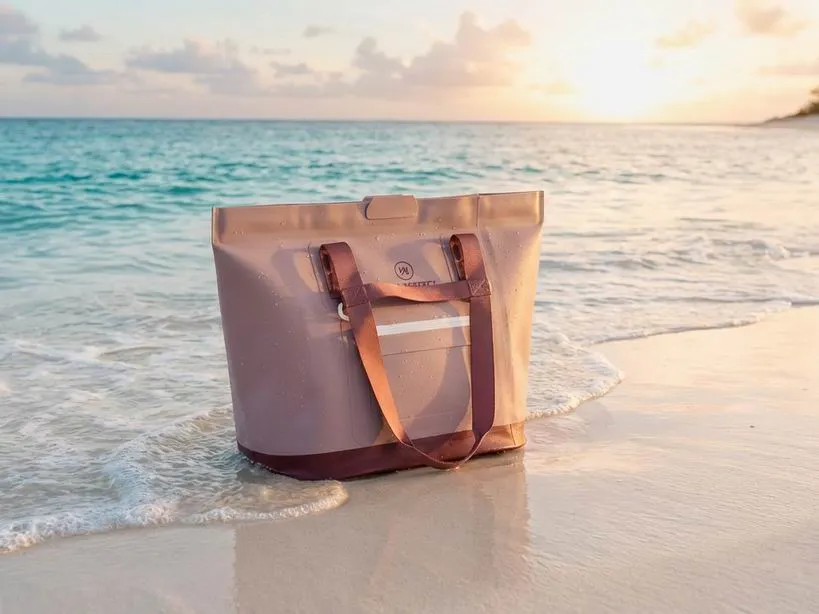
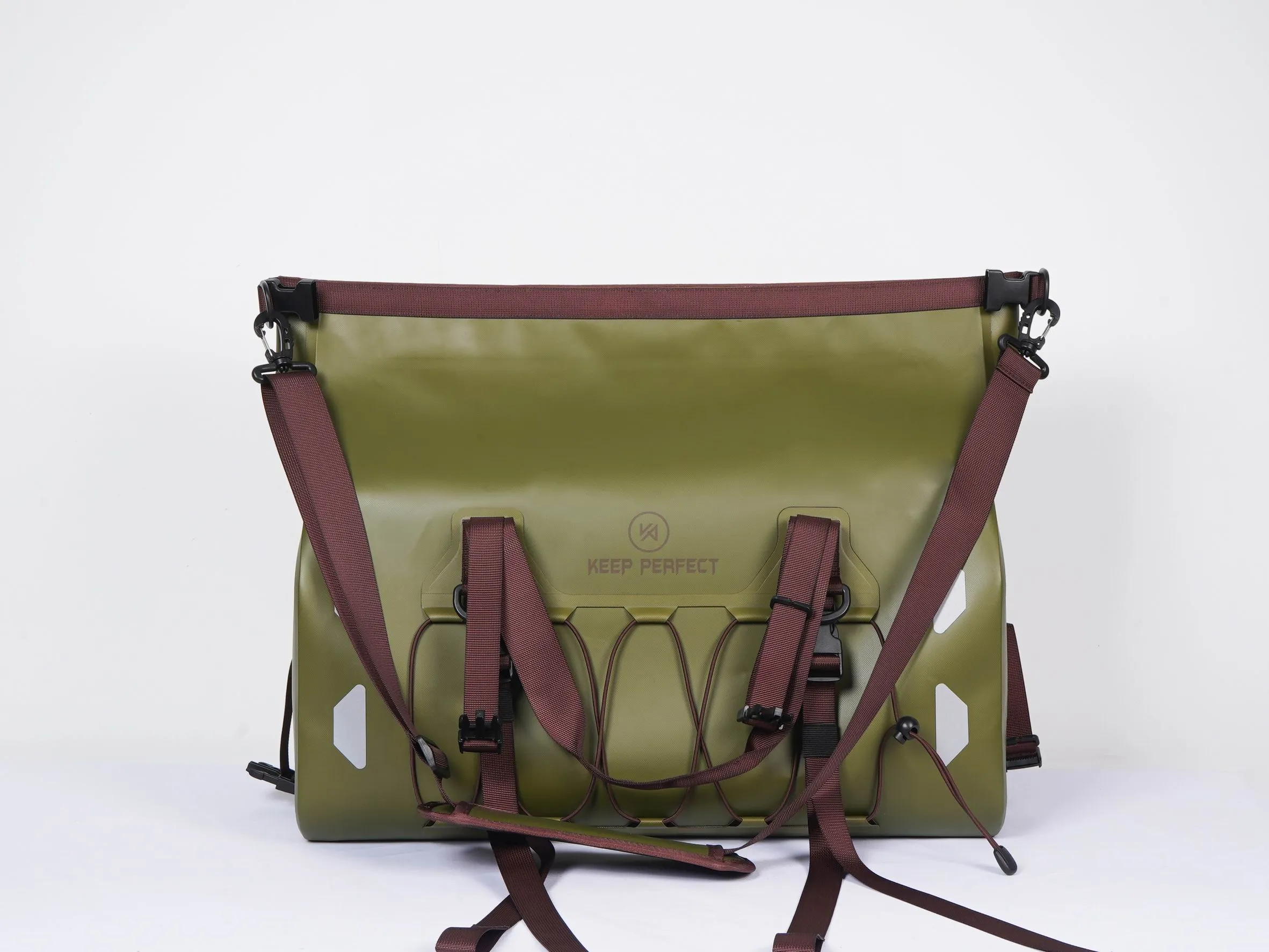
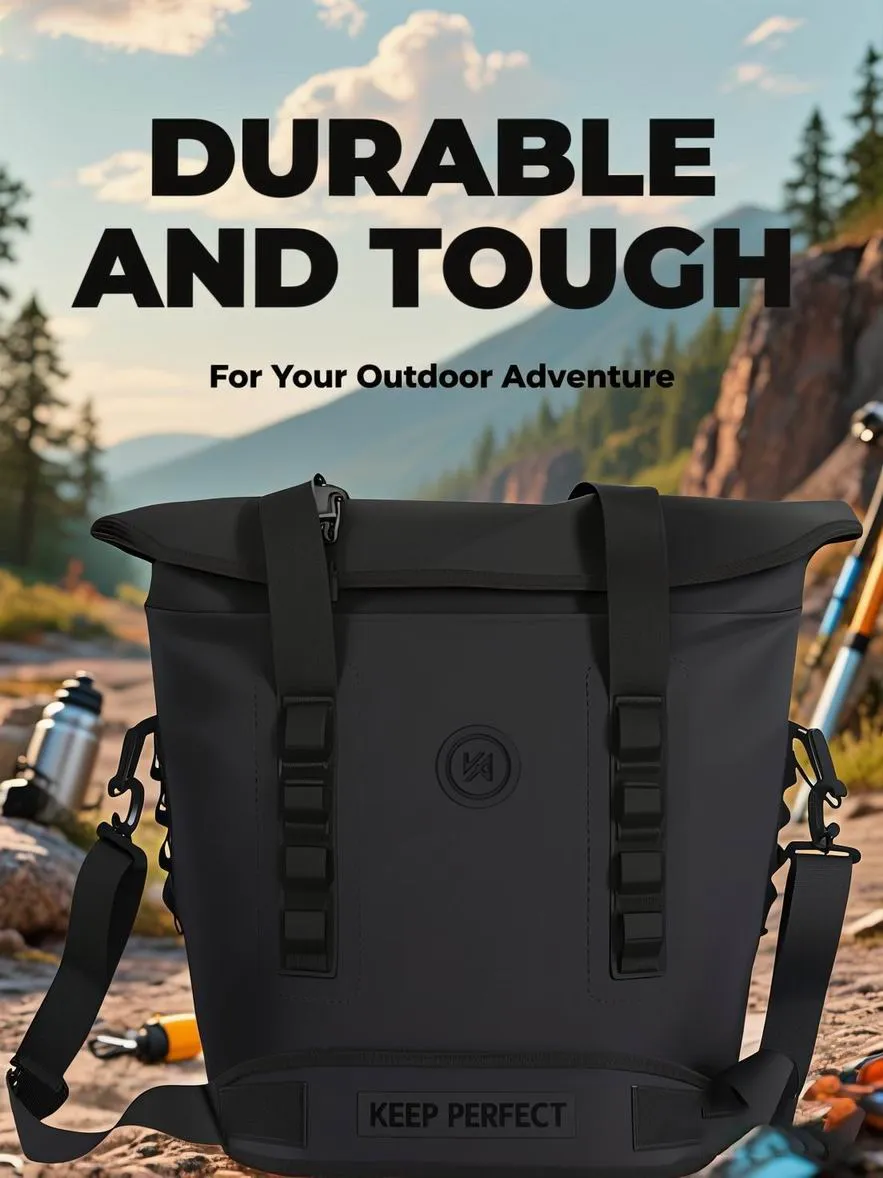
Why music events are the toughest casual-duty market
Music festival bags answer an exposure profile no ordinary tote survives: a multi-day outdoor event compresses a season of weather abuse into one weekend. The concert waterproof bags that live through it take crowd-compression abrasion, spilled drinks, mud-field chemistry, UV hours on open grounds and the strap loads of a full day’s kit — then get judged aesthetically, because the bag is photographed by more phone cameras per square meter than any retail environment on earth. The buyer landscape splits two ways: the business side (promoters, promoters’ production partners, merch companies, touring acts) specified in our event industry guide, and the fan-facing side this guide leads with — retail packs, campsite gear and collab drops where the bag is both product and marketing. The crossover between them is the merch tent, where a weatherproof tote is simultaneously a sale, a billboard and a fan’s gear for the next three events.
The category’s defining fact is the mud field: the single environment that ends ordinary totes within hours and the reason festival-grade builds specify welded seams and wipeable laminates — the washdown materials our hygiene-critical guide documents for a harder duty cycle.
The fan-side program: five formats that sell
| Format | The buyer moment | Defining duty | Unit cost (500+) |
|---|---|---|---|
| Crossbody sling packs | Hands-free for the crowd pit | Crowd abrasion, drink splash, fast access | $2.10–$4.40 |
| Festival totes | The merch-tent workhorse | Mud, rain, heavy loads all day | $1.40–$3.20 |
| Campsite dry bags | The weekend locker | Multi-day weather, wet-tent adjacency | $2.80–$6.20 |
| Hydration-compatible packs | The all-day carry | Water-bladder duty, daylong comfort | $3.40–$6.80 |
| Lanyard pouches & belt kits | Ticket, cash, phone survival | Body-wear for three days straight | $0.85–$2.30 |
The five formats map the festival day: the sling carries the pit hours, the tote carries the merch and layers, the dry bag holds the campsite’s weekend, the hydration pack runs the grounds, and the belt kit keeps the essentials — ticket, cash, ID, phone — alive at body-wear exposure. Retail economics: the $2.10 sling retails at $18–$28 in the festival channel, the $2.90 tote at $20–$35, the margin multiples our tourism guide documents for destination goods — the same 6–12× arithmetic, in a customer who is already in a spending mood.
Campsite duty: the weekend without resupply
The campsite is where campsite dry bags earn their name: three days, no resupply, tent-adjacent humidity, dew cycles, spilled coolers and the evening rain that finds every zipper left open. The specification borrows the roll-top discipline from paddling duty — sealed closures operable with one hand in the dark, welded seams rated for sustained rain, and capacities sized to the weekend: a 20-liter day chamber for the essentials, 40–60 liter builds for the full kit. The campsite formats parallel the packing-cube discipline our travel organizers guide documents, upgraded to welded construction for open-field weather. The organizer collaboration is natural: festival-branded dry bags retail in the camping aisle of the event store and live on in the buyer’s gear closet — the retention argument our promotional programs guide quantifies for exactly this multi-year brand-exposure pattern.
The wet-tent adjacency deserves its own spec line: gear stored against rainfly surfaces takes on water from contact, not just from air. Doubled-base construction — the truck-bed discipline our industrial guide applies to tool totes — keeps the dry bag’s contents off wet ground through the weekend.
The merch tent: weatherproof retail at event prices
Festival merch totes are the category’s revenue engine: the merch tent sells in delivered weather, at event-price multiples, to buyers who photograph everything. The waterproof tote outperforms the standard canvas giveaway on three axes at once — it survives the mud and keeps carrying purchases through the weekend; it stays functional after the festival as a genuine waterproof bag rather than a souvenir that hides in a closet; and it photographs like a product rather than a giveaway, which is why tour merch lines increasingly spec welded-seam builds at the $1.40–$3.20 tier. The artwork is the retail product: full-color print on the laminated face, the print-method economics our logo and branding options guide maps for exactly this high-visibility format. The drop-calendar logic runs like any limited release: festival-year artwork, date-printed runs — the variable-data printing our production lines run for serialized merchandise — and sell-through reorders on stored patterns, the reorder economics our reorder process guide documents.
The quiet advantage: a weatherproof merch tote gets used again — at the next festival, on the commute, at the beach — and every reuse is a free impression of the tour artwork that a canvas bag’s closet life never delivers.
Artist and touring crew builds
The touring side buys the hardest duty in the category: touring crew bags live on trucks, buses and stage decks for months, and the failure of a cue binder or an in-ear case is a show-stop, literally. The build pattern follows the production-channel engineering of our photography equipment guide — sealed chambers for electronics, impact architecture for gear, fast access under weather — with two tour-specific additions: bus-compartment dimensions worked into the pattern so cases stow without dead space, and night-stage visibility, the reflective discipline our reflective materials guide documents, on every backstage format. In-ear and cable kits run the micro-case discipline our small electronics cases guide specifies; wardrobe totes run the garment-volume formats of the hospitality build. Crew programs are per-department splits on one calendar — the split discipline our MOQ guide documents — and a 60-date tour’s crew alone makes a 500-unit program.
The artist-merch crossover: tour-exclusive bags — backstage-print runs sold at premium tiers — ride the same production as the fan formats, split into the same MOQ basis.
Weather banding for open-grounds duty
Festival duty runs the splash-to-downpour band rather than submersion — sustained rain, mud-field abrasion, drink-spill chemistry — the exposure class our IPX rating guide maps band by band. The fabric ladder follows format: fan slings and belt kits in 210D–420D laminates for hand feel and cost; totes and dry bags in 500D TPU for the mud-field abuse; crew builds at the top of the 500D class with doubled bases. UV stability is the underrated spec: an open-grounds weekend delivers more UV exposure than months of city use, the polymer science our UV resistance guide quantifies — a fading, embrittling tote on day two looks like exactly what it is. Strap and load engineering follows the carry study our load stress testing guide documents, because a crowd-pit sling that fails drops its kit into the mud at the worst possible moment. Every rating quoted is drawn from the ingress-protection codes published by the International Electrotechnical Commission, so "waterproof" on a festival spec always means a defined test rather than a marketing adjective.
- Fan formats: 210D–420D laminates, wipeable faces, crowd-abrasion closures
- Campsite formats: 500D welded builds, roll-top seals, doubled base against wet ground
- Merch formats: retail-finish laminates, full-color artwork, mud-rated bases
- Crew formats: 500D + reflective, bus-dimension patterns, sealed electronic chambers
Collaboration economics: the drop model at MOQ 500
| Program element | Unit cost adder | Notes |
|---|---|---|
| Festival-year full-color artwork | +$0.15–$0.35 | The print IS the product |
| Date/serial variable-data run | +$0.08–$0.15 | Limited-drop collectibility |
| Reflective piping (crew builds) | +$0.20–$0.35 | Night-stage visibility |
| Premium matte laminate (artist tiers) | +$0.60–$1.40 | Backstage-exclusive look |
| rPET shell upgrade | +$0.20–$0.50 | The sustainability story fans repeat |
The festival collab drop runs the tightest margin math in the category: a $2.90 waterproof tote with festival-year artwork retails at $22–$35 in the merch tent, sells out a 500-unit run in a single weekend at mid-size events, and reorders — if artwork is stored — on a two-week turnaround, the reprint discipline our sampling guide covers for repeat calendars. The drop model fits MOQ 500 precisely: one hero tote, a sling variant and a belt-kit split against the basis, three price points on one production calendar. Multi-city tours multiply the pattern: same platform, city-variable artwork runs, the variable-data capability our lines run in one pass.
Sampling against the festival calendar
Festival dates do not move, so the sample calendar is booked backward from load-in: golden samples — 6–10 working days per configuration at $60–$150, credited against bulk — must exist before the merch artwork locks, and bulk — 35–50 days at AQL 2.5 — must land before the first gate. Validation is weekend-realistic: run the tote through a rain day loaded like a fan’s, drag the dry bag across wet grass on its base, open the sling with crowd-gloved hands. The full production chain from golden sample to delivered bulk is documented, and the touring buyer map — promoters, merch companies, camp outfitters, act branding — routes through the channels our tourism guide documents for destination-retail economics.
Drink-spill chemistry and crowd abuse
The festival bag’s daily enemies are not just water: beer, cocktails, energy drinks and the sugared-liquid spectrum carry acids, sugars and dyes that stain and degrade fabric coatings faster than clean rain ever will. The specification answer is the TPU face chemistry our chemical resistance guide documents for harsher fluid lists — wipeable laminates that shed spills before they set, wipe-clean rather than absorb, and seam construction that keeps the spill on the outside of the bag rather than wicking into the carry space. Crowd abuse completes the brief: abrasion against denim and hardware in compression, strap loads that spike when a crowd surges, and closures operated by hands that are busy holding everything else. The validation standard is deliberately crude and effective: a loaded bag dragged across wet grass, hosed, spilled on, opened a hundred times — and inspected for face, seam and closure survival. Formats that pass weekend-protocol testing earn the festival grade; the ones that do not stay in the city-catalog where they belong.
Regional circuits and their weather profiles
Festival circuits are regional, and the weather profile travels with the region: the Southeast Asian circuit runs monsoon-season duty — the sustained-rain and humidity engineering our monsoon travel guide documents — while the North American summer circuit runs heat-and-thunderstorm cycles, and the European circuit adds the cold-rain-and-mud profile that made the Wellington boot a festival icon. Custom programs spec to the circuit: the same platform tuned per region, with monsoon builds upgrading closure sealing and humidity-tolerant interiors, and cold-circuit builds adding the low-temperature-flexibility discipline our durability prediction guide tests for. Multi-region tours split the MOQ across regional variants — one 500-unit basis, two or three weather tunings — the split discipline our MOQ guide documents. The buyer who specs the circuit rather than a generic weather band gets a bag that looks engineered on the grounds because it is.
The after-festival life: retention economics
The festival bag’s marketing value is written after the festival ends: a weatherproof tote lives on as gear — the beach run, the commute, the grocery stop — and every reuse re-shows the artwork to an audience that canvas souvenirs never reach from inside a closet. The retention math is the strongest in the promotional spectrum, the multi-year exposure study our promotional programs guide quantifies for corporate programs, amplified by the festival audience’s social behavior: a photographed bag on a train is a brand impression with a story attached. The follow-on economics run the same channel: festival brands reorder year-over-year on stored platforms — the festival-year artwork change is a one-plate difference — and the retention product becomes the brand’s most durable asset, outliving lineup changes and venue moves. The buyer who treats the festival bag as a one-season giveaway underprices it; the buyer who treats it as a retention program measures it against ad spend and wins.
Spec your festival program
- Format mix: sling + tote + dry bag + belt kit against one 500-unit basis
- Duty band: splash-to-downpour, mud-rated bases, UV-stable faces on open-grounds formats
- Artwork system: festival-year platform with city-variable drop runs
- Crew line: reflective 500D builds, bus dimensions, sealed electronics chambers
- Calendar: sample before artwork lock, bulk before load-in, reprint turn ready for sell-out
- Retail tiers: three price points — belt kit / sling / tote — on one calendar
Frequently Asked Questions
Q1. Why do music festivals need waterproof bags?
Because the show runs on delivered weather: fans carry their day through mud and rain, campsites run days without resupply, crews work night stages in the wet, and merch sells in the open. The festival weekend compresses a season of weather abuse into three days.
Q2. What is the MOQ for custom festival bags?
MOQ 500 per design, splittable across the festival family — slings, totes, dry bags, belt kits and crew builds mix against one 500-unit basis, one production calendar.
Q3. How much do custom festival waterproof bags cost?
Belt kits from $0.85, totes $1.40–$3.20, campsite dry bags $2.80–$6.20, hydration packs $3.40–$6.80 at MOQ 500. Full-color festival artwork adds $0.15–$0.35, variable-data date runs $0.08–$0.15.
Q4. Can festival totes really retail at merch-tent prices?
Yes — a $2.90 waterproof tote retails at $22–$35 in the festival channel and outsells canvas giveaways because it survives the weekend and stays in use afterward, carrying the tour artwork to the next event for free.
Q5. What is a campsite dry bag?
The weekend locker: a roll-top welded-seam bag rated for multi-day open-field weather, with doubled-base construction against wet ground and one-hand closure that works in the dark — capacities from a 20L essentials chamber to 60L full-kit builds.
Q6. Do you make bags for touring crews and artists?
Yes — crew builds run 500D TPU shells with reflective trim for night stages, bus-compartment dimensions in the pattern, sealed chambers for in-ears and electronics, and backstage-print artist tiers split into the same MOQ basis.
Q7. Can merch artwork change per tour city?
Yes — variable-data printing runs city-variable artwork from one stored platform in a single production pass, the same capability used for serialized festival-year and date-printed drops.
Q8. How do festival bags handle mud fields?
TPU-laminated wipeable faces, welded seams, mud-rated doubled bases and closures tested for crowd-glove operation — the materials ladder our industrial guide documents, scaled to festival duty.
Q9. Are the bags suitable for multi-day festival wear?
Belt kits and slings are specified for three-day body-wear: moisture-tolerant linings, abrasion-rated webbing and closures that survive thousands of crowd-compression cycles.
Q10. What fabrics are used for festival waterproof bags?
210D–420D laminates for fan-hand formats, 500D TPU-laminated welded builds for totes, dry bags and crew duty, UV-stable pigments throughout — the fabric ladder our IPX rating guide maps.
Q11. Can fans buy our festival bags after the event?
Yes and they should: the drop model sells the same stored platform through post-event online runs, the reorder economics our reorder guide quantifies on two-week turnarounds.
Q12. How fast can festival samples be produced?
6–10 working days per configuration at $60–$150 per design, credited against bulk — booked backward from the artwork lock date, because festival dates do not move.
Q13. What is the bulk timeline for a festival order?
35–50 days after golden-sample approval at AQL 2.5 inspection, FOB Xiamen or DDP, timed to land before load-in with the freight lane confirmed in writing.
Q14. Do you make lanyard and ticket pouches?
Yes — body-worn credential and essentials pouches with welded perimeters and clear windows sized to phones and tickets, at $0.85–$2.30 — the access-channel duty our event industry guide documents.
Q15. Can festival programs run sustainable materials?
Yes — rPET shells at a $0.20–$0.50 delta, the supply chain story our rPET guide documents, and festival audiences repeat sustainability stories more loudly than any other consumer segment.
Q16. How do we start a festival bag program?
Send the format mix, the artwork direction and the festival dates — the quotation returns in 24–48 hours, samples follow in 6–10 working days, and bulk lands before the first gate.
People Also Ask
What bags are best for music festivals?
Waterproof laminates with welded seams: a crossbody sling for the pit, a tote for merch, a roll-top dry bag for the campsite and a belt kit for essentials — the format family this guide specs for mud, rain and crowd duty.
How much do custom festival totes cost?
From $1.40 for merch totes to $6.80 for hydration packs at MOQ 500, retailing at 6–12× in the festival channel — the highest-margin retail window in the category.
Can a tote survive a rainy festival weekend?
A welded-seam 500D TPU tote does — sustained-rain closure, mud-rated base and wipeable faces; sewn canvas fails in the first hours of the same weekend.
Do festivals sell waterproof merchandise bags?
Increasingly yes: the waterproof tote outlives the canvas giveaway, keeps carrying after the event and photographs like a product — tour merch lines now spec it at the $1.40–$3.20 tier.
What do crew members carry at concerts?
Sealed-chamber kits for in-ears and cables, cue-binder cases with night-reflective trim, and wardrobe totes — bus-dimensioned 500D builds that survive months of touring.
How fast can festival bag drops be produced?
Samples in 6–10 working days, bulk in 35–50 days, reprints on stored artwork in about two weeks — booked backward from festival dates that never move.