Food delivery is the industry where waterproof stopped being a feature and became the business model: every meal that arrives rain-soaked is a refund, a one-star review and a churned customer — so the world’s delivery platforms, restaurant groups and catering companies run branded waterproof fleets where the bag is simultaneously equipment, food-safety infrastructure and the most-seen advertisement on city streets, at unit costs from $2.40 at MOQ 500. This guide covers the full food-delivery program: the three segments (last-mile riders, catering transport, grocery and meal-kit), food-safe material requirements, insulation-plus-waterproof construction, fleet economics and rider retention, branding that works at street level, hygiene compliance, and the procurement calendar for fleet rollouts.
The manufacturer reference is QUANZHOU JUNYUAN BAGS: custom waterproof bag production since 2014, 4,950 m² SGS-verified facility, 7 lines, 149 machines, 137 staff, 200,000 pieces monthly. MOQ 500 per design splittable across the delivery family, samples 6–10 working days, bulk 35–50 days, AQL 2.5 inspection, 30/70 T/T, FOB Xiamen, shipping to 100+ countries.

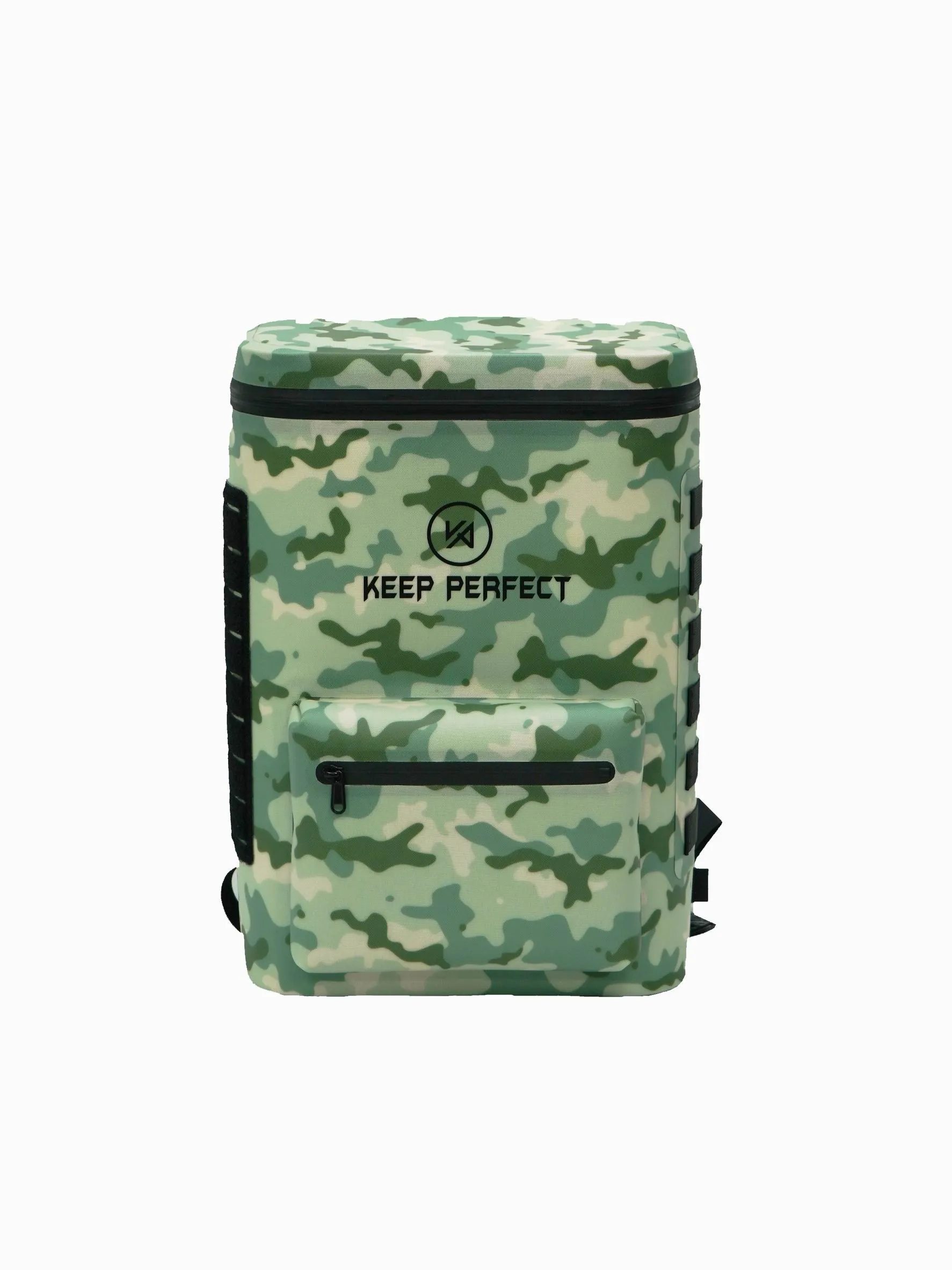
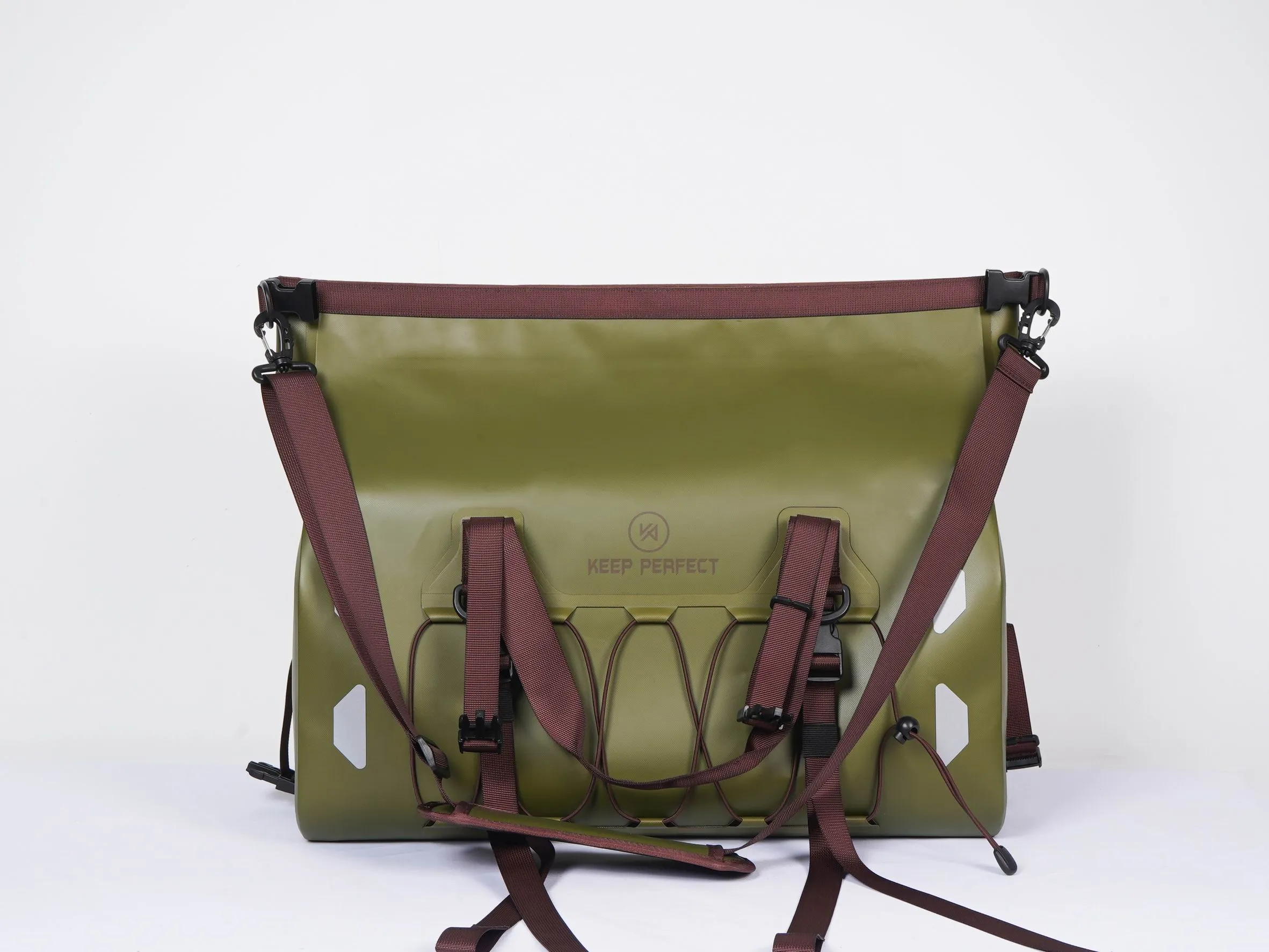
Why waterproof is the delivery industry’s baseline
Food delivery bags and catering transport bags share a waterproof shell but answer different thermal and hygiene briefs — the segments below separate them. The delivery economics are unforgiving. A rider completes 15–30 deliveries a shift in whatever the sky is doing, and every wet-arrival incident costs the platform roughly ten times the order value in refunds, credits and support time — before counting the churned customer. The platforms that scaled past this learned that the bag is the cheapest insurance in the system: a waterproof fleet bag at under $5 amortized over a year of shifts costs less per delivery than a single refund. That is why every serious delivery operation on earth — from the global platforms to the three-restaurant local fleets — runs branded waterproof bags rather than leaving equipment to riders’ own choices.
The second driver is advertising math. A delivery bag on a bike or scooter is seen by thousands of pedestrians and drivers daily, in exactly the neighborhoods the platform serves. Industry operators routinely describe the fleet bag as their cheapest out-of-home media: the branding analysis in our corporate promotional guide applies with the volume turned up, because no other promotional product spends eight hours a day circulating through the service area.
The three segments and their specifications
| Segment | Formats | Key spec | Unit cost (500+) | Fleet pattern |
|---|---|---|---|---|
| Last-mile riders | Delivery backpacks, top-box liners | Insulated + waterproof + reflective | $4.60–$8.50 | Per-rider issue, 12–18 month rotation |
| Catering transport | Large-volume carriers, pan bags | Temperature hold + stackability | $6.80–$12.40 | Per-vehicle kits, event-driven |
| Grocery & meal-kit | Tote-style carriers, crate liners | Waterproof + wipe-clean + cold hold | $2.40–$5.40 | Route fleets, high turnover |
Last-mile is the volume segment — the backpack format that every city dweller recognizes. Catering is the specification segment — larger volumes, stricter temperature windows, and presentation standards because the bag walks into the client’s venue. Grocery is the growth segment — tote-style waterproof carriers that keep a week’s shopping dry and cold through the last mile. Each segment’s bag is a different product; a quotation that does not ask which segment is quoting a generic box.
Food-safe materials: the non-negotiable layer
Everything inside a food-delivery bag must be food-contact appropriate: food-grade PEVA or TPU liners that resist grease and wipe clean, sealed seams that leave no dirt traps, and materials documented against food-contact regulations — FDA food-contact frameworks for US programs and the EU’s food-contact materials regime for European fleets, with the regulatory mapping covered in our compliance guide. The liner is the part riders actually maintain, so it must survive daily wipe-downs with food-safe sanitizers without degrading — the material science of liner chemistry is in our TPU vs PVC comparison, and the short version is that TPU-family liners win on odor resistance and low-temperature flexibility.
- Food-grade liner: PEVA or TPU, grease-resistant, wipe-clean, odor-neutral
- Sealed interior seams: no stitched dirt traps in the food zone
- Documented food-contact status: FDA / EU framework declarations in the compliance pack
- Sanitizer tolerance: liner chemistry that survives daily food-safe disinfection cycles
Insulation meets waterproof: the delivery construction
The delivery bag is a dual-engineering product: the insulation system holds temperature (closed-cell foam walls, reflective inner faces, tight-closing lids), and the waterproof system keeps weather out (laminated outer shells, welded or bound seams, covered zippers) — and the two systems must not fight each other, because a waterproof shell that traps condensation inside ruins insulation performance. The builds that work run a breathable-but-waterproof outer architecture with drainage-designed bases, so rain sheds off and interior moisture escapes. The insulation-side engineering is detailed in our cooler bag insulation guide; the delivery-specific addition is the abuse layer — 500D shells, reinforced base panels and strap systems rated for 15 kg loads cycled thousands of times, with the strap engineering in our load stress testing guide.
Rider fleet economics and retention
Fleet buyers think in cost per delivered order, and the math favors quality: a $6 fleet backpack surviving 18 months of daily shifts costs under two cents per delivery, while a failed bag mid-shift costs a paused rider, a late order and a refund. The rotation economics: issue per rider, replace on 12–18 month cycles, keep a 10% float for new starters and warranty swaps — a 200-rider fleet is a 500-unit program every two years, which sits exactly at our MOQ structure. The retention layer is less obvious but real: riders consistently rank quality gear among the factors that keep them on a platform, and in an industry where rider churn costs hundreds of dollars per replacement, the bag is retention spend as much as equipment spend. Platforms extending the logic issue weather-tier kits — the base bag plus rain covers, hi-vis vests and winter liners as separate SKUs at the same MOQ.
Branding that works at street level
Delivery branding has three jobs: be seen (the fleet is media), be trusted (the bag arrives at the customer’s door), and be safe (the rider mixes with traffic). The design grammar that serves all three: high-contrast brand colors with large-format logos readable at 20 meters, reflective panels integrated into the design rather than stuck on as afterthoughts — EN-compliant reflective material positioned for 360-degree night visibility — and door-moment details like clean interiors and professional zip pulls, because the customer’s closest look at the brand is the thirty seconds at their door. Pantone matching at Delta E ≤2 keeps a 5,000-rider fleet reading as one brand; method economics are in our logo options guide. Restaurant-group fleets add a co-branding option: platform logo plus restaurant brand panels, printed per batch with variable data for franchise territories.
Catering: where the bag meets the client
Catering transport operates one level up in every dimension: volumes run to full-event loads (pan carriers holding 20–40 kg of prepared food), temperature windows are contractual (hot-held above food-safety thresholds, cold-held below), and the bag enters the client’s venue where presentation counts. The specification stack: rigid-frame waterproof carriers that stack in vans, pan-format interiors matched to standard gastronorm sizes, wipe-clean food-grade liners, and understated professional branding — caterers sell reliability, and the bag should say so. Event-driven buying patterns mean catering fleets expand before wedding season and holiday peaks, which the procurement calendar below plans around. Large-format carriers run $6.80–$12.40 at MOQ 500 depending on frame and insulation spec.
Grocery and meal-kit: the growth segment
Grocery delivery and meal-kit services run the industry’s highest bag turnover: every delivery is a tote-format carrier protecting a week’s shopping or a recipe box through the last mile, in fleets that scale with subscriber growth. The spec is lighter-duty than rider backpacks — $2.40–$5.40 carriers with waterproof shells, cold-hold liners and fold-flat returns logistics — but the volumes are larger and the branding is the service itself: the grocery tote on the doorstep is the subscription made visible. Meal-kit programs add the insulated-liner SKU that ships inside the box, a related product our lines build at the same MOQ. The sustainability angle increasingly drives this segment’s specs — recycled-fabric shells and take-back programs — with the materials story in our rPET supply chain story. The returns-logistics detail that separates workable grocery programs from expensive ones: carriers must fold flat enough that a driver can route-return fifty empties without sacrificing cargo space, which is why the fold pattern is specified alongside the insulation spec.
Hygiene compliance and inspection reality
Food-delivery fleets live under food-safety inspection: health authorities in most markets treat delivery equipment as food-contact-adjacent, which means documented cleanability, material declarations and — in an increasing number of jurisdictions — temperature-performance records for hot and cold holding. The fleet’s compliance pack should include food-contact declarations for liner materials, cleaning-protocol documentation, and batch traceability — all standard in our export documentation, with the regulatory map in our compliance testing guide. The operational layer is equally inspectable: fleets that issue cleaning schedules with the bags (daily liner wipe-down, weekly deep clean, monthly inspection) pass inspections and extend bag life in the same motion.
Delivery program economics at MOQ 500
| Program line | Unit cost (500+) | Replacement cycle | Fleet math |
|---|---|---|---|
| Rider delivery backpack | $4.60–$8.50 | 12–18 months | Per-rider issue + 10% float |
| Top-box liner bag | $3.20–$4.90 | 18–24 months | Per-vehicle issue |
| Catering pan carrier | $6.80–$12.40 | 24–36 months | Per-vehicle kits |
| Grocery delivery tote | $2.40–$5.40 | 6–12 months (high turnover) | Route fleets, volume scaling |
| Meal-kit insulated liner | $1.90–$3.60 | Per-box consumable | Subscription volume |
The MOQ 500 splits across fleet SKUs: a platform launch of rider backpacks, box liners and weather-tier accessories is one order and one production calendar. Fleet programs above 2,000 units step down in unit cost; the full mechanics are in the cost breakdown guide.
Sampling: the loaded-shift test
Delivery samples prove themselves on a working shift: load the sample with a real order mix, ride it through a shift including rain if the sky cooperates, then evaluate — temperature hold on arrival, strap comfort under 15 kg at hour six, zip operation with gloves, liner cleanability after a sauce spill, and the reflective panels under car headlights. Samples run 6–10 working days at $60–$150 per configuration, credited against bulk, with the golden sample becoming the AQL 2.5 reference. Fleet buyers should sample the full kit — backpack, liner, accessories — because the SKUs work as a system. The full protocol is in our sampling guide.
Common mistakes in delivery fleet programs
- Non-food-grade liners: the saving is cents, the food-safety finding costs the contract
- Fashion zippers on fleet bags: fleet zips cycle thousands of times — spec fleet-grade or budget for failures
- Reflective as afterthought: stick-on tape peels; integrated reflective panels last and look professional
- Ignoring condensation: a waterproof shell without moisture management steams the food it protects
- No float stock: fleets without 10% spares pause riders when bags fail — the cheapest operational insurance there is
- Underestimating branding wear: cheap prints fade in months on daily-duty bags; spec the print method for the duty cycle
The fleet procurement calendar
Delivery fleets expand on business calendars — market launches, seasonal peaks, contract wins — and the production math (samples 6–10 working days, bulk 35–50 days, freight 4–6 weeks) means a market launch needs the bag order placed two to three months before riders hit the street. Peak-season expansions (holiday delivery surges, summer tourism markets, wedding-season catering) work backward from the peak: bulk production finishing six weeks before the surge, samples approved six weeks before that. Reorders for fleet rotation ride the 30–35 day window for established designs. Fleets that plan the calendar ride sea freight and full QC; fleets that launch late buy air freight and discover what compressed inspection windows miss. The discipline is the same one our seasonal planning guide teaches wholesale buyers.
Spec your delivery program
Bring four facts — your segment (last-mile, catering, grocery), your fleet size and rotation, your climate and temperature requirements, and your brand standards — and the quotation returns in 24–48 hours: format spec per segment, food-safe material documentation, insulation-plus-waterproof architecture, and a costed fleet program at MOQ 500 with SKU splits. QUANZHOU JUNYUAN BAGS — delivery-grade custom waterproof bags since 2014, 4,950 m² SGS-verified facility, 7 lines, 149 machines, 137 staff, 200,000 pieces monthly, samples 6–10 working days, bulk 35–50 days, AQL 2.5, 30/70 T/T, FOB Xiamen, 100+ countries. The production chain from first inquiry runs from sampling into bulk; the logistics-side transport decisions are in our logistics industry guide, and the complete manufacturing reference is the manufacturing guide.
Frequently Asked Questions
Q1. What bags do food delivery riders use?
Insulated waterproof delivery backpacks: food-grade liners, closed-cell foam insulation, 500D laminated shells, integrated reflective panels, and straps rated for 15 kg loads — $4.60–$8.50 at MOQ 500, replaced on 12–18 month rotations.
Q2. How much do custom food delivery bags cost?
At MOQ 500: rider backpacks $4.60–$8.50, top-box liners $3.20–$4.90, catering pan carriers $6.80–$12.40, grocery totes $2.40–$5.40, meal-kit liners $1.90–$3.60.
Q3. What is the minimum order for branded delivery bags?
MOQ 500 per design, splittable across fleet SKUs — rider bags, box liners and accessories as one order. A 200-rider fleet is roughly a 500-unit program every two years including float stock.
Q4. Are delivery bag liners food safe?
Ours are: food-grade PEVA or TPU liners, grease-resistant, wipe-clean, odor-neutral, documented against FDA and EU food-contact frameworks, with sealed interior seams that leave no dirt traps.
Q5. How do delivery bags keep food hot and dry at once?
Dual architecture: closed-cell foam insulation with reflective inner faces holds temperature, while the waterproof shell sheds rain and a moisture-managed interior lets condensation escape — a sealed trap would steam the food it protects.
Q6. Can delivery bags carry platform and restaurant branding together?
Yes — co-branded builds print platform logos plus restaurant or franchise panels per batch with variable data, Pantone-matched at Delta E ≤2 across the fleet.
Q7. How long do fleet delivery bags last?
Properly specified backpacks survive 12–18 months of daily shifts; catering carriers 24–36 months. The failure points are zippers and straps — which is why fleet-grade components are the specification, not the upgrade.
Q8. What makes a delivery bag safe for night riding?
Integrated reflective panels positioned for 360-degree visibility, built into the design rather than stuck on — plus high-contrast brand colors that read at 20 meters in daylight.
Q9. Do health authorities inspect delivery bags?
In most markets yes, as food-contact-adjacent equipment: documented cleanability, material declarations and increasingly temperature-performance records. Our compliance pack includes food-contact declarations and batch traceability.
Q10. What size are catering transport bags?
Pan-format carriers matched to standard gastronorm sizes, holding 20–40 kg loads in stackable rigid frames — specified per vehicle kit and event volume rather than per rider.
Q11. Can grocery delivery totes be made from recycled materials?
Yes — rPET shells from recycled feedstock with the same waterproof performance, supporting the take-back and sustainability programs grocery brands increasingly specify.
Q12. How fast can a fleet rollout be produced?
Samples 6–10 working days, bulk 35–50 days after golden-sample approval, sea freight 4–6 weeks. Market launches should order two to three months before riders hit the street; rotation reorders ship in 30–35 days.
Q13. What is the cost per delivery of a fleet bag?
A $6 fleet backpack over 18 months of daily shifts costs under two cents per delivery — against a wet-arrival refund incident costing roughly ten times an order value.
Q14. Do riders care about bag quality?
Consistently yes — riders rank quality gear among the factors keeping them on a platform, and in an industry where churn costs hundreds per replacement, the bag is retention spend as much as equipment.
Q15. Can bags be customized for hot and cold in one fleet?
Yes — hot-side carriers with enhanced insulation and cold-side builds with cold-hold liners as separate SKUs at the same MOQ, plus dual-compartment builds for mixed loads.
Q16. How do I test a delivery bag sample?
Load it with a real order mix and ride a working shift: check arrival temperature, strap comfort at hour six, zip operation with gloves, liner cleanability after a spill, and reflectivity under headlights.
Q17. Do delivery bags work for bicycle and scooter fleets alike?
Yes — the backpack format rides any two-wheeler, and the harness adjusts across rider sizes. Fleets running mixed vehicles standardize on the backpack plus top-box liners for the boxed scooters.
Q18. Can the bags handle sauce and grease spills?
The food-grade liner is grease-resistant and wipes clean with food-safe sanitizer; the sealed seams prevent spill migration into the insulation. Spill response is a thirty-second wipe, not a bag retirement.
People Also Ask
Are food delivery bags insulated?
Purpose-built ones are: closed-cell foam walls with reflective inner faces hold hot food hot and cold food cold through the delivery window — inside a waterproof shell that keeps weather out of the equation.
How do food delivery bags stay clean?
Food-grade liners wipe clean with food-safe sanitizers after every shift; sealed interior seams leave no dirt traps. Fleets that issue cleaning schedules — daily wipe, weekly deep clean — pass inspections and extend bag life together.
What are delivery bags made of?
Outside: laminated waterproof shells in 500D fabrics with covered zippers and reflective panels. Inside: closed-cell foam insulation and food-grade PEVA or TPU liners. Straps and bases are reinforced for 15 kg loads cycled thousands of times.
Why do delivery riders use backpacks instead of boxes?
Backpacks ride any vehicle — bicycle, scooter, motorbike — keep weight stable through traffic, and cost a fraction of hard boxes. Top-box liners bring the same insulation-and-waterproof system to vehicles that do carry boxes.
How long does food stay hot in a delivery bag?
Purpose-built insulated bags hold food-safe temperatures through typical delivery windows; the variables are foam thickness, lid closure discipline and pre-heating the bag. Catering carriers with rigid frames extend the window for event transport.
Can you wash a food delivery bag?
The liner wipes clean daily with food-safe sanitizer; shells rinse externally. Machine washing degrades insulation and coatings — the wipe-clean liner exists precisely so machine washing is never needed.