The most powerful sustainability story in the bag industry starts at the water’s edge: an ocean plastic waterproof bag — built from rPET, polyester fiber recycled from bottles collected in coastal zones where plastic would otherwise reach the sea — carries a narrative no factory-scrap claim can match, because every bag traces to a shoreline, a collector community and a certified chain of custody. But the story’s power is exactly why it invites exaggeration: "ocean plastic" has no single legal definition, collection happens on land not in the sea, and the certificate matters more than the adjective. This guide traces the full rPET supply chain for waterproof bags from the buyer’s chair: what ocean-bound plastic actually is, the six-link chain from shoreline to sewn bag, how rPET fabric performs when laminated into waterproof constructions, the certification systems that police the claims, the honest marketing language that survives green-claims enforcement, and the specification lines that put ocean plastic on a purchase order with its proof attached.
The manufacturer reference is QUANZHOU JUNYUAN BAGS: custom waterproof bag production since 2014, 4,950 m² SGS-verified facility, 7 lines, 149 machines, 137 staff, 200,000 pieces monthly. MOQ 500 per design, samples 6–10 working days, bulk 35–50 days, AQL 2.5 inspection, 30/70 T/T, FOB Xiamen, shipping to 100+ countries.

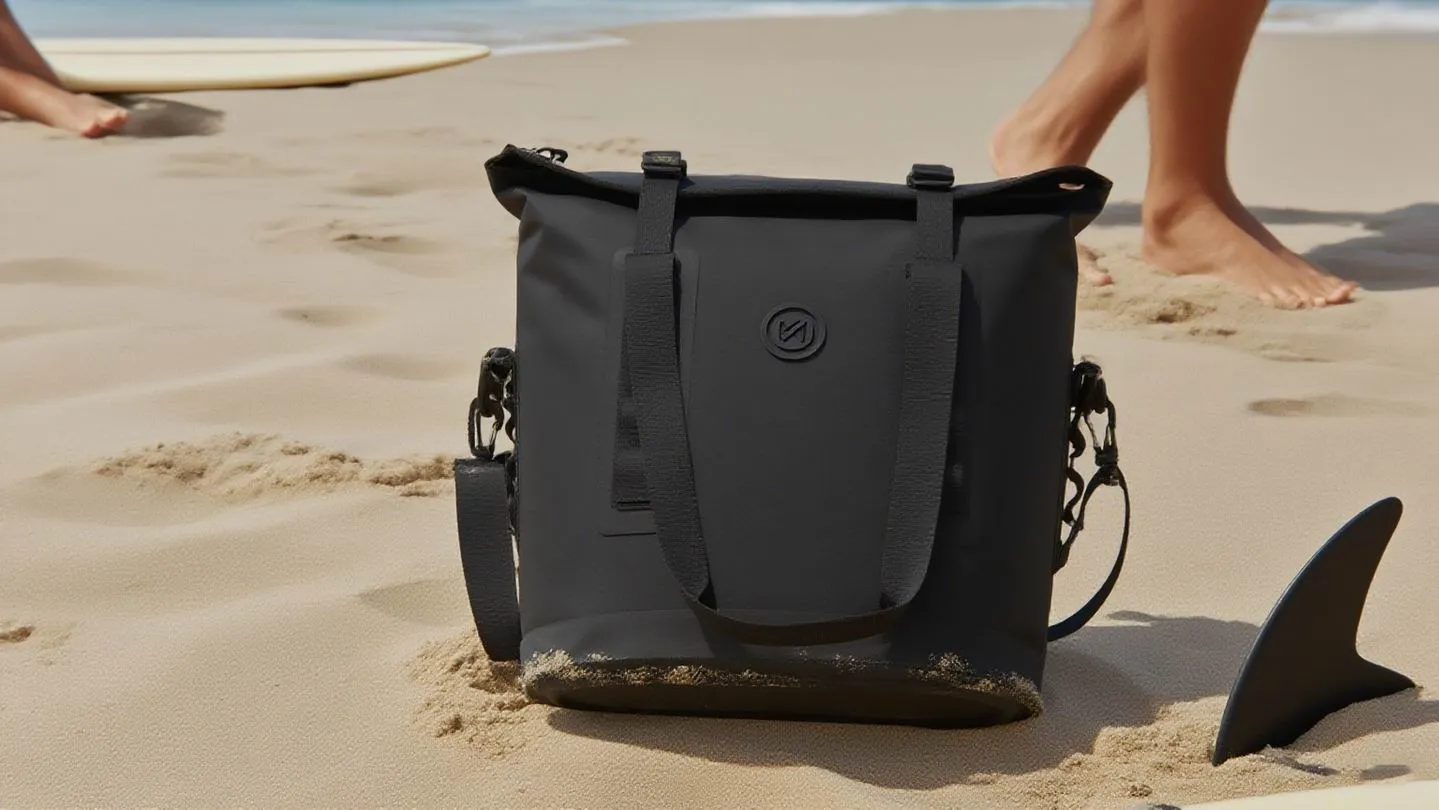
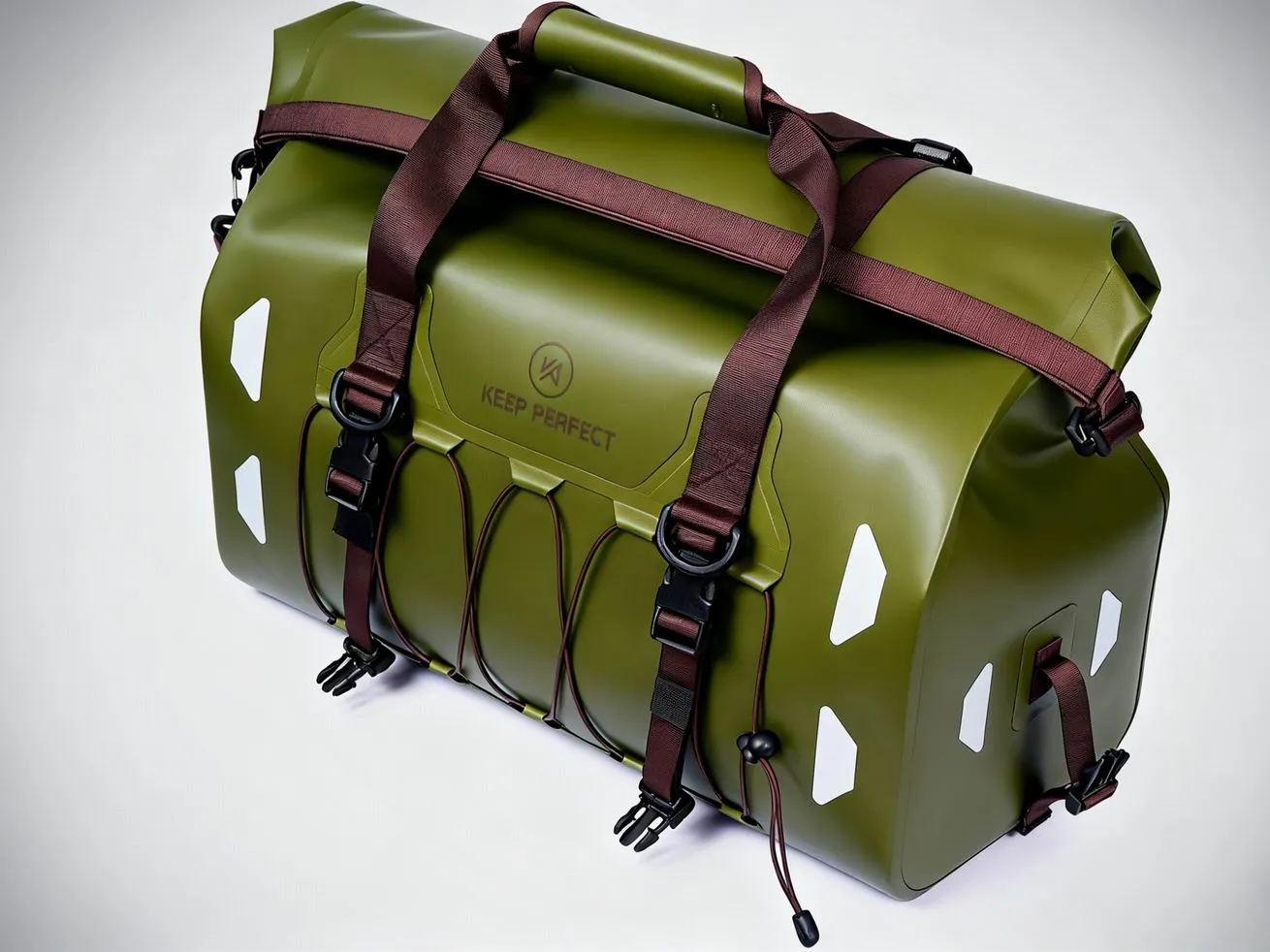
What ocean-bound plastic actually is: definitions before stories
Three terms occupy this space, and the buyer who cannot separate them cannot audit the claim. Ocean-bound plastic — OBP: plastic waste collected within roughly fifty kilometers of a coastline in regions with inadequate waste management, intercepted before it can reach the water — the definition formalized by certification programs and the honest content of most "ocean plastic" products. Ocean plastic: material recovered from the sea itself — beach cleanups, nearshore trawls, river mouth booms — real but tiny in volume, irregular in quality, and mostly symbolic in commercial supply. Recycled PET — rPET: the material family both streams feed into, which also includes ordinary post-consumer bottles collected far inland — excellent circularity with no ocean narrative at all. The marketing hazard is compression: supply chains collect OBP, process it identically to inland rPET, and sell the story as "ocean plastic" — a claim that survives scrutiny only when the certificate behind it defines its terms. The buyer’s first question on any ocean-claim pitch is therefore definitional: which stream, defined by whom, certified under which standard — because the answer determines whether the hangtag is a document or a decoration. The certification systems that draw these lines are walked below, and the enforcement climate that punishes the vague versions is mapped in our certification map.
The six-link chain: from shoreline to sewn bag
An ocean plastic waterproof bag passes through six custody links, and the certification exists because each link is a chance for the story to dilute. Link one, collection: registered collector groups — often coastal community cooperatives — gather bottles from shorelines, riverbanks and informal dump sites within the OBP zone, paid per kilogram at rates the certifier audits for social compliance. Link two, aggregation: collection centers sort, bale and log the material by weight and origin, issuing the first custody documents. Link three, recycling: the recycler washes, grinds and extrudes the bottles into rPET flakes or pellets, with mass-balance reconciliation — kilograms in, kilograms out — audited against loss norms. Link four, spinning: the pellets melt-spin into yarn, where rPET content can be diluted with virgin polyester — the dilution point the transaction certificates police hardest. Link five, weaving and finishing: the yarn becomes fabric, receives its coating or lamination — the waterproof barrier, per the stack our lamination guide details — and ships as certified rolls. Link six, the bag factory: the rolls convert into sewn and welded bags, with content tracked per component — shell fabric, lining, webbing where certified — through cutting records. The chain’s governing logic: every link hands certified material plus a transaction certificate to the next, so the final bag’s claim is arithmetic, not assertion — the same chain-of-custody mechanics our GRS guide details for recycled content generally, here pointed at the coastal stream. The chain-of-custody rules behind that claim are maintained by Textile Exchange, the standards body that owns the recycled-content standard.
| Chain link | Operator | Document created | Dilution risk | Audit handle |
|---|---|---|---|---|
| 1. Collection | Registered coastal collectors | Collection logs, weight tickets | Origin inflation | Geo-tagged collection records |
| 2. Aggregation | Collection centers | Bale manifests | Mixing with inland PET | Mass-balance per batch |
| 3. Recycling | rPET recycler | Pellet/flake output records | Virgin blending | Input-output reconciliation |
| 4. Spinning | Yarn spinner | Yarn lot certificates | Content dilution in yarn | Transaction certificates |
| 5. Weaving/finishing | Mill + laminator | Fabric roll certificates | Uncertified rolls swapped | Roll-level traceability |
| 6. Bag factory | Cut-and-sew plant | Cutting records per component | Content overstated on BOM | Component-level content map |
rPET in waterproof constructions: performance reality
The engineering question behind the story: does ocean-sourced rPET fabric hold up as a waterproof bag shell? The fiber answer: rPET yarn runs within a few percent of virgin polyester on tenacity and elongation when the recycler controls the stream — certified suppliers publish data sheets indistinguishable from virgin for bag-weight deniers, per the strength vocabulary our fabric strength guide defines. The waterproof answer: the rPET fabric itself is never the barrier — the coating or film laminated behind it is, which means the waterproof rating of an ocean-plastic bag is a lamination decision, not a recycling decision: PU-coated rPET oxford performs like PU-coated virgin oxford, TPU-laminated rPET welds like its virgin twin through the windows our RF versus hot-air guide compares. The UV and aging answer: polyester’s inherent UV stability survives recycling — rPET shells age on the same UV timeline as virgin polyester, with the stabilizer package mattering more than the feedstock history. The honest limitations: deep-dyed blacks and brights occasionally show lot-to-lot shade variation from the mixed bottle stream — managed by lot control and shade bands; certified OBP fabric costs a premium over both virgin and inland rPET; and supply of specific constructions — heavy deniers, special weaves — is thinner than the virgin catalog. The construction summary: ocean plastic changes the bag’s provenance, not its physics — the barrier, the weld and the rating all behave exactly as their virgin-based equivalents, provided the mill did its work.
The certification systems: who polices the ocean claim
Three certification frameworks govern ocean-plastic claims, and serious programs run under at least one. Ocean Bound Plastic Certification — Zero Plastic Oceans: the dedicated standard for the OBP definition, certifying collection zones, collector welfare and custody from shoreline to recycler — the origin specialist. Global Recycled Standard: the general recycled-content workhorse, certifying content percentage and custody from recycler onward, embeddable with OBP origin certification for a full-chain file — the two-document mechanics — scope certificate plus transaction certificate — apply exactly as our GRS guide details. GRS alone does not prove ocean origin; it proves recycled content. The social layer: collector-community certifications audit the human side — fair payment, safe conditions, no child labor — because the collection zone’s informal economy is where exploitation hides, and brands building marketing on community impact need the audit behind the photograph. The verification routine for buyers: every certificate verified on the certifier’s public database, transaction certificates contracted as shipment preconditions, and the claim language matched to what the certificates actually cover — "made with 85% GRS-certified recycled polyester from ocean-bound collection zones" when both files exist, "made with GRS-certified recycled polyester" when only content is proven. The compliance backdrop: green-claims enforcement in the EU and FTC policing in the US treat unverifiable ocean claims as deceptive practices, priced per the enforcement wave our certification map tracks — the certificate is not paperwork supporting the story; it is the story’s legal form.
Marketing the story honestly: language that survives scrutiny
The ocean-plastic story sells — and the brands that keep selling it are the ones whose language never outruns their file. The defensible vocabulary: "ocean-bound plastic collected within 50 km of coastlines," "certified by [named standard]," "equivalent to X bottles diverted per bag" where the arithmetic is documented — specific, sourced, checkable. The hazardous vocabulary: "ocean plastic" naked, implying sea recovery; "cleans the ocean," a causation the collection model does not support; "100% ocean plastic bag," almost never true once coatings, threads, zippers and webbing enter the BOM — the component-level content map from the chain section is the honest denominator. The impact arithmetic: bottles-per-bag conversions must use the certified input weights, not marketing estimates — a 500-gram rPET shell represents roughly twenty-five half-liter bottles by resin weight, and the claim should say "equivalent to approximately" with the basis stated. The imagery discipline: beach and ocean photography is legitimate scene-setting for an OBP story; photographs implying the specific bag’s plastic was trawled from the sea are not. The program-level payoff for discipline: retail eco programs and platform sustainability scores increasingly require the claim file at onboarding, and the brands with certificate-backed language sail through reviews that stall competitors for weeks — the documentation-first rhythm our eco bags guide builds across the whole sustainable assortment. Honest language is not the price of the story; it is the story’s durability.
Program economics: premium, supply and the decision rules
Ocean-plastic rPET prices itself through three lines, and the program budget should name them before the marketing meeting does. The material premium: certified OBP fabric runs twenty to fifty percent above virgin polyester and ten to thirty above inland rPET — the collection logistics and certification burden priced in — translating to low single-digit dollars per bag at typical shell weights. The supply reality: OBP-certified fabric capacity is a fraction of the rPET market, with longer lead times on specific constructions and minimums per color and weave — programs plan fabric commitments earlier than virgin equivalents, inside the same 35–50 day bulk cycle once material is reserved. The value side: the strongest sustainability narrative available to a bag brand, retail eco-program admission, platform sustainability scoring, and genuine impact — collector income in coastal communities, plastic intercepted before the tide. The decision rules: choose certified OBP rPET when the brand story leads — eco-positioned lines, ocean and beach categories, premium sustainable collections where the hangtag does commercial work; choose inland GRS rPET when the recycled claim matters but the ocean narrative does not; choose virgin when the construction is cost-critical or supply-critical and no claim is made — the honest triage our recycled TPU guide applies to the film side of the same decision. And the pairing note: an OBP rPET shell laminated with recycled TPU film builds a bag whose barrier and face both carry certified recycled content — the strongest defensible eco construction in the current catalog.
The ocean-plastic specification lines: six commitments
The guide compresses to six specification lines. One: the stream is defined — ocean-bound plastic under a named certification, with the collection-zone definition quoted, not the adjective assumed. Two: the chain is certified end to end — OBP origin certification plus GRS content certification, scope certificates verified on the certifiers’ databases. Three: transaction certificates are contracted — TCs as a precondition of each fabric shipment, filed against the PO before cutting. Four: content is mapped per component — shell, lining, webbing percentages named against the full BOM, so the bag-level claim uses the honest denominator. Five: the performance file is complete — the laminated construction’s hydrostatic, weld and aging battery identical to virgin builds, because provenance changes nothing about the rating. Six: the claim language is scoped — certified percentages, named standards, bottle-equivalents with documented arithmetic, no naked ocean adjectives. Six lines turn the ocean plastic story into a purchase order with its proof attached — and the chain that cuts and welds certified rolls at 200,000 pieces monthly, samples in 6–10 working days, bulk 35–50 days, FOB Xiamen, SGS-verified, is documented end to end for buyers who want the factory side of the ocean-plastic program before the first roll ships.
Frequently Asked Questions
Q1. What is an ocean plastic waterproof bag?
A bag whose fabric is woven from rPET yarn recycled out of bottles collected in coastal zones — typically within fifty kilometers of the sea in regions with weak waste management — intercepted before the plastic could reach the water, then laminated or coated into waterproof constructions like any polyester shell.
Q2. Is ocean plastic actually collected from the ocean?
Almost never at commercial scale. Ocean-bound plastic — the honest category — is collected on shorelines, riverbanks and coastal communities before it reaches the sea. True ocean-recovered plastic exists in symbolic volumes with irregular quality. The certificate behind the claim defines which stream the bag actually carries.
Q3. What is rPET?
Recycled PET: polyester fiber made from recycled plastic bottles rather than virgin petroleum resin. Mechanically recycled rPET yarn performs within a few percent of virgin polyester on tenacity and elongation — the workhorse recycled fiber of the bag industry, from both inland and coastal collection streams.
Q4. How does an ocean plastic bag stay waterproof?
Exactly the way any polyester bag does: the rPET fabric is the face; the waterproof barrier is the PU coating or TPU film laminated behind it. Provenance changes nothing about the physics — the hydrostatic rating, the welds and the closures behave identically to virgin-based builds.
Q5. What certifications prove an ocean plastic claim?
Two layers: Ocean Bound Plastic certification for the collection origin — zones, collectors, custody from shoreline to recycler — and GRS for the recycled content from recycler onward, with scope certificates proving capability and transaction certificates proving each shipment. GRS alone proves content, not ocean origin.
Q6. Is ocean plastic rPET more expensive?
Certified ocean-bound fabric runs twenty to fifty percent above virgin polyester and ten to thirty above inland rPET — collection logistics and certification priced in — translating to low single-digit dollars per bag at typical shell weights, with longer fabric lead times on specific constructions.
Q7. How many bottles make one bag?
By resin weight, roughly twenty-five half-liter bottles per 500 grams of rPET shell — but honest claims state "equivalent to approximately" with the certified input weights as the basis, not marketing estimates. The arithmetic should be documented in the claim file.
Q8. Can I say my bag is "100% ocean plastic"?
Almost never honestly — coatings, films, threads, zippers and webbing enter the BOM beyond the shell fabric. The defensible claim names the certified content per component: "shell made with 85% GRS-certified recycled polyester from ocean-bound collection zones."
Q9. Does recycled polyester fade or wear faster?
No — rPET carries polyester’s inherent UV stability and ages on the same timeline as virgin, with the stabilizer package mattering more than feedstock history. The one honest caveat: deep-dyed lots can show shade variation from the mixed bottle stream, managed by lot control.
Q10. What is the difference between ocean-bound and ocean plastic?
Ocean-bound plastic is intercepted on land within coastal zones before reaching the water — the commercial reality. Ocean plastic implies recovery from the sea itself — real but tiny in volume. Certification programs formalize the ocean-bound definition precisely so the claims stay honest.
Q11. Who collects the plastic, and are they paid fairly?
Registered collector groups, often coastal community cooperatives, paid per kilogram at rates the certification programs audit — the social layer is part of the file: fair payment, safe conditions, no child labor. Brands marketing community impact need the social audit behind the photograph.
Q12. Does an ocean plastic bag perform differently in salt water?
No — polyester is indifferent to salt regardless of feedstock history, and the laminated barrier and welded seams behave identically to virgin builds. Marine exposure testing per the UV and environmental batteries applies equally to both.
Q13. Can ocean plastic rPET be welded?
Yes, when TPU-laminated: the rPET face changes nothing at the weld interface — the film is what welds, through the same RF and hot-air windows as virgin-laminated constructions, qualified per lot at first article like any build.
Q14. What should I ask a supplier offering ocean plastic bags?
Four documents: the OBP origin certificate verified on the certifier’s database, the GRS scope certificate, the transaction certificate contracted as a shipment precondition, and the component-level content map against the full BOM. Four documents turn the story into evidence.
Q15. Is ocean plastic better for the environment than virgin polyester?
Yes on three counts: bottles diverted from coastal leakage into the sea, collector income in underserved communities, and recycled resin’s lower embodied carbon than virgin polymerization — with the lifecycle figures belonging to the supplier’s LCA, filed with the claim.
Q16. What goes on an ocean plastic specification?
Six lines: stream defined under a named certification, chain certified end to end with scope certificates verified, transaction certificates contracted per shipment, content mapped per component against the BOM, the performance battery identical to virgin builds, and claim language scoped to certified percentages.
People Also Ask
What is ocean-bound plastic?
Plastic waste collected within roughly fifty kilometers of coastlines in regions with inadequate waste management — intercepted on land before it can leak into the sea. Certification programs formalize the definition, the collection zones and the chain of custody that make the claim auditable.
Are ocean plastic bags really made from ocean plastic?
They are made from ocean-bound plastic — coastal-zone collections intercepted before reaching the water — not from plastic trawled out of the sea, which exists only in symbolic volumes. The certificate behind any bag defines which stream it carries; the adjective alone proves nothing.
How is rPET fabric made?
Six links: coastal collection by registered groups, aggregation into baled lots, recycling into washed flakes and pellets, melt-spinning into yarn, weaving and lamination into certified fabric rolls, and conversion into sewn bags — with transaction certificates policing every handover.
Is recycled polyester as strong as regular polyester?
Within a few percent on tenacity and elongation when the recycler controls the stream — certified rPET data sheets are indistinguishable from virgin for bag-weight deniers, and UV stability survives recycling unchanged.
Why do brands use ocean plastic?
The strongest sustainability narrative available: a traceable shoreline origin, collector-community impact, retail eco-program admission and platform sustainability scoring — plus genuine diversion of plastic from marine leakage pathways, documented bottle by bottle.
How can consumers verify an ocean plastic claim?
Look for the named certification — Ocean Bound Plastic or GRS — and the certified percentage; then check the certifier’s public database for the brand’s scope certificate. Vague ocean adjectives without a named standard and percentage are marketing, not evidence.