Waterproof fabric lamination is the premium half of the category’s barrier engineering: instead of building a coating onto the weave liquid layer by liquid layer, a pre-made film — TPU, PVC or a membrane — is bonded to the fabric as a finished, quality-controlled barrier, and that single manufacturing difference explains everything laminates do better (rating consistency, higher head per weight, three-layer hand) and everything they cost more to deliver, which makes waterproof fabric lamination a technique buyers should understand at the specification level rather than accept as a premium-sounding word: the film family, the adhesion route, the layer count and the test battery behind a laminate decide whether a fabric performs for a decade or delaminates in a season, and all four are negotiable lines on a purchase order. This guide walks each of them — the films, the bonding technologies, the constructions built from them, the failure modes that hunt them, and the specification that protects a program from every one of those failures.
Custom waterproof bag production since 2014, a 4,950 m² SGS-verified facility, 7 lines, 149 machines, 137 staff and 200,000 pieces monthly — that is the manufacturer reference at QUANZHOU JUNYUAN BAGS. Buyers work to MOQ 500 per design, samples 6–10 working days, bulk 35–50 days, AQL 2.5 inspection, 30/70 T/T, FOB Xiamen, shipping to 100+ countries.
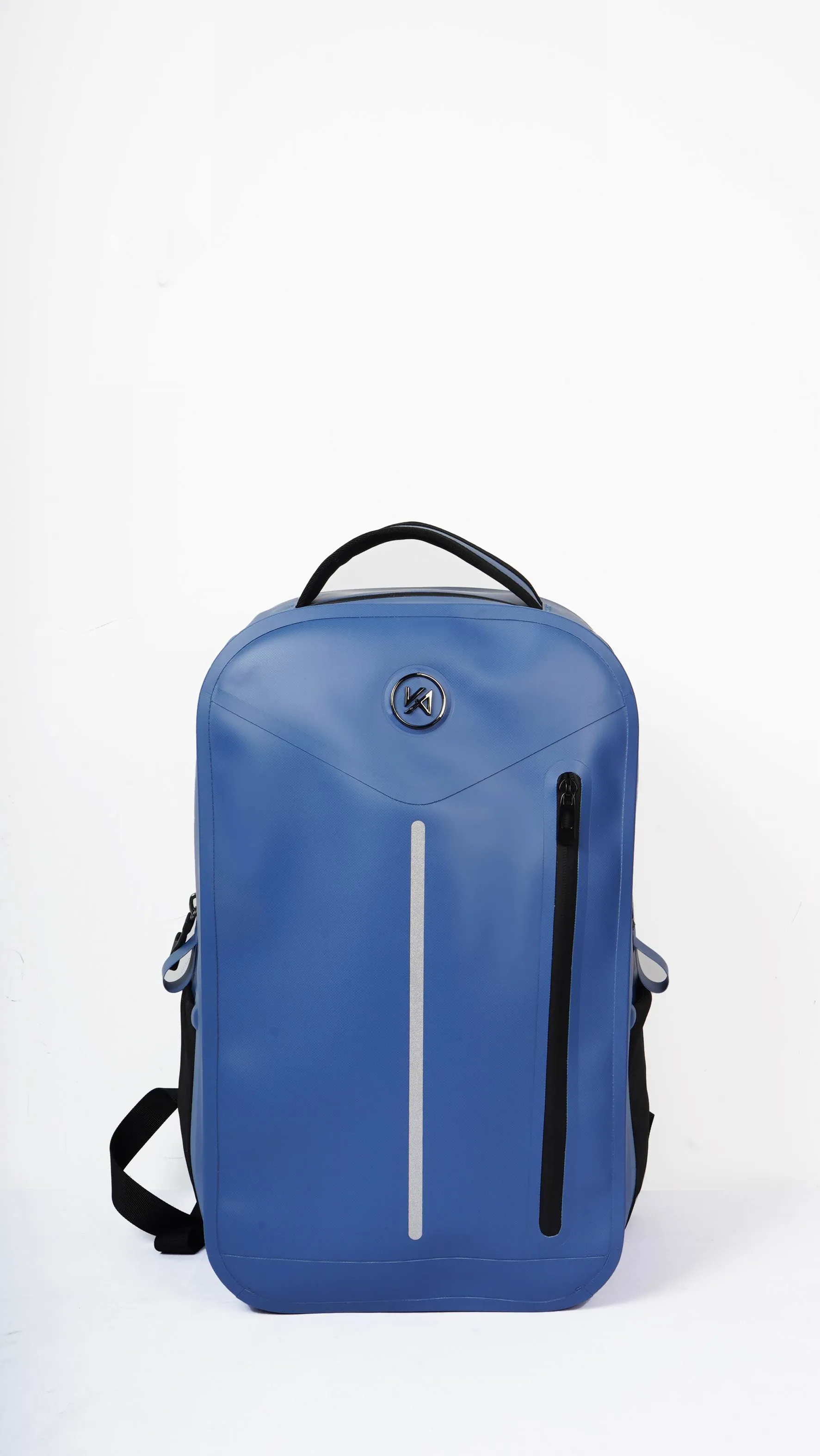
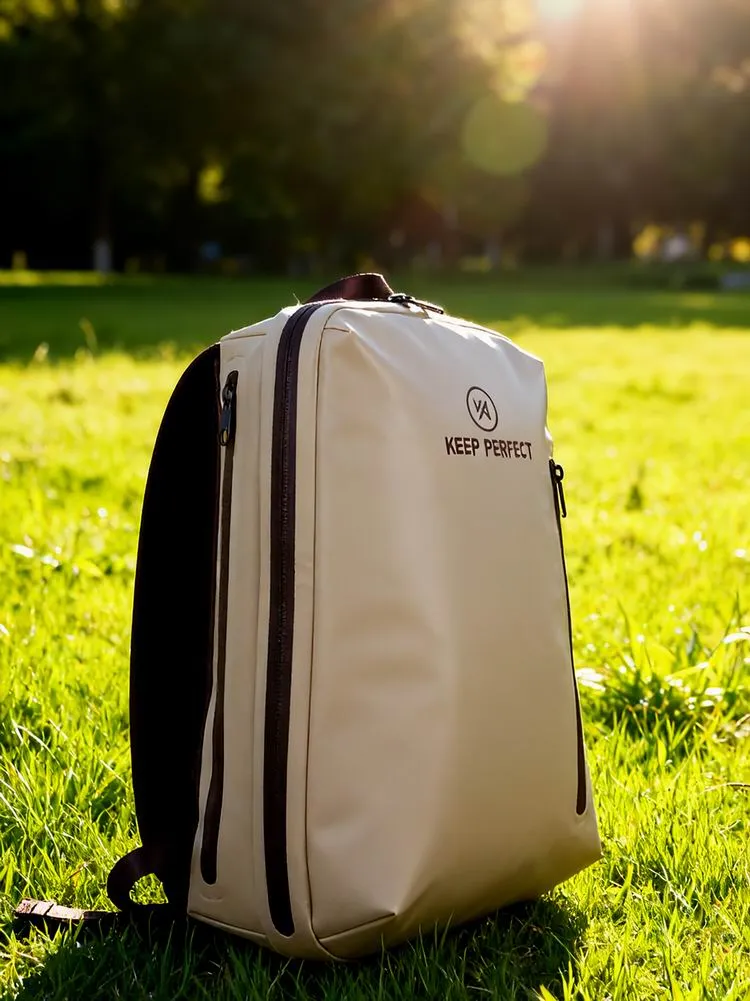
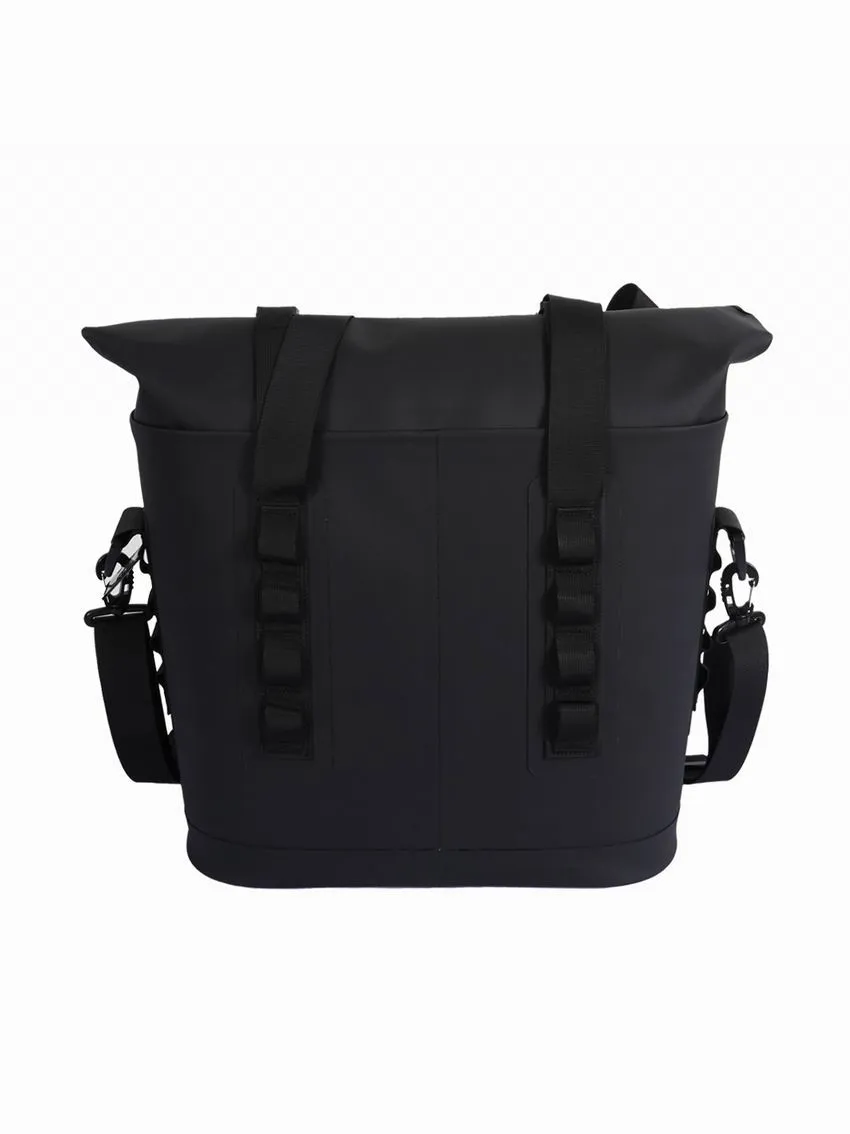
What lamination is: a made film bonded to a made fabric
A laminated waterproof fabric is a composite of finished components: a barrier film manufactured to a controlled thickness and quality, a woven or knit face fabric carrying strength and hand, and an adhesive system bonding them — three engineered layers assembled by heat and pressure into one material. The distinction from coating is manufacturing, not marketing: a coating is created on the fabric wet layer by wet layer, its consistency hostage to the application line; a laminate arrives as a film already tested for pinholes and thickness, then transfers that consistency onto the fabric. The consequences run in both directions. Laminates deliver higher hydrostatic head per unit weight, the rating arithmetic our hydrostatic head guide sets, with the barrier integrity of a factory-made film; they enable the multi-layer constructions — breathable membranes, tricot backers, printed interlayers — that coatings cannot build; and they price accordingly, at a cost premium our coating counterpart guide, the coatings explained article, keeps honest from the other side of the fork. Neither route is universally superior — the coating guide maps where coatings win at value — and the programs that buy well specify duty band first, then pick the barrier route that serves it at the right price.
The film families: TPU, PVC and the membrane cores
The barrier film is the laminate’s engine, and the families divide by chemistry with familiar loyalties. TPU film is the premium workhorse: elastic enough to flex with any weave, tough enough for the submersion band, fully weldable across the RF and hot-air family — the joining routes our construction guides map — and specified by thickness from the economy grades to the heavy-duty films, the gauge arithmetic our TPU film thickness guide prices. PVC film remains the value engine: lower cost, good water barrier, weldable, and carrying the plasticizer and aging caveats our TPU versus PVC comparison runs in full. The membrane cores — led by the expanded-PTFE family — are the breathable laminates: a microporous or hydrophilic film that blocks liquid water while passing vapor, the technology behind premium breathable waterproof builds, where its water-head ratings pair with moisture-vapor transmission numbers in a two-axis specification. Each film also carries a substrate loyalty: TPU bonds to nylons and polyesters cleanly, PVC prefers the coated-fabric ecosystem it grew up in, membranes demand engineered adhesives and careful process windows. The buyer’s film decision is therefore three decisions at once — chemistry, gauge, and the duty band they serve — and the honest shorthand is that TPU owns the flexible premium band, PVC the value band, and membranes the breathable band that only they deliver.
| Film family | Strengths | Watch items | Typical duty |
|---|---|---|---|
| TPU film | Elastic, weldable, submersion-capable | Ketone-family chemical limits; gauge cost | Premium welded and laminated builds |
| PVC film | Cost, barrier value, weldable | Plasticizer aging; solvent sensitivity | Value laminates, promotional submersion |
| ePTFE / breathable membranes | Blocks water, passes vapor | Adhesive process windows; premium cost | Breathable waterproof builds |
| PE/PP film | Chemical and heat tolerance | Stiff; narrow joining routes | Chemical-duty specialty laminates |
The adhesion routes: hot-melt, dot print and adhesiveless bonding
Lamination technology lives or dies in the bond, and the industry’s bonding routes trade off hand, breathability and cost. Full-surface hot-melt lamination: a thermoplastic adhesive film or web is melted between face fabric and barrier under heated pressure — the strongest, most water-tight bond, the default for heavy-duty laminates, at the cost of adding a continuous adhesive layer that stiffens the hand and, in breathable builds, blocks vapor paths. Dot-pattern lamination: adhesive deposits in a discrete dot grid leave open channels between face and film — the breathable constructions’ standard, passing vapor through the un-bonded lanes while the dots carry the bond, at lower peel strength than full-surface and a process that needs control to keep dots uniform. Adhesiveless thermal lamination: heat and pressure fuse film to fabric directly where the chemistries allow — the cleanest hand and lowest added weight, the route premium soft-shell-adjacent constructions use, with the narrowest process window and the highest operator-skill dependency. The specification issue hiding in all three: the adhesive layer is a material with its own aging profile — it embrittles, hydrolyzes and softens on the same chemistry clocks our chemical resistance guide sets — so a laminate specification names the adhesive system, not just "lamination," because the bond is what fails in year three when failures arrive.
Two-layer, two-and-a-half and three-layer constructions
The layer count is the laminate’s architecture decision, and the market’s naming maps directly to what hangs inside the bag. A 2-layer laminate is face fabric plus barrier film, worn with the film side exposed inside: the lightest and cheapest laminate build, at the cost of the film rubbing against contents, needing a liner in real products and aging fastest at the exposed film surface. A 2.5-layer build prints or deposits a partial protective layer onto the film’s inner face — printing dots, carbon prints or thin backers — protecting the film at minimal weight gain, the ultralight category’s standard. A 3-layer laminate bonds a full tricot or mesh backer over the film: the barrier fully protected on both sides, the most durable laminate construction, the premium standard — at weight, cost and hand-consequence prices that the value tiers rightly refuse to pay. The engineering translation for buyers: layer count is durability-per-gram engineering, and the correct count follows the product’s abuse profile — a promotional tote needs no 3-layer protection, and an expedition shell has no business shipping 2-layer film-exposed construction. The layer-count decision also interacts with the bag-level stacking our double-layer construction guide documents, where the laminate is one layer of a two-barrier system.
Where lamination wins over coating — and where it cannot
The fork deserves an honest mapping because both routes anchor real programs. Laminates win where consistency and ceiling matter: submersion band — a factory-made TPU film delivers the 10,000 mm-plus ratings that heavy coatings reach only with pinhole risk; premium durability — the film’s engineered elongation out-flexes most coating chemistry; breathable builds — membranes exist only as laminates; and specialty constructions — transparent windows, printed interlayers, ultralight builds. Coatings win where economics and simplicity rule: the value weather band, promotional programs at MOQ 500 scale, and any build where one production step beats three. The crossover zone — heavy PU coating against mid-tier TPU laminate at the 5,000 mm weather-plus band — is decided by evidence rather than construction philosophy: which quotation carries the aged rating, the flex-cycle data and the seam plan, the verification discipline our testing methods guide standardizes. Two boundary rules keep the fork honest: no laminate excuses a poor bond — delamination is the route’s signature failure, the file below — and no coating should be sold into the submersion band it cannot carry. Between the rules, the market sorts correctly: laminates own the top, coatings own the value core, and buyers holding both quotations to the same evidence standard get the right answer at every budget tier.
Delamination, bubbles and the adhesion failure file
Laminates fail in their bond layer, and the failure catalog is short enough to memorize. Edge and corner delamination: flex and abrasion attack the laminate’s edges first, peeling the film from the face — the failure pattern behind fraying hems and lifting seams, countered by edge taping and pattern design that keeps cut edges folded. Bubble formation: process voids and contamination trap air or moisture between layers; a bubble is a non-bonded zone that grows under flex, and one visible bubble on a delivered lot means the process control that shipped it cannot be trusted to have shipped none. Adhesive aging: the bond layer embrittles under UV, hydrolyzes in hot-wet service and softens under heat — the chemistry clocks of our chemical guide — which is why a laminate that rated beautifully on delivery can peel in year three; the countermeasure is named adhesive systems and combined-cycle aging data, the aging discipline our testing guides apply. Wet-flex separation: saturated fabrics flex apart at the bond line in sustained wet duty, the failure mode separating outdoor-grade from casual-grade laminates, and the reason premium programs test flex after immersion, not just flex and immersion separately. The buyer’s screening tools are two questions: what adhesive system, and what aged peel data — and a supplier who answers both from a test log is a supplier whose laminates age on schedule.
| Failure mode | What it looks like | Root cause | The countermeasure |
|---|---|---|---|
| Edge delamination | Peeling film at hems and cut edges | Flex plus abrasion at boundaries | Edge taping; folded-edge pattern design |
| Bubbles between layers | Raised spots growing under flex | Process voids, contamination | Line discipline; incoming-laminate inspection |
| Adhesive embrittlement | Stiff, cracking bond after sun seasons | UV aging of the adhesive system | UV-stable adhesives; combined-cycle testing |
| Wet-flex separation | Layers parting after sustained wet flex | Bond degraded by moisture under load | Outdoor-grade adhesives; flex-after-immersion tests |
Testing a laminate: peel strength plus the water battery
Laminate testing is two batteries run together, because the material must hold water out and hold itself together — and the two properties fail independently. Where an outside reference point is required, peel and adhesion work is benchmarked against ASTM methods and ISO test standards, so a supplier figure can be re-run by any laboratory rather than taken on trust. The water battery: hydrostatic head on the laminate as delivered, re-run after flex cycles and after combined aging, the protocols our testing guide standardizes and our fabric strength testing complements on the substrate side — a laminate’s honest rating is the aged number, not the day-one number. The bond battery: peel strength at the laminate’s interfaces — face-to-film, film-to-backer — measured fresh and after the same aging cycles, because peel strength is the property that predicts delamination years ahead, the same first-article logic our seam integrity testing applies to the assembled bag. Lot discipline closes the loop: AQL 2.5 sampling with both batteries attached, the acceptance framework our AQL buyers guide documents, so a shipping lot proves both its barrier and its bond on evidence. For programs with certification weight behind claims, third-party labs run the full protocols — the engagement path our third-party labs guide walks — and for programs in regulated markets the compliance chemistry rides the same paperwork, the scope our compliance guide maps. The one-line buyer’s test for any laminate claim: ask for peel data, ask for aged head data, and compare the answers across competing quotations — the gap between data-backed and data-free suppliers is the most informative gap in the whole quotation cycle.
Laminates under welding, sewing and the processing interface
A laminate is chosen partly for how it joins, and the processing interface belongs in the specification. Welding: TPU and PVC laminates weld across the RF and hot-air family — the laminate route’s structural advantage, since a film-backed fabric fuses at the film — with gauge and cleanliness deciding weld quality, the parameter discipline our HF welding guide and welding routes comparison document. The contamination gate applies to laminates doubly: release agents and silicone residues that lurk in some laminate processes cause arcing and cold bonds, the failure modes our welding QC sections hunt. Sewing and taping: laminates take stitching with the needle-path tax every sewn build pays, and tape over the needle line needs the tape system matched to the laminate’s film — TPU tape on TPU laminate, the pairing rule our seam taping guide states — with breathable membranes demanding the seam-sealing tapes engineered for them. Trimming and edges: every cut laminate edge is a delamination invitation, so serious patterns fold, bind or tape edges rather than leaving film exposed to fray — a pattern-level decision that costs nothing at design time and fails visibly in the field when skipped. The seam-map specification our construction comparison defines carries all of this per seam class, and a laminate program should arrive at that seam map with joining compatibility already confirmed in writing.
Specialty laminates: transparent, recycled and bio-based
The laminate platform carries the category’s specialty materials, and buyers should know them by route. Transparent TPU laminates: the film’s clarity makes see-through builds — pouches, windows, clear dry bags — where a barrier film doubles as the visual interface, the products our transparent TPU guide profiles, and where gauge and clarity grades, not just water head, define the specification. Recycled-content laminates: recycled TPU films and rPET face fabrics deliver certified-content builds with performance the measurement work our recycled TPU guide documents — the materials answer for programs with recycled-content targets, where the certificate chain and the performance data arrive together. Bio-based laminates: bio-TPU films from plant-derived polyols push the bio-content axis our bio-based TPU guide tracks toward commercial maturity — specified increasingly in premium sustainability-forward programs, at the price premium early platforms carry. The specialty common thread: each laminate is a materials story a certification or datasheet carries, and each story is falsifiable — which is exactly what makes it useful to programs whose markets demand proof rather than adjectives. The buyer’s move is to ask for the datasheet and the certificate chain together, and route any claim that arrives without both to the marketing pile.
The cost architecture of laminated programs
Lamination prices in three layers a buyer can read off any quotation. The film layer: film cost scales with chemistry and gauge — PVC lowest, TPU by grade and micron, membranes and specialty films at the top — and gauge decisions compound across a program, the thickness arithmetic our TPU film guide makes explicit. The bonding layer: adhesive systems and their process windows price by route — full-surface hot-melt fastest to run, dot print slower with its breathability value priced in, adhesiveless thermal carrying the operator-skill premium. The construction layer: layer count is a direct cost ladder, 2-layer to 2.5 to 3-layer adding face, backer and process steps; at MOQ 500 scale the ladder is real but so is its selection logic, because paying for 3-layer protection on a splash-duty product wastes more than it protects. The consolidation lever our MOQ guide documents applies with extra force to laminates: consolidated film gauges and shared constructions across a product family amortize the premium materials handling and give the factory a single process to control well. The comparison discipline when laminates quote against coatings: align the rating, the seam plan and the aged data first — a laminate quotation and a coating quotation at the same unit price are usually quoting different products, and the seam map tells you which is which.
The lamination purchase order: naming the stack on paper
The specification that survives production names the stack layer by layer, and it runs seven lines. One: the film — family, grade and gauge by the micron numbers, never "waterproof film." Two: the adhesive system by route and chemistry — full-surface hot-melt, dot pattern for breathables, adhesiveless where the build allows — because the bond is the aging part. Three: the layer count and backer — 2-layer with liner plan, 2.5-layer, 3-layer tricot — matched to the product’s abuse profile. Four: the delivered rating, stated as hydrostatic head with the test basis, plus the aged rating for long-service programs. Five: the peel specification — bond strength fresh and after combined aging, with the test method named. Six: the joining plan — weldable constructions with parameters referenced, sewn builds with the matched tape system, edge treatment named per pattern. Seven: the evidence — mill certificates for film, adhesive datasheets, AQL 2.5 lot batteries, and third-party reports where the market demands them. Seven lines turn "premium laminate" from an adjective into an engineering document — and the chain that executes it, 200,000 pieces monthly, samples in 6–10 working days, bulk in 35–50, FOB Xiamen, is documented end to end for buyers who want the factory behind the specification before writing the first line.
Frequently Asked Questions
Q1. What is waterproof fabric lamination?
Bonding a pre-made barrier film — TPU, PVC or a membrane — to a fabric using heat, pressure and an adhesive system. The film arrives factory-tested for thickness and pinholes, transferring that consistency to the fabric.
Q2. What is the difference between coated and laminated fabric?
Coatings are built onto the fabric wet layer by layer; laminates bond a finished film on as a separate layer. Laminates deliver higher head per weight and consistent barriers at higher cost; coatings own the value weather band.
Q3. What film is used in waterproof lamination?
TPU film for the flexible premium band, PVC film for value builds, expanded-PTFE and similar membranes for breathable waterproof constructions, PE/PP films for chemical-duty specialty laminates.
Q4. What is a 3-layer laminate?
Face fabric, barrier film and a tricot or mesh backer bonded into one material — the film protected on both sides, the most durable laminate construction, at the weight and cost the protection earns.
Q5. How is laminate fabric bonded?
By full-surface hot-melt adhesives (strongest), dot-pattern adhesive deposits (breathable constructions, open vapor channels) or adhesiveless thermal fusion (cleanest hand, narrowest process window).
Q6. Why does laminate delaminate?
The bond layer fails: edge flex and abrasion peel the film, process voids grow into bubbles, UV embrittles the adhesive, and wet-flex separates casual-grade bonds. Named adhesive systems and aged peel data are the countermeasures.
Q7. Are laminated fabrics waterproof?
Fully — a sound laminate carries the submersion band’s 10,000 mm-plus ratings. The honest question is not whether but for how long: aged rating and peel data predict the service life the day-one number cannot.
Q8. Can you weld laminated fabric?
TPU and PVC laminates weld across the RF and hot-air family — the route’s structural advantage — provided gauges suit the process and surfaces are contamination-free. Membrane laminates join by taping instead.
Q9. What is a 2.5-layer laminate?
Face fabric plus barrier plus a partial printed or deposited protection layer on the film’s inner face — protecting the film at near-2-layer weight, the ultralight standard.
Q10. Is TPU laminate better than PVC laminate?
Better in elasticity, aging and chemical tolerance against oils and plasticizer loss; higher in cost. PVC remains the value answer for budget submersion-adjacent duty. The comparison guide runs the full trade.
Q11. How do you test fabric lamination?
Two batteries together: water head fresh and after flex-plus-aging, and peel strength at every interface fresh and aged — sampled at AQL 2.5, with third-party reports where markets require certification weight.
Q12. What adhesive is used in fabric lamination?
Thermoplastic hot-melt films and webs for full-surface bonds, dot-printed adhesives for breathable builds, and direct thermal fusion where chemistries allow. The adhesive is a named material because it is the aging part.
Q13. Do breathable waterproof laminates work in bags?
Yes, in the builds that need them — vapour passes while liquid water stays out. Most waterproof bag duty does not need breathability, and paying for membranes in a dry-bag program is spending on the wrong axis.
Q14. Can laminates use recycled content?
Yes — recycled TPU films with rPET face fabrics deliver certified-content builds whose performance the recycled TPU guide documents; bio-based TPU films push the bio-content axis further at a premium.
Q15. How much more does laminate cost than coating?
Program-specific, but the shape is constant: film plus bonding plus construction layers each add cost, climbing with layer count and gauge. The consolidation lever — shared gauges and constructions across a family — narrows the gap at MOQ 500 scale.
Q16. What should a laminate specification name?
Seven lines: film family, grade and gauge; adhesive system; layer count and backer; delivered and aged rating; peel specification; joining plan; and the evidence chain — the final section of this guide writes them out.
People Also Ask
What is laminated waterproof fabric?
A composite of fabric, barrier film and adhesive bonded under heat and pressure — the film factory-made for consistency, delivering higher waterproof ratings per weight than coatings.
How is TPU film laminated to fabric?
Mostly through hot-melt adhesive films activated by heated rollers, dot-print adhesion for breathable builds, or direct thermal fusion — the route sets the hand, the breathability and the aging profile.
What is the difference between lamination and coating on waterproof fabric?
Manufacturing: coatings are built onto the fabric in liquid form; lamination bonds a finished film on. Laminates reach higher, more consistent ratings at higher cost; coatings own the value tier.
Which is better, laminated or coated fabric?
Neither universally: laminates win the submersion band, premium durability and breathable builds; coatings win the value weather band. Duty band first, then the route that serves it.
What causes laminate fabric to peel?
Adhesive-layer failures — edge flex, process bubbles, UV embrittlement, wet-flex separation. Specified adhesive systems plus aged peel testing predict and prevent the peeling.
Is 3-layer laminate worth it?
Where the product’s abuse profile protects the film — expedition and daily-carry duty, yes, it is the durability standard. On splash-duty promotional builds it is protection the product will never use.