Agriculture is the original waterproof-bag industry: the work happens outdoors, the product is moisture-sensitive from seed to sale, and the equipment must survive UV, mud, crop chemicals and washdown — so farms, agricultural cooperatives, seed companies and agri-retail brands buy waterproof programs across harvest transport, input protection and field-kit duty, at unit costs from $1.90 at MOQ 500. This guide covers the full agricultural program: harvest and post-harvest transport, seed and feed protection, field crew kits, sample and documentation duty, farm-brand retail totes, and the material specifications — UV, chemical and washdown resistance — that separate farm-duty builds from garden-store substitutes.
The manufacturer reference is QUANZHOU JUNYUAN BAGS: custom waterproof bag production since 2014, 4,950 m² SGS-verified facility, 7 lines, 149 machines, 137 staff, 200,000 pieces monthly. MOQ 500 per design splittable across the agriculture family, samples 6–10 working days, bulk 35–50 days, AQL 2.5 inspection, 30/70 T/T, FOB Xiamen, shipping to 100+ countries.

Why agriculture buys waterproof by default
Agriculture waterproof bags protect the two things farms cannot reorder mid-season — seed viability and harvest grade — and farm harvest bags are where both duties begin. Agriculture’s relationship with water is double-edged: crops need it and products fear it. Harvest moisture ruins grade (wet produce grades down), seed moisture ruins viability (a damp seed lot is a lost season), and feed moisture spawns mold mycotoxins that turn feed into liability. Meanwhile the work environment itself is wet — irrigation, rain, mud, washdown — and the sun attacks every plastic left outdoors (the UV embrittlement science in our UV resistance guide). The industry’s response is the same as logistics and healthcare: specify the protection. Harvest totes rated for washdown, seed bags with moisture-sealed construction, field kits that survive a season of mud and spray drift.
The structural context: farm-direct distribution keeps growing — farmers’ markets, CSA programs, farm e-commerce — which multiplies the branded-tote moment where the producer’s name meets the customer’s kitchen. Every CSA share carried in a farm-branded waterproof tote is produce marketing that costs less than any ad the farm could buy.
The five agricultural program segments
| Segment | Formats | Defining duty | Unit cost (500+) |
|---|---|---|---|
| Harvest transport | Field totes, picking bags, crate liners | Washdown + mud + UV | $2.40–$5.90 |
| Seed & input protection | Moisture-sealed seed bags, input totes | Moisture barrier + pest resistance | $1.90–$4.60 |
| Field crew kits | Crew backpacks, tool bags | Mud, spray drift, daily washdown | $3.40–$7.20 |
| Sampling & records | Sample bags, document cases | Moisture-integrity for lab accuracy | $1.90–$3.90 |
| Farm-brand retail | CSA totes, market bags | Brand presentation + field reuse | $3.20–$5.40 |
The segments protect different things: harvest formats protect grade and cleanliness from field to shed; seed formats protect viability (the highest-stakes moisture protection on the farm); crew kits protect tools, devices and records through the working day; sampling formats protect the accuracy of the lab results that drive agronomy decisions; retail formats carry the farm’s brand to its customers. Each is a different specification — and the differences are where the value engineering lives.
Harvest transport: from wet field to packing shed
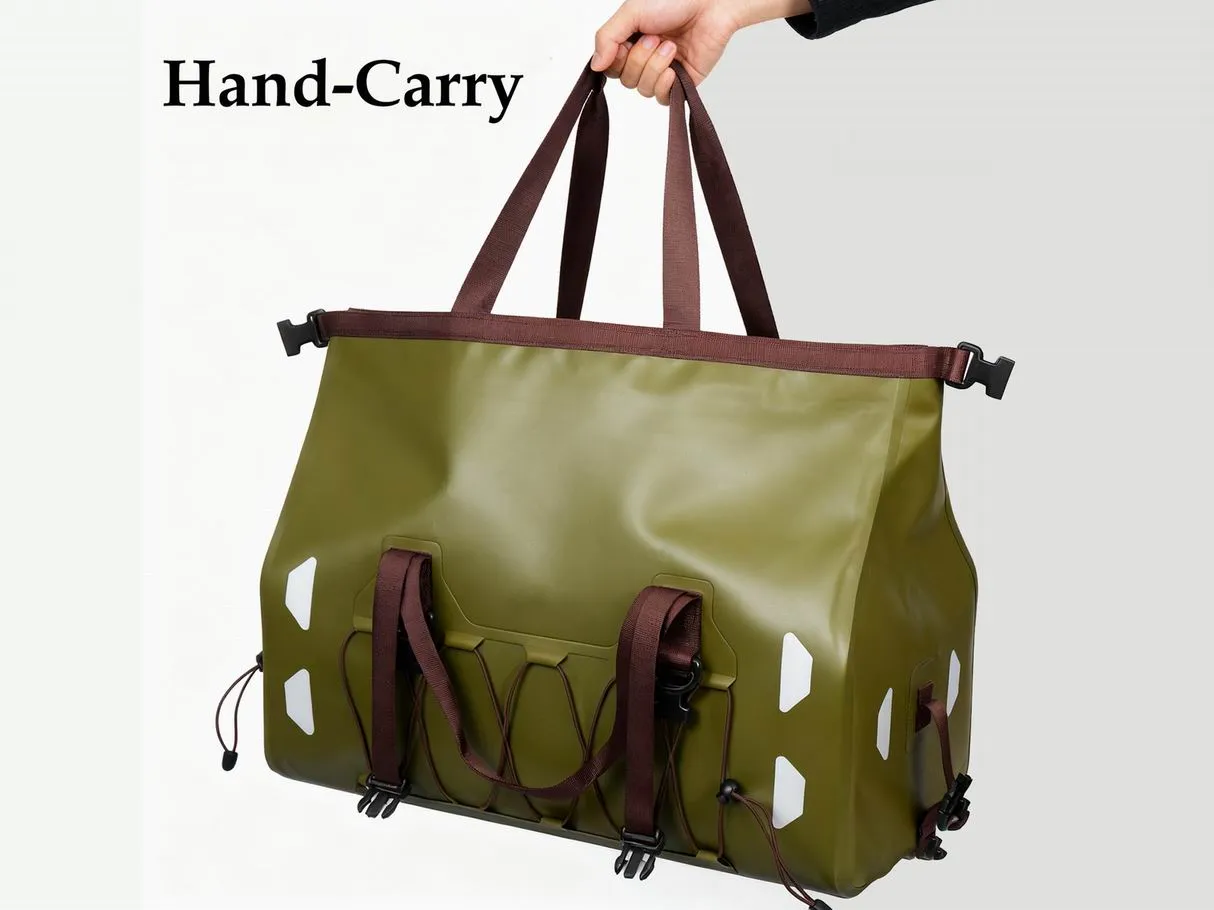
Harvest transport is the farm’s daily quality chain: produce moves from field to shed in whatever the field offers — irrigation overspray, rain, mud — and the transport container determines whether it arrives clean. The harvest-tote specification: food-contact-appropriate liner materials (produce touches the surface — the food-grade liner chemistry our food delivery guide documents applies directly), washdown-compatible construction (sanitation cycles between loads, sealed seams that leave no soil traps), and UV-stable materials for containers that live outdoors through a season. The crate-liner format extends the pattern to existing infrastructure — farms that own rigid crates line them with washable waterproof liners that keep produce off crate surfaces and grade the loads cleaner, at a fraction of replacement-crate cost.
Seed and input protection: the viability stakes
Seed moisture is the farm’s most unforgiving failure mode: viability decays with every moisture excursion, and a damp lot can lose germination percentage that no money buys back. Moisture-sealed seed bags are specified to exactly that standard — welded or sealed-seam construction with verified moisture-barrier materials, pest-resistant closures (the rodent-and-insect discipline that sealed construction provides), and batch-coded lots so every seed lot answers to its storage history. The same logic covers treated-seed transport (chemical-rated liners where treatments demand them — the chemical-resistance ladder in our chemical resistance guide) and input protection generally: feed, amendments and sensitive inputs stored in moisture-sealed totes against the barn’s ambient humidity. Seed companies and cooperatives buy at season scale — the planting calendar’s volume concentrated into MOQ-500 batch orders.
Field crew kits: the working-day duty
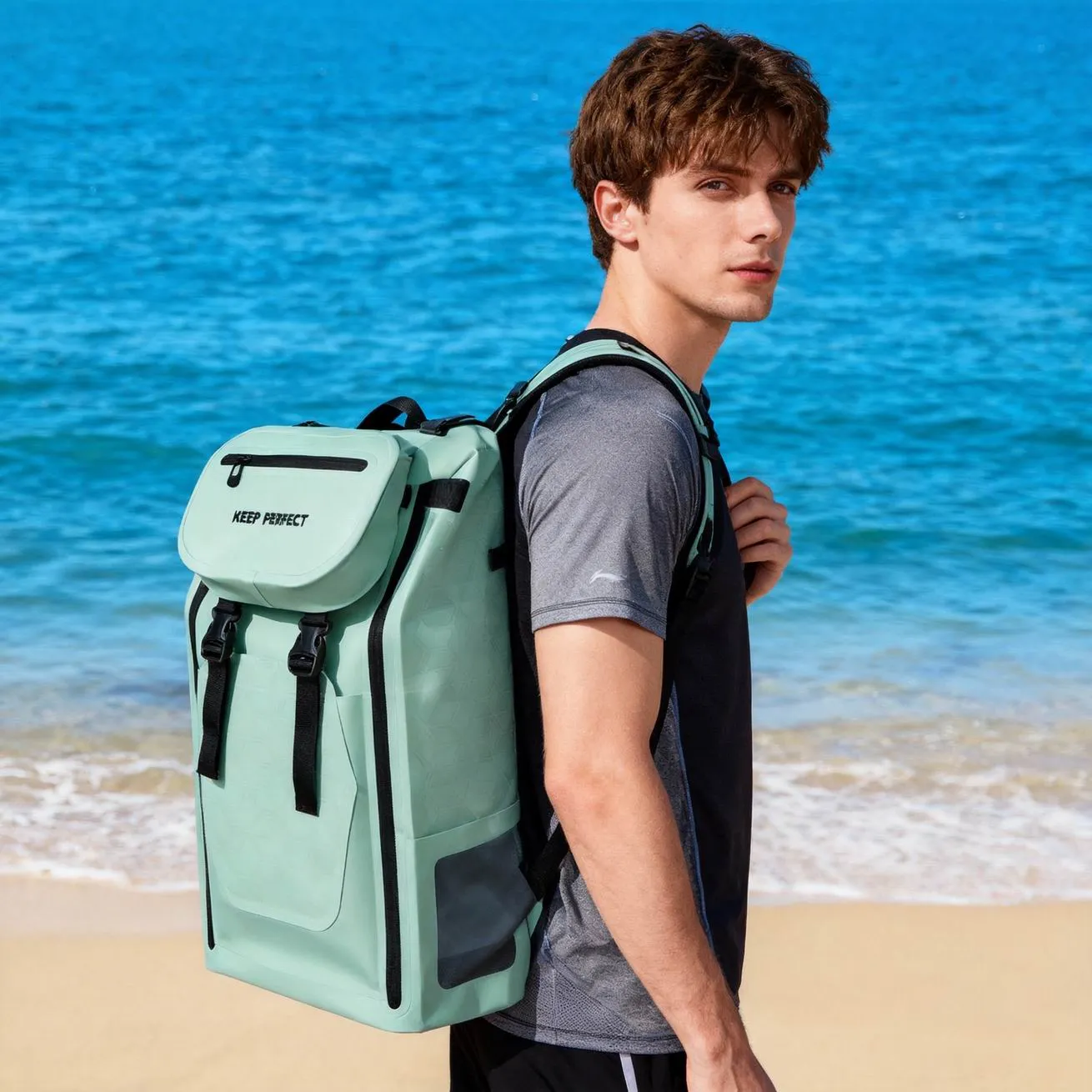
Field crews work the day in mud, spray drift and weather, and their kit bags carry the tools of that work: pruning gear, meters and tablets, record books, PPE. The crew-kit spec mirrors the utility-industry build in our industrial workers guide — 500D washdown-compatible bodies, hi-vis options for equipment traffic on farm roads, closures operable in work gloves — with two agricultural additions: chemical-splash tolerance for spray-adjacent work (the drift exposure that finds every bag on the sprayer route) and mud-duty construction that survives the pressure-washer between seasons. Crew kits issue per-worker with season rotation; a 40-crew operation is a 500-unit program with float, exactly our MOQ. The strap-load engineering in our load stress testing guide matters here too: field kit bags carry real weight across real distances daily.
Sampling, records and lab accuracy
Agronomy runs on samples — soil, tissue, water, grain — and the sample’s moisture integrity is the lab result’s integrity: a wet-changed grain moisture reading mis-prices a whole harvest, a compromised soil sample mis-prescribes a whole field. Sample transport bags are specified to that standard: moisture-sealed construction that preserves the sample’s state from field to lab, labeling surfaces that keep sample identification legible through field conditions (the chain-of-custody discipline our oil and gas guide documents for its sample programs), and batch-coded lots for the records trail. Document cases complete the segment — field records, spray logs and certifications travel in the same weather the work happens in, and a soaked spray log is a compliance problem no farm needs. Sample and document formats run $1.90–$3.90 at MOQ 500.
Farm-brand retail: the tote that markets
The farm-brand tote is the segment’s quiet marketing engine: CSA shares, farmers’ market sales and farm e-commerce deliveries carried in a farm-branded waterproof tote that customers keep and reuse — the farm’s name circulating through customers’ kitchens, gyms and beaches for years (the retention argument our corporate promotional guide makes for brand campaigns, applied at farm scale). The design grammar: farm identity done well (Pantone-matched brand colors, the matching discipline in our color customization guide), produce-friendly food-contact surfaces, and the durability that lets one tote serve seasons of CSA duty. Retail economics: $3.20–$5.40 per tote at MOQ 500, retail-realized at $15–$30 or built into share pricing — the farm-direct channel’s margin structure covered in our tourism guide for the destination-retail version of the same logic.
The farm-duty material specification
- UV stability: outdoor-lived containers need UV-stabilized film and fabrics — the aging predictions in our accelerated aging tests guide separate season-durable from season-failed
- Washdown tolerance: pressure-washer and sanitizer chemistry between seasons, sealed seams with no soil traps
- Chemical-splash rating: spray-adjacent duty means drift-rated materials on the crew-kit line
- Food-contact liners: produce-touching surfaces on harvest and retail formats, documented to food-contact frameworks
- Pest-resistant closures: sealed construction that keeps rodents and insects out of stored inputs
Agricultural program economics at MOQ 500
| Program line | Unit cost (500+) | Scale pattern | Farm math |
|---|---|---|---|
| Seed/storage bag | $1.90–$3.60 | Season lot scale | Viability insurance per stored lot |
| Sample/document bag | $1.90–$3.90 | Per-crew + per-field kit | Lab-accuracy protection |
| Harvest tote | $2.40–$4.90 | Field fleet, season rotation | Grade protection per load |
| Crate liner | $1.90–$3.40 | Crate-fleet conversion | Infrastructure upgrade fraction |
| Farm-brand retail tote | $3.20–$5.40 | CSA/market volume | Marketing asset with margin |
| Crew kit bag | $3.40–$7.20 | Per-worker issue + float | Season-cycle equipment |
The MOQ 500 splits across the farm family: a diversified operation’s harvest totes, seed storage and crew kits run as one order with season-timed delivery. Cooperatives aggregate member demand to the same effect — the consortium pattern our cost breakdown guide rewards with volume pricing.
Sampling: the season-standard test
Agricultural samples prove themselves in the field, in season: the harvest tote through real loads including a wet-field day, the seed bag through a storage-integrity test (moisture indicator inside, sealed, stored — the honest way to verify a moisture barrier), the crew kit through a spray-season month, the sample bag through the actual field-to-lab run with result verification. UV exposure checks happen at sampling too — outdoor-lived formats get the sunlight test, because the difference between season-durable and season-failed materials is visible in weeks. Samples run 6–10 working days at $60–$150 per configuration, credited against bulk. The full protocol is in our sampling guide.
Common mistakes in agricultural bag programs
- Garden-store substitution: retail-grade totes fail a farm season — the washdown and UV duty alone exceed consumer specs
- Unverified moisture barriers: seed bags without indicator-tested seals are viability gambles — test the barrier, don’t trust the label
- Food-contact gaps: produce-touching surfaces must carry the documentation, not just the waterproofing
- Spray-route blindness: crew kits on the sprayer route need drift-rated materials — chemistry finds every untested bag
- Season-timing misses: harvest-season orders placed in harvest season arrive after harvest — the calendar below is the difference
- Marketing-grade retail totes: a CSA tote that dies mid-season is a brand event, not a cost event
The agricultural procurement calendar
Agriculture runs on the season, and bag programs must land before the season’s work does: planting-season inputs (seed storage, crew kits) order through winter for early-spring delivery; harvest programs (totes, liners) order in spring for pre-harvest arrival; retail totes order ahead of CSA season and market openings. The production math — samples 6–10 working days, bulk 35–50 days, freight 4–6 weeks — means a fall-harvest tote program places bulk by early summer, and a spring seed program samples in the winter quiet season (when our lines also run their agricultural calendar most efficiently). Reorders of established designs ride the 30–35 day window for mid-season needs. The planning discipline is the same seasonal logic our seasonal planning guide teaches wholesale buyers, at farm stakes.
Livestock and equine programs
The livestock side of agriculture runs its own waterproof duty: feed transport and storage (moisture-sealed totes against barn humidity and mold mycotoxins — the same moisture discipline as seed storage, with higher volume), veterinary kit transport (medications, syringes and records moving barn-to-barn through weather — the clinical-adjacent spec our healthcare transport guide documents, scaled to farm operations), and equine-program gear (tack bags, grooming kit totes and show-day carriers built for stable duty and travel weather, a retail-adjacent segment where the stable’s brand rides to events). Feed and vet formats run $2.40–$4.90 at MOQ 500; equine formats ride the same structure with the market-grade presentation our sports programs guide applies to team gear. The livestock buyer’s distinction is duty scale: daily feed rounds and barn-to-barn weather make the farm’s winter the bag’s hardest season.
Precision agriculture: protecting the data layer
Modern farming runs on a data layer that lives outdoors: soil-mapping tablets, yield-monitor handhelds, drone controllers and soil-sensor kits — equipment worth hundreds to thousands of dollars per unit, riding in tractor cabs, UTV beds and field backpacks through the same mud and weather as everything else. The protection spec is the dual-engineering our tech protection guide documents — shock management plus moisture sealing — in farm-duty exteriors: drift-rated materials for spray-adjacent fields, washdown-compatible surfaces for the season’s end, and closures operable in gloves at the field gate. Agronomy operations issue per-operator and per-vehicle cases at $4.60–$8.50, a fleet pattern that fits the MOQ structure at cooperative scale. The economics are the simplest in this guide: a case at under $10 protecting a device at 50–100× its price, through the environment most likely to kill it.
Spec your agricultural program
Bring four facts — your segments (harvest, seed, crew, retail), your season calendar and volumes, your chemical and UV exposure profile, and your food-contact requirements — and the quotation returns in 24–48 hours: duty-matched material spec per segment, food-contact documentation where produce touches the surface, and a costed program at MOQ 500 with season-timed delivery. QUANZHOU JUNYUAN BAGS — farm-duty custom waterproof bags since 2014, 4,950 m² SGS-verified facility, 7 lines, 149 machines, 137 staff, 200,000 pieces monthly, samples 6–10 working days, bulk 35–50 days, AQL 2.5, 30/70 T/T, FOB Xiamen, 100+ countries. The production chain from first inquiry runs from sampling into bulk; the industrial-adjacent specifications are in our industrial workers guide, and the complete manufacturing reference is the manufacturing guide.
Frequently Asked Questions
Q1. What waterproof bags do farms use?
Farm-duty programs: washdown-rated harvest totes, moisture-sealed seed bags, spray-drift-rated crew kits, sample-protecting transport bags and farm-brand retail totes — $1.90–$7.20 at MOQ 500, built for UV, mud, chemicals and washdown.
Q2. How much do agricultural waterproof bags cost?
At MOQ 500: seed/storage bags $1.90–$3.60, sample and document bags $1.90–$3.90, harvest totes $2.40–$4.90, crate liners $1.90–$3.40, farm-brand retail totes $3.20–$5.40, crew kit bags $3.40–$7.20.
Q3. What is the minimum order for farm-branded bags?
MOQ 500 per design, splittable across the farm family — a diversified operation’s harvest totes, seed storage and retail formats as one order. Cooperatives aggregate member demand to the same threshold.
Q4. Do seed bags really need waterproof construction?
Seed viability decays with every moisture excursion — a damp lot loses germination percentage no money buys back. Moisture-sealed, pest-resistant seed storage is viability insurance priced per stored lot.
Q5. Can harvest bags be washed between loads?
They are built for it: washdown-compatible materials and sealed seams that leave no soil traps — pressure-washer and sanitizer cycles between loads and between seasons are part of the specification.
Q6. Are produce-contact surfaces food safe?
Ours carry the documentation: food-contact-appropriate liner materials on every produce-touching format, with declarations in the compliance pack — the same food-grade liner chemistry the delivery industry runs.
Q7. What makes a farm-duty bag different from a retail tote?
Duty: UV-stabilized materials for outdoor life, chemical-splash ratings for spray-adjacent work, washdown construction, and load-cycled straps — the garden-store substitute fails the first season of any one of these.
Q8. Can farms brand CSA and market totes?
Yes — Pantone-matched farm identity on durable food-contact totes, $3.20–$5.40 at MOQ 500, retail-realized at $15–$30 or built into share pricing. Every kept tote is the farm’s name circulating for years.
Q9. How do waterproof bags protect lab samples?
Moisture-sealed construction preserves the sample’s state field-to-lab: grain moisture readings that price a harvest, soil results that prescribe a field — a compromised sample mis-prices or mis-prescribes at whole-lot and whole-field scale.
Q10. Do field crews need chemical-rated bags?
Spray-adjacent duty says yes: drift finds every bag on the sprayer route, and crew kits carrying tools, meters and records need materials rated for the exposure — not consumer fabrics that degrade through a season.
Q11. How long do farm bags last outdoors?
With UV-stabilized materials: full seasons of outdoor staging and use. The aging-test documentation separates season-durable from season-failed; fashion-grade film embrittles in weeks of summer exposure.
Q12. When should farms order for harvest season?
Bulk by early summer for fall harvest: samples in spring, 35–50 days production, 4–6 weeks freight. Spring input programs order through winter for early-season arrival; mid-season reorders ride the 30–35 day window.
Q13. Can one order cover harvest, storage and retail formats?
Yes — the farm family as tiered designs on one production calendar: harvest totes, seed bags, crew kits and retail totes in one order, season-timed delivery per segment.
Q14. Do agricultural cooperatives get consortium pricing?
Yes — pooled member demand reaches the volume ladder solo orders miss: a four-member cooperative pooling 2,000 units captures pricing four 500-unit orders cannot, with batch coding per member program.
Q15. What closures work in mud and gloves?
Farm-spec hardware: oversized pulls and positive-locking closures operable in work gloves and field conditions, with pest-resistant sealed formats for storage duty.
Q16. How do I test farm bag samples?
In the field, in season: harvest totes through real loads on a wet day, seed bags through a moisture-indicator storage test, crew kits through a spray-season month, sample bags through the field-to-lab run — 6–10 working days, fees credited against bulk.
Q17. Do drone and sensor kits need protection?
Yes — precision-ag devices worth 50–100 times their case ride through mud, spray and washdown daily; drift-rated, glove-operable cases at under $10 are the cheapest insurance on the data layer.
Q18. What about feed storage against mycotoxins?
Moisture-sealed feed totes: the same barrier discipline as seed storage at barn-humidity scale, because mold mycotoxins turn stored feed from asset into liability — the sealed construction is the feed program’s insurance.
People Also Ask
How do you keep seeds dry in storage?
Moisture-sealed seed bags: welded construction with verified barrier materials and pest-resistant closures — tested with moisture indicators, because seed viability decays with every moisture excursion and no money buys germination back.
What bags work for harvesting produce?
Washdown-rated harvest totes and crate liners with food-contact surfaces: produce moves field-to-shed clean, the liner washes between loads, and UV-stable materials survive the outdoor season.
Can farm totes go through a pressure washer?
Farm-spec ones can — washdown-compatible materials and sealed seams built for sanitation cycles between loads and seasons. Retail-grade totes fail the first washdown.
What is a CSA tote?
The branded waterproof share bag of community-supported agriculture: the farm’s name on a durable food-contact tote that members keep and reuse — produce marketing that costs less than any ad.
Do waterproof bags protect against spray drift?
Drift-rated materials do: crew kits on the sprayer route specify chemical-splash tolerance, because drift finds every untested bag — consumer fabrics degrade through a spray season.
How do grain samples stay accurate?
Moisture-sealed sample transport from field to lab: the sample’s state preserved, identification legible through field conditions — because a wet-changed moisture reading mis-prices an entire harvest.