Custom waterproof bags for sports teams cost $4.60–$9.80 per player bag at MOQ 500, arrive in team colors matched to your Pantone at Delta-E ≤1.5 with player names and numbers, and take 8–10 weeks from order to delivery — so season-deadline programs need to start in the off-season. They solve the three problems every athletic program knows: wet kit (swim, rowing, water polo, sailing, rainy-season field sports), uniform identity (one bag, one look, from the first-team squad to the supporters' stand), and gear durability (a bag that survives a season of locker rooms, bus floors and pool decks). This guide gives athletic directors, team managers and club merchandisers the product options, the personalization mechanics, the budget tiers, and the calendar math that gets bags into players' hands before day one.
We equip programs from youth clubs to university athletics at QUANZHOU JUNYUAN BAGS — custom waterproof bag production since 2014, 4,950 m² SGS-verified partner facility, 7 lines, 149 machines, 137 staff, 200,000 pieces monthly. Team programs run MOQ 500 per design (mixed sizes within the design allowed), samples 6–10 working days, bulk 35–50 days, individual names and numbers at no extra setup, 30/70 T/T, FOB Xiamen, delivery to 100+ countries.
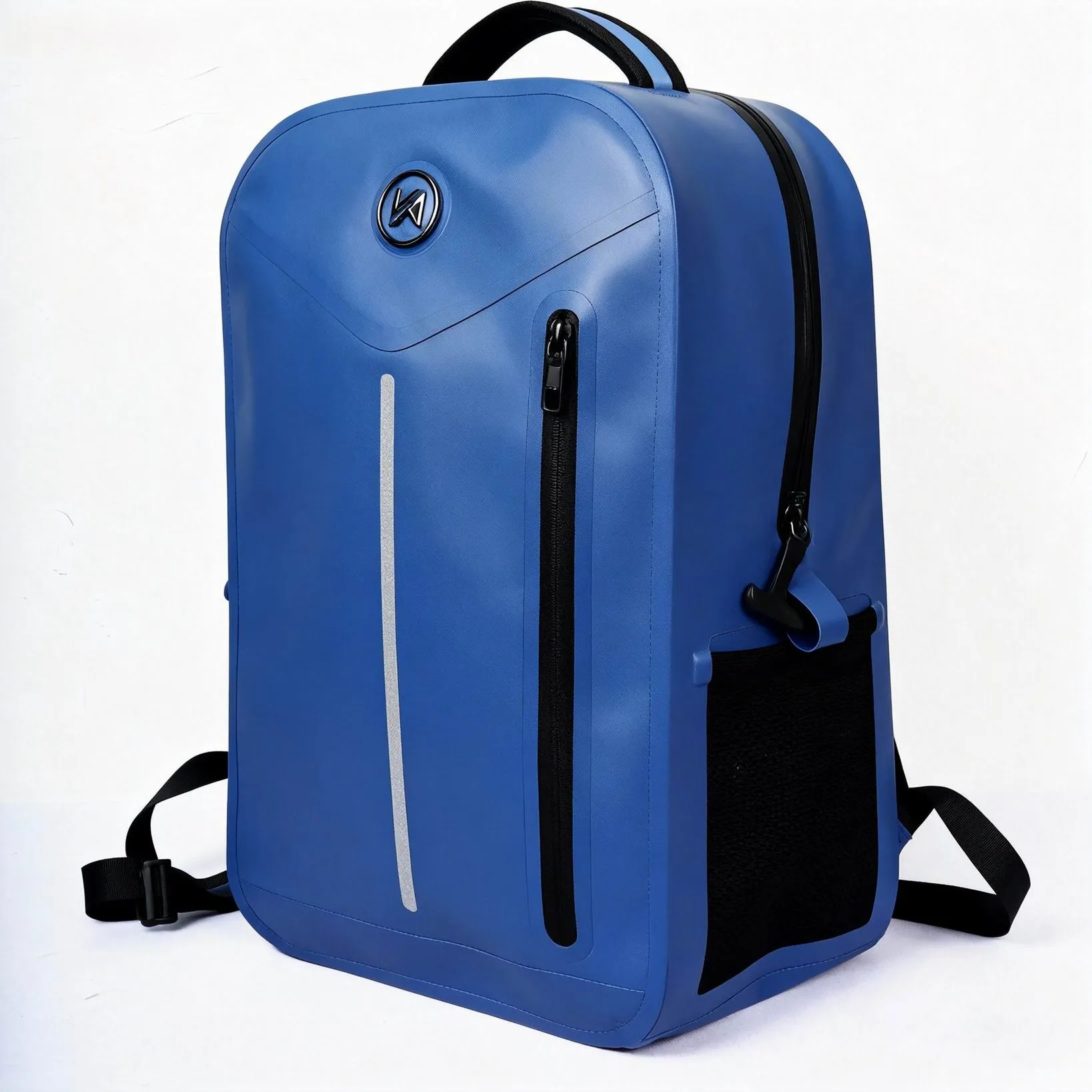
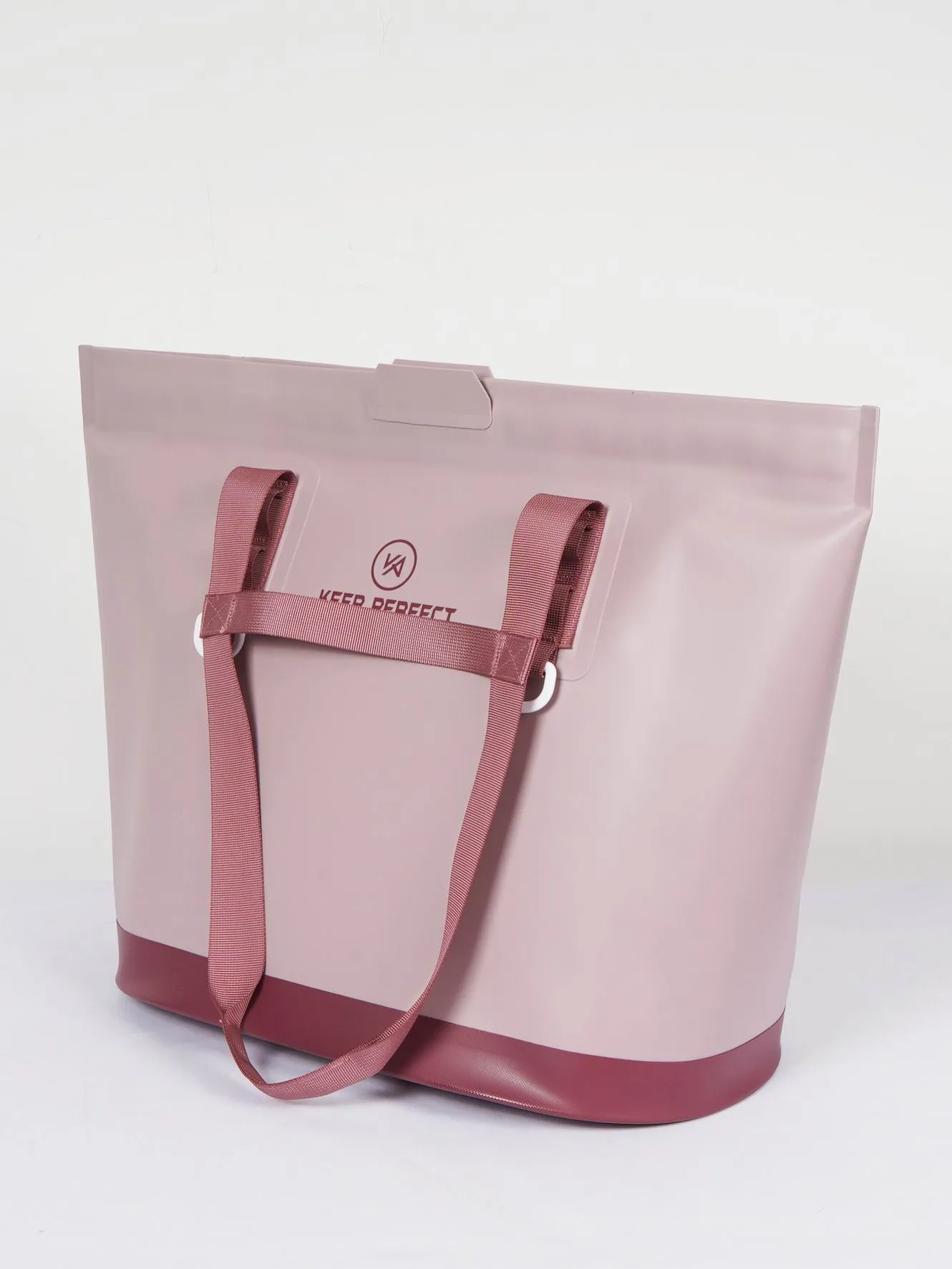
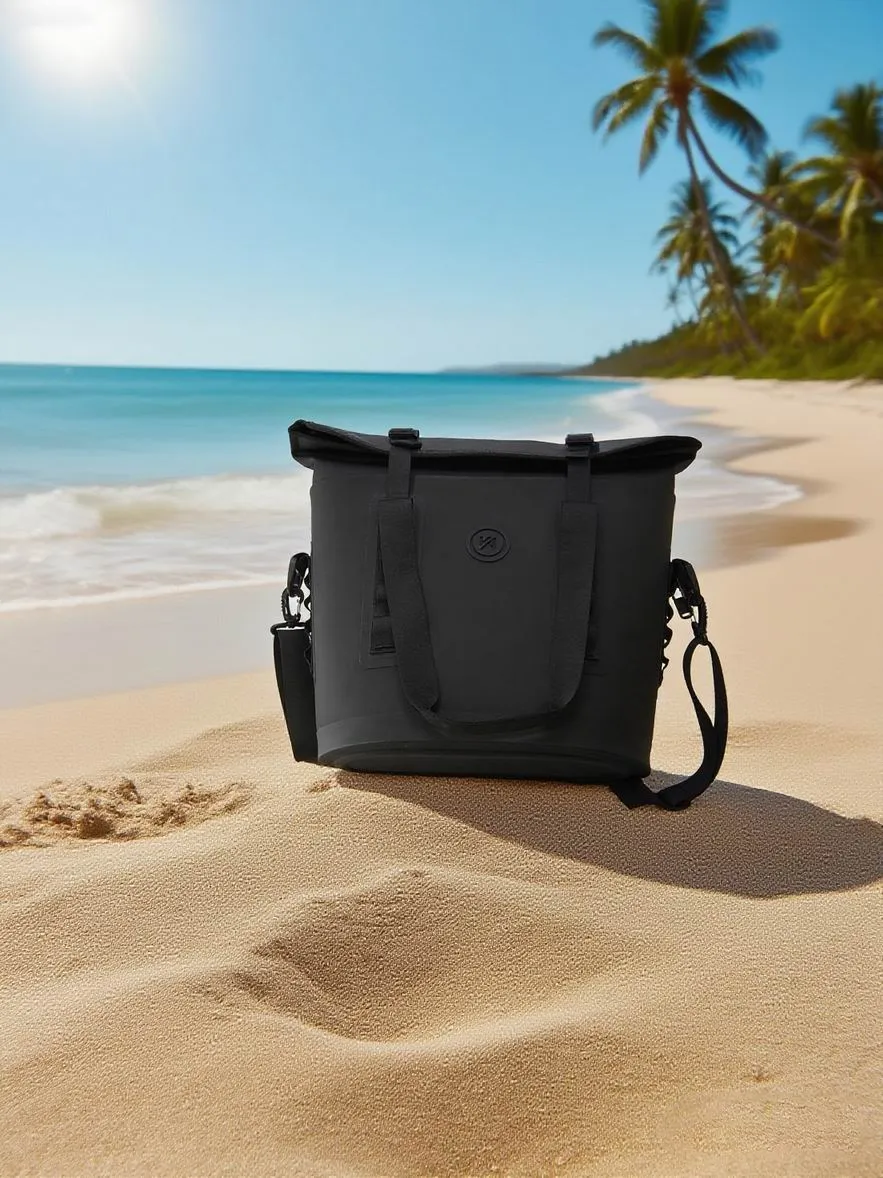
Why waterproof specifically: the wet-kit problem every team has
Sports teams order waterproof programs for one reason: wet gear costs seasons — and athletic programs that specify protection once stop paying for spoiled equipment twice. Every athletic program has a wet-kit logistics problem; water-adjacent sports simply have it in its purest form. Swim teams carry dripping suits and towels home daily. Rowing and paddling programs live on the water by definition. Field sports in rainy seasons (soccer, rugby, lacrosse, track) generate muddy, soaked kit from October through March. And every sport shares the universal version: a bag that rides bus floors, locker-room benches and pool decks absorbs whatever is on those surfaces.
A welded waterproof bag answers all three mechanically: wet gear seals inside (the bus seat stays dry), the shell wipes clean in one pass (pool-deck chlorine, mud, spilled drinks), and the closure that keeps water out also keeps odor in — a mercy every car-pooling parent understands. The durability argument seals the purchase: a TPU-laminated team bag survives multiple seasons where a standard polyester duffel fails at the seams by mid-season, which is why programs report waterproof issue bags outlasting previous kit bags two to one.
For water sports specifically the bag is not an accessory but equipment: a roll-top dry bag that floats when it goes overboard is a piece of safety gear for paddling and sailing programs. Coaching staff kit (laptops, timing equipment, medical supplies) has the same requirement at higher stakes — the first-aid bag that stays dry is the one that works when needed.
Product options: matching the bag to the sport
| Program type | Recommended style | Spec | FOB at 500 |
|---|---|---|---|
| Swim / water polo | 20 L roll-top dry bag backpack | 0.35 mm TPU, vented wet pocket option | $5.20–$6.80 |
| Rowing / paddling / sailing | 30 L dry bag or deck bag | IPX6–7 roll-top, lash points | $6.20–$8.40 |
| Field sports (rain seasons) | 25 L waterproof backpack | Tarpaulin shell, boot compartment | $6.80–$9.20 |
| Gym / fitness clubs | Waterproof tote or 20 L pack | Wet/dry separation | $5.40–$7.60 |
| Coaching / staff kit | Structured waterproof backpack | Laptop sleeve, organizer panel | $8.20–$11.80 |
| Supporters / merchandise | Waterproof tote, club colors | Retail-ready, hangtag | $4.60–$6.40 |
The feature that earns its cost on every team bag is wet/dry separation: a welded waterproof main compartment plus a ventilated or drainable wet section, so dry clothes and wet kit share one bag without sharing moisture. It adds $0.80–$1.40 per unit and eliminates the plastic-bag-inside-the-bag ritual every athlete knows. For youth programs, prioritize wipe-clean interiors — the biology experiment in a forgotten swim bag is a parent-complaint genre, and a smooth TPU interior ends it.
Size discipline matters for issue gear: 20–25 L fits daily training kit for most sports; 30 L+ is for overnight and travel. Oversized issue bags end up left at home — the bag that gets carried is the one that fits the kit list and the bus rack. When in doubt, survey the actual kit: lay out what a player carries daily, and size the bag to the list plus 20%.
Team identity: colors, crests, names and numbers
Team color is the identity layer, and it is a solved problem: film tinted to your club Pantone at Delta-E ≤1.5, so the bag matches the jersey, the tracksuit and the stand flags. Two-tone builds (body in primary, panel or trim in secondary) carry most club palettes natively. Setup runs $150–$300 per custom color, waived at 1,000+ pieces — on a 500-piece program that is $0.30–$0.60 per bag for full club color, the cheapest identity in the entire kit budget. The matching process is detailed in our Pantone matching guide.
Crest and logo methods for team use: molded TPU patches are the premium standard ($0.60–$1.20 + $80–$150 mold, yours for future seasons) — they read as equipment, not promotion, and survive everything a season does. Screen print handles large wordmarks and sponsor logos at $0.30–$0.90. Player personalization — name and number per bag — runs $0.60–$1.10 per unit via heat transfer from your roster spreadsheet, no minimums beyond the program MOQ. Numbered bags also solve the locker-room ownership problem permanently.
Sponsor real estate: team bags carry sponsor logos visibly (pool decks and touchlines are media inventory). Structure it as a revenue line — a local sponsor's $1,500–$3,000 contribution for bag placement commonly covers 30–60% of the entire bag program. The bag is one of the few kit items that appears in public daily; price that visibility into your sponsorship deck rather than absorbing the bag cost as pure expense.
Budget tiers and funding models for programs
| Program tier | Configuration | All-in per bag* | Funding model |
|---|---|---|---|
| Youth club issue | 20 L dry bag, club color, crest patch, player number | $6.20–$7.80 | Kit fee line item |
| School / university squad | 25 L backpack, wet/dry, name+number | $7.90–$9.80 | Athletic budget + sponsor |
| Elite / academy | 30 L premium + staff structured packs | $9.40–$13.60 | Sponsor-funded, multi-year |
| Supporter merchandise | Club-color tote or 10 L dry bag | $4.60–$6.20 | Retail margin 60–100% |
*All-in: FOB + branding + personalization + packaging + sea freight allocation at 500 pieces. Mixed-style programs (player bags + staff packs + merchandise totes on one PO) share development and ship together.
The multi-year arithmetic favors buying deep: bags survive 2–3 seasons, so a 500-piece order serving a 180-player program covers roughly three intake years with spares. Reorders for new intakes run 30–35 days at lower unit cost (no new molds or setups) — the mechanics are in our reorder process guide. Programs that annualize the cost (a $7.50 bag over 3 seasons = $2.50 per player-season) find the budget line defensible against any alternative kit item.
The season-deadline calendar: working backwards from day one
Team gear lives and dies by the calendar — a bag program that delivers in week 3 of the season is a failure at any price. Work backwards from first use: distribution day (kit handover) ← 1 week ← in-warehouse ← 3–5 weeks ocean freight and customs ← 35–50 days production ← 2–3 weeks sampling and approval ← 1 week quotation and roster collection. Total: 12–16 weeks from decision to distribution. An August season start means a March–April decision; a January indoor season means an August–September start.
| Weeks before season | Milestone |
|---|---|
| 16–14 | Style selection, budget approval, sponsor logo collection |
| 14–12 | Quotation, PO, roster spreadsheet (names/numbers) submitted |
| 12–10 | Digital proofs + physical sample approval |
| 10–4 | Production (35–50 days), personalization applied in-line |
| 4–1 | Freight, customs, in-warehouse, sort by roster |
| 1 | Kit handover distribution |
The two calendar killers in team programs: roster changes and sponsor approvals. Collect names and numbers with a hard cutoff 10 days before production starts, and order 3–5% blanks-with-numbers-unglued as late-addition stock (numbers can be heat-pressed locally for mid-season signings). Sponsor logo approvals run on sponsor time, not team time — collect written sign-off at PO stage. Both disciplines are free; both save the deadline.
Compliance and safeguarding notes for youth programs
Youth programs carry two extra obligations. Product safety: bags sized or marketed for children 12 and under trigger CPSIA rules in the US (third-party testing, tracking labels) — a standard configuration we run at $400–$900 testing plus $0.20–$0.45 per unit, detailed in our compliance guide. Procurement governance: schools and clubs often require vendor documentation (business registration, insurance, social-compliance reports), which we supply as a standard packet with the quotation.
Choking-hazard and strap-safety notes apply to the youngest age groups: for U8 and below, spec breakaway buckle options and avoid small detachable charms on zipper pulls. These are zero-cost spec choices made at the sampling stage — flag the age group and the engineering adjusts.
For school districts and universities with formal purchasing processes, we work within them: purchase orders on institutional terms, W-9/W-8BEN equivalents, invoicing against PO numbers, and delivery documentation matched to receiving requirements. The earlier procurement is looped in, the smoother the one calendar that matters — the season start.
Distribution logistics: getting 500 bags onto 180 backs
The delivery is not the finish line — distribution day is, and it fails on logistics nobody planned. Factory-side preparation solves most of it: each bag individually polybagged with a roster label (name, number, size) at $0.08–$0.12 per unit, cartons packed by squad or age group with content lists on the outside. Kit handover then runs at the speed of reading a spreadsheet, not the speed of opening 500 identical bags in a gym.
For multi-site programs (school districts, clubs with satellite facilities, tournament distribution), split shipments route cartons directly to each site at $0.35–$0.60 per address plus local freight — the alternative is one central delivery and a volunteer weekend of re-shipping. Tournament and event programs should note the on-site option: palletized delivery to the venue with boxes organized by team, scheduled to the setup day.
The spare-parts file that closes the loop: with delivery we include the number-font file (for local pressing of late additions), a care card per bag (wipe-clean instructions, closure care — the two habits that double bag life), and a reorder reference card with your style code and color references. Three pieces of paper that make next year's intake a 30-day administrative task instead of a new project.
Three program profiles: how real teams run it
Age-group swim club, 220 swimmers: 20 L dry bag backpacks in club teal (Pantone-matched to the team suit), molded crest patch, player name and number on the back panel, wet/dry separation. Funded by a $35 kit-fee line and a pool-deck sponsor covering 40%. Ordered across two intakes — the year-two reorder for 60 new swimmers rode the archived molds and color cards at 30 days and lower unit cost. The program detail that mattered most: numbered bags ended the lost-and-found bin.
University rowing program, 96 athletes plus staff: 30 L IPX6 deck bags for athletes (lash points, hi-vis interior), structured waterproof backpacks for coaching staff (laptop and timing gear), all in the two-color club palette. Sponsor logos from the boathouse's two corporate partners printed on the side panel — the placements were sold as a package that funded the entire bag line. CPSIA not triggered (adult athletes); the athletic department's vendor packet handled at quotation stage.
Youth soccer club, rainy-region, 340 players U10–U16: 25 L waterproof backpacks with boot compartments in club red, names and numbers, breakaway buckles spec'd for the U10/U12 groups. Distribution at season kickoff from cartons pre-sorted by team. The feedback item the club flags every year: the wipe-clean interior — the mud season no longer comes home in the car. Reorder cadence: annual intake top-up of 120–150 units on the archived spec.
Outfit your program
The starter package: sport and age group, squad size, your club Pantone references (or jersey photos — we read colors from physical samples), and your season date. You receive a style recommendation with tiered pricing (500 / 1,000 / 2,500), a roster template for names and numbers, and digital proofs within 48 hours.
QUANZHOU JUNYUAN BAGS — team and program gear since 2014: 4,950 m² SGS-verified facility, 7 lines, 149 machines, 137 staff, 200,000 pieces monthly. MOQ 500 per design, samples 6–10 days, bulk 35–50 days, names and numbers at no extra setup, 30/70 T/T, FOB Xiamen, 100+ countries. For the production pipeline your program order travels, our production team shows every stage.
Frequently Asked Questions
Q1. How much do custom team waterproof bags cost?
All-in at 500 pieces: youth club 20 L dry bags $6.20–$7.80 per player, school/university 25 L backpacks $7.90–$9.80, elite programs $9.40–$13.60, supporter merchandise totes $4.60–$6.20 — including club colors, crest, personalization, packaging and freight allocation.
Q2. What is the minimum order for team bags?
MOQ 500 per design — covering mixed sizes and colorways within the design. For a 180-player program that is roughly three intake years with spares, since the bags last 2–3 seasons. Individual names and numbers carry no extra minimum or setup.
Q3. How far ahead should we order for a season?
12–16 weeks before distribution day: quotation and roster by week 14, sample approval by week 10, production weeks 10–4, freight and sorting by week 1. An August season start means a March–April decision. Late programs can compress with air freight at premium.
Q4. Can bags be made in our exact team colors?
Yes — film tinted to your club Pantone at Delta-E ≤1.5, matched to physical jersey samples if you have no chip references. Setup $150–$300 per custom color, waived at 1,000+ pieces. Two-tone builds carry most club palettes natively.
Q5. Can each player's name and number go on their bag?
Yes — heat-transferred from your roster spreadsheet at $0.60–$1.10 per unit, no extra setup. Numbered bags end the locker-room ownership problem permanently. Order 3–5% unnumbered spares for mid-season signings — numbers can be pressed locally.
Q6. Which bag style works for swim teams?
A 20 L roll-top dry bag backpack with wet/dry separation: wet suits and towels seal away from dry clothes, the shell wipes clean of pool-deck chlorine, and the closure keeps odor in the bag and out of the car. $5.20–$6.80 FOB at 500.
Q7. What about rowing, paddling and sailing programs?
30 L roll-top dry bags or deck bags at IPX6–7 with lash points — they float when closed, which makes them safety equipment as much as kit carriers. Coaching launches and coxswain kits take the structured waterproof backpack variant.
Q8. How do we fund a team bag program?
Three proven models: kit-fee line item (youth clubs), athletic budget plus a bag sponsor whose logo contribution covers 30–60% of program cost (schools), and supporter merchandise at 60–100% retail margin that subsidizes player issue (universities).
Q9. Do youth programs need special compliance?
Bags sized or marketed for children 12 and under trigger US CPSIA rules: third-party testing ($400–$900) plus tracking labels ($0.20–$0.45/unit) — a standard configuration for us. For U8s, spec breakaway buckles and skip small detachable zipper charms.
Q10. What happens with roster changes after ordering?
Rosters lock 10 days before production with a hard cutoff. Order 3–5% extra bags without numbers; mid-season signings get numbers heat-pressed locally from the same font file we supply with delivery.
Q11. How long do team waterproof bags last?
TPU-laminated welded construction survives 2–3 full seasons of locker rooms, bus floors and pool decks — programs report double the lifespan of previous polyester duffels. The annualized cost of a $7.50 bag is about $2.50 per player-season.
Q12. Can we reorder for new intakes each year?
Yes — reorders run 30–35 days at lower unit cost (molds and color setups are archived for 3 years). Same colors, same crest, same quality; just a new roster spreadsheet for names and numbers.
Q13. Do you work with school purchasing departments?
Yes — institutional POs, vendor documentation packets (registration, insurance, social-compliance reports), PO-matched invoicing and receiving documentation. Loop procurement in at quotation stage and the process runs on rails.
Q14. Can sponsor logos go on the bags?
Yes — screen-printed sponsor marks at $0.30–$0.90 per position. Bag placement is genuine media inventory (pool decks, touchlines, daily commutes), so price it into the sponsorship deck: a $1,500–$3,000 placement commonly funds 30–60% of the entire program.
Q15. Can parents and supporters order extra bags?
Yes — supporter runs are the natural extension: the same club-color design in a tote or 10 L dry bag, ordered with the team program or as a club-store reorder at the archived spec. Clubs commonly add a supporters' batch of 100–200 units to the player order (inside the same 500 MOQ) and sell them through the club shop at 60–100% margin — the merchandise line that funds next season's player issue.
People Also Ask
What bags do swim teams use?
Roll-top dry bag backpacks, typically 20 L with wet/dry separation — wet suits and towels seal inside, shells wipe clean of chlorine, and welded construction survives seasons of pool decks. Custom team versions run $5.20–$6.80 FOB at 500 pieces with club colors and player numbers.
How do sports teams customize gear bags?
Team Pantone-matched colors (Delta-E ≤1.5), molded crest patches, player names and numbers heat-transferred from a roster spreadsheet, and optional sponsor logos. MOQ 500 per design with mixed sizes allowed.
How much do custom team bags cost?
$4.60–$9.80 per bag all-in at 500 pieces depending on style: 20 L dry bags $6.20–$7.80, 25 L backpacks $7.90–$9.80, merchandise totes $4.60–$6.20. Over a 2–3 season lifespan that annualizes to $2–$4 per player-season.
What is the minimum order for custom sports bags?
500 pieces per design for custom waterproof team bags — roughly three intake years for a 180-player program. Names, numbers and mixed sizes within the design carry no extra minimums.
How long do custom team bags take to produce?
Sampling 6–10 working days, bulk 35–50 days, plus 3–5 weeks ocean freight — 12–16 weeks from decision to kit handover. Season-deadline programs should start in the off-season; air freight compresses late programs at premium.