Equestrian kit is destroyed by the stable, not by the weather. A saddle worth several thousand pounds lives in a room that contains ammonia vapour from urine, organic acids from soiled bedding, dust from hay and feed, hair, and a relative humidity that swings with every mucking out and every wet rug hung up to dry. Waterproofing is close to irrelevant in that environment; humidity control and chemical resistance are everything. Leather is the reason: it needs a stable moisture content of roughly twelve to eighteen per cent, and both a soaking and a dry radiator kill it, by different mechanisms and at different speeds.
This guide covers the load cases in the order they cost money: what a tack room atmosphere actually contains and what it does, why leather fears dry air as much as damp, ammonia and organic acid attack on hardware and coatings, saddle and bridle shapes and how they should be carried or hung, boots bandages and the grit-and-hair problem, rug and blanket storage across seasons, competition-day transport and the mud window, feed and contamination rules, coating and lining selection, a five-piece tack room system, and how a brand should structure an equestrian programme. QUANZHOU JUNYUAN BAGS: custom waterproof bag production since 2014, 4,950 m² SGS-verified facility, MOQ 500 pieces per style, sampling in 6–10 working days and bulk in 35–50 days, FOB Xiamen.
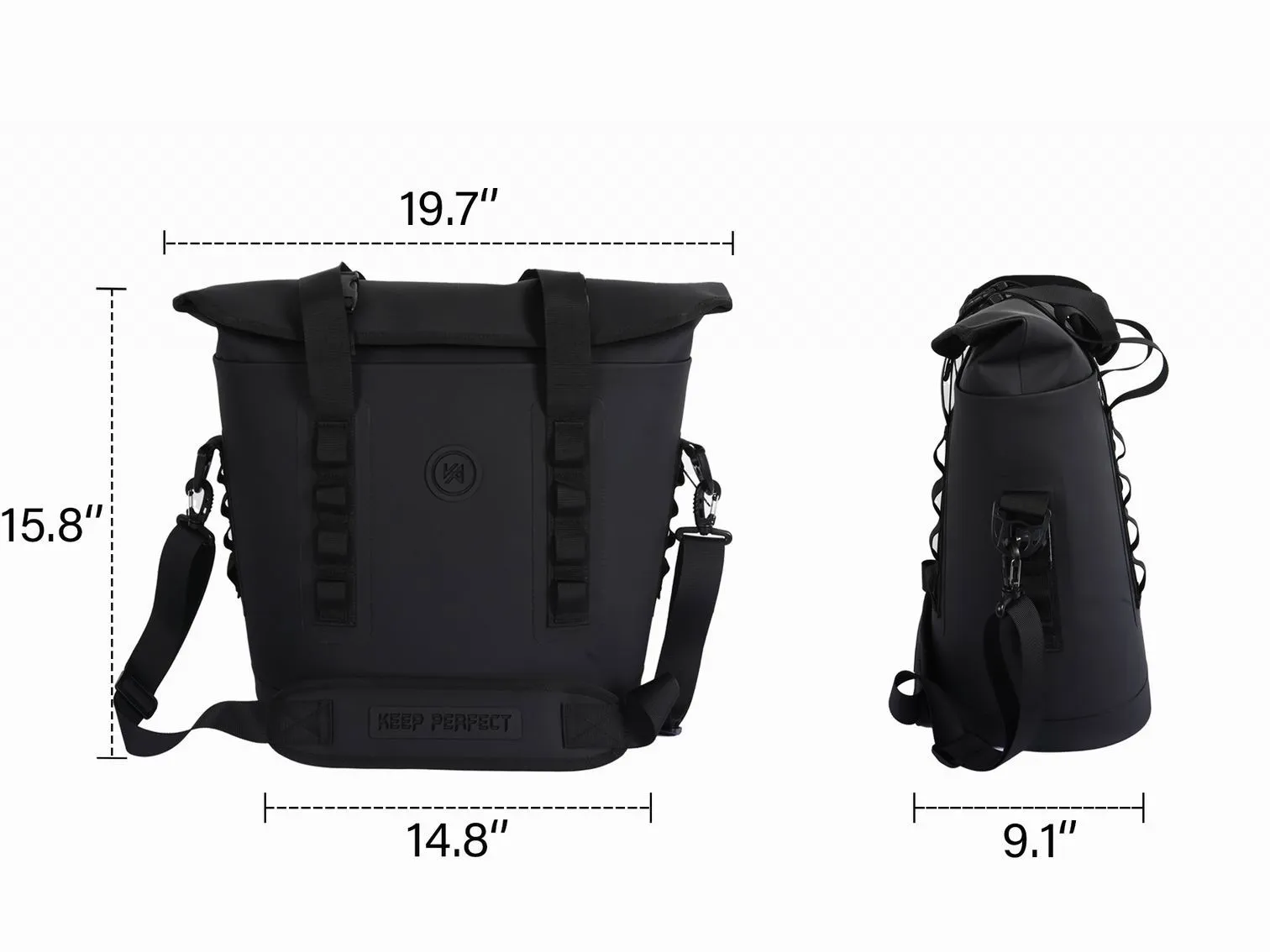
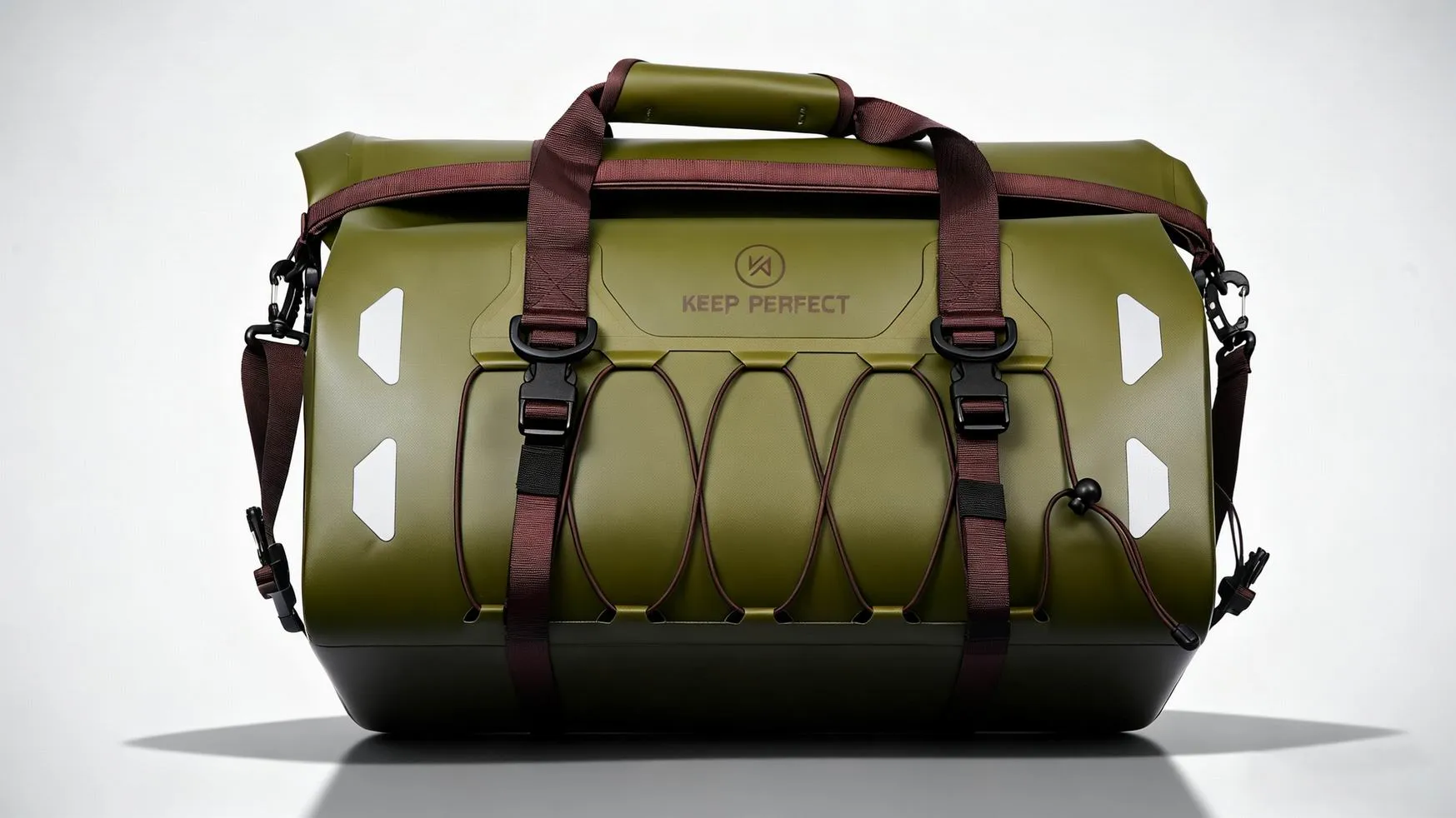
The stable, not the weather, is what ruins equestrian kit
The instinct when specifying for any outdoor-adjacent channel is to start from rain, and in equestrian that instinct is wrong. A horse lives indoors for a large part of the year, its equipment lives indoors permanently, and the atmosphere of that indoor space is chemically aggressive in a way no hill is. A tack room shares air with a stable that produces ammonia, hydrogen sulphide and organic acids continuously, plus hay dust, feed dust, hair and the moisture from wet rugs drying. That combination attacks metal, coatings, thread and leather simultaneously, and it does so every hour of every day rather than during a rainstorm. So equestrian waterproof bags are really chemical-resistance and humidity-control products, and tack room storage systems should be specified against the atmosphere rather than against the forecast.
The commercial consequences of getting this wrong are unusually expensive, which is what makes the channel worth taking seriously. Tack is high-value, long-lived and emotionally significant to its owner. A bridle ruined by hardware corrosion or a saddle with mould in the panel is not a twenty-pound replacement decision, it is a four-figure one, and owners remember exactly which storage product let it happen. That produces a market that will pay properly for a product that demonstrably protects, and that punishes a product that merely looks the part.
The second structural point is that equestrian storage is mostly static. Unlike hiking or paddling, very little of this kit travels most of the time; it hangs in a room. That inverts the usual design priorities: weight is irrelevant, access speed matters less than it does in the field, and what matters instead is shape retention, hanging behaviour, breathability and cleanability. A bag designed for carrying is usually the wrong answer for a tack room, and a bag designed for hanging is usually wrong for a lorry. Ranges need to separate the two rather than sell one compromise product.
The general environmental behaviour of coated materials under sustained humidity and chemical load is covered in our page on temperature and humidity testing, and the wider farming and agricultural chemical context is set out in our guide to bags for agriculture.
Humidity control: why leather fears dry air as much as damp
Leather is a material with a target moisture content, not a material that wants to be dry. Vegetable-tanned and combination-tanned leathers used in bridles, girths and saddle flaps sit happiest at roughly twelve to eighteen per cent moisture by weight. Above about twenty-five per cent, in a warm enclosed space, mould establishes on the grain surface within days and begins to attack the finish and then the fibre structure. Below about eight per cent, which happens quickly above a radiator, in a hot lorry or in an unheated room in a dry winter, the fibre loses bound water, the leather becomes brittle, and it cracks at flex points such as the buckle holes and the bend of a rein.
| Condition | What happens to leather | Time scale | What the storage must do |
|---|---|---|---|
| Damp sealed bag after a wet ride | Surface mould on the grain | Two to five days | Never seal damp leather; dry slowly at room temperature first |
| Hung above or beside a radiator | Bound water lost; fibre embrittled | A few days to a week | Keep kit away from direct heat sources; no storage on a radiator |
| Hot sealed vehicle in summer | Rapid drying plus elevated temperature | A single afternoon | Insulated or reflective outer; never leave tack in a parked lorry |
| Damp unventilated tack room | Chronic mould and a permanent musty smell | Weeks | Ventilated storage; air movement around every item |
| Stable humidity, moderate temperature | Leather stays supple indefinitely | Indefinite | This is the target; breathable storage that buffers change |
The design conclusion from that table is precise and it surprises people who assume waterproof means protective: a fully sealed waterproof bag is one of the worst things you can put damp leather into. It traps the moisture against the grain, holds it there at elevated humidity, and manufactures mould. The correct construction for leather is breathable storage that buffers the rate of change — it slows drying when the room is dry and allows drying when the item is damp — rather than a hermetic one. Our discussion of condensation in sealed constructions explains the mechanism, and ventilated mesh panels are one of the practical ways to build it.
What the sealed waterproof construction is genuinely for in this channel is transport: getting dry tack from a dry tack room to a wet show ground through rain and mud without it getting wet on the way. That is a real requirement and it is the one place where a welded shell earns its place. The discipline is to keep the two functions apart — breathable storage at home, sealed protection in transit — rather than buying one product that does both badly. Our article on choosing the right waterproof level sets out how to make that call deliberately.
Ammonia and organic acids: the chemical attack nobody specifies against
Horse urine is roughly two to four per cent urea, and urease-producing bacteria in bedding hydrolyse that urea to ammonia and carbon dioxide within hours. In a poorly ventilated stable, ammonia concentrations reach levels that are measurable, unpleasant and genuinely corrosive. It dissolves in the thin film of moisture that sits on every cool surface, and that alkaline film attacks a specific list of materials: brass and copper alloys, zinc plating, aluminium, some elastomers, and the adhesive bonds in bonded and taped constructions.
| Material or component | What ammonia and organic residues do | How it presents | Specification response |
|---|---|---|---|
| Brass and copper-alloy fittings | Stress corrosion cracking and verdigris | A fitting that snaps, or green deposits on leather | Stainless or polymer fittings in stable storage |
| Zinc-plated steel hardware | Rapid corrosion of the plating, then the base metal | Rust staining on leather within weeks | Stainless steel or engineering polymer instead |
| Aluminium hooks and carabiners | Pitting and white oxide bloom | Stiff, stained, weak hardware | Anodised or polymer; avoid bare aluminium |
| Adhesive seam tape and bonded patches | Alkaline hydrolysis of the adhesive | Seams lifting in a bag that never got wet | Stitched construction, or adhesives tested against alkaline exposure |
| PU-coated fabrics | Hydrolysis in warm alkaline damp conditions | Tacky surface, coating rubs off | TPU or silicone-coated route for stable storage |
| Textile linings | Absorption of ammonia and organic odour | Permanent stable smell that will not wash out | Smooth non-absorbent linings throughout |
Two conclusions follow, and both are cheap. First, hardware choice is the single highest-leverage decision in an equestrian range: stainless steel or engineering polymer throughout, with brass, zinc-plated steel and bare aluminium avoided entirely, because those three are what actually fail. Second, linings must be smooth and non-absorbent, because odour absorbed into a textile in a stable is permanent and it is the complaint that ends a product’s life. The comparison data for these exposures sits in our review of chemical resistance in waterproof materials; read the alkaline and organic columns rather than the salt one.
Odour deserves its own line because it is the failure customers notice first and forgive last. A bag that has lived in a tack room for a season and smells permanently of ammonia and damp bedding is a bag that gets thrown out regardless of its condition. A smooth welded liner wipes clean and never absorbs; a textile liner cannot be rescued. This is the same separation logic described in our page on stitched, welded and bonded constructions, with welded interiors preferred wherever odour or contamination could occur.
- Hardware in stainless steel or engineering polymer; no brass, no zinc plating, no bare aluminium.
- Smooth non-absorbent linings, because absorbed stable odour is permanent.
- Stitched rather than bonded seams where the bag will live in an alkaline atmosphere.
- Ventilation designed in, not an afterthought: air must move around stored items.
- Feed and supplements kept in separate sealed containment, never in a general tack bag.
Saddles and bridles: shape, hanging and why bags are often the wrong answer
A saddle is a shaped object that must not be compressed, must not stand on its cantle or pommel, and must not be hung by its stirrup bars for long periods. The correct storage is a saddle rack that supports the panel area, or a purpose-made saddle carrier that cradles it. The correct transport is a padded saddle bag sized to the actual saddle, because the tree is at risk from a point load at the pommel or cantle and the flaps are at risk from anything rubbing against them. That makes a saddle carrier a genuinely engineered product rather than a large bag, and it is the highest-value item in an equestrian range.
Bridles are the opposite problem: they are long, floppy, and prone to tangling and to being twisted out of shape. A bridle hung on a shaped hook or a wide rounded peg keeps its form and dries properly; a bridle folded into a bag comes out twisted, with the reins kinked and the noseband creased. So the storage answer for a bridle is hanging, and the transport answer is a flat, wide carrier that lets it lie in one loop rather than being folded. Both are shape problems rather than waterproofing problems.
- A saddle carrier sized to real tree sizes, with a cradle that supports the panels and clears the pommel and cantle.
- A bridle carrier that lies flat and wide, or a hanging bridle hook with a rounded, wide profile.
- A reinforced hang loop rated well above the item weight, because a wet saddle or a wet rug is very heavy.
- A smooth interior that lets leather slide in and out without abrading the grain.
- Separation between items so a bit cannot contact a bridle cheek or a buckle cannot score a saddle flap.
One detail is worth specifying explicitly because it is the most common product failure in the category: bit and metalwork contact. A bit stored loose in a bag next to a bridle is a hard steel object with edges, and it scores leather and chips coated surfaces. A dedicated bit pocket or wrap, or simply a separate pouch, prevents it entirely at trivial cost. The garment and textile-protection parallel — keeping shaped, valuable items from being folded or abraded — sits in our page on garment bags for wrinkle-free transport.
Boots, bandages and the grit-and-hair problem
Grooming kit and leg protection carry a distinctive contaminant load: grit, sand, dried mud, hair and sweat. Stable bandages and boots come off a horse coated in arena surface and hair, and they are frequently still damp. Put into a general bag, that load contaminates everything it touches and turns a bag into something that has to be washed rather than wiped. This is the item that most equestrian ranges omit and the one that customers complain about most after the fact.
| Item | Contaminant it carries | Failure if bagged with everything else | Design response |
|---|---|---|---|
| Stable bandages, fleece or quilted | Hair, arena surface, sweat | Grit ground into other items; persistent damp | A vented, drainable boot-bag style item with a mesh panel |
| Brushing and tendon boots | Dried mud and sand | Abrasive paste inside the bag; scuffed surfaces | A separate compartment with a smooth wipe-clean base |
| Grooming brushes and combs | Hair, dander, product residue | Hair woven into linings and closures | A dedicated kit roll with a wipe-clean interior |
| Riding boots and half chaps | Mud, manure, water | Everything else in the bag is soiled | A boot bag that opens fully, drains and hangs |
| Saddlecloths and numnahs | Sweat, hair, arena dust | Mildew if stored damp; hair everywhere | A ventilated bag; wash and dry before storage |
The design response across that table is consistent and it is the opposite of the leather answer: for dirty items you want smooth, welded, drainable and washable. A welded base with a drain path, a smooth interior that can be hosed out, and a hang loop so the item can dry in moving air. The boot bag format is the closest existing analogue and it transfers directly; our page on boot and shoe bags covers the construction, and the washable-textile side of the problem sits in our guide to wet and dirty laundry bags.
Hair deserves a specific note because it is a mechanism people do not anticipate. Horse hair is stiff, it works its way into hook-and-loop, into zip coils and into stitch lines, and once there it is very hard to remove and it holds moisture. Avoid hook-and-loop in anything that will share space with grooming kit, prefer coil zips with storm flaps, and keep stitch lines off interior corners where hair collects.
Rugs and blankets: volume, weight and the season rotation
Turnout rugs, stable rugs, fleece coolers and sweat rugs are the bulkiest part of equestrian storage and the part that defeats most product. A heavyweight turnout rug is large, stiff when wet, and heavy: a wet 6’9 turnout can weigh several kilograms, and it must never be stored wet. Owners typically hold four to eight rugs per horse across weights and seasons, which means rug storage is a volume problem of the same order as a household duvet cupboard.
- Breathable storage, never a sealed bag: a rug put away even slightly damp will mildew in days.
- Volume sized to the actual rug folded, not to a generic litre figure; ask customers for rug sizes.
- A wide flat opening, because a bulky stiff rug will not go through a narrow collar.
- Handles on at least two sides, since a wet rug is lifted by two people from awkward angles.
- A hang loop or a strap system, because rugs dry far better hung than folded.
Season rotation is the commercial opportunity in this category. Rugs change with the season, so owners are moving items into and out of storage twice a year, and that is exactly when they discover the previous product failed. A breathable rug storage bag sold as a set of three — lightweight, medium, heavyweight — matches the way people actually think, sells as a set, and reaches an efficient order quantity across one construction.
Washing is the other half and it is worth designing for: rugs go to a commercial wash, come back damp, and need to be transported clean afterwards. A bag that can carry a clean rug to the yard without picking up stable dirt on the way is a real product with a real use. The principles of managing bulky soft textiles are the same ones set out in our page on storage and organisation bags.
Show day: transport, timing and the mud window
Competition day compresses every failure mode into eight hours. Tack is loaded into a lorry or trailer in the dark, often in rain, from a yard that is muddy; it travels for one to three hours in a vehicle that is damp and warm; it is unloaded into a muddy parking area; and it is carried to a lorry park or a stable block through mud. Then the whole sequence repeats in reverse, at the end of a long day, in the dark, with wet and dirty kit. The bag that works on show day is the one designed for the worst hour of that sequence rather than for the average one.
| Show-day stage | Exposure | What fails | Design response |
|---|---|---|---|
| Loading in the dark, in rain, from a muddy yard | Rain plus mud plus poor visibility | Items dropped; bags set down in mud; mud on the base | Welded base; wipe-clean exterior; reflective identification |
| Transport in a warm damp lorry | Warmth, vibration, condensation | Leather drying too fast; condensation inside sealed bags | Ventilated storage inside; never a sealed bag for leather |
| Unloading into a muddy car park | Deep mud, no clean surface | Nowhere to put the bag down | A bag that hangs on a lorry door or a rail |
| Carrying to the stable block | Mud, rain, long distances | Strap failure; contents shifted | Reinforced strap anchors; internal separation |
| Packing up at the end of a long day | Dark, wet, tired handling | Items left behind; wet kit sealed with dry kit | Clear identification; a designated wet compartment |
The practical recommendations follow directly. Identification matters more than usual because packing happens in the dark: a labelled panel, a name patch or a colour-coded system prevents the single most common show-day loss, which is leaving something behind. A hang loop matters because there is nowhere clean to put a bag down. And a designated wet compartment matters because at the end of the day everything is wet and it will all be packed together. Our note on reflective detailing covers the low-light identification option.
Vibration and load security in a moving horsebox deserve a line, because a loose heavy bag in a trailer with an animal aboard is a safety issue rather than a convenience one. Anything heavy should be secured, and anything that can rattle or slide should not be loose in the same space as the horse. Load restraint guidance for vehicles is published by the National Highway Traffic Safety Administration.
Feed, supplements and the contamination rule
Feed and supplements should never share a bag with tack, and the reason is not tidiness. Feed dust and molasses residue are hygroscopic and sticky, they attract rodents, and residue left in a bag contaminates whatever goes in next. Supplements in particular are potent, some are controlled substances in competition contexts, and cross-contamination between a supplement and anything else is a genuine problem rather than a theoretical one.
- Dedicated sealed containment for feed and supplements, never a general tack bag.
- A smooth welded interior that can be wiped and dried, because residue left in a bag spoils.
- A closure that actually seals, since feed dust escapes from anything less.
- No textile linings, which hold residue, moisture and odour permanently.
- Clear external identification, because a supplement bag must never be mistaken for anything else.
The construction is the same one used for fluids and chemicals everywhere in this library: a welded base that contains a spill, a chemically tolerant liner, and separation rather than resistance. Trying to make a general tack bag resist feed residue is more expensive and less effective than giving feed its own containment. The wider agricultural and feed-handling context is covered in our page on seed and sample bags for field use.
Coating and lining selection for a stable atmosphere
Given the atmosphere described above, material selection in this channel is narrower than in most. Flexible PVC is a poor choice because it loses plasticiser in warm damp enclosed conditions and then cracks, and it also absorbs stable odour. Standard PU coatings are vulnerable to hydrolysis in warm alkaline damp conditions, which is precisely the tack room condition. That leaves TPU laminates and silicone-coated fabrics for the shell, and welded smooth interiors for anything that will meet grit, hair, feed or moisture.
Thread is the component most often overlooked and one of the first to fail. Standard polyester thread degrades slowly in an alkaline damp atmosphere, and a seam whose thread has gone will open along its whole length rather than at a point, which is a dramatic failure on a bag carrying a saddle. Specify a thread with documented resistance to alkaline and biological exposure, and prefer stitched construction with a welded liner to bonded construction, because adhesive bonds are the weakest link in this specific chemistry.
Antimicrobial treatment on linings is worth specifying here for a reason that is more concrete than in most channels: stable environments carry a heavy biological load, mould on leather is the primary threat, and a treated liner measurably slows the establishment of mould on anything stored damp. It does not replace drying kit properly, but it converts a bag that grows mould in three days into one that takes a week. The trade-offs and testing are set out in our review of antimicrobial treatments, and the material comparison is in our page on TPU versus PVC.
Hardware and closures: what survives ammonia and hair
Hardware selection was flagged above as the highest-leverage decision, and it is worth restating in specification terms. Use stainless steel or an engineering polymer such as acetal for buckles, hooks and clips. Avoid brass and copper alloys because ammonia causes stress corrosion cracking in them and the verdigris stains leather. Avoid zinc-plated steel because the plating goes first and the rust stains everything it touches. Avoid bare aluminium because it pits and blooms. None of these substitutions cost meaningfully more, and all of them remove a failure mode that will otherwise appear within a season.
- Stainless steel or acetal hardware throughout, in a stable or yard environment.
- No hook-and-loop in anything that shares space with grooming kit, because hair packs into it.
- Coil zips with storm flaps rather than open zips, so hair and grit are excluded.
- Reinforced, stitched strap anchors rather than bonded tabs, because adhesive is the weak link here.
- A closure that can be operated with gloves on, since much of this work happens in cold weather with cold hands.
Closures in a yard also need to survive being operated with dirty hands, in a hurry, in the dark, frequently with a horse on the other end of the lead rope. That argues for large pulls, simple action and no small toggles. Hardware behaviour and selection detail is covered in our page on hardware selection for buckles and straps, and closure trade-offs in our comparison of closure families.
Cleaning, drying and the mould that starts in a seam
Mould in equestrian storage almost always starts in the same place: a seam, a folded corner or a lining where moisture was trapped against organic matter. Leather provides the nutrient, hair and sweat provide more of it, and a warm enclosed bag provides the conditions. Once it is established in a seam it is effectively permanent, because the spores sit inside the stitch line where no wipe reaches. Prevention is therefore about geometry as much as about chemistry: eliminate the places where damp organic material can sit.
| Where mould starts | Why | How it presents | Prevention |
|---|---|---|---|
| Interior seam and stitch lines | Moisture and organic matter held in the thread | Black spotting along a seam | Welded interiors; fewer internal seams; a smooth liner |
| Folded corners at the base | Standing moisture collects there | Mildew at the bottom corners | Rounded welded corners that drain and wipe |
| Textile lining next to damp leather | Lining holds moisture against the grain | Mould on the leather surface | Non-absorbent liner; dry leather before storage |
| Under items stored flat on a shelf | No airflow beneath | Mildew on the underside | Hang items, or store on a vented rack |
| Inside a sealed bag after a wet day | Trapped moisture with no escape | Everything affected within days | Never seal damp kit; dry at room temperature first |
The cleaning regime that follows is short: wipe smooth interiors with a dilute disinfectant, dry everything open, never store damp, and keep storage off a cold floor where condensation forms. Temperature and humidity guidance for storage generally is covered in our note on temperature and humidity behaviour.
A five-piece tack room system
Five formats cover an equestrian yard well, and the system test is whether each has an unambiguous role, whether the leather items can breathe and whether the dirty items can be hosed out. Note that only one of the five is primarily a waterproof product.
| Format | Volume and shape | Job it does | Governing requirement |
|---|---|---|---|
| Saddle carrier | Shaped, sized to real trees | Transport and protective storage for a saddle | Cradles the panels; clears pommel and cantle; smooth interior |
| Bridle and leather hanger | Flat and wide, or a shaped hook | Storage that keeps a bridle in form | Breathable; rounded wide profile; stainless or polymer fittings |
| Grooming and bandage bag | 25 to 45 L, welded, drainable | Dirty boots, bandages, brushes | Welded base; hose-out interior; vented; no hook-and-loop |
| Rug storage set | Three sizes, breathable | Season rotation of rugs and blankets | Breathable; wide opening; hang loop; sized to real rug sizes |
| Show-day transport bag | 40 to 70 L, sealed, labelled | Getting dry tack through rain and mud | Genuinely waterproof; wipe-clean base; hang loop; clear identification |
The saddle carrier and the grooming bag are the two that differentiate a range, because both are genuinely engineered rather than generic and both protect something expensive. The rug set is the volume seller and the one that reaches order quantity most easily, because owners buy three at once.
Five formats on three or four constructions is twelve to fifteen styles with every style above the 500-piece minimum per style. Planning detail is in our note on minimum quantities and production slots, and the general sizing logic is in our capacity selection guide.
Building an equestrian range commercially
Equestrian is an attractive channel for a bag brand for structural reasons that have nothing to do with fashion. The customer is committed and spends steadily over decades rather than seasons. The kit is expensive, so protection has clear value. The community is tight and recommendation-driven through yards, instructors and competition circuits. And the product is used daily rather than occasionally, which means a good product is noticed and a bad one is noticed faster.
- Split the range explicitly into breathable storage and sealed transport; one compromise product serves neither well.
- Standardise on stainless or polymer hardware across the whole range and say so; it is a genuine differentiator.
- Sell the rug storage set as a three-piece set, because owners buy by season and weight.
- Offer embroidery as the standard decoration route, because yards and competition teams buy personalised kit.
- Ask customers for real saddle tree sizes and rug sizes before sampling; generic sizing is the main reason ranges fail here.
Personalisation is the commercial engine in this channel. Yards, competition teams and individual owners all buy embroidered kit, and embroidery on a heavy coated or canvas-look shell is durable and reads as premium in a way a large print does not. Our guide to logo and decoration methods covers durability by process. Competition rules, welfare standards and participation data for the sport are published by the International Equestrian Federation, and national-level guidance by the United States Equestrian Federation. If you are specifying an equestrian range, review our process from first enquiry through sampling into bulk production and send us the saddle and rug sizes you need to accommodate, the formats you want, and your target volumes. Sampling takes 6–10 working days, bulk production runs 35–50 days, and quotations are issued FOB Xiamen.
Frequently Asked Questions
Q1. Do equestrian bags need to be fully waterproof?
Mostly not. The stable atmosphere, not rain, is what damages kit. Breathable storage protects leather at home; genuinely sealed construction is for getting dry tack through rain and mud on show day.
Q2. Why is a sealed waterproof bag bad for leather?
It traps moisture against the grain at elevated humidity and manufactures mould. Leather needs a stable moisture content of roughly twelve to eighteen per cent and it needs to breathe, not to be sealed.
Q3. What humidity is right for storing leather tack?
Around twelve to eighteen per cent moisture content in the leather, in a moderate, ventilated room. Above about twenty-five per cent mould establishes within days; below about eight per cent the fibre embrittles and cracks.
Q4. Why does hardware fail so fast in a tack room?
Ammonia from urine dissolves in surface moisture and attacks brass, zinc plating and aluminium. Stainless steel or engineering polymer fittings remove the problem at little cost.
Q5. Can I store damp leather in a breathable bag?
Not damp. Dry it slowly at room temperature first, then store in breathable storage. Breathable means it buffers the rate of change, not that it will dry a wet item safely inside.
Q6. What should I keep grooming kit and bandages in?
A welded, drainable bag with a smooth interior you can hose out, plus a mesh panel for drying. Hair packs into hook-and-loop, so avoid it in anything that shares space with grooming kit.
Q7. How should a saddle be carried?
In a shaped carrier that cradles the panels and clears the pommel and cantle. A point load at the pommel or cantle risks the tree, and anything rubbing the flaps damages leather.
Q8. How should a bridle be stored?
Hung on a wide rounded hook or peg, or laid flat and wide in a carrier. Folded into a bag it comes out twisted, with the reins kinked and the noseband creased.
Q9. Why does my tack bag smell permanently?
Ammonia and organic residue absorbed into a textile lining. It does not wash out. Specify a smooth non-absorbent liner throughout.
Q10. Should feed and supplements share a bag with tack?
Never. Feed dust and molasses residue are hygroscopic and sticky, they attract rodents, and residue left in a bag contaminates whatever goes in next.
Q11. What is the biggest show-day packing risk?
Packing in the dark and in mud. Clear external identification, a hang loop because there is nowhere clean to put a bag down, and a designated wet compartment for the end of the day.
Q12. Which materials survive a stable atmosphere best?
TPU laminates and silicone-coated fabrics for shells, welded smooth interiors for anything meeting grit or moisture, and thread specified for alkaline resistance. Avoid flexible PVC and standard PU coatings.
Q13. How do I stop mould in equestrian storage?
Eliminate the places damp organic matter can sit: welded interiors with few seams, rounded corners that drain, no textile lining against leather, and never sealing damp kit.
Q14. Why do bag seams open in a tack room?
Adhesive bond hydrolysis in a warm alkaline damp atmosphere, and thread degradation. Prefer stitched construction with a welded liner over bonded seams.
Q15. Can a leather item be stored near a radiator?
No. Direct heat drives moisture below about eight per cent, the fibre embrittles, and it cracks at flex points such as buckle holes and the bend of a rein.
Q16. How big should rug storage be?
Sized to the actual rug folded, in three weights. A heavyweight turnout is bulky and stiff, and it must never be put away even slightly damp.
Q17. How many formats should an equestrian range carry?
Five: a saddle carrier, a bridle hanger, a grooming and bandage bag, a three-piece rug storage set, and a sealed show-day transport bag. Three or four constructions keeps each style above the minimum order requirement.
People Also Ask
Do equestrian bags need to be waterproof?
Mainly no. Breathable storage protects leather in the tack room; sealed construction is for transporting dry tack through rain and mud on show day.
Why should leather not be kept in a sealed bag?
A sealed bag traps moisture against the grain and grows mould. Leather needs stable humidity and air movement, not a hermetic enclosure.
What hardware survives a stable?
Stainless steel or engineering polymer. Ammonia attacks brass, zinc plating and aluminium, so avoid all three in a yard environment.
How should I store a saddle?
On a rack that supports the panels, or in a shaped carrier. Never on the cantle or pommel, and never hung long-term by the stirrup bars.
Where does mould start in tack storage?
In seams, folded corners and textile linings, where moisture sits against organic matter. Welded interiors and rounded corners prevent it.
How do I pack for a wet show day?
Use a sealed labelled bag with a wipe-clean base and a hang loop, keep a designated wet compartment for the end of the day, and secure anything heavy in the lorry.