Birding is the only outdoor activity where the loudest component of your equipment is the bag, and that single fact drives a specification almost nothing else shares. A zip that takes two seconds to open costs you the bird; a webbing pull that clicks against a buckle at forty metres puts everything up. Beyond silence, the load case is unusual: heavy, compact, fragile glass, a tripod that no general-purpose bag will accept, paper field notes that must stay dry next to optics cloths that must stay clean, and ground conditions where the only available surface is wet mud or standing water.
This guide works through it in the order birders actually experience it: why stillness is the governing constraint, what silence costs and how to specify it, the real load case for binoculars and a spotting scope, the tripod problem, opening direction and one-handed access, harness geometry for standing still for three hours, marsh and mud, sheen and camouflage control, paper and cloth separation, the modest waterproof level actually required, saltmarsh corrosion, a four-piece birding carry system, and how a brand should build a birding range. QUANZHOU JUNYUAN BAGS — custom waterproof bag production since 2014, 4,950 m² SGS-verified facility — works to MOQ 500 pieces per style, with sampling in 6–10 working days and bulk in 35–50 days, FOB Xiamen.
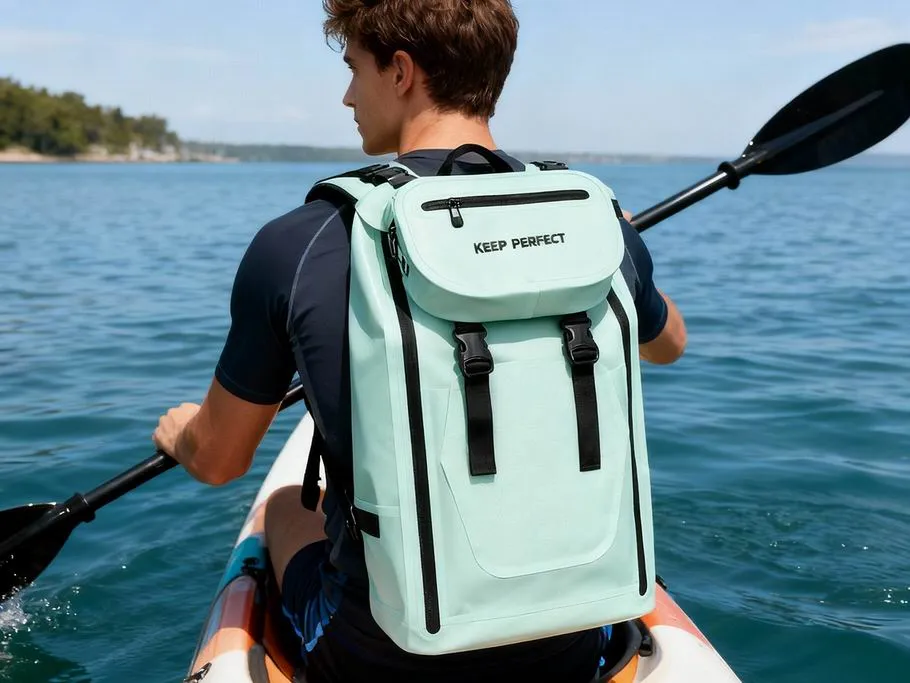
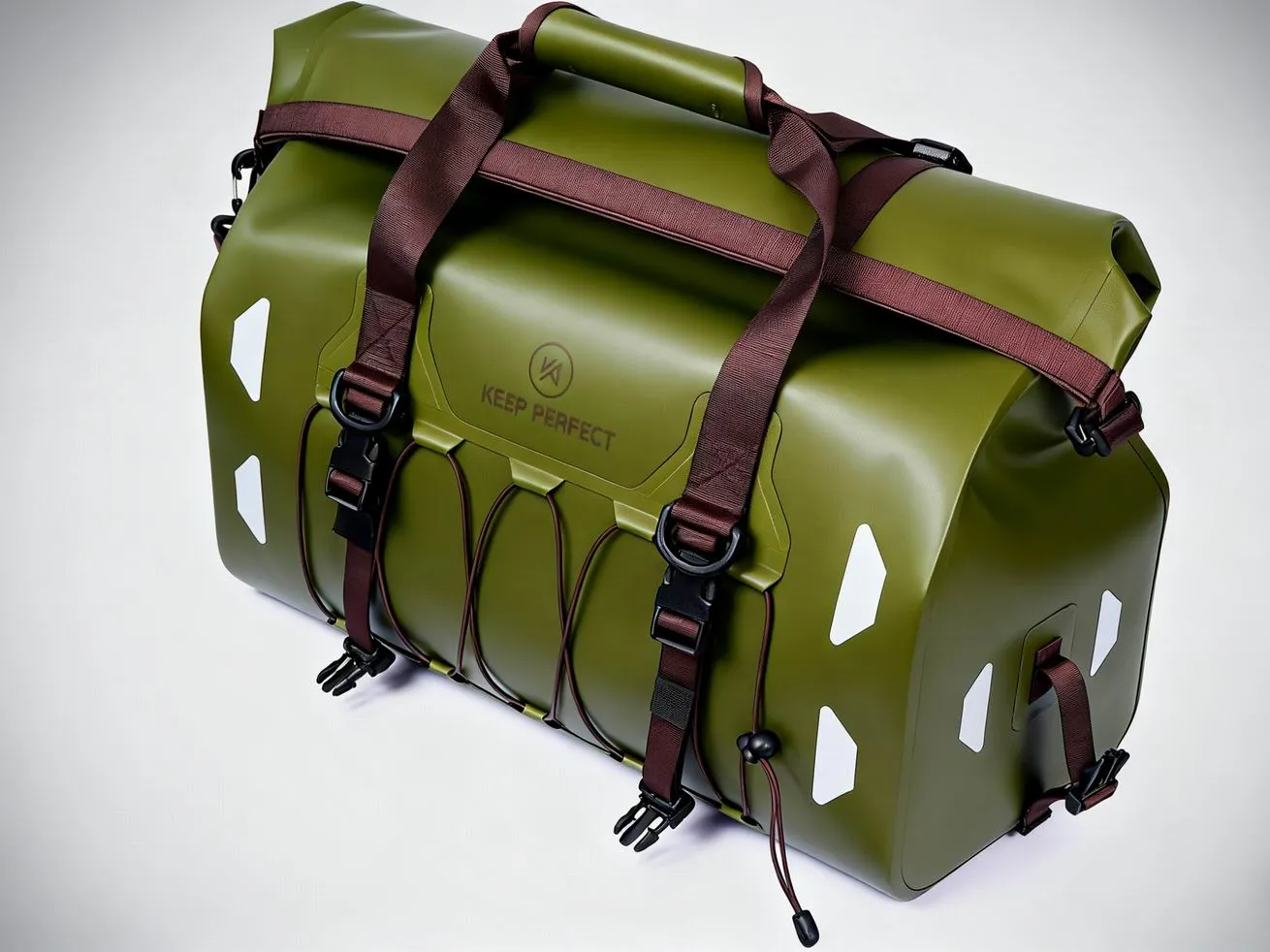
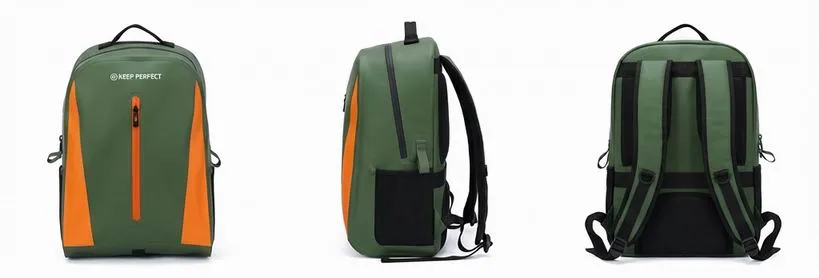
Birding is a stillness problem, and the bag is usually the loudest thing in it
Every other outdoor category optimises for movement: access while walking, ventilation while climbing, compression while covering distance. Birding optimises for the opposite. A birder stands in one place for twenty minutes to three hours, moves as little as possible, and needs to retrieve and return items without a single sharp sound. That reframes the entire brief, which is why birdwatching waterproof bags sourced from a general hiking catalogue disappoint: hiking design solves a problem birders do not have, and ignores the one they do. Building optics carry systems properly starts from the proposition that noise is a functional failure, not a refinement.
The acoustics are worth being specific about because they determine the specification. A metal zip pull striking a metal slider or an eyelet produces a sharp broadband click that carries well over a hundred metres in still air. Hook-and-loop tape being separated is louder and more directional than most people realise, and it is routinely specified on outdoor bags precisely because it is fast. Plastic buckles clicking shut, webbing slapping against a stiff panel, and a stiff coated fabric crackling as it flexes are all audible at distances that matter. None of these are loud in a shop, which is why they survive to production.
The consequence for the buyer is simple to state and hard to find in retail product: try the bag in a quiet room, with the contents in it, at the speed you would actually use it. Open the main compartment, take out the binoculars, put them back, close it. If any part of that sequence makes a sharp sound, the bag will cost you birds. It is a thirty-second test that no specification sheet substitutes for, and it is the first thing a brand developing for this channel should build into its sampling approval.
The general framework for deciding how much protection a piece needs, rather than defaulting to the maximum, is set out in our article on choosing the right waterproof level. For birding the answer is modest ingress protection plus excellent noise control plus good optics padding, a combination almost no general outdoor product offers.
Silent closures: how to specify a zip that does not announce you
Silence is engineered from four decisions and all four are cheap. First, the pull: a cord or webbing pull with a soft moulded end, long enough to be gripped and guided, rather than a metal tab that swings free. Second, the slider: a slider with a rubberised or coated body, and a pull attachment that cannot swing far enough to contact the shell. Third, retention: a garage, a keeper or a soft loop that parks the pull so it cannot migrate. Fourth, the closure position: a zip that runs along a panel that flexes will crackle as it opens, so closures belong on stable panels.
| Noise source | How loud and how far it carries | Cost to remove | Specification change |
|---|---|---|---|
| Metal pull striking a slider or eyelet | Sharp click; audible well past a hundred metres | Very low | Cord or webbing pull with a soft moulded end |
| Hook-and-loop tape separating | Loud directional tear; the worst offender in the category | Low | Replace with a magnetic or turn-lock fastening, or a silent zip garage |
| Buckle clicking shut | Sharp plastic click | Very low | Soft-closure buckles, or magnetic fastenings on outer pockets |
| Webbing slapping a stiff panel | Repeated soft slap while walking in | None | Elasticated keepers that hold webbing flat against the body |
| Stiff coated fabric crackling | Continuous rustle as the body flexes | Low to moderate | Softer coating or a fabric with a quieter hand on flex panels |
| Contents rattling inside the bag | Intermittent and unpredictable | None | Divided cells so nothing can move; soft linings |
Note that the two most expensive-sounding items in that table are actually among the cheapest. A magnetic closure on an outer pocket costs little more than a buckle and is genuinely silent. Elasticated webbing keepers cost pennies. The expensive-sounding option — a quieter coating — is the one to avoid if it means compromising waterproofing; instead, place closures on panels that do not flex, which solves the crackle without touching the material specification.
There is one counterintuitive recommendation worth stating because it reverses the usual outdoor advice: in birding, a roll-top can be the quieter closure. A roll-top makes no sharp sound at all, and while it is slower and needs two hands, that speed penalty applies to items you access rarely. The practical split is a silent coated zip for the optics compartment you open constantly, and a roll-top or magnetic fastening for everything else. Our comparison of closure families gives the full trade-off, and the hardware detail is in our page on hardware selection.
The optics load case: what binoculars and a scope actually need
Birding optics are heavy, compact and fragile in a specific way. A pair of full-size binoculars weighs roughly 800 to 1,300 grams and is most vulnerable at the barrels and the hinge; a spotting scope body with an eyepiece runs 1,200 to 2,500 grams and is vulnerable at the lens surfaces and at the eyepiece thread. Neither is at risk from a drop in the way a camera body is — birders are careful with expensive glass — they are at risk from pressure on the barrels, from grit on the lens, and from the hinge being forced when a bag is compressed.
| Optic | Mass and shape | What damages it | What the bag must do |
|---|---|---|---|
| Full-size binoculars, 42 mm class | 800 to 1,300 g; two barrels on a hinge | Pressure on the barrels; hinge forced when compressed; grit on the objectives | A dedicated cell with a rigid or semi-rigid top; no compression over the cell; lens cloths stored separately |
| Compact binoculars | 300 to 600 g | Less fragile; mainly scratched lenses | A soft-lined pocket; a cloth always to hand |
| Spotting scope, angled or straight | 1,200 to 2,500 g; long cylinder | Impact on the objective end; eyepiece thread damage; grit | A padded sleeve with a reinforced closed end; carried horizontally |
| Camera body and a long lens | 1,000 to 3,000 g combined | Same as scope, plus sensor and mount vulnerability | A separate compartment so glass and glass never touch |
| Rangefinder or a phone scope adapter | 150 to 400 g | Small, easy to lose, easily crushed | A dedicated small pocket, not loose in the main volume |
The governing rule from that table is that nothing should be able to press on the barrels. A bag with compression straps running over an optics compartment is a bag that will damage a hinge, and it is a common retail design. The optics cell should sit against the wearer’s back, where the body itself provides the rigid plane, and no strap should cross it. Padding selection is covered in our page on foam padding materials, and the product-level detail for binocular cases specifically is in our guide to waterproof binocular and optics cases.
One maintenance reality shapes the design more than most buyers expect: optics cloths and lens tissue have to be immediately reachable and they have to stay clean. Birders clean glass constantly in drizzle and salt spray. A pocket dedicated to cloths, separated from anything gritty or damp, is a small feature that gets mentioned in every review of a product that has it and complained about in every review of a product that does not.
The tripod problem: a shape no general-purpose bag will accept
A travelling tripod for a spotting scope is long, angular and rigid: typically 350 to 550 millimetres folded, with legs that do not compress and a head that protrudes at one end. No rucksack designed for a torso will take it internally without wasting a great deal of volume, and strapping it externally makes noise and catches vegetation. This is the single item that most birding bags get wrong and the one that most reliably distinguishes a purpose-built product from a rebranded hiking pack.
- A dedicated external sleeve with a closed, reinforced bottom, carried along the side rather than across the back.
- A sleeve that holds the tripod at two points, so it cannot swing, tap the bag or catch on vegetation.
- A quiet retention method at the top: a soft cord with a toggle, not a buckle that clicks.
- A drainage path at the bottom, because a tripod put away wet will drain into the sleeve.
- Enough clearance that the tripod can be extracted one-handed while the bag stays on.
The alternative worth considering is a separate tripod bag, and for serious birders it is often the better answer: it lets the main bag be optimised for optics and notes, and it means the tripod can be left in the car on days it is not needed. For a brand, offering both is a genuine range decision rather than a hedge, because the two answers suit different customers — the walking birder and the hide-based birder.
The carrying geometry matters as much as the sleeve itself. A tripod carried across the back catches every branch and swings on every step; carried along one side at a slight angle it stays clear and does not foul the shoulder blades. Our general expedition packing logic, including how awkward shapes are handled in a system, is set out in our page on multi-day expedition packing systems.
Opening direction and one-handed access while glassing
Speed of access in birding is not about seconds saved, it is about what you can do without taking your eyes off the bird or moving your feet. The requirement is a compartment that can be opened, and an item retrieved, with one hand while the other holds binoculars to the face. That imposes a specific geometry: the opening must be on the side or front of the bag rather than the top, it must stay open once opened rather than flopping shut, and the item must be grabbable without looking.
- A side or front access panel rather than a top opening, so the bag can be reached without lifting or twisting it.
- An opening that stays open: a stiffened lip or a stay, not a floppy flap that needs a second hand.
- Contents positioned by role, so a notebook, a cloth and a phone are each in a known place by feel.
- A pocket that can be operated while wearing gloves, which in a winter hide means a large pull and no small toggles.
- No hook-and-loop on the primary access, because separating it is both loud and two-handed.
The failure mode to design against is the flap that closes itself. A birder opening a top-flap pocket one-handed, with binoculars in the other hand, will have that flap drop back over the opening at least half the time, and the resulting fumble is exactly the sound and movement that spoils the sighting. A stiffened lip or a simple stay costs almost nothing and eliminates it. Sling and crossbody formats handle this well because the bag can be rotated to the front without being removed, and the general format is discussed in our page on sling and crossbody carry.
Standing still for three hours: harness geometry and shoulder load
A birding load is compact and dense, typically four to seven kilograms including optics, a scope and water, and it is carried at a walk and then worn while standing almost motionless for long periods. That combination produces a specific comfort problem: hiking harnesses are designed to transfer load to the hips while the body moves, which is comfortable when walking and irrelevant when standing. What matters when standing is that the load does not pull the shoulders back, does not create pressure points under a strap, and does not need to be shifted every few minutes.
Three specification consequences follow. A shorter, wider contact area on the shoulder spreads load better when static than a narrow hiking strap does, because there is no walking motion to pump heat and no need for the strap to flex. A sternum strap matters more than a hip belt in this use, because it stops the shoulder straps from migrating outward when you raise binoculars repeatedly. And the load should sit high and close to the back, because raising binoculars to the eyes hundreds of times a session punishes any bag that shifts the centre of mass rearward.
Back panel ventilation, which dominates hiking design, is close to irrelevant here: a standing birder generates little of the airflow that makes a suspended mesh panel work. A plain closed back panel with a soft face is quieter against clothing and cheaper to make, and it does not crackle when flexed. That is one of the rare cases where the cheaper construction is also the better one. General backpack selection for long days is covered in our guide to waterproof hiking backpacks.
Weight discipline still matters, but for a different reason than in hiking: every gram is carried at eye level for hours. A bag body that is 300 grams heavier than it needs to be is not a big number on a specification sheet and is a genuinely noticeable number after three hours of standing with binoculars raised. The trade-offs are covered in our piece on lightweight material optimisation.
Marsh, mud and the only ground you are allowed to use
Prime birding habitat is wet. Reedbed, saltmarsh, mudflat, estuary, flooded grazing and the edge of a lagoon are where the birds are, and in all of them the ground is saturated, often standing water, and frequently deep soft mud that takes a boot to the ankle. A bag set down in that environment is set down in water, and this is the one place in birding where a genuine waterproof base is non-negotiable rather than a nice-to-have.
| Ground condition | Exposure to the bag | Failure if unspecified | Design response |
|---|---|---|---|
| Saturated reedbed or flooded grazing | Standing water several centimetres deep | Water wicks through the base fabric in under an hour | Welded base panel; no seams in the lowest thirty millimetres |
| Soft estuary mud | Coating of mud over the whole lower bag | Mud in every zip and closure; a bag that will not close | Storm-flapped closures; smooth wipe-clean base; feet or a raised weld |
| Saltmarsh and tidal creeks | Salt water plus abrasive silt | Corrosion of hardware; stiff, salt-crusted fabric | Corrosion-resistant hardware; rinse-tolerant materials |
| Wet hide floor and boardwalk | Persistent damp under the bag | Mildew on the underside after a session | A base that wipes dry; never store the bag closed |
| Sand dune and dune slack | Fine sand in every closure | Grit in zips within a day | Brushed-clean closures; roll or flapped openings |
The behavioural half of the answer is a hanging point. In a hide, a bag is best hung on a hook or rail rather than set on a wet floor, and a reinforced hang loop rated for the full load is the cheapest feature that solves most of the problem. Our discussion of condensation in sealed constructions matters here too: a sealed bag brought from cold damp ground into a warm hide collects moisture on the outside immediately.
Abrasion deserves a line because mud is abrasive in a way that surprises people. Wet silt plus grit acts as a lapping compound on any surface that moves against the bag, and the usual result is a thinned and eventually holed base panel at the exact spot where the bag is repeatedly set down. A heavier denier at the base and a smooth, hard-wearing coating there is a small cost that extends service life substantially. Comparison methods are in our page on abrasion resistance standards, and the denier decision is covered in our note on denier and durability.
Camouflage, sheen and the reflection that gives you away
Birds detect movement and specular reflection far more readily than they detect colour, which is why camouflage pattern matters less than most birders think and surface finish matters more. A glossy coated shell produces a hard specular highlight that flashes as the wearer moves, and a bright metal buckle or a chrome zip pull does the same at a smaller scale. The practical requirement is a matte finish throughout, with no reflective hardware and no bright trim, in a low-saturation colour that suits the habitat.
- Matte or soft-touch coating on every outward-facing panel; avoid gloss laminates entirely.
- Hardware in matte black, dark bronze or a muted anodised finish, with no polished faces.
- No retroreflective piping or panels, which exist on most hiking bags for road safety and are wrong here.
- Low-saturation colour: olive, dark grey, muted brown, or a subdued green depending on the habitat.
- A lining that does not flash light when the bag is opened, since an open bag is a bright cavity.
The colour question has a commercial dimension that brands underestimate. Birders buy into habitat-specific palettes — coastal and estuary birders want greys and muted blues, woodland birders want greens and browns, and upland birders want subdued earth tones. Offering two or three habitat colourways across one construction is cheap and it is the kind of range decision that signals the brand understands the customer. Matching mechanics are covered in our page on Pantone matching and colour customisation.
One more reflection source is routinely missed: the optics themselves. Glass glints, and a bag that holds binoculars with the objective lenses exposed when open is a bag that flashes. A compartment that keeps glass facing inward or downward when opened, or a simple lens-down orientation in the cell, removes the problem. This is the same class of thinking as our guidance on hunting concealment in our page on bags for hunting and shooting sports.
Paper, notebooks and the wet-dry conflict inside one bag
Birders carry paper. A field notebook, a printed checklist, sometimes a folded map, and almost always a pencil that has to work in the rain. Paper and wet optics cloths are fundamentally incompatible in one compartment, and the usual outcome is a notebook with softened, illegible pages by mid-morning. The fix is a dedicated dry compartment with a genuinely waterproof liner, sized to an A5 or A6 notebook, and positioned where it can be reached without opening the wet zone.
- A welded or taped dry compartment sized to a real notebook format, not a generic pocket.
- A pencil loop or sleeve, because a pencil that has fallen to the bottom of a bag is a pencil that is not being used.
- A separate pocket for used, damp optics cloths so they never touch paper.
- A clear or labelled panel for a permit, a reserve map or a parking ticket.
- An opening on the dry compartment that does not expose the wet zone, so rain does not enter while writing.
The construction behind this is the same three-zone logic used in longer expeditions: dry, wet and ventilated. Our page on wet-dry separation design explains the build, and ventilated mesh panels cover the third zone, which in birding is where a damp cloth or a wet hat goes. Document and paper protection generally is covered in our guide to waterproof document holders.
The electronic equivalent is worth a line: birders increasingly carry a phone for sound recording and an app-based field guide, and a phone in a wet bag in a marsh is a real risk. A small submersible pouch that still operates through the film is the right answer, and the failure mode to avoid is buying one that cannot be used while sealed. Our overview of small electronics cases covers it.
Rain, drizzle and the waterproof level birding actually requires
Birders go out in weather that other people stay in, because overcast and drizzle are when birds feed. But the exposure is persistent light rain and drizzle over hours, not immersion, and that has implications. What fails in a long drizzle is not the face fabric, which any coated shell handles, but the closure line and the shoulder strap, because both sit where water runs and both are in contact with clothing that wicks.
So the specification is: a coated shell with taped or welded seams on the top and shoulder-facing panels, a storm-flapped or garaged closure on every external opening, and a shoulder strap that does not become a wick. The last point is the one that gets missed — a strap with an absorbent face draws water into the bag body at the attachment and then into the back panel, and a birder notices a damp back within an hour. A closed-cell or coated strap face prevents it. Our page on coating types covers the material choice.
Immersion protection is genuinely needed in one birding case only: a hide or boat trip where a bag could be dropped into water, and coastal and pelagic work where spray is continuous. For those, a roll-top dry bag inside the main bag is the efficient answer rather than a fully submersible outer, because a submersible outer sacrifices the access speed that this activity depends on. The rating system is explained in our article on IPX ratings.
Saltmarsh and coast: the corrosion case for seabird and wader work
Coastal birding is a materially harsher environment and it is worth separating from inland work. Salt spray deposits chloride on everything, salt crust is abrasive while damp and hygroscopic once dry, and the combination of salt, sand and continuous damp attacks metal hardware and stiffens coated fabric. A bag used weekly on a coastal reserve ages several times faster than the same bag used weekly inland, and the difference is almost entirely hardware and closure.
- Corrosion-resistant hardware throughout: polymer, stainless or well-anodised fittings rather than plated steel.
- Zips specified for salt service; a standard coil zip stiffens and then fails within a season.
- A rinse routine stated on the care label, because salt left on a bag does continuing damage.
- No absorbent webbing next to metal fittings, since damp salt-laden webbing is a corrosion cell.
- A smooth wipe-clean base, because salt crust on a textured surface has to be washed rather than wiped.
The maintenance instruction is short and worth printing: rinse with fresh water at the end of a coastal day, dry open, and never store closed and damp. It is the same discipline used in marine categories, and the underlying material data sits in our review of chemical and salt resistance. The coastal and island travel context is also covered in our guide to island and boat-based travel.
A four-piece birding carry system
Four formats cover birding well, and the system test is whether a birder can retrieve optics, notebook and cloth in that order without a sound and without looking. Buy against the specification rather than a brand name, because the specification survives model changes.
| Format | Volume and shape | Job it does | Governing requirement |
|---|---|---|---|
| Optics pack | 15 to 25 L, worn high and close | Binoculars, cloths, notebook, phone, water | Silent closures; rigid optics cell on the back panel; no strap across the cell |
| Scope sleeve | 5 to 12 L, long cylinder | Spotting scope body and eyepiece | Reinforced closed end; padded; horizontal carry |
| Tripod sleeve or bag | 350 to 550 mm folded length | Tripod and head | Two-point retention; quiet cord closure; drains when the tripod is put away wet |
| Marsh ground bag | 10 to 20 L, welded base | Set down on saturated ground; wet outer layers | Welded base; no low seams; reinforced hang loop for a hide rail |
The optics pack is the hero and the marsh ground bag is the differentiator, because almost no general brand makes a bag that can be set down in standing water and hung on a hide rail. Together they also solve the safety problem that birders care about most: expensive glass never touches wet mud.
For a brand, four formats on two or three constructions, in three habitat colourways, is a compact programme with every style above the 500-piece minimum per style. Planning detail is in our note on minimum quantities and production slots.
Building a birding range commercially
The birding market is commercially distinctive in three ways that make it worth serving properly. It is an older, more affluent demographic than general outdoor, with high optics attachment rates and a willingness to pay for purpose-built product. It is a community that reviews in detail and shares recommendations through clubs and reserves, so a single well-judged product earns disproportionate reach. And it is unusually stable: birding participation does not swing with fashion the way hiking and running categories do.
- Approve silence at sampling: a quiet-room test with the bag loaded, at realistic speed, written into the approval criteria.
- Offer habitat colourways on one construction rather than one compromise colour.
- Keep branding discreet and matte; this customer does not want a logo that flashes or a large glossy print.
- Specify corrosion-resistant hardware as standard, because coastal birding is a large share of the market.
- Sell the optics pack and the marsh bag as a pair; together they solve the two problems birders actually describe.
Decoration is where the aesthetic and acoustic constraints meet. A large glossy heat transfer is wrong on both counts — it flashes and it reads as promotional — while embroidery or a muted welded badge is quiet, matte and durable on a coated shell. Our guide to logo methods for waterproof bags covers durability by process. Bird and habitat conservation guidance and participation data are published by the National Audubon Society, and international species and site data by BirdLife International.
If you are developing a birding range, review our process from first enquiry through sampling into bulk production and send us the optics dimensions you need to accommodate, the habitat colourways you want, the tripod folded length and your target volumes. Sampling takes 6–10 working days, bulk production runs 35–50 days, and quotations are issued FOB Xiamen.
Frequently Asked Questions
Q1. Why do birders care so much about how loud a bag is?
Because a sharp click carries a long way in still air and puts birds up. A metal zip pull striking a slider, or hook-and-loop being separated, is audible well past a hundred metres, which is exactly the distance you are working at.
Q2. What is the quietest closure for a birding bag?
A coated zip with a soft cord pull parked in a garage, or a magnetic fastening on outer pockets. Avoid hook-and-loop entirely; separating it is the loudest and most directional sound in the category.
Q3. Should a birding bag be a backpack or a sling?
A backpack for long walks carrying a scope and tripod, because the load sits high and close. A sling works well for short sessions, since it can be rotated to the front and opened without being taken off.
Q4. How should binoculars be carried inside a bag?
In a dedicated cell against the back panel, with no compression strap crossing it. Pressure on the barrels and a forced hinge are the two ways binoculars get damaged in transit.
Q5. Do I need a fully submersible bag for birding?
Only for boat work, pelagic trips or a hide where the bag could go in the water. For normal use a coated shell with taped seams and a welded base is enough, plus a small roll-top dry bag inside.
Q6. Why does my back get wet under a waterproof bag?
The shoulder strap wicks. A strap with an absorbent face draws water into the bag body at the attachment and then into the back panel, which a birder notices within an hour of drizzle.
Q7. How do I carry a spotting scope safely?
In a padded sleeve with a reinforced closed end, carried horizontally, with a separate sleeve for the tripod. Impact on the objective end and damage to the eyepiece thread are the risks to design against.
Q8. What size bag do I need for a day of birding?
15 to 25 litres covers binoculars, a notebook, cloths, a phone, water and a light layer. Add a separate scope sleeve and a tripod sleeve or bag if you carry glass on a tripod.
Q9. How do I keep a field notebook dry?
A dedicated welded or taped dry compartment sized to an actual A5 or A6 notebook, reachable without opening the wet zone. Damp optics cloths must have their own pocket or the pages will soften by mid-morning.
Q10. Does camouflage pattern matter as much as finish?
No. Birds detect movement and specular reflection more than colour. A matte finish, no polished hardware and no reflective piping matter far more than the pattern itself.
Q11. What colour should a birding bag be?
Low-saturation and habitat-matched: greys and muted blues for coast and estuary, greens and browns for woodland, subdued earth tones for upland. Two or three habitat colourways beat one compromise colour.
Q12. How do I protect a bag on wet marsh ground?
A welded base with no seams in the lowest thirty millimetres, plus a reinforced hang loop so the bag can be hung on a hide rail instead of being set down in standing water.
Q13. Is coastal birding harder on bags than inland?
Yes, several times harder. Salt spray deposits chloride, damp salt crust is abrasive, and salt, sand and continuous damp together attack hardware and stiffen coated fabric fast.
Q14. What hardware should a saltmarsh bag use?
Corrosion-resistant fittings throughout: polymer, stainless or well-anodised metal, never plated steel. Standard coil zips stiffen and fail within a season of salt service.
Q15. How do I stop mud ruining the zips?
Storm-flapped closures, a smooth wipe-clean base and feet or a raised weld line so the bag is not sitting in silt. Rinse and dry open at the end of the day.
Q16. What should a brand test before approving a birding bag sample?
Silence. A quiet-room test with the bag loaded, opened and closed at realistic speed, with the noise written into the approval criteria alongside the usual dimensional and waterproof checks.
Q17. How many formats should a birding range carry?
Four: an optics pack, a scope sleeve, a tripod sleeve or bag, and a marsh ground bag. Two or three constructions in three habitat colourways keeps every style above the minimum order requirement.
People Also Ask
Why do birders need quiet bags?
A sharp click carries a long way in still air and puts birds up. Metal pulls, hook-and-loop and clicking buckles are all audible at the distances birders work at.
What is the best way to carry binoculars?
In a dedicated cell against the back panel with no compression strap crossing it, so nothing can press on the barrels or force the hinge.
Do I need a waterproof bag for birdwatching?
You need a coated shell, taped or welded seams and a welded base. Full submersion protection is only needed for boat work or a hide where the bag could go in the water.
How do I keep a field notebook dry in the rain?
Use a welded dry compartment sized to your notebook, reachable without opening the wet zone, and keep damp optics cloths in a separate pocket.
Does camouflage pattern matter for birding bags?
Less than finish. Matte surfaces, no polished hardware and no reflective piping matter more, because birds react to movement and glare rather than colour.
How do I stop mud and salt ruining a birding bag?
Storm-flapped zips, a welded base, corrosion-resistant hardware, and a fresh-water rinse followed by drying open at the end of every coastal or marsh day.