Emergency and disaster relief is the use case where waterproof performance is measured in aid delivered: the hurricane that destroyed the storage building destroyed the cardboard boxes too, the flood that displaced the family soaked the supplies that arrived unprotected, and the response team that works for 72 hours straight does it in the weather — so NGOs, government agencies and relief logistics operators buy waterproof programs engineered for the worst day, at unit costs from $1.20 at MOQ 500. This guide covers the full relief program: relief kit formats, response team gear, cold-chain aid supplies, stockpile procurement with long-storage stability, and the rapid-production logistics that decide whether goods arrive in the response window or after it.
The manufacturer reference is QUANZHOU JUNYUAN BAGS: custom waterproof bag production since 2014, 4,950 m² SGS-verified facility, 7 lines, 149 machines, 137 staff, 200,000 pieces monthly. MOQ 500 per design splittable across the relief family, samples 6–10 working days, bulk 35–50 days, AQL 2.5 inspection, 30/70 T/T, FOB Xiamen, shipping to 100+ countries.
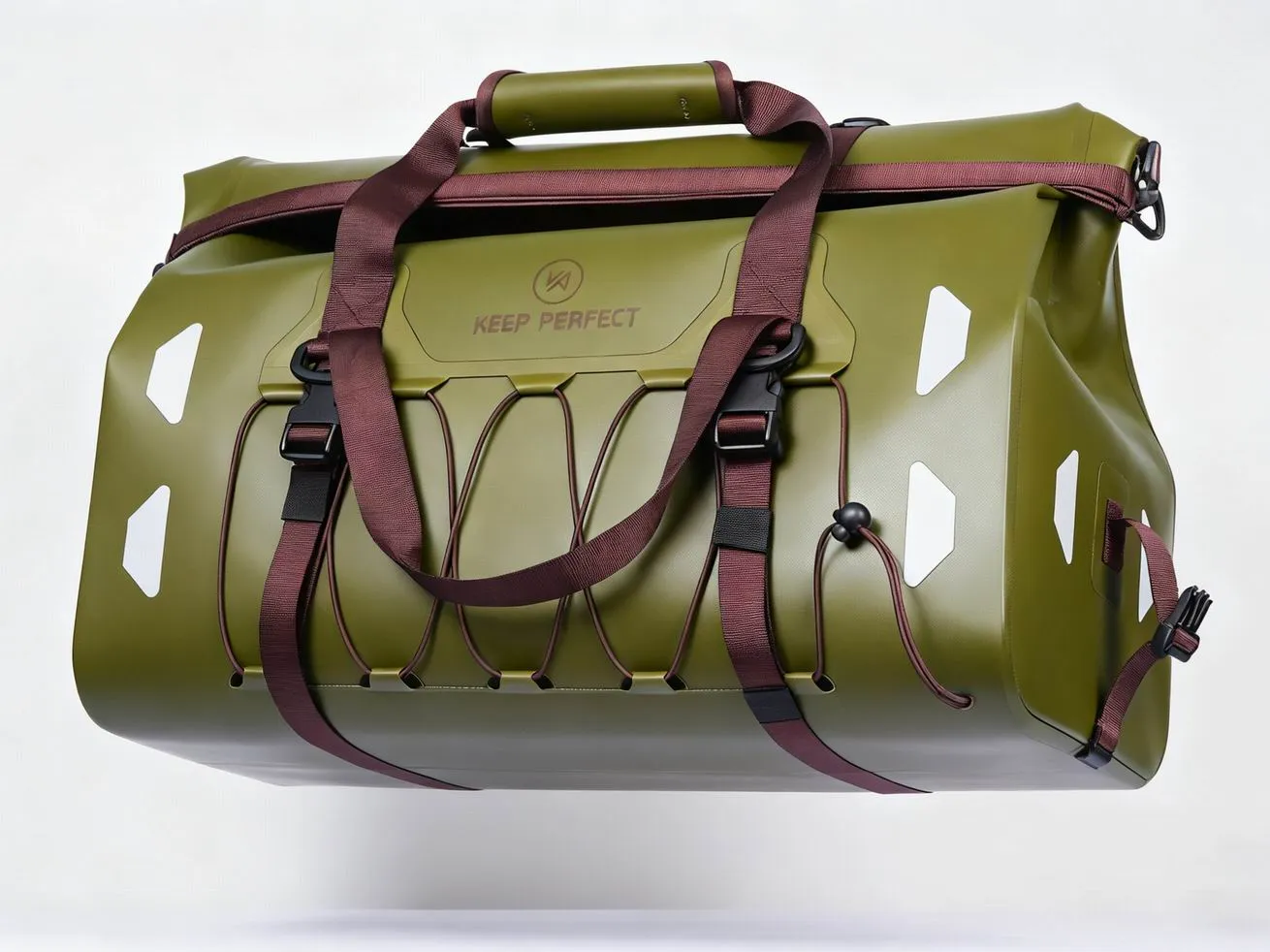
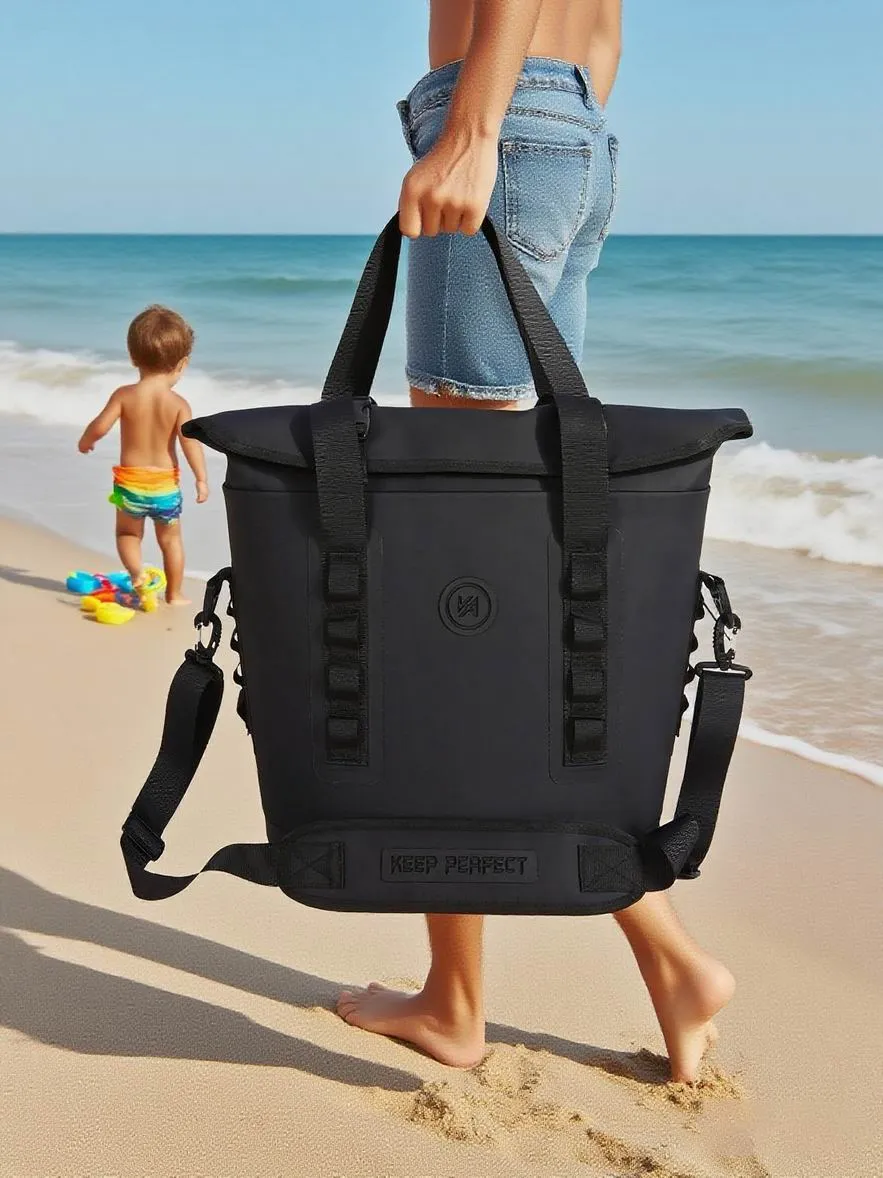
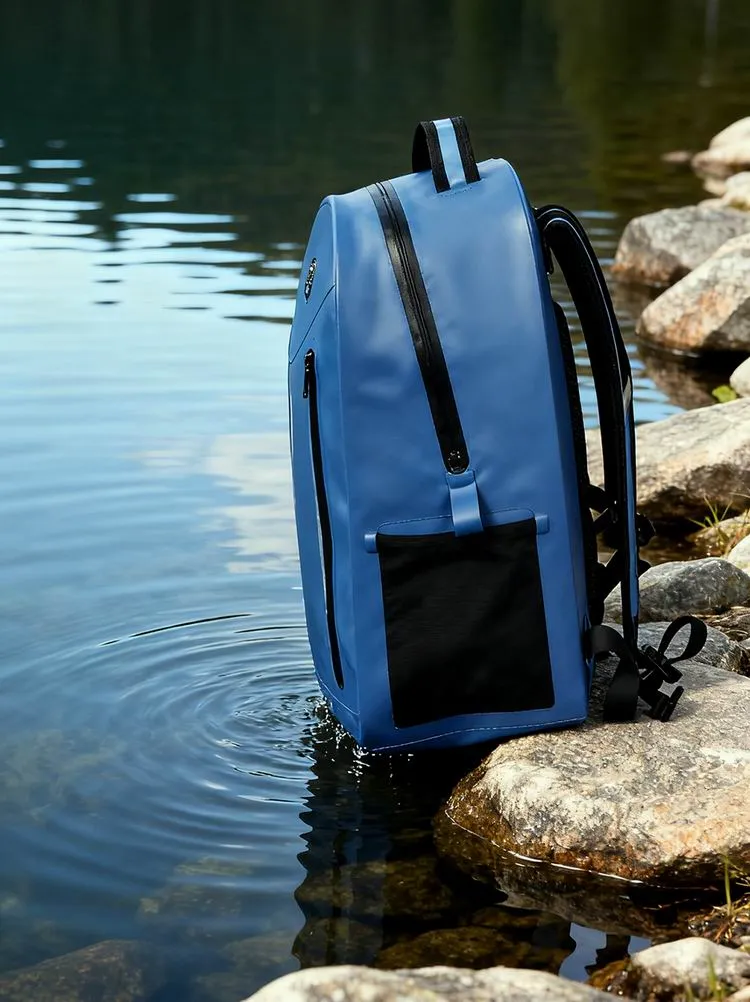
Why relief logistics is waterproof logistics
Disaster relief bags answer a simple brutal brief: keep contents dry when everything around them is wet — and emergency response bags must do it for 72 hours without resupply. Disasters are water events more often than not — floods, storms, hurricanes, monsoon displacement — which means the relief supply chain runs through the disaster’s own medium. Aid that arrives unprotected is aid the disaster gets a second chance at: soaked blankets, ruined hygiene supplies, waterlogged documentation. The sector’s operational answer is the same conclusion logistics and healthcare reached: protection is not packaging, it is delivery. Relief bags are engineered for the worst conditions they will meet — saturated environments, rough handling in crisis logistics, field conditions with no support infrastructure — and the engineering standard is immersion-rated construction for the flood contexts, covered in our IPX7 vs IPX8 comparison.
The institutional context: relief agencies pre-position stocks before seasons, deploy through standing logistics frameworks (the coordination architecture organizations like the UN Office for the Coordination of Humanitarian Affairs maintain), and measure their programs in beneficiaries served — a metric that makes supply loss a direct service failure.
The three relief program types
| Program | Formats | Duty requirement | Unit cost (500+) |
|---|---|---|---|
| Beneficiary relief kits | Kit bags, water-resistant totes | Deliver aid dry through the disaster’s weather | $1.20–$4.90 |
| Response team gear | Field backpacks, jump bags | 72-hour sustained field duty | $3.40–$8.50 |
| Cold-chain aid supplies | Insulated carriers | Vaccine and medication temperature hold | $3.60–$6.80 |
The three programs serve different users at different moments: beneficiary kits serve the affected population at distribution (the moment aid meets need), response gear serves the teams during the response (the 72–168 hour emergency phase), and cold-chain supplies serve health operations in flood and outbreak contexts where vaccine integrity is the mission. The specifications differ accordingly — distribution formats optimize cost-at-scale and delivery protection; team formats optimize durability and organization; cold-chain formats optimize validated temperature performance.
Beneficiary relief kits: aid that arrives dry
The relief kit is the sector’s unit of delivery — hygiene supplies, blankets, water treatment, first aid, dignity items — and the kit bag is what makes the unit survivable in transit and meaningful at distribution. The specification logic: waterproof construction rated above the delivery environment (flood contexts demand immersion-rated builds; storm and monsoon contexts demand jet-band water resistance at minimum), materials that tolerate rough crisis logistics (500D laminated bodies, sealed seams), and cost engineered for scale — because kit programs buy in the tens of thousands, and every dollar of bag cost is a dollar not in contents. At MOQ 500 and volume steps beyond, kit bags run $1.20–$4.90 depending on format and rating, with family-tier designs (adult, child, household) on one production calendar. The kit-bag economics are the same scale logic our cost breakdown guide documents, at the volumes relief procurement runs.
Response team gear: the 72-hour standard
Response teams — search and rescue, medical, assessment, distribution teams — work the emergency phase in the disaster’s worst conditions, sustained. The gear specification follows the emergency-management discipline our healthcare transport guide covers for the medical side: field backpacks and jump bags with rapid-access organization (findable in the dark, under stress, in rain — the same protocol-engineering logic as EMS jump bags), immersion-capable protection for flood and storm water work, hi-vis colorways as safety equipment in collapsed-structure and traffic-mixed environments, and durability that survives 72-hour duty cycles with no support infrastructure. Response organizations buy per-team issue with rotation economics — a 50-team deployment is a 500-unit order with float, exactly our MOQ structure — and the strap-load engineering in our load stress testing guide matters more here than anywhere, because a failed strap mid-rescue is not an inconvenience.
Cold-chain aid: vaccines and medications in the flood
Flood and displacement emergencies carry epidemic risk (cholera, waterborne disease), and outbreak response moves vaccines and medications through exactly the environments that ruin them: heat, water, rough field logistics. Cold-chain aid carriers are engineered to that mission — validated insulation performance holding vaccine-range temperatures through the field leg, waterproof shells keeping the cold chain’s cargo dry, and formats sized to the health operation’s actual workflow (campaign-day carriers, multi-dose cold boxes, health-worker cold totes). The insulation-plus-waterproof architecture is the delivery-industry dual-engineering our cooler bag insulation guide documents, specified to health-sector validation expectations; unit costs run $3.60–$6.80 at MOQ 500. The sector’s cold-chain discipline is why this is a specified procurement, never an improvised one.
Stockpile procurement: the long-storage specification
Preparedness stockpiles are the sector’s quiet majority purchase: relief agencies and government emergency programs warehouse kit bags and response gear against the season, and the specification that matters most is stability — materials that survive years of warehouse storage without degrading. Films that embrittle on the shelf, coatings that hydrolyze in humidity, hardware that corrodes in storage: all are documented failure modes the accelerated aging tests guide exists to predict. The stockpile spec: UV-stabilized and hydrolysis-resistant materials with aging-test documentation, batch-coded production so every stored lot answers to its manufacture date, and warehouse-friendly packing (flat-pack, pest-resistant, moisture-sealed outer packaging). Stockpile programs buy in large episodic orders aligned to budget and grant cycles — the pattern our production calendar handles with batch scheduling.
Field realities: what relief duty demands
- Saturated environments: flood contexts mean standing water, not rain — immersion-rated construction for anything meeting floodwater
- Crisis logistics handling: palletized air-drops, boat transfers, hand-to-hand chains — 500D bodies and sealed seams, no fashion-grade components
- No support infrastructure: no stores, no replacements mid-deployment — float stock travels with the program
- Documentation in the wet: manifests and beneficiary lists in document cases — the logistics discipline our logistics guide covers
- Identifiability: agency branding and aid marking that survives — printed, not labeled; the printing methods in our logo options guide
Relief program economics at MOQ 500
| Program line | Unit cost (500+) | Scale pattern | Budget logic |
|---|---|---|---|
| Kit bag (basic) | $1.20–$2.40 | Season stockpile, 5,000–50,000 | Cost per beneficiary served |
| Kit bag (immersion-rated) | $2.40–$4.90 | Flood-program stock | Aid-integrity insurance |
| Response field backpack | $3.40–$8.50 | Per-team issue + float | Program equipment budget |
| Cold-chain carrier | $3.60–$6.80 | Health operation scale | Vaccine-integrity requirement |
| Document/manifest case | $1.90–$3.60 | Per-distribution-team | Operational necessity |
Relief procurement runs the volume ladder harder than any sector — kit programs above 10,000 units step down meaningfully, and the cost-at-scale engineering (never at integrity’s expense) is exactly what the volume mechanics in the cost breakdown guide document.
Sampling: the field-standard test
Relief samples prove themselves against the field standard: the kit bag through a saturation test (immersion for flood-rated builds — towel inside, submerged, inspected), the response bag through a loaded 72-hour field simulation, the cold-chain carrier through a validated temperature-hold run. Documentation review happens at this stage for stockpile programs — aging-test records, batch coding, material declarations — because the stockpile’s audit happens years later against the records made now. Samples run 6–10 working days at $60–$150 per configuration, credited against bulk, with the golden sample becoming the AQL 2.5 reference. The full protocol is in our sampling guide.
Common mistakes in relief bag programs
- Rain-rated bags in flood programs: splash protection in a standing-water environment is aid wrapped in a wish
- Shelf-life blindness: stockpiles of hydrolysis-prone materials are failures scheduled for the next disaster
- Fashion logistics: crisis handling destroys retail-grade construction — the field standard is 500D and sealed seams
- Unlabeled vs mislabeled: aid marking must survive the same water the contents survive; printed marking, not stuck-on labels
- Single-sourcing seasons: stockpile-then-scramble patterns pay emergency premiums — batch-scheduled procurement keeps unit costs down
- Documentation gaps: the audit that matters happens mid-crisis; records made at production are the only ones available then
The relief procurement calendar
Relief buying runs on two clocks. The preparedness clock: pre-positioning before the known seasons — Atlantic hurricane season (stock by spring), monsoon cycles in South Asia, Pacific typhoon seasons — which means stockpile orders placed 4–6 months ahead, riding the standard production math (samples 6–10 working days, bulk 35–50 days, freight 4–6 weeks) to land before the season’s first named storm. The response clock: post-disaster surge procurement, which is where supplier responsiveness matters — 24–48 hour quotations, sampling that fits decision windows, and production slots that can be expedited honestly. Agencies that run the preparedness clock well barely touch the response clock’s urgency premiums; agencies that skip pre-positioning pay the response clock’s prices in air freight and compressed everything. The seasonal discipline is the wholesale-planning logic our seasonal planning guide documents, at relief-sector stakes.
Distribution-day operations: the last waterproof mile
The distribution day is where the relief program meets its beneficiaries, and it runs in the disaster’s aftermath conditions: wet distribution sites, boat-and-vehicle access chains, and crowds — organized by systems that need the kit bag to cooperate. The design details that make distribution days work: kit bags that stack and palletize cleanly (flat-pack formats that ride boats and trucks without wasted cube), handles and strap points sized for hand-to-hand chains, identification marking that lets beneficiaries and staff sort tiers at a glance (adult, child, household — the color-and-mark system in our color customization guide applied to program logic), and closure systems a soaked, exhausted beneficiary can open without scissors. Programs that spec the distribution day into the bag design report faster lines, fewer losses and calmer sites; programs that buy generic totes discover that distribution-day friction compounds by the thousand-unit.
The wet-weather distribution protocol deserves explicit planning: when the site itself is flooded or rain is falling, the kit bag’s rating is the difference between distributing aid and warehousing it. Flood-rated programs spec immersion-rated bags precisely because the beneficiary’s walk home may cross standing water — the aid’s journey does not end at the distribution table.
Funder documentation and consortium buying
Relief programs answer to funders, and funders increasingly buy outcomes per dollar — which makes the documentation trail part of the program design. The pack that satisfies institutional donors and government grantors: batch-coded traceability (every lot answering to manufacture date and test records), material declarations showing the rating claims are documented rather than labeled, cost-at-scale records showing procurement efficiency, and the delivery-verification chain from production to distribution. Our export documentation is structured for this environment — the same audit-ready records our compliance guide maps for regulated industries, applied to the humanitarian accountability standard.
Consortium procurement is the sector’s efficiency pattern: multiple agencies pooling demand on one production calendar — tiered designs per agency, batch coding per program, consolidated freight to the staging warehouse — capture the volume ladder that solo orders miss. A four-agency consortium pooling 2,000 units captures pricing that four 500-unit orders cannot, and our MOQ structure and batch scheduling are built for exactly this pattern. The coordination questions are operational, not technical: whose specification governs each tier, whose marking runs on which design, and whose audit trail each batch codes to — all answered at golden-sample stage before bulk.
Spec your relief program
Bring four facts — your program type (beneficiary kits, response gear, cold-chain, stockpile), your operating environment (flood, storm, monsoon — the water exposure that defines the rating), your scale and season calendar, and your documentation requirements — and the quotation returns in 24–48 hours: rating-specified construction, aging-test documentation for stockpiles, and a costed program at MOQ 500 with volume steps at relief scale. QUANZHOU JUNYUAN BAGS — relief-grade custom waterproof bags since 2014, 4,950 m² SGS-verified facility, 7 lines, 149 machines, 137 staff, 200,000 pieces monthly, samples 6–10 working days, bulk 35–50 days, AQL 2.5, 30/70 T/T, FOB Xiamen, 100+ countries. The production chain from first inquiry runs from sampling into bulk; the medical-side programs are in our healthcare transport guide, the first-aid architecture in our first aid bags guide, and the complete manufacturing reference is the manufacturing guide.
Frequently Asked Questions
Q1. What bags do disaster relief organizations use?
Rating-matched relief bags: immersion-rated kit bags for flood programs, jet-band water resistance for storm contexts, 72-hour-duty response gear for teams, and validated cold-chain carriers for health operations — $1.20–$8.50 at MOQ 500.
Q2. How much do relief kit bags cost at scale?
At MOQ 500: basic kit bags $1.20–$2.40, immersion-rated flood-program bags $2.40–$4.90, response backpacks $3.40–$8.50, cold-chain carriers $3.60–$6.80. Volume programs above 10,000 units step down meaningfully.
Q3. What is the minimum order for relief programs?
MOQ 500 per design, splittable across the relief family — kit tiers, response gear and document cases as one order with batch-coded production for traceability.
Q4. Why do flood relief bags need immersion ratings?
Flood contexts mean standing water, not weather: distribution routes cross floodwater, storage sites are wet, and beneficiaries carry aid home through water. Splash-rated bags in flood programs are aid wrapped in a wish.
Q5. Can relief bags survive years in storage?
The stockpile specification exists for exactly that: UV-stabilized and hydrolysis-resistant materials with aging-test documentation, batch-coded lots answering to manufacture dates, and moisture-sealed warehouse packing.
Q6. What gear do response teams carry?
Field backpacks and jump bags engineered to the 72-hour standard: rapid-access organization findable in the dark and rain, immersion-capable protection, hi-vis safety colorways, and strap-load engineering tested to the field standard.
Q7. How do vaccines stay cold in disaster zones?
Validated cold-chain carriers: insulation performance holding vaccine-range temperatures through the field leg, waterproof shells against the wet, sized to campaign workflows — specified procurement, never improvised.
Q8. How fast can emergency orders be produced?
Standard math: samples 6–10 working days, bulk 35–50 days, freight 4–6 weeks. Surge responsiveness: 24–48 hour quotations and expedited production slots — but pre-positioned stockpiles beat every surge premium.
Q9. Do relief bags need special marking?
Yes — agency branding and aid identification must survive the same conditions the contents survive: printed marking on rated materials, never stuck-on labels, with color and marking conventions per the program’s distribution system.
Q10. Can NGOs and government agencies order together?
Consortium procurement is common and efficient: tiered designs for each program on one production calendar, with batch coding that answers each agency’s audit separately — a pattern our MOQ structure supports directly, and one that captures the volume ladder solo orders miss.
Q11. What documentation do relief programs require?
The full trail: material declarations, aging-test records for stockpiles, batch traceability, AQL 2.5 inspection records and factory verification — because the audit that matters happens mid-crisis, when only production-stage records exist.
Q12. How are relief bags different from retail waterproof bags?
Duty engineering: 500D laminated bodies and sealed seams for crisis logistics, immersion ratings for water events, glove-operable closures, and cost-at-scale engineering without integrity compromises — the retail bag’s fashion grades fail in the first boat transfer.
Q13. Do stockpile programs need different specs than deployment buys?
Yes — stockpiles add long-storage stability (aging-tested materials, moisture-sealed packing) and manufacture-date traceability to the standard duty specs, because the bag must perform years after the production run.
Q14. Can kit bags carry family-tier contents?
Yes — adult, child and household tiers as separate designs on one production calendar, with interior organization matched to each tier’s contents list and distribution system.
Q15. What closures work in field conditions?
Fleet-spec hardware: oversized pulls and positive-locking closures operable in gloves, in rain, in the dark — tested at sampling through the field-standard simulation, not the showroom.
Q16. How do agencies test relief bag samples?
Against the field standard: immersion for flood-rated builds (towel inside, submerged, inspected), a loaded 72-hour simulation for response gear, validated temperature-hold runs for cold-chain — 6–10 working days, fees credited against bulk.
Q17. Can bags be reopened and resealed by beneficiaries?
Yes — kit closures are spec’d for exactly that: positive-locking buckles and roll-top formats that beneficiaries reopen and reseal without tools, keeping contents protected after the distribution day and through the walk home.
People Also Ask
What is a relief kit bag?
The waterproof bag that carries a disaster relief kit — hygiene supplies, blankets, water treatment — engineered so the aid arrives dry through the disaster’s own weather, at costs engineered for tens-of-thousands scale.
How do you keep aid supplies dry in floods?
Immersion-rated relief bags: sealed welded construction, tested to submersion standards, with field-grade materials that survive boat transfers and hand-to-hand distribution chains through standing water.
What do emergency responders carry in floods?
72-hour-duty field gear: immersion-capable backpacks with rapid-access organization, hi-vis safety colorways, and load-rated straps — built for sustained work in the conditions everyone else is fleeing.
How long can emergency supplies be stockpiled?
With the stockpile specification — aging-tested, hydrolysis-resistant materials in moisture-sealed packing — years in warehouse storage, with batch coding that answers every stored lot to its manufacture date.
Can waterproof bags carry vaccines?
Yes, in validated cold-chain carriers: vaccine-range temperature hold through the field leg, waterproof shells against flood environments, sized to campaign workflows — the health operation’s specified procurement.
When should relief supplies be ordered?
On the preparedness clock: stockpiles 4–6 months before the known seasons — hurricane, monsoon, typhoon — riding standard production and freight. Post-disaster surge buying exists, but pre-positioning beats its premiums every time.