Aviation buys waterproof bags across four distinct programs — premium-cabin amenity kits that extend the brand into the passenger’s daily life, crew gear that survives 80+ flight sectors a month, ground-operations equipment that protects tablets and documents on rain-swept aprons, and airport retail that serves the traveler who packed wrong — with unit costs from $0.85 at MOQ 500 and the industry’s strictest vendor-compliance expectations. This guide covers the full aviation program: the four buyer channels and their purchasing logic, cabin-baggage constraints that shape every format, amenity-kit design, crew and ground-ops specifications, airport retail economics, and the compliance documentation airlines demand from every vendor in their supply chain.
The manufacturer reference is QUANZHOU JUNYUAN BAGS: custom waterproof bag production since 2014, 4,950 m² SGS-verified facility, 7 lines, 149 machines, 137 staff, 200,000 pieces monthly. MOQ 500 per design splittable across the aviation family, samples 6–10 working days, bulk 35–50 days, AQL 2.5 inspection, 30/70 T/T, FOB Xiamen, shipping to 100+ countries.
Why aviation is a four-channel bag market
Aviation procurement splits into four parallel channels, and airline amenity kits are only the visible one — aviation waterproof bags also fly in crew, ground-ops and retail programs. Most industries buy one kind of bag program; aviation buys four, each with its own buyer, budget line and success metric. Amenity kits are a brand-experience purchase — the premium-cabin gift that passengers photograph, keep and use for years, extending the airline’s brand into daily commutes on five continents. Crew gear is an equipment purchase — flight crews live out of their bags more intensively than any other profession, and airlines that issue quality crew bags buy crew goodwill alongside durability. Ground operations is a safety-and-continuity purchase — the tablets, documents and radios that run turnarounds cannot go down because of weather. Airport retail is a margin purchase — the traveler at the gate who just watched rain lash the tarmac is the most motivated waterproof-bag buyer alive.
The scale context: the International Air Transport Association counts over four billion passenger journeys a year, and every one of them is a weather-exposure event at both ends. Aviation’s weather problem is not the flight — it is everything before boarding and after landing, which is exactly the territory waterproof bags own.
The four aviation programs at a glance
| Program | Buyer | Formats | Volume | Unit cost (500+) |
|---|---|---|---|---|
| Premium amenity kits | Brand / inflight services | Pouches, document cases, tote | 2,000–50,000/route-year | $0.85–$5.40 |
| Crew gear | Operations / crew services | Tech backpacks, travel totes | Per-crew issue + annual refresh | $5.90–$8.50 |
| Ground operations | Station operations | Tablet cases, document bags | Per-station fleet | $1.90–$4.90 |
| Airport retail | Concession buyers | Pouches, dry bags, travel formats | High-turnover range | $0.85–$8.50 |
The channels differ fundamentally in buying logic. Amenity kits compete on design and passenger delight at a per-kit budget that procurement watches to the cent. Crew gear competes on durability math — cost per sector over a multi-year issue cycle. Ground ops buys to a specification written by people who stand on aprons in sleet. Airport retail buys margin and turnover. A quotation that does not ask which program it is pricing will get all four wrong.
Cabin constraints that shape every aviation format
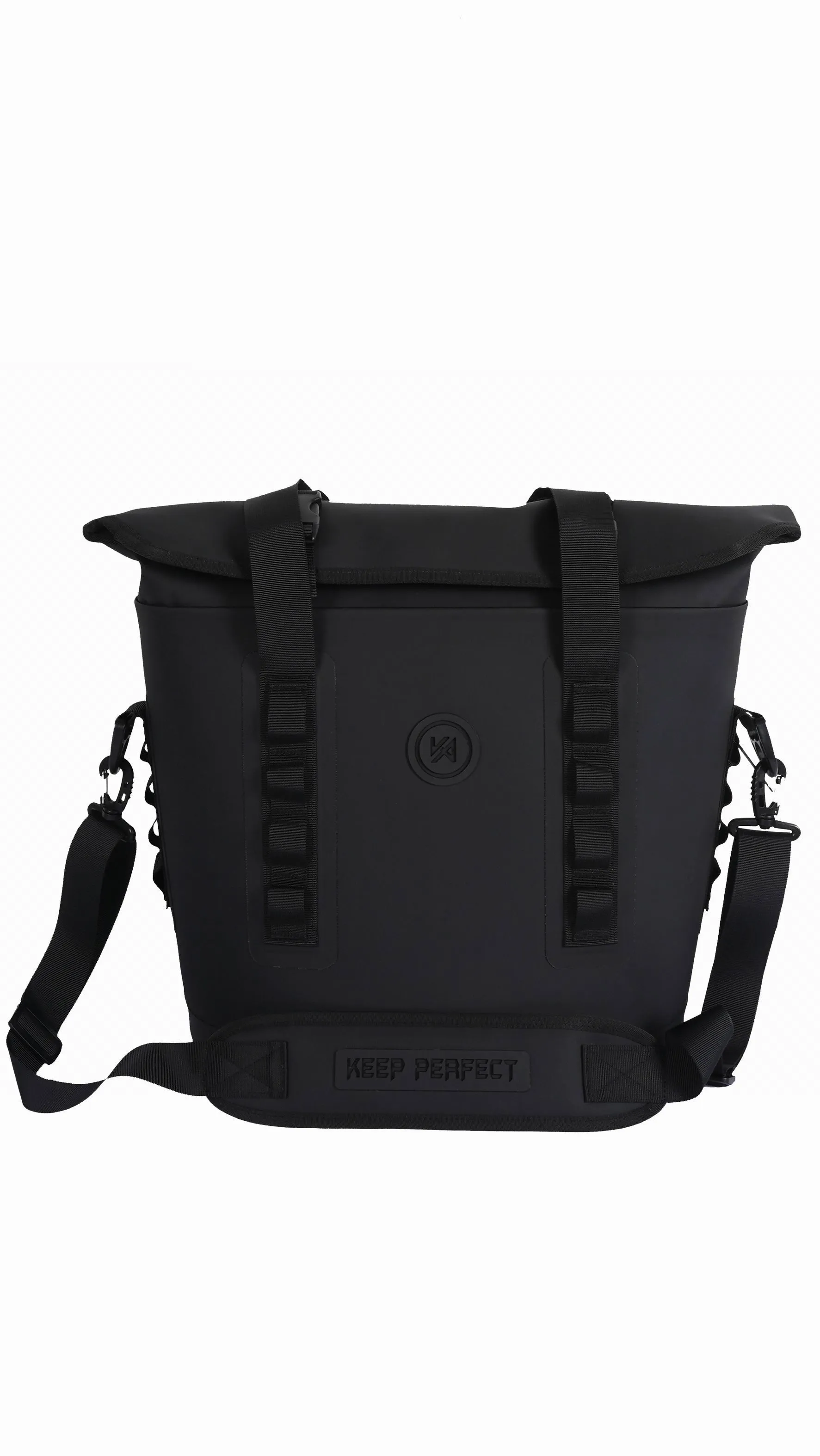
Every aviation bag lives inside the industry’s dimensional discipline. Amenity formats must nest inside the cabin service flow — compact enough for tray-table presentation, light enough that 300 kits do not tax the weight budget, flat-packing for galley stowage. Crew bags must fit crew-luggage allowances and overhead bins across the fleet’s narrowest airframes. Retail formats must answer the carry-on reality: personal-item dimensions that slide under the seat, since the traveler buying at the gate already has a full overhead bag. These constraints are why aviation programs are specified, not shopped: the format that ignores the cabin is a sample that never reaches the cabin.
- Amenity kit sweet spot: 20 × 12 × 6 cm pouch formats, under 120 g, flat-pack stowage
- Crew bag ceiling: personal-item or under-seat dimensions on the fleet’s smallest airframe
- Ground ops: high-visibility options for apron safety, radio and tablet specific fits
- Retail: under-seat formats, packable designs the traveler can add to existing luggage
Amenity kits: the brand that leaves the aircraft
The premium-cabin amenity kit is aviation’s most studied bag program, and the waterproof pouch has become its modern chassis for a simple reason: it is the kit passengers actually reuse. A waterproof travel pouch holding skincare and accessories transitions seamlessly into the passenger’s gym bag, beach bag and carry-on for years — every reuse a brand impression in a context advertising cannot buy. The design grammar: airline livery colors at Delta E ≤2 Pantone fidelity, discreet logo placement (passengers reuse tasteful kits and discard loud ones), and interior organization that makes the pouch genuinely useful — the difference between a kept kit and a binned one. The construction runs splash-band protection with quality zippers rather than submersion ratings, since the duty is rain-exposure in ground transfer, not immersion. Branding method economics are in our logo options guide.
The volume math suits our MOQ structure well: a single premium route consumes 2,000–10,000 kits a year, and multi-class programs (first, business, premium economy tiers with differentiated kits) split naturally at the MOQ 500-per-design level — three cabin tiers is three designs, one production calendar, consolidated freight.
Crew gear: the hardest-working bags in the industry
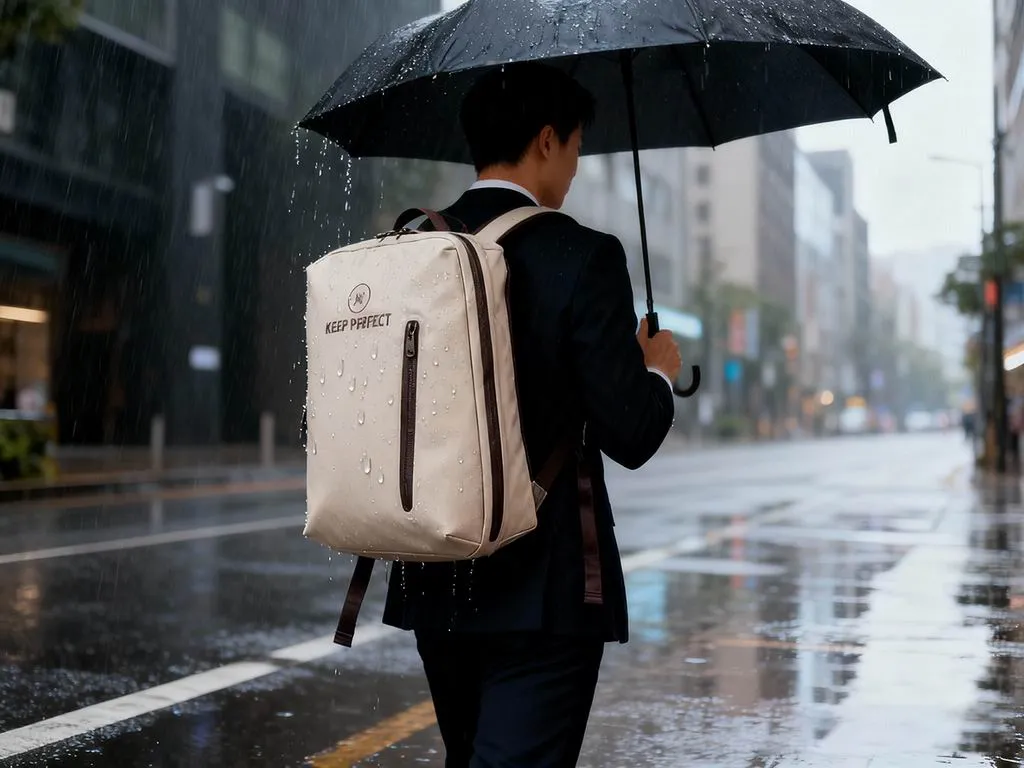
Flight and cabin crews are the most demanding bag users in any industry: 80–100 flight sectors a month, every climate on the route network, rain-swept crew parking at 4 a.m., tropical tarmac walks by afternoon. Crew-issue programs have learned what fails: fashion bags delaminate within months, zippers die under daily cycling, and straps give up under the pack weight of a four-day roster. The specification that survives is the one our tech backpack guide details — suspended laptop sleeves for the crew iPad and documents, waterproof zippers on the jet-band chassis, back-panel luggage pass-throughs for stacking on rollaboards — at $5.90–$8.50 per unit, which prices a multi-year issue cycle at less than the cost of one uniform refresh.
Airlines increasingly extend crew programs to the brand layer: livery-matched crew bags turn the crew walk through the terminal into a brand moment, and crew pride in issued kit shows up in retention conversations. Pantone-matched builds keep the bag reading as uniform, not merchandise.
Ground operations: where weather meets turnaround
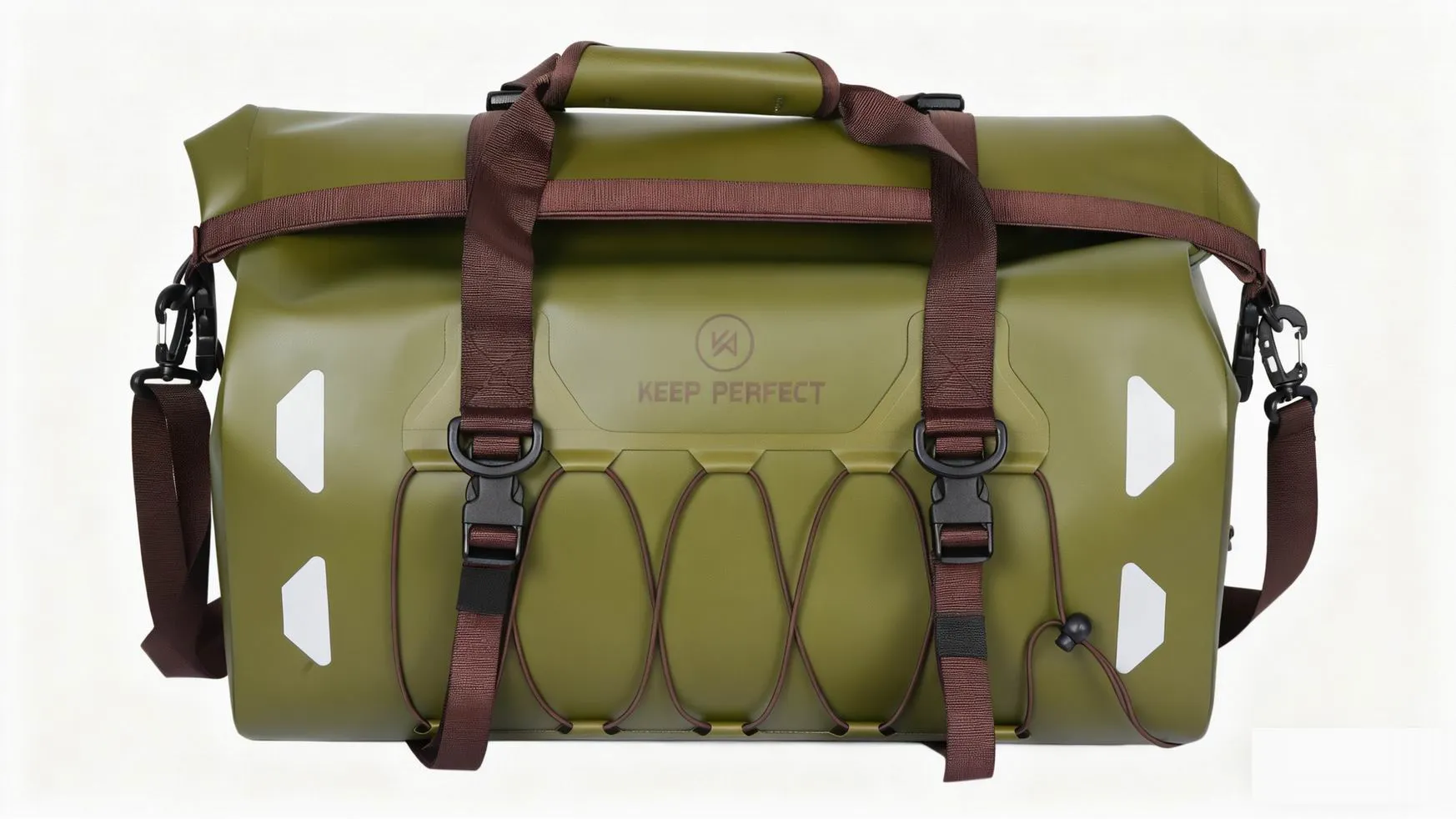
The apron is the most hostile office in aviation: rain, de-icing fluid, jet blast, and a turnaround clock that does not pause for weather. Ground-ops programs protect the tools the turnaround runs on — tablet cases for electronic turnaround logs, document bags for load sheets and NOTAM packs, radio pouches — specified in high-visibility colorways because apron safety rules demand it. The construction draws directly from our industrial and utility workers guide: 500D laminated bodies, welded seams, closures operable in work gloves, at $1.90–$4.90 per unit in per-station fleet quantities. De-icing fluid exposure adds a chemical-resistance requirement the chemical resistance guide covers — glycol-based fluids degrade standard coatings, and the material stack must be specified against them.
Airport retail: the motivated-buyer economics
Airport retail sells waterproof bags to the best-qualified customer in retail: the traveler with an immediate, visible need — rain at the destination, a beach segment ahead, a phone already showing water anxiety. The range that turns over: phone pouches at the impulse tier, packable dry bags and splash totes at the mid tier, travel backpacks at the premium tier — the same three-tier structure destination retail runs, covered in our tourism industry guide. Concession buyers purchase on margin and turnover per square meter, and the category’s 6–12× multiples on landed cost make it a permanent feature of travel-retail planograms. Travel-format selection for this channel is in our travel bag features guide.
Compliance: the vendor documentation airlines demand
Airlines run the most demanding vendor-compliance regimes in consumer goods: factory audits, material declarations, social-compliance certification, and product test documentation for every item that carries the brand. Our documentation pack is built for this environment — SGS-verified facility records, material test reports, AQL 2.5 inspection trails — and the regulatory layer (REACH for EU-flagged carriers, CPSIA where kits include items for minors, Prop 65 awareness for California touchpoints) is mapped in our compliance guide and compliance testing guide. Amenity kits add one aviation-specific layer: contents restrictions for cabin carriage mean the kit bag itself should be liquid-free, sharp-free and security-screening neutral — a pouch, not a problem.
Aviation program economics at MOQ 500
| Program line | Unit cost (500+) | Program scale | Budget logic |
|---|---|---|---|
| Amenity pouch | $0.85–$1.60 | 2,000–50,000/route-year | Per-kit budget × cabin volume |
| Document/valuables case | $1.90–$2.80 | Kit component, lounge gifting | Bundled kit economics |
| Premium cabin tote | $3.20–$5.40 | Tiered amenity programs | Halo-tier brand spend |
| Crew tech backpack | $5.90–$8.50 | Per-crew issue, multi-year cycle | Cost per sector over issue life |
| Ground-ops tablet case | $2.40–$4.90 | Per-station fleet | Equipment budget, safety compliance |
The MOQ 500 splits across cabin tiers and program lines — a three-tier amenity program is three designs on one production calendar. Volume programs above 10,000 units step down meaningfully in unit cost; the full cost mechanics including freight and the volume ladder are in the cost breakdown guide.
Sampling for aviation programs
Aviation sampling answers the industry’s specific questions: does the amenity pouch present well on a tray table and stow flat in the galley, does the crew bag fit the smallest airframe’s overhead, does the ground-ops case operate in winter gloves, does the Pantone match the livery under cabin lighting. Samples run 6–10 working days at $60–$150 per configuration, credited against bulk, with the golden sample becoming the AQL 2.5 reference. Amenity programs should sample all cabin tiers simultaneously — the tier comparison is the internal selling meeting. The full protocol is in our sampling guide.
Common mistakes in aviation bag programs
- Loud amenity branding: passengers reuse tasteful kits and discard billboards — discretion is the reuse rate
- Fashion-grade crew issue: bags that delaminate in month four cost the program its credibility with crews
- Ignoring airframe minimums: a crew bag that fails the smallest overhead bin fails the whole fleet
- Skipping hi-vis in ground ops: apron safety rules are not a design suggestion
- Forgetting the weight budget: 300 heavy kits is a fuel conversation with flight operations
- Single-tier amenity thinking: cabin differentiation is the program’s entire point — design the ladder
The aviation procurement calendar
Airline programs run on the industry’s calendar: amenity-kit refreshes align with brand campaigns and route launches (typically decided 6–9 months out), crew-issue cycles align with uniform refreshes and new-hire classes, and ground-ops procurement aligns with winter-season preparation. The production math: sampling 6–10 working days, bulk 35–50 days, sea freight 4–6 weeks — which means a summer route launch decided in spring needs samples approved almost immediately, and a winter ground-ops refresh must order by late summer. Airlines and their service partners that run the calendar early get the full margin of sea freight and unhurried QC; those that run late buy air freight and compressed inspection windows. The seasonal planning discipline is the same one our seasonal planning guide teaches wholesale buyers.
Cargo and special-mission programs
Beyond the passenger cabin, aviation’s cargo and special-mission segments buy waterproof protection at industrial specifications. Air-cargo operators protect moisture-sensitive freight documentation and unit-load-device electronics through rain-exposed ramp transfers; medical-evacuation and search-and-rescue operators run waterproof kit bags that must survive rotor wash, sea spray and field sterilization; and aerial-work operators (survey, firefighting, offshore transport) spec crew gear to the same helicopter-deck realities our marine programs guide engineers for — salt-rated hardware, high-visibility colorways, and welded construction that tolerates fuel-and-salt air. These programs buy small but specify hard: 500–1,500 units against detailed performance standards, exactly the profile the MOQ 500 structure serves. The documentation expectations mirror the passenger side — full material declarations and test trails — because special-mission operators answer to aviation authorities too.
Spec your aviation program
Bring four facts — your program channel (amenity, crew, ground ops, retail), your fleet or route scale, your brand standards (livery Pantones, logo guidelines), and your launch calendar — and the quotation returns in 24–48 hours: format spec per channel, cabin-constraint compliance, documentation pack preview, and a costed program at MOQ 500 with tier splits. QUANZHOU JUNYUAN BAGS — aviation-program custom waterproof bags since 2014, 4,950 m² SGS-verified facility, 7 lines, 149 machines, 137 staff, 200,000 pieces monthly, samples 6–10 working days, bulk 35–50 days, AQL 2.5, 30/70 T/T, FOB Xiamen, 100+ countries. The production chain from first inquiry runs from sampling into bulk; the business-travel format decisions are in our business travel guide, and the complete manufacturing reference is the manufacturing guide.
Frequently Asked Questions
Q1. What bags do airlines give premium passengers?
Waterproof travel pouches and document cases as the modern amenity-kit chassis — compact (about 20 × 12 × 6 cm), light (under 120 g), livery-matched, and genuinely reusable as gym, beach and carry-on pouches for years after the flight.
Q2. How much do custom airline amenity kit bags cost?
At MOQ 500: amenity pouches $0.85–$1.60, document cases $1.90–$2.80, premium cabin totes $3.20–$5.40. Multi-class tier programs split naturally at MOQ 500 per design on one production calendar.
Q3. What is the minimum order for airline-branded bags?
MOQ 500 per design — a three-cabin-tier amenity program is three designs, one production run, consolidated freight. Single-route programs consume 2,000–10,000 kits a year.
Q4. What bags do flight crews use?
Waterproof tech backpacks with suspended laptop sleeves, waterproof zippers and luggage pass-throughs — built for 80–100 sectors a month across every climate on the route map. Crew-issue programs run $5.90–$8.50 per unit at MOQ 500.
Q5. Can amenity kits be matched to airline livery?
Yes — Pantone matching at Delta E ≤2, with discreet logo placement that drives reuse. Passengers keep tasteful kits for years and discard loud ones; discretion is the reuse rate.
Q6. What do ground operations teams need in waterproof bags?
Tablet cases for electronic turnaround logs, document bags for load sheets, radio pouches — in high-visibility colorways for apron safety, with chemical-resistant materials against de-icing fluid, $1.90–$4.90 per station fleet unit.
Q7. Do airline vendors need special compliance?
Yes — airlines demand factory audits, material declarations, social-compliance certification and product test documentation. Our pack includes SGS-verified facility records, material test reports and AQL 2.5 inspection trails, plus REACH/CPSIA mapping per flag market.
Q8. What sells in airport waterproof bag retail?
Phone pouches at the impulse tier, packable dry bags and splash totes mid-tier, travel backpacks premium — serving the traveler with rain at the destination. The category runs 6–12× multiples on landed cost in travel retail.
Q9. How far ahead do airline bag programs procure?
Amenity refreshes 6–9 months out aligned to brand campaigns; crew issue aligned to uniform cycles; ground ops before winter. Production needs samples approved, then 35–50 days bulk plus 4–6 weeks sea freight.
Q10. Can crew bags be branded to match uniforms?
Yes — livery-matched crew bags turn the terminal crew walk into a brand moment, with Pantone-matched fabrics that read as uniform rather than merchandise.
Q11. What size must an airline amenity kit be?
The working sweet spot is roughly 20 × 12 × 6 cm and under 120 g: tray-table presentable, galley flat-packable, and light enough that a full cabin’s kits do not tax the weight budget.
Q12. Do amenity pouches need to be security-screening friendly?
Yes — the kit bag itself should be liquid-free, sharp-free and screening-neutral. A simple pouch chassis passes everywhere; integrated compartments for restricted items create cabin-carriage problems.
Q13. How long do crew-issue bags last?
Properly specified waterproof tech backpacks survive multi-year issue cycles at 80–100 sectors monthly. Fashion-grade alternatives delaminate within months — durability math is cost per sector, not unit price.
Q14. Can one order cover multiple cabin tiers?
Yes — first, business and premium economy kits as three designs at MOQ 500 each, one production calendar, one consolidated shipment, with differentiated materials per tier.
Q15. What materials suit aviation duty?
Splash-band laminated builds with quality waterproof zippers for cabin programs (rain exposure in ground transfer, not immersion); 500D welded construction with chemical-resistant coatings for ground ops against de-icing fluids.
Q16. How fast are samples for an airline program?
6–10 working days per configuration at $60–$150, credited against bulk. Sample all cabin tiers together — the tier comparison is the internal selling meeting.
Q17. Do cargo and medevac operators buy different specs?
Yes — special-mission programs buy 500–1,500 units at industrial specifications: welded construction, salt-rated hardware, high-visibility colorways, and full documentation trails for aviation authority oversight.
People Also Ask
What is in an airline amenity kit?
A pouch or case holding skincare, eye mask, earplugs and dental items — with the pouch itself increasingly designed as the lasting gift: a waterproof travel case passengers reuse for years.
Do airlines still give amenity kits?
Premium cabins on long-haul routes do, and the kit has evolved from disposable tokeepsake — the bag is now the durable brand ambassador, the contents the consumable.
What size bag fits under an airplane seat?
Personal-item dimensions run roughly 45 × 35 × 20 cm depending on carrier — packable waterproof totes and compact tech backpacks are built to the smallest common airframe.
Why do pilots and crew use specific bags?
Crew bags must survive 80–100 sectors a month: waterproof protection for documents and devices, overhead-bin fit across the fleet, and durability measured in cost per sector — which is why airlines issue specified gear rather than leaving it to chance.
Can you bring a waterproof pouch through airport security?
Yes — the empty pouch is screening-neutral. Liquids inside must follow the 100 ml rule; the pouch itself passes as an ordinary bag.
What is the best bag for frequent flyers?
A waterproof tech backpack with a suspended laptop sleeve, waterproof zippers and a luggage pass-through — the crew-spec architecture, because crews are the most frequent flyers alive.