Most tropical packing advice is written for the beach day and ignores the flight home, which is where holidays actually go wrong. A swimsuit worn at eleven in the morning is still damp at six, it goes into a bag that then sits in a humid hotel room overnight and in an aircraft hold for eight hours, and it arrives home smelling and mould-spotted. The second mistake is treating humidity as if it were rain. A bag can be genuinely waterproof against liquid water and still fail completely against water vapour, salt and sand, none of which care about a hydrostatic rating.
This guide works through those three agents separately, because each damages a bag by a different mechanism and each needs a different response. It covers humidity versus liquid water, sunscreen as a solvent and what it does to coatings, salt crystallisation and corrosion, sand as a long-lived abrasive, packing order and quantities for a ten day trip, wet-dry separation applied at packing time rather than at the beach, electronics in salt air, the return leg, the reality of drying in a hotel room, a checklist by trip type, and what a brand should specify for a tropical resort range. QUANZHOU JUNYUAN BAGS has produced custom waterproof bags since 2014 in a 4,950 m² SGS-verified facility: MOQ 500 pieces per style, sampling in 6–10 working days, bulk in 35–50 days, FOB Xiamen.
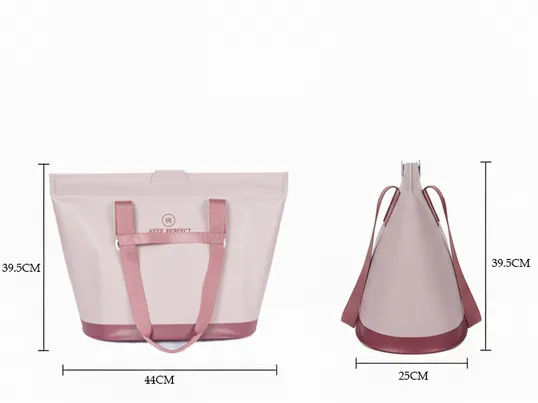
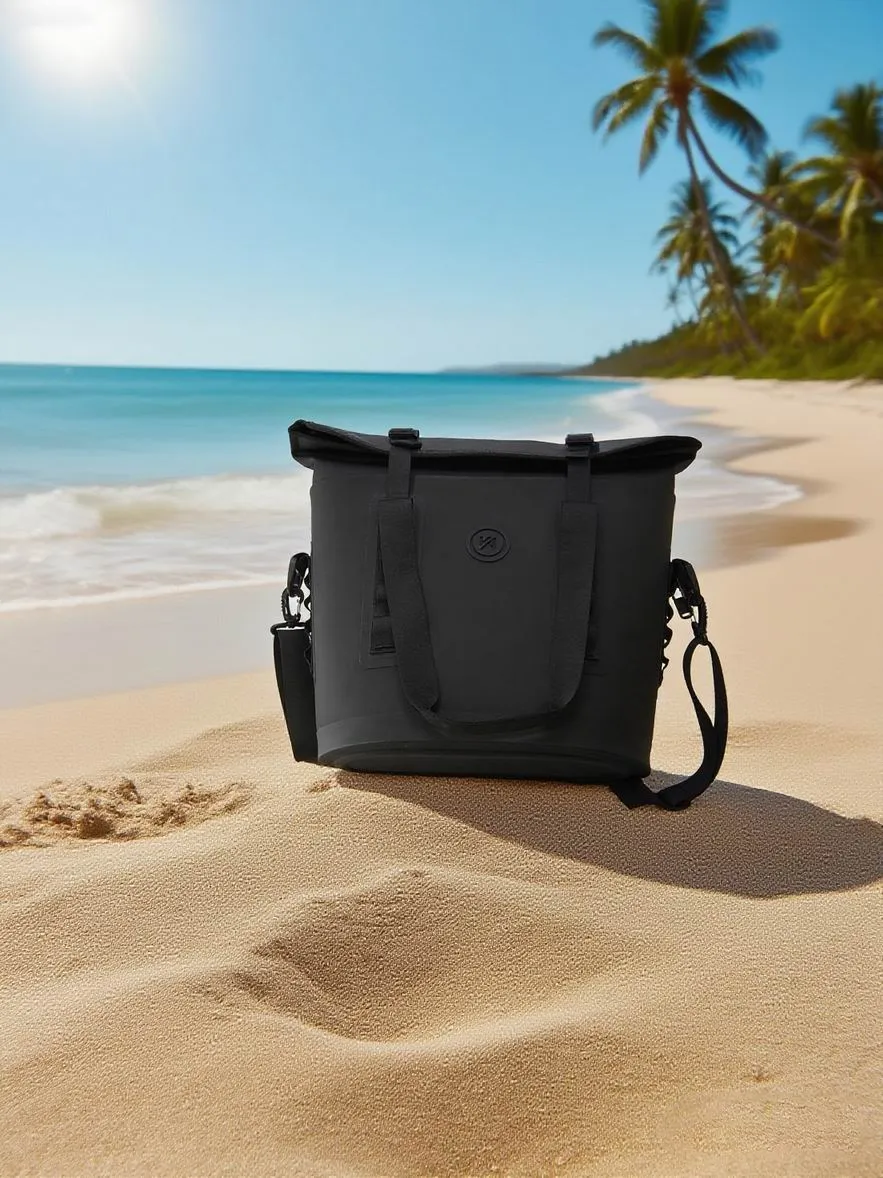
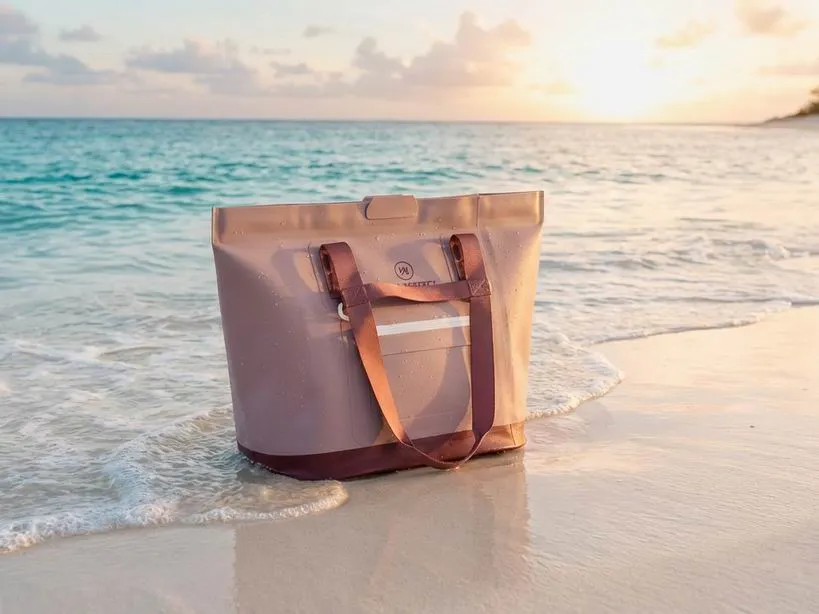
Tropical packing fails on the way home, not on the way out
Ask anyone what went wrong on a tropical holiday and the answer is rarely that it rained. It is that a bag came home smelling, that a favourite shirt has a permanent sunscreen stain, that a zip will not move, or that a phone charging port corroded. All four are cumulative damage from agents that were present every day rather than a single wet event, and all four are preventable at the packing stage rather than at the beach. That is why the most useful tropical vacation packing tips are about what happens between the beach and the suitcase, and why waterproof packing for humidity is a different discipline from waterproof packing for rain.
The outbound leg is easy because everything is dry and clean. The return leg has to move damp clothing, wet swimsuits, sandy footwear, half-used sunscreen bottles and souvenirs, often with no opportunity to dry anything first. A packing plan that does not have an explicit answer for the return leg will produce a ruined bag, and usually a ruined suitcase lining along with it.
So the plan needs two systems rather than one: a day system for the beach, built around access and sand, and a return system for the journey home, built around containment and isolation. Most travellers build only the first.
Humid is not wet: why vapour defeats a bag that stops liquid
Waterproof ratings measure resistance to liquid water under pressure. Humidity is water vapour, and it moves through materials by a completely different mechanism: diffusion and adsorption rather than flow. A coated shell that is perfectly impermeable to a splash will still equilibrate with ambient air over hours, and at 80 per cent relative humidity the interior of a sealed bag will approach that level regardless of what the shell is rated for.
This is why the tropics produce a specific set of complaints that do not happen in a rainy temperate trip. Paper softens. Leather grows mould. Electronics fog internally when moved from an air-conditioned room at 21 degrees into street air at 30 and 85 per cent. Tablets and capsules in a wash kit clump. None of these is caused by a leak; all of them are caused by vapour reaching an equilibrium nobody planned for.
- Do not rely on a sealed bag to protect moisture-sensitive items from humidity. Use a sealed container plus desiccant, and open it only in dry air.
- Let a bag reach room temperature before opening it after air conditioning, so condensation forms on the outside rather than on a device inside.
- Keep medications and anything hygroscopic in a sealed pouch with silica gel rather than in a main compartment.
- Choose vented or mesh storage for anything that will be damp, since sealed and damp is the worst combination in this climate.
- Accept that the outer bag will be damp. Plan protection in layers rather than trying to keep the outer bag dry.
The design consequence is that a tropical bag needs ventilation as well as sealing. A bag with a welded wet compartment and a ventilated mesh panel handles both vapour and liquid, whereas a fully sealed single-compartment bag is excellent against rain and poor against humidity. That trade-off is discussed more fully in our guide to choosing the right waterproof level.
Sunscreen is a solvent: what it does to coatings and fabric
Sunscreen is the most destructive substance in a tropical bag and the one nobody plans for. It is not water; it is an emulsion of organic UV filters, oils, emollients and solvents, several of which are aggressive towards polyurethane coatings and towards the plasticisers in flexible films. A bottle that leaks inside a bag does not simply wet the contents — it attacks the liner, and the damage is both immediate and permanent.
| Agent | What it attacks | Timeline of visible damage | Mitigation that works |
|---|---|---|---|
| Chemical UV filters and solvent base | PU and TPU coatings, printed logos, adhesives | Softening and tackiness within hours; staining is immediate | Store upright in a sealed wet bag; wipe spills within the hour |
| Oily emollient fraction | Fabric face and any fabric liner | Permanent translucent stain that survives washing | Surfactant wipe, never water alone; accept the stain on fabric |
| Mineral sunscreen, zinc or titanium | Coatings less; zips and sliders more | Gritty deposit stiffening the slider within days | Rinse the closure with fresh water daily |
| Insect repellent with DEET | Coatings, plastics, printed graphics | Can soften or lift a print within minutes | Never store repellent loose with a bag or a device |
| Salt residue after swimming | Metal hardware, connectors, zip sliders | Corrosion and stiffness over days to weeks | Freshwater rinse of bag and hardware every evening |
| Chlorine from pools | Elastane in swimwear, colour fastness | Loss of elasticity over a season | Rinse swimwear in fresh water after every swim |
The row that surprises people is repellent. Products containing DEET are effective and widely used in the tropics, and they are also capable of softening coatings and lifting printed graphics within minutes of contact. Nothing containing DEET should ever travel loose in a bag; it belongs in its own sealed container, ideally a rigid one, and away from anything printed or coated.
Stains are the practical cost most travellers notice. A sunscreen stain on a fabric liner does not come out with water and often does not come out at all, because the oily fraction has bound to the fibre. That is a strong argument for welded, wipe-clean liners in any bag sold for resort use, and it is the same chemical-resistance question covered in our page on chemical and saltwater resistance.
Salt: crystallisation, corrosion and the zip that will not move
Saltwater is benign while it is dissolved and destructive once it is not. A bag that has been to the beach holds a film of salt in its stitching, in its zip coil and on its hardware, and as the water evaporates the salt crystallises. Crystals growing inside a zip coil do two things: they make the slider progressively stiffer, and they act as an abrasive that wears the coil every time the zip is used. The traveller notices the stiffness first and the leak later.
Hardware and electronics suffer the same process by a different route. Chloride ions drive pitting corrosion on metal fittings, and on device connectors they produce the intermittent contact faults that travellers misdiagnose as a failing cable. A phone that charges intermittently two weeks after a beach holiday has usually got salt in the port rather than a broken lead.
- Rinse the bag and its hardware with fresh water every evening of a coastal trip; it takes one minute and prevents almost all salt damage.
- Rinse device connectors with fresh water and dry thoroughly if a phone has been used near the sea, then leave it to dry fully before charging.
- Choose acetal or coated hardware rather than bare metal for anything used on a coast.
- Never close and store a salty bag; let it dry open so crystals do not grow inside the closure.
- Keep snorkel and swim gear in a separate mesh bag so salt never reaches the main compartment at all.
There is a specification angle worth stating plainly: bags intended for resort and coastal use should be specified with corrosion-resistant hardware and tested for salt exposure, not merely for water ingress. Our page on zipper durability testing describes how closure life is measured, and salt exposure is one of the conditions worth adding to that test for a coastal product.
Sand management: the grit that outlives the holiday
Sand is the gift that keeps giving. It gets into a bag at the beach, it stays in the stitching and the zip for the rest of the trip, and it is still there when the bag comes out of storage next year. Dry sand is mostly a nuisance; damp sand is a grinding paste that abrades stitch holes and closure coils, and sand mixed with salt and sunscreen is worse still.
- Shake and rinse items at the beach before they go into any bag; one rinse removes most of the load.
- Keep sandy items in mesh rather than in a sealed compartment, so grit falls out instead of being held against the fabric.
- Never put a bag down directly on sand; use a mat or a chair, and keep the closure facing up.
- At the end of the trip, turn the bag inside out and vacuum or shake out the seams before storage.
- Do not force a stiff slider. Grit inside a coil damages it permanently, and the damage is not repairable.
For footwear the same logic gives a specific answer: a dedicated waterproof shoe bag keeps sand and salt out of the suitcase entirely, and it is one of the cheapest items in any tropical kit. Sandals are the better primary footwear choice for the same reason — they can be rinsed in seconds and dry in minutes, whereas a pair of trainers that has been in seawater takes two days and carries sand in the lining indefinitely.
Packing order and quantities for a ten day tropical trip
Quantity is where tropical packing goes wrong in both directions. People pack ten cotton t-shirts because that is what they own, and two swimsuits when three is the minimum for a humid destination where nothing dries overnight. The correct numbers follow from the drying time of each fabric rather than from the number of days.
| Item | Quantity for ten days | Reason | Where it lives in the bag |
|---|---|---|---|
| Quick-dry shirts | 4 to 5 | Wash nightly, dry in 1 to 2 hours | Compression cube, dry zone |
| Swimsuits | 3 minimum | One in use, one damp, one dry; nothing dries overnight | Mesh bag until rinsed, then dry zone |
| Cotton clothing | 0 to 1 | Stays wet 8 to 12 hours at high humidity | Leave at home; it is the wrong fibre |
| Quick-dry towel | 1, microfibre | A damp towel is the largest moisture source in any bag | Aired outside the bag, never sealed |
| Dry bag, 5 litre | 1 per person | Protects documents and devices from vapour and splash | Inner layer, with silica gel |
| Wet bag, 8 litre | 1 per two people | Return-leg containment for damp items | Outer access, welded liner |
| Mesh bag, 10 litre | 1 | Sandy and damp items that need to drain and dry | Outside or in a vented pocket |
| Sunscreen and repellent | As needed | Both are solvents that attack coatings | Sealed rigid container, never loose |
Packing order follows from the same logic. Heavy and dry items go in first against the back panel, the wet and mesh bags go last at the outer face where they can be reached and removed without unpacking, and the dry bag with documents and devices goes in the middle where it is protected by everything else. That order means the bag can be opened at a beach exit, have wet items put in, and be closed again without exposing the dry contents to humid air.
Compression is worth using here, but not for the reason most people assume. Compressing dry clothing is about fitting more in; the useful tropical benefit is that it keeps the dry zone physically separated from the wet zone and stops a damp item migrating across the bag. Our page on compression bag systems covers the approach, and the organiser logic appears under packing cubes and organisers.
Wet-dry separation applied at packing time, not at the beach
Everyone agrees wet-dry separation is a good idea, and most people implement it at the wrong moment. Deciding which items are wet when you are standing at a beach exit with a child, a towel and a drink in your hands does not work. Deciding at packing time — by physically placing each item in one of three containers — works every time, because the decision has already been made.
- Container one, dry and protected: documents, devices, medication. Sealed, with silica gel, opened only indoors.
- Container two, wet and welded: swimsuits and anything genuinely soaked. Wipe-clean liner, emptied daily.
- Container three, damp and vented: towels, cover-ups, sandy items. Mesh, carried outside the main volume where possible.
- Rule for the boundary: if it would damage something else by touch, it belongs in two or three, not in one.
- Rule for the evening: containers two and three are emptied and aired every evening, whether or not the day felt wet.
The construction detail that makes this work is a welded rather than sewn liner in container two, because a sewn liner holds liquid under its seam tape where it cannot dry and will smell within days. That distinction is explained in our page on wet-dry separation design, and the hygiene upgrade worth specifying for resort products is covered under antimicrobial treatments.
Electronics and the salt air problem
Devices fail on tropical holidays more often than on any other kind of trip, and the cause is usually airborne salt rather than water. Coastal air carries chloride, it settles on connectors and on circuit boards, and combined with humidity it produces corrosion that shows up as intermittent faults days or weeks later. A phone used on a beach and then put into a bag has carried salt into the bag with it.
- Keep devices in a sealed pouch with silica gel when not in use, and open the pouch only in dry air-conditioned space.
- Rinse and dry connectors if a device has been near seawater, and do not charge it until it is fully dry.
- Never leave a device on a beach towel or a table near the surf; salt aerosol travels further than people expect.
- Use a rated waterproof phone pouch for boat and surf days rather than trusting a pocket.
- Back up photos before the return flight. Devices are at their most vulnerable in the last 48 hours of a trip.
Cameras deserve their own note because lens fungus is the expensive version of this problem. It establishes when a moisture film sits on glass in warm air for weeks, and it etches the element permanently. The defence is a dry bag with desiccant rather than a sealed case, opened and aired regularly; the same principle is applied in our page on electronics transport solutions.
The return leg: swimsuits, souvenirs and the eight hour flight
This is the section most packing guides skip and the one that produces the complaints. On the last morning of a tropical holiday, the traveller has three damp swimsuits, a damp towel, sandy footwear, half-used sunscreen and possibly wet snorkel gear, and roughly two hours before a transfer. Nothing can be dried in that window, so the job is containment rather than drying.
- Wring everything as dry as possible, then roll damp items in a towel and press to remove more water before packing.
- Pack damp items in a welded 8 litre wet bag, not in plastic; plastic traps vapour against fabric and accelerates mould.
- Put sandy and damp footwear in a shoe bag, outside the main case entirely.
- Seal sunscreen and repellent bottles in a rigid container and carry them upright in the cabin or a checked bag, never loose.
- Dry everything fully within hours of arriving home. The mould clock does not pause for jet lag.
- Weight check: a litre of water absorbed in fabric is a kilogram, which matters on carriers with a 7 kilogram cabin allowance.
Liquids rules still apply on the way home, and sunscreen bought at the destination often comes in containers larger than the cabin allowance. Guidance on cabin baggage and liquids is published by IATA, but the binding limits are the carrier’s, so oversized bottles belong in checked luggage, sealed and upright.
Souvenirs introduce a different risk that is easy to overlook: damp or resinous items packed with clothing transfer moisture and odour, and some local crafts arrive with finishes that have not fully cured. Give anything with a smell or a soft finish its own bag rather than letting it sit against clothing for eight hours.
Drying in a hotel room: the reality of the last three days
Every tropical packing plan assumes laundry will dry, and in a humid hotel room it often does not. At 80 per cent relative humidity with limited air movement, a hand-washed shirt can still be damp after twelve hours, and a swimsuit after a full day. The plan has to work without a dryer, which means either washing less, washing earlier, or using the room’s air conditioning to create a dry microclimate.
- Wash at night, not in the morning, so items have the coolest, driest hours of the day.
- Hang items in the airflow of the air conditioner rather than in the bathroom; moving air matters more than heat.
- Wring, then roll in a dry towel and press; this removes more water in thirty seconds than an hour of hanging.
- Use the hairdryer on low for collars, cuffs and waistbands, which are the last parts to dry and the first to smell.
- Pack a small length of cord and a few clips; hotel rooms rarely have enough hanging points for a family.
- If nothing can dry, carry it damp in the mesh bag rather than sealing it. Sealed and damp arrives home mouldy.
The honest conclusion is that drying capacity, not clothing quantity, sets the packing list for a humid destination. Four quick-dry shirts washed nightly outperform ten shirts that cannot be dried, and the space saved is better spent on a second dry bag.
A checklist by tropical trip type
The kit changes with the trip, mostly because the ratio of beach time to transit time changes. Three archetypes cover most tropical holidays, and the differences are in how much wet containment is needed relative to how much dry clothing.
- Resort with daily housekeeping and laundry: one 30 litre bag, one 5 litre dry bag per person, one 8 litre wet bag, three swimsuits, quick-dry clothing for four days.
- Island hopping with boat transfers: a 40 litre roll-top main bag, a 20 litre dry bag for transfer days, drainable pockets, a mesh bag for damp gear, and a rated phone pouch.
- City plus coast with flights between: one cabin bag meeting the strictest carrier limit, one wet bag sized for the whole trip’s damp items, and a packing plan that puts the wet bag in checked luggage.
- Diving or snorkel-focused trip: a mesh bag for gear, a separate welded bag for wetsuit, freshwater rinse at the end of every day, and desiccant for camera housing.
- Family tropical holiday: see the wet-load arithmetic in our guide to keeping a whole family’s gear dry, which applies the same three-container logic at four times the volume.
Across all of them the constants are identical: a sealed dry layer for irreplaceables, a welded wet layer for soaked items, a vented layer for damp ones, sunscreen and repellent in their own rigid container, and a freshwater rinse every evening. Those five decisions prevent the overwhelming majority of tropical packing failures.
What a brand should specify for a tropical resort range
A resort range is a chemical-resistance problem disguised as a waterproof problem. The product will meet sunscreen, repellent, salt, chlorine, sand and high ultraviolet load, usually all in the same week, and customers will judge it on whether it still looks acceptable at the end of a season rather than on whether it passed a water test in a laboratory. That changes both the material specification and the colour strategy.
- Specify welded, wipe-clean liners in every wet zone; fabric liners take permanent sunscreen stains and hold moisture under seam tape.
- Choose acetal or coated hardware and test closures with salt exposure included, not water alone.
- Select coatings and prints for resistance to sunscreen solvents and DEET, and test the logo against those agents specifically.
- Treat colour fastness as a primary criterion: chlorine, salt and UV will fade a colour story within weeks if it is not specified for it.
- Add drainage and ventilation to the design; a resort bag that cannot drain or dry will smell before the season ends.
- Offer the range as a set — day bag, wet bag, mesh bag and pouch — because the three-container logic is how customers actually use it.
Commercial structure follows the three-container logic directly: a 20 to 25 litre day piece, a 5 litre dry pouch, an 8 litre wet bag and a 10 litre mesh bag make a natural four-piece ladder sharing one material story and one colour story. Minimum order quantity is 500 pieces per style, and a four-piece range in two or three colourways reaches that comfortably when planned as one programme rather than four separate products; see minimum order quantities. Print and branding decisions should be validated against sunscreen and salt exposure rather than assumed, as set out under logo options for waterproof bags, with colour decisions covered by colour fastness testing. Presentation matters in resort retail too, and the trade-offs are described under wholesale packaging options. If you want those inputs as real numbers, send us the set configuration, coating preference and target volumes. Sampling takes 6–10 working days, bulk production runs 35–50 days, and quotations are issued FOB Xiamen.
Frequently Asked Questions
Q1. Is a waterproof bag enough to protect things in a tropical climate?
Not by itself. Waterproof ratings measure liquid water, while humidity is vapour that diffuses regardless of the rating. Use a sealed container with desiccant for moisture-sensitive items and vented storage for anything damp.
Q2. Why does sunscreen damage a bag?
It is an emulsion of oils, solvents and UV filters, several of which attack polyurethane coatings and lift printed graphics. A leak leaves a permanent stain on fabric and can soften a coated liner within hours.
Q3. Can insect repellent damage my bag?
Yes. DEET-containing repellents can soften coatings and lift prints within minutes of contact. Always carry repellent in its own sealed rigid container, away from anything coated or printed.
Q4. How do I stop salt from seizing my bag zip?
Rinse the bag and closure with fresh water every evening on a coastal trip, and let it dry open. Salt crystallises inside the coil, stiffening the slider and abrading it each time the zip is used.
Q5. Why does my phone charge intermittently after a beach holiday?
Usually salt in the charging port rather than a faulty cable. Chloride residue causes contact corrosion; rinse with fresh water and dry the device fully before charging again.
Q6. How many swimsuits should I pack for ten days in the tropics?
Three at minimum: one in use, one damp, one dry. Nothing dries overnight at 80 per cent relative humidity, so two is not enough and four is only useful if you swim twice a day.
Q7. Should I pack cotton clothing for a tropical holiday?
Very little. Cotton stays wet for eight to twelve hours at high humidity and then smells. Quick-dry synthetics and light merino wash nightly and dry in one to two hours.
Q8. How do I pack wet swimsuits for the flight home?
Wring them, roll them in a towel and press out more water, then pack them in a welded wet bag rather than plastic. Plastic traps vapour against fabric and accelerates mould during an eight hour flight.
Q9. What is the best way to keep sand out of my suitcase?
Rinse items at the beach, keep sandy things in a mesh bag, and carry footwear in a dedicated shoe bag. Never close and store a bag with sand in the seams.
Q10. Will chlorine damage my swimwear and bag?
Chlorine degrades elastane over a season and affects colour fastness. Rinse swimwear in fresh water after every swim and choose colours specified for chlorine resistance.
Q11. How do I dry laundry in a humid hotel room?
Wash at night, wring and roll in a towel, then hang in the airflow of the air conditioner. Moving air matters more than heat, and cuffs and waistbands may need a hairdryer on low.
Q12. Do I need a dry bag for a resort holiday with no boat trips?
Yes, but a small one. Its job is humidity and sunscreen rather than immersion, so a 5 litre sealed pouch with silica gel for documents and devices is the useful size.
Q13. Should sunscreen go in hand luggage or checked luggage?
Oversized bottles belong in checked luggage, sealed and upright, since cabin liquids rules apply on the return leg as well. Never pack sunscreen loose with clothing in either case.
Q14. How much weight does damp clothing add on the way home?
About a kilogram per litre of retained water. On a carrier with a 7 kilogram cabin allowance, wringing items properly can be the difference between compliance and a gate charge.
Q15. What should I do with damp gear the moment I get home?
Dry everything fully within hours rather than the next day. The mould clock does not pause for jet lag, and a bag put away damp will be mouldy next season.
Q16. What should a brand specify first for a tropical resort range?
Welded wipe-clean liners, acetal or coated hardware, and coatings and prints tested against sunscreen and DEET. Then colour fastness against chlorine, salt and ultraviolet.
Q17. How long does it take to develop a custom tropical waterproof set?
Sampling typically takes 6–10 working days once the specification is agreed, and bulk production runs 35–50 days. Both assume coating, hardware and colour decisions are settled before sampling begins.
People Also Ask
Is a waterproof bag enough in the tropics?
No. Ratings cover liquid water, not humidity. Use a sealed pouch with desiccant for devices and documents and vented storage for damp items.
Why does sunscreen ruin bags?
Its oils and solvents attack coatings and prints and stain fabric permanently. Store bottles sealed and upright, and wipe spills within the hour.
How do I stop salt seizing a zip?
Rinse the bag and closure with fresh water every evening and dry it open. Salt crystals stiffen the slider and abrade the coil.
How many swimsuits for ten days?
Three minimum: one in use, one damp, one dry. Nothing dries overnight at 80 per cent humidity, so two is not enough.
How do I pack wet swimsuits for the flight home?
Wring, roll in a towel to press out water, then use a welded wet bag rather than plastic. Dry everything within hours of arriving home.
Should I pack cotton for a tropical trip?
Very little. Cotton stays wet for eight to twelve hours and smells. Quick-dry synthetics wash nightly and dry in one to two hours.