A compression bag removes air. That is the entire mechanism, and it means the saving is capped by how much air your load contains, not by how hard the bag squeezes. Most travel compression purchases are made on the wrong expectation: buyers look at a puffy jacket, imagine it shrinking to a third of its size, and discover on the road that the recovered volume is one to three litres across the whole bag. That is still worth having, but it is a different product from the one people think they are buying, and buying it correctly starts with measuring the air fraction rather than the bag.
The second honest boundary is time. Compression is harmless for a transit of a few hours and progressively damaging over days, because loft recovery in down and foam is not complete after sustained loading. Those two limits — how much air there is, and how long you leave it compressed — explain every disappointing experience with these products. This guide quantifies both, then covers mechanism types, valve designs and their failures, fabric permeability trade-offs, the arithmetic of when compression beats a smaller bag, wet compression and mildew, cabin-luggage implications, durability under repeated cycles, storage and care, and what a brand should specify when sourcing a compression range. QUANZHOU JUNYUAN BAGS has produced custom waterproof bags since 2014 in a 4,950 m² SGS-verified facility: MOQ 500 pieces per style, sampling in 6–10 working days, bulk in 35–50 days, FOB Xiamen.
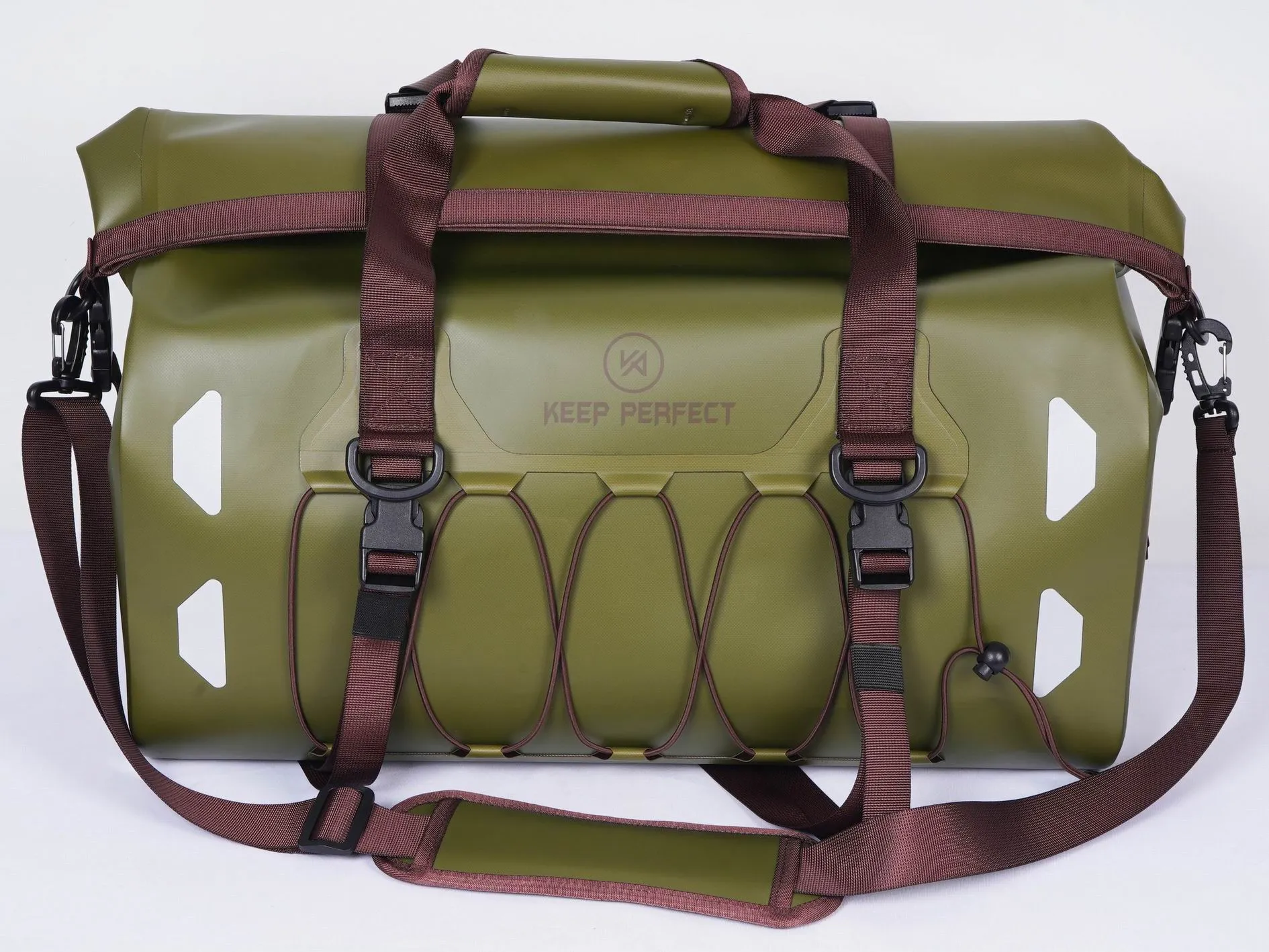
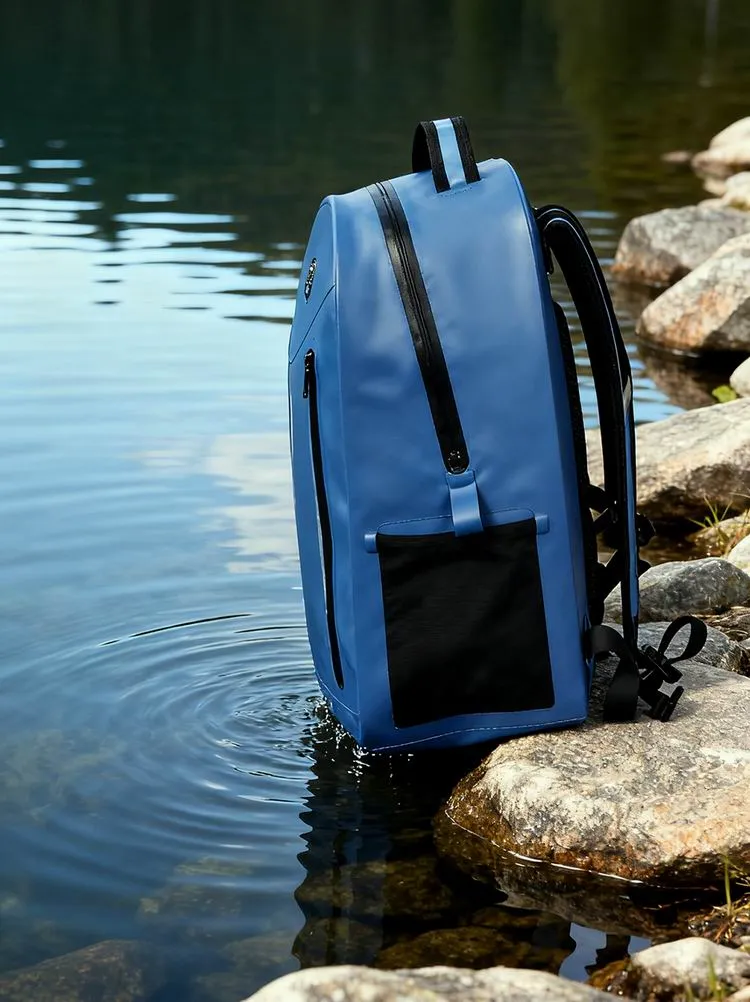
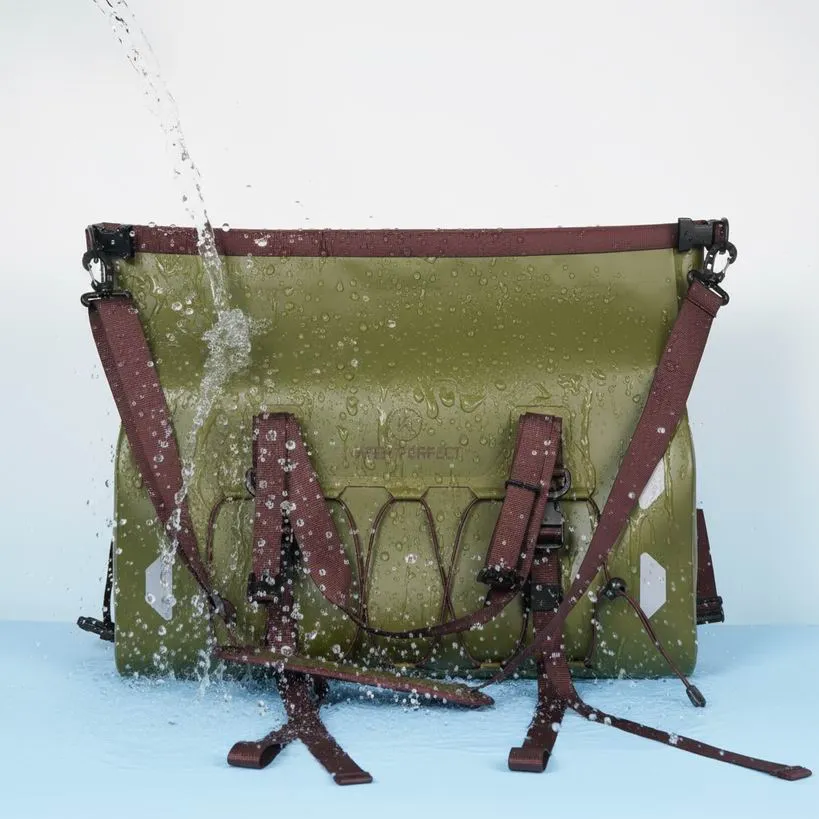
The air fraction: the only number that predicts the saving
Every item in a bag occupies volume as material plus trapped air, and compression can only attack the second term. That is why waterproof compression bags produce wildly different results on different loads and why reviews of the same product disagree so sharply: nobody is reporting the air fraction. Estimate it before buying and the decision becomes arithmetic rather than hope. Treat space saving travel bags as a tool for recovering one to three litres, and you will be satisfied; expect them to halve a bag and you will not.
A quick way to estimate it at home: pack the item loosely into a measuring container, note the volume, then press it firmly by hand and note the volume again. The difference is roughly the compressible air. Most people find that a fleece loses a third of its volume and a pair of jeans loses almost none, which is exactly the pattern the table below describes.
| Load | Approximate air fraction | Realistic volume saving | Damage risk from sustained compression |
|---|---|---|---|
| Down jacket or sleeping bag | 60 to 75 per cent | 40 to 60 per cent while compressed | High; loft loss accumulates over days |
| Synthetic fleece and knitwear | 40 to 55 per cent | 20 to 35 per cent | Low; recovers well |
| Cotton t-shirts and shirts, rolled | 20 to 30 per cent | 10 to 20 per cent | None; creasing is the only cost |
| Denim and heavy woven trousers | 10 to 15 per cent | Under 10 per cent | None; effectively incompressible |
| Shoes and trainers | 5 to 15 per cent | Near zero | Moderate; adhesives and shape suffer |
| Toiletries, bottles, hard objects | Zero | Zero | High; force transfers to the closure |
| Inflatable or foam sleeping mats | Depends entirely on the mat | High if self-inflating | High; foam cells take a set if compressed warm |
Read that table as a portfolio. A traveller carrying two fleeces, a down jacket and eight cotton items has a genuinely compressible load of maybe 40 per cent of the clothing volume, and will recover around two litres from a 40 litre bag. A traveller carrying denim, shoes and a toiletry bag has almost nothing to recover and should not carry the hardware at all.
Three mechanisms, and what each one delivers
Compression is delivered by three distinct mechanisms that are often confused because they look similar on a shelf. Rolling pushes air out through the open end before the closure is made. Straps squeeze the whole package after it is closed, forcing air back out through a valve or through imperfect seals. A one-way valve lets air escape during rolling or squeezing without letting water back in. Most products combine two of the three, and the combination determines both the achievable compression and the water resistance.
| Mechanism | Achievable compression | Water resistance | Failure mode | Best use |
|---|---|---|---|---|
| Roll-top only | Moderate; limited by hand strength and roll length | Genuine, if three-plus rolls are made | Cannot be rolled when the bag is completely full | Small dry bags, 3 to 15 L |
| Roll-top plus one-way valve | Good; air escapes during rolling | Genuine, provided the valve seals | Valve leaks or sticks open | Expedition and long trips, the standard choice |
| External compression straps | Good; mechanical advantage beats hand strength | Depends on the underlying closure | Straps distort the roll and open a leak path | Bulky loads, camping and expedition use |
| Slider or zipper compression | Moderate and even | Only with a coated zip | Zip bursts under load; the classic failure | Travel cubes and suitcase packing |
| Vacuum pump or external extraction | Highest by a wide margin | Requires a fully sealed closure | Slow, bulky, and pointless for daily travel | Storage at home, not travel |
The mechanism table hides an important interaction: straps and rolling fight each other if the bag is not designed for both. A roll-top that is then squeezed by straps tends to deform the roll and open a channel at the fold, which is why purpose-built compression sacks put the valve in the panel rather than relying on the closure to vent. If a product has both straps and a roll-top but no valve, treat the water resistance as approximate.
For travel specifically, the recommended combination is a roll-top with a valve and two light straps. It delivers most of the achievable compression, keeps a genuine seal, and degrades gracefully: lose one roll and the bag still sheds water, whereas a burst compression zip fails completely. The closure trade-offs are examined in our page on zipper and roll-top closures.
Valve designs and how each one fails
The valve is the component that makes a waterproof compression sack work, and it is the component most often chosen last and cheapest. Its job is asymmetric: let air out under a small pressure difference, keep water out under a much larger one. That asymmetry is easy to state and difficult to build cheaply, because the same flexible element has to move one way at a few millibars and hold at a substantial head of water.
- Simple flap or duckbill membranes are cheap and reliable for air release, but they invert under pressure and then leak; they suit roll-top bags that are not submerged.
- Twist or screw caps are robust and user-serviceable, and they are the right choice where the bag may be sat in water, at the cost of an extra motion every time.
- Push-button valves are fast and tactile with cold hands, but the spring or the seal is a consumable part; specify a replaceable one.
- Sintered or hydrophobic membrane vents pass air without a moving part and resist water well, but they clog with salt and detergent residue in marine use.
- Any valve recessed into a panel should be protected from abrasion, because a scuffed seat is a permanent leak that no amount of rolling will fix.
The maintenance consequence is straightforward and rarely stated: rinse the valve in fresh water after any salt or sandy exposure, and operate it a few times before each trip to confirm it has not stuck. A stuck-open valve turns a waterproof sack into an ordinary one, which is a discovery best made at home. Our dedicated page on air release valve systems covers the constructions in more depth, including how valve seats are welded into panels.
Down under compression: what the loft loss actually looks like
Down works by trapping air in a three-dimensional plume structure, and compression flattens those plumes. Short compression is fully reversible: a bag squashed for a two-hour flight recovers essentially all its loft within minutes of being released. Sustained compression is a different phenomenon, because the plumes progressively lose their ability to re-expand and the damage accumulates across repeated cycles.
The practical guidance that follows from how down behaves: compress for transit, release at the destination, and never store down compressed between trips. A bag left in its compression sack for three months will measure measurably lower in loft and correspondingly lower in warmth, and while much of that recovers with airing and tumbling, recovery is incomplete and the loss is permanent in part. Fill power testing, which quantifies exactly this property, is performed by specialist laboratories such as IDFL, and their published methods are the reference for anyone making a claim about loft.
The interaction with moisture is the part that causes real damage. Down compressed while damp compacts into clumps, loses loft far faster than dry down, and can mildew inside a sealed sack within days in a warm climate. So the rule has two parts: dry before compressing, and release as soon as practicable. Travellers who compress a damp jacket on the last morning of a trip and unpack it a week later are the ones who report permanent flattening.
Foam, synthetics and the items that do not recover
Synthetic insulation behaves much better than down under compression, which is one of its genuine advantages, but it is not immune: repeated compression cycles break fibres and the loft declines gradually over years rather than sharply over days. Closed-cell foam is the interesting case, because it survives compression well when cold and takes a permanent set when compressed warm, which is why a foam mat strapped tightly to a pack in direct sun can come back thinner than it left.
- Open-cell and memory foam: worst case. It takes a set quickly and recovers slowly; avoid compressing it for more than a few hours.
- Closed-cell foam: good recovery when compressed cool, poor when compressed warm. Release it before it heats up in the sun.
- Synthetic fill: good recovery, gradual long-term decline. The practical choice for trips with daily compression.
- Down: excellent short-term recovery, poor long-term. Compress for hours, never for weeks.
- Inflatable items: compress fully by design, but never compress an inflatable against a sharp object inside the same sack.
For brands, this is a specification issue rather than a consumer advice point: the foam and padding used in bag structures is subject to the same compression-set behaviour described in our page on foam padding materials, and a compression sack shipped tightly packed from the factory can arrive with its own padding already deformed.
Why a fully waterproof shell compresses worse
There is a real trade-off between waterproofness and compressibility, and it is physical rather than commercial. A coated or laminated shell is effectively airtight, which is exactly what makes it waterproof, and that means air has nowhere to go except through the closure or the valve. An uncoated woven shell leaks air through the fabric itself, so it compresses more easily and more evenly — but it also lets water in.
The consequence is that a waterproof compression sack depends entirely on its valve. Without one, rolling an airtight bag compresses the air inside rather than expelling it, and the result is a hard, springy package that rebounds when released. With a well-placed valve, the difference is dramatic: the same load compresses noticeably flatter and stays compressed because the air has genuinely left.
This is also why the cheapest waterproof compression sacks feel so unsatisfying. They have the airtight shell and the straps, but the valve is either absent or too small to pass air at the rate the load can be compressed, so the user ends up squeezing against trapped air. When evaluating a sample, close the valve deliberately and try to compress it: if it behaves like a balloon, the valve is undersized for the volume. The material side of this trade-off is covered in our guide to film thickness by application.
When compression loses to a smaller bag
Compression hardware and heavier shells cost weight and money to save volume. Before buying, do the arithmetic against the obvious alternative, which is carrying less or carrying a bag that fits the load better. On many trips the alternative wins outright.
| Situation | Compression verdict | Better alternative | Reasoning |
|---|---|---|---|
| Load is mostly denim, shoes and toiletries | Not worth it | Carry fewer heavy items | Air fraction under 15 per cent; nothing to recover |
| Trip has laundry access every three or four days | Marginal | Halve the clothing carried | Volume is not the binding constraint in the first place |
| Winter trip with bulky insulation | Worth it | Compression sack plus a slightly smaller bag | High air fraction; the saving is real, often two to four litres |
| Cabin bag at the dimensional limit | Worth it | Compress only the soft items | Only soft goods respond; compressing hard goods just loads the closure |
| Weight-limited rather than volume-limited flight | Not worth it | Save weight instead | Compression changes dimensions, never kilograms |
| Long expedition with daily repacking | Worth it, with discipline | Compress for the carry, release at camp | The saving compounds across a full pack |
The general rule: compression pays when the load is soft and bulky and the trip is volume-limited. It does not pay when the trip is weight-limited, when the load is structured, or when the traveller could simply carry less. That is unglamorous advice, but it is the difference between a product that gets used and one that gets left at home after two trips.
Compressing wet items: the benefit and the trap
A waterproof compression sack is genuinely useful for wet gear, because it contains the water and shrinks the bulky wet load at the same time. A soaked towel or a swimsuit is both the heaviest and the bulkiest thing most travellers carry on a beach day, and containing it is a real win. The trap is that compressing a wet organic item inside an airtight sack is precisely the condition that produces mildew and odour: warmth, moisture, no airflow.
The safe protocol is short and specific. Compress wet items only for the transit, and open the sack the same day. Wipe the interior and air it before reuse. Never leave a wet load sealed for more than about twelve hours in a warm climate, because that is roughly the point at which odour becomes permanent in a coated liner. Antimicrobial linings slow the process measurably and are worth specifying on any bag sold into humid markets; the options are covered in our page on antimicrobial treatments.
If the wet item is merely damp rather than soaked, a ventilated mesh sack is the better tool. Sealing dampness into an airtight shell manufactures condensation overnight, so the choice between a sealed compression sack and a mesh sack is the choice between containing liquid and allowing evaporation. Travellers who own both use them for different items on the same trip, which is why mixed sets sell better than uniform ones.
Cabin luggage: compression changes dimensions, not kilograms
This is the disappointment to avoid. Airlines limit cabin bags by both dimensions and weight, and compression addresses only the first. A traveller at a 7 kilogram ceiling gains nothing at all from a compression sack, and may lose, because the sack and its hardware weigh 60 to 150 grams. Compression is for travellers who are volume-limited: those on carriers with generous weight allowances and strict sizers, those packing bulky insulation, and those trying to fit everything into a personal-item allowance.
The personal-item case is the strongest one. A soft 20 to 25 litre bag that nominally exceeds a 40 by 30 by 20 centimetre personal-item allowance can often be compressed into compliance at the gate, because the sizer measures the bag as presented, not as specified. That is a legitimate and widely used trick, and it works best with a soft bag and a compressible load — which is the clearest argument for buying soft rather than structured when flying strict carriers.
One caution: do not rely on compression to fit a bag that is genuinely oversized. Gate staff see it daily, a bag that visibly springs back when released will be charged, and the fee exceeds the price of the correct bag. Treat compression as a margin of two or three centimetres, not as a way to carry 40 litres in a 30 litre allowance.
Durability: what repeated compression cycles do to the bag
A compression sack is a fatigue product. It is loaded, squeezed and released daily, and the cycle stresses components that a dry bag never stresses: the valve seat, the weld lines at the panel corners, and the strap anchors. Field failures follow that order, with the valve seat leading by a wide margin because it is a small bonded area subjected to flexing every time the bag is squeezed.
- Valve seat: the first thing to fail. Look for a welded or over-moulded seat with a generous flange rather than a bonded disc.
- Corner welds: repeated over-pressure concentrates stress at the corners; rounded corners distribute it and cost nothing to specify.
- Strap anchors: shock loading from a bulky load pulls anchors out before it tears webbing. Box stitching into a seam, or a welded anchor patch, is the fix.
- Closure: rolling the same crease line every day work-hardens coated fabric. A slightly longer collar lets the roll position vary.
- Abrasion: compressed bags are dragged across surfaces more often because they are small and stiff; a heavier base panel is worth the grams.
The testing implication is that a compression sack needs a cycle test rather than a static one. Inflating it once and checking for leaks proves very little; inflating, compressing and releasing a few hundred times is what predicts field life. Zippered versions should be tested to the same standard applied to any load-bearing closure, as described in our page on zipper durability testing, and the cycling methods published by ASTM International give both sides a common reference.
Storage, care and the habits that preserve loft
The way a compression product is stored between trips determines more of its life than how it is used on them. Four habits cover it, and all four are free.
- Store empty, open and dry. Never store down or synthetic insulation compressed; use a large breathable storage sack instead.
- Rinse the valve and the closure in fresh water after salt or sand exposure, then operate the valve a few times before it dries.
- Dry the interior fully before the bag goes into storage; a sealed damp sack grows mould in weeks and the smell is effectively permanent in a coated liner.
- Avoid heat. A compression sack left in a hot vehicle with foam or insulated contents inside will produce permanent compression set.
- Release the straps whenever the bag is not in transit; webbing and foam both hold a set if left tensioned for weeks.
One diagnostic worth running annually: close the bag with a little air in it, press firmly, and listen and feel at the valve. Any hiss at the seat, or a valve that does not hold pressure for a minute, means the seal is degrading and the bag should be demoted to non-critical duty rather than trusted with a sleeping bag. It takes thirty seconds and prevents the worst kind of field discovery.
Sourcing a compression range: specification priorities
For a brand, compression products are attractive because the value proposition is easy to demonstrate on a shelf and the category has strong repeat purchase. They also carry a specific set of specification risks, and the three that generate warranty claims are an undersized valve, an anchor that pulls out, and a closure that the user cannot operate cold. Addressing those three costs very little per unit.
| Decision | Risk if done poorly | Specification that avoids it | Commercial effect |
|---|---|---|---|
| Valve type and size | Bag will not compress; feels like a balloon | Valve sized to the bag volume, welded seat, replaceable if a moving-part design | The single biggest driver of reviews in this category |
| Closure choice | Burst zip or a roll that cannot be made when full | Roll-top with sufficient collar length; avoid zipper compression above 15 L | Returns concentrate on closures more than on fabric |
| Strap anchors | Anchor tears out under shock load | Box-stitched or welded anchor patch, tested in cycle not statically | Field failures are photographed and shared |
| Shell material | PU coating flakes in humid markets | TPU or a higher-grade coating; see TPU versus PVC | Warranty cost concentrates in tropical markets |
| Set composition | Uniform sizes that do not map to real loads | Ladder of 5, 10 and 20 L plus one mesh piece | Differentiated sets sell complete; uniform ones sell singly |
Packaging and freight deserve a note, because compression products are bulky relative to their weight and ship as air unless nested. Ship them nested and loose rather than individually boxed, and confirm the retail packaging cube before artwork is finalised; that decision is covered in more detail in our page on packaging options for wholesale orders. Hardware selection for straps and buckles follows the same logic as any load-bearing component, set out in hardware selection.
Volume planning is straightforward here: minimum order quantity is 500 pieces per style, and each size in the ladder counts as a style, so a three-size compression ladder plus a mesh piece is a four-style programme. If you want that quoted against your own specification, send the size ladder, valve preference, material tier and target volumes. Sampling takes 6–10 working days, bulk production runs 35–50 days, and quotations are issued FOB Xiamen.
Frequently Asked Questions
Q1. How much space does a compression bag actually save?
It removes only the air in the load. Expect around 40 to 60 per cent on down, 20 to 35 per cent on fleece, under 10 per cent on denim, and nothing at all on shoes or bottles.
Q2. Why does my compression sack feel like it will not compress?
Because a waterproof shell is airtight and the air has nowhere to go. If there is no valve, or the valve is undersized, you are squeezing trapped air rather than expelling it.
Q3. Are vacuum compression bags worth it for travel?
Rarely. They give the biggest volume reduction but they are slow, bulky, need a pump and are pointless for daily repacking. They suit home storage rather than travel.
Q4. Does compressing a down jacket ruin it?
Not for a few hours. Sustained compression over days or weeks causes loft loss that is only partly recoverable, and compressing down while damp is significantly worse.
Q5. Can I store my sleeping bag in its compression sack between trips?
No. Store it loose in a large breathable sack. Long-term storage in a compression sack produces measurable, partly permanent loft loss.
Q6. What is the best closure for a compression sack?
A roll-top with a one-way valve and two light straps. It compresses well, keeps a real seal, and degrades gracefully. Zippered compression fails abruptly and is best kept below 15 litres.
Q7. What are the main valve failure modes?
A stuck-open flap that destroys water resistance, a scuffed or abraded seat that leaks permanently, and clogging from salt or detergent residue. Rinse and operate the valve before each trip.
Q8. Does compression help with airline weight limits?
No. Compression changes dimensions, not kilograms. It helps with strict sizers and personal-item allowances, and it is irrelevant at a 7 kilogram weight ceiling.
Q9. Can I compress wet items in a waterproof sack?
Yes for the transit, but open it the same day. Compressed wet fabric in an airtight, warm sack develops mildew and permanent odour within roughly twelve hours.
Q10. Should damp items go in a compression sack or a mesh sack?
A mesh sack. Sealing dampness into an airtight shell manufactures condensation overnight; mesh lets it evaporate. Use sealed compression for genuinely wet items only.
Q11. What fails first on a compression bag?
The valve seat, followed by corner welds and strap anchors. It is a fatigue product, so it should be cycle-tested rather than tested once under static pressure.
Q12. Is a coated or uncoated shell better for compression?
An uncoated shell vents air through the fabric and compresses more easily, but lets water in. A coated shell needs a properly sized valve to compress at all, and is the right choice when water protection matters.
Q13. How do I stop a compression sack smelling?
Dry the interior fully before storage, rinse after salt or sand exposure, and never leave wet contents sealed overnight. Antimicrobial linings help measurably in humid climates.
Q14. What sizes should a compression range cover?
A ladder of 5, 10 and 20 litres maps to real loads, plus a mesh piece for damp items. Evenly spaced sizes do not match what people actually pack.
Q15. What is the minimum order quantity for custom compression bags?
500 pieces per style. Each size counts as a style, so a three-size ladder plus a mesh piece is planned as a four-style programme rather than one product.
Q16. How should compression bags be shipped to keep freight sensible?
Nested and loose rather than individually boxed. They are bulky relative to their weight and ship as air otherwise, so packaging cube should be settled before artwork is finalised.
Q17. How long does development take for a custom compression sack?
Sampling is 6–10 working days once the specification is agreed and bulk production runs 35–50 days. Both figures assume the valve type, closure and size ladder are settled before sampling starts.
People Also Ask
How much volume do compression bags really save?
Only the air in the load: around 40 to 60 per cent on down, 20 to 35 per cent on fleece, and almost nothing on denim, shoes or bottles.
Is it bad to leave a down jacket compressed?
Yes beyond a few hours. Sustained compression causes loft loss that only partly recovers, and compressing it damp is considerably worse.
Do compression bags help with airline weight limits?
No. They reduce dimensions, not kilograms. They help only when the limit is a sizer or a personal-item allowance.
What is a one-way valve for on a dry bag?
It lets air out while the bag is rolled or squeezed without letting water back in. Without it, an airtight shell cannot compress.
Can I put wet clothes in a compression sack?
For a few hours, yes. Open it the same day, since compressed wet fabric in a warm sealed sack develops mildew and lasting odour.
What is the minimum order for custom compression bags?
500 pieces per style, and each size in the ladder counts as a separate style when planning the programme.