A wholesale waterproof bag ships in packaging that decides how it arrives, how it sells and how much the program actually costs. The standard factory default — a plain polybag inside a master carton — protects the bag and nothing more. Every option beyond that default, from a printed hangtag to a full retail box, is a deliberate decision with its own cost, minimum quantity and factory workflow. This guide maps the complete option set so brands specify packaging once and correctly.
QUANZHOU JUNYUAN BAGS: custom waterproof bag production since 2014, 4,950 m² SGS-verified facility. We produce packaging to customer specification alongside the bags themselves — polybags, hangtags, inserts, belly bands, gift boxes and retail-ready cartons — because packaging is the last manufacturing step and the first customer touchpoint.
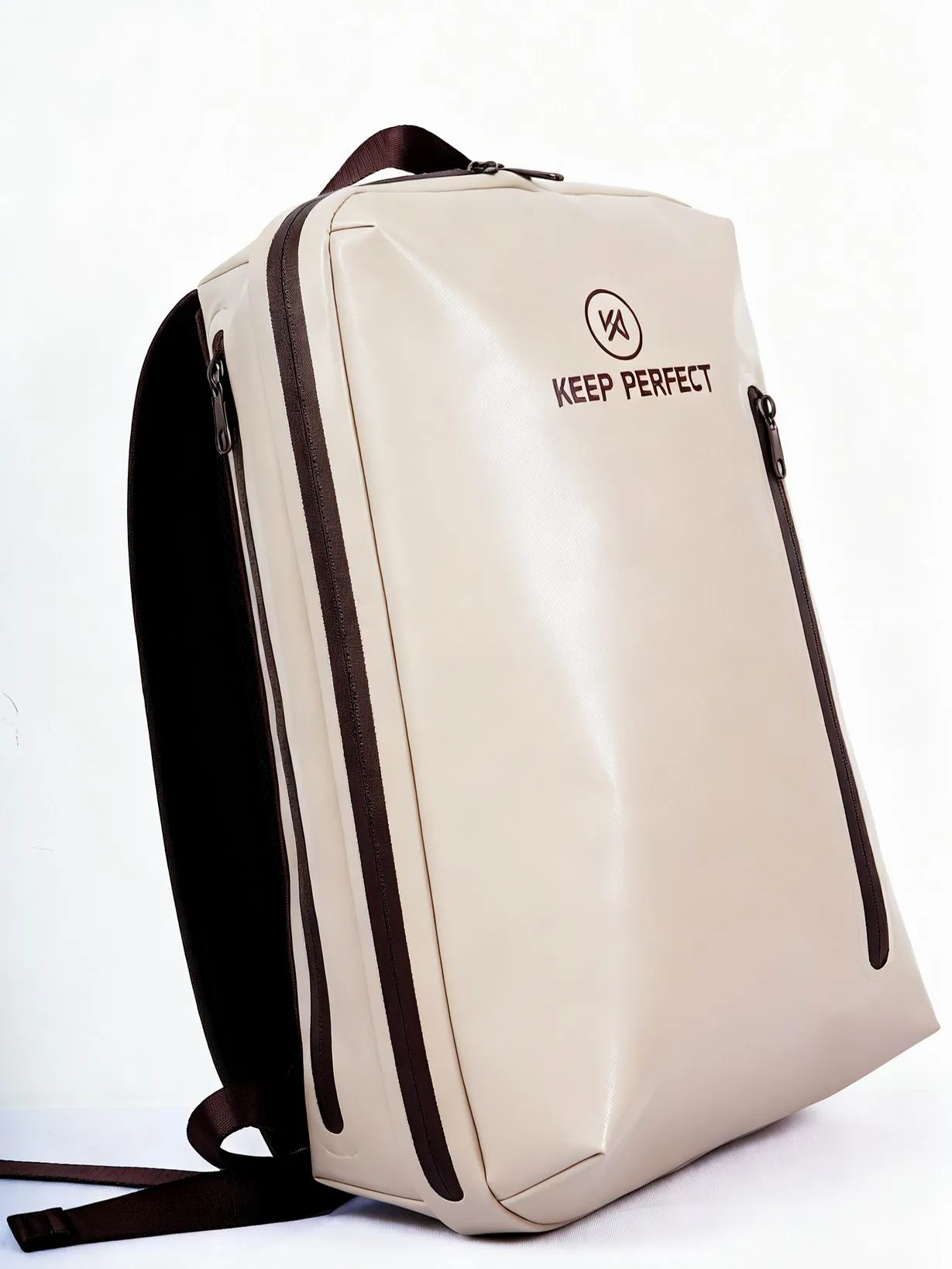
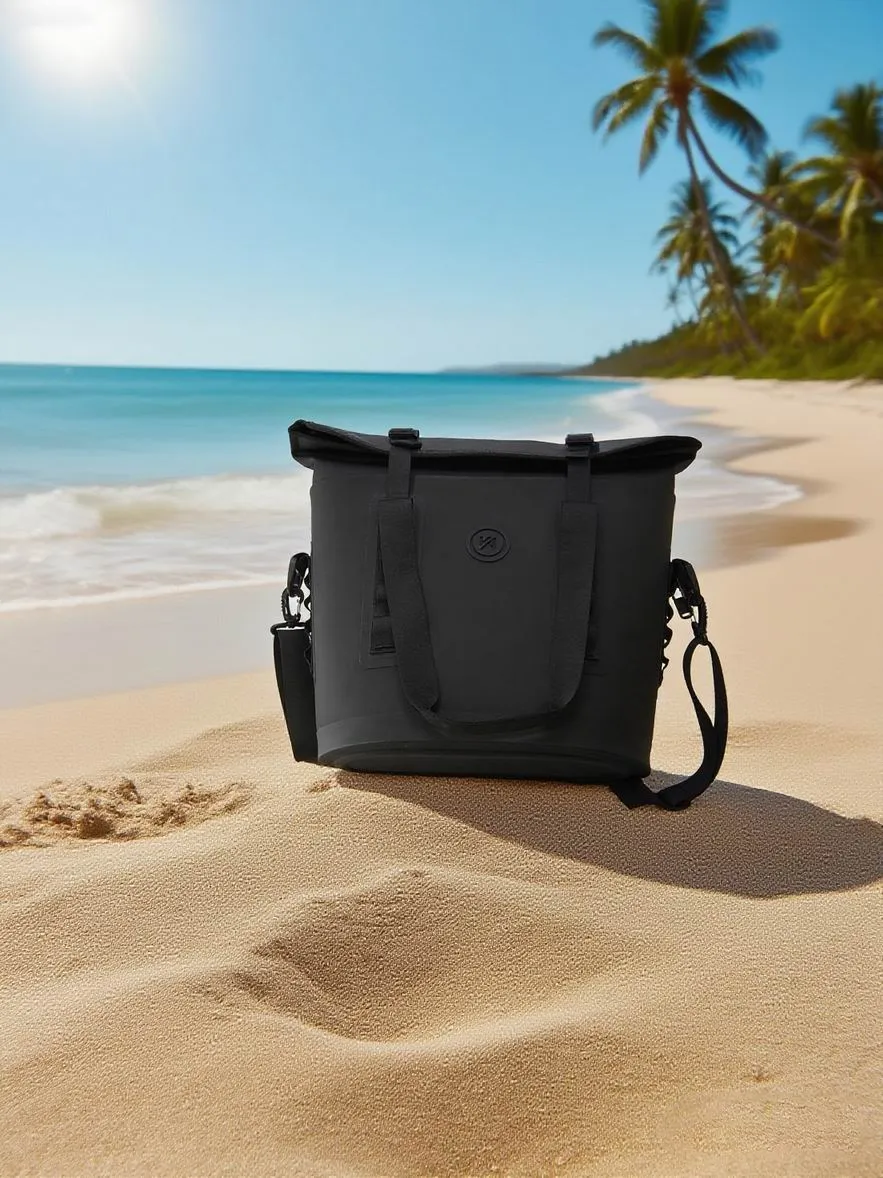

The default stack: what ships when nothing is specified
Every waterproof bag factory has a default packaging stack, and it is worth naming explicitly because it is what a purchase order gets by silence. One bag in one plain polybag — usually LDPE, unprinted, sometimes with a suffocation warning — folded flat. Twenty to fifty polybagged units in one five-ply corrugated master carton. The carton sealed with tape, strapped, and labeled with a shipping mark. This stack is not lazy; it is the lowest-cost configuration that reliably delivers bags without damage.
The default stack costs roughly one to three percent of unit value and requires no minimums beyond the bag order itself. It exists because freight is priced on volume and weight, and because a bag is not a fragile retail object until the buyer decides it is one. Understanding the default matters because every custom option is priced as a delta above it — a delta in unit cost, a delta in minimum quantity, and a delta in lead time, since printed packaging components carry their own production schedules that the bag line must wait for.
The core menu: polybags, hangtags and carton print
Three upgrades sit at the entry level of custom packaging because they touch every unit and cost pennies to dimes. The printed polybag replaces the plain bag with the brand’s logo, and usually requires a cylinder or plate charge of $50-150 and a minimum run of 5,000-10,000 bags — meaning the first program typically buys ahead and warehouses the surplus. The hangtag is a printed card with string or a plastic fastener carrying branding, care instructions and a barcode; at $0.03-0.08 per tag with minimums around 1,000-3,000, it is the cheapest branded touchpoint that exists. The printed master carton replaces the unmarked box with branded outer packaging; cartons print at minimums of 300-500 units and add $0.10-0.30 per carton, which amortizes to under a cent per bag.
| Option | Unit cost delta | Typical MOQ | Lead-time impact |
|---|---|---|---|
| Printed polybag | $0.02-0.05 | 5,000-10,000 bags | +7-14 days first run |
| Hangtag + fastener | $0.03-0.08 | 1,000-3,000 pcs | +5-7 days |
| Printed master carton | $0.10-0.30/carton | 300-500 cartons | +5-10 days |
| Insert card (inside polybag) | $0.02-0.06 | 1,000-5,000 pcs | +3-5 days |
| Belly band / sleeve | $0.05-0.12 | 1,000-3,000 pcs | +5-7 days |
The insert card deserves special mention for e-commerce programs: a card slipped into the polybag with care instructions, a QR code for warranty registration or a review request costs almost nothing and turns a shipping container into a brand channel. Wholesale buyers ordering for resale often skip insert cards; brands selling direct should treat them as standard.
Retail-ready upgrades: boxes, sleeves and display trays
Bags destined for physical retail shelves need packaging that sells, not just protects. The gift box or retail box — a printed rigid or folding carton sized to the folded bag — runs $0.40-1.50 per unit depending on board weight and print coverage, with minimums of 1,000-3,000 pieces. The box must be engineered to the folded dimensions of the specific bag, which means the packaging design process starts after the bag’s folding spec is frozen, not before. A roll-top dry bag folded to 25 × 15 × 5 cm needs a different box than the same bag folded to 30 × 20 × 8 cm, and the folding method must be documented in the packing instruction so every unit matches the box.
The belly band offers a middle path: a printed paperboard sleeve wrapped around the folded bag, showing the product while carrying the branding, at roughly a third of box cost. Display trays and PDQ (product display quick) units serve club stores and promotional retail — a printed tray holding 12-24 units that the retailer drops straight onto the shelf. Display packaging adds both unit cost and carton volume, so freight math must be re-run: a bag that shipped 500 units per pallet in polybags may drop to 320 in display trays, and the freight delta belongs in the packaging decision, not as a surprise on the shipping invoice. Our retail packaging design guide covers the shelf-facing design rules in detail.
The unboxing tier: kits for direct-to-consumer programs
Direct-to-consumer brands buy packaging as marketing. The full DTC kit — printed mailer box or poly mailer, branded tissue or insert, thank-you card, warranty card, stickers — adds $0.80-2.50 per unit but converts the delivery moment into a brand event that customers photograph and share. The factory’s role in the DTC kit is kitting: assembling multiple components per unit at the packing station, which is a labor operation priced per minute. A kit with four components adds packing labor of roughly one to two minutes per unit; at scale this is a real cost line, and it is why kit contents should be consolidated — two cards that carry four messages beat four separate cards.
Waterproof bags have one unboxing advantage most products lack: the product itself is a reusable container. Smart DTC programs ship the bag folded inside a minimal mailer with a card explaining that the packaging was deliberately reduced because the bag is the durable object. This converts a sustainability posture into cost savings — a pairing our packaging sustainability guide frames as the negative-cost improvement: less material, less freight, better story.
Barcodes, compliance marks and the hidden requirements
Packaging carries obligations that are easy to forget in the design phase and expensive to fix at the dock. Retail programs require scannable barcodes — UPC or EAN — on every sellable unit, and the code must be registered to the brand through GS1, not generated free online; the GS1 barcode standards define the symbologies retailers scan at receiving. Master cartons need ITF-14 case codes for automated warehouse receiving. The polybag itself is regulated in most markets: suffocation warnings are mandatory above certain opening sizes, and several jurisdictions now require recycled-content percentages and resin identification codes printed on the film.
- UPC/EAN on every sellable unit — registered to the brand via GS1, verified with a scanner, not just printed
- ITF-14 case code on master cartons for retail distribution programs
- Suffocation warning on polybags above the threshold opening size, in the destination-market languages
- Resin identification code and recycled-content marking where the destination requires it
- Country of origin marking on unit packaging — "Made in China" legible and permanent
- FSC or recycled-content certification marks on paper components, only if the certified material is actually used
Retail chargebacks are the enforcement mechanism: a major retailer will fine a vendor per carton for missing or unscannable codes, and the fines routinely exceed the entire packaging budget. The factory’s packing instruction should name every mark, its placement and its verification method, and the AQL inspection should include barcode scan verification on sampled units.
Cost architecture: what each tier really adds
Packaging cost decisions should be made on fully-loaded arithmetic, not unit price. The visible line is the component cost — dimes for tags, dollars for boxes. The invisible lines are the freight delta from added volume, the labor delta from kitting operations, the warehousing of packaging component minimums, and the obsolescence risk when branding changes before the printed stock is consumed. A $0.50 retail box on a $12 bag is a four percent component add, but if it cuts pallet density by thirty percent, the landed-cost delta approaches eight percent — and eight percent of landed cost is typically the entire gross margin of a wholesale program.
| Tier | Added unit cost (typical) | Freight impact | Best fit |
|---|---|---|---|
| Default polybag + carton | $0 baseline | Baseline density | B2B wholesale, distributor programs |
| Branded core (tag + insert + printed carton) | $0.08-0.20 | Negligible | E-commerce wholesale, brand-building on budget |
| Retail-ready (box or sleeve) | $0.50-1.80 | -20-40% pallet density | Physical retail, gift channels |
| DTC unboxing kit | $0.80-2.50 | -10-25% density | Direct-to-consumer, premium positioning |
| Display / PDQ | $0.40-1.20 + tray | -30-50% density | Club stores, promotional retail |
The decision rule that survives contact with reality: spend packaging money where the customer touches the package. B2B programs where a distributor opens the carton should spend on durability and labeling. DTC programs where the customer films the opening should spend on the kit. Programs in between should spend on the tag and the insert — the cheapest touchpoints with the highest visibility per dollar.
MOQs, warehousing and the surplus stock problem
Printed packaging components carry minimums set by their own producers — the polybag film printer, the carton plant, the tag printer — and those minimums rarely match the bag program’s first order size. A 500-bag first order facing a 5,000-bag polybag minimum has three honest options: buy the full print run and warehouse 4,500 surplus bags for the reorders, start with a plain polybag plus a branded hangtag that carries the identity at lower minimum, or use a sticker or stamp on the plain bag as a bridge. Most disciplined programs choose the hangtag bridge, because it defers the film-printing commitment until order volumes justify it.
The surplus stock problem recurs at every rebrand. Printed packaging is obsolete the moment the logo, address or certification mark changes, and brands that printed 10,000 boxes to hit a price break have thrown away 6,000 of them more often than the industry admits. The mitigation is design discipline: keep variable data — addresses, codes, seasonal marks — on stickers and labels, and keep printed components to elements that never change. A carton that prints only the logo survives every other change in the business. Our MOQ guide covers how packaging minimums interact with bag minimums when structuring a first order.
Quality control on the packing line: inspecting the last step
Packaging quality fails quietly: the bag passes every test, then arrives in a crushed carton with an unscannable code, and the customer experience is defined by the failure the bag never had. Packing-line QC therefore inspects the packaging with the same rigor as the product. The packing instruction is the reference document — fold dimensions with a tolerance, component placement with a photo, tape pattern, carton weight range — and the line leader signs against it at the start of each shift. First-article inspection applies to packing exactly as it applies to sewing: the first fully packed carton of the run is opened, measured and photographed against the specification before the line proceeds.
The AQL inspection extends to packaging defects with their own classification: an unscannable barcode is a critical defect because it blocks the sale; a wrong-language warning is critical because it breaches regulation; a misprinted logo or scuffed box is major; a slightly crooked hangtag is minor. Carton drop tests — one sample carton dropped on the corner, edge and face from conveyor height — belong in the protocol for any program shipping parcel-post, because the parcel network is the harshest environment the packaging will ever meet. The brands that treat packing as an inspected process rather than an afterthought are the ones whose packaging budgets stop paying for damage claims.
Briefing the factory: the packaging specification block
Packaging failures trace to vague briefs more often than to factory error. "Retail packaging" means nothing; a specification block means everything. The block names every component with material, dimensions, print specification and artwork reference; the packing method with folding dimensions and orientation; the marks with placement; and the verification method for each element. Artwork ships in the printer’s format — vector files, dielines on the correct template, color callouts in Pantone where the match matters — and the factory produces a pre-production sample of the complete packed unit for approval before bulk packing begins.
- Component list: every item with material, size, print spec and artwork file reference
- Packing method: fold dimensions, orientation, what faces up, closure method
- Marks: every barcode, warning and origin mark with exact placement
- Verification: what the AQL inspector checks — scan the code, read the warning, measure the fold
- Pre-production sample: one fully packed unit approved before bulk packing starts
- Surplus plan: where leftover printed components live and who owns them
The packed-unit sample is the discipline that catches the failures a bag sample cannot: the box sized for the wrong fold, the hangtag string that scratches the coating, the insert card printed upside down relative to the opening. Ten days spent on a packaging sample saves the container that arrives with ten thousand units packed wrong. Six lines close the brief: components specified line by line, packing method documented, marks placed and verified, packed-unit sample approved, surplus stock planned, and the whole block executed by a factory packing 200,000 pieces monthly — sampling in 6–10 working days, bulk 35–50 days, FOB Xiamen, SGS-verified — documented end to end. The shipping and logistics guide picks up where this one ends — palletization, container loading and the carton engineering that survives the voyage.
Frequently Asked Questions
Q1. What is the cheapest way to brand wholesale waterproof bag packaging?
A printed hangtag plus an insert card. Together they add roughly $0.05-0.14 per unit with minimums of 1,000-3,000 pieces, and they brand every unit without touching the polybag or carton print minimums.
Q2. What minimums should I expect for custom packaging?
Printed polybags run 5,000-10,000 bags; printed cartons 300-500; hangtags and insert cards 1,000-3,000; retail boxes 1,000-3,000. Component minimums are set by the packaging printers, not the bag factory.
Q3. Does custom packaging delay the bag order?
Yes on the first run — printed components add 5-14 days of their own production time, which runs in parallel with bag production if briefed early. Late packaging briefs are a common cause of missed ship dates.
Q4. What barcodes do I need for retail?
A GS1-registered UPC or EAN on each sellable unit and an ITF-14 case code on master cartons for distribution programs. Codes must be registered to the brand and scanner-verified, not just printed.
Q5. Are suffocation warnings required on polybags?
In most destination markets, yes, above a threshold opening size — and in the destination languages. The warning is usually printed on the film during the polybag production run.
Q6. How much does a retail box add to landed cost?
Component cost of $0.40-1.50 plus a freight delta from reduced pallet density — typically twenty to forty percent fewer units per pallet. Fully loaded, retail boxing often adds six to eight percent to landed cost.
Q7. Who owns leftover printed packaging after the order ships?
The buyer, unless the contract says otherwise. Specify storage: the factory can warehouse surplus components for reorders, usually free for a period, which is the standard handling for print-run minimums.
Q8. Can packaging be sustainable without costing more?
Often it costs less — right-sizing cartons, eliminating void fill and consolidating kit components reduce both material and freight. The trade-offs and certification marks are mapped in our packaging sustainability guide.
Q9. What is a packed-unit pre-production sample?
One fully packed unit — bag, all packaging components, all marks — produced and approved before bulk packing. It catches box-size, fold and placement errors that a bag-only sample cannot.
Q10. Should packaging artwork be final before the bag order starts?
The components that print early — polybag film, cartons — should be final at order placement. Tags and inserts have shorter print schedules and can trail by a few weeks, but every day of artwork delay risks the ship date.
Q11. How do club-store display trays change the freight math?
Display packaging cuts pallet density thirty to fifty percent because the tray is volume the customer pays to ship. Re-run the landed-cost model with display packaging before committing to a club program quote.
Q12. What goes wrong most often in custom packaging?
The box sized to the wrong fold, the barcode that does not scan, the warning in the wrong language, and the artwork that arrived as a JPEG instead of a vector dieline. All four are caught by the packed-unit sample and the specification block.
People Also Ask
What packaging do waterproof bags ship in by default?
One bag in a plain polybag, twenty to fifty units in a five-ply corrugated master carton. The default costs one to three percent of unit value and every custom option prices as a delta above it.
How much does custom packaging cost for wholesale bags?
Branded core elements add $0.08-0.20 per unit, retail boxes $0.50-1.80, and full DTC unboxing kits $0.80-2.50 — before the freight delta from reduced pallet density, which often exceeds the component cost.
What is the minimum order for printed polybags?
Typically 5,000-10,000 bags because the film printer sets the minimum. Programs below that volume bridge with a plain bag plus branded hangtag until order sizes justify the print run.
Do I need a barcode on my waterproof bag packaging?
For retail programs, yes — a GS1-registered UPC or EAN on every sellable unit, plus ITF-14 case codes on master cartons for distribution. Missing codes trigger retail chargebacks that exceed the packaging budget.
How do I avoid surplus printed packaging waste?
Keep variable data — addresses, codes, seasonal marks — on stickers, and print only permanent elements on components. Surplus stock from print minimums should be warehoused for reorders under a plan named in the purchase order.
Can the bag factory handle packaging too?
Yes — factories source packaging components from partner printers and handle kitting and packing in-house. The buyer’s job is the specification block, the artwork in printer format, and approval of the packed-unit sample.