Family travel breaks waterproof bags for a reason that has nothing to do with rain: volume and hands. A couple generates maybe two wet items on a beach day; a family of four generates ten to fourteen, plus a leaking bottle, plus a sandy toy, and it all has to be dealt with by an adult who is holding a child, a ticket or a pushchair with at least one hand. A bag that is technically waterproof and operationally useless will be set down in the wettest place available, which is how gear actually gets soaked. The design brief for family travel is throughput and one-handed access, and waterproofing comes third.
This guide quantifies that throughput first, then works through the one-handed rule, bottle and snack leaks and what sugar does to a zip, sand and grit as an abrasive, stroller hook point loads and where family bags get left, colour coding and the lost-swimsuit problem, how to allocate bags across four people, rinsing and cleaning cycles, hygiene in a sealed wet compartment, a packing plan by child age, and what a brand should specify for a family range. QUANZHOU JUNYUAN BAGS has produced custom waterproof bags since 2014 in a 4,950 m² SGS-verified facility: MOQ 500 pieces per style, sampling in 6–10 working days, bulk in 35–50 days, FOB Xiamen.
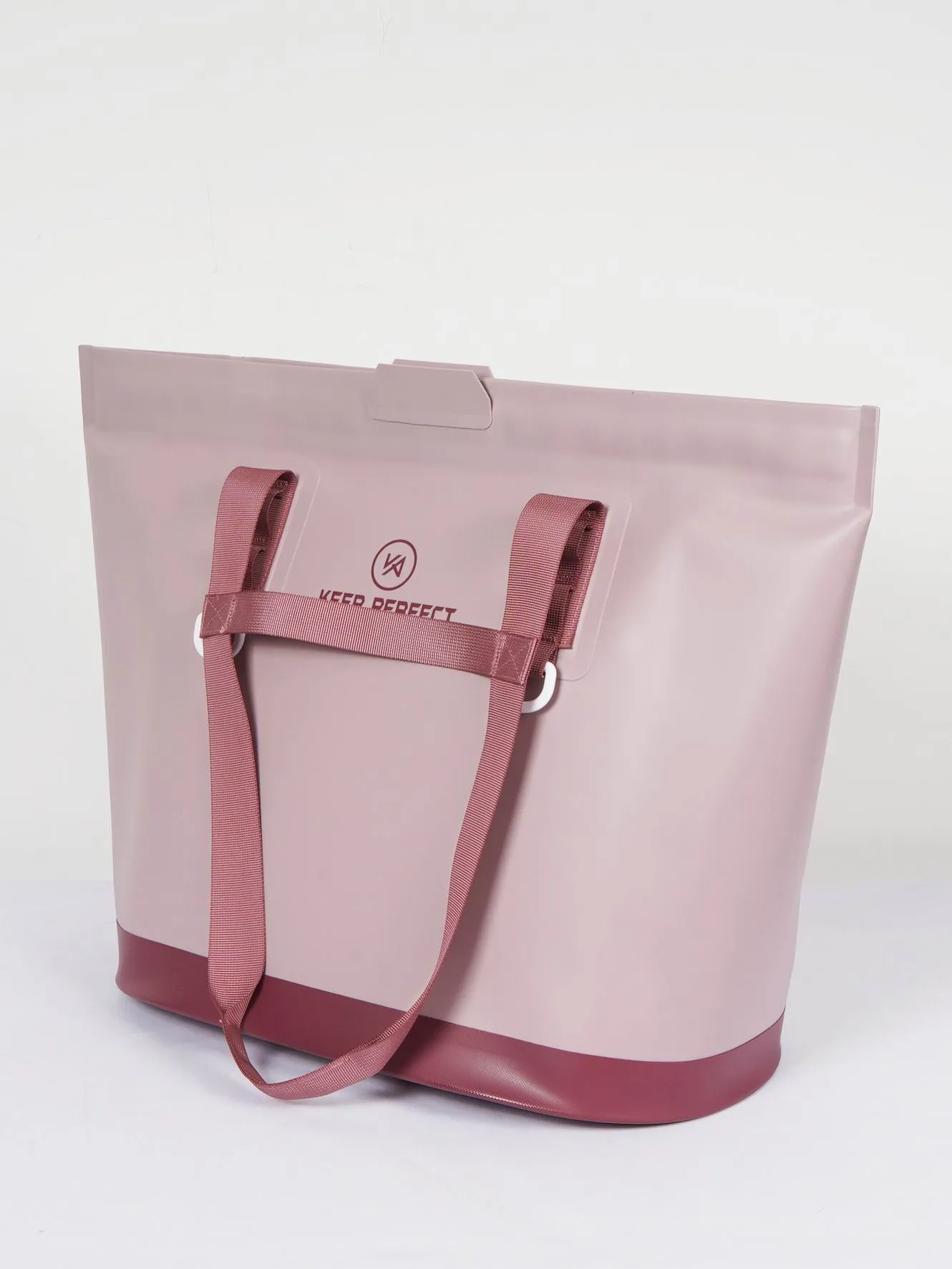
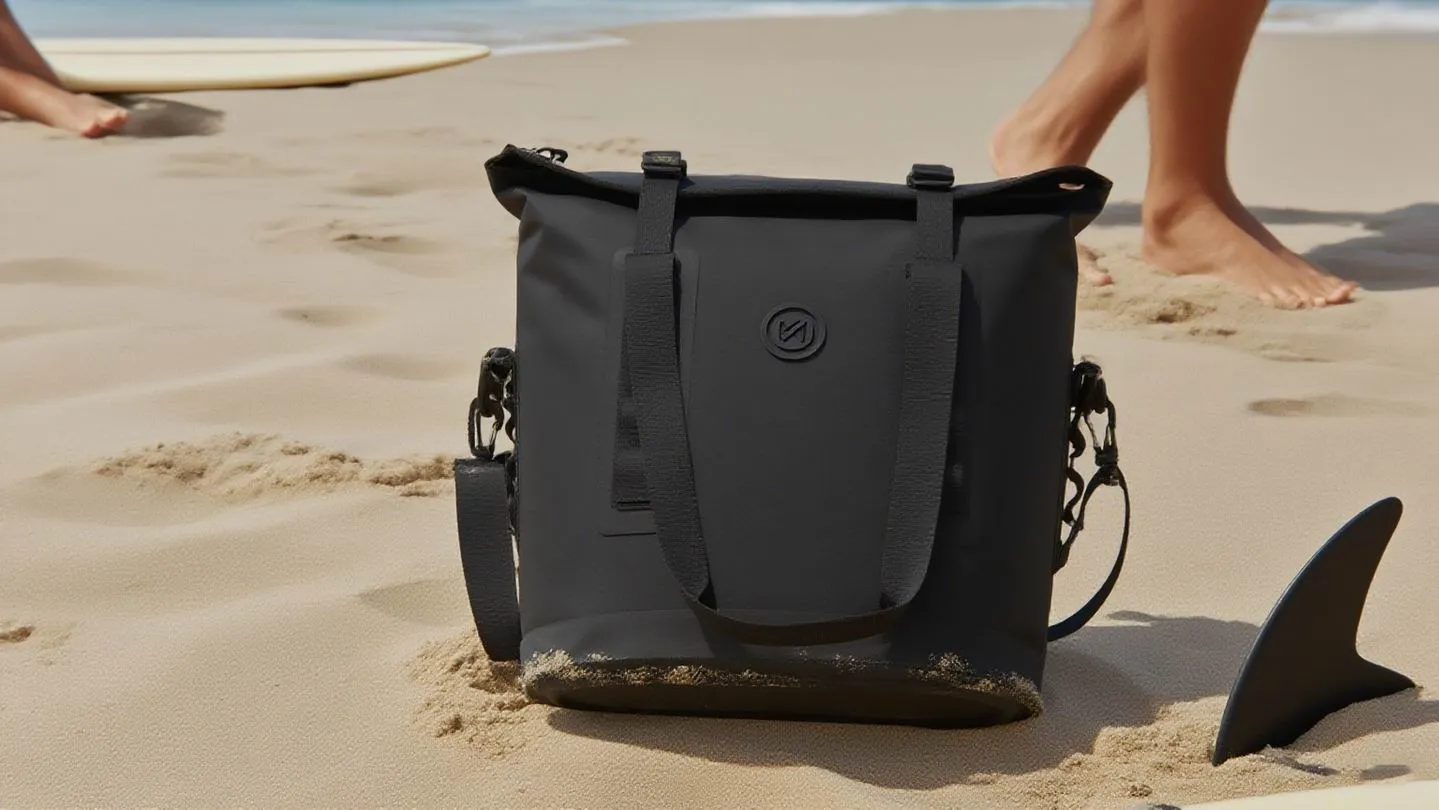
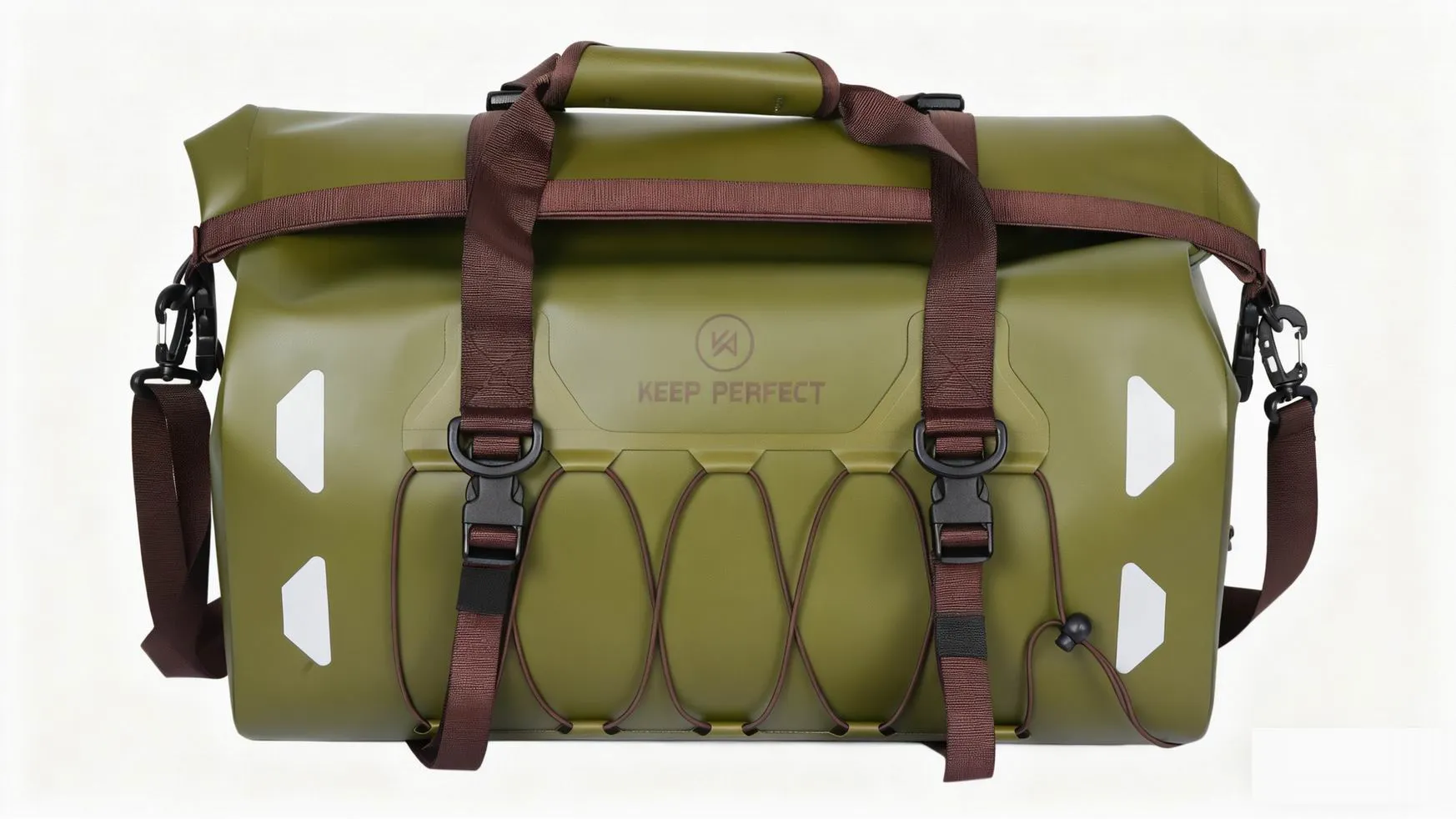
Family waterproof packing is a throughput problem before it is a waterproof problem
The first mistake parents make is buying one big waterproof bag. The second is buying it on a rating. What actually decides whether a family trip works is how many wet items arrive at the accommodation each evening and whether there is somewhere to put them that is not the carpet. Good family travel waterproof bags are therefore specified by wet volume per day rather than by litres of clothing, and good kids gear dry storage is a set of small colour-coded containers rather than one large compartment.
Throughput matters because wet items accumulate faster than they dry. On a beach holiday in a humid place, a swimsuit worn at ten in the morning is still damp at six in the evening. On day three the family has six damp swimsuits, four damp towels and a collection of sandy toys, and no single bag handles that well. The system answer is a wet compartment that can be emptied and rinsed in under two minutes plus enough small dry bags that each person’s wet items never mix.
The hands constraint is the other half. An adult travelling with a small child has, in practice, one free hand for most of the day. Any closure that needs two hands and a flat surface will be left open, or the bag will be put down. That single ergonomic fact eliminates a surprising number of otherwise excellent bags, and it is the criterion most parents only discover on day two of the first trip.
Count the wet load: how much wet volume a family really generates
Before buying anything, do the arithmetic for one ordinary day. A beach or pool day with two children produces two swimsuits, two towels, two rash vests, one change of underwear per child after an accident or a spill, a sandy bucket and spade set, one leaking snack container, and possibly a wet sun hat and a pair of shoes. That is roughly eight litres of genuinely wet volume and about three litres of damp-and-sandy volume, every day, with almost no drying between days in a humid destination.
| Family profile | Wet items per beach day | Wet volume to manage | Bag configuration that copes |
|---|---|---|---|
| Couple, no children | 2 to 3 items | 2 to 3 litres | One 30 litre bag with a 5 litre wet compartment |
| One adult, one toddler | 6 to 9 items | 6 to 9 litres | 35 litre main bag plus two 5 litre colour-coded dry bags |
| Two adults, two children under 8 | 10 to 14 items | 10 to 14 litres | 45 litre duffel with welded wet zone plus four 5 litre dry bags |
| Two adults, three children | 14 to 20 items | 15 to 20 litres | Two bags: one wet, one dry, plus five labelled dry bags |
| Multi-generational group of six | 18 to 26 items | 20 to 28 litres | Wet duffel at the accommodation plus individual day bags |
| Theme park with water rides | 8 to 12 items, sudden | 8 to 12 litres in one hour | Two 8 litre dry bags carried in the stroller basket |
Read that table as a shopping list and the conclusion is that a single bag is rarely the answer for families of four or more. Two bags with different jobs — one dry and protected, one wet and hose-able — outperform one large bag with a clever divider, because the wet bag can be left open to dry on a balcony without exposing the dry contents. It is also cheaper, since a plain welded duffel costs less than a compartmentalised technical bag.
There is a second, less obvious benefit to splitting. When the wet bag is separate, children can be given responsibility for their own dry bag, which reduces the number of items an adult is tracking by roughly half. Parents consistently report that the lost-item problem drops once each child owns a coloured bag, and the same principle is discussed for water park and theme park days, where the wet event is sudden rather than gradual.
The one-handed rule: a bag you cannot open while holding a child
Test every candidate bag with one hand behind your back, holding the strap with the other, in a shop. If it cannot be opened, searched and closed in that position, it will fail in the field. Roll-tops are the usual casualty: unrolling three turns needs two hands and somewhere to put the bag down, and the place a parent puts it down is a wet poolside, a sandy path or a public toilet floor.
- A wide-mouth opening that stays open on its own beats a narrow roll-top collar, because you can see and reach without holding the bag open.
- Magnetic or hook-and-loop flap closures can be worked one-handed; buckles with two-part release generally cannot, because the bag swings.
- A light-coloured interior matters more than it sounds: finding a specific item in a black-lined bag one-handed is genuinely difficult.
- External bottle pockets should be deep enough that a bottle cannot fall out when the bag is tilted while being carried on one shoulder.
- A wipe-clean exterior lets the bag be put down anywhere without the parent worrying about what it picked up.
The same rule applies to the closure’s failure direction. A bag whose closure degrades gracefully is essential here, because a parent will not notice a slow leak for hours. A wide storm flap over a standard zip sheds most water even when not perfectly closed, whereas a coated zip that is slightly misaligned weeps continuously and quietly. That asymmetry is the argument for flap-covered openings on family bags even though they are less waterproof at the limit.
Bottles, snacks and milk: the leak that ruins everything else
The most damaging liquid in a family bag is not water. It is milk, formula or a sugary drink, because those leave a residue that does not evaporate and becomes a hygiene problem within hours. At 30 degrees, milk residue in a sealed compartment develops a sour odour inside about four hours and supports bacterial growth well before that. Water damage dries; milk damage has to be washed, and it contaminates everything it touched.
Sugar is worse for the bag itself. A sugary drink that leaks into a zip dries into a crystalline deposit inside the coil, and the slider then becomes stiff and eventually jams. This is one of the few failure modes specific to family bags, and it is entirely preventable: any liquid that is not water should travel in a sealed container inside a welded wet compartment, never loose in a main compartment with a fabric lining.
- Carry bottles and cups upright in a rigid external pocket with a drain hole at the base, so a leak drains out rather than pooling.
- Put anything dairy or sugary inside a welded wet compartment, and check it at every transfer rather than at the end of the day.
- Rinse a leak with fresh water within the hour; sugar residue that has dried is markedly harder to remove and can jam a slider.
- Never store snacks in the same compartment as a sunscreen bottle; a crushed tube coats everything in an oil that will not wipe off fabric.
- Keep one dedicated small wet bag just for food containers, so a leak never reaches clothing or electronics.
For families with a baby, the same logic is why a dedicated waterproof diaper bag earns its place: the wet events are more frequent, more predictable and more contaminating than on any other kind of trip, and separating them from the general bag is the whole solution.
Sand, grit and what they do to a closure
Sand is the most underrated destructive agent in family travel, because it is not a liquid and most people do not think of it as a threat to a bag. What actually happens is that wet sand forms a slurry that works into stitching, into zip coils and into buckle channels, where it acts as a grinding paste. A zip that has been closed a few dozen times with sand in the coil wears measurably and begins to leak, and the damage is permanent.
The protection is staged. Rinse toys and feet before they go anywhere near a bag — one bucket of water at the beach exit removes most of the load. Then keep sandy items in a mesh bag rather than a sealed one, so the remaining grit falls out instead of being held against the fabric. And accept that a family bag needs its closure rinsed with fresh water at the end of every beach day, which takes thirty seconds and is the single highest-value maintenance habit in this category.
Mesh deserves a specific mention because it solves two problems at once. A ventilated mesh panel lets sandy, damp items drain and dry instead of marinating, and it lets the grit fall through rather than accumulating in a sealed wet compartment. Combining one mesh bag for toys with one welded bag for genuinely wet clothing covers the whole family wet load with no overlap in function.
Stroller hooks, point loads and where family bags actually get left
Hanging a bag on a pushchair is standard practice and a genuine structural risk. Most pushchair manufacturers specify a maximum hook load of two to three kilograms, and a family bag loaded with drinks, snacks and wet clothing routinely exceeds five. The consequences are twofold: the pushchair becomes unstable and can tip backwards when the child is lifted out, and the bag’s own handle or strap takes a point load it was never designed for, which deforms the webbing at the attachment and eventually pulls the stitching.
The design response is a bag with a reinforced, centrally located hanging loop rather than two shoulder straps taking the load asymmetrically, and a habit of hanging no more than three kilograms from the handlebar. Heavier loads belong in the pushchair basket, low and central, where they affect stability far less.
- Hang the bag from a dedicated central loop, not from the shoulder straps, so the load path is symmetric.
- Keep the hung load under three kilograms; put drinks and bulky items in the basket instead.
- Never hang a bag on the handlebar when lifting a child out, which is exactly when the pushchair tips.
- Choose a strap attachment that is box-stitched and bar-tacked; a single line of stitching is what pulls out under a point load.
- Check the hook or loop for wear at the end of a trip; webbing that has begun to fuzz is webbing that is failing.
Where bags get left matters too. The most common loss events in family travel are not theft but abandonment: a bag hung on a pushchair in a restaurant, left on a poolside lounger, or set down at a security tray. A bag in a bright colour that is visibly a child’s bag is recovered far more often than a neutral adult bag, which is an argument against the muted-shell advice given elsewhere on this site. Hardware choice interacts here as well, and our page on buckle and strap hardware covers the attachment detail.
Colour coding, labelling and the lost-swimsuit problem
Lost items are a larger cost in family travel than damaged ones, and they are largely preventable with a system rather than a better bag. The system is one colour per person, applied consistently to dry bags, packing cubes and water bottles, plus a name written on the bag itself rather than on a hangtag that comes off. Children as young as four can reliably identify their own colour, which turns adult labour into child responsibility.
- Assign a colour per person and keep it constant across bags, bottles and cubes for the whole trip.
- Write the name inside the bag in permanent marker, not on a removable tag; tags are lost within days.
- Give each child one 5 litre dry bag and make it their responsibility; this halves the items an adult tracks.
- Use two different shapes as well as colours, so a colour-blind family member can still sort reliably.
- Keep a spare dry bag in the car or pushchair; the day one is lost or left behind is the day it is needed.
There is a sourcing angle here that matters commercially: colour is the reason family ranges sell in multiples. A set of four coloured dry bags is bought as a set, not as four individual purchases, and the colour story has to be specified with that in mind — enough contrast between colours to be distinguishable by a child in a dim hotel room, and colour fast enough to survive sun and chlorine. The testing side is covered under colour fastness testing and the matching process under Pantone colour customisation.
Allocating bags across a family: who carries what
Once the wet load is understood, allocation is straightforward and worth deciding before the trip. The principle is that wet and dry never share a container, and that each person who can carry something does. A family of four typically ends up with three containers in motion and one large wet container at the accommodation, not one bag each.
| Container | Carried by | Contents | Why it is separate |
|---|---|---|---|
| Adult day bag, 25 to 30 litres | Adult one | Documents, phone, sunscreen, first aid, snacks | Must stay dry and be reachable one-handed |
| Child dry bag, 5 litres each | Each child over four | Own swimsuit, towel, change of clothes | Colour ownership eliminates sorting and reduces loss |
| Wet duffel, 40 to 60 litres | Left at accommodation or in the car | All wet and sandy items for the day | Can be hosed out and left open to dry |
| Mesh toy bag, 10 to 15 litres | Pushchair basket | Sandy toys and footwear | Grit falls through instead of grinding into a liner |
| Food wet bag, 3 litres | Adult two | Bottles, cups, snack containers | Milk and sugar residue never reaches clothing |
Two details make this work in practice. The wet duffel should live in the car or on the balcony rather than travelling with the family, because carrying twelve litres of wet weight to a beach and back is wasted effort. And the food bag should be checked at every transfer rather than at the end of the day, because a milk leak discovered six hours later has already contaminated whatever it touched.
Rinsing, drying and the cleaning cycle that keeps a family bag usable
A family bag that is never cleaned will smell, jam and grow mould within a single holiday, and cleaning is mostly about frequency rather than method. The agents that cause the problem are milk residue, sunscreen oil, salt and sand, and each has a different removal requirement. Salt and sand come off with fresh water; sunscreen oil needs a surfactant; milk residue needs both plus time to dry.
| Task | Frequency | What it removes | Consequence of skipping it |
|---|---|---|---|
| Rinse sandy items and feet before packing | Every beach exit | Grit that abrades zips and stitching | Permanent closure wear and leaks |
| Empty the wet compartment and air it | Every evening | Standing water and damp fabric | Odour within two days, mould within a week |
| Rinse the closure with fresh water | Every beach day | Salt and sand inside the coil | Slider stiffness, then jamming, then leakage |
| Wipe the liner with a mild surfactant | Every two to three days | Sunscreen oil and milk residue | Persistent smell that survives airing |
| Full wash and complete dry before storage | At the end of the trip | Everything accumulated | Mould during storage; the bag is unusable next season |
| Inspect stitching and strap attachment | Monthly in season | Early wear before failure | A bag that fails at the start of the next trip |
The end-of-trip step is the one most often skipped and most often regretted. A bag put into storage even slightly damp with milk or sunscreen residue will be mouldy when it comes out, and mould in a coated liner is effectively permanent. Wash, dry completely in moving air for a full day, then store open.
Hygiene: what grows in a sealed wet compartment
A sealed wet compartment holding damp fabric at 28 to 32 degrees is close to an ideal culture conditions. Odour develops first, typically within twenty-four to forty-eight hours, and visible mould follows within several days in humid destinations. For families this is not only unpleasant but genuinely a health issue when the bag also carries food containers and children’s items.
Three design measures help. A welded liner rather than a sewn one, because sewn seams trap liquid under the tape where it cannot dry. An antimicrobial treatment on the liner and on any fabric the wet items touch, which slows rather than prevents growth and is worth specifying for any bag sold into family or humid markets. And a closure that can be left open — a wet compartment with a stiff seal will be closed by default and will therefore always be damp.
Families buying for children should also check compliance documentation. Bags and accessories marketed for children fall under additional safety requirements in several markets, and the relevant substance and small-parts testing is described in our page on REACH and CPSIA compliance testing; in the United States the Consumer Product Safety Commission sets the framework for children’s products. For the hygiene side of the specification, see antimicrobial treatments for bag materials, and for general hygiene guidance in travel settings the World Health Organization publishes accessible material on hand and food hygiene.
A packing plan by child age and trip type
The right configuration changes sharply with the age of the youngest child, because the wet load and the hands constraint both peak in the toddler years and then decline. Below is a working plan for each stage, assuming a seven to ten day trip with beach or pool access.
- Baby under eighteen months: adult bag with a welded wet zone, one dedicated diaper bag, two changes of clothing per day in a dry bag, and bottles always upright in a drained pocket.
- Toddler one to four years: expect one clothing change per day plus accidents. Two 5 litre dry bags minimum, a mesh toy bag, and a food wet bag separate from everything.
- Children five to ten years: give each child a coloured 5 litre dry bag and one responsibility. One 40 litre wet duffel at the accommodation covers the whole family.
- Teenagers: they carry their own. One 20 litre day bag each with a wet compartment, plus a shared wet duffel for towels.
- Theme park with water rides: two 8 litre dry bags in the pushchair basket, because the wet event is sudden and total rather than gradual.
- Beach holiday in a humid destination: assume nothing dries overnight. Double the clothing count and plan a laundry day mid-trip.
Across every stage the constants are the same: wet and dry never share a container, each person who can carry does, food liquids travel separately, and the closure is rinsed daily. Those four rules resolve most family packing failures without buying anything more elaborate, and they are the same principles that structure our guide to beach day packing.
What a brand should specify for a family travel range
Family is one of the few segments where the product genuinely sells as a set, and the range should be designed around that from the start rather than discovered later. The commercial unit is not one bag; it is a colour-coded set plus one large wet container, which means the range has a natural ladder and a natural reason for the customer to buy four units at once.
- Design the colour story for distinguishability first: high contrast, child-identifiable, and chlorine- and UV-fast enough to survive a season.
- Specify welded liners and antimicrobial treatment in every wet zone, because family bags are cleaned less often than they should be.
- Choose flap-covered or wide-mouth openings over roll-tops for anything a parent carries, since one-handed access is the real requirement.
- Make the hanging loop a reinforced central component and test it to a point load above the stated pushchair hook limit.
- Offer the set as one SKU with four colours and one spare, rather than four separate colours sold individually.
Volume planning works well in this segment because sets share material and trim across four colourways of a single style. Minimum order quantity is 500 pieces per style, which a four-colour set reaches comfortably when planned as one programme; see minimum order quantities. Packaging deserves early attention too, since sets are bulky and a flat-packed presentation sells better on shelf — the trade-offs are covered under wholesale packaging options, and the branding detail under logo options for waterproof bags. If you want these decisions turned into a quotation, send us the set configuration, colour count and target volume. Sampling takes 6–10 working days, bulk production runs 35–50 days, and quotations are issued FOB Xiamen.
Frequently Asked Questions
Q1. Do families really need waterproof bags, or will a plastic bag do?
A plastic bag solves the wet problem and creates the throughput problem: it cannot be opened one-handed, it tears under sandy weight, and it does not drain. A welded bag with a wide opening and a drainable base does the same job for years.
Q2. How much wet volume does a family of four generate on a beach day?
Roughly ten to fourteen wet items and ten to fourteen litres, including swimsuits, towels, rash vests and sandy toys. Nothing dries overnight in a humid destination, so day three carries day two as well.
Q3. Why does a roll-top bag work badly for parents?
Unrolling three turns needs two hands and somewhere to put the bag down, and the place a parent puts it down is a wet poolside or a sandy path. A wide-mouth opening you can work one-handed is the real requirement.
Q4. What is the worst liquid to have leak inside a family bag?
Milk or a sugary drink. Water dries; milk residue smells within about four hours at 30 degrees and contaminates everything it touched, and a sugary leak crystallises inside a zip and eventually jams the slider.
Q5. How do I stop sand from destroying the zip?
Rinse toys and feet before they reach the bag, keep sandy items in a mesh bag rather than a sealed one, and rinse the closure with fresh water at the end of every beach day. Wet sand in a coil acts as a grinding paste.
Q6. Is it safe to hang a heavy bag on a pushchair handle?
Only up to the manufacturer’s stated hook load, commonly two to three kilograms. Above that the pushchair can tip backwards when the child is lifted out, and the bag’s strap attachment takes a point load it was not designed for.
Q7. How many dry bags should a family of four carry?
One 5 litre bag per person in a distinct colour, plus one shared 40 to 60 litre wet duffel kept at the accommodation or in the car, plus a small mesh bag for sandy toys.
Q8. Should children carry their own bags?
From about four years old, yes. Colour ownership turns adult sorting labour into child responsibility and measurably reduces lost items, which are a bigger cost in family travel than damaged ones.
Q9. How often should a family bag be cleaned during a trip?
Empty and air the wet compartment every evening, rinse the closure after every beach day, and wipe the liner with a mild surfactant every two to three days to remove sunscreen oil and milk residue.
Q10. Why does my bag smell even after it has dried out?
Usually because residue rather than water was left behind: milk, sunscreen oil or salt held in a sewn seam or a fabric liner. A welded liner wipes clean; a sewn liner traps it under the tape.
Q11. Can mould in a waterproof bag be removed?
Surface mould on a welded liner can often be wiped away, but mould that has taken hold in fabric or under seam tape is effectively permanent. Prevention through daily drying is the only reliable answer.
Q12. Are there safety standards for bags sold for children?
Yes, and they are stricter than for general luggage. Children’s products face additional substance and small-parts requirements, with the framework set by the US Consumer Product Safety Commission and substance rules covered under REACH and CPSIA testing.
Q13. Should a family bag be bright or neutral?
Bright. Lost bags are recovered far more often than neutral ones, and a visibly child-oriented bag is also less attractive to opportunistic theft. This is the opposite of the advice for business travel.
Q14. What is the best way to pack sunscreen?
In its own sealed small wet bag, never loose with snacks or clothing. A crushed tube coats everything in an oil that does not wipe off fabric, and the smell is effectively permanent.
Q15. How do I plan for wet items on the journey home?
Assume nothing is dry. Carry two 8 litre dry bags for the travel day, put every damp item in them, and open and dry the whole set within hours of getting home rather than the next day.
Q16. What should a brand specify first for a family range?
The set structure and the colour story, then welded antimicrobial wet liners and one-handed openings. Family ranges sell as sets, so plan four colourways of one style as a single programme.
Q17. How long does it take to develop a custom family waterproof set?
Sampling typically takes 6–10 working days once the specification is agreed, and bulk production runs 35–50 days. Both assume the colour and material decisions are settled before sampling begins.
People Also Ask
How do I keep a family of four dry on a beach holiday?
Split wet and dry into separate containers, give each child a coloured 5 litre dry bag, and keep one 40 litre wet duffel at the accommodation.
What is the best closure for a parent with one free hand?
A wide-mouth opening with a storm flap. Roll-tops need two hands and a flat surface, so they get set down in the wettest place available.
How do I stop sand ruining my bag zip?
Rinse toys and feet first, carry sandy items in mesh, and rinse the closure with fresh water after every beach day.
How much weight can I hang on a pushchair?
Follow the manufacturer’s limit, commonly two to three kilograms. Heavier loads go in the basket and never while lifting the child out.
Why does my family bag smell after two days?
Milk, sunscreen oil or salt residue trapped in a sewn liner. Use a welded liner, wipe it every few days and air the wet compartment nightly.
Should kids carry their own dry bags?
Yes, from about age four. Colour ownership cuts lost items and halves the number of things an adult has to track.