A digital nomad does not buy luggage, they buy infrastructure. The bag is opened eight to twelve times a day, carried at close to maximum load every day rather than on travel days only, left in shared rooms and coworking spaces where nobody is responsible for it, and pushed through an X-ray machine every few weeks. None of those stresses appear on a waterproof rating. The bag that survives a year of this is not the one with the highest submersion figure; it is the one whose weakest component was chosen for the number of cycles it will actually see.
That is the argument this guide develops. It covers the real electronics load and what five to ten kilograms does to a frame, custody risk in shared accommodation and coworking, repeated border crossings and the questions immigration officers ask about equipment, multi-climate condensation, the seven to ten day laundry cycle, insurance and what policies quietly exclude, weight versus mobility on real streets, component life at nomad duty cycle, repair far from home, a packing system built for weekly unpacking, and what a brand should specify for a remote-work range. QUANZHOU JUNYUAN BAGS — custom waterproof bag production since 2014, 4,950 m² SGS-verified facility — works to MOQ 500 pieces per style, with sampling in 6–10 working days and bulk in 35–50 days, FOB Xiamen.
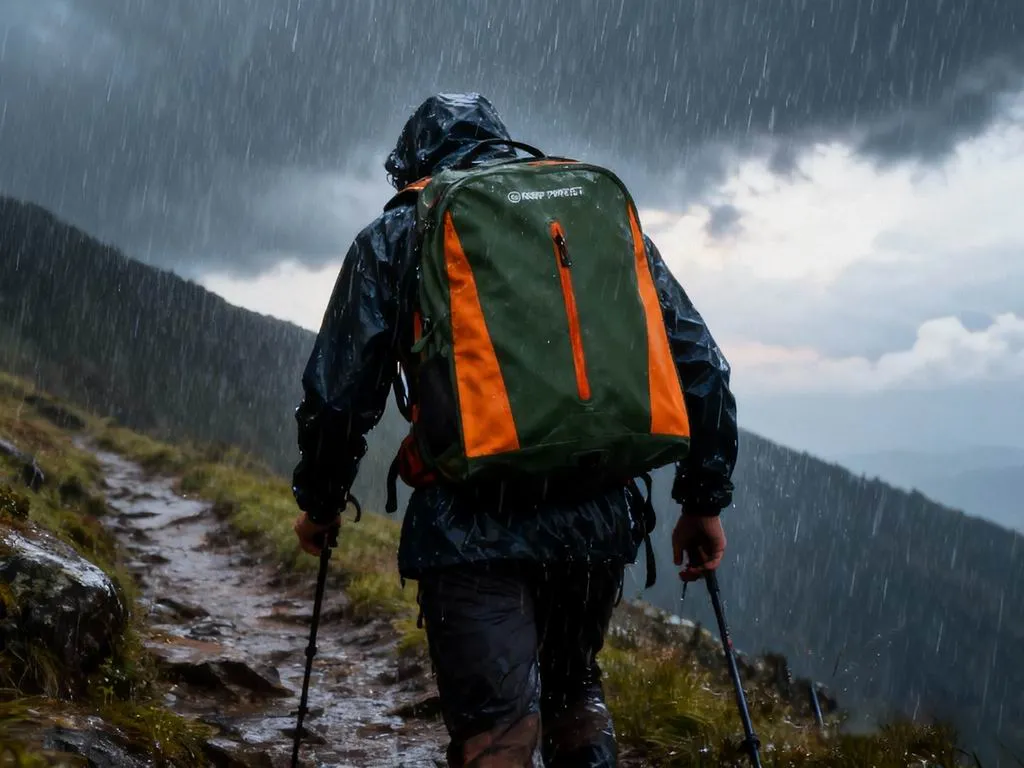
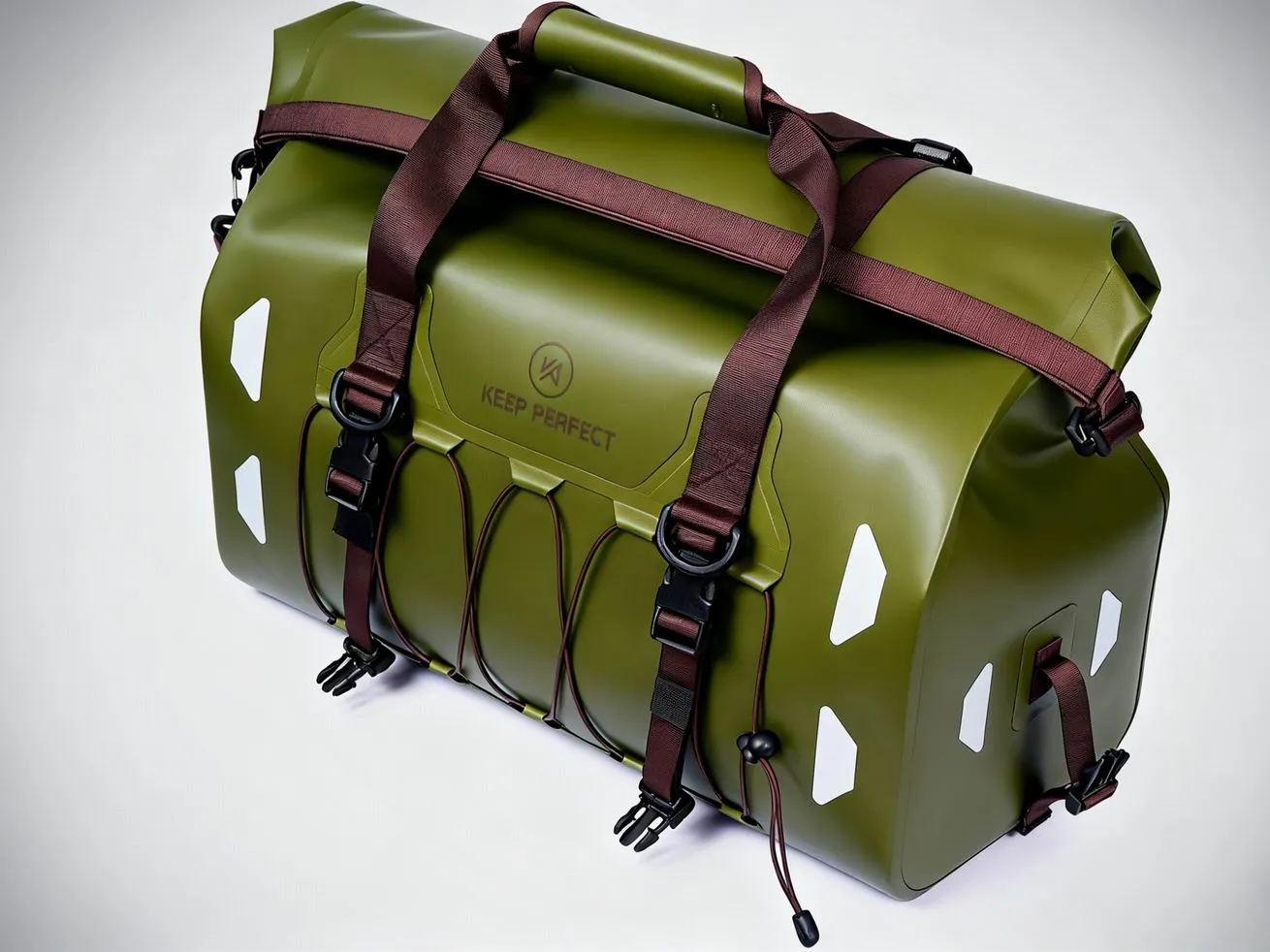
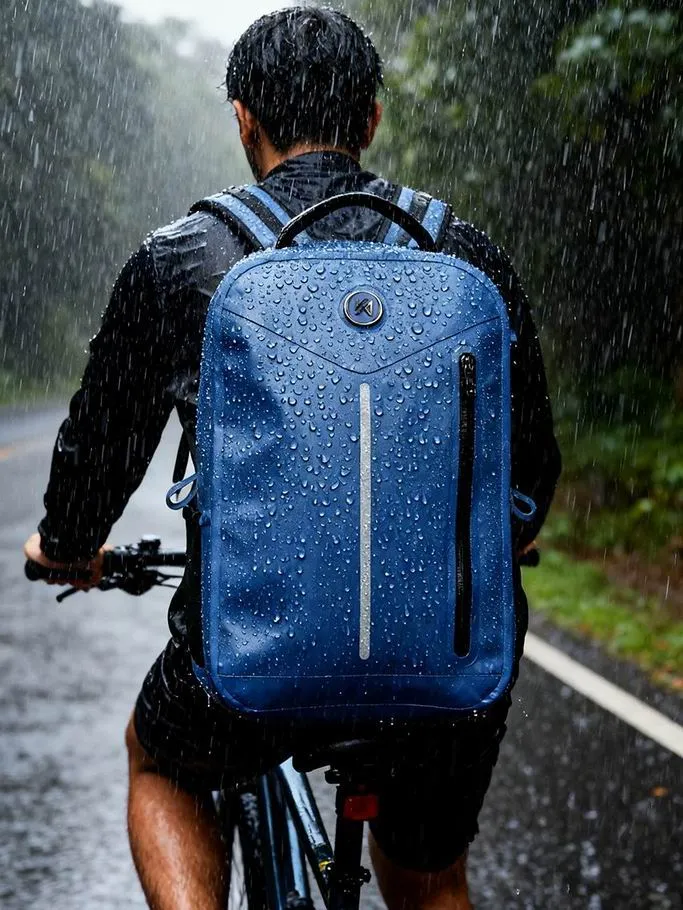
Why a nomad bag fails on duty cycle rather than on weather
Most digital nomad waterproof bags are selected the way a holiday bag is selected, against the worst weather of the trip. That is the wrong axis for someone who moves every few weeks for a year. The dominant stress is repetition: the same zip opened three thousand times, the same strap attachment carrying the same load through three hundred days, the same wet compartment that never fully dries between uses. remote work gear protection therefore has less to do with a submersion rating and more to do with which component reaches its cycle limit first.
Put a number on it. A tourist opens a main compartment perhaps six hundred times in a year. A nomad working from cafes, coworking spaces and shared apartments opens theirs eight to twelve times a day, three hundred days a year — between two and three thousand cycles. Coated zips, slider assemblies and roll-top collars all have practical cycle lives in that range, which means the closure is a scheduled consumable rather than a permanent feature. Planning for that, rather than hoping it lasts, is what separates a bag that survives a year from one that needs replacing in month five.
The second structural difference is load. A holiday bag is empty on most days and full on travel days. A nomad bag is full on every day, because the workstation travels whether or not it is used. Components therefore sit near their design load continuously rather than intermittently, and fatigue — not peak strength — becomes the governing failure mode.
The five to ten kilogram electronics load and what it does to a frame
Weigh a real remote-work kit and the number is usually higher than people expect: a laptop at 1.3 to 2.0 kilograms, a tablet or secondary screen at 0.5 to 1.0, a camera and two lenses at 1.0 to 2.5 for anyone producing visual work, a charger brick and cable set at 0.6 to 1.2, one or two power banks at 0.2 to 0.6, a hard drive and dongles, a phone, and a headset. Five kilograms is a light kit; eight to ten is common for video, development or design work. Add clothing and the bag is permanently in the eight to thirteen kilogram range.
That mass does two things to a bag. It concentrates in one plane, so the back panel and the strap attachment points carry nearly all of it, and it never comes out, so there is no recovery period for foam, webbing or seam. A suspension system designed for a hiking load assumes the pack is set down every few hours; a nomad pack is set down at a desk and picked up again, but the load path is the same and the daily hours are longer.
| Item | Typical mass | Dominant risk over a year | Specification response |
|---|---|---|---|
| Primary laptop | 1.3 to 2.0 kg | Corner shock at the base of the sleeve; condensation on the lid | Suspended sleeve with a false bottom and closed-cell foam |
| Charger brick and cable set | 0.6 to 1.2 kg | Abrasion against device surfaces; connector corrosion | Dedicated tech pouch with separation between brick and device |
| Power banks | 0.2 to 0.6 kg | Regulatory limit at the checkpoint; heat in a sealed pocket | Ventilated external-access pocket, kept under 100 Wh each |
| Camera body and lenses | 1.0 to 2.5 kg | Fungus on glass in humid months | Padded insert inside a dry bag with desiccant |
| External drives and dongles | 0.2 to 0.5 kg | Connector corrosion in coastal humidity | Sealed pouch, silica sachet, wiped down monthly |
| Phone and small pouches | 0.2 to 0.4 kg | Theft from a table rather than water damage | Tethered pouch, kept on the person |
| Constant-load consequence | 8 to 13 kg total | Strap attachment fatigue, harness foam set | Load-tested attachment, replaceable harness |
Two specification consequences follow directly. The laptop sleeve must have a false bottom so the device corner never rests on the base seam where shock and set-down water arrive together. And the strap attachment must be specified to a cycle-tested load rather than to a static pull figure; the relevant method is described in our page on strap and handle load testing. Devices themselves are covered in more detail under electronics transport solutions.
Custody: the bag is unattended more often than a tourist ever leaves it
The risk profile that actually hurts a nomad is custody, not weather. A tourist is separated from a bag at an airport conveyor and nowhere else. A nomad leaves a bag in a shared apartment with rotating guests, in a coworking space where the door is propped open, in a hostel locker with a padlock that fits three keys, on a cafe chair while ordering, and in the back of a taxi or a scooter taxi while paying. Each of those is a window of one to forty minutes, and they happen weekly for a year.
The correct response is to reduce the value of what is left behind rather than to harden the bag. Split the kit: the device that would end the working week travels on the person in a small sling or waist pouch, and the bag carries the replaceable mass — clothing, cables, stand, secondary drive. That single change removes most of the tail risk, because a stolen charger is an inconvenience and a stolen laptop with an unbacked-up project is a catastrophe.
| Where the bag sits | Window and threat | Design response | Behavioural response |
|---|---|---|---|
| Shared apartment with rotating guests | Hours; opportunistic access by someone known to the building | Lockable main sliders, no external signal of value | Keep the laptop in a pouch on the person or in a locked drawer |
| Coworking space | Minutes to hours; high footfall, low accountability | Rear-panel access only; muted unbranded shell | Cable the bag to the desk leg; never leave the device in it |
| Cafe or restaurant | One to five minutes; the classic grab | Tethered strap, bag between the feet | Take the device; leave the clothing |
| Scooter taxi or tuk-tuk | Minutes; bag out of sight behind the rider | Reinforced grab handle, no loose straps | Hold the bag on the lap rather than stowing it |
| Long-distance bus or minivan | Hours; overhead or hold, unattended at stops | Lockable sliders, no external pockets holding value | Photograph contents; keep documents on the person |
| Accommodation change day | Two to six hours in a lobby | Neutral appearance, no brand signal | Split value across two bags so one loss is survivable |
- Choose lockable or interlocking zip sliders on the main compartment; they defeat the fastest form of opportunistic access.
- Avoid external water-bottle pockets that advertise a device inside; a muted shell with no logos is a real security feature.
- Keep a short steel cable and a small padlock for desk legs and hostel lockers; it weighs under 100 grams.
- Photograph serial numbers and keep an off-device backup of anything irreplaceable before the first border crossing.
Insurance interacts with this directly, and the exclusion that matters is unattended. Many travel policies exclude theft from an unattended bag entirely, or require evidence of forced entry, which a zip opened by a lockable slider does not always provide. That is not an argument against locks; it is an argument for not leaving the device in the bag at all.
Repeated border crossings and the equipment question
Someone crossing a border every four to eight weeks meets a different problem from a holidaymaker. Immigration officers in several popular nomad destinations ask about multiple laptops, cameras and drives because the honest answer — I work remotely — sits awkwardly against a tourist visa. The bag itself becomes part of that conversation: a bag that looks like professional production equipment invites the question, and a bag that looks like ordinary travel luggage usually does not.
The practical guidance is to keep the exterior unremarkable and the interior organised. Four devices spread across four compartments take four times as long to inspect and look like a commercial shipment; the same devices in one flat-opening tech compartment look like a traveller with a laptop and a camera. Battery rules are the other recurring checkpoint: lithium batteries belong in the cabin rather than the hold and are conventionally limited to 100 watt-hours each without airline approval, with the detailed guidance issued by ICAO and applied by individual carriers.
There is also a physical toll. Repeated X-ray means repeated lifting onto and off a belt, and belt handling is abrasive; the base panel and corners take the wear, not the fabric face. A bag with a reinforced base and no protruding hardware survives two years of fortnightly screening visibly better than one specified for looks alone, and the relevant comparison is set out under abrasion resistance standards.
Multi-climate in one bag: altitude, coast and the condensation between
A nomad year can include a month at 2,000 metres where nights fall near freezing, followed by a coastal month at 30 degrees and 85 per cent relative humidity, with air-conditioned rooms in between. The failure this produces is condensation rather than rain. A bag that has cooled in an air-conditioned room or an aircraft hold and is then carried into humid air collects moisture on its coolest internal surface, which is usually a metal device lid or a lens element.
Fogging is the visible symptom and fungus is the expensive one. Lens fungus establishes in warm humid air given a surface film of moisture and a few weeks, and once it has etched glass the element is permanently degraded. The defences are unglamorous and cheap: silica gel sachets replaced or dried monthly, a dry bag rather than a sealed rigid case for optics so the interior can be opened and dried, and never sealing a damp item into the same space as a device.
Coastal months add salt. Chloride-laden air settles on hardware and on connector surfaces, and over months rather than days that produces pitting on metal fittings and intermittent contact faults on exposed connectors. Specifying acetal or coated hardware rather than raw metal removes most of it; the material-side comparison is covered in our page on chemical and saltwater resistance, and the internal-moisture design answer under anti-condensation design.
Laundry, drying and the seven to ten day cycle
Laundry rhythm is the hidden variable of long-term packing. A two-week holiday can carry everything dirty home; a nomad washes every seven to ten days, sometimes with a two or three day turnaround in humid seasons, which means damp items live in the bag continuously. A wet compartment that is emptied only when it is full becomes a permanent moisture source, and in a tropical month it will smell and then grow mould.
- Empty and air the wet compartment every evening, not when it is full; in humid months this is a daily task.
- Carry two washing days of clothing rather than one, so a slow turnaround never forces a damp item back into the bag.
- Choose quick-dry fabrics; a cotton shirt that takes eight hours to dry in 85 per cent humidity is a liability on a seven-day cycle.
- Dry the bag itself: open it fully and stand it in moving air for an hour once a week, which is the cheapest mould prevention available.
- Keep silica sachets in the tech pouch and dry or replace them monthly; a saturated sachet does nothing.
The same logic applies to the bag’s own materials. A welded TPU liner wipes dry in seconds; a fabric-lined compartment holds moisture in its fibres for hours. For a bag that will be damp every week for a year, that difference matters more than any rating on the hangtag, and it is one of the reasons wet-dry separation is worth specifying on a nomad bag in a way it is not on a weekend bag.
Component life at nomad duty cycle
Because the failure mode is cycling, the specification should be written against cycles. Below is the arithmetic for a remote worker moving every few weeks and working from the bag daily: roughly 2,500 to 3,000 main-compartment openings a year, around 300 days at eight to thirteen kilograms, and weekly damp-dry cycles. Compare that with the design assumption behind most travel bags, which is intermittent use at moderate load.
| Component | Nomad duty per year | Predicted first failure | Specification that changes the outcome |
|---|---|---|---|
| Main closure | 2,500 to 3,000 cycles | Coating delamination near the slider end | Serviceable slider, coated zip rated for the cycle count, covered garage |
| Roll-top collar | 2,000 to 3,000 rolls | Coating cracking at the fold line | Thicker collar film, no sharp fold radius, replaceable dry bag instead |
| Strap attachment | 300 days near maximum load | Stitch pull-out or webbing creep at the bar-tack | Box-stitched webbing carried into the frame, load-tested |
| Harness foam | 3,000 plus hours compressed | Permanent set, loss of cushioning | Closed-cell foam, replaceable harness panel |
| Wet compartment liner | 50 plus damp cycles | Seam tape lift, odour and mould | Welded liner, no sewn seams in the wet zone |
| Base panel | Weekly belt handling | Abrasion through the coating at corners | Higher denier base fabric, raised corner reinforcement |
| Hardware in coastal months | Months of salt-laden air | Pitting and stiff buckles | Acetal or coated hardware, freshwater rinse monthly |
Reading that table as a buying brief leads to three concrete requests: a serviceable slider rather than a moulded one, a replaceable harness, and a welded rather than sewn wet liner. None of these is expensive at the specification stage and all three convert a bag-ending failure into a part replacement. Accelerated test methods for the same questions are described under accelerated ageing and durability prediction, and closure-specific cycling under zipper durability testing.
Weight versus mobility on real streets
Nomads underestimate how much walking a bag does. Not airport walking — accommodation hunting with the full load, staircases in walk-up apartments, cobblestones, market streets, bus terminals, and the ten minutes looking for the address that was wrong. A bag that is comfortable for a two-hour airport transit can be miserable for an eighty-minute walk with ten kilograms, and the difference is almost entirely in the harness and the load path rather than in the bag’s empty weight.
The trade to make consciously is between protection mass and carry comfort. Waterproof construction costs 300 to 600 grams on a 40 litre bag. Spending it on the shell is correct; spending it on metal hardware or a moulded frame is not. The grams recovered are better spent on a harness that actually transfers load to the hips, because a ten kilogram load carried on the shoulders for an hour is the difference between arriving able to work and arriving needing to lie down.
There is also an honesty point about capacity. Many nomads buy a 60 or 70 litre bag and then fill it, when the realistic kit fits 40 to 50 litres with compression. A smaller bag is easier on stairs, fits overhead racks on buses, and — critically — leaves the closure enough free collar height to seal properly. Overfilling is the most common cause of a roll-top failing to seal, which is why sizing discipline is a waterproofing decision; our page on dry bag sizing applies the same logic to the internal layers.
Power and connectivity: running the bag as a workstation
A nomad bag is opened as often to reach a cable as to reach a laptop, and cables are the highest-turnover item in the kit. Bend failure at the connector strain relief is the usual end, typically after a few months of daily coiling, and it happens faster when the cable is stuffed into a compartment alongside a charger brick that abrades it. A dedicated flat tech pouch with separated loops, rather than a single open pocket, roughly doubles cable life and removes the daily tangle that costs five minutes every time.
Charging while moving is the second design problem. A power bank kept inside a sealed compartment and used while walking means the bag is effectively open for the duration of the walk, which defeats the closure entirely. Specify a passthrough or an external-access pocket with a covered opening: the device stays outside the dry zone on the cable, and the bag stays closed. Power banks should stay under 100 watt-hours each for air travel, and they should not be sealed into an unventilated pocket while charging, because a warm cell in a small sealed space is exactly the condition manufacturers warn against.
- Carry one spare of every cable in the kit; cables fail more often than any other component and are rarely available in the exact specification locally.
- Keep the charger brick separated from device surfaces, since a brick abrading against a laptop lid over a year leaves visible wear.
- Use a universal adapter with a fused replaceable plug rather than a stack of country adapters, which is lighter and less failure-prone.
- Route a charging cable through a covered passthrough so the bag can remain closed while a device charges in transit.
Repair and replacement far from home
At some point in a nomad year something breaks in a city where the brand has no presence. The question is whether the failure is field-repairable. A stitched and taped bag can be closed with a needle and a few minutes; a welded TPU shell cannot usefully be sewn and needs a solvent or heat-applied patch. Neither is difficult if the traveller is carrying the right thirty grams.
- Carry a small urethane patch kit and a short length of repair tape; it resolves most welded-shell punctures in minutes.
- Carry one spare slider or a zip-pull that fits the main closure, since a failed slider is the single most common bag-ending fault.
- Choose bags with standard component sizes so a local repair shop can substitute a buckle or a strap.
- Keep the critical contents in an inner dry bag, so any repair is a scheduled task rather than an emergency.
- Prefer acetal hardware: it is cheap to replace locally, whereas a proprietary metal fitting may not be available at all.
The design conclusion is that serviceability should be a purchase criterion. Ask whether the slider, the harness and the buckles are standard parts, and whether the brand sells spares. A bag that can be repaired in a market stall in a medium-sized city is worth more over a year than one with marginally better laboratory numbers.
A packing system built for weekly unpacking
Nomads unpack far more often than tourists, so a packing system that requires deliberate folding every time will be abandoned within a month. The system that survives is the one that can be dumped and reassembled without thought: a small number of fixed zones, each with a single job, and no item that has to be folded to fit.
- Zone one, dry and protected: 8 litre dry bag for documents, backup drive and anything irreplaceable.
- Zone two, devices: flat-opening tech compartment, one pouch for the brick and cables, one for connectors and drives.
- Zone three, wet and wipeable: welded compartment for laundry, wash kit and anything damp, emptied daily.
- Zone four, clothing: compression cubes rather than loose packing, so the bag can be closed in under thirty seconds.
- On the person: phone, passport, one power bank and a card in a sling or waist pouch that never goes into the main bag.
The measure of a good system is the reassembly time. If the bag can be packed from a hotel bed in under five minutes without thinking, it will still be in use in month eleven; if it takes fifteen minutes and a folding technique, it will have been replaced by a plastic bag by month three. Our related pages on packing cube and organiser systems and stuff sack organisation cover the same principle at different scales.
What a brand should specify for a remote-work range
Remote work is a genuinely distinct commercial segment rather than a colourway of travel, and it rewards a different specification. The buyer is not buying a holiday accessory; they are buying a tool they will use daily for a year, and they will read the specification more closely than any other travel customer. That changes what sells and what gets returned.
- Design to a cycle count, not to a rating: publish or at least engineer to a target number of closure cycles, and make the slider a serviceable part.
- Make the harness replaceable and the attachment points load-tested to continuous rather than intermittent duty.
- Keep the exterior unbranded or minimally branded; in this segment a quiet shell is a feature, and it also reduces the questions at border crossings.
- Use welded liners in every wet zone and acetal or coated hardware throughout, because salt and humidity are year-round rather than occasional.
- Offer a spares kit as an accessory SKU — slider, buckle, patch. It is a low-cost line that materially improves the ownership story.
Commercial structure should follow the way this customer actually buys: one main pack, one tech organiser set, and one small on-person piece. That is a three-tier ladder where each tier is a separate purchase occasion, and it reaches volume efficiently because all three share material and hardware. Minimum order quantity is 500 pieces per style, planned per style rather than across the programme; see our page on minimum order quantities and the sequence in what to expect from sampling. Branding decisions should be tested against the coating rather than assumed, as described under logo options for waterproof bags. If you want those figures turned into a real quotation, send us the capacity ladder, closure target and annual volume. Sampling takes 6–10 working days, bulk production runs 35–50 days, and quotations are issued FOB Xiamen.
Frequently Asked Questions
Q1. Do digital nomads actually need a waterproof bag, or is a rain cover enough?
A cover handles the downpour but not the weekly damp cycle. For someone whose bag is damp every week for a year, a welded wet compartment and a coated shell matter more than any cover, because the failure is cumulative moisture rather than one storm.
Q2. How many opening cycles should a nomad bag be specified for?
Around 2,500 to 3,000 main-compartment openings a year at eight to twelve per working day. Ask whether the slider is serviceable, since a failed slider is the most common single fault at that cycle count.
Q3. Should I keep my laptop in the main bag while working from cafes?
No. Split the kit: the device travels on the person in a small pouch, and the bag carries replaceable mass. That removes most of the theft tail risk and satisfies the unattended exclusion in most insurance policies.
Q4. How do I stop condensation forming on my laptop in humid countries?
Let the bag reach room temperature before opening it after air conditioning, keep silica sachets in the tech pouch, and never seal a damp item in the same space. A suspended sleeve with a false bottom also helps.
Q5. Will carrying multiple devices cause problems at immigration?
It can invite questions about working on a tourist visa. Keep the exterior unremarkable and consolidate devices into one flat-opening tech compartment so the bag reads as ordinary travel luggage rather than equipment.
Q6. What battery limits apply when I fly every few weeks?
Lithium batteries and power banks belong in the cabin rather than the hold, and are conventionally limited to 100 watt-hours each without airline approval. Guidance is issued by ICAO and applied by individual carriers.
Q7. How often should I wash and dry a bag used daily for a year?
Air the wet compartment every day and fully open and dry the bag for an hour once a week. In humid months that weekly dry is the difference between a bag that lasts and one that grows mould.
Q8. Is a bigger bag better for a year on the road?
Usually not. Forty to fifty litres with compression cubes beats sixty to seventy, because a smaller bag fits bus racks, handles stairs, and leaves the closure enough free collar height to seal.
Q9. What is the most common warranty claim in this segment?
Closure faults — coating delamination or a failed slider — followed by strap attachment pull-out. Both are cycle and load problems rather than material defects.
Q10. Can a welded waterproof bag be repaired in a small city?
Yes, with a urethane patch kit and repair tape carried in advance. Welded TPU cannot usefully be sewn, so plan for adhesive repair and keep critical contents in an inner dry bag.
Q11. Should I choose metal or plastic hardware for coastal months?
Acetal or coated hardware. Salt-laden air pits raw metal over months and stiffens buckles, while acetal rinses clean and is cheaply replaceable in local markets.
Q12. How do I protect camera lenses from fungus over a long humid stay?
Keep optics in a dry bag rather than a sealed rigid case, replace or dry silica sachets monthly, and open the bag in moving air weekly. Fungus establishes in weeks and permanently etches glass.
Q13. Is travel insurance enough to cover a stolen work laptop?
Often not. Many policies exclude theft from an unattended bag or require evidence of forced entry. Keep the device on the person and maintain an off-device backup regardless of cover.
Q14. How much does waterproof construction add to the weight I carry daily?
Roughly 300 to 600 grams on a 40 litre bag. Spend it on the shell and closure, and refuse to spend it on metal hardware or a moulded frame.
Q15. Should the bag look expensive or plain for this kind of travel?
Plain. A muted unbranded shell reduces opportunistic theft, draws fewer questions at borders and avoids advertising the value inside.
Q16. What should a brand specify first for a remote-work range?
A cycle target for the closure and a load-tested harness, then welded wet-zone liners and acetal hardware. Make the slider, harness and buckles serviceable parts so the bag can be repaired rather than replaced.
Q17. How long does it take to develop a custom remote-work waterproof bag?
Sampling typically takes 6–10 working days once the specification is agreed, and bulk production runs 35–50 days. Both figures assume the closure and material decisions are settled before sampling begins.
People Also Ask
Do nomads need a different bag from ordinary travellers?
Yes. Nomads open their bag thousands of times a year and carry maximum load daily, so cycle life and harness matter more than a waterproof rating.
What fails first on a long-term travel bag?
The closure, usually a coated zip delaminating or a slider failing after two to three thousand cycles, followed by strap attachment fatigue.
How do I protect a laptop in humid countries?
Let the bag warm up before opening, use silica sachets, and keep the device in a suspended sleeve with a false bottom away from damp items.
Should I keep my laptop in my main bag in cafes?
No. Carry the device on the person in a small pouch and leave only replaceable items in the bag; insurance usually excludes unattended theft.
Is a 60 litre bag too big for a nomad year?
Usually. Forty to fifty litres with compression cubes fits bus racks, handles stairs and leaves the closure enough collar height to seal properly.
Can a welded waterproof bag be repaired abroad?
Yes, with a urethane patch kit and repair tape. Welded shells cannot be sewn, so carry the kit and keep spares for the slider and buckles.