In adventure racing, a waterproof bag is not really a waterproofing decision; it is a compliance and time decision. A team racing for thirty to sixty hours across trekking, mountain biking, paddling and rope stages is judged on whether it can produce every mandatory item at scrutineering, reach each one at a checkpoint without unpacking, and repack in a transition area in the time it takes to eat a sandwich. Water is the easy part. The hard part is that the kit list is a legal document and the clock never stops, so the bag that wins is the one that makes the mandatory gear provable and reachable while the racer is cold, wet and moving.
This guide works through the decisions in the order a race director would apply them: how a mandatory kit list should be read as a specification, why scrutineering and checkpoint access are different design problems, how to design so the main compartment never has to be opened mid-stage, what officials actually inspect and how long it takes, why the transition repack is where most teams lose placings, how a sleep system is compressed and separated when it is already wet, what changes on paddling, trekking and rope legs, how navigation and electronics survive wet hands, what the weight arithmetic really says, where the minutes in a penalty ledger actually go, and how a brand should build a race-ready range. QUANZHOU JUNYUAN BAGS has produced custom waterproof bags since 2014 in a 4,950 m² SGS-verified facility: MOQ 500 pieces per style, sampling in 6–10 working days, bulk in 35–50 days, FOB Xiamen.
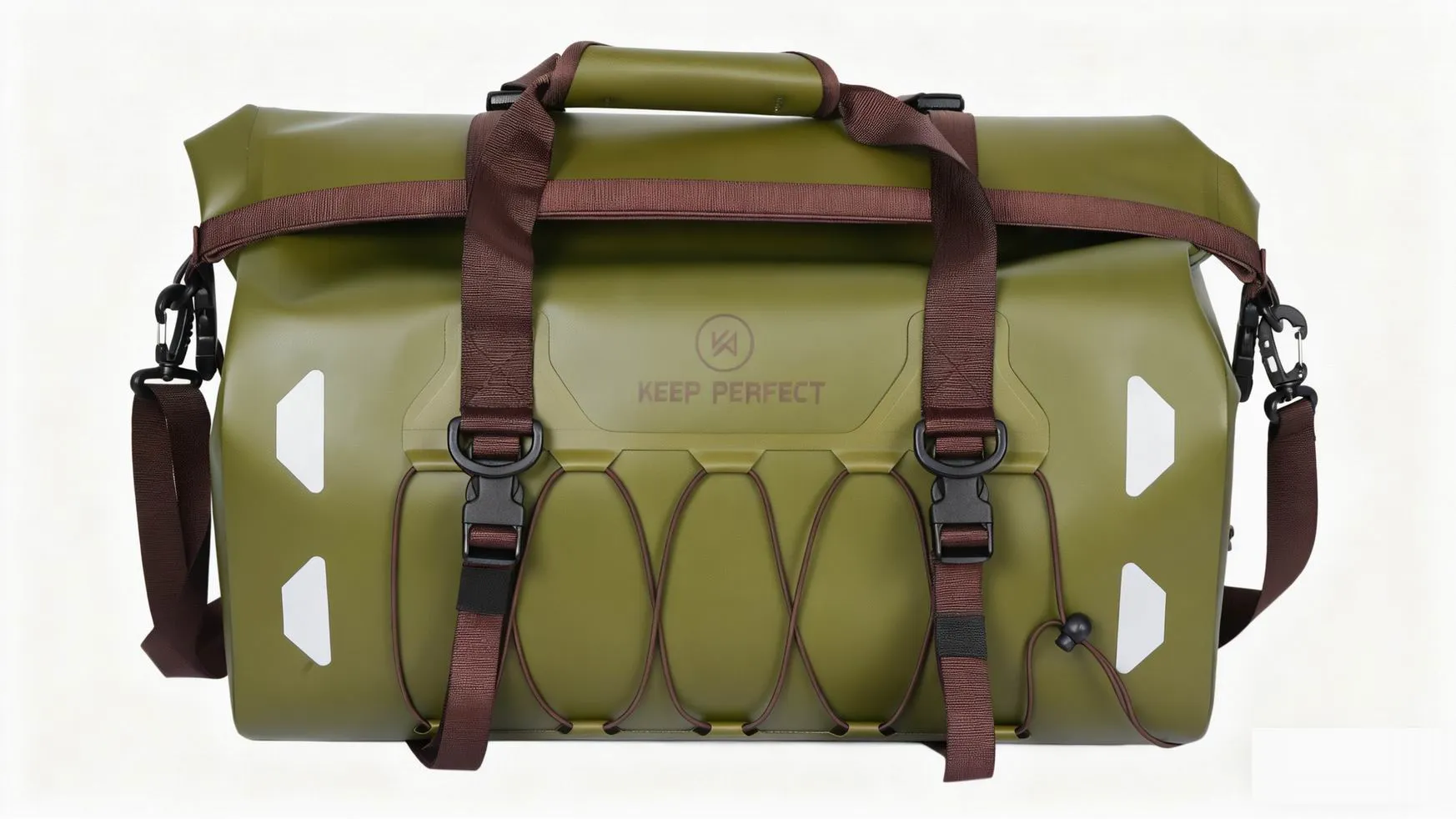
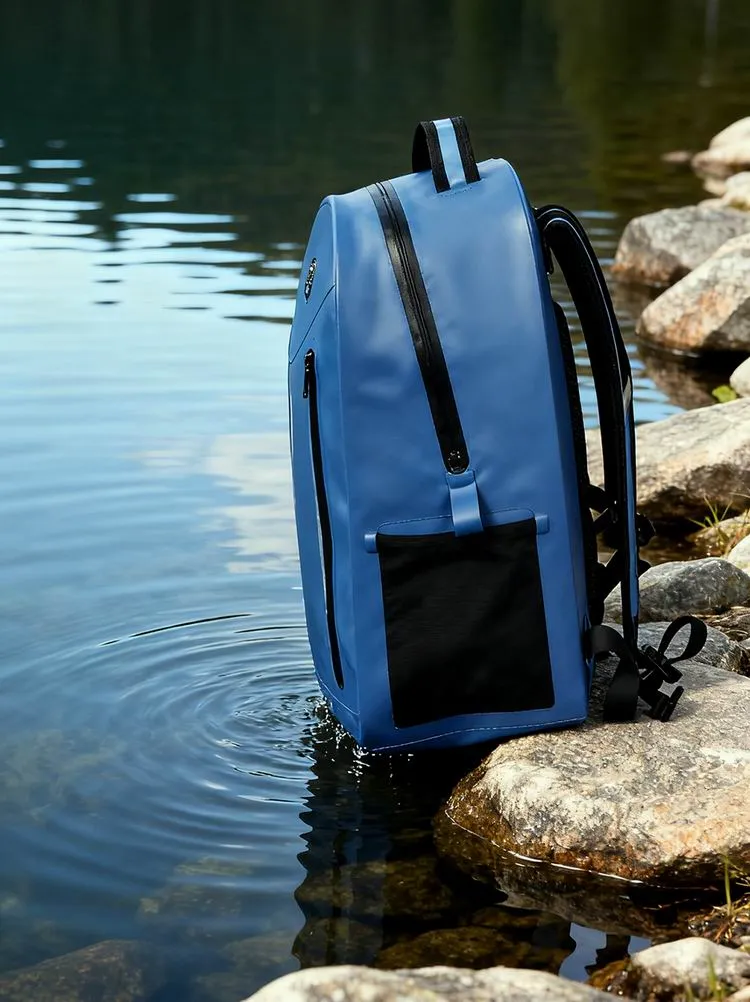
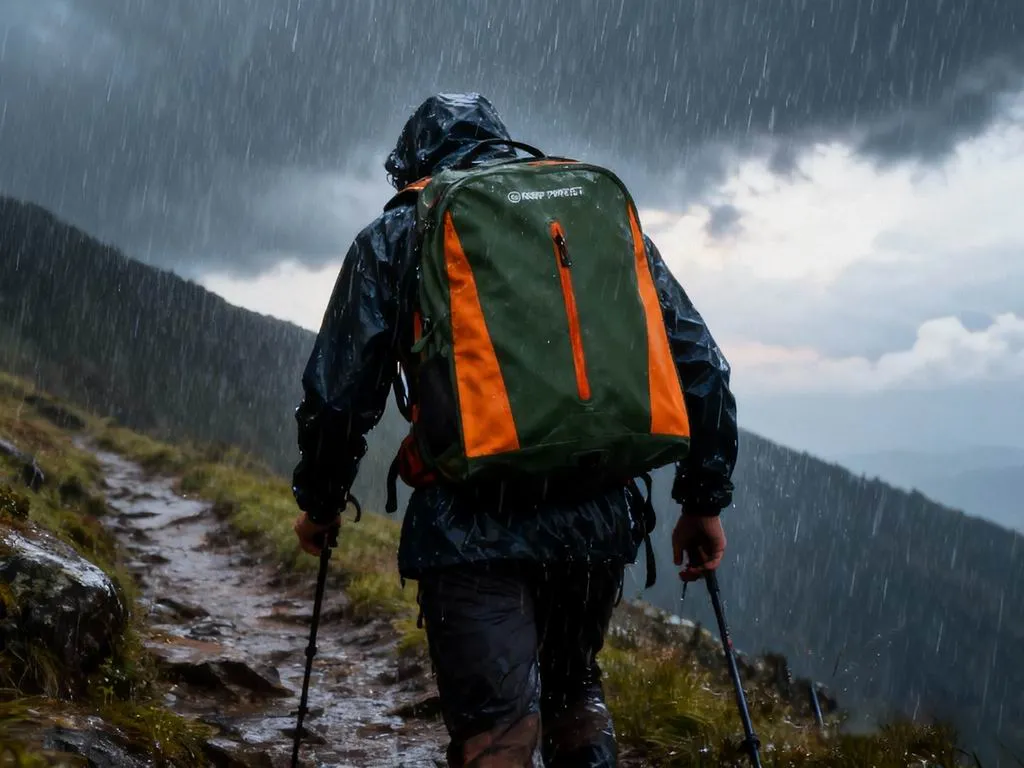
Compliance first: the kit list is the specification
Every serious expedition race publishes a mandatory kit list weeks before the start, and that list is the true specification for adventure racing waterproof bags. It names items, quantifies them — a sleeping bag rated to a stated temperature, a waterproof jacket with taped seams, two litres of water capacity, a first aid kit with named contents — and it usually states how the gear must be protected. Mandatory gear organization therefore begins with reading the list line by line and mapping each line to a compartment, because a team that cannot produce a listed item at a checkpoint is stopped, and a team that is stopped for ten minutes has lost more than any material advantage could recover.
The list also dictates volumes. A multi-day race commonly requires a sleeping bag, a sleeping mat, a bivouac shelter or tent share, insulation layers, waterproof shell top and bottom, a stove and fuel, food for a stated number of hours, a first aid kit, a repair kit, navigation tools, a whistle, a head torch with spare batteries, and discipline-specific hardware such as a paddle leash, a helmet or a harness. Add team gear — a raft, paddles, a rope, a tracker — and the per-person load lands in the range of eight to fourteen kilograms, distributed across bags that must each be small enough to be carried on a bike and in a boat.
| Kit list line | What the list usually implies | Packing consequence | Risk if got wrong |
|---|---|---|---|
| Sleeping bag to a rated temperature | Must arrive dry and lofted | Dedicated sealed compression compartment, never shared with wet kit | Failed scrutineering or a hypothermic night |
| Waterproof jacket and trousers | Taped seams, often a stated hydrostatic figure | Top-of-pack access, reachable in under thirty seconds | Unable to dress before a storm on an exposed ridge |
| Water capacity, usually two litres or more | Two separate vessels in some lists | External bottle pockets plus a bladder sleeve | Disqualified at a checkpoint or dehydrated on a long climb |
| First aid kit with named contents | Sealed, intact, identifiable | One dedicated red pouch with a clear external marker | Contents scattered, kit rejected during inspection |
| Head torch plus spare batteries | Batteries must be dry and separate | Small hard case inside an access pocket, never loose | A dead torch at dusk ends a nav leg |
The commercial insight for brands is that racers buy to the list. A product page that states "fits a mandatory kit list of this shape" converts better than one that states litres alone, and a range that publishes the mapping between compartments and typical list lines removes the customer’s biggest uncertainty. Very few outdoor bag brands do this, which is why race-oriented products are often chosen on forum recommendations rather than on specification.
There is a second-order point about ratings. Race organisers frequently specify a waterproof level rather than a brand, and they inspect rather than test. Choosing the right level is a specification exercise rather than a marketing one; our guide to choosing the right waterproof level and the wider note on the IPX rating system set out what those numbers actually describe.
The two-bag problem: gear you must show and gear you must reach
The single most useful reframing in this category is that a race bag carries two different populations of items, and they want opposite things. The first population is gear you must show: mandatory kit that an official may ask to see, which needs to be identifiable, grouped and intact. The second is gear you must reach: food, water, a shell, a map, a head torch, which need to be available in seconds while the racer is wearing a harness, a helmet or a paddling jacket.
Those populations conflict because the fastest way to make something identifiable is to put it in a labelled pouch deep inside a protected volume, and the fastest way to make something reachable is to put it on the outside where it is exposed. Resolving the conflict means designing a third category: external protected access. An external pocket with a storm flap, a welded seam and a closure that works with cold hands gives reach without sacrificing the item to rain.
- Group every mandatory item by inspection event, not by function: one pouch for the first aid check, one for the sleep system check, one for the lighting check.
- Give each of those pouches a colour and a printed label, because a racer at hour thirty cannot remember which black pouch holds the whistle.
- Put the reach items where the hands already go: hip belt, shoulder strap, top lid, and a side pocket that faces the direction the pack is set down.
- Accept that the main compartment holds only what is needed once per stage: the sleep system, spare clothing, and stage-specific hardware.
- Never put a mandatory item at the bottom of the main compartment. If it cannot be produced in under a minute, treat it as unpacked.
Teams that adopt this structure consistently report the same outcome: scrutineering becomes a two-minute formality rather than a twenty-minute excavation, and the mid-race checkpoint stops become a matter of opening one flap. That is worth more than any fabric choice, and it costs nothing except design attention.
It is also the clearest way for a brand to differentiate honestly. A bag sold with a printed compartment map, colour-coded pouches and a stated "scrutineering time" is making a claim that can be verified, which is rare in a category where most claims are about litres and millimetres. Our overview of stuff sack and organisation systems covers the pouch logic in more depth.
Designing so the main compartment never has to be opened
The design rule that separates a race bag from a trekking bag is simple to state and hard to execute: during a stage, nothing should require opening the main compartment. Opening a loaded main compartment on a hillside in the rain means laying the pack down in wet ground, exposing the sleep system to the weather, and then repacking under time pressure with cold hands. Every one of those steps costs minutes and increases the chance that something mandatory ends up on the ground.
| Access point | What belongs there | Why it works in a race | What breaks if it is wrong |
|---|---|---|---|
| Top lid or brain pocket | Shell layer, hat, gloves, snacks | Reachable without removing the pack | Wet hands inside the main volume |
| Hip belt pockets | Food, lip balm, map, compass | Reachable while walking or riding | The rider stops to reach a pocket |
| Shoulder strap pocket | Phone, tracker, energy gel | Reachable without breaking stride | Items in a back pocket behind a harness |
| Side stretch pocket with a drain | Water bottles, wet gloves | Bias toward the hand, drains when it fills | Bottles ejected on a rough descent |
| Front shovel pocket | Wet shell, tarp, rope | Isolates the wet from the dry | Wet gear sharing volume with the sleeping bag |
| External protected flap pocket | First aid, repair, mandatory smalls | Showable without unpacking | Twenty minutes lost at scrutineering |
Two construction details make the difference between a pocket that works and a pocket that leaks. A welded or taped seam at the pocket mouth, because a stitched pocket on a waterproof shell is a wick; and a closure geometry that sheds water downward, because a horizontal opening collects water at its lowest point and then delivers it inside when opened. Both are cheap to specify and both are invisible in a photograph.
The drain question deserves its own decision. A pocket that holds water is heavier and slower to dry, but a pocket with a drain hole admits splash where a wheel or a paddle throws it. The rule that works is to drain side and bottom pockets that sit above the spray line, and to seal completely anything below it. Our comparison of stitched, welded and bonded construction explains which seams can be drained and which cannot.
Finally, test the rule rather than asserting it. Load the bag to race weight, then ask a tester to take out a shell, a map, food, water and a first aid kit while wearing gloves and a helmet, with the pack on. If any of those requires the main compartment, the design is not finished.
Checkpoints, scrutineering and the two-minute inspection
A race has at least two kinds of inspection and they behave differently. Scrutineering happens before the start, usually in a hall, often the evening before, and it is thorough: officials work through the list, may weigh items, may check that a sleeping bag is still dry, and may reject a team that cannot produce something. Checkpoints happen during the race, usually at a transition or a remote point, and they are fast and partial: an official checks that teams arrived, that the tracker is present, and occasionally that a specific item is on the person.
Designing for scrutineering means making the whole mandatory set presentable at once. In practice that means a team kit dump: a large open-mouthed waterproof bag, light-coloured inside so items can be seen, wide enough to lay out the sleep system, the clothing and the pouches side by side, and sturdy enough to be dragged across a hall floor. A dark, narrow sack makes an official’s job slower, and an official whose job is slower is an official who looks harder.
- Use a light interior colour in any bag intended for inspection; dark interiors hide small items and waste time under a hall light.
- Make pouches open flat rather than open at one end, so contents can be shown without being tipped out onto a wet floor.
- Print or weld the contents list onto the pouch. A labelled pouch is inspected in seconds; an unlabelled one is opened.
- Keep the pouches small enough to hand over. An official should never have to take a whole pack.
- Plan for the inspection to happen twice: pre-race and at a mid-race gear check, which is where tired teams fail.
The time arithmetic is unforgiving. A team that takes twenty minutes to lay out its kit instead of five has not just lost fifteen minutes; it has lost sleep, because pre-race scrutineering happens in the evening before a start that is often before dawn. A bag that makes inspection fast is therefore a bag that buys rest, and rest is a performance input in a multi-day event.
There is a documentation angle for brands too. Publishing a scrutineering checklist with the product — the same list the team will be checked against, with a tick column — is a genuinely useful insert that costs a few cents and gets photographed and shared. Race teams are unusually active online, and an insert that gets photographed is marketing that was paid for once.
Transition areas: the ninety-second repack
A transition area is the hinge of an adventure race. Teams arrive from one discipline, change clothing and hardware, take on food and water, and leave on the next discipline, often several times in a race. The teams that move through transitions quickly are not the fittest; they are the ones whose gear is arranged so that the changeover is a fixed sequence rather than a search.
| Transition step | What a prepared team does | Time, typical | Time if the bag is disorganised |
|---|---|---|---|
| Arrive and rack bikes or boats | Kit box already laid out in discipline order | 2 to 4 min | 5 to 8 min |
| Change clothing layers | One labelled pouch per layer set | 3 to 5 min | 10 to 15 min |
| Swap hardware (helmet, PFD, harness) | Hung on the box, not bagged | 1 to 2 min | 5 min |
| Take on food and water | Pre-portioned bags, bottles filled by a support crew | 4 to 6 min | 12 to 20 min |
| Sleep system decision | One dry bag, one decision, no debate | 1 min | 10 min of argument |
| Leave | Everything back in the same box | 1 min | 5 min of searching |
The lesson for product design is that a race bag should be designed to be laid out rather than to be carried. A bag that opens flat, holds its shape when empty, and has internal anchor points for pouches becomes the team’s transition box. A bag that collapses into a soft heap makes every changeover slower, because the team is working inside a fabric well rather than on a surface.
Structure is therefore worth specifying: a semi-rigid base panel, a mouth stiffener that holds the opening up, and internal loops or daisy chains that pouches clip onto. None of these add much weight and all of them convert a bag from a container into a workspace, which is what a transition area actually needs.
Teams also need a discipline marker system. Colour-coding by discipline — one colour for paddling, one for biking, one for trekking — lets a racer grab the right pouch without reading a label in the dark. For a brand, offering the pouches in discipline colours is a low-cost way to sell a set rather than a single item, and it is the kind of detail that gets a product recommended in team forums.
Sleep system: compression, separation and the wet tent
Every expedition race includes at least one sleep, and the sleep system is the heaviest, bulkiest and most moisture-sensitive thing a racer carries. It is also the item that arrives at camp already compromised: a tent fly that was packed wet in the morning, a bivouac bag that collected condensation overnight, a sleeping bag that has been compressed for eighteen hours inside a pack that has been rained on.
The packing response has three parts. Compress the sleeping bag hard enough to control volume, but not so hard and for so long that loft recovery suffers over repeated cycles. Separate it absolutely from anything wet, because a down bag that takes up water is a safety incident rather than a discomfort. And give the wet shelter its own drainable volume so meltwater and condensation do not migrate into the dry compartment during the night.
| Element | Requirement | Design response | Failure mode |
|---|---|---|---|
| Sleeping bag | Dry and compressed | Sealed roll-top compression sack, four straps, light interior | Damp bag, no loft, cold night |
| Sleeping mat | Punctured by nothing, packed separately | Its own sleeve or an external strap, never loose with sharp gear | Puncture from a crampon point or a stove part |
| Bivouac or tent share | Wet, drainable, isolated | Drainable external wet compartment or shovel pocket | Condensation and rain migrating into dry gear |
| Insulation layers | Dry, reachable first at camp | One pouch at the top of the pack, never at the bottom | Racer sleeps in the clothes they walked in |
| Stove and fuel | Separated from food and skin | Hard-sided case, external, vented | Fuel contamination and a failed safety check |
Compression hardware matters more here than in almost any other category because it is operated at the worst moment: in the dark, cold, at the end of a long stage, often by a racer who has been awake for twenty hours. A side-release buckle that can be closed by feel is better than a cam buckle that needs alignment, and four straps are better than six because the sixth is the one that gets skipped.
There is also a real tension between compression and inspection. A sleeping bag compressed to its minimum is difficult for an official to verify quickly, and some lists require it to be shown lofted. The practical answer is a compression sack with a quick-release strap set so the bag can be loosened for scrutiny and re-compressed in under a minute, which is a design detail almost no product on the market offers explicitly. Our guide to compression bags and volume covers the mechanics, and the wider system view is in multi-day expedition packing systems.
Paddling legs: flotation, submersion and getting water out
A paddling leg changes the water problem completely. On a trek the water comes from above and the bag only needs to shed it. In a boat the water comes from below, the bag sits in a bilge, and it may be fully submerged for a period. That is a different test with a different pass criterion, and it is the reason a race pack should be rated for submersion rather than for rain even if the paddling is only a few hours of the race.
- Specify a submersion rating rather than a spray rating for anything that rides in an open boat, because a bag in a bilge is under water, not under rain.
- Add positive buoyancy or a lash point for a float, because a bag overboard in a river is a bag that is gone and its mandatory kit with it.
- Make the bag drainable in one motion. A roll-top that can be opened at the bottom, or a drain panel, converts a waterlogged bag into a light one at the portage.
- Lash rather than stack. A bag that is simply placed in a boat becomes a projectile in a rapid and a weight that shifts when the boat rolls.
- Keep the tracker and the map case on the person, not in the boat bag, because the boat bag is the one most likely to be separated from the team.
Portages are the moment that hurts. A team carries boats and bags over rough ground, sometimes for kilometres, and the bags are at their heaviest because they have taken on water. Handles and haul loops rated for a wet, overloaded lift are not decorative; a handle that tears at a portage delays a team by however long it takes to improvise a carry, which on a rocky portage can be thirty minutes.
The paddling discipline also has a specific contamination problem: river water carries silt, and silt in a roll-top closure or a zip coil is abrasive. A bag used on a river leg should be rinsed at the next transition, and a specification that uses roll-tops rather than zips on the main opening avoids the worst of it. Our piece on dry bags for kayaking and canoeing covers the same failure set in a non-racing context.
Trek and rope stages: sharp rock, harness and the pack on the move
On foot the loads change again. A trekking leg is where the pack is carried longest and where abrasion is worst, because rock, scrub and the pack’s own contact with the ground during scrambling all work on the same panels. Add a rope stage with a harness and a helmet and the pack now has to sit clear of hardware and still be reachable, which is a constraint most general-purpose packs are not designed for.
Three design responses earn their place. Reinforce the lower back panel and the base, because those are the panels that touch rock when the pack is set down or slid. Keep the hip belt low-profile enough to work with a harness, or make it removable, because a padded belt over harness webbing is both uncomfortable and a snag risk. And put a rope-carrying system on the outside rather than the inside, because a wet rope inside a pack adds kilograms of water and then shares that water with everything else.
- Zone the fabric: heavier denier on the base and lower back, lighter on the top and front where abrasion never happens.
- Cover or sheath anything sharp — crampon points, ice screws, stove parts — at the source rather than relying on the pack to resist them.
- Keep the pack narrow. A wide pack catches on rock in a chimney and shifts the centre of mass away from the body on a traverse.
- Test the hip belt with a harness worn, and check that gear loops and the belay device remain reachable.
- Give the wet rope its own external carry with a drain, and accept the aerodynamic cost, because the alternative is a wet pack interior.
Rock type matters more than racers expect. Granite and quartzite abrade coatings quickly; sandstone is less sharp but sheds grit that works into seams and closures; limestone is often the worst combination of sharp and dusty, because the dust is alkaline and fine enough to pack into a zip coil. A race route that crosses several rock types is the reason zoned construction beats a uniform shell. Our article on abrasion resistance standards sets out how to specify that numerically, and the crag-specific version of the problem is covered in bags for rock climbing and bouldering.
One operational detail closes the loop: on a rope stage, a bag that swings is a hazard to the belayer and to anyone below. A stabilising strap or a clip point that ties the pack to the anchor reduces the swing, and it is the sort of small feature that gets noticed and repeated in race reports.
Navigation, electronics and wet hands
Navigation is the discipline that fails quietly. A wet map is unreadable, a phone with a wet screen is useless, a tracker with a flat battery stops a team’s progress being recorded, and all three fail at the worst possible moment — at night, in weather, on an unmarked section. Electronics protection in a race is therefore not a convenience category; it is a safety category with its own checkpoints.
The design answers are well understood and rarely executed together. A map case that opens flat and can be read without removing it from its sleeve, with a closure that works with wet fingers. A phone or tracker pouch worn on the person rather than in the pack, because the pack is removed at transitions and on rope stages. And a battery strategy that keeps spares in a hard, sealed case rather than loose in a pocket with keys and food.
| Item | Where it should live | Protection needed | Why |
|---|---|---|---|
| Paper map | Map case on a cord, or a chest pocket | Waterproof, readable through the sleeve, tear resistant | A wet map costs a leg |
| Phone or GPS | On the person, in a sealed pouch | Submersion-rated pouch with a usable touch screen | Losing it loses navigation and safety contact |
| Tracker | On the person or the pack shoulder strap | rigid case, fixed, unlosable | Race control stops seeing the team |
| Spare batteries | Hard sealed case inside an access pocket | Crush proof and dry | Flat spares at dusk end a nav leg |
| Head torch | Top pocket, always the same pocket | Dry, with a spare bulb or a second unit | A failed light stops a team entirely |
Touch-screen operability through a pouch is the specification most often got wrong. A pouch that keeps water out but makes the screen unresponsive forces the racer to remove the device in the rain, which defeats the purpose. Specify the film by its capacitive behaviour and test it with wet fingers, not dry ones.
Our guide to phone pouches and small electronics cases goes through the material choices. For race use, the summary is that a welded pouch with a roll-top and a tested screen window outperforms a zip pouch, because silt and grit destroy zips in this environment long before water does.
Weight, volume and the arithmetic of a multi-discipline kit
Adventure racing weight arithmetic is different from backpacking arithmetic because the load is carried by a person who is already fatigued and because the same load is carried on a bike and in a boat, where weight has different consequences. On foot, a kilogram costs roughly a measurable amount of additional energy per kilometre. On a bike, weight matters less in absolute terms but matters a great deal where it sits. In a boat, weight is nearly free but volume is critical.
| Where weight is saved | Typical saving | What it costs | Verdict for racing |
|---|---|---|---|
| Lighter shell denier on low-contact panels | 150 to 300 g | Abrasion resistance on those panels | Good trade; keep the base and back heavy |
| Fewer pouches | 80 to 150 g | Inspection speed and item identification | Poor trade; pouches buy time back |
| Removing the lid | 80 to 150 g | A protected, reachable place for the shell layer | Poor trade for multi-day racing |
| Lighter hardware | 30 to 60 g | Cold, wet, gloved operation | Poor trade; hardware is an interface |
| Sharing team gear | 1 to 3 kg per person | Requires coordination and a single point of failure | Good trade if the team is disciplined |
| Cutting spare clothing | 300 to 600 g | Warmth if the weather turns | Usually against the kit list anyway |
The conclusion that experienced teams reach is that weight should be cut from the fabric and from redundant clothing, and never from organisation. Pouches, labels, colour coding and access points weigh a few hundred grams and save many minutes, and in a race measured in hours, minutes are the more expensive currency. A brand marketing a race bag should therefore publish a weight that includes the organisation system rather than a stripped weight that flatter the number.
Volume has a different logic. Because the kit list fixes the contents, the useful specification is not maximum litres but the volume at which the mandatory kit fits with room for food. A bag that holds the mandatory kit plus four days of food in thirty-five litres is a better race product than a forty-five litre bag that fits the same kit with air to spare, because the smaller bag is easier to carry on a bike and to lash in a boat.
The time penalty ledger: where minutes actually go
Every race has a penalty structure, and teams are surprisingly bad at estimating which penalties they will incur. Formal penalties — a missed checkpoint, a missing mandatory item, a shortcut — are rare and catastrophic. Informal penalties — slow scrutineering, a slow transition, a search for an item in the dark, a wet bag that has to be emptied — are common and cumulative, and over a forty-hour race they add up to hours rather than minutes.
| Penalty source | Typical cost | Frequency | Prevented by |
|---|---|---|---|
| Searching for a mandatory item at a checkpoint | 5 to 20 min | Several times per race | Labelled pouches and an external protected pocket |
| Repacking a wet bag at a transition | 10 to 30 min | Every wet transition | Drainable wet compartment, dry/wet split |
| Failed or slow scrutineering | 15 to 60 min, or a start refusal | Once, before the start | Light interiors, a kit dump bag, flat-opening pouches |
| Dressing late for a storm | 5 min plus the cost of getting cold | A few times | Shell layer in the lid pocket, always the same place |
| Losing or damaging electronics | 30 min to a leg | Occasionally | On-person pouches, hard battery case |
| Formal penalty for missing kit | Disqualification | Rare | A printed checklist used at every transition |
Read that table as a design brief and the priorities become obvious. Four of the six rows are prevented by organisation rather than by material, and the two that are material problems — a wet compartment that drains and a hard case for batteries — are cheap. A race range that solves the organisation rows and publishes that it has done so is selling time, which is the only thing a racer is actually buying.
There is a commercial version of the same ledger for brands. The warranty and return cost of a race bag is dominated by the same failures: a pocket that leaks, a handle that tears at a portage, a compression buckle that breaks cold. Each is prevented at the specification stage for a cost per unit measured in cents, and each costs a return measured in tens of currency units plus a forum post.
Materials, hardware and closures for continuous multi-day use
A race bag is used continuously for two to three days and then discarded into a pile of wet gear. It is not dried, it is not cleaned, and it is not inspected between stages. That usage pattern is harsher than almost any other category, and it changes what matters: coatings that tolerate being stored wet, hardware that tolerates grit, and closures that work when packed with silt.
- Choose a coated fabric or laminate that does not hydrolyse quickly when stored wet and warm; polyurethane coatings are the usual risk here and TPU films the usual answer.
- Specify hardware by its behaviour when dirty. A buckle that jams with grit is worse than a buckle that is slightly weaker.
- Prefer roll-tops on main openings. Grit destroys zip coils faster than water does, and a zip that fails on day two cannot be repaired trailside.
- Use welded seams on any panel that will be in contact with bilge water or wet ground, and taped seams elsewhere.
- Require a stated salt spray and abrasion figure for metal parts, because coastal and estuary races combine chloride with abrasion.
- Make handles and haul loops rated and load tested. They are lifted when the bag is heaviest and the racer is weakest.
Closure choice is worth stating plainly. A roll-top with three or more turns and a side-release buckle is the right answer for every main opening in this category, because it tolerates grit, it can be operated by feel, and it degrades gracefully — a worn roll-top is still water resistant, whereas a worn zip is not. Waterproof zips belong on access pockets where a roll-top would be awkward, and they should have a garage and a cleaning instruction. Our comparison of zipper and roll-top closures sets out the mechanics, and hardware selection is covered in hardware, buckles and strap accessories.
Testing should follow the usage pattern rather than the catalogue. Soak the loaded bag, freeze it if the race is in a cold climate, cycle it wet, then operate every closure wearing gloves and with the bag packed with a little grit. A bag that passes that sequence will pass a race; a bag that passes a shower test will not tell you anything about day two.
Building an adventure racing range: matrix, logo and order planning
A race range is smaller than most brands expect. Racers do not buy seven products; they buy a system of four or five that covers the mandatory list, and they buy it once, all at once, before a season. That buying pattern is unusually good for a brand: it is a basket purchase driven by a deadline, and it is repeatable when the team renews or when new members join.
| Product | Capacity band | Role in the system | Sourcing note |
|---|---|---|---|
| Race pack | 30 to 45 L | The main carried volume on foot and bike | The defining product; needs harness-compatible belt and zoned fabric |
| Compression dry sack | 8 to 20 L | Sleep system | Highest volume accessory; shares tooling with paddling lines |
| Wet compartment sack | 10 to 25 L | Wet shelter, rope, paddling gear | Drainable, heavier film, external carry |
| Pouch set, colour coded | 1 to 5 L | Mandatory smalls by inspection event | Low risk, high attachment, printed contents list |
| Kit dump bag | 40 to 70 L | Scrutineering and transition box | Light interior, holds shape when empty, semi-rigid base |
| On-person electronics pouch | 0.5 to 1.5 L | Phone, tracker, map | Highest margin item, tested touch-screen window |
Logo durability in this category has a specific enemy: abrasion against rock and boat, plus grit-laden water, plus ultraviolet exposure on exposed ridgelines. Screen print on a high-flex panel cracks; embroidery perforates a waterproof shell and needs a welded backing. Silicone prints and welded badges are the safer choice on the panels that take the abuse, and they also survive the way racers actually treat gear, which is to drag it. The full comparison is in our guide to logo printing and embroidery options.
Order planning is the other half of the sheet. Because each style carries its own minimum of 500 pieces, the commercial question is how many styles a range can support before inventory fragments. Six products on one fabric platform and one hardware family is realistic; six products in four colourways each is twenty-four inventory lines and a very different cash requirement. The disciplined answer is to make colour the variable rather than tooling: one fabric, one hardware family, two or three closure types, and colourway differentiation by discipline.
Sequencing should follow the racer’s own purchase logic. Launch the pouch set and the compression sack first, because they are cheap, they are bought by teams that already own a pack, and they generate cash and reviews. Launch the race pack next, because it is the product that defines the brand and needs the most validation. Add the kit dump bag last, because it is bulky to ship and slow to turn. Where a brand wants independent verification of material claims before committing, the route is set out in third-party laboratory testing, and published environmental methods such as those catalogued by the International Organization for Standardization remove the argument about what a test meant.
One last commercial point that is specific to this audience. Race teams are small, vocal and influential, and they race in places where land access is a shared concern. Sponsoring with product rather than cash, and aligning the range with the access and low-impact principles promoted by organisations such as the Leave No Trace Center for Outdoor Ethics, is both cheap and credible with exactly the customers who recommend gear to everyone else.
The development sequence that works is to start from the list rather than from the bag. Take two or three real mandatory kit lists, lay the items out, and assign each to a compartment before any volume is chosen. That exercise determines the pocket map, the pocket map determines the pattern, and the pattern determines the cost. Working in the other direction — picking a bag and trying to fit the list into it — is how race ranges end up with a beautiful main compartment and nowhere to put a whistle.
Then build a sample, load it to race weight with the actual kit, and run the four tests that predict race performance: a scrutineering simulation with a stopwatch, a transition repack with a stopwatch, a submerged-and-drained cycle, and a closure operation test with cold wet hands and a little grit in the seams. All four are cheap and all four are more informative than any standard waterproof test. Only then commit to bulk, with the pocket map and the test criteria written into the production specification rather than into an email thread, because a race bag is a system and a system has to be specified as one.
If you want these decisions turned into real numbers rather than estimates, send us your kit list, compartment map and target volumes. Minimum order quantity is 500 pieces per style, samples take 6–10 working days, bulk production runs 35–50 days, and quotations are issued FOB Xiamen.
Frequently Asked Questions
Q1. What is the single most important feature in an adventure racing bag?
Organisation that lets every mandatory item be produced without unpacking. Water protection is largely solved; the time lost to searching and repacking is what costs teams placings.
Q2. How should mandatory kit be packed for scrutineering?
Group it by inspection event into labelled, flat-opening pouches held in a light-interior kit dump bag. An official should be able to verify a group in seconds without handling the whole pack.
Q3. Why should the main compartment never be opened during a stage?
Because opening it in weather exposes the sleep system, forces the pack onto wet ground and costs minutes to repack. Everything needed mid-stage should live in external protected pockets.
Q4. What waterproof rating does an adventure racing bag need?
Submersion rather than spray for anything that rides in a boat, and spray resistance with welded or taped seams elsewhere. Rain is the easy case; bilge water and portage submersion are the hard ones.
Q5. Are roll-tops or waterproof zips better for racing?
Roll-tops for main openings, because grit destroys zip coils and a worn roll-top still seals. Zips belong on access pockets where they must have a garage and a cleaning instruction.
Q6. How should a sleeping bag be carried on a multi-day race?
Compressed in a sealed sack, absolutely separated from wet gear, with the wet shelter in its own drainable compartment. A down bag that takes up water is a safety incident.
Q7. What is a transition area box and does a bag make a good one?
It is the surface a team works from during a changeover. A bag that opens flat, holds its shape empty and has internal anchor points works well; a soft collapsing sack does not.
Q8. How much weight should a race pack carry?
Typically eight to fourteen kilograms per person including a share of team gear. Weight should be cut from fabric in low-contact zones and from redundant clothing, never from organisation.
Q9. How do you protect a phone and a tracker in a race?
Carry them on the person in a welded roll-top pouch with a tested touch-screen window, not in the pack. Spare batteries belong in a hard sealed case, never loose with food and keys.
Q10. What causes most adventure racing bag failures?
Handle tears at portages, closures jammed with silt, and pockets that leak. Water ingress through the main panel is comparatively rare, which is why testing should follow the usage pattern.
Q11. Should a race pack have a hip belt if the racer wears a harness?
Yes above roughly ten kilograms, but it must be low-profile or removable so it sits clear of the harness and its gear loops, and it should be tested with a harness worn.
Q12. How do teams lose the most time in a race?
Through informal penalties: searching for kit at checkpoints, repacking wet bags at transitions and slow scrutineering. Over a forty-hour race those add up to hours.
Q13. What fabric should be used on a race pack?
A zoned laminate: heavier denier on the base and lower back where rock and ground contact occur, lighter on the top and front. TPU film tolerates being stored wet better than many coatings.
Q14. Why is a light interior colour useful?
Because scrutineering happens in a hall and a dark interior hides small mandatory items. Light interiors cut inspection time and reduce the chance of a rejection.
Q15. Which logo process survives adventure racing?
Silicone prints and welded badges, because they flex with the panel and resist grit abrasion. Screen print cracks on flexing panels and embroidery perforates the shell.
Q16. How many products does a race range actually need?
About five or six: a race pack, a compression sack, a wet compartment sack, a colour-coded pouch set, a kit dump bag and an on-person electronics pouch. Racers buy the set at once.
Q17. What should brands publish to sell to race teams?
A compartment map tied to typical mandatory kit lines, a scrutineering checklist, closure operation data with gloves, and a drainage statement. Litres alone do not answer the buyer’s question.
People Also Ask
What makes a bag suitable for adventure racing?
A compartment map that puts every mandatory item in a reachable, labelled place, a submersion-rated shell for paddling legs, drainable wet compartments and closures that work with grit in them.
Why do adventure racers use so many small pouches?
Because scrutineering and checkpoint checks reward grouped, identifiable kit. Pouches cost a few hundred grams and return many minutes over a multi-day race.
Should a race pack be waterproof or just water resistant?
Submersion rated. Bags sit in bilge water and are fully submerged on portages, which is a different and harder test than rain.
How do you keep a sleeping bag dry in a multi-day race?
Sealed compression sack, strictly separated from the wet shelter and rope, with wet gear in a drainable external compartment.
What is the biggest time cost in adventure racing?
Informal penalties: searching for kit, repacking wet bags at transitions and slow scrutineering. These accumulate to hours, unlike formal penalties which are rare.
Do roll-top bags work better than zips in muddy races?
Yes. Silt and grit destroy zip coils, and a worn roll-top still seals while a worn zip does not.