A scooter or e-bike commute is short, frequent and mechanically unforgiving, and those three properties decide the bag in ways that a general commuting guide does not cover. The ride lasts ten to twenty minutes, it happens twice a day, and it happens roughly five hundred times a year. That frequency concentrates wear into the handful of components the rider touches every trip, while the riding position rules out most of the bag formats that work fine on foot. And the rain that matters is not a storm the rider planned for; it is the shower that starts in minute four of a twelve-minute ride, with no shelter and no time to stop and deploy a cover.
This guide works through that pattern in order: why short high-frequency trips wear a different set of parts, the ride-cycle arithmetic that predicts where failures land, how riding posture eliminates deck and handlebar carry and what the sway numbers actually are under braking, the sudden-rain problem on a ten-minute ride, measurable grab-and-go criteria rather than vague convenience claims, the specific components that fail first at five hundred rides a year, charging ports and battery carriage, visibility in a driver’s eyeline, capacity and shape for a rider’s load, the water protection level that actually matches the ride, and what a brand should specify for a micromobility line. QUANZHOU JUNYUAN BAGS — custom waterproof bag production since 2014, 4,950 m² SGS-verified facility — works to MOQ 500 pieces per style, with sampling in 6–10 working days and bulk in 35–50 days, FOB Xiamen.
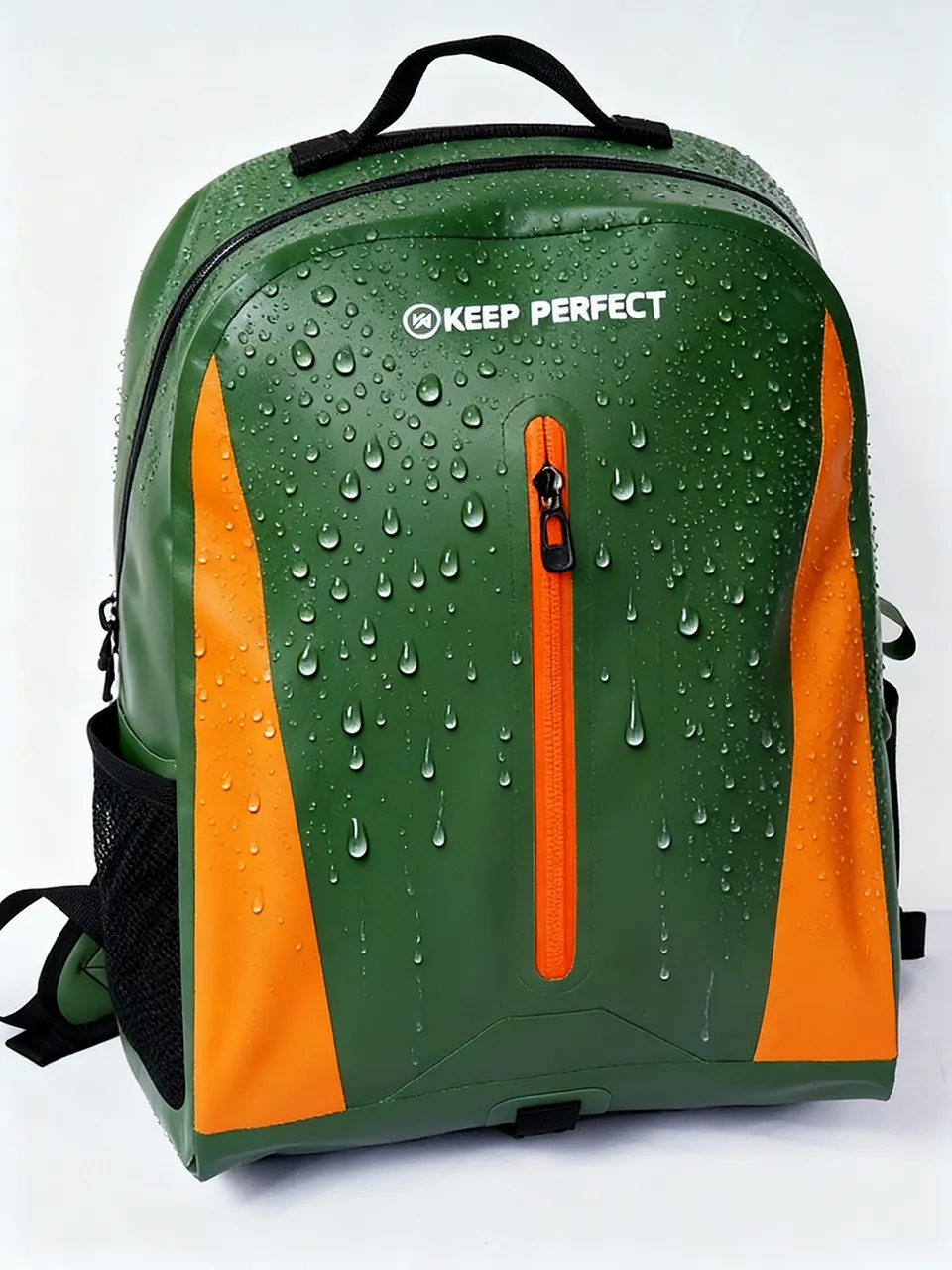
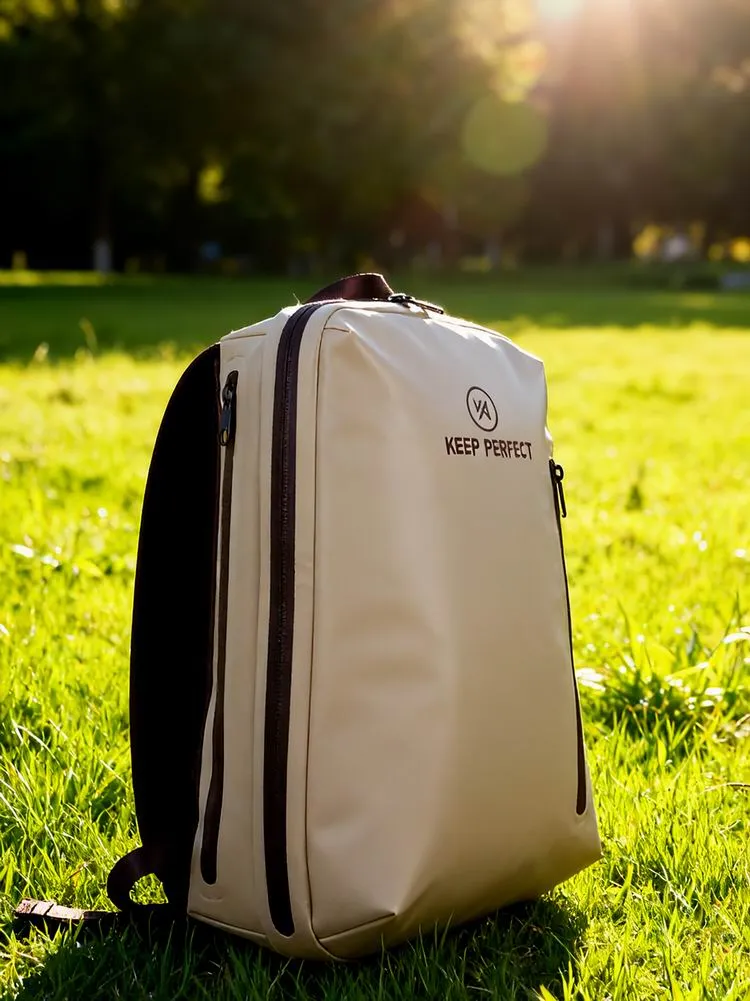
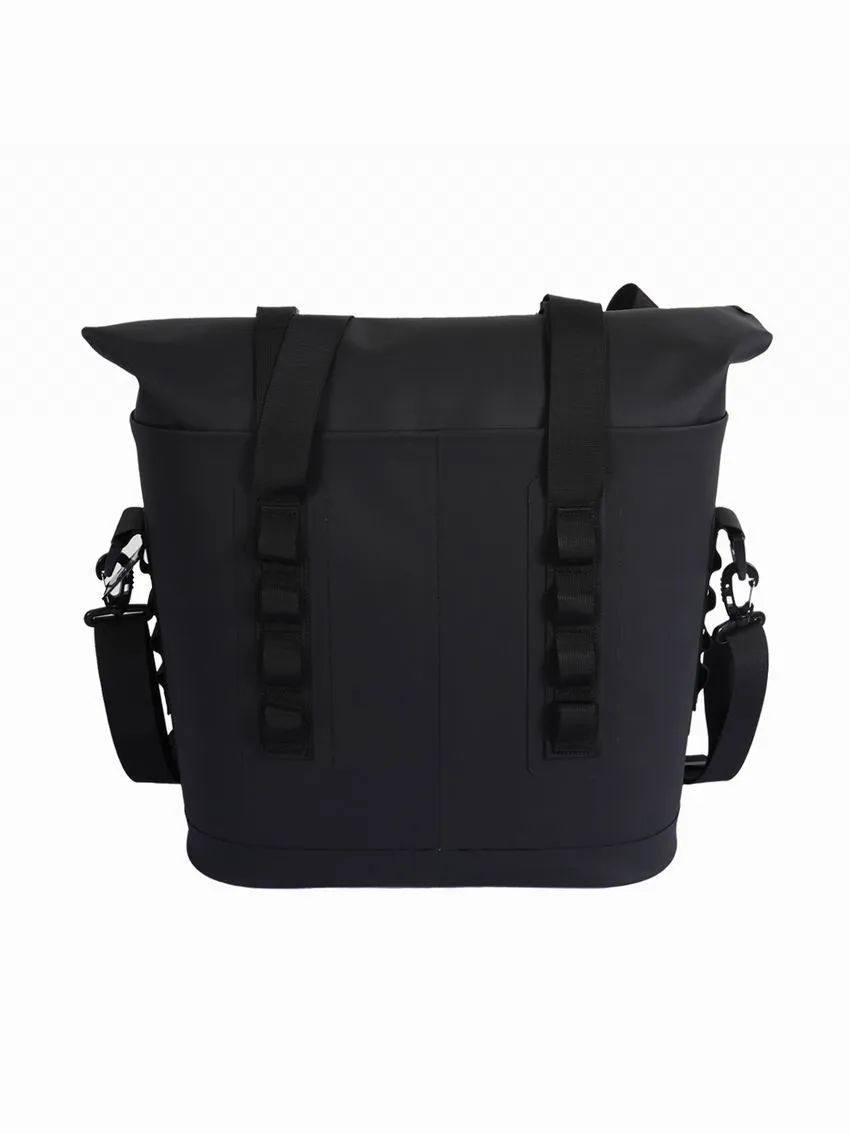
Why short high-frequency trips wear a different set of parts
Durability advice written for travellers assumes low frequency and long exposure: a bag used twelve times a year for a week at a time, exposed to weather for hours. A scooter commuter inverts both variables. Exposure per ride is short, often under twenty minutes, but the number of rides is enormous, and between rides the bag is picked up, put down, opened, closed, hung, dropped onto a floor and shoved into a locker or under a desk. What wears out is therefore not the fabric and not the coating; it is the interface between the rider and the bag. Good waterproof scooter commuter bags are specified around that interface, and e-bike daily carry is best understood as a cycle-count problem rather than a weather problem.
The second difference is mechanical rather than statistical. On foot, a bag that swings is an irritation. On a scooter, a swinging mass is a stability input, because the rider is balancing on two small wheels with a narrow steering axis and very little margin. Anything that adds mass away from the rider’s centreline, or that can move independently of the rider, changes how the vehicle behaves. That is why the handlebar question below is treated with real numbers instead of a warning, and why the default recommendation for a rider is worn carry rather than mounted carry.
- Exposure per ride is short, so coating performance matters far less than it does for a hiker or a courier working a full shift outdoors.
- Cycle count per year is very high, so closures, buckles, strap adjusters and hanging loops dominate the failure statistics.
- Handling time per ride is short, so any bag that needs adjustment, deployment or repacking will be used badly or not at all.
- The rider is balancing, so any mass that can move independently is a handling problem before it is a comfort problem.
- The vehicle is small, so storage on the vehicle competes directly with the rider’s own feet and hands.
It is worth being clear about the honest counter-case: a rider with a basket, a front rack or a top box has a different and easier problem, because the mass is mounted to the frame rather than to the steering or to the rider. Most scooter riders do not have any of those, which is why the guidance below assumes an unmodified vehicle and a bag the rider carries or hangs.
The ride cycle: how many openings a year a commuter bag actually takes
Putting numbers on the cycle count is what turns a vague durability worry into a specification. A rider commuting five days a week for roughly forty-eight weeks makes about 480 rides a year. Each ride involves opening the bag to take out a phone, a card or a lock, and again at the other end; add an opening for a bottle or a layer and the realistic figure is four to eight closure cycles per ride. That is somewhere between 1,900 and 3,800 cycles a year on the main closure, and more on any quick-access pocket. A zip that would last a leisure traveller five years is being asked to do five years’ work in one.
| Component | Cycles per ride | Cycles per year | Typical first failure | What that implies |
|---|---|---|---|---|
| Main compartment closure | 2 to 4 | 1,000 to 1,900 | Slider wear, tape separation at the ends, coating delamination | Specify a serviceable slider and a garaged termination |
| Quick-access pocket closure | 4 to 8 | 1,900 to 3,800 | Slider loosening, stitching at the tape end | This is the highest-cycle component on the bag; specify it accordingly |
| Buckle or adjuster hardware | 2 to 4 | 1,000 to 1,900 | Slipping under load, latch wear, cold-impact cracking | Specify an engineering-grade polymer and test for slip |
| Strap length adjuster | 1 to 2 | 500 to 960 | Webbing glazing where the adjuster rides, loss of grip | Use a textured webbing and a cam that does not polish it |
| Hanging loop and its anchor | 4 to 8 load events | 1,900 to 3,800 | Stitch pull-out at the anchor, panel delamination | Anchor into a webbing spine and bar-tack it |
| Base panel set-down | 4 to 10 | 1,900 to 4,800 | Abrasion through the coating at the corners | Specify a reinforced, darker base panel |
| Shoulder strap attachment | Continuous load | Not cycled but always loaded | Webbing tear at the stitch line | Reinforce with a backing panel and a box stitch |
Two conclusions follow directly from that table. The quick-access pocket closure is the highest-cycle component on the whole bag and is routinely the cheapest one specified, which is backwards. And the slider should be a serviceable part, because at these cycle counts it will need replacing before the fabric does, and a bag that cannot have its slider changed becomes waste at roughly the eighteen-month mark. Cycle-testing expectations are set out in our page on zipper durability testing.
Riding posture decides the bag type: deck, handlebar, or back
A scooter rider stands with both feet on a deck roughly 500 by 150 millimetres, leaning slightly forward with both hands on a bar. An e-bike rider sits, with feet on pedals and often a rack available. Those two postures leave very different amounts of spare capacity, and they eliminate different bag formats. The deck of a scooter is the rider’s floor; anything placed on it occupies the space the feet need and moves under acceleration. The handlebars are the steering input; anything hung on them changes how the steering responds. That leaves worn carry as the default for scooters, and worn or rack carry for e-bikes.
| Carry position | What the rider gives up | Behaviour under braking and acceleration | Verdict for micromobility |
|---|---|---|---|
| On the deck, between the feet | Foot placement and the ability to put a foot down | Under acceleration a bag of 4 kg needs roughly 8 N of friction to stay put; a wet deck can drop available friction below that, so it slides | Reject for anything above about 2 kg |
| Hung on the handlebar | Steering inertia and clear bar movement | A 3 kg bag at 200 mm from the steering axis adds roughly 0.12 kg m² to steering inertia and applies about 17 N through the mount in a hard stop | Avoid; see the braking section below |
| Crossbody or shoulder, unsecured | Nothing structurally, but it swings | Swings into the rider’s arm and across the body on every turn and stop | Acceptable only with a stabilising strap |
| Backpack, worn on both shoulders | Nothing; the load moves with the rider | Neutral, because the mass is coupled to the rider’s torso | The default recommendation |
| Frame or rack mounted | Luggage space on the vehicle | Neutral to slightly beneficial, since the mass is low and fixed | Best option where the vehicle allows it |
| Basket or front-mounted box | Some steering feel at low speed | Acceptable if the mount is rigid; poor if it flexes | Good if properly mounted to the frame rather than the bars |
The deck case deserves one more number because riders do try it. A scooter accelerating at roughly 0.2 g subjects a bag on the deck to a horizontal inertial force of about 0.2 times its weight; a 4 kilogram bag therefore needs around 8 newtons of friction to stay in place. A dry deck with a rubberised surface provides that comfortably. A wet deck with a smooth coated bag underside can drop the available friction to a few newtons, and the bag then slides backward under acceleration and forward under braking, which is exactly when the rider needs both feet planted. Anything above about 2 kilograms should not ride on the deck.
E-bike riders have an easier answer, and it is worth stating plainly: if the bike has a rack, use a rack-mounted or frame-mounted solution rather than anything on the bars. The handling penalty of bar-mounted mass applies to bicycles as well, though a bicycle’s larger steering geometry tolerates it better than a scooter’s does. The cycling-specific options are set out in our page on compact bike storage packs and the wider guidance in cycling and bike-packing bags. Motorcycle riders, who face a related but more severe version of the same mounting question, are covered in motorcycle touring gear.
Handlebar-hung bags and the sway that arrives exactly when you brake
This is the single most under-discussed safety issue in micromobility carry, and it is worth doing the arithmetic. A bag hung on a handlebar is a pendulum whose pivot is the mounting point. When the rider brakes, the vehicle decelerates and the bag does not; it swings forward about its mount until the pendulum reaches a new equilibrium angle. That angle is set by the ratio of deceleration to gravity: tan of the angle equals deceleration divided by g. A hard stop on a scooter from 25 kilometres per hour to rest in about 1.2 seconds is a deceleration of roughly 5.8 metres per second squared, giving a swing angle of about 30 degrees. A 200 millimetre pendulum at 30 degrees displaces roughly 100 millimetres forward and lifts about 27 millimetres.
That displacement matters for two distinct reasons. The first is the physical one: the bag swings forward and upward into the space in front of the rider’s hands and, if it is hung from a bar-end or a mirror mount, toward the controls. The second is the dynamic one, and it is the one that actually changes handling: while the bag is swinging, it applies a horizontal reaction force through the mount of roughly mass times deceleration. A 3 kilogram bag in that stop applies about 17 newtons, which feels to the rider like a sudden 1.7 kilogram pull on one side of the bar, arriving precisely when both hands are needed for a controlled stop.
- Steering inertia rises with the square of the distance from the steering axis, so moving a bag 100 millimetres further out roughly triples its effect on steering feel.
- The reaction force arrives at the moment of maximum braking, which is the moment of least margin.
- A bag on one side creates an asymmetric input; a balanced pair of panniers does not, which is why symmetry matters more than total mass.
- Elastic mounts and loose straps make it worse, because the bag can overshoot the equilibrium angle and oscillate.
- A front basket mounted rigidly to the frame or fork behaves far better than the same mass hung from the bars, because the mount does not flex.
- Even a small bag is a problem if it can swing: the issue is the pendulum, not the weight.
The specification conclusion is straightforward and should be written into any micromobility product brief: nothing intended for handlebar use should be sold without either a rigid, non-pivoting mount or a secondary strap that couples the bag to a fixed part of the vehicle. A hook that lets the bag pivot freely is the worst case. Riders who already own a shoulder bag should add a stabilising strap rather than accepting the swing. Practical road-safety context for micromobility is published by the National Highway Traffic Safety Administration, and the general principle — keep moving mass off the steering input — is the same one that applies to any mount, as set out in our page on load stress testing.
Sudden urban rain: the ten-minute problem, not the storm problem
Riders prepare for the rain they can see when they leave and get caught by the rain that starts mid-ride. The exposure profile is therefore different from a walking commute: a heavy convective shower can deliver 10 to 30 millimetres in twenty minutes, the rider is moving at 20 to 30 kilometres per hour so the apparent rain is driven into the front-facing surfaces at an angle, and there is no realistic option to stop and deploy a cover because stopping safely takes longer than the shower lasts. A bag that depends on a deployed cover will simply get wet, because the cover stays in its pocket.
- Specify passive protection over deployable protection: a covered closure and a water-shedding front panel work without any rider action.
- The front-facing face of a worn backpack is the wetting surface on a scooter, because apparent rain arrives at an angle rather than from above.
- A spray skirt or a mudguard matters for a rider with a bag mounted low, because wheel spray is a larger water source than rainfall on wet roads.
- A cover that can be deployed one-handed in under ten seconds is acceptable; anything slower will not be used at speed on a shoulder-less road.
- Assume the rider will be wet anyway and protect the contents, not the rider; a phone, a laptop and documents are what matter.
- Dry the bag on arrival rather than leaving it closed; a bag put away wet and opened the next morning is how odour and mildew start.
The water protection level that matches this profile is modest and specific: sustained driven rain for up to about thirty minutes, spray from a wet road, and set-down on wet ground. That is a coated zip or a properly rolled roll-top with a covered termination, plus taped or welded seams at the top surfaces. Immersion construction is overkill and brings stiffness and slow access, which a rider will notice twice a day. The framework for matching exposure to construction is in our page on choosing the right waterproof level, and the rating vocabulary is explained in the IPX rating system. Ingress ratings themselves are defined by the International Electrotechnical Commission.
Grab-and-go criteria: the numbers behind convenience
Micromobility riders consistently describe the same requirement in vague terms, and it can be made measurable. They care far less than office commuters do about whether a bag looks professional, and far more about whether it can be dealt with in seconds while standing next to a vehicle that will not stay upright on its own. That converts into four numbers, each of which can be tested on a sample in a shop or in a car park.
- Shoulder-to-riding in under five seconds: the bag goes on and the rider is moving, with no strap adjustment and no second attempt.
- One-handed closure: the main compartment must close with one hand while the other steadies the vehicle. Anything needing two hands fails.
- Contents reachable within three seconds at the destination, from an external pocket, without putting the bag down on a wet pavement.
- No deployment step at all for rain protection: if the rider has to remember something, it will not happen on the ride it matters.
- Stable when set down: a bag that falls over on a scooter deck or a pavement forces the rider to pick it up, which is the single most common annoyance reported.
- Nothing dangling: any strap, cord or loose end near a wheel or a bar is a hazard as well as an irritation.
These criteria explain why format recommendations for riders differ from those for walkers. A roll-top is excellent at keeping water out and poor at all six criteria, because it needs two hands, several seconds and attention. A covered zip is slightly less capable in immersion terms and much better against the criteria that riders actually apply. Where a rider carries something that genuinely must stay dry, the right answer is a zip on the outside and a small roll-top dry pouch on the inside, not a roll-top as the main closure. The closure trade-off is set out in our page on zipper and roll-top closures.
Where a high-frequency commuter bag actually wears out
At five hundred rides a year, the failure ranking is dominated by cycle count rather than by material quality, and the ranking is stable enough to specify against. The coated shell almost never fails first. What fails is the closure, the hardware, the hanging loop anchor and the base corners, in roughly that order, and every one of them is a specified component that can be upgraded for a small cost at the manufacturing level.
| Component | Failure mode at high cycle count | Detectable sign before failure | Specification response |
|---|---|---|---|
| Quick-access pocket slider | Slider loosens and begins to slip open; tape separates at the end | The slider no longer stays where it is left | Branded slider, reinforced tape ends, garaged termination |
| Main closure coating | Coating delaminates near the slider end where it flexes most | Flaking at the last 50 millimetres of tape | Higher-grade coated tape and a covered garage |
| Buckle and adjuster | Latch wear leads to slipping under load; cold makes polymers brittle | The strap creeps tighter or looser during a ride | Engineering-grade polymer, tested for slip and cold impact |
| Hanging loop anchor | Stitch pull-out where the loop meets the panel | Visible stitch movement when the bag is lifted by the loop | Anchor into a webbing spine, box or bar-tack stitch |
| Base corners | Coating abrades through, then the face fabric frays | Light marks appearing at the two front corners | Reinforced darker base panel, raised corner construction |
| Strap webbing at the adjuster | Webbing glazes and loses grip, so the adjuster slips | Strap length drifts within a ride | Textured webbing and a cam with a positive bite |
| Back panel and harness | Foam sets and the harness loses shape under daily load | The bag sits lower and swings more than when new | Closed-cell foam, and a harness that can be replaced |
The commercial implication for a brand is that the cheapest possible upgrade path is also the most effective: specify a branded slider, a reinforced tape termination, an engineering-grade buckle and a properly anchored hanging loop, and the bag will survive the cycle count that this use imposes. Spending the same money on a higher coating specification instead produces a bag that still fails at the slider in eighteen months with a pristine shell. Hardware selection logic is in our page on custom hardware selection, and attachment testing in load stress testing.
Charging ports, cable routing and battery carriage
The micromobility load has one electrical dimension that a walking commute does not: the rider is already managing batteries. A phone is used for navigation and often mounted to the bars, a power bank is carried because a mounted phone drains quickly, and some riders carry a spare battery or a charger for the vehicle itself. Each of those introduces a cable and, on a wet ride, a water path into the bag. A charging port on a bag is only useful if it keeps water out and if the cable is managed rather than dangling near a wheel.
- Any external port needs a grommet or a flap that closes without rider intervention, and it should be positioned where driven rain does not land on it directly.
- Route the cable inside a dedicated sleeve rather than through the main compartment, so a wet cable does not run across dry contents.
- A port at the side of the bag is better than one on the front face, because the front face is the wetted surface when riding.
- Keep the power bank in an inner pocket close to the body rather than in an outer pocket, where it is both exposed and a theft target.
- A vehicle battery carried in a bag should be treated as a hazard rather than as luggage: it is heavy, typically 2 to 4 kilograms, and damaged lithium cells are a fire risk.
- Never charge a cold lithium cell; warm it to room temperature first, which matters for riders in winter.
Carrying a spare vehicle battery is worth a specific caution. Removable e-scooter and e-bike batteries are typically 2 to 4 kilograms and are among the heaviest single items a rider might consider putting in a bag. They are also the one item in this category that should not be carried in a bag at all if the casing is damaged: a punctured or swollen lithium cell is a genuine fire hazard, and a bag holds it against the rider’s body. If a battery must be carried, use a dedicated case and never one that seals it into a soft bag with fabric around it. Battery and power bank carriage options are covered in our page on battery and power bank cases, and device protection for a mounted phone in phone and small electronics pouches.
Visibility: the bag sits where a driver looks
A rider is the smallest and least protected thing on the road, and the bag is often the largest silhouette a driver sees. That makes reflective placement on a rider’s bag a genuine safety feature rather than a trim detail. Retroreflective material returns light toward its source, so it works without any power, and it must be placed where headlights actually land: on the back of a worn backpack at hip to shoulder height, and on the sides, because a rider crossing a junction presents a side profile to traffic.
- Put retroreflective panels on the back and sides of the bag rather than relying on jacket trim that the bag covers.
- Target the height band a car headlight reaches, roughly 500 to 1400 millimetres above the ground.
- Add reflective detail to moving elements such as strap ends, because motion is detected faster than static brightness.
- Do not rely on fluorescent colour after dark; fluorescence needs daylight and only retroreflection works at night.
- If a rain cover is supplied, it must carry its own reflective panels or it will hide the bag’s reflectivity in the worst conditions.
- Keep reflective area generous rather than token; a 20 millimetre piping band reads as nothing at 50 metres.
Integration methods, including where reflective film can be welded or stitched without compromising the shell, are set out in our page on reflective materials integration. Urban transport and climate context for planning this kind of route is published by the European Environment Agency.
Capacity and shape for a rider’s load
Rider loads are small but awkward. A typical scooter or e-bike commute carries a laptop or tablet, a charger, a phone, a lock, a water bottle, a light layer and a small set of personal items, which is 3 to 6 kilograms and 12 to 22 litres. The shape matters more than the volume: a bag that is wide catches wind and mirrors, a bag that is tall shifts the rider’s centre of mass upward, and a bag that projects far behind the shoulders changes how the rider fits through gaps. The best shape for a rider is close to the back, narrow, and no taller than the shoulders.
- Twelve to eighteen litres covers most rider loads; above twenty-two litres the bag starts to affect lane positioning and mirror clearance.
- Keep the bag no wider than the rider’s shoulders, because width is what catches on car mirrors and door frames.
- Prefer depth over width so the load sits close to the back rather than projecting behind it.
- Compression straps let one bag handle both a light day and a grocery stop, which is the most common variation in rider loads.
- A flat structured base keeps the bag upright on a pavement, which matters more when the rider has nowhere to set it down.
- A separate small pouch for the lock is worthwhile, because a wet lock packed with clothes is an unpleasant and common mistake.
Laptop carriage deserves a rider-specific note: the suspension that protects a device for a walker is not sufficient for a rider, because a scooter transmits far more vibration and the occasional kerb strike is a sharp impulse rather than a gradual load. The sleeve should suspend the device clear of the base, use dense closed-cell foam that does not bottom out, and sit against the back panel rather than the outer face. The device-specific detail is in our page on waterproof laptop protection.
What a brand should specify for a scooter and e-bike line
For a brand building into micromobility, the product logic follows the rider rather than the vehicle. The three pieces a rider buys are a 12 to 20 litre worn pack, a bar-mounted or frame-mounted phone pouch for navigation, and a small accessory pouch for lock, cables and a power bank. All three should share one material story and one hardware language, and critically none of them should be sold with a free-pivoting handlebar hook unless a secondary stabilising strap is included.
- Specify passive rain protection: a covered zip with a garaged termination and a water-shedding front panel, with no deployment step.
- Make the closure operable one-handed and specify a branded, serviceable slider, because cycle counts here are extreme.
- Use acetal hardware throughout; it is quiet, corrosion-resistant and does not conduct in wet conditions.
- Add retroreflective panels to the back and sides in the 500 to 1400 millimetre band, and repeat them on any cover.
- Include a stabilising strap with any product intended for bar or frame mounting, and state the mounting limit in the copy.
- Anchor the hanging loop into a webbing spine and test it at a defined multiple of rated load.
- Size the range for a 3 to 6 kilogram load and keep the silhouette narrower than the rider’s shoulders.
Commercial mechanics follow the usual structure: minimum order quantity is 500 pieces per style, which is straightforward across a three-piece range in two colourways when planned as one programme. The two items most likely to be lost to value engineering are the slider grade and the reflective area, and both should be named explicitly on the bill of materials; see our pages on minimum order quantities and lead times for custom orders. Where the range is sold through mobility retailers or fleet operators, the corporate and promotional channel often drives the first volume. To turn this into real dates and a quotation, review the process from first enquiry through sampling into bulk production and send the capacity ladder, closure specification and target volumes. Sampling takes 6–10 working days, bulk production runs 35–50 days, and quotations are issued FOB Xiamen.
A buying checklist by rider pattern
Buying to a specification survives model changes, so this checklist is written as specification rather than as product names. Each line is checkable in under a minute, and the first three lines decide whether the bag works on a scooter at all.
- Short city scooter commute under twenty minutes: 12 to 18 litre worn pack, one-handed covered zip, external quick-access pocket, reflective sides, passive rain protection.
- E-bike commute with a rack: rack-mounted or frame-mounted load wherever possible, worn pack for anything valuable, and nothing on the bars.
- Rider carrying a laptop: suspended sleeve against the back panel, dense closed-cell foam, suspension clear of the base, and a bag no wider than the shoulders.
- Rider who shops on the way home: compression straps plus a fold-flat spare bag, rather than a larger everyday bag.
- Shared or rental scooter user: a bag that can be worn at all times, with no mounting hardware at all, since the vehicle changes daily.
- Any rider: reject anything hung from the bars on a free-pivoting hook, and reject any bag whose rain protection requires a deployment step.
The ordering is deliberate: cycle-count durability first, then mounted-mass behaviour, then passive rain protection and access speed, and only last the coating figures that the category sells on. A bag specified in that order will do five hundred rides a year for several years. A bag specified in the market’s order will lose its slider in the first year and, if it is hung on the bars, will pull on the steering the one time the rider brakes hard.
Frequently Asked Questions
Q1. Is a backpack or a handlebar bag better for a scooter?
A worn backpack. A bag hung on the bars adds steering inertia and applies a pull through the mount during braking. If mounting is unavoidable, use a rigid mount or a stabilising strap, never a free-pivoting hook.
Q2. How much does a handlebar bag affect braking?
A 3 kilogram bag at 200 millimetres from the steering axis adds roughly 0.12 kilogram metres squared of steering inertia and applies about 17 newtons through the mount in a hard stop, which feels like a sudden pull on one side of the bar.
Q3. Can I put a bag on the footboard of an e-scooter?
Only up to about 2 kilograms. A 4 kilogram bag needs roughly 8 newtons of friction to stay put under acceleration, and a wet deck can drop available friction below that, so the bag slides exactly when you need both feet planted.
Q4. What level of waterproofing does a scooter commute need?
Sustained driven rain for up to about thirty minutes plus road spray, which is a covered closure and protected top seams. Immersion construction adds stiffness and slow access that a rider will notice twice a day.
Q5. Is a roll-top or a zip better for a rider?
A zip on the outside and a small roll-top pouch inside for anything critical. A roll-top needs two hands and several seconds, which fails the grab-and-go criteria riders actually apply.
Q6. How many times a year does a commuter bag get opened?
Around 1,000 to 1,900 cycles on the main closure and 1,900 to 3,800 on a quick-access pocket, at roughly 480 rides a year. The pocket closure is the highest-cycle part on the bag.
Q7. What fails first on a high-frequency commuter bag?
The quick-access pocket slider, then the main closure coating near the tape end, then buckles and the hanging loop anchor. The shell almost never fails first.
Q8. Should the slider be replaceable?
Yes. At these cycle counts the slider will need replacing before the fabric does, and a bag that cannot have its slider changed becomes waste at roughly eighteen months.
Q9. How much reflective material should a rider bag have?
Generous retroreflective panels on the back and sides in the 500 to 1400 millimetre height band. A narrow piping band reads as almost nothing at 50 metres, and fluorescence does nothing at night.
Q10. Can I carry a spare e-scooter battery in my bag?
Not if the casing is damaged. Removable batteries weigh 2 to 4 kilograms and a punctured or swollen lithium cell is a fire risk. Use a dedicated case, and never seal it into soft fabric against your body.
Q11. Should a scooter bag have a charging port?
Only with a grommet or flap that closes without rider action, positioned on the side rather than the front face. Route the cable inside a dedicated sleeve so a wet cable does not run across dry contents.
Q12. How much capacity does a rider actually need?
Twelve to eighteen litres for a laptop or tablet, charger, lock, bottle, light layer and personal items. Above twenty-two litres the bag begins to affect lane positioning and mirror clearance.
Q13. Is a rain cover worth it on a scooter?
Rarely, because stopping to deploy one is not realistic mid-ride. Passive protection that requires no rider action is the correct specification for a vehicle that cannot simply stop on the shoulder.
Q14. Does a backpack affect scooter stability?
Far less than any mounted load, because the mass is coupled to the rider. Keep the bag narrow, close to the back and no taller than the shoulders, and it will not change handling noticeably.
Q15. What should a brand specify first for a micromobility range?
A serviceable branded slider, passive rain protection, acetal hardware and retroreflective area. Those four decide whether the bag survives the cycle count and whether riders feel safe using it.
Q16. Should a bag sold for handlebar use include a stabilising strap?
Yes, always. A free-pivoting hook is the worst case, because the bag becomes a pendulum that swings into the rider and pulls on the steering during a hard stop.
Q17. How long should a scooter commuter bag last?
Judge by cycles rather than years. At five hundred rides a year, expect the quick-access slider and the buckles to be the first consumables, typically inside eighteen to thirty months, unless the slider is serviceable.
People Also Ask
Where should a bag go on an e-scooter?
On your back. The deck is your floor and the bars are your steering input. Only mount to a rack or frame, and never on a free-pivoting hook.
Why is a handlebar bag dangerous?
It is a pendulum. In a hard stop a 3 kilogram bag applies about 17 newtons through the mount and swings roughly 100 millimetres forward, pulling the steering at the worst moment.
What waterproof level does a scooter commute need?
Driven rain for up to thirty minutes plus road spray. A covered zip and protected seams are enough; immersion construction is overkill and slows access.
What wears out first on a commuter bag?
The quick-access pocket slider, then the main closure tape and the buckles. The shell almost never fails first at these cycle counts.
How much capacity does a rider need?
Twelve to eighteen litres. Above twenty-two litres the bag starts to affect lane positioning and mirror clearance.
Is a rain cover useful on a scooter?
Usually not, because you cannot stop safely to deploy one. Specify passive protection that needs no rider action.