A plein air case is not a small dry bag with an artist logo. Its three real enemies are solvent chemistry, point pressure and vapour. Turpentine, mineral spirits, alcohol and cleaning thinners can swell, whiten, soften or weld-attack coated fabrics, and the solvent that is gentle on one polymer can be aggressive on another, so a lining chosen for water resistance alone can fail during the first clean-up. Brush tips deform permanently under a strap, a buckle or an over-packed roll, and a deformed sable or synthetic tip cannot be repaired. Wet panels and canvases need rigid, non-marking support rather than a soft pouch, and odour from solvents and mediums travels through fabric and into vehicles, studios and shared transport.
This guide sets out solvent and coating compatibility with a film-by-film comparison, vapour and odour management, brush-roll geometry and tip clearance, rigid panel and canvas support, palette and wet-canvas isolation, drying-time and light planning, cleaning and decontamination, compartment zoning, validation tests, and how schools, workshops and art brands convert all of it into a repeatable custom programme. The production baseline at QUANZHOU JUNYUAN BAGS — custom waterproof bag production since 2014, 4,950 m² SGS-verified facility — is MOQ 500 pieces per style, sampling in 6–10 working days and bulk in 35–50 days, FOB Xiamen.
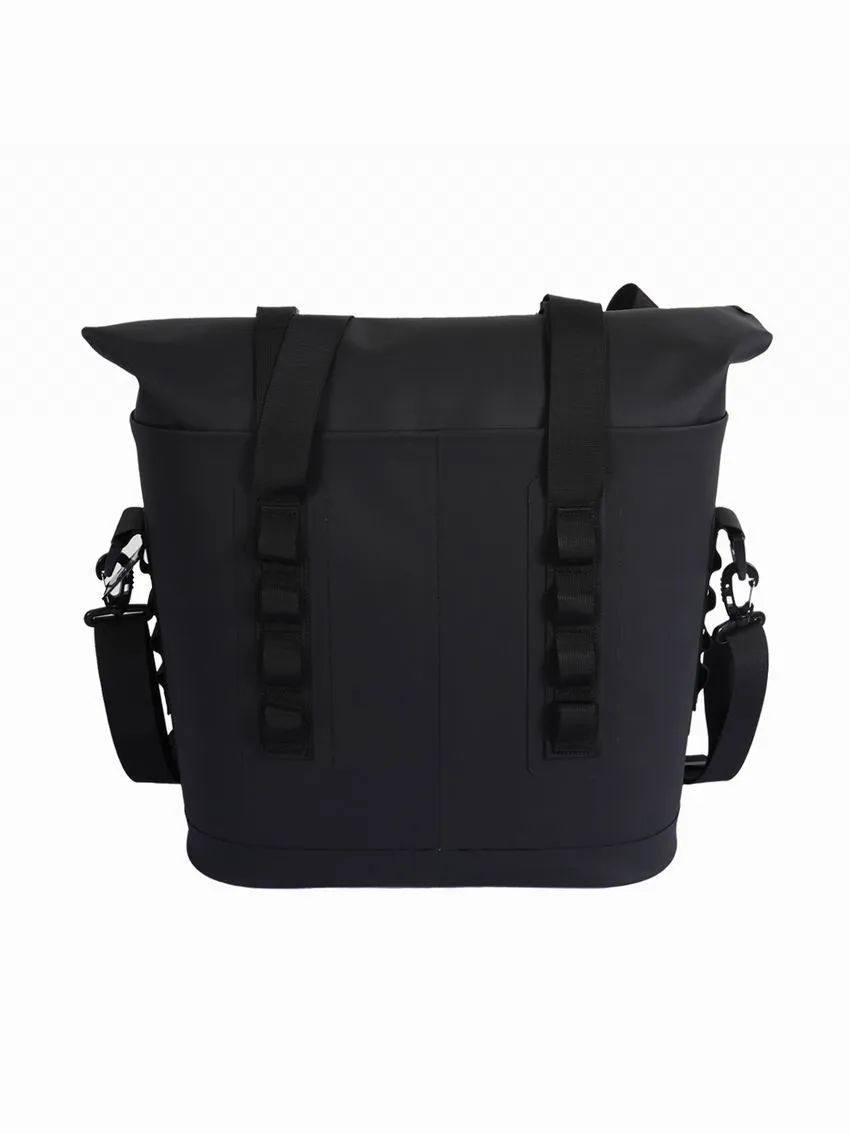
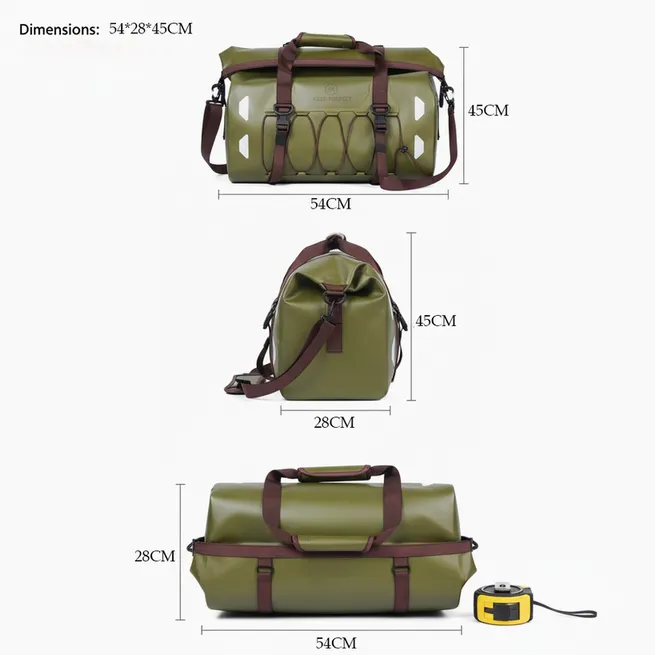
Solvent chemistry: turpentine and thinners attack coatings differently
The first engineering question for plein air art bags is chemical, not mechanical. Painters carry distilled turpentine, odourless mineral spirits, isopropyl alcohol, brush cleaner, and sometimes acetone or lacquer thinner for cleaning. These liquids do not behave like water on a polymer surface. Aromatic and chlorinated solvents can swell or extract plasticizer from flexible PVC, while polar solvents and ketones can attack polyurethane systems, haze some coatings, dissolve print layers and creep into welded seams. A waterproof brush case specified only by hydrostatic head can fail on the first cleaning day even though it never leaked in rain.
The comparison must therefore be made per lining candidate against the actual liquids in the kit. Water-based acrylic media are comparatively benign but still wet and alkaline while curing; oils and alkyd mediums bring drying oils and, when thinned, aromatic solvent; solvent-based varnishes and cleaners may carry stronger aromatics or ketones. Coupon testing should include printed, welded and coated areas because failures usually begin at a seam edge, a print boundary or a zipper tape rather than in the middle of a flat panel.
- Test the formulated product, not only the named ingredient; commercial brush cleaners often contain a solvent blend with surfactants.
- Include seam and print coupons in every exposure, since weld edges and ink layers fail before base film.
- Record mass and dimensional change, then flex and leak-test after exposure rather than judging by appearance alone.
- Fix a maximum credible contact time, because a spill wiped in two minutes is not the same risk as an overnight leak.
- Keep a retained exposure coupon from each production lot when solvent contact is routine.
The screening logic is expanded in our comparison of chemical resistance in waterproof materials. For art programmes, add one specific requirement: ask whether the coating is face-coated or laminated, because a thin surface coating can be breached by abrasion and then allow solvent to reach a susceptible base layer.
TPU versus PVC linings under artist solvent exposure
Thermoplastic polyurethane and flexible PVC are the two most common waterproof linings, and they fail differently in an artist kit. TPU generally offers better abrasion and low-temperature performance and is often chosen as a PVC-free option, but some grades soften or swell under aromatic or ketone exposure and can suffer hydrolysis in persistently damp conditions. Flexible PVC contains plasticizer that can be extracted by oils and solvents, leading to stiffening, cracking, surface tack and odour as the plasticizer leaves. Neither choice is universally correct; the decision depends on which liquids and which cleaning habits the programme expects.
| Exposure or condition | TPU lining behaviour | Flexible PVC lining behaviour | Specification response |
|---|---|---|---|
| Odourless mineral spirits | Usually tolerated better than PVC, but grade-dependent and can still cause swelling | Plasticizer extraction, tack or stiffening over repeated contact | Validate the exact grade; specify wipe-dry practice and a spill tray |
| Distilled turpentine | Possible softening, haze or weld attack depending on grade | Swelling and plasticizer loss, often with strong retained odour | Use a removable solvent-resistant tray rather than relying on the liner |
| Isopropyl alcohol | Generally tolerated in brief contact; haze possible on some coatings | Surface whitening and plasticizer migration in sustained contact | Limit contact time and validate print adhesion after exposure |
| Acetone or lacquer thinner | Frequently aggressive: softening, print loss, weld creep | Severe swelling and rapid failure | Exclude from the design case; require an external sealed metal or glass container |
| Drying oil residue | Surface film; clean with approved agent | Can plasticize and soften surface over time | Specify cleanability and a defined cleaning cycle |
| Long-term damp storage | Hydrolysis risk in some grades | Plasticizer loss and cracking | Require drying-open storage and a retirement criterion |
The practical conclusion for a buying specification is to define the solvent list, the contact-time case and the acceptance criteria, then let the material be chosen against them. The material trade-offs themselves are covered in TPU versus PVC waterproof materials and in the review of PVC-free waterproof alternatives. A programme that refuses to name its solvents will receive a lining selected for water, not for turpentine.
Vapour, odour and the sealed solvent bay
Liquid spillage is only part of the problem. Solvent vapour moves through fabric, through stitch holes and around zipper coils, and it carries odour into vehicles, classrooms and shared accommodation. Vapour also reaches materials the liquid never touched, so a case can develop lining damage and odour in a compartment that stayed visibly dry. Odour control is therefore a barrier and sealing problem rather than a fragrance problem, and adding a scent to a leaking design only produces scented solvent odour.
The most reliable control is to remove the vapour source from the soft structure entirely. Use a rigid, sealed, chemically compatible solvent bottle or a metal or glass container with a verified closure, then place it in a dedicated removable bay with a welded, wipeable surface and, where the programme requires it, a vapour-barrier liner. Keep brushes, panels and paper out of that bay. Provide a documented vapour-barrier test rather than an unspecified "odour resistant" claim, and define what the barrier is and how long it has to hold.
- Specify primary solvent containers by material and closure type; the bag is secondary containment, not the vapour seal.
- Use a welded, seam-free bay with radiused corners that can be wiped and inspected.
- Avoid stitched seams and absorbent textile in the solvent bay because they store vapour and residue.
- Separate solvent storage from paper, panels and finished work; vapour travels further than liquid.
- Validate odour containment with a sealed surrogate and a blinded check outside the case after a realistic dwell.
Closure and seam choices determine how much of this works in practice. Welded seams and a gasketed or covered closure reduce vapour paths substantially compared with a stitched liner and an exposed zipper. The construction trade-offs are set out in stitched, welded and bonded bag construction; for solvent service, prefer welded containment surfaces wherever geometry allows.
Brush tips are shaped tools and cannot be compressed
A brush tip is geometry, not bulk. Sable and other natural hair holds a point through the natural arrangement of the hair; synthetic filaments hold a point through taper and spring; both are permanently damaged by sustained bending, by pressure against a hard edge, or by storage while damp in a closed sleeve. A brush roll that looks tidy on a bench can ruin a set during a single rough walk if the tips rest against a buckle, a panel corner or the bottom of the carrier.
The design rules follow from that. Give every tip a protected overhang so nothing touches the filament end. Use a roll or sleeve with a rigid or semi-rigid end guard that transfers load to the handle rather than to the tip. Keep the roll from being over-tightened: a strap that compresses the roll to save space applies exactly the load tips cannot take. Store brushes dry, or where damp storage is unavoidable, store them horizontally with tips unsupported and allow ventilation.
- Dimension tip clearance from the longest brush plus ferrule, not from handle length alone.
- Add rigid end guards or a stiffened channel so straps load the handle end.
- Separate stiff hog or bristle brushes from soft detail brushes; mixing them transfers load to fine tips.
- Never store brushes tip-down in a closed wet sleeve; capillary moisture loosens adhesive at the ferrule.
- Inspect returned rental or class sets under good light for splayed tips before reissue.
For school and workshop programmes, a simple acceptance test helps: pack the case, walk a realistic route, then inspect tip alignment against a photograph taken before departure. Any tip that splayed under normal carrying indicates a geometry or clearance problem that a tougher fabric will not fix.
Rigid support for panels, canvases and wet surfaces
Wet painting surfaces need structure, not cushioning. A soft pouch lets a panel flex, and flexing can crack a ground, dent a canvas or transfer wet paint onto another surface. The case should therefore provide a flat, rigid or semi-rigid support with a non-marking, solvent-tolerant face, plus a separation system that keeps wet surfaces apart without touching the painted side. Spacers, corner posts or a slotted rack are preferable to stacking panels face to face.
Non-marking is a distinct requirement from solvent resistance. Some polymer surfaces can transfer plasticizer or colour onto a painting surface under pressure, especially in heat. Specify a facing material that has been tested against painted and gessoed coupons under load and warmth, and avoid printing or embossing on any surface that can contact artwork. Where a wet canvas must be carried, define the maximum number of wet surfaces and the separation method, and keep the painted faces outward or isolated by a spacer system.
- Support panels on a flat rigid board sized to the largest format plus margin.
- Use corner spacers so painted faces never contact another surface.
- Choose a facing material tested for transfer under load and heat, not merely for water resistance.
- Keep wet work separated from paper, brushes and clothing by a dedicated bay.
- Design the wet bay to be removable and cleanable, because paint residue accumulates quickly.
Sizes should be derived from the actual panel and canvas formats plus support thickness and spacer allowance, rather than from a nominal litre figure. The conversion method is explained in the size and dimension customization guide; the art-specific addition is the flat usable area, which matters more than volume for panels.
Palettes, mediums and the wet-bay isolation problem
A palette with wet paint is the most likely source of mess in the kit, and it interacts with everything else: medium and solvent odour, wet paint transfer, and cleaning residue. A wet palette box should be carried level, in a bay that can be wiped, with a closure independent from the dry compartments. Mediums and additives should be in sealed containers with secondary containment, because a leaking medium can contaminate brushes, paper and clothing in one movement.
- Carry the palette level; a tilted box turns a seal into a leak path regardless of how good the lid is.
- Give the wet bay a welded, seam-free surface and a wipeable, non-absorbent liner.
- Store mediums and additives in sealed primary containers with secondary containment around them.
- Keep paper and finished work in a dry bay that is physically separated, not merely bagged.
- Provide a small waste pouch for solvent rags; used solvent rags are both an odour and a safety issue.
Solvent-soaked rags deserve an explicit rule. They carry odour, they can soil the lining, and they are a recognised fire-safety concern because oxidising oils on a rag can self-heat. The case design should not encourage storing damp solvent rags; provide a removable, sealable waste option and a written instruction to dispose of them according to local rules. Solvent exposure limits and protective practices for artists are covered by occupational health authorities, and the US National Institute for Occupational Safety and Health publishes guidance on solvent hazards and ventilation. Safety labelling conventions for art materials are published by the Art and Creative Materials Institute, and solvent safety guidance is available from national occupational health authorities.
Where artwork or branding is printed on the case, test it against the same solvent list. Print loss is not merely cosmetic when the print identifies a solvent bay, a warning or a programme owner. Decoration processes and their durability are compared in our custom logo and printing guide.
Light, heat and drying windows decide what the artist can carry
Plein air work is time-bound. Oil and alkyd films remain vulnerable for hours and can remain soft for days; acrylics can skin within minutes in dry heat and stay workable longer in humid shade. Direct sun raises surface temperature, accelerates skinning, changes colour perception and can soften a lining or warp a panel. A case therefore has to manage a time window, not simply protect against rain: keep wet work shaded, ventilated where safe, and separated, and avoid sealing damp surfaces into an airtight pocket that traps solvent vapour against a coating.
- Provide a shaded, ventilated wet bay rather than a sealed pocket for freshly painted surfaces.
- Avoid dark linings in direct sun where surface temperature matters; test the hottest realistic exposure.
- Plan the return trip around the paint surface state; a soft film needs separation, not compression.
- Keep solvents out of hot, sealed compartments; vapour pressure and odour both increase with temperature.
- Record the intended climate range so material selection can be matched to the workshop location.
Temperature and humidity exposure also governs material ageing, and the test approach is described in environmental testing for waterproof bags. For art cases, add a solvent-exposed coupon to the same chamber cycle, because heat and solvent together cause failures that neither produces alone.
UV exposure is a separate, slower mechanism. Outdoor use means repeated sun on the exterior, which affects colourfastness, coating embrittlement and print life. The mechanisms and test options are summarised in UV resistance of outdoor waterproof materials.
Cleaning and drying after paint and solvent contact
Paint and solvent residue change the case over a season, and the cleaning method determines whether that change is cosmetic or structural. Oil and medium residue should be removed before it cures; solvent cleaning must use the mildest effective agent because aggressive solvents damage the very lining they are cleaning. Water-based residue is simpler but still needs drying. Every cleaning instruction should name the agent, the dwell limit, the wipe method and the drying state.
- Remove wet paint before it cures; cured residue usually requires harsher chemistry that damages linings.
- Use the mildest effective cleaner and avoid soaking; a soaked seam is a future leak.
- Validate the approved cleaning agent against print, seam adhesive and coating, not only against the film.
- Dry the case fully open, with solvent bays emptied and removable trays out of the structure.
- Retire cases with cracked coating, tacky or stiffened lining, broken welds, or solvent bays that no longer seal.
A defined retirement criterion matters for institutional programmes because a degraded solvent bay becomes a leak and odour source that operators tend to tolerate. Build the criterion into the inspection checklist alongside cosmetic checks: coating condition, weld continuity, closure function, print legibility and bay seal performance.
Where the case is used for teaching, provide a short cleaning card inside the lid. It reduces the two most common failures in class sets: aggressive solvent cleaning that destroys the lining, and closed storage that traps vapour and moisture against a coating.
Compartment zoning for a one-way outdoor workflow
A plein air kit contains incompatible neighbours: solvent, wet paint, dry paper, clean brushes, finished work, rags and personal items. Zoning should follow a one-way workflow so that clean supplies are accessed from one side, active materials are used from the front, and wet or contaminated items enter a removable bay that never crosses the dry space. Physical separation, not colour coding, is what prevents a leak from becoming a ruined day.
- Give solvent and wet paint a removable, welded bay with a wipeable surface.
- Keep paper and finished work in a rigid, flat, dry compartment with a separate closure.
- Store brushes in a protected roll with tip clearance and an end guard.
- Provide a rigid panel sleeve that spans the full format, not a pocket that lets panels flex.
- Keep personal items and food entirely separate from solvent and paint contact.
Load testing should use the real kit weight, including solvent and panel mass, with a dynamic safety factor rather than a static display load. Strap and handle stress behaviour is covered in load stress testing for straps and handles; for art cases, add a flex test with panels loaded, because panel edges concentrate load against the lining.
Ergonomics matter more outdoors than in a studio. The case must be openable and re-packable on uneven ground, in wind and with cold or paint-covered hands. Pull tabs, zipper runs and bay releases should be dimensioned for gloved use and validated at the lowest operating temperature of the programme.
Validation: solvent coupons, drop tests and a scripted field day
Approval should be evidence-based rather than impression-based. Run a coupon exposure against the declared solvent list; a filled leak test on every welded bay; a loaded drop and vibration sequence with panels and solvent aboard; a tip-protection check with brushes photographed before and after; and an odour containment check outside the closed case after a realistic dwell. Set the acceptance criteria before testing so a marginal result cannot be argued into acceptance.
| Test | Method summary | Acceptance criterion | Why it matters |
|---|---|---|---|
| Solvent coupon exposure | Film, seam and print coupons exposed to each declared solvent for the maximum credible time | No cracking or tack; change within agreed limits; seam strength retained | Prevents the lining failing during the first cleaning |
| Bay leak test | Welded bay filled and held in worst orientation | Zero leak at welds, corners and closure terminations | A solvent leak ruins paper, clothing and vehicle interiors |
| Loaded drop and vibration | Packed case dropped on corners and faces, then vibrated for route duration | No weld split, panel crack or closure opening | Transport damage is the most common field failure |
| Brush tip protection | Photograph tips, carry a realistic route, inspect alignment | No splaying or compression marks | Tip damage is permanent and expensive |
| Odour containment | Sealed solvent surrogate in a closed case, blinded check outside after dwell | No detectable odour outside the case | Odour is the complaint that ends institutional purchases |
Involve users who did not design the case. Designers unconsciously avoid the ambiguous pocket and remember which way the tray comes out; a first-time user will reveal whether the zoning and labelling actually work. Run the trial in the worst realistic weather, because a fair-weather trial hides wind, mud and cold-hand problems.
Sample approval timing and revision discipline are described in custom bag sampling and what to expect. For art programmes, require that the approval sample uses the production-intent lining, print method and hardware, because a substitute lining invalidates every solvent result.
Material and trim selection after the solvent list is fixed
Once the solvent list, formats and cleaning agents are fixed, the remaining material decisions become straightforward. Choose a lining validated against those liquids; choose a base fabric and denier for abrasion from panel corners and rough ground; choose hardware that will not mark panels or corrode in a damp bay; and choose print processes that survive both solvent wiping and outdoor UV exposure. The rule is to select the weakest component deliberately rather than discovering it later.
| Component | Selection driver | Common mistake | Control to specify |
|---|---|---|---|
| Lining film | Solvent list and contact time | Selecting for hydrostatic head alone | Coupon evidence per solvent and a retained sample per lot |
| Base fabric | Abrasion from panels, ground and buckles | Choosing a light denier for weight saving that scuffs through | Abrasion test against the panel corner and ground contact case |
| Hardware | Corrosion in a damp solvent bay and marking of artwork | Bright metal plating that marks panels and corrodes | Covered or polymer hardware plus a marking test under load |
| Closure | Vapour path, gloved use and cold operation | An exposed zipper whose coil wicks vapour | Covered closure with a leak and odour test at low temperature |
| Print and labels | Solvent wiping plus UV exposure | Surface print that dissolves during cleaning | Protected print or sealed label with rub and solvent validation |
Fabric and coating durability interact, because a scuffed coating exposes the base fabric to solvent that the intact surface would have resisted. The relationship between denier, abrasion and coating life is discussed in denier and waterproof bag durability and in the review of abrasion-resistant coatings; for art cases, repeat the abrasion step before the solvent exposure so the coupon represents a used case rather than a new one.
A useful discipline is to specify a single "weakest link" test that combines the mechanisms: abrade the coupon, expose it to the declared solvent, flex it, then leak-test the seam. Cases that pass flat coupon tests often fail this combined sequence, which is closer to what actually happens in a workshop or on location.
Procurement for schools, workshops and art brands
Institutional buyers should specify the kit contents before specifying the bag: solvent list, container types, brush set lengths, panel formats, palette box dimensions, climate range, cleaning agents and expected lifetime. That list drives lining choice, bay geometry, panel sleeve size, closure selection and artwork. Price comparisons are meaningless without it, because a cheap case with a water-resistant lining and a solvent-resistant case are not the same product.
- Name the solvent list and the contact-time case, then require coupon evidence per lining candidate.
- Specify welded containment surfaces in solvent and wet bays, with a leak test in the acceptance plan.
- Define flat usable panel area and tip clearance as dimensions, not as nominal capacity.
- Require print and cleaning-agent validation, since warnings and bay labels must remain legible.
- Set critical defects: solvent bay leak, cracked weld, missing warning print, tip-compression geometry errors.
- MOQ is 500 pieces per style; consolidate variants through shared materials and controlled print versions.
For brands and retailers, the same technical file becomes a marketing asset: a named solvent list, a documented bay leak test and a stated panel format are more persuasive than a generic waterproof claim. Packaging and labelling considerations are covered in waterproof bag packaging design for retail, while artwork control for brand programmes is described in private label waterproof bag programmes.
To start a programme, send the solvent list, kit dimensions, formats, climate range and expected order structure at enquiry. You can see how an art case moves from application sample through validated sampling into bulk production; every style starts at 500 pieces minimum, with samples in 6–10 working days and bulk in 35–50 days, quoted FOB Xiamen.
Frequently Asked Questions
Q1. Why does turpentine damage some waterproof linings but not others?
Because solvent attack is specific to polymer chemistry. Flexible PVC can lose plasticizer and become tacky or stiff, while some TPU grades soften, haze or suffer weld attack. Only coupon testing against the actual product and grade gives a reliable answer.
Q2. Is TPU always better than PVC for artist solvent exposure?
No. TPU generally handles abrasion and low temperature better and avoids plasticizer loss, but certain grades are attacked by ketones and aromatics. The solvent list, contact time and cleaning habits decide which material is safer for a given programme.
Q3. Which solvents should a specification list explicitly?
Distilled turpentine, odourless mineral spirits, isopropyl alcohol, commercial brush cleaner and any acetone or lacquer thinner the kit may contain. Acetone and strong thinners should be excluded from soft-lining contact and carried only in sealed rigid containers.
Q4. Can a waterproof case contain solvent odour?
Only with a vapour-barrier design: sealed primary containers, a welded seam-free bay, a covered closure and validated barrier performance. Adding fragrance to a leaking design simply produces scented solvent odour.
Q5. How should brushes be stored to protect the tips?
Dry where possible, with tip clearance beyond the longest filament, an end guard that transfers load to the handle, and no strap compression across the tip. Never store brushes tip-down in a closed damp sleeve.
Q6. What support do wet panels and canvases need?
A flat rigid or semi-rigid board sized to the largest format, with corner spacers so painted faces never touch another surface. Soft pouches allow flexing that can crack grounds and dent canvases.
Q7. Why is non-marking a separate requirement from solvent resistance?
Because a polymer can transfer plasticizer or colour onto a painting surface under load and heat without being chemically attacked. Test the facing material against painted and gessoed coupons under pressure and warmth.
Q8. What is the safest way to carry solvent on location?
Use a sealed rigid primary container with a verified closure, placed in a removable welded bay with secondary containment. The bag is secondary containment; it should not be the only vapour or liquid seal.
Q9. Are used solvent rags a design concern?
Yes. They carry odour, soil the lining and can present a self-heating fire risk from oxidising oils. Provide a removable sealable waste option and written disposal instructions rather than a fabric pocket that holds damp rags.
Q10. How does heat affect an outdoor art case?
Heat raises solvent vapour pressure and odour, accelerates paint skinning, can soften linings and can warp panels. Test the hottest realistic exposure with solvent present, because heat and solvent together cause failures neither causes alone.
Q11. What cleaning agents are safe for paint and solvent residue?
The mildest effective agent, validated against the lining, print and seam adhesive. Remove wet paint before it cures, avoid soaking seams, and dry the case fully open with removable trays out of the structure.
Q12. When should an art case be retired?
When the coating cracks, the lining becomes tacky or stiff, welds split, the solvent bay no longer seals, closures fail, or warning and identification prints are no longer legible. Retirement criteria belong in the inspection checklist.
Q13. How should a buyer validate a plein air case before ordering?
Run solvent coupon exposure, bay leak testing, loaded drop and vibration with panels aboard, a brush tip protection check and an odour containment check. Set numeric acceptance criteria before testing begins.
Q14. What dimensions matter most for an art case?
Flat usable panel area, brush tip clearance, palette box footprint and solvent bay volume. Nominal litre capacity is a poor guide because panels need area and brushes need clearance rather than volume.
Q15. What are critical defects at incoming inspection?
Solvent bay leaks, cracked or split welds, missing or illegible warning prints, tip-compression geometry that damages brushes, and closures that fail the leak test. Cosmetic shade variation can follow an AQL plan; these cannot.
Q16. What is the MOQ for custom art supply and brush cases?
MOQ is 500 pieces per style. Consolidate sizes around shared qualified materials and vary print or internal trays where possible, because a different lining or closure system is a separate validation case.
People Also Ask
Why do solvents ruin waterproof art bags?
Turpentine, mineral spirits and cleaners can swell coatings, extract plasticizer, dissolve print and creep into welded seams, so water resistance alone does not predict survival.
Is TPU or PVC better for artist solvent contact?
Neither is universal. PVC risks plasticizer loss and odour; some TPU grades risk softening or weld attack from aromatics and ketones. Test the exact grade against the solvent list.
How do you stop brush tips from bending in a case?
Provide tip clearance beyond the longest filament, an end guard that loads the handle, no strap compression across the tip, and dry ventilated storage.
Can a bag contain turpentine odour?
Only with sealed primary containers, a welded vapour-barrier bay, a covered closure and validated odour testing. Scented liners do not solve vapour leakage.
What support do wet paintings need in transport?
A flat rigid board with corner spacers so painted faces never contact another surface; soft pouches allow flexing that damages grounds and canvases.
What is the MOQ for custom plein air cases?
MOQ is 500 pieces per style, with variants best consolidated around a shared qualified lining and closure rather than separate constructions.