A first custom run is expensive for one structural reason that has nothing to do with materials: the setup work costs the same whether it is spread across five hundred units or five thousand. Pattern making, screen or plate setup, cutting dies, machine changeover, colour approval and operator familiarisation are all fixed, and at a low volume they dominate the unit price. The lever is therefore not negotiation. It is specification: how much of the factory’s existing tooling, standard colours and proven cutting dies you are willing to accept determines whether a small run is viable or merely possible.
This guide works through that decision in the order a startup meets it. It opens with what a 500-piece minimum actually covers and where colour splits quietly break it, then breaks the cost of a small run into fixed and variable parts with real numbers, sets out the three levers that lower the fixed burden, explains why pressing for a lower minimum usually raises unit price and destabilises quality, shows how to design within one fabric and one hardware family, covers sampling discipline, low-volume branding methods, inspection on a small lot, cash and deposit planning, the three-step taper from a first run to a scaled one, when custom is the wrong starting point, and a ninety-day plan for the first order. QUANZHOU JUNYUAN BAGS: custom waterproof bag production since 2014, 4,950 m² SGS-verified facility, MOQ 500 pieces per style, sampling in 6–10 working days and bulk in 35–50 days, FOB Xiamen.
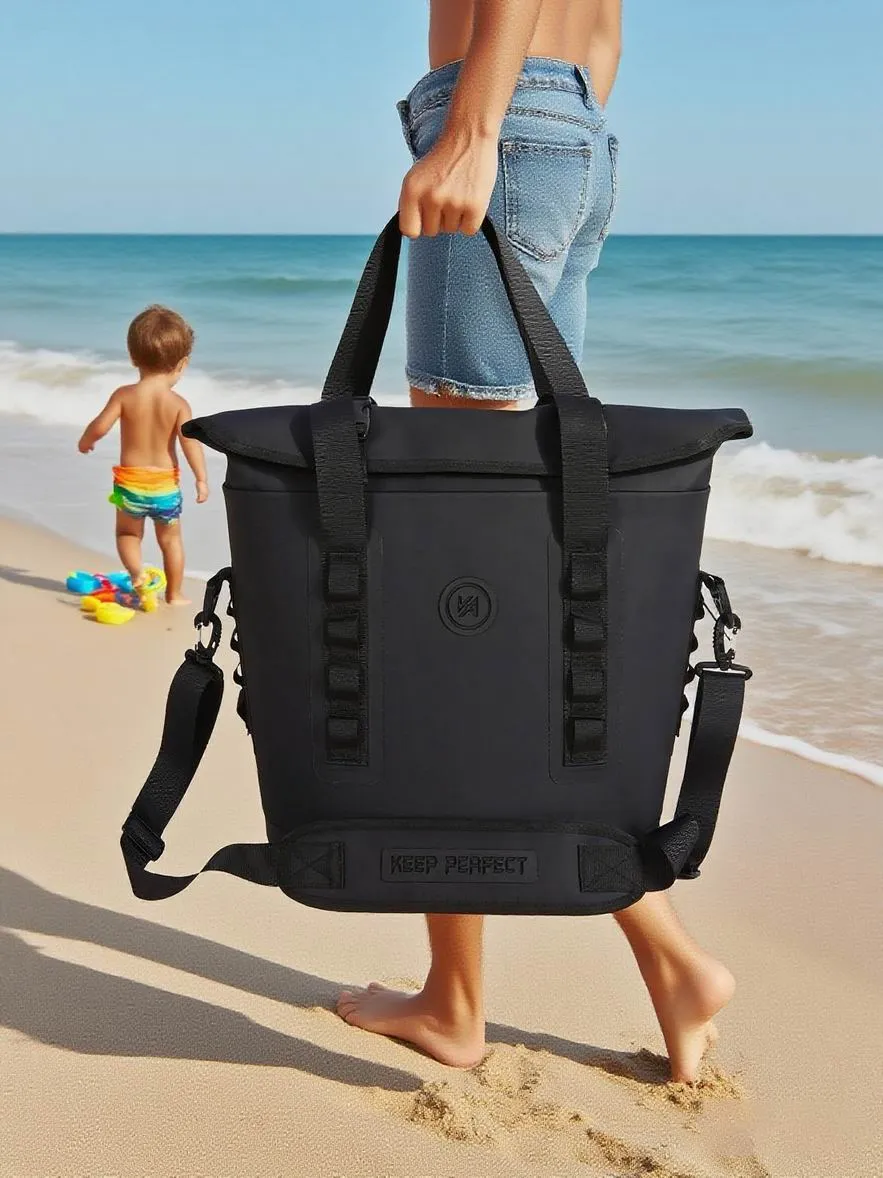
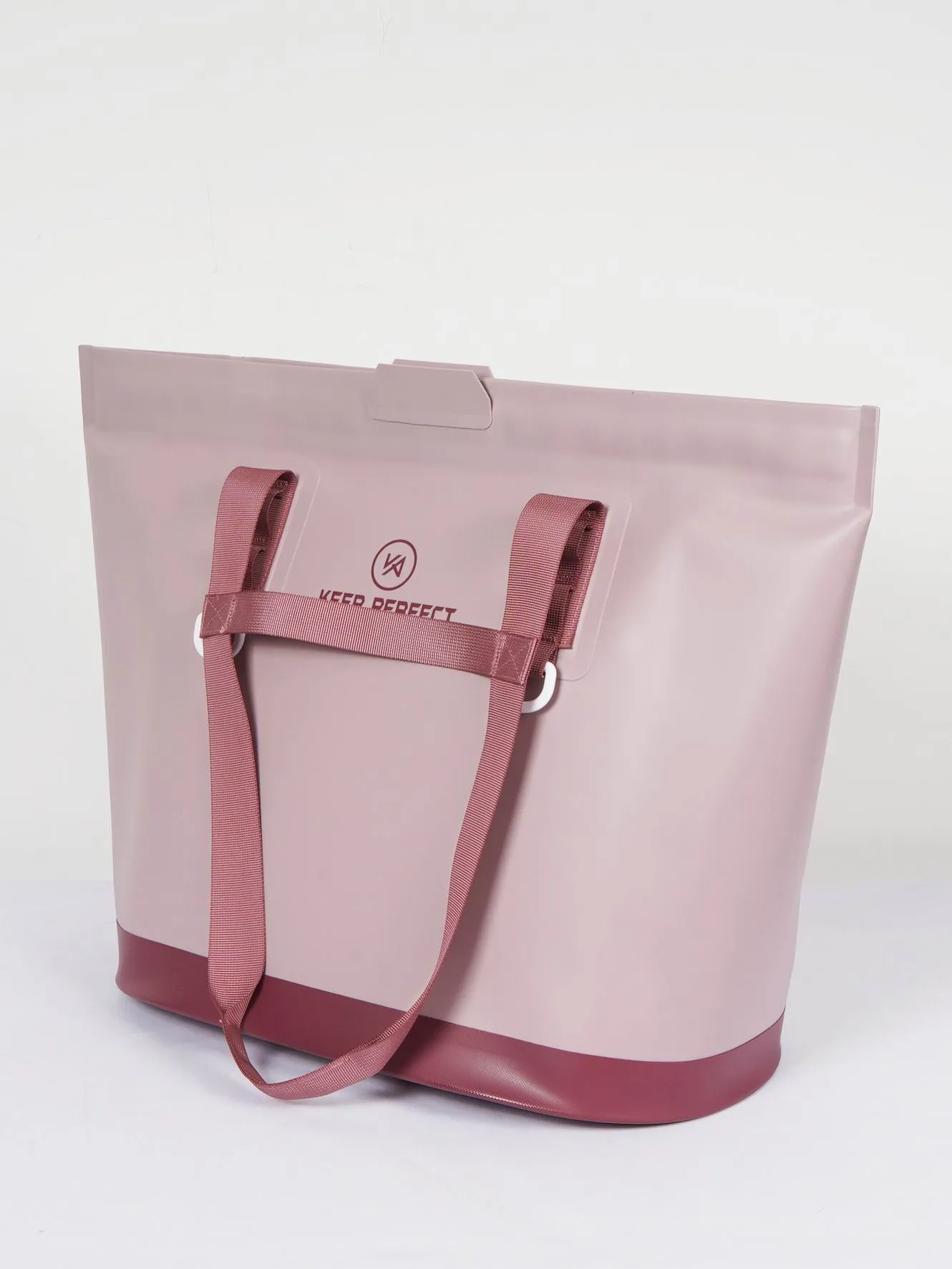
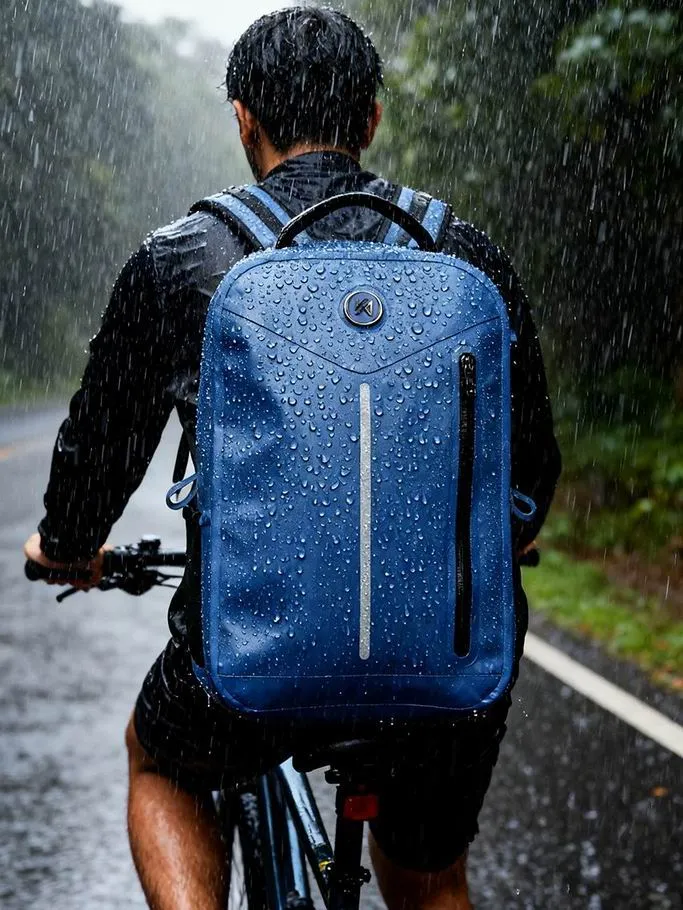
What a 500-piece minimum actually covers, and where it breaks
The first thing to understand about small batch production of custom waterproof bags is that a minimum is quoted per style, not per order, and the word style carries more weight than most first-time buyers assume. One construction in one colourway is a style. The same bag in three colours may be three material bookings and three print setups, because fabric and coating are bought and approved by colour. Buyers who hear 500 and plan 500 across four colourways are usually planning four runs and one disappointment.
| Question buyers ask | What the minimum means in practice | Why it works that way |
|---|---|---|
| Can I split 500 across four colours? | Usually not as one style; each colourway commonly carries its own material minimum | Fabric and coating are purchased and approved by colour, and small dye lots cost disproportionately more |
| Does one logo count as one style? | Yes, provided construction, fabric and colour are identical | Branding is a setup applied to a shared base, not a new product |
| Can I mix sizes in one run? | Sometimes, if they share a pattern family; otherwise each size needs its own cutting dies | Dies and sewing setup are size-specific |
| Is packaging part of the minimum? | Retail packaging usually has its own minimum, often higher than the bag run | Print suppliers price cartons and hangtags on press setup, not on bag quantity |
| Does a test or certificate change the minimum? | No, but it adds cost and time that must be amortised over the same units | Laboratory work is priced per report, independent of run size |
The practical reading of that table is that a small run is cheapest when it is narrow: one construction, one base fabric, one or two colours, one hardware family, one logo method. Every extra variable is not a variation of the same order but a partial new one, and it arrives as a line item rather than as a conversation. This is the same economics described from the supplier side in the guide to minimum order quantities and production slots.
There is also a strategic reason to accept the minimum rather than fight it. A 500-piece run is not simply the smallest quantity a factory will accept; it is roughly the smallest quantity at which the setup can be amortised, the operators can settle into a rhythm, and the inspection result means anything statistically. Below that point you are not buying a cheaper product. You are buying a prototype at production prices.
Where a small run’s money goes: setup, not labour
Ask a new buyer why a small run costs more per unit and the answer is usually "they make less margin on small orders". Sometimes true, usually not the main effect. The dominant effect is fixed cost spread over fewer units. Labour per bag is nearly constant whether you make 500 or 5,000; what changes is everything that has to happen once before the first bag can be made correctly.
| Cost element | Fixed or per unit | Illustrative amount | Per unit at 500 | Per unit at 3,000 |
|---|---|---|---|---|
| Pattern and sample development | Fixed | USD 150 to 300 | USD 0.30 to 0.60 | USD 0.05 to 0.10 |
| Cutting die or template set | Fixed | USD 120 to 260 | USD 0.24 to 0.52 | USD 0.04 to 0.09 |
| Print screen or plate setup | Fixed per colour per position | USD 60 to 180 | USD 0.12 to 0.36 | USD 0.02 to 0.06 |
| Machine changeover and first-hour adjustment | Fixed | USD 80 to 200 | USD 0.16 to 0.40 | USD 0.03 to 0.07 |
| Colour approval or lab dip | Fixed per colour | USD 40 to 120 | USD 0.08 to 0.24 | USD 0.01 to 0.04 |
| Material and labour | Per unit | USD 4.50 to 9.00 | Unchanged | Better by a few per cent on volume buying |
Add the fixed column at the low end and the difference is roughly a dollar per unit between a 500-piece run and a 3,000-piece run of the same bag. That is not a rounding error on a product retailing at thirty dollars; it is three margin points. It is also, importantly, temporary: setup is paid once per design, so the second and third runs of the same style inherit the amortisation benefit, which is why the taper matters more than the opening price.
The second cost of a small run is less visible and often larger: material minimums. Coated fabric is bought in rolls, trim in lots, and hardware in box quantities. If a run needs 180 metres and the material comes in 300-metre lots, the leftover is either paid for and wasted or paid for, stored and hopefully used later. Asking what the material minimum is for your specific fabric and colour is one of the most useful questions a small buyer can ask, and it is rarely volunteered.
The three levers that make a small run affordable
If setup dominates small-run cost, the strategy is to remove setup rather than to negotiate it. Three levers do almost all the work, and each one trades a degree of distinctiveness for a real reduction in cost and risk. Founders who want a completely original shape, a bespoke colour and a custom buckle should expect to pay for all three and should not be surprised when the quotation reflects it.
| Lever | What you give up | What you save | When it is worth taking |
|---|---|---|---|
| Use an existing cutting die or pattern family | A fully original silhouette | Die cost, development time and fit risk | Almost always for a first run, where speed and reliability matter more than novelty |
| Choose a stock or standard colour | An exact brand colour match | Lab dip cost, dye-lot minimum and several weeks of lead time | When the brand colour is not yet established, or when the core product is unproven |
| Accept standard hardware from the existing catalogue | A signature buckle or fitting | Mould cost and the longest single lead-time item | Whenever the component is functional rather than the visual signature |
What makes these levers powerful is that they compound. A first run that uses an existing pattern, a stock colour and catalogue hardware can often be quoted and sampled weeks faster and at a materially lower unit cost than the same concept specified from scratch, while still carrying your logo, your label, your packaging and your chosen fabric grade. Distinctiveness in this category comes far more from branding, colourway, trim and presentation than from geometry, and geometry is the expensive part.
The obvious objection is differentiation, and it deserves a serious answer. A startup does not win by having a unique shape; it wins by being discoverable for a specific problem and by delivering consistently. Being copyable is not the risk most founders fear — being unable to fund a second run because the first one consumed the working capital is. Spend the differentiation budget on the parts that are cheap to change and visible to customers, and keep the expensive structural novelty for the third run.
Why pressing for a lower minimum raises price and lowers consistency
It is entirely rational for a founder with limited cash to ask for fewer units, and it is worth understanding precisely why the answer is often no, or yes at a worse price. A very short run consumes almost as much setup as a normal one, so the fixed burden per unit rises. It interrupts a production schedule that was planned around longer runs, which is a real cost even when the line is nominally idle. And it produces too few units for the process to settle, which is the part that affects the customer.
- Operator learning: the first thirty to fifty units of any run are where settings are corrected. On a long run that is noise; on a micro-run it is a meaningful share of the output.
- Material consistency: very small fabric buys are more likely to come from partial lots, which increases the chance of shade or coating variation within the order.
- Inspection value: sampling plans assume a lot size. Below a few hundred units, an inspection either examines a large share of the run at high cost or offers very little statistical assurance.
- Process selection: some methods, particularly welding and seam taping, need a warm-up and verification cycle that is identical whether you make 80 units or 800.
- Negotiating position: an order that a factory accepts as a favour is not an order you can hold them to when something goes wrong.
The quality point deserves emphasis because it is the one founders discover after launch. Consistency is a function of repetition. A run long enough for the operators to reach a steady state produces lower variance in seam strength, weld width and closure alignment than a short one made between other jobs. If your first customers are also your first reviewers — which is normal for a startup — variance is exactly what you cannot afford. A slightly larger first run is often the cheapest quality insurance available.
If cash genuinely will not stretch to the standard minimum, there are better asks than a smaller quantity. Ask for a simpler construction, a stock colour, or a phased delivery where the second half ships later against the same production run. Each of those reduces cash pressure without reducing the run below the point where the process and the inspection are reliable. Tactics for these conversations are covered in the guide to negotiating with waterproof bag manufacturers.
Design within one fabric and one hardware family
The specification choices that make a small run affordable are mostly made before anyone talks to a factory. The discipline is to design a family, not a set of unrelated products: one base fabric used across the range, one hardware family shared between styles, one closure type wherever the use case allows, and branding that varies while the structure stays constant. This makes each additional SKU cheaper than the last, which is the opposite of what usually happens when a range is designed one product at a time.
- Pick the base fabric first and let every style in the opening range use it, even if a different fabric would be marginally better for one item.
- Choose one closure family — roll-top, coated zipper or welded flap — and use it across sizes rather than introducing three mechanisms at once.
- Standardise webbing width, buckle size and strap construction so trim is interchangeable between styles.
- Keep the logo method the same across the range so screens or plates are reused rather than remade.
- Treat the fabric grade as the variable you spend on; it is visible in use and cheap to keep constant across SKUs.
Where the waterproof level is concerned, resist over-specifying. A commuting or everyday product does not need the construction of a whitewater dry bag, and specifying immersion-level performance on a bag that will only ever see rain adds cost, weight and stiffness while making the product less pleasant to use daily. Start from the exposure the customer will actually meet; the framework in choosing the right waterproof level is the fastest way to pin that down before materials are chosen.
Sampling discipline: one round that answers every question
Sampling is where small buyers most often lose money, not because samples are expensive but because they are used badly. A sample that arrives without a defined purpose generates opinions, and opinions generate a second round, and a second round costs both money and calendar time. Before the sample is made, write down what it must answer, who will judge it, and what count as approval criteria rather than preferences.
Separate what the sample can legitimately prove from what it cannot. It can prove geometry, capacity, access, strap comfort, branding placement and workmanship. It cannot prove bulk consistency, colour repeatability across a full run, or long-term durability. Ask the first set of questions against the physical sample and the second set against documentation, a reference from a previous run, or a defined test. Confusing the two is how a founder approves a sample and then disputes a production result that was never actually promised.
Consolidate feedback. Every stakeholder should submit comments before the review meeting, and the meeting should end with one of three outcomes: approved, approved with a short documented correction list, or a new round against a closed list of named changes. "Generally good, let’s tweak a few things" is not an outcome; it is a delay. The stages, timing and what to expect at each are laid out in the walkthrough of custom waterproof bag sampling, and the inputs that make the first round productive are described in the guide to submitting production-ready design files.
Branding at low volume: what is actually viable
Branding is where a small run can still look deliberate, and where the volume constraint bites differently depending on the method. Each logo method has its own setup economics, and the setup is usually the reason a method is unavailable or expensive at 500 pieces. Screen printing needs a screen per colour per position, heat transfer needs artwork preparation but no screen, embroidery needs a digitised file and is priced partly by stitch count, and a woven or rubber label needs its own production minimum, often higher than the bag minimum.
- Single-colour screen print: setup is modest and it is usually the cheapest option per unit above a few hundred pieces.
- Heat transfer: no screen, good for multi-colour or photographic artwork, but durability depends on the film and the application control.
- Embroidery: strong perceived quality on panels and webbing, priced by stitch count and slower per unit, so it suits small runs better than very large ones.
- Woven or rubber label: the professional-looking option, but labels carry their own minimum, so plan one label design across the whole range.
- Custom zipper pull or moulded badge: the highest setup and the longest lead time; defer it until the design is proven.
The decision rule is to spend branding effort where it is visible in the customer’s first minute and cheap to repeat, and to defer anything that requires a mould until the style has sold through once. A clean one-colour logo in the right position, on a bag with good structure and consistent workmanship, reads as a real brand. An elaborate badge on an inconsistent product does not. Options and their trade-offs are compared in the guide to custom logo methods.
Quality control on a small lot: first article and sampling reality
Inspection on a small run is awkward for a reason worth stating plainly: statistical sampling plans are designed around lot sizes, and a few hundred units sits at the uncomfortable end of them. The standard approach used across the industry, ISO 2859-1, defines acceptance quality limits and sample sizes that assume a larger lot; below a few hundred pieces you are effectively choosing between inspecting a large share of the run or accepting limited assurance. The International Organization for Standardization publishes the standard, and the practical guidance for this product category is in our AQL sampling guide for buyers.
What works better at low volume is first-article discipline plus a defined in-process check. Approve a first article off the line against the approved sample, checking the specific dimensions, seam or weld quality, closure function, hardware attachment and branding placement, and only then release the run. Then agree one mid-run check at a stated percentage, focused on the defects that matter for this product: seam or weld integrity, closure alignment, strap attachment and cosmetic consistency.
Be explicit about what the inspection covers and what it does not, and get it in writing before production. A buyer who assumes an inspection includes a waterproof test and a buyer who assumes it does not will interpret the same report differently. For a first run from a new supplier, a pre-shipment check against a written list is cheap relative to the cost of discovering a systematic defect after the goods have landed; the items worth putting on that list are in the pre-shipment inspection checklist.
Cash planning: deposits, milestones and not over-buying
The most common financial mistake in a first run is not paying too much per unit; it is buying too many units of a design that has not been validated. A 500-piece run is small by manufacturing standards and enormous by startup standards, because it is several months of inventory for a business with no sales history. Before committing, compute how many units you can sell in ninety days at a realistic conversion rate, and treat anything above that as capital tied up in a hypothesis.
- Model three outcomes — slow, expected and fast — and check that the slow case still leaves enough cash to operate.
- Ask for staged delivery where possible: half now, half later against the same run, which reduces the storage burden and matches cash to sales.
- Confirm what triggers the deposit, what triggers the balance, and whether any part is refundable if the sample fails approval.
- Include freight, duty and packaging in the cash plan; on a small run these can add a quarter to the landed cost and they are invoiced at different times.
- Hold back a contingency, commonly ten per cent, because something in a first run always costs more than the quotation said.
If the slow case is uncomfortable, the answer is not to push the minimum down. It is to narrow the range: fewer styles, one colour, simpler packaging, and a lower-cost construction that reaches the market faster. A business that validates demand with one well-made product at a defensible margin is in a far stronger position than one holding four unvalidated variants. The cost structure behind those trade-offs is laid out in the custom waterproof bag cost breakdown.
The three-step taper: from a first run to a scaled one
The right way to think about a first order is as the first step of a taper, not as a one-off purchase. Each step changes what is affordable, what is worth specifying and what the factory can offer, and skipping steps usually costs more than it saves. The pattern below is typical rather than prescriptive, but the mechanism behind it — setup amortisation and proven demand — is what actually drives the economics.
| Step | Typical quantity | What becomes affordable | What should still be avoided |
|---|---|---|---|
| Validate | 500 pieces per style, one or two colours | Your logo, your label, standard packaging, a stock or near-stock colour | Custom moulds, bespoke fabric development, complex multi-material construction |
| Prove | Roughly 1,500 to 2,000 pieces | A custom colourway, a second size on the same pattern family, retail packaging with your own print | A new structural platform or a second hardware family |
| Scale | 3,000 pieces and above per style | Custom hardware, developed fabric, extended size ranges, channel-specific packaging | Changing the proven specification at the same time as increasing volume |
The discipline that makes the taper work is to change one variable per step. Moving from 500 to 2,000 units while also introducing a new colour, a new closure and a new factory is three experiments run simultaneously, and if the result is disappointing there is no way to know which change caused it. Increase volume against a settled specification, then add the next variable once the demand signal is real.
There is also a negotiating consequence. A supplier can offer better pricing at 3,000 units partly because of material buying and partly because the run is predictable, and that discount is easier to obtain from a buyer who has already completed two clean runs than from one asking for a large discount on an unproven first order. Track record is a commercial asset in this relationship, and it is built one reliable order at a time.
When custom is the wrong first move
Custom production is not always the correct entry point, and saying so saves founders a great deal of money. If the proposition is untested, if the cash available is closer to the cost of one run than two, or if speed to market matters more than differentiation, then buying existing product and branding it is usually the better first step. It validates demand, generates reviews and cash flow, and produces real data about what customers actually want before any tooling is committed.
The middle path is private label: an existing construction produced with your branding and packaging, sometimes with modest modifications to colour or trim. It sits between white label, where you resell an existing product, and full custom development, where the product is designed to your specification. The differences in cost, control, lead time and risk are set out in the comparison of private label versus white label, and the programme structure is described in the guide to building a private label waterproof bag brand.
The decision turns on what you are actually selling. If the value is in the brand, the audience or the channel, then the product can be an existing one and the custom investment should wait. If the value is in the product itself — a construction, a capacity, a carrying system or a waterproof method that does not exist in the market at your price — then custom is the point, and the minimum is the price of entry rather than an obstacle. The manufacturing model question behind this is covered in OEM versus ODM.
Negotiating a first order without damaging the relationship
A first order is also an audition, and how it is negotiated shapes every order afterwards. The most effective posture is not aggressive and not passive; it is specific. Explain the constraint — cash, timing, validation risk — and ask which part of the specification is driving the cost. That question gets a useful answer far more often than a request for a percentage discount, because it lets the supplier propose a change that reduces real cost instead of reducing their margin.
- Ask which specification decisions carry the most cost, and offer to change those rather than asking for a blanket reduction.
- Offer something in return: a stated reorder intention, fewer colourways, standard packaging, or faster approval turnaround.
- Confirm in writing what is included and what is not, particularly testing, packaging, freight terms and revision rounds.
- State your volume plan honestly. A supplier who believes the 500 is the beginning of something will treat it differently from one who believes it is the whole order.
- Do not threaten to walk away over a small difference on a first order; the relationship value of a clean first run exceeds the saving.
Two protection steps are worth taking before the first shipment, and both are cheap at this stage. Clear the brand name in every market you intend to sell into, and register it before labels or packaging are printed; the World Intellectual Property Organization is the reference point for international filing systems. Then check that safety and labelling requirements for the destination market are met before bulk rather than after landing, using the checklist in our compliance and regulatory guide.
One specific ask is often worth more than any discount: ask whether the setup or tooling charge can be credited against a subsequent order of a stated size. It is a common arrangement, it costs nothing now, and it converts a sunk setup cost into a deposit on the second run. It also signals that you expect there to be a second run, which changes how seriously the programme is treated.
A ninety-day plan for the first order
Compressing a first order into a structured ninety days keeps it from drifting, which is the main risk for a founder doing this for the first time alongside everything else. The sequence below assumes a decision to go custom; adjust the first two weeks if you are still choosing between custom and an existing product.
- Weeks 1 to 2: fix the use case, the waterproof level, the target retail price and the required margin. Write a one-page brief with dimensions, capacity, fabric family, closure, hardware and branding.
- Weeks 3 to 4: send the brief to two or three suppliers with the same content, and compare not just price but what each quotation assumes and excludes.
- Weeks 5 to 7: run sampling. Consolidate all feedback into one list, approve or request one revision round, and confirm the packaging and labelling at the same time.
- Weeks 8 to 9: place the order, pay the deposit, and lock artwork, colour references and any compliance requirements.
- Weeks 10 to 15: production. Agree a first-article approval and a mid-run check, and book freight and packaging while the run is in progress.
- Weeks 16 to 17: inspection, shipment and documentation. Confirm the packing list matches the invoice before goods move.
- Weeks 18 onwards: receiving, photography, launch, and a written record of what would be changed in the second run.
The last line is the one most often skipped and the one that makes the taper work. Write down, while the experience is fresh, which specification decisions cost the most, which took the longest, and which the customer commented on. That document is what turns a first order into a repeatable process rather than an event. If you want those inputs as real numbers for your own brief, send your specification, target volume and timing. Minimum order quantity is 500 pieces per style, sampling takes 6–10 working days, bulk production runs 35–50 days, and quotations are issued FOB Xiamen.
Frequently Asked Questions
Q1. What does a 500-piece minimum mean for a custom waterproof bag order?
It applies per style, generally one construction in one colourway. Splitting 500 across several colours usually means several material bookings and print setups, so a first run is cheapest when it is narrow: one base fabric, one or two colours and one hardware family.
Q2. Why is a small run more expensive per unit?
Because setup cost is fixed. Pattern development, cutting dies, print screens, machine changeover and colour approval cost the same whether they are spread over 500 or 3,000 units, so the fixed element can add around a dollar per unit at low volume.
Q3. Can I order fewer than 500 pieces to test the market?
Sometimes, but it is usually worse value. Very short runs carry the same setup, interrupt the schedule, produce too few units for the process to settle, and leave inspection with little statistical meaning. Simplifying the specification is a better lever.
Q4. What is the cheapest way to make a small run look like a real brand?
Use an existing pattern with your own logo, label and packaging. Distinctiveness in this category comes from branding, colourway and presentation far more than from an original shape, and geometry is the expensive part.
Q5. Is a custom Pantone colour worth it on a first order?
Usually not. A custom colour adds a lab dip, a dye-lot minimum and several weeks of lead time. Establish demand with a standard or near-stock colour, then move to a matched colourway once the style is proven and volumes are larger.
Q6. Which logo methods work at low volume?
Single-colour screen printing is usually the cheapest per unit above a few hundred pieces, heat transfer suits multi-colour artwork without a screen, and embroidery works well on panels. Woven or rubber labels carry their own minimum, so use one label design across the range.
Q7. How much should a first custom order cost in total?
Budget the unit price plus setup charges, packaging, freight, duty and a contingency of around ten per cent. On a small run, freight and packaging can add roughly a quarter to the landed cost, and they are invoiced at different times from the goods.
Q8. How should quality be controlled on a run of only a few hundred units?
Use first-article discipline plus a defined mid-run check. Approve a first piece off the line against the approved sample, then inspect a stated percentage at mid-run for seam or weld integrity, closure alignment, strap attachment and cosmetic consistency.
Q9. Does an inspection include waterproof testing?
Not by default, and this assumption causes disputes. State in writing before production whether any test is included, which method it uses, and what the inspection does and does not cover.
Q10. When should a startup choose private label instead of full custom?
When the value sits in the brand, audience or channel rather than in the product itself, when cash only covers one run, or when speed matters more than differentiation. Custom is right when the product construction is the proposition.
Q11. What should I ask for instead of a discount on a first order?
Ask which specification decisions carry the most cost and offer to change those, ask whether setup can be credited against a second order, and offer fewer colourways or faster approvals in exchange. Each reduces real cost rather than supplier margin.
Q12. How long does a first custom order take from brief to delivery?
Roughly sixteen to eighteen weeks in total: two weeks of briefing, three weeks of sampling, six weeks of production, then inspection and transit. Sampling itself takes 6–10 working days and bulk production 35–50 days.
Q13. Should the first run include several sizes or one?
One, ideally on a pattern family that allows a second size later. Each size usually needs its own cutting dies and setup, so launching three sizes triples fixed cost before demand has been validated.
Q14. What is the biggest risk in a small first run?
Over-buying an unvalidated design. Compute realistic ninety-day sell-through before committing, model a slow case, and prefer staged delivery or a simpler construction to pushing quantity below the level where the process is stable.
Q15. How do I know when to move from 500 to a larger run?
When the first run has sold through or is tracking to sell through inside the planned window, and when the specification has settled. Increase volume against a proven design before introducing the next variable.
Q16. Does changing the specification between runs cost extra?
It reintroduces development, sampling and setup, and it removes the amortisation benefit of repeating a proven design. Change one variable at a time so a disappointing result can be attributed to a specific cause.
Q17. What information makes a first quotation accurate?
Dimensions, capacity, fabric and coating family, construction and closure, hardware, branding method and position, colour reference, packaging, quantity by colour, destination market and required timing. Missing cost drivers should be listed as assumptions rather than left unsaid.
People Also Ask
Can startups order small quantities of custom waterproof bags?
Yes, from 500 pieces per style. Below that, setup dominates the unit price and consistency suffers, so simplifying the specification beats pushing quantity down.
Why are small orders more expensive per unit?
Fixed setup such as patterns, dies, screens and changeover costs the same regardless of volume, so it carries far more weight at 500 units than at 3,000.
How do I lower the cost of a small custom run?
Use an existing pattern, a stock colour and catalogue hardware, keep one fabric and one closure family, and add branding rather than new tooling.
Is private label better than custom for a startup?
Usually for a first product. It validates demand and builds reviews cheaply; custom makes sense once the product itself is the proposition.
Which logo method is cheapest at low volume?
Single-colour screen printing for simple artwork, heat transfer for multi-colour, and embroidery where a premium panel finish matters. Labels carry their own minimum.
How long does a first custom waterproof bag order take?
Around sixteen to eighteen weeks end to end: briefing, sampling in 6–10 working days, bulk in 35–50 days, then inspection and transit.