A short trip has a different packing problem from a long one, and it is not simply a smaller version of it. Two or three nights means no laundry cycle, no resupply and no margin for error, but it also means the bag will be seen in a restaurant, a hotel lobby and a meeting rather than only in an airport and a hostel. That combination — minimal volume plus maximum social exposure — is what makes weekender bags a distinct category rather than a smaller travel bag, and it is why the best ones look almost nothing like outdoor equipment.
The decision therefore has three parts that have to be satisfied at once: a capacity that genuinely holds two to four nights without checking luggage, a footprint that clears the strictest cabin or under-seat rule on the routes you fly, and a finish that does not announce itself as technical gear. This guide works through all three with numbers, then covers material and closure choices, shoe and wet separation in a small volume, convertible carry systems, the empty-weight trap on low-cost carriers, colour and finish, urban durability, care between trips, and what a brand should specify when developing a weekender range. Production reference for this guide — QUANZHOU JUNYUAN BAGS, custom waterproof bags since 2014, 4,950 m² SGS-verified facility, MOQ 500 pieces per style, sampling in 6–10 working days, bulk in 35–50 days, FOB Xiamen.
The two-job problem: a bag for the flight and a bag for the city
Every weekender has to do two jobs that pull in opposite directions. On the flight it needs to be compliant, protective and capacious. In the city it needs to be quiet, unbranded-looking and socially appropriate. Most products in this category fail at one or the other: weekender waterproof bags built by outdoor brands are excellent at the first job and rarely carried past the hotel, while fashion short getaway travel bags nail the second and leak in the first heavy shower. The genuinely useful product is the one that resolves the tension rather than picking a side.
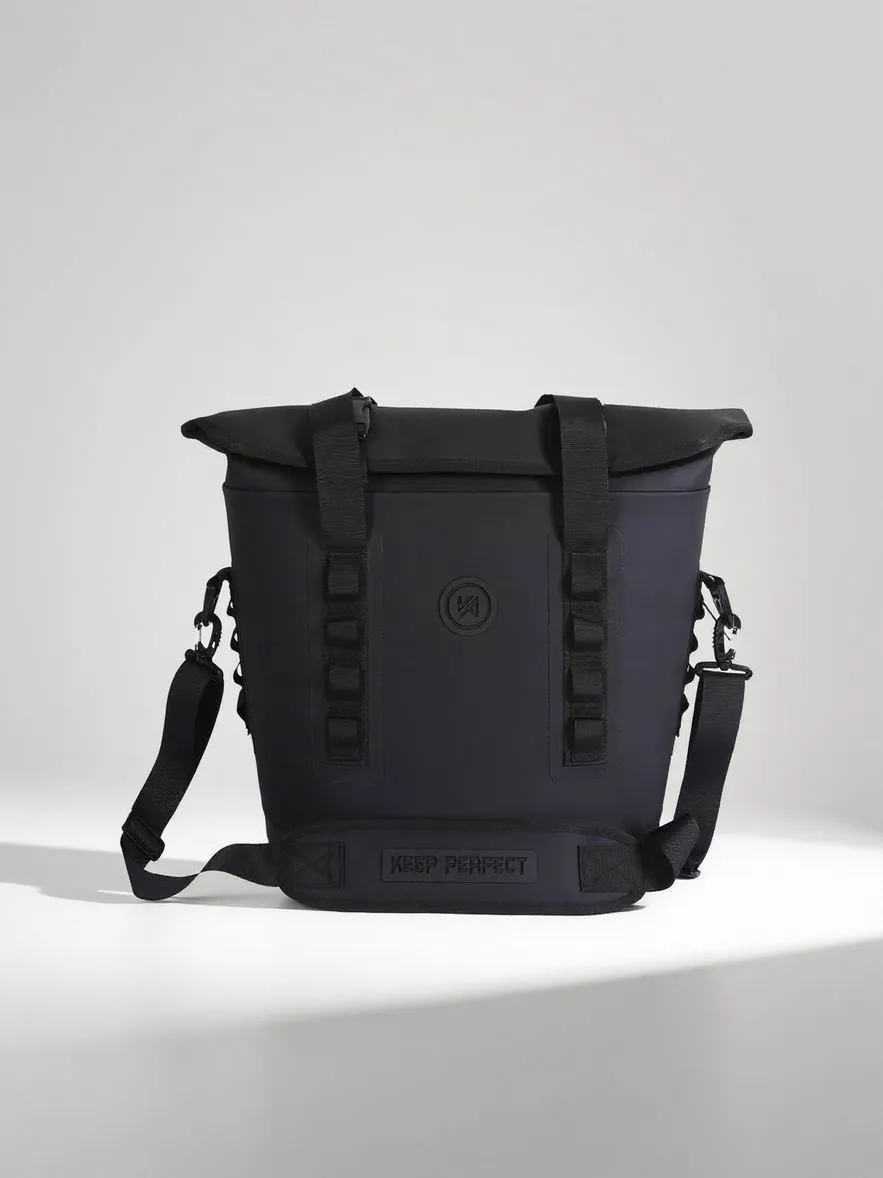
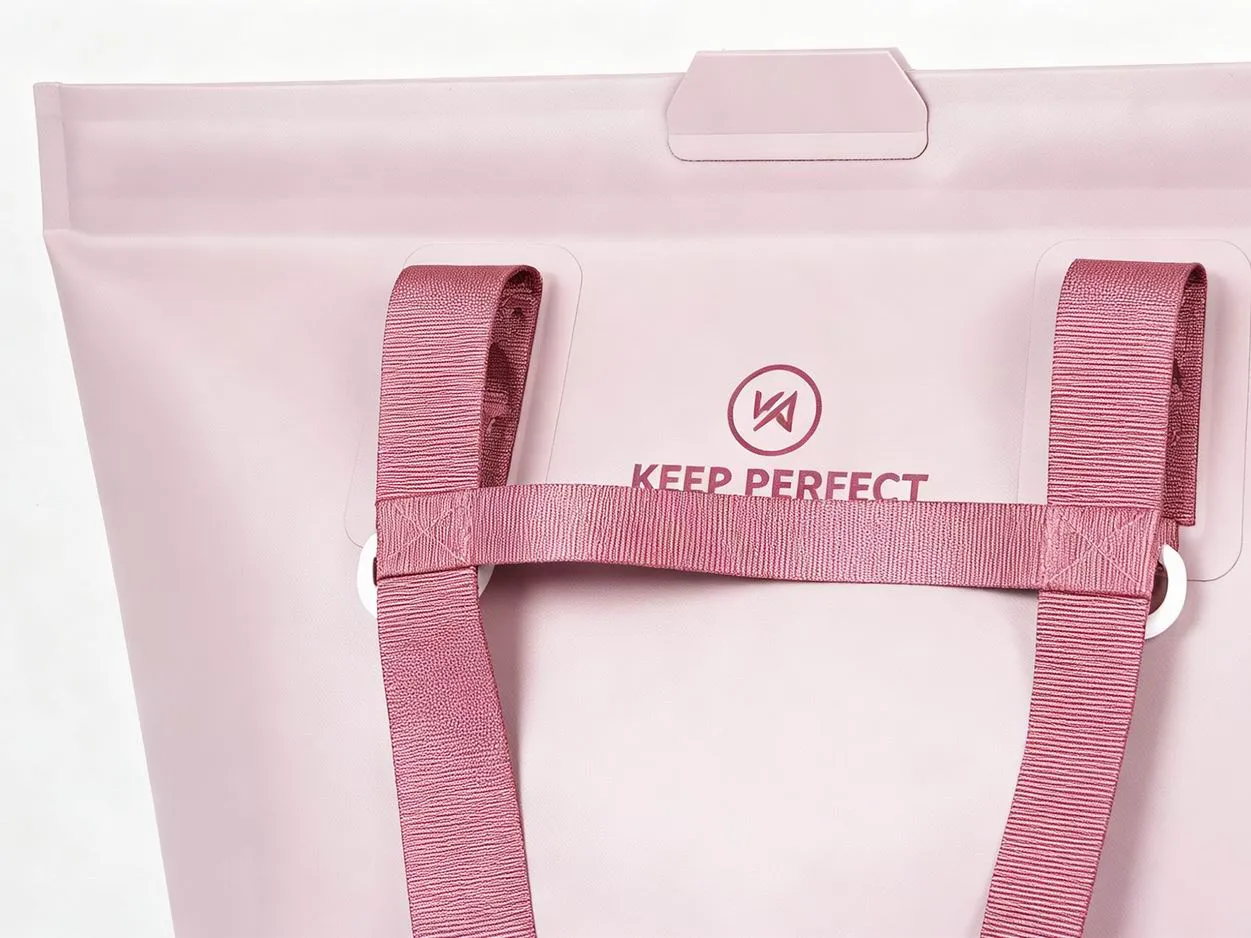
The resolution is a specific design strategy: put the waterproof performance in the shell and the closure, and put nothing technical on the outside. Coated fabric looks like fabric. A discreet roll-top or a garaged zip looks like a design detail. Chunky webbing, exterior daisy chains, bright welded seams and large reflective logos do not, and each of them is the reason a technically better bag gets left in the room.
There is a measurable commercial version of the same point. Bags that read as equipment are bought for trips and used four times a year; bags that read as city bags are used weekly and therefore replaced more often, recommended more often and photographed more often. For a brand, that difference in usage frequency is worth more than any waterproof specification, and it should be settled in the design brief rather than in the material meeting.
Capacity: what two to four nights actually requires
Weekender capacities are quoted generously, and the gap between nominal litres and usable packing volume is the reason people arrive with a bag that will not close. A duffel has no internal structure to lose, so its conversion is good — around ninety per cent of nominal capacity is usable. A structured holdall loses more to frames and panels. The practical approach is to work from the contents list outwards rather than from a litre figure inwards.
| Trip | Realistic contents | Capacity that fits | Cabin or hold decision |
|---|---|---|---|
| One night, business | Shirt, underwear, wash kit, laptop, charger | 20 to 25 L | Personal item or cabin on every carrier |
| Two nights, leisure | Two outfits, wash kit, shoes, light layer | 30 to 35 L | Cabin on most carriers; under-seat only if soft |
| Three nights, mixed plans | Three outfits, one pair of shoes, gym kit, wash kit | 35 to 42 L | Cabin on long-haul carriers; tight on budget carriers |
| Four nights with one formal outfit | Four outfits, formal wear, shoes, toiletries | 45 to 55 L | Usually hold, or cabin with the formal item worn |
| Weekend with sports or beach kit | Casual clothing plus bulky wet or dirty kit | 40 to 50 L plus a separate wet bag | Cabin if soft; the wet bag is what makes it work |
Two observations from that table matter more than the numbers. First, shoes are the item that breaks the plan: a pair of trainers occupies three to five litres and is the single largest incompressible object in a short-trip load, which is why a separate shoe compartment or shoe bag is worth more than five extra litres of main volume. Second, the jump from two to three nights is where bags start failing to close, and it is almost always a separation problem rather than a volume problem.
If you are choosing between two sizes, take the smaller one and add a shoe bag. The smaller bag closes, fits the sizer and looks better in the city; the larger one is carried half empty most of the time, which is worse for the contents and worse for the impression. Our capacity sizing guide walks through the same arithmetic for sealed bags, where the conversion rate is lower still because of the closure allowance.
Cabin and under-seat compliance on short-haul routes
Short-haul budget carriers are where weekender bags get caught, because their allowances are tighter than long-haul ones and they are enforced at the gate with a sizer. Cabin dimensions cluster around 55 by 40 by 20 centimetres at the strict end; the under-seat personal item is typically around 40 by 30 by 20, and it is the figure that a soft weekender can legitimately meet even when its nominal capacity suggests otherwise.
- A soft bag compresses into a sizer; a structured one does not. If under-seat is the goal, buy soft with no rigid base board.
- Measure the bag packed and closed, including shoes in an end compartment, because that is where the extra three centimetres appears.
- Weight limits on short-haul carriers commonly sit at 7 to 10 kilograms for a cabin bag, and the bag’s own empty weight is the part people forget to subtract.
- Wheeled and structured weekenders are charged more often, because they cannot be squeezed and they visibly exceed the frame.
- Check the carrier’s own conditions rather than a general figure: IATA publishes guidance, but the binding limit is always the airline’s own rule.
There is a genuine trick worth knowing, and it is legitimate: a soft 30 litre weekender that measures 52 by 32 by 22 when packed will compress into a 40 by 30 by 20 personal-item frame if the load is soft and the base is not rigid. It will not do that if it contains a laptop in a rigid sleeve, a shoe box or a toiletry case. Compliance is a property of the load as much as of the bag.
For travellers who fly the same budget route repeatedly, the correct answer may be two bags rather than one: a small cabin-compliant piece for clothing and a flat personal item for the laptop and documents. Related route-specific planning appears in our page on waterproof bags in aviation.
Dual-use design: the details that decide whether it leaves the hotel
The difference between a bag that travels and a bag that gets used in the city is a short list of details, none of which appear on a specification sheet. They are about noise, silhouette and the number of things hanging off the bag.
| Detail | Equipment look | City-appropriate equivalent | Effect on function |
|---|---|---|---|
| External webbing and daisy chains | Visible loops and dangling straps | Internal organisation instead | None; purely cosmetic |
| Hardware finish | Raw aluminium and loud acetal | Matte or coated hardware in a tone-matched colour | None |
| Seam treatment | Bright welded seams as a design feature | Welded seams in a matched or darker tone | None; the seal is unchanged |
| Branding | Large reflective logo | Small tonal logo or a debossed patch | None; see logo options |
| Base | Rubberised technical base with feet | Discrete feet or a leather-look base panel | Slight; still protects against wet pavements |
| Silhouette | Barrel duffel with external compression | Clean cylindrical or tapered holdall | Minor volume difference only |
Two of those rows carry a functional cost worth stating honestly. A large reflective logo does improve visibility on a dark road, so removing it entirely is a small safety concession on a cycling or walking-heavy trip; the compromise is a small reflective pip at the strap end rather than a chest-sized print. And external compression straps do recover volume, so removing them costs a little packing efficiency in exchange for a bag that looks like luggage instead of equipment.
The strap system is the other decisive detail, and it is covered in its own section below. In short: if the backpack straps cannot be detached or stowed completely, the bag will always look like a backpack and will be carried as one, which is exactly the outcome a dual-use buyer does not want.
Materials: coated nylon, TPU laminate and the canvas-look compromise
Material choice sets the look, the weight, the price tier and the waterproof performance simultaneously, which is why it should be the first decision in a weekender brief. Three families cover the market, and each has a clear best use.
| Material family | Appearance | Waterproof performance | Empty weight, 35 L class | Best tier |
|---|---|---|---|---|
| PU-coated polyester or nylon | Matte fabric, looks conventional | Showerproof with taped seams; closures dominate | 700 to 1,000 g | Mid-market, the volume choice |
| TPU laminate or TPU-coated | Smooth, slightly technical sheen | Genuinely waterproof shell; weldable | 900 to 1,300 g | Premium and outdoor-crossing ranges |
| Canvas-look with a hidden membrane | Traditional, city-appropriate | Depends entirely on the membrane and seam taping | 1,100 to 1,600 g | Fashion-led ranges where look dominates |
| Recycled PET with coating | Matte, sells on the sustainability story | Equivalent to the base fabric it replaces | 800 to 1,100 g | Brands with an explicit material position |
The honest trade-off: the more a material looks like ordinary luggage, the more the waterproof performance depends on seam taping and closure design rather than on the face fabric. A canvas-look shell with an internal membrane and fully taped seams outperforms a glossy welded shell with an exposed zip, and it looks better in a restaurant. That is the argument for spending the specification budget on the seams and the closure rather than on the fabric face, a point developed in our comparison of TPU and PVC and in the guide to seam taping methods.
One caution specific to short trips: a bag with a coated interior and a coated exterior does not breathe, so a damp item left inside overnight will still be damp in the morning. For a two-night trip that is usually irrelevant; for a bag that doubles as a gym or beach bag all summer it is the reason to specify at least one ventilated compartment.
Closures for short trips: what gets opened and how often
Access frequency is higher on a short trip than on a long one, because the bag is opened at the airport, at the hotel, in the city and again at the airport within forty-eight hours. A closure that is slow therefore costs more on a weekend than on a three-week itinerary. That argues against a roll-top main closure for a city weekender, despite its superior seal.
The configuration that works: a garaged or covered coated zip on the main compartment for fast flat access, a small internal sealed pouch or wet bag for anything that must stay dry, and magnetic or clip closures on external pockets where a zip would be overkill. The main zip should have a storm flap or a garage, because that is what turns a water-resistant zip into one that survives a real shower; see our overview of closure types for how those constructions differ in production.
One failure mode deserves specific mention because it is common and avoidable: a coated zip that is difficult to pull invites users to leave the last few centimetres open, and an open coated zip is simply an opening. If the slider drags in the sample, the bag will be used partly closed in the field. Specify a slider with a comfortable pull and test it loaded, not empty.
Shoes, wash kit and wet items in a thirty-litre bag
In a large travel bag, separation is a convenience. In a 30 litre weekender it is the difference between a bag that works and one that cannot be used at all, because there is no spare volume to isolate a problem. Three categories need separating, and each needs a different solution.
- Shoes: a dedicated end compartment or a separate shoe bag. An end compartment is better because it keeps the shape of the main volume rectangular; a loose bag is more flexible in use.
- Wash kit: a sealed or wipeable pouch, always, because a bottle that vents in a small bag contaminates everything within minutes. Size it for the actual bottles, not generously.
- Wet or damp items: a small roll-top bag kept in the end compartment for the return journey, when a swimsuit or a gym kit comes home with you.
- Laptop and documents: a flat sleeve against the back panel, never in the same compartment as liquids, and reachable without opening the main volume.
- Dirty laundry on the way home: acompressible mesh or coated cube, so the return journey does not require the whole bag to be repacked.
The return journey is the part people plan badly. A weekend bag packed carefully on Friday is a different proposition on Sunday, when a damp towel, worn shoes and a full wash kit all have to come home. Specifying one wet bag and one shoe compartment costs very little and solves the entire return-leg problem, which is why those two items appear in most weekender sets that customers actually keep using. The separation logic is described in more detail in our page on wet-dry separation design.
Carry systems: what people actually use on a weekend
Convertible carry is the feature most often specified and least often used as intended. Buyers imagine switching between backpack and hand carry several times a day; in practice most people pick one mode and stay in it, and the other mode exists to handle the two situations where it genuinely matters: a long walk from the station, and a moment when both hands are needed.
What gets used, in order: a comfortable padded shoulder strap for city walking, a pair of grab handles that join cleanly for hand carry, a trolley sleeve for wheeled luggage, and detachable backpack straps for the occasional long walk. What does not get used: a sternum strap on a 30 litre bag, and any conversion that requires more than about ten seconds or that leaves straps dangling.
The specification consequence is clear. Make the backpack straps detachable and stowable in a dedicated zip pocket, not merely adjustable, because dangling straps are the single most common reason a convertible bag is never carried by hand. Choose hardware that is quiet: metal-on-metal rattling hardware is noticeable in a meeting and it is the kind of detail that gets mentioned in reviews. Hardware selection guidance is in our page on buckles, straps and accessories.
The empty-weight trap on low-cost carriers
Short-haul budget carriers are weight-limited as well as dimension-limited, and the empty weight of a waterproof weekender is the cost people forget. A welded TPU holdall at 1.4 kilograms is more than twice the weight of an uncoated fabric duffel at 650 grams, and on a 7 kilogram allowance that difference is one pair of shoes or a jacket and wash kit. Waterproofness has a weight bill and it should be checked against the route.
The mitigation is to buy waterproofness selectively. A coated shell and taped seams on the outer faces cost a few hundred grams and deliver most of the benefit. A fully welded construction with coated hardware and a rigid base costs more for marginal gain on a city weekend. Ask what the bag needs to survive: a shower between the station and the hotel, or immersion? Almost always the former.
For travellers on tighter allowances, the alternative is a lighter bag plus one small dry bag inside. That combination weighs less than a fully welded weekender, protects the items that matter, and leaves the outer bag looking and weighing like ordinary luggage. The same logic drives our notes on lightweight material optimisation.
Colour and finish: what survives urban use
Short-trip bags are used in cities, which means they meet diesel film, street dust, handrails, café floors and the inside of taxi boots. Finish choice determines whether that shows. Very light colours show urban grime within a season. Very glossy finishes show scuffs. Dark matte tones in the mid range hide both, and textured or heather finishes hide them best of all.
- Mid-tone matte colours hide urban dirt better than either pale or glossy finishes; a textured weave hides abrasion better than a flat one.
- Choose welt and trim colours darker than the body, because trim takes the most contact and light trim shows it first.
- Metal feet or a reinforced base panel are worth specifying: bags are set down on wet pavements constantly and the base is where wear concentrates.
- Hardware finish should be matched or tone-on-tone; bright hardware dates a bag faster than any other single element.
- For ranges, lock colour to a standard reference rather than a screen approval — see colour matching
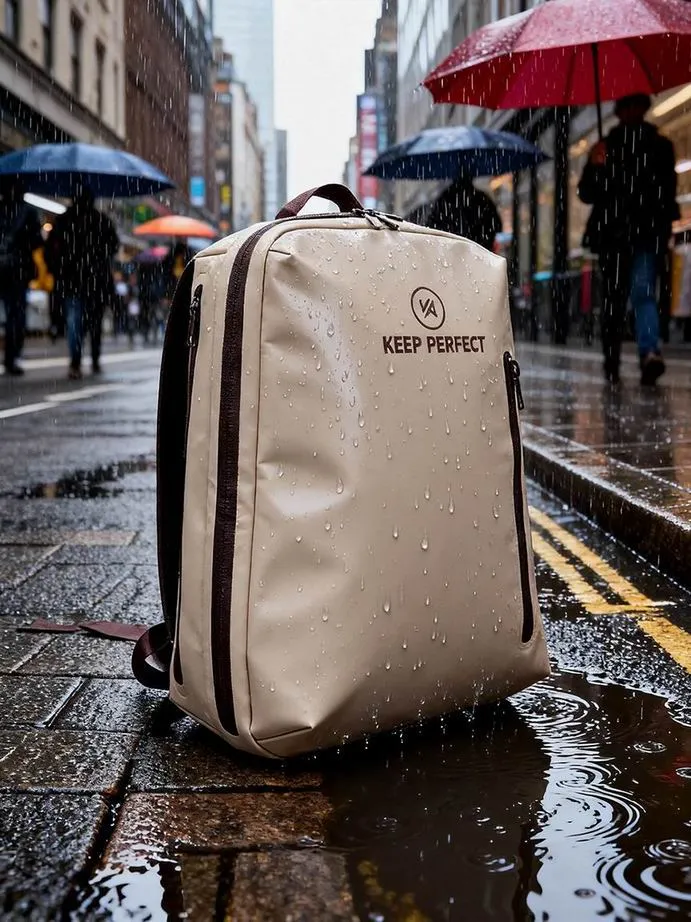
Wipeability is the practical test. A coated shell that can be wiped clean with a damp cloth survives years of city use; an uncoated fabric that absorbs street grime does not, and no amount of colour cleverness fixes that. This is the one place where waterproof construction delivers a benefit that has nothing to do with rain.
Urban durability: where a weekender wears out
The wear pattern on a city bag is unlike the wear pattern on a travel bag. There is less abrasion from conveyor systems and far more from being set down on rough surfaces, swung onto shoulders, and squeezed into overhead compartments and car boots. Wear concentrates in four places, and all four are specifiable.
| Location | Typical wear | Specification response | Cost of the fix |
|---|---|---|---|
| Base and corners | Abrasion from pavements and boot floors | Reinforced base panel, wrapped corners, feet | Moderate; the best value upgrade |
| Handles and their attachment | Stitch pull-out from swinging a loaded bag | Box-stitched handle anchored into a structural seam | Low |
| Main zip | Slider wear and tape damage from overpacking | Larger gauge, branded slider, bar-tacked ends | Low to moderate |
| Trolley sleeve and back panel | Scuffing against wheeled luggage handles | Abrasion-resistant panel fabric; see abrasion standards | Moderate |
| Shoulder strap pad | Compression set in the foam after a season | Closed-cell foam that resists set | Low |
The single most cost-effective upgrade in that table is the base and corners. A bag whose base wears through is discarded while the rest of it is sound, and a reinforced panel costs a fraction of what the customer paid. For brands, this is also the specification detail that produces the best reviews, because it is visible and it fails visibly when omitted. Referencing a published abrasion test method from ASTM International rather than a generic claim keeps that specification enforceable in a purchase order.
Care between trips and the drying routine
Weekender bags are stored for weeks between uses, and most of the damage they suffer happens in storage rather than on the trip. Two routines cover it. Immediately after a trip: empty completely, wipe the interior if anything was damp, and leave it open for a day before it goes away. Before a trip: check the zip runs freely and check that no coated surface has started to flake.
Coating degradation is the one failure to look for. Low-grade polyurethane coatings hydrolyse in humid storage and flake, particularly where the bag has been folded or compressed. Once flaking starts it spreads and cannot be repaired, so catching it early and demoting the bag to dry use is the only response. Storing the bag open, dry and out of direct sunlight delays it substantially.
If the bag has been used for beach, gym or pool duty, rinse it in fresh water and dry the interior fully before storage, because salt and chlorine residue accelerate both coating and hardware degradation. A bag used weekly for wet activities and dried properly will outlast one used monthly and stored damp, which is a counter-intuitive but consistent pattern in warranty data.
Sourcing a weekender range: brief, ladder and programme shape
For a brand, the weekender is one of the strongest categories in the whole waterproof range: it has a clear use case, an accessible price point, strong gifting demand and a customer who will buy a second one in a different colour. It is also the category where the design brief matters most, because the commercial outcome depends on how the bag looks rather than on how it tests. Three decisions shape it.
- Set the look first, then engineer to it. Decide whether the range reads as city luggage or as outdoor equipment, because that decision determines material, hardware, seam treatment and branding together.
- Build the ladder around real trip lengths: a 25 L one-night piece, a 35 L core weekender and a 45 to 50 L long-weekend size covers the market without fragmenting it.
- Specify the separation accessories as part of the range, not as an afterthought: a shoe bag and a wet pouch cost little, raise perceived value and solve the return-journey problem.
- Plan the packaging for shelf presence, since weekenders are frequently bought as gifts; the retail box and the way the bag sits in it matter more here than in any other category.
- Confirm the branding method against the coating early, because adhesion on coated shells varies and testing on the actual fabric is far cheaper than a reprint.
Programme arithmetic is manageable if it is planned as one range. Minimum order quantity is 500 pieces per style, and a three-size ladder in three colourways is nine styles, which is a realistic opening programme for a brand committing to the category. Sampling takes 6–10 working days and bulk production runs 35–50 days, quoted FOB Xiamen. Corporate and gifting demand for this size class is strong enough to justify a second colourway run; the channel is discussed in our page on corporate gifting programmes.
If you want the range quoted against your own brief, send the capacity ladder, the look reference, the material preference and the target volumes per colourway.
Frequently Asked Questions
Q1. What size weekender bag do I need for two or three nights?
Around 30 to 35 litres for two nights and 35 to 42 litres for three. The binding constraint is usually shoes and wash kit rather than clothing, so a shoe compartment is worth more than extra main volume.
Q2. Will a 35 litre weekender fit under an airline seat?
Sometimes. Under-seat allowances are typically around 40 by 30 by 20 centimetres, and a soft bag with no rigid base can compress into that frame if the load is soft. A structured bag will not.
Q3. Why do low-cost carriers charge for weekenders more often than for backpacks?
Because they are often structured and cannot be squeezed into the sizer, and because their empty weight is higher. Soft construction and a light shell reduce both risks.
Q4. Should a weekender use a roll-top or a zip closure?
A zip for the main compartment, because a short trip means frequent access. Keep a small roll-top wet bag inside for anything that genuinely must stay dry.
Q5. How much does waterproof construction add to a weekender’s weight?
A welded TPU holdall can weigh 1.4 kilograms against roughly 650 grams for an uncoated fabric duffel. On a 7 kilogram allowance that difference is a pair of shoes.
Q6. Is a canvas-look waterproof bag actually waterproof?
It depends entirely on the internal membrane and whether the seams are taped. A canvas-look shell with a membrane and taped seams outperforms a glossy welded shell with an exposed zip.
Q7. Do I need a separate shoe compartment in a weekender?
Strongly recommended. Shoes occupy three to five litres and are the largest incompressible item in a short-trip load, and they are the reason most bags will not close on the last morning.
Q8. What should I do about wet items on the return journey?
Carry a small roll-top wet bag in the end compartment. Most weekenders are packed carefully on the way out and badly on the way back, when a damp towel and worn shoes have to come home.
Q9. Are detachable backpack straps worth specifying?
Yes, and they should stow in a dedicated pocket. Straps that dangle are the main reason a convertible bag is never carried by hand in the city.
Q10. What colour hides city wear best?
Mid-tone matte colours with a textured weave. Very light shades show grime, glossy finishes show scuffs, and light-coloured trim shows contact first.
Q11. Where does a weekender wear out first?
The base and corners, then the handle attachment. A reinforced base panel and box-stitched handles are the two cheapest upgrades that materially extend life.
Q12. How should I store a waterproof weekender between trips?
Empty, wipe dry, and store open in a dry place out of direct sunlight. Low-grade coatings hydrolyse and flake in humid storage, and once flaking starts it cannot be repaired.
Q13. Can I use a weekender as a gym or beach bag all summer?
Yes, but rinse it in fresh water and dry the interior afterwards. Salt and chlorine residue accelerate coating and hardware degradation more than ordinary rain does.
Q14. What is the minimum order quantity for a custom weekender range?
500 pieces per style. A three-size ladder in three colourways is nine styles, which is a realistic opening programme when planned as one range rather than size by size.
Q15. How should a brand decide the look of a weekender range?
Decide whether it reads as city luggage or outdoor equipment before choosing material. That single decision determines hardware, seam treatment, branding and the price tier together.
Q16. Are separation accessories worth including in a weekender set?
Yes. A shoe bag and a wet pouch cost little, raise perceived value substantially and solve the return-journey problem that otherwise generates complaints.
Q17. How long does it take to develop a custom weekender?
Sampling is 6–10 working days once the brief and specification are agreed, and bulk production runs 35–50 days. Both assume the look, material and closure decisions are settled before sampling begins.
People Also Ask
What size weekender bag is right for two nights?
About 30 to 35 litres, with a shoe compartment and a wash-kit pouch. Volume is rarely the constraint; separation is.
Can a weekender bag go under the airline seat?
If it is soft, unstructured and lightly packed. Under-seat allowances are near 40 by 30 by 20 centimetres and rigid bags will not compress into them.
Is a zip or roll-top better for a weekender?
A zip for fast access on a short trip, with a small roll-top wet bag inside for anything that must stay dry.
Why will my weekend bag not close on the way home?
Because shoes, a damp towel and a full wash kit all come back at once. A shoe compartment and a wet bag solve it.
How heavy should an empty weekender be?
Under 1 kilogram is comfortable. Welded construction can reach 1.4 kilograms, which matters against a 7 kilogram cabin allowance.
What is the minimum order for custom weekender bags?
500 pieces per style; a three-size ladder across three colourways is planned as nine styles in one programme.