Diving is the one water sport where the equipment is wet, heavy, chemically sensitive and spatially organised before the bag even enters the picture. A single dive day moves gear across three zones — the wet deck, the humid cabin, and a dry transition space somewhere ashore — and most bags are designed for one of them at most. Add lead weights concentrating thirty kilograms into a handful of square centimetres, daily soaking that never fully dries, and a contamination constraint that most buyers have never heard of, and the specification turns out to have very little in common with general beach or boating product.
This guide covers the three-zone model and why it is the organising idea, how wet and dry separation should actually be engineered rather than merely claimed, what loaded weight really does to seams and handles, why trapped air behaves differently for gear that goes below the surface, the contamination issue involving silicones and hydrocarbons that can quietly damage regulators and other oxygen-adjacent equipment, what shared rinse tanks carry and how that should inform materials selection, how to handle chlorine in pools and salt in the sea without shortening life, how to protect logs, cards and dive computers, which constructions survive multiple dives a day for years, the failure modes dive centres report most, and how a centre or liveaboard structures its order. QUANZHOU JUNYUAN BAGS: custom waterproof bag production since 2014, 4,950 m² SGS-verified facility, MOQ 500 pieces per style, sampling in 6–10 working days and bulk in 35–50 days, FOB Xiamen.

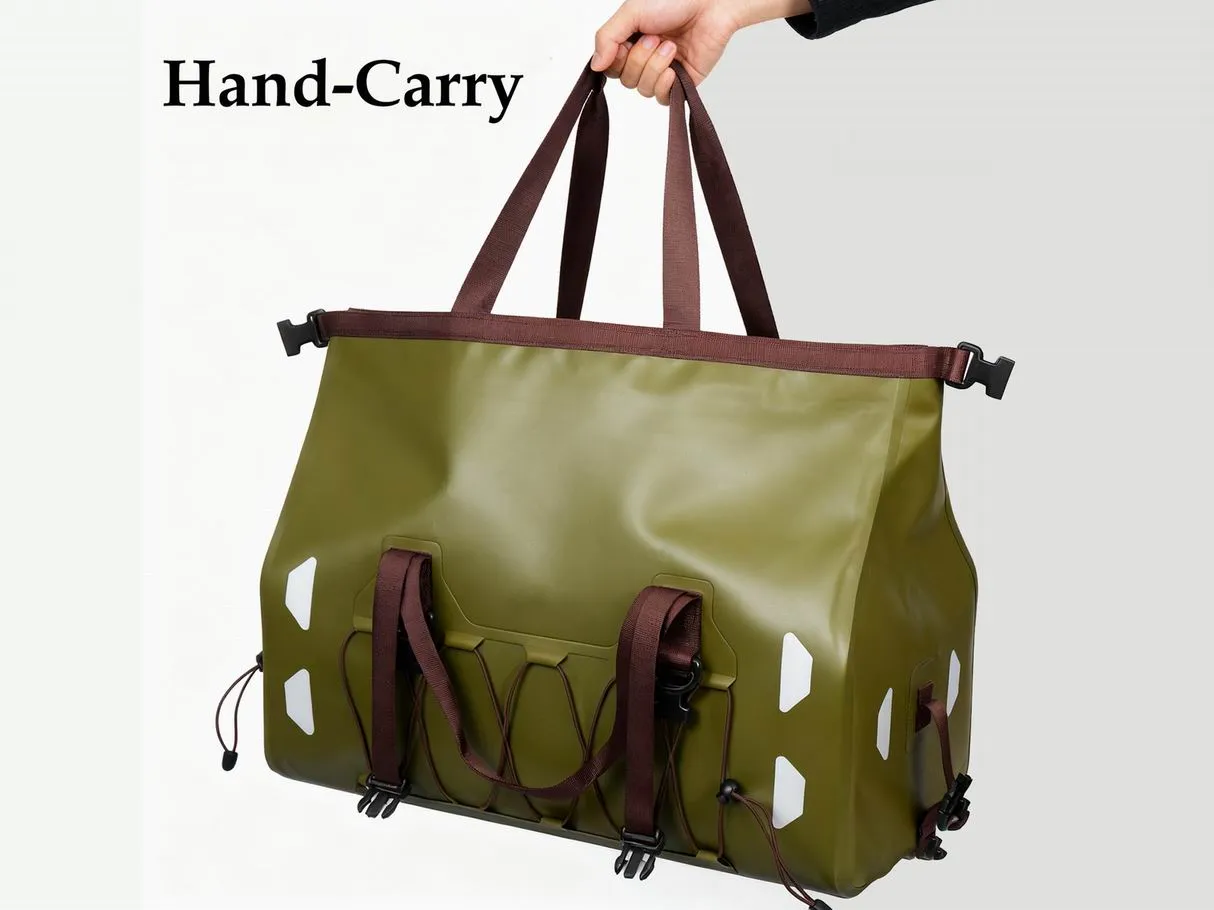
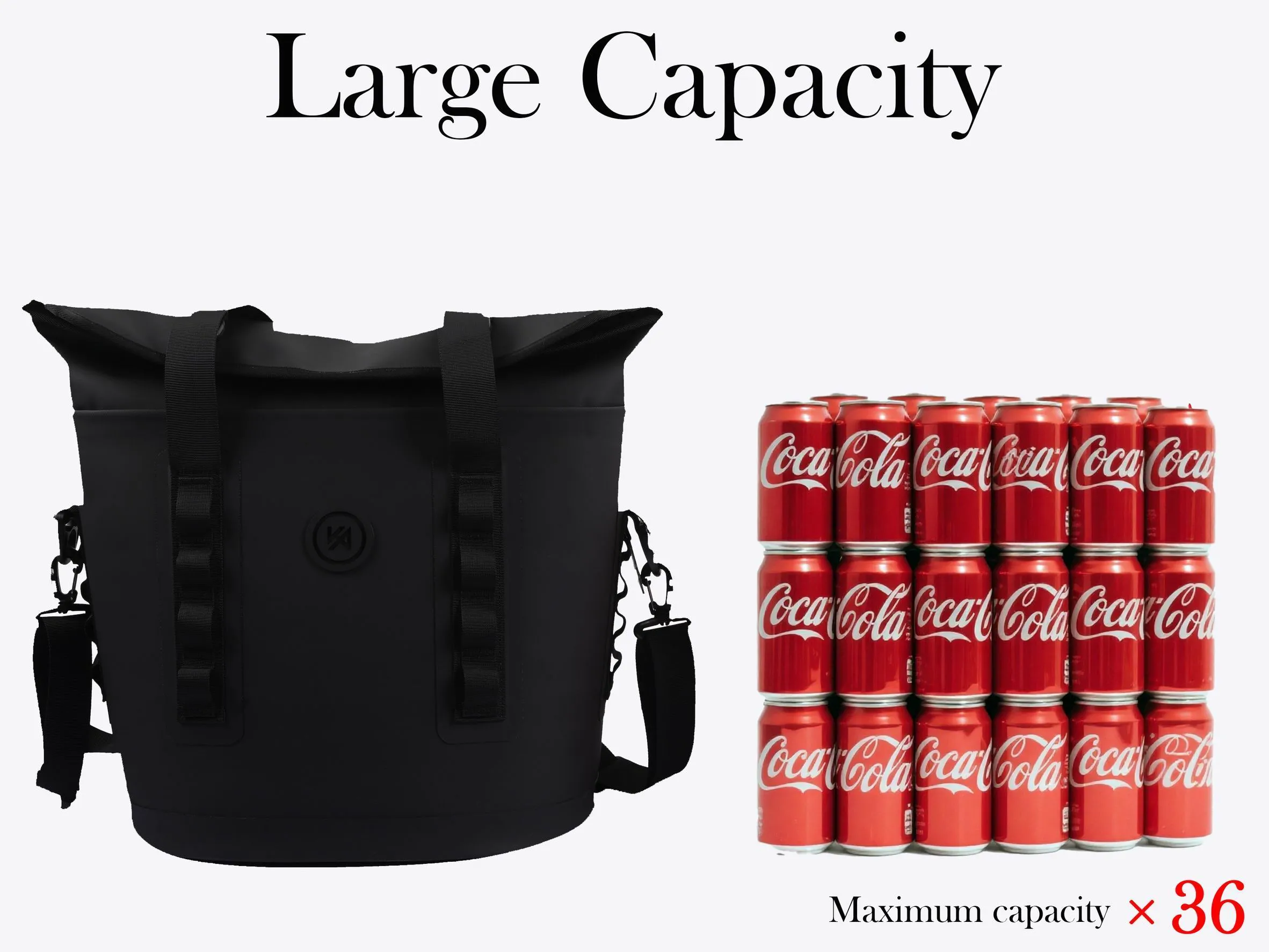
A dive day moves through three zones
Most of the arguments about which bag to buy for diving come from arguing about the wrong unit. The relevant unit is not the activity but the zones the gear passes through in a single day, because a bag that performs beautifully in one zone is frequently the wrong thing in the next — which is why most scuba diving waterproof bags are judged unfairly and why dive gear dry storage should be specified zone by zone rather than activity by activity. And the bags almost always fail at the boundaries rather than inside any single zone.
Zone one is the wet deck. Everything here is soaked, usually repeatedly, in whatever water you dived in, and it is being moved quickly between dives. Requirements are drainage, tolerance of permanent dampness, and abrasion resistance against cylinders and weights; high-level waterproofing is close to irrelevant here. Zone two is the cabin or liveaboard interior: warm, humid, condensation-prone, and shared with electronics and paperwork. Requirements are moisture isolation and identification. Zone three is transit and hotel — the only place the bag is dry, and also the place where wet gear must not be given the chance to contaminate dry luggage.
Thinking in zones immediately resolves decisions that otherwise seem like contradictions. Should the regulator bag breathe or seal? It should seal in the cabin and not trap water on the deck, which points to a drainable compartment with a sealed outer boundary rather than a fully airtight pouch. Should the logbook case be submersible? It never goes swimming, so it needs splash survival and fast access rather than depth capability, unlike a pouch used by a snorkeller.
This framing also scales properly across the channel. A dive centre running three trips a day needs durable zone-one and zone-two products. A travelling diver needs a zone-three product with a wet compartment. So this is therefore not one product category but several, and suppliers who treat it as one inevitably produce something suited to none of them. General background on diver training realities worth designing around is published by PADI, whose equipment-handling guidance shapes what most centres teach.
Wet and dry separation is a construction problem
Nearly every dive bag claims wet and dry separation. Very few are engineered for it, and the difference matters because the failure has consequences beyond inconvenience: a regulator, computer or passport sharing space with a dripping wetsuit is how equipment fails and documents are ruined.
Three designs exist and they are not equivalent. The simplest is a barrier panel — one fabric layer separating compartments, which stops contact but not humidity, so dry items become damp within hours in a hot cabin. Better is a fully independent welded liner, so the wet compartment is a sealed vessel within the bag and cannot share air. Best for this application adds drainage to the wet compartment and a vent path to the dry one, which is a combination few products achieve because it requires genuinely thinking through both zones.
The engineering detail that most often gets missed is capillary transfer across the barrier. A barrier panel stitched into the same seam line as the outer shell creates a wicking bridge through the stitch holes, so water travels from wet side to dry side regardless of how good the fabric is. The fix is unglamorous: the liner and the shell should not share a stitch line, and where they must meet, that junction should be welded or bound.
Our separate discussion of wet and dry separation construction goes through the geometries in more detail. For dive programmes specifically, add one criterion that is rarely specified: the wet compartment must be cleanable. It will accumulate neoprene residue, sand, and the fine biological matter that comes off a wetsuit, and if it cannot be turned out and hosed it becomes the reason the bag smells permanently within one season.
What thirty kilograms of lead and steel does
Dive gear is dense in a way no other water sport approaches. A full aluminium cylinder is roughly fourteen to fifteen kilograms; a weight belt for a tropical dive is typically six to twelve kilograms and can be more for a dry suit; a BCD with integrated weights adds further. A single bag carrying full kit routinely exceeds twenty-five kilograms, and unlike camping gear it applies that weight through hard, sharp-cornered objects.
The failure mechanics are about contact area. Fabric does not care much about total load; it cares about load per unit area. Weights are effectively point loads: four or five lead blocks sitting in the bottom of a bag apply their entire load through perhaps thirty square centimetres, and then they move every time the bag is lifted. That combination of high contact stress and relative motion is precisely what peels a weld from a film and what tears handles out of side panels.
| Component under load | Realistic load | Common failure | Specification that survives |
|---|---|---|---|
| Base panel with weights in direct contact | 10 to 16 kg over roughly 30 cm² | Film puncture, then wicking through the exposed substrate | Doubled or reinforced base with a removable weight pad that spreads the load |
| Carry handles with full kit inside | 25 to 35 kg static, multiplied by two to three under swinging | Handle pulled through the side panel rather than the handle itself failing | Webbing continuing under the base rather than terminating in the panel |
| Shoulder straps on a heavy kit bag | Same total load borne by two narrow attachment points | Attachment bar-tack tear-out | Load path carried into a reinforced panel, tested to at least five times working load |
| Weld seam next to a cylinder boot | Point stress plus rolling contact | Seam peel starting at the base corner | Welded base with radius, no seam within twenty millimetres of the base edge |
There is a cheap design intervention that solves most of it: a removable padded insert shaped to hold weights flat rather than lumped. It costs a few dollars, spreads point loads across the whole base, stops the blocks migrating, and doubles as protection for the base fabric so that a single bag can serve several seasons. Very few suppliers offer it because nobody asks for it. The straps and handles side of this equation is set out in our article on load testing straps and handles, and the base abrasion problem is covered in our review of abrasion standards.
Trapped air behaves differently underwater
Most dry bag advice assumes the bag stays at the surface. Diving and freediving break that assumption, and the consequence is not a leak — it is a burst, or a bag that becomes impossible to open or close at the wrong moment. Boyle’s law is not subtle: pressure doubles between the surface and ten metres, halving gas volume, and reverses on the way back up.
Sealed at depth and brought to the surface, a rigid or semi-rigid air-filled container can more than double its internal volume relative to what it contained at depth, and at thirty metres the ratio is four to one. That is enough to split films, pop lids and eject closures. Anyone who has taken a rigid case freediving has met this. The design response, where a genuinely submersible product is intended, is one of two things: either exclude trapped air by specifying that the case be flooded and purged, or provide a pressure-equalising path that lets internal and external pressure match while excluding liquid water.
The equalising route is what the serious phone and camera pouch manufacturers do, and it is why depth ratings on those products are stated together with a maximum dive profile rather than as a single number. Our page on small electronics pouches explains the mechanisms; the useful question beneath the rating is not maximum depth but whether the product must be evacuated before descent and vented before opening.
For soft dive bags that never intentionally go below the surface, the same physics appears in a milder form that is still worth specifying against. A bag rolled shut in a warm cabin, carried onto a deck in direct sun, sits happily; the same bag rolled shut in an air-conditioned dive shop and then loaded into a hot tender sees a meaningful pressure increase, and if someone then stacks something heavy on it, failure occurs at the weakest weld. It is the same mechanism described in our general discussion of temperature and humidity effects, with the gradient made steeper by air conditioning and tropical sun.
Contamination: the constraint nobody puts in a brief
This is the part of dive-specific specification almost never covered in general outdoor product literature, and it is a genuine safety-adjacent constraint rather than a nicety. Equipment used with high partial pressures of oxygen must be kept free of hydrocarbons and certain other contaminants, because contaminants in an oxygen-enriched environment behave very differently from the way they behave in air. Regulators, valves and cylinders prepared for enriched-air diving operate under exactly those conditions.
Where does a bag come in? Through three routes. Silicone lubricants sprayed liberally aroundMASKs and zippers migrate onto everything nearby, including regulator first stages. Plasticisers migrating from flexible PVC can transfer to rubber components and have been implicated in their deterioration. And certain cleaning residues left in rinse water concentrate in fabric rather than being rinsed out, then transfer to whatever is stored next.
The practical specification that follows is unusually concrete. Separate storage for regulators and breathing apparatus from anything treated, sprayed or lubricated. Avoidance of materials with high plasticiser migration in direct contact with rubber components over long periods. And — the one actually enforceable in a busy dive centre — colour-coded storage so that contaminated and clean kit never share a compartment by accident.
Diver safety organisations publish equipment-handling guidance that reflects this; Divers Alert Network maintains accessible material on equipment care and is the reference many centres use for their own protocols. The wider chemical picture for how coatings and films respond to chemicals they encounter is summarised in our page on chemical resistance of these materials.
Rinse tanks, shared water and what accumulates in them
Every dive operation has a rinse tank and most of them are doing more chemistry than anyone intends. Into a hundred litres of standing water go dozens of wetsuits per day, each carrying neoprene degradation products, salt, biological matter, sunscreen and residues of whatever products were applied in the morning. The tank is changed less often than it should be, and it becomes warm, which accelerates everything in it.
Bags and cases get dunked in the same water. So material selection has to assume repeated contact with a warm, slightly contaminated, sometimes chlorinated solution rather than clean seawater. Three specifics matter. Warm water accelerates hydrolysis in susceptible polyurethanes, so prolonging soaking is worse than frequent short rinses. Chlorinated pool water is more aggressive to some coatings and to elastomeric components than seawater is, which is the reason pool-training centres see different failure patterns from beach operations. And residues that remain in fabric after drying then reactivate on the next wetting, which is why smell develops in bags that are never properly cleaned rather than merely dried.
- Rinse in fresh water promptly, but keep soak times short — around thirty minutes rather than overnight.
- Where both exist, treat chlorinated pool water as the harsher environment, not the milder one.
- Design for cleanability: smooth linings with no blind corners beat textured ones that trap residue.
- Avoid fully sealed hollow sections in hardware; they retain rinse water and become the smell source.
- Specify that bags dry open and inverted where possible; closed storage of a damp bag guarantees odour.
Odour deserves explicit treatment because it ends rentals. It is almost never the fabric degrading; it is biological growth in retained moisture plus residue. Where an antimicrobial finish is proposed, understand what it does and does not do — it suppresses growth on treated surfaces for a period and does nothing about residue, drainage or ventilation. Our review of antimicrobial approaches sets this out honestly.
Drip-dry, transport and the salt versus chlorine split
Post-dive handling is where product life is either preserved quietly or destroyed casually. The common pattern is that gear comes off the boat wet, goes into a vehicle, stays there for six hours in tropical heat, and is then rinsed tomorrow or the day after. Nothing about that sequence is compatible with long materials life, and the bag is the component that suffers most because it is the one holding everything.
The two water chemistries behave differently once trapped. Salt residue deliquesces and stays damp, drawing moisture from humid air, which is why equipment in tropical dive towns never truly dries. Chlorinated water does not have that property but is chemically more aggressive toward elastomers and some coatings. In both cases the correct sequence is rinse, drain, dry with airflow — and the bag design should support that sequence rather than obstruct it, which specifically means drainage paths and hang loops in the right places.
Transport has constraints of its own that are worth stating in a brief. A wet bag in a vehicle boot is a humidity generator: air at thirty degrees holding that moisture will condense on every cold surface, including the interior electronics of dive computers stored nearby. So the transport question is not only "does the bag leak" but "does the bag isolate humidity", and those are different properties. Fully sealed welded construction isolates humidity; sewn-and-coated construction often does not, even when it does not leak liquid water.
For centres operating boats and tenders, the same humid-isolation argument supports small sealed cases for computers, cameras and paperwork even when nothing is likely to be immersed. That recommendation overlaps heavily with marine practice generally, and our article on bags for boating programmes is the natural companion reading.
Protecting logs, cards and computers
Theft gets the attention, but for dive paperwork water and humidity are the threats that actually arrive. Certification cards, insurance documents, passports and a logbook are worth vastly more than any piece of hardware on the boat, they are far harder to replace at a remote destination than anyone expects, and they routinely live loose in a wet bag.
What they need is modest in engineering terms and specific in specification: reliable splash and rain protection, enough rigidity to prevent creasing, and fast access. Depth capability is irrelevant for something that never goes in deliberately, and paying for IPX8 performance on a document wallet is money better spent on construction quality. What actually helps is a rigid or semi-rigid insert, a closure that can be operated one-handed on a moving boat, and high-visibility colour so it does not get left behind or buried.
Dive computers and cameras are the harder case because they combine value with genuine sensitivity: buttons, battery compartments, and displays that fail after even brief exposure to trapped moisture. Store them in a sealed container with a desiccant and a clear reminder to replace the desiccant, in preference to trusting any pouch, and never store them while still wet. Where an underwater pouch is required, evacuate the air, respect the stated depth profile, and treat the seal line as a maintenance item — inspecting and rinsing it is what keeps it working.
Our notes on pouches for small electronics and on the wider question of selecting a protection level for the real use case, covered in our guide to choosing the right waterproof level, both argue against buying maximum rating by default.
Constructions that survive three dives a day
A diving product sees a duty cycle closer to industrial equipment than to leisure goods. Three dives a day, six days a week, ten months a year is around seven hundred cycles annually, each involving soaking, loading to twenty-five kilograms, carrying, draining and stacking. When specifying against that, four decisions carry almost all of the outcome.
| Decision | Option A | Option B | Which fits dive centres |
|---|---|---|---|
| Shell | PVC-coated polyester: tough, cheap, field-repairable | TPU laminate: lighter, better low-temperature flex, higher cost | Coated for general duty; laminate for cold-water and technical programmes |
| Seam | Sewn and taped | Welded | Welded for anything carrying weight or sitting wet daily |
| Edging | Raw cut or folded | Bound or fully welded | Bound, because raw edges are the main wicking route into dry compartments |
| Hardware | Plated zinc alloy with plastic buckles | One identified alloy or all-plastic where load permits | All-plastic where load permits; otherwise single alloy; zinc excluded |
Base cloth weight then sets the mechanical reserve needed for point loads. Denier and weave selection interacts with coating in a way described in our note on denier and durability, and the general trade-offs between the two polymer families are set out in our comparison of TPU and PVC constructions. For dive programmes the practical rule is that base cloth strength deserves more of the budget than coating hardness, because all the contact here is wet, loaded and abrasive.
One maintenance feature pays for itself continuously: a drain. A bag used for wetsuits or fins that can drain without being opened and emptied saves staff time every single day, reduces the temptation to store it closed and damp, and prevents the standing residue that produces odour. Our discussion of ventilated designs covers where this trade-off sits for anything that must also protect dry contents.
Matching the product to four diver types
One more source of avoidable mismatches: the word "diver" covers at least four groups whose requirements barely intersect, and a range that tries to serve all four with one product serves none of them well. Segmenting properly is what turns a decent dive programme into a coherent one, and it costs nothing beyond writing the brief more carefully.
| Segment | What they carry and where | Dominant requirement | Feature that matters most |
|---|---|---|---|
| Rental or resort diver | Everything hired from the centre, carried short distances | Speed of loading and identification | Colour-coded roles and a wet compartment that staff can hose out |
| Travelling diver | Personal kit flown to a destination, then used daily for a week | Protecting other luggage from damp kit | Genuine wet isolation plus carry compliance on weight |
| Technical and cold-water diver | Dry suit, twin sets, stage cylinders, multiple regulators | Load capacity and clean-kit separation | Load paths rated high, dedicated clean compartment, cold-flexible material |
| Freediver and spearfisher | Long fins, low-volume masks, weights, speargun components | Long low-profile shapes and salt tolerance | Slim carried formats plus rinse-friendly seals |
The technical and cold-water row is where suppliers most often get it wrong by reusing warm-water geometry. A dry suit is bulky and heavy when wet but compresses, and dry-suit divers carry substantially more lead, so both volume and load rise together while the shape becomes awkward. Material also has to stay flexible out of cold water rather than merely in it, which argues for laminate rather than coated product at the premium end.
The freediving row is instructive for a different reason: nobody wants a bag. Fins are long and fragile at the tip, masks are stowed in rigid boxes, and everything gets salted. What works is a purpose-shaped sleeve with a protected fin tip rather than a general-purpose holdall, which is a reminder that the correct answer to "buy a dive bag" is sometimes different equipment entirely.
For anyone building the whole range rather than one item, the sizing principles are the same as elsewhere in the category and are set out in our general capacity selection guide; what changes for diving is that weight distribution, not volume, is usually the binding constraint once total load passes about fifteen kilograms.
What dive centres report most
Dive centres are the useful source of truth here for the same reason charter fleets are in sailing: high utilisation, systematic turnover, and a season boundary that makes ageing measurable. Their reported failure patterns cluster into six recognisable causes, and the ranking is stable across warm-water operations.
| Reported problem | Root cause | When it appears | Design or operating response |
|---|---|---|---|
| Handle torn out of the side panel | Load path terminates in the fabric rather than continuing under the base | Two to six months of daily loaded use | Webbing sling under the base; reinforced panel; test to five times working load |
| Wet compartment rewetting the dry side | Barrier panel sharing a stitch line with the shell, creating a wicking bridge | Immediately, worst in hot cabins | Independent welded liner not stitched into the same seam line |
| Persistent odour that cleaning does not fix | Retained moisture plus accumulated residue in non-cleanable compartments | First season | Drainage, smooth linings, invert-to-dry design, and an actual cleaning protocol |
| Base film punctured under weights | Point loading from lead blocks | First to third month | Doubled base plus removable load-spreading weight pad |
| Closure stiff or gritty | Sand or salt crystals in the seal line, with solder rarely rinsed | Continuous | Rinse before rolling; secure closure in a protected position |
| Damp documents or fogged computer | Device stored in a bag that resists liquid but not humidity transfer | Intermittent | Fully sealed construction plus desiccant for anything electronic or paper |
Lifetime expectations worth budgeting against are roughly two to four seasons for a well-specified bag in daily centre use, with annual replacement of twenty to thirty per cent. Below roughly two seasons the cause is usually specification rather than chance, and above four seasons is normally evidence of a disciplined rinse and dry culture rather than an exceptional product.
The last point deserves emphasis because it changes how a supplier should pitch the channel: the highest-return investment for a centre is almost never a more expensive bag. It is a rinse station, a drying rack with airflow, and a written protocol. Good product in a careless operation loses to adequate product in a disciplined one, and the successful suppliers are those who say so.
The dive centre and liveaboard order
This channel buys in a pattern that rewards planning. Refit happens in the off-season, hire fleets are replaced on a calendar rather than on demand, and centres would rather run one proven product for years than adopt something new annually. That predictability is worth more than any unit price concession, and it shapes what to offer.
Structure the range around functions rather than around sizes. Three styles cover most operations: a heavy kit bag with a genuine wet compartment, a smaller drainable bag for wetsuit and fins, and a small sealed case for computers, cameras and paperwork. Colour-coding by function is what actually makes it work operationally, because it lets staff identify the right bag instantly and prevents cross-contamination between clean and contaminated kit. Because each style carries a 500-piece minimum, three styles is commercially viable while nine would not be.
Branding should be specified for how it will be treated, not how it photographs. Dive bags are hosed down, dragged across concrete and stacked wet; heat-transferred film in an abrasion zone will not survive, whereas a welded-on badge or a patch on a reinforced area will. Detailed guidance by process is in our article on logo options and durability, and the accessory combinations that sell in this channel — weight pads, desiccant sachets, care cards — cost little and lift perceived value considerably.
Finally, two commercial details that protect the account. Include spare buckles and slides with the original order, at roughly five per cent of units, because hardware tooling changes without notice. And build the reorder around the off-season: planning detail discussed in our note on minimum quantities and production slots applies directly, since a fleet discovered short in the first week of the season cannot realistically be resupplied in time.
Specifying a dive programme
Everything above reduces to a specification small enough to quote against without a meeting and specific enough to argue about later. Eight items do most of the work.
- Declare the zones the product serves. Writing "deck and cabin" into the brief changes more decisions than any material choice.
- State the maximum loaded weight and how it is distributed, including weights and a cylinder if those are carried.
- Specify separation as a welded independent liner rather than a barrier panel, and confirm it does not share a stitch line with the shell.
- Require the load path to continue past the base for any handle bearing more than ten kilograms, with a stated test load.
- Ask whether the construction will be in contact with breathing apparatus, and specify material accordingly.
- Specify cleaning: the wet compartment must be hoseable and drainable, with no blind corners.
- State the water chemistry: seawater, chlorinated, or both, and whether warm rinse tanks are routine.
- Require a cyclic ageing test rather than a single-condition one, because daily soak-and-dry is exactly what single tests miss.
Then do two things most buyers skip. Ask for a competing quotation built to the supplier’s own standard rather than to yours, because the gap between those two numbers is the map of where your assumptions differ, and that map is a better conversation than haggling over one price. And agree how failures will be assessed before the order, which means committing to cutting open retired units and sharing photographs annually.
It is worth saying plainly that the biggest gains in this category usually sit outside the product specification. A functioning rinse station, a drying rack with genuine airflow and a written protocol will extend the life of a mediocre bag more than switching to a premium one in an operation that simply piles wet gear in a corner. Suppliers who lead with that advice tend to keep dive-centre accounts for years; suppliers who quote specifications at every problem tend to be replaced.
If you are specifying for a dive centre, liveaboard or freediving operation, send us duty cycle, water chemistry, loaded weights and current failure history. Minimum order quantity is 500 pieces per style, samples take 6–10 working days, bulk production runs 35–50 days, and quotations are issued FOB Xiamen.
Frequently Asked Questions
Q1. What makes diving different from other water sports for bag design?
Density and chemistry. A bag routinely carries twenty-five kilograms concentrated by lead weights, breathes warm humid air in a cabin, and shares space equipment that must stay free of hydrocarbon and silicone contamination.
Q2. Should a dive bag be fully submersible?
Usually not necessary. Most dive gear never intentionally goes underwater. Reliable splash protection, drainage and humidity isolation matter more than a depth rating, except for pouches designed for cameras and phones.
Q3. Why does my dry compartment get damp anyway?
Because the barrier panel shares a stitch line with the outer shell, creating a capillary bridge that transfers moisture regardless of how waterproof the fabric itself is. An independent welded liner fixes it.
Q4. How much weight should handles be tested to?
Specify a static test of around five times expected working load and insist the load path continues under the base rather than terminating in a side panel. Most field failures involve the panel rather than the handle webbing.
Q5. What should I look for when carrying lead weights?
A doubled base and, ideally, a removable pad that spreads point loads. Four blocks of lead concentrate their weight into roughly thirty square centimetres, which punctures films faster than total weight suggests.
Q6. Is a sewn or welded seam better for dive bags?
Welded, for anything carrying weight or staying wet daily. Sewn and taped seams rely on an adhesive layer that degrades under continuous immersion and warm rinse water.
Q7. Can Trapped air damage bags during a descent?
Yes. Pressure doubles between the surface and ten metres, halving gas volume, and reverses on ascent. A container sealed at depth can burst at the surface; anything taken below should be evacuated or pressure-equalised.
Q8. Are pool operations harder on bags than sea operations?
Chemically, often yes. Chlorinated water is more aggressive toward some coatings and elastomeric components, which is why training-centre fleets show different failure patterns from beach operations.
Q9. How long can I soak gear in a rinse tank?
Keep it short, around thirty minutes rather than overnight. Warm standing water accelerates hydrolysis in susceptible polyurethanes and the tank itself accumulates residues.
Q10. What causes the persistent smell in dive bags?
Retained moisture plus accumulated organic residue, almost never fabric degradation. Fix it with drainage, airflow and cleanability before adding antimicrobial finishes.
Q11. Do antimicrobial finishes solve odour problems?
Partly. They suppress growth on treated surfaces for a period but do nothing about residue, poor drainage or closed damp storage, and they wash out over time.
Q12. How should I store a dive computer or camera?
Sealed container with desiccant, replaced regularly, and never while still wet. Humidity transfer through a merely water-resistant bag causes more failures than immersion ever does.
Q13. Do I need to worry about regulators and silicone near bags?
Yes. Silicone and hydrocarbon contamination is a real concern for oxygen-adjacent equipment. Separate regulator storage from anything sprayed or lubricated, and use colour-coding to enforce it.
Q14. How long should a dive centre bag last?
Two to four seasons in daily use, with annual replacement of twenty to thirty per cent. Falling below two seasons usually indicates a specification problem rather than unavoidable wear.
Q15. Is investing in a better bag the biggest improvement a centre can make?
Rarely. A rinse station, a drying rack with airflow and a written protocol extend a mediocre bag more effectively than upgrading product in an operation that piles wet gear in a corner.
Q16. How many styles should a dive programme carry?
Three covers most operations: a heavy kit bag with a wet compartment, a drainable bag for wetsuit and fins, and a small sealed case for electronics and paperwork. Colour-code them by function.
Q17. Why should spare hardware ship with the original order?
Hardware tooling changes without notice, and availability protects the account. Ordering around five per cent of units with the original run costs little and prevents being unable to service the fleet later.
People Also Ask
Do I need a waterproof bag for scuba diving?
You need several, serving different zones: something drainable for wet kit, something sealed for electronics and documents, and something durable enough to carry twenty-five kilograms of weights.
Can a dry bag go underwater while scuba diving?
A soft dry bag is unnecessary underwater and awkward if it traps air. Anything genuinely taken below must be evacuated or pressure-equalised to avoid expansion damage on ascent.
How should I dry dive gear between dive days?
Rinse briefly in fresh water, drain thoroughly, then dry with airflow rather than heat. Never store closed and damp, because that is what causes odour and mildew.
Why are dive bags so heavy duty?
Full kit can exceed twenty-five kilograms and there are point loads from lead weights and cylinder bases. A single season of daily carrying will tear handles that are only stitched into the panel.
What should I put the dive computer in?
A sealed container with desiccant rather than a general dry bag. Internal humidity transfer damages electronics far more often than immersion does.
How often do dive centres replace their bags?
Typically two to four seasons of daily use, replacing twenty to thirty per cent annually. Shorter life usually means the specification is wrong rather than the kit being abused.