Custom waterproof bags for gyms and fitness brands cost $3.40–$7.20 per unit at MOQ 500, solve the industry’s universal complaint — wet, smelly kit contaminating everything else in the bag — and turn a cost line into a revenue line when sold or bundled as branded merchandise. The mechanics are simple: welded seams and a roll-top or waterproof-zip closure seal sweaty kit and swim gear inside a wipeable compartment, so the car seat, the office chair and the rest of the bag stay dry and odor-free. This guide covers formats, spec choices, member-pricing economics and the merchandising models that make gym bags pay for themselves.
We produce fitness-industry programs from boutique studios to national gym chains at QUANZHOU JUNYUAN BAGS — custom waterproof bag manufacturing since 2014, 4,950 m² SGS-verified facility, 7 lines, 149 machines, 137 staff, 200,000 pieces monthly. MOQ 500 per design, samples 6–10 working days, bulk 35–50 days, AQL 2.5 inspection, 30/70 T/T, FOB Xiamen, shipping to 100+ countries.
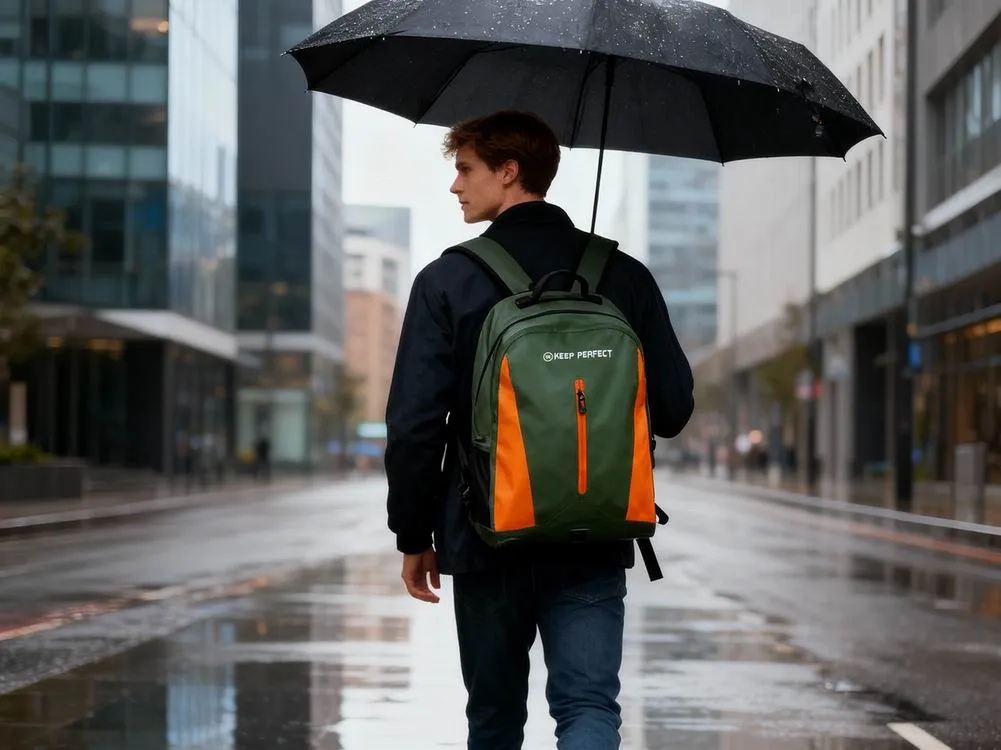
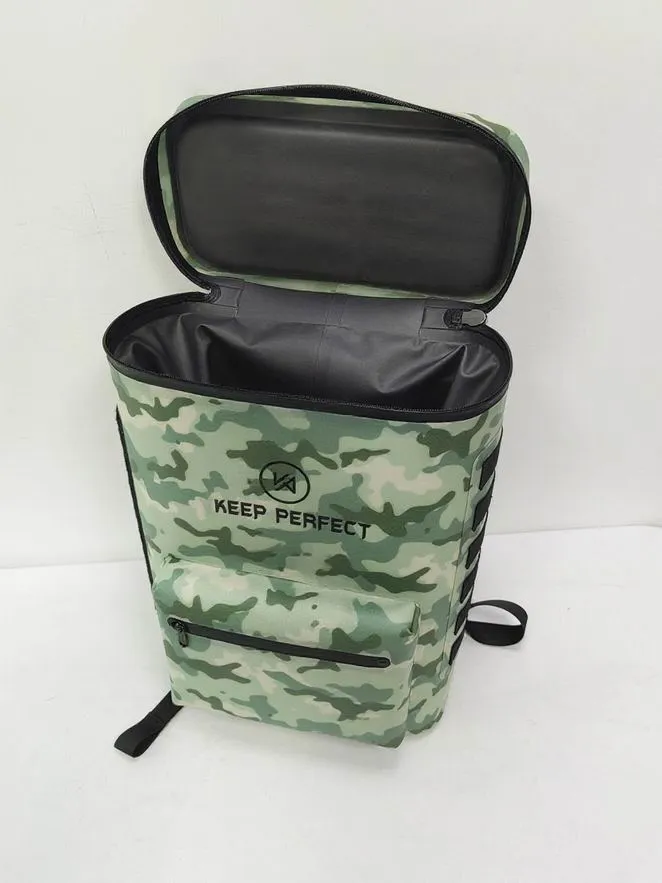
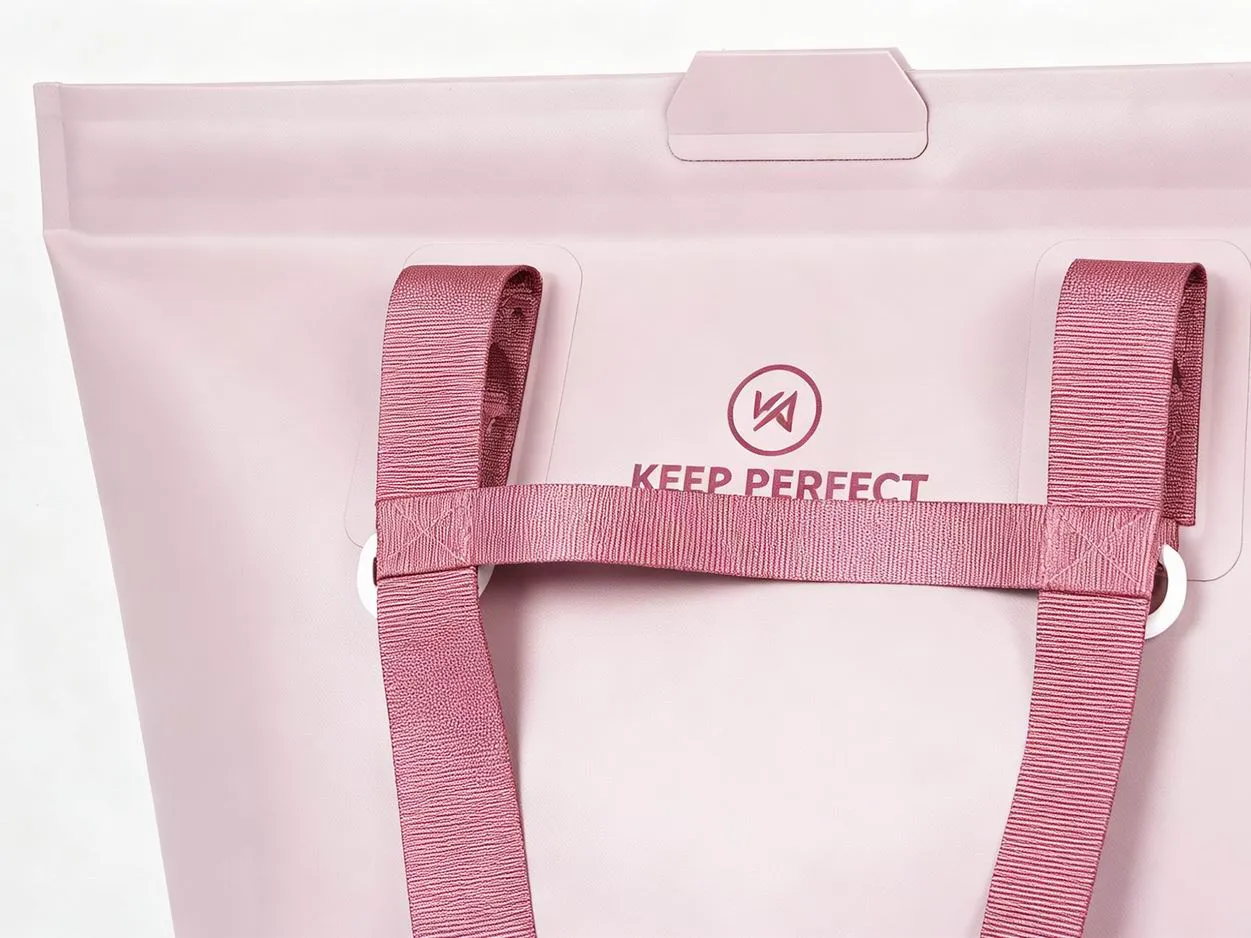
Why gyms are a natural waterproof-bag market
Every gym member generates wet kit daily: sweat-soaked training clothes, towels, swim gear from the pool, shower shoes. The standard gym bag answer — a mesh pocket or a plastic bag — fails within weeks and smells worse. A welded wet/dry compartment solves it mechanically: moisture and odor stay sealed behind TPU film that wipes clean in one pass, and the bag itself never absorbs the locker-room floor. For gyms with pools, the case is stronger still: swim members are carrying dripping kit through your facility every single day.
The business case has two sides. Operationally, waterproof kit bags reduce the slip hazards and locker-room mess that wet kit creates. Commercially, a branded waterproof bag is the one piece of gym merchandise members actually use daily — which is why fitness chains report bag merchandise outselling apparel three to one at the front desk. A member carrying your logo into offices, trains and cafes five days a week is advertising you cannot buy cheaper.
Formats that sell in fitness
| Format | Best for | Typical size | Unit price (500+) | Retail benchmark |
|---|---|---|---|---|
| Wet/dry gym backpack | Chain gyms, CrossFit boxes | 20–28L | $5.20–$7.20 | $39–$69 |
| Roll-top dry bag | Pools, swim clubs, spas | 5–15L | $3.40–$4.90 | $19–$35 |
| Drawstring wet sack | Budget merch, class freebies | 8–12L | $2.90–$3.80 | $12–$18 |
| Insulated cooler backpack | Meal-prep market, outdoor bootcamps | 18–24L | $6.10–$8.40 | $49–$79 |
| Waterproof tote | Yoga/pilates studios, spa retail | 14–20L | $3.90–$5.40 | $29–$49 |
The wet/dry backpack is the anchor product: one welded compartment rated IPX6 for wet kit, one dry compartment for laptop and clean clothes, vented shoe pocket optional. Boutiques and studios punch above their weight with the waterproof tote — it matches the aesthetic of yoga and pilates retail better than a technical backpack, and the wipeable interior handles damp towels and post-class kit.
Spec decisions that matter for gym use
- Welded wet compartment — stitched seams wick moisture through needle holes; welded seams are the actual waterproof barrier
- Antimicrobial lining option — silver-ion treated TPU lining adds $0.30–$0.55 per bag and measurably reduces odor buildup
- 500D–840D shell fabric — gym bags live on floors; 840D on base panels doubles abrasion life
- YKK or SBS #8 zippers — the #1 failure point on gym bags is the zipper; 10,000-cycle rated zippers end the complaint
- Ventilation grommets on shoe pockets — sealed is right for wet kit, wrong for shoes; spec them separately
- Reinforced grab handles — bartacked to 200+ kg webbing; members carry by the handle, not the straps, 80% of the time
One spec to avoid: PVC-coated fabrics. They are cheap and genuinely waterproof, but they crack in cold gyms, off-gas in hot cars and increasingly fail retailer chemical screens (phthalates under Prop 65 and REACH). TPU lamination costs $0.40–$0.80 more per bag and is the material the fitness market has converged on — see the material comparison in our manufacturing guide.
Branding that survives the gym environment
Gym bags face a branding-hostile environment: sweat, chlorine, floor abrasion, weekly washing. Method choice decides whether your logo looks fresh at month twelve:
| Method | Cost/position | Gym durability | Best use |
|---|---|---|---|
| Embroidery | $0.80–$1.80 | Excellent — outlasts the bag | Club crests, premium merch |
| Screen print (plastisol) | $0.30–$0.90 | Good — 50+ wash cycles | Large logo hits, slogans |
| Silicone/TPU patch | $0.45–$1.10 | Excellent — wipeable, 3D look | Technical bags, boutique brands |
| Heat transfer | $0.25–$0.70 | Fair — edges lift after ~30 washes | Short-run promos only |
The full method-by-method breakdown — including Pantone matching to your brand colors at Delta E ≤2 — is in our logo options guide. Gym chains with multiple locations can split the MOQ 500 across location colorways (e.g., 5 clubs × 100 pieces) at no extra tooling cost.
The merchandising math: from cost center to profit center
Three models cover how gyms actually deploy branded bags, and the unit economics differ meaningfully:
| Model | Unit cost | How it monetizes | Payback |
|---|---|---|---|
| Retail merchandise | $5.20–$7.20 | Sells at $39–$69 front desk / app | 5–10× margin, immediate |
| Membership bundle | $5.20–$7.20 | Included in $199–$299 annual premium tier | Drives tier upgrades 8–15% |
| Corporate/wellness resale | $4.50–$6.50 | Sold to corporate wellness clients at markup | B2B2C channel expansion |
The retail model is the simplest: at $6 average cost and $49 retail, a 500-piece run grosses $24,500 against $3,000 cost. Even at 40% sell-through the program is profitable, and the remaining stock keeps selling — bags are not date-coded like apparel collections. The membership-bundle model trades margin for retention: chains report premium-tier upgrades rising 8–15% when a genuinely useful physical product anchors the tier.
Programs by facility type
- Big-box chains — wet/dry backpack as flagship merch; 500 split across locations; annual refresh reorders ship in 30–35 days
- Boutique studios (yoga, pilates, barre) — waterproof tote with silicone patch; aesthetic-first spec; retails $39–$49
- CrossFit boxes — heavy-duty 840D backpack; survives chalk, drops and garage floors; member-pride branding sells itself
- Swim clubs and pools — roll-top dry bags in 5L/10L/15L; the true waterproof use case; often sponsor-funded
- Hotel and corporate gyms — understated branding, premium finish; pairs with towel service as amenity kit
- Outdoor bootcamp operators — insulated cooler backpack for meal-prep positioning; differentiates in a crowded market
Aquatics-adjacent programs (swim clubs, triathlon squads, masters swimming) overlap heavily with team procurement — the budget layering and seasonal calendar in our sports teams guide applies directly.
Designing a bag members actually carry daily
The merchandising math only works if members carry the bag outside the gym — that is where the advertising value and the perceived value live. Three design decisions drive daily-carry adoption. First, aesthetics that pass in public: muted shells (black, charcoal, navy, olive) with a clean logo placement outsell loud color-blocking four to one, because the bag has to work in an office elevator, not just a locker room. Second, the laptop question: a padded 15-inch sleeve turns a gym bag into a commute bag, doubling usage frequency; it adds $0.60–$0.95 to unit cost and roughly doubles perceived value.
Third, carry comfort at gym loads: a wet/dry backpack loaded with shoes, towel, laptop and a shaker bottle runs 7–10 kg, so 50 mm padded straps and a ventilated back panel are not luxuries. The bags that end up in the donation pile are the ones that hurt to carry. Our sampling process exists precisely to test these decisions physically — a member-focus-group of one sample tells you more than a committee discussion of a mockup, and samples arrive in 6–10 working days.
Hygiene expectations after 2020: the wipeable standard
Member expectations around shared-space hygiene permanently shifted: a bag that sits on locker-room floors and bench seats is now expected to be wipeable, the same way equipment is. TPU-laminated shells meet that expectation mechanically — one pass with a disinfectant wipe and the surface is clean, with no fabric weave to harbor moisture. We have watched "wipeable interior and exterior" move from a niche request to a line item in over half of fitness-industry inquiries since 2021.
For facilities, the hygiene angle is a marketing asset, not just a spec: "every member bag is fully wipeable and seals wet kit" is a locker-room-cleanliness message that costs nothing once the bags exist. Several chains print the care instruction ("wipe clean, air dry") inside the wet compartment as a subtle quality signal — a $0.02 print that members notice and repeat.
Launch timing and the fitness retail calendar
Fitness retail has two demand spikes: January (new-year memberships and resolutions) and September (post-summer restart). A bag program should land stock 3–4 weeks before either spike. Working backwards with our production calendar — sampling 6–10 days, bulk 35–50 days, sea freight 4–6 weeks — a January launch wants the inquiry in early September and PO by mid-October; a September launch wants inquiry by late April and PO by early June.
Miss the window and the standard recovery is a hybrid shipment: 15–20% of the order by air (arrives in 7–10 days, adds $1.80–$2.60 per unit) to cover the launch spike, the balance by sea for the steady-state months. Chains planning annual refreshes avoid the crunch entirely by running scheduled reorders — the 30–35 day repeat cycle that skips sampling and locks materials ahead of peak season.
Common mistakes on first gym-bag orders
- Choosing fashion fabric over floor fabric — a beautiful 210D shell dies on locker-room floors in a season; 500D+ with an 840D base panel is the floor-life spec
- Heat-transfer logos on daily-use bags — edges lift after ~30 washes and the brand looks tired; embroidery or silicone patches for anything meant to last
- Skipping the laptop sleeve — the $0.60–$0.95 decision that doubles daily-carry usage and perceived value
- Ordering one giant size for everyone — 24L fits the median member; petite members abandon oversized bags. Split sizes across the MOQ 500
- No retail-price plan before ordering — the bag should be spec’d backwards from a $39–$69 price point, not priced forwards from whatever the spec cost
- Launching in February — the January spike is missed; the stock sits until September. The calendar section above exists because this keeps happening
Every one of these has cost a real operator a season. All six are free to avoid at the spec stage, which is why our first reply to any fitness inquiry includes format recommendations against your stated retail price point — not just a quotation.
The sustainability question members now ask
Fitness members skew environmentally aware, and "what is this bag made of" is now a front-desk question. The honest answer for waterproof bags: virgin TPU-laminated polyester is the durability optimum, and durability itself is the biggest sustainability lever — a bag that lasts five years displaces three cheaper bags that would have failed. For brands wanting a materials story, we offer rPET shells (recycled PET face fabric with TPU lamination) at +$0.40–$0.70 per bag with GRS transaction certificates, and PVC-free construction across the entire line as standard.
What we will not do is print "eco-friendly" on a bag that is not — greenwashing is a reputation risk for your brand and ours. If sustainability is core to your positioning, the rPET spec with a woven "made from recycled bottles" label is a genuine, certifiable story; if it is secondary, the durability argument is the honest one. Either way, members respond to specifics: "this bag replaces three disposable ones" beats a leaf icon every time.
Case patterns from real fitness programs
| Program | Qty | Spec | Result |
|---|---|---|---|
| Boutique fitness chain, 12 studios | 1,200 | Wet/dry tote, silicone patch, 3 colorways | Sold out in 11 weeks at $45; reordered 2,000 |
| National gym chain | 5,000 | Wet/dry backpack, embroidered logo | Premium-tier bundle; upgrades +12% in launch quarter |
| Masters swim club | 500 | 10L roll-top, screen print, club colors | Sponsor-funded; zero cost to club, renewed 3 seasons |
The consistent pattern across every fitness program we have shipped: bags move faster than apparel merch because every member needs a bag and uses it daily, while a t-shirt competes with twenty others in the drawer. First orders validate the format and the price point; from the second order the program runs on 30–35 day reorders that skip sampling and lock materials ahead of peak season — the fast lane described step by step in our reorder process guide.
Launch your gym’s bag program
QUANZHOU JUNYUAN BAGS — fitness-industry programs since 2014, from single studios to 5,000-piece chain rollouts, produced in our 4,950 m² SGS-verified facility (7 lines, 149 machines, 137 staff, 200,000 pieces monthly). MOQ 500 per design (location colorway splits welcome), samples 6–10 working days, bulk 35–50 days, AQL 2.5 inspection, 30/70 T/T, FOB Xiamen, delivery to 100+ countries. See the full journey from inquiry to delivery.
Send your logo, brand colors and target member price point through the inquiry form — we reply within 24–48 hours with format recommendations, a branded mockup and a quotation that includes the retail-margin math. If you are still choosing between a one-off merch run and an ongoing private-label line, our private label guide maps that decision.
Frequently Asked Questions
Q1. What is the minimum order for custom gym bags?
MOQ is 500 pieces per design, which can split across location colorways (e.g., 5 clubs × 100 pieces) or size runs at no extra tooling cost.
Q2. How much do custom waterproof gym bags cost?
Drawstring wet sacks $2.90–$3.80, roll-top dry bags $3.40–$4.90, waterproof totes $3.90–$5.40, wet/dry backpacks $5.20–$7.20, insulated cooler backpacks $6.10–$8.40 — all at MOQ 500.
Q3. What makes a gym bag actually waterproof?
A welded wet compartment (no needle holes to wick moisture) in TPU-laminated fabric, closed by a roll-top or waterproof zipper rated IPX6+. Stitched "water-resistant" compartments leak at the seams within weeks.
Q4. Can the bags handle chlorine and sweat?
Yes — TPU film is chlorine-resistant and wipes clean; the antimicrobial lining option (silver-ion, +$0.30–$0.55) measurably reduces odor buildup. Embroidery and silicone patches survive the environment best.
Q5. How do gyms make money on branded bags?
Retail merch at $39–$69 against $5–$7 cost (5–10× margin), premium membership bundles (upgrades rise 8–15% with a physical anchor product), or corporate wellness resale. Bags outsell apparel merch roughly 3:1 at the front desk.
Q6. How long does production take?
Samples 6–10 working days, bulk 35–50 days after approval, sea freight 4–6 weeks. Reorders of established designs ship in 30–35 days.
Q7. Can each gym location have its own colorway?
Yes — the MOQ 500 splits across location colorways at no extra tooling cost. Logo placement and construction stay identical; only fabric colors change.
Q8. What size wet/dry backpack do members prefer?
20–28L is the sweet spot: fits shoes, towel, change of clothes and a laptop without becoming luggage. 24L is the single best-selling capacity in chain programs.
Q9. Do you offer insulated meal-prep bags?
Yes — insulated waterproof cooler backpacks (18–24L, $6.10–$8.40) serve the meal-prep market and double as leak-proof gym bags. Food-contact-compliant PEVA liners are standard.
Q10. Can we add individual member names?
Yes — heat-pressed or embroidered names at $0.40–$0.90 per bag from a spreadsheet. Common for coaching-staff bags and VIP member gifts; allow 5 extra production days.
Q11. What branding method lasts longest on gym bags?
Embroidery outlasts the bag itself; silicone/TPU patches are wipeable and keep a premium 3D look; screen print survives 50+ washes. Heat transfer is for short-run promos only.
Q12. Do you supply swim clubs specifically?
Yes — roll-top dry bags in 5L/10L/15L are the swim-club standard, often sponsor-funded. See our sports teams guide for the aquatics program calendar and budget layering.
Q13. What are payment terms for gym chains?
30% deposit with PO, 70% against shipping documents (30/70 T/T). Multi-location chains can structure annual agreements with scheduled waves and price locks.
Q14. Can we get a sample with our logo before ordering?
Always — samples are built on the production line with your actual fabric, branding method and logo, in 6–10 working days for $60–$150, credited against the bulk order.
Q15. Do you offer recycled or eco material options?
Yes — rPET shells (recycled PET face fabric with TPU lamination) at +$0.40–$0.70 per bag with GRS transaction certificates. The whole line is PVC-free as standard, and durability itself is the strongest sustainability argument we can honestly make.
Q16. How should we price the bag at retail?
Spec backwards from the member price point: $39–$69 is the proven retail band for wet/dry backpacks, $19–$35 for dry bags, $29–$49 for totes. Tell us your target retail price and we will spec the bag to protect a 5× margin at MOQ 500.
People Also Ask
What is the best bag for wet gym clothes?
A wet/dry backpack with a welded TPU compartment rated IPX6+: welded seams block the moisture that stitched "water-resistant" pockets leak, and the sealed closure locks odor in until you can empty it.
How do I stop my gym bag from smelling?
Use a bag with a sealed, wipeable wet compartment and empty it daily; antimicrobial linings reduce bacterial odor buildup. The smell problem is really a moisture-trapping problem — breathable mesh bags just spread it.
Are waterproof gym bags worth it?
For daily gym-goers, yes: they protect laptops and clean clothes from wet kit, wipe clean instead of absorbing locker-room floors, and typically outlast standard polyester gym bags two to one.
What size gym bag do I need?
20–28L covers shoes, towel, change of clothes and a laptop for most members; 24L is the best-selling single capacity. Add a separate shoe pocket if you train daily.
Can gyms sell branded bags profitably?
Yes — at $5–$7 unit cost and $39–$69 retail, margins run 5–10×. Fitness chains report branded bags outselling apparel three to one because every member needs a bag and uses it daily.
What is a wet/dry gym bag?
A bag split into a waterproof welded compartment for sweaty kit or swim gear and a dry compartment for clean clothes and electronics — the two never share air, moisture or odor.