The most powerful sustainability tool in the bag industry is not a material or a certificate — it is an educated buyer: sustainable waterproof bag choices — purchasing decisions that read past the adjectives to the materials, certifications and construction underneath — are the market force that converts the whole industry, because every verified claim rewarded and every greenwashed one ignored moves the shelf toward honesty. But consumer education has a fairness problem: nobody should need a materials-science degree to buy a dry bag, and the certification landscape was built for auditors, not shoppers. This guide closes that gap in plain language: the five questions that decode any eco bag in five minutes, the label short-list worth memorizing — and the adjective list worth ignoring, the material basics that explain ninety percent of what matters, the durability-first buying arithmetic that beats every other green choice, the care habits that complete the purchase, and the one-page checklist to keep on the phone for the next time a hangtag makes a promise.
Working reference: QUANZHOU JUNYUAN BAGS, custom waterproof bag production since 2014 from a 4,950 m² SGS-verified facility running 7 lines, 149 machines and 137 staff at 200,000 pieces monthly. MOQ 500 per design, samples 6–10 working days, bulk 35–50 days, AQL 2.5 inspection, 30/70 T/T, FOB Xiamen, shipping to 100+ countries.
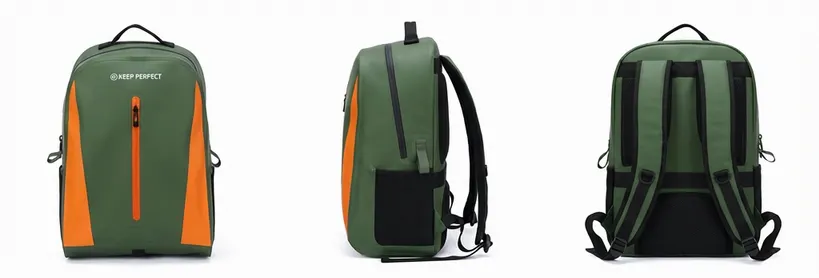
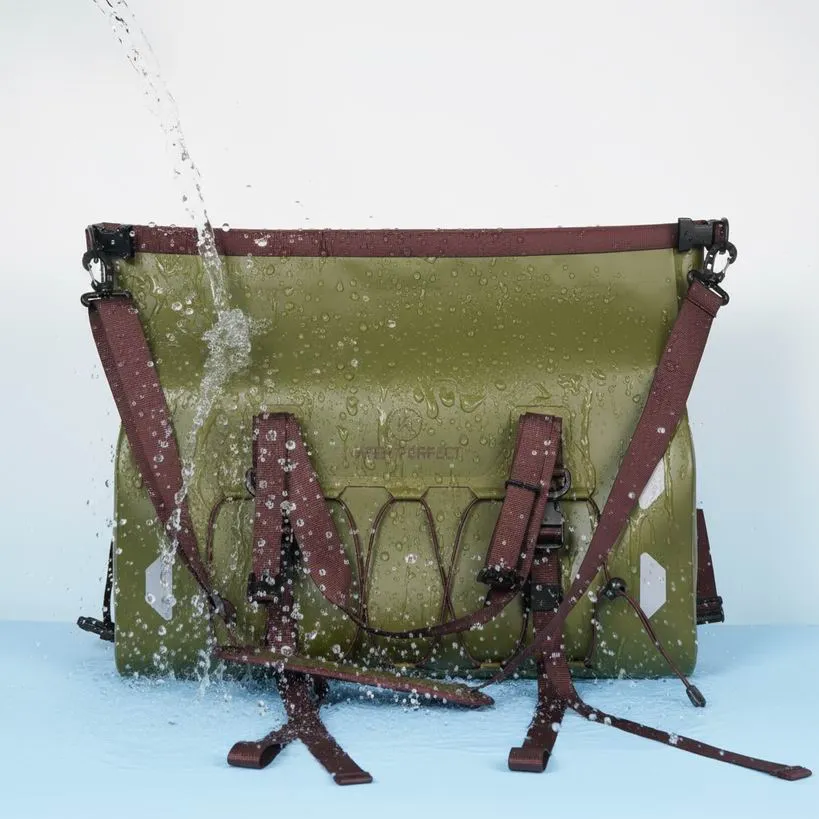
The five questions that decode any eco bag
Strip away the marketing, and every sustainable-bag claim answers five questions — ask them in order, and the honest products separate from the decorated ones in minutes. What is it made of? The answer should name materials layer by layer — recycled polyester fabric, TPU waterproof film, PFC-free finish — because products with real files name things, while products with real problems say "eco materials." What exactly is sustainable about it? Recycled content, cleaner chemistry, certified production, or long life — the four honest claims our eco bags guide details, each legitimate, none interchangeable. Who certified it? A named standard — GRS, bluesign, GOTS, OEKO-TEX — with a certifier that exists outside the brand’s marketing department; self-invented leaf logos certify nothing. What percentage, and can I check? Certified claims carry percentages and database-verifiable certificates — "85% GRS-certified recycled polyester" is a checkable fact; "made with recycled materials" is a mood. How long will it last? Welded seams, rated closures, repair policies and multi-year warranties are the durability tells that matter more than any single material — the arithmetic below explains why. Five questions, five minutes: the consumer’s complete audit kit, no degree required.
The label short-list — and the adjective ignore-list
Consumer education does not mean memorizing the certification universe — it means memorizing a short-list of five and an ignore-list of five. Worth memorizing: GRS — Global Recycled Standard — recycled content with chain-of-custody proof, verifiable online; bluesign — clean chemistry managed at the process level, the outdoor industry’s deepest chemistry assurance; GOTS — organic natural fiber with full processing audits, the heritage lane’s gold standard, per our GOTS guide; OEKO-TEX Standard 100 — tested-for-harmful-substances assurance on the finished product; and Fair Trade / SA8000-type social marks — the people side of the product. Worth ignoring: "eco," "green," "natural," "earth-friendly," and any leaf, globe or tree logo with no standard behind it — legally exposed adjectives that cost nothing to print and prove nothing about the product. The gray zone worth a second question: "recycled" without a certifier — sometimes honest small brands, sometimes not; "PFC-free" and "PVC-free" — meaningful chemistry claims that honest products back with declarations, per the chemistry chapters our PVC-free guide walks; and "ocean plastic" — a claim whose truth lives in certificates, per our ocean plastic guide. The memorization rule that keeps it simple: named standard plus percentage equals probably real; adjective plus leaf equals probably marketing.
Material basics: the ninety percent that matters
A shopper needs exactly four material facts to read ninety percent of the market. Fact one — the waterproof part is a film or coating, not the fabric: bags stay dry because of a TPU, PVC or coated barrier behind the pretty outer fabric — which is why "what is the waterproof layer made of" is the key question, and why TPU is the answer to look for: chlorine-free, plasticizer-free, long-lived, the eco heir explained in our TPU versus PVC guide. Fact two — recycled polyester performs like virgin: rPET fabric is the mainstream sustainable face material, essentially identical in use, with the certificate doing the differentiating. Fact three — the finish is not the waterproofing: DWR and nano finishes make water bead on the surface — nice, renewable, and separate from the actual waterproof barrier, the two-layer logic our nano coating guide draws. Fact four — construction beats materials at the failure points: welded or taped seams, roll-top or rated waterproof zippers, and reinforced stress points decide whether the bag survives — the anatomy our construction guide compares. Four facts, and the materials wall on any product page becomes readable: fabric, barrier, finish, construction — in that order, each with a right answer.
The five myths that cost shoppers money
Consumer education also means unlearning, and five myths account for most bad purchases. Myth one — "waterproof is waterproof": ratings exist on a ladder from splash-proof to submersible, and a shower-rated tote fails the day it meets a kayak; the IPX and hydrostatic numbers are the ladder’s rungs, and the honest products print them. Myth two — "recycled means weaker": certified rPET and recycled TPU perform within normal grade variation of virgin materials — the recycling plant, not the performance, is what changed; the data sheets say so, per the ledgers our recycled TPU guide publishes. Myth three — "the greener bag is the one with more labels": label-count is not virtue — one verifiable certification with a percentage beats five decorative badges; the audit habit is checking, not counting. Myth four — "eco bags are for light duty": the certified materials are the same polymers the expedition market already runs — TPU barriers, welded seams, rated closures — and the category’s toughest products increasingly carry the certifications too. Myth five — "care does not matter if the bag is good": even decade-grade construction dies early stored wet and never rinsed — the ownership habits are half the lifespan, and the brands printing care instructions are admitting the truth the others hope you skip. Unlearning the five myths is worth more than learning any label list — because myths shop on autopilot, and educated buyers shop on evidence.
The durability arithmetic: the greenest choice of all
Every sustainable-bag conversation should end at the same arithmetic, because it outranks every material nuance. Most of a bag’s environmental cost is spent making it — polymer production, weaving, coating, sewing, freight — so the impact per year divides by the years of service: one bag used ten years costs one-tenth of its footprint annually; three cheaper bags across the same decade cost three full footprints for identical service. The educated buyer therefore shops durability first: welded or taped seams stated on the page — stitched-only seams are the failure point at waterproof duty; closure quality — a roll-top has no teeth to break, and quality waterproof zippers carry cycle ratings, per our zipper durability guide; repair support — patch kits, spare buckles, published repair policies — brands that plan for repair are telling you how they built the bag; and warranty length — a five-year warranty is a durability statement with money behind it. Price reads differently through this lens: the certified, welded, repairable bag at twice the price of the disposable one costs one-fifth as much per year of service while generating one-third of the waste — the cheapest bag on the shelf is usually the most expensive one per year, and the least green thing a shopper can do is buy the same bag three times.
What to expect at each price tier
The educated buyer also calibrates expectations by price, because sustainability claims mean different things at different tiers. Budget tier — under thirty dollars: honest expectations are basic water resistance and a season or two of service; at this price, prioritize the construction tells — sealed seams, a decent closure — over eco claims, and treat any certification language as a verification exercise, because genuine certification chains cost more than this tier’s margins usually fund. Mid tier — thirty to eighty dollars: the value heartland, where welded TPU construction, recycled-content fabrics and PFC-free finishes are all realistic, warranties reach one to three years, and the five questions find products that answer all of them — most educated buyers should shop here. Premium tier — eighty dollars and up: certified materials as standard, decade-grade construction, repair services and five-plus-year warranties, with the heritage lanes — GOTS waxed canvas — and the technical lanes — expedition welded builds — both living here; the premium is justified when the durability arithmetic and the certificate file both check out. The tier-reading rule: sustainability claims should get more specific as price rises — a premium product with vague adjectives is overpriced marketing, while a budget product with a verifiable certificate is a genuine find worth telling friends about.
Care completes the purchase: the ownership habits
The educated purchase finishes at home, where four habits multiply the investment. Rinse after salt and sand: salt crystals abrade coatings and corrode zippers; sand grinds into weaves — a fresh-water rinse after beach and boat days adds seasons. Wash gently, re-proof yearly: mild detergent, no fabric softener, air dry, and a PFC-free re-proofing spray when water stops beading — the finish is renewable, and renewing it is five dollars instead of a new bag. Store dry: mildew degrades coatings from inside — a bone-dry bag, loosely stored, keeps its barrier supple, the moisture physics our anti-condensation guide explains. Repair before replacing: patch kits seal pinholes permanently, buckles swap with basic tools, seam tape can be professionally renewed — a repaired bag is not a compromised bag; it is the system working as designed. And the final habit — pass it on: a durable bag outliving one owner’s needs serves another’s, and the secondhand market for quality outdoor gear is the circular economy with no certification required. Care is not homework appended to a purchase; it is the second half of the sustainability the shopper paid for.
The phone checklist: one page for the store
The whole guide fits in a note on the phone — six lines to read at the shelf. One: materials named — fabric, waterproof barrier, finish — with TPU as the barrier to look for. Two: the sustainable claim specified — recycled content, cleaner chemistry, certified production, or long life — one of four honest claims, stated plainly. Three: a named standard — GRS, bluesign, GOTS, OEKO-TEX — never a self-invented leaf. Four: a percentage and a verifiable certificate — checkable online in the parking lot. Five: durability tells — welded seams, rated closure, repair policy, multi-year warranty. Six: the per-year price — price divided by realistic years of service, the only honest comparison. Six lines turn any shopper into the market force the industry converts for — and the production discipline behind certified, decade-grade builds, 200,000 pieces monthly, samples in 6–10 working days, bulk 35–50 days, FOB Xiamen, SGS-verified, is documented end to end for readers who want to see what the honest end of the industry looks like from the factory floor.
Frequently Asked Questions
Q1. How do I choose a sustainable waterproof bag?
Ask five questions: what is it made of — materials named layer by layer; what exactly is sustainable about it — one of four honest claims; who certified it — a named standard; what percentage and can I check — database-verifiable; how long will it last — welded seams, rated closure, repair policy, warranty.
Q2. What labels should I trust on eco bags?
Five worth memorizing: GRS for recycled content, bluesign for clean process chemistry, GOTS for organic fiber, OEKO-TEX for harmful-substance testing, and Fair Trade or SA8000-type social marks — all verifiable online. Ignore adjectives: "eco," "green," "natural" and self-invented leaf logos prove nothing.
Q3. What is the most important material in a waterproof bag?
The waterproof barrier — the film or coating behind the outer fabric. Look for TPU: chlorine-free, plasticizer-free, longer-lived than PVC, and available in recycled and bio-based grades. The pretty outer fabric is the face; the barrier is the waterproofing.
Q4. Is recycled polyester as good as new?
Yes — certified rPET performs within a few percent of virgin polyester on strength and ages identically in sunlight and use. The certificate, not the performance, is what differentiates it: GRS-certified means the recycled claim is proven, not just printed.
Q5. What does "PFC-free" mean and why does it matter?
The water-repellent finish contains no per- and polyfluorinated "forever chemicals" — persistent pollutants being regulated out worldwide. Modern PFC-free finishes match the old chemistry’s rain beading, and the claim matters because the finish touches everything the bag touches.
Q6. Are expensive eco bags worth the money?
Run the per-year arithmetic: a bag’s footprint and cost divide by years of service. A certified, welded, repairable bag at twice the price often costs one-fifth as much per year as a disposable alternative — the cheapest bag on the shelf is usually the most expensive per year.
Q7. How can I tell if a bag is greenwashed?
Adjectives without evidence: "eco," "green," "earth-friendly" with no named standard, no percentage, no verifiable certificate. Honest products name materials and standards and invite checking; greenwashed ones invent leaf logos and change the subject.
Q8. What is the difference between water-resistant and waterproof?
Water-resistant sheds rain and splashes — surface repellency; waterproof blocks water under pressure — rated barriers and sealed seams, measured by hydrostatic head and IPX ratings. A shower-proof tote and a submersible dry bag are different tools; match the rating to the duty.
Q9. How long should a good waterproof bag last?
A decade of regular use is the honest benchmark for welded TPU construction with a roll-top closure and basic care. Zippers and buckles may need one service round along the way — repairable by design, not disposable by default.
Q10. What does GRS certified mean on a bag?
Global Recycled Standard: third-party proof of recycled content through the whole supply chain — the recycler, the fabric mill, the bag factory — with certificates verifiable on the public database by company name. The logo requires at least 50% certified recycled content.
Q11. Should I buy ocean plastic bags?
When the claim is certified, they are a strong choice: bottles collected in coastal zones before reaching the sea, with verified chain of custody and collector-community benefits. Ask which certification backs the claim — vague "ocean plastic" adjectives without a named standard deserve the five questions.
Q12. How do I care for a waterproof bag to make it last?
Four habits: rinse after salt and sand, wash gently with mild detergent and air dry, re-proof with PFC-free spray when beading fades, store bone-dry and loosely — then repair instead of replacing: patches, buckles and seam tape are all serviceable.
Q13. What is the greenest thing about any bag?
How long it lasts. Most of a bag’s environmental cost is spent at manufacture, so service life divides the footprint: ten years of use means one-tenth the annual impact. Durability outranks every material nuance in the sustainability ledger.
Q14. Can I verify a certification myself?
Yes — every serious standard runs a public database: GRS, bluesign, GOTS and OEKO-TEX all let you search the company name and see the certificate status. Five minutes on a phone in the parking lot is the consumer’s audit.
Q15. Are vegan leather bags sustainable?
Not automatically: "vegan leather" usually means PVC or PU synthetics — animal-free but plastic-based. Read the layer: PVC versions carry the chemistry problems of chlorine and plasticizers; PU and recycled-content versions are cleaner. The five questions apply here hardest.
Q16. What should I do with an old waterproof bag?
Repair it first — patches and parts extend life cheaply; pass it on second — quality gear serves second owners well; recycle it last — textile-recycling streams take PVC-free fabric where local systems allow. Landfill is the last resort, not the default.
People Also Ask
How do I know if a bag is really sustainable?
Check for named materials, a specified claim (recycled content, clean chemistry, certified production or long life), a named standard like GRS or bluesign, a verifiable percentage, and durability tells — welded seams, repair policy, multi-year warranty. Five minutes of reading beats any adjective.
What is the most eco-friendly bag to buy?
A certified recycled-fabric bag with a TPU barrier and PFC-free finish, welded seams, a repair policy and a long warranty — then keep it for a decade. The certified materials matter; the service life matters more.
Are waterproof bags recyclable?
Partially: PVC-free constructions with separable materials enter textile-recycling streams where local systems allow. The better answers come first — buy durable, repair along the way, pass on when done — and recycling closes the loop where infrastructure exists.
Is TPU environmentally friendly?
Friendlier than the PVC it replaces: chlorine-free, no migrating plasticizers, mechanically recyclable, longer-lived — and available in recycled and bio-based grades. It remains a petrochemical polymer at base, so the honest claim is "cleaner and longer-lasting," evidenced by declarations.
What should I look for when buying a dry bag?
A TPU or laminated barrier with a stated rating, welded seams, a roll-top closure or rated waterproof zipper, reinforced stress points, certified materials where the eco claim matters, and a warranty measured in years — construction first, adjectives last.
Do eco bags cost more?
Certified materials add modest premiums — low single-digit dollars at retail — and decade-grade construction costs more up front. Per year of service, the math reverses: one durable certified bag beats three disposable ones on both wallet and footprint.