The organic lane of eco bags runs on a different fiber and a different certificate: GOTS certified organic waterproof fabrics — water-resistant constructions built on Global Organic Textile Standard certified cotton, finished with waxes or modern coatings — serve the heritage, lifestyle and premium-conscious segments where synthetic technical fabrics do not fit the brand story, and they carry the most comprehensive textile certification in existence: GOTS tracks the fiber from certified organic farming through every processing stage, with environmental and social criteria enforced at each step. But honesty about physics belongs in the first paragraph: organic cotton is not waterproof, and no finish makes it submersion-grade — the GOTS lane serves water-resistance, weather protection and shower-grade duty, not the IPX-rated world of welded TPU. This guide maps the lane from the buyer’s chair: what GOTS actually certifies and why it leads the label hierarchy, how organic cotton becomes water-resistant through wax and coating routes, the honest performance envelope and its limits, the certification file and claim language that survive scrutiny, the market segments where the lane wins, and the specification lines that put GOTS fabrics on a purchase order with their proof attached.
The manufacturer reference is QUANZHOU JUNYUAN BAGS: custom waterproof bag production since 2014, 4,950 m² SGS-verified facility, 7 lines, 149 machines, 137 staff, 200,000 pieces monthly. MOQ 500 per design, samples 6–10 working days, bulk 35–50 days, AQL 2.5 inspection, 30/70 T/T, FOB Xiamen, shipping to 100+ countries.
Organic fiber claims are audited on the same chain-of-custody logic as recycled content, where the Textile Exchange standards set the template for traceability.


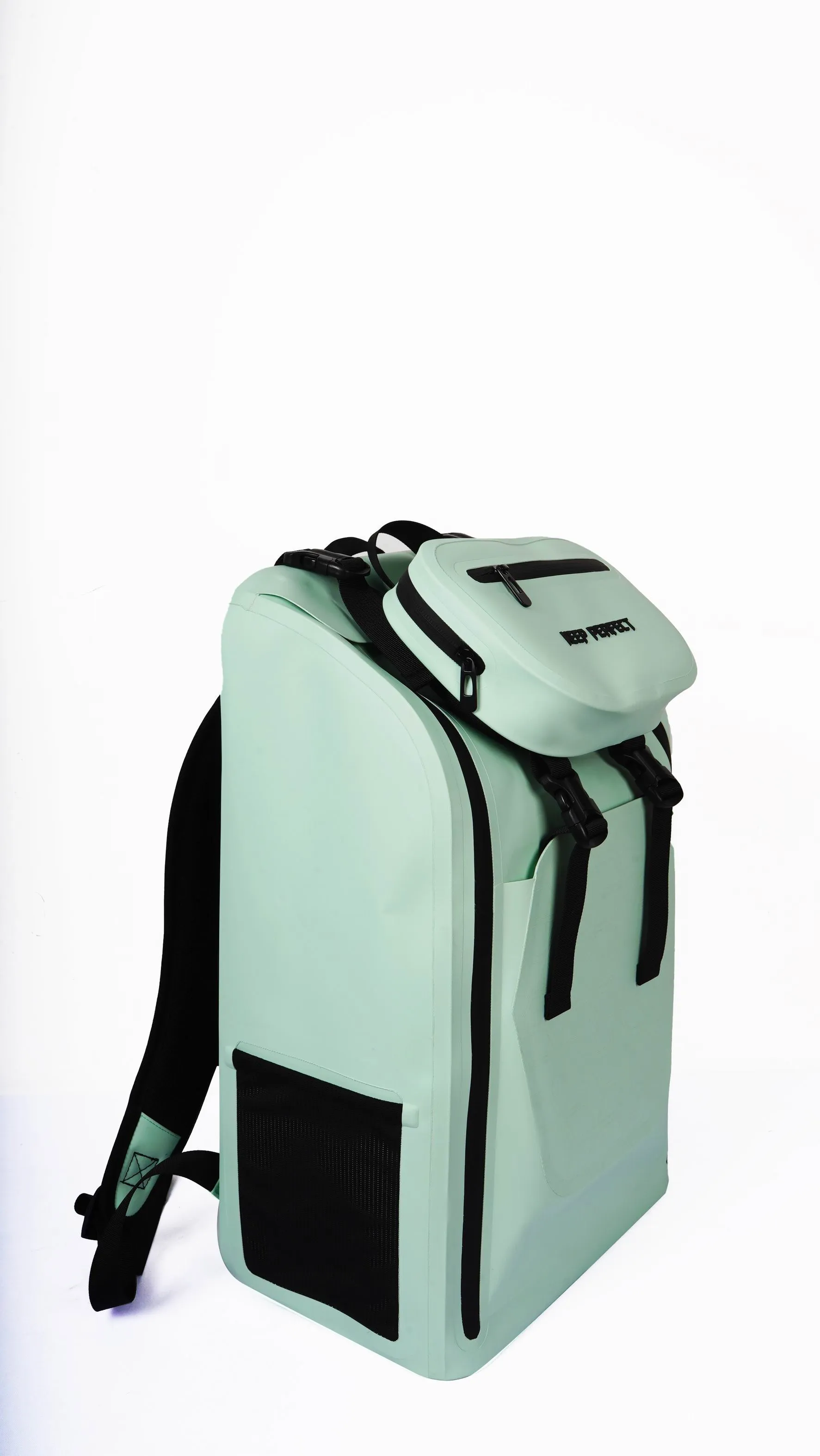
What GOTS certifies: the most comprehensive textile standard
GOTS — the Global Organic Textile Standard — earns its position at the top of the textile label hierarchy by covering what other certifications leave out, and buyers should know its three-layer architecture. The fiber layer: the cotton must come from certified organic agriculture — no synthetic pesticides or fertilizers, no GMO seed, soil-health practices verified at farm level — with GOTS recognizing the farm-level certifications like USDA Organic and EU Organic as inputs. The processing layer — where GOTS separates itself from fiber-only claims: every stage from ginning through spinning, weaving, dyeing and finishing must meet GOTS environmental criteria — approved chemical inputs on a positive list, wastewater treatment requirements, energy and chemical management — and social criteria based on ILO norms: no child or forced labor, safe conditions, freedom of association, audited at every facility in the chain. The labeling grades: "organic" requires 95% certified organic fiber; "made with organic" requires 70% — the two grades with their exact wording regulated, not optional. The chain-of-custody mechanics mirror the recycled-content world: scope certificates prove each facility can handle GOTS goods, transaction certificates prove specific shipments did — the same two-document system our GRS guide details for recycled content, here pointed at organic fiber. The verification: every certificate is checkable on the GOTS public database by company name — the audit handle that separates the certified lane from "organic cotton" used as an adjective, per the label hierarchy our eco bags guide draws.
From organic cotton to water resistance: the finish routes
Organic cotton fabric is absorbent by nature — the water resistance arrives through finishing, and three routes serve the GOTS lane with different characters. Traditional wax finishing: paraffin or natural-wax blends impregnated into the fabric — the heritage route behind a century of field jackets and expedition canvas, delivering genuine shower and weather resistance, a distinctive handle that ages into patina, and renewable water repellency: the finish can be re-waxed at home or by service, giving waxed canvas an indefinitely renewable surface — with weight, a characteristic scent, and care constraints — no machine washing, no dry cleaning heat — as the honest costs. Modern coating routes: PU and acrylic coatings applied to organic canvas deliver higher and more consistent water resistance with lighter weight and easier care — at the cost of the heritage hand and the re-waxable renewal story; GOTS-compliant coating chemistry exists on the approved-inputs list, keeping the certified chain intact. DWR-plus-weave routes: tight high-density weaves with GOTS-compliant water-repellent finishes — the lightest option, shower-grade only, preserving the fabric’s natural hand most fully. The hybrid architecture that serves serious products: an organic cotton face fabric for story and hand, backed by a technical membrane or liner for the actual waterproof duty — natural fiber outside, engineering inside — the layer logic our lamination guide frames, here with a GOTS face. The finish choice is a brand decision before it is a technical one: wax for heritage authenticity and renewable character, coatings for performance and care convenience, hybrids when the bag must genuinely perform in weather.
| Finish route | Water resistance | Hand & character | Care | Renewability | GOTS-compatible |
|---|---|---|---|---|---|
| Traditional wax | Shower + weather grade | Heritage patina, distinctive scent | No machine wash; re-wax service | Indefinitely re-waxable | Yes — approved waxes |
| Modern PU/acrylic coating | Higher, consistent | Technical, lighter | Standard gentle care | Coating lifetime | Yes — approved inputs list |
| DWR + dense weave | Shower grade | Most natural hand | Gentle care | Re-proofable | Yes — compliant DWRs |
| Hybrid (organic face + membrane) | Full waterproof duty | Natural outside, technical inside | Per membrane construction | Membrane lifetime | Face yes; membrane separate |
The honest performance envelope: what the lane can and cannot do
The GOTS lane’s credibility depends on stating its envelope honestly, because the physics does not negotiate. What the lane delivers: genuine weather and shower resistance — waxed canvas sheds rain through a commute, a market day, a weekend of changing weather; durability measured in decades — heavyweight organic canvas is among the most abrasion-tolerant bag fabrics made, aging into character rather than failure, the wear behavior our abrasion standards guide quantifies; repairability — canvas patches, re-waxes, and re-stitches with basic craft, supporting the decade-grade ownership arithmetic the eco guide prices; and the certified story — farm-to-factory documentation no synthetic lane can match for depth. What the lane cannot deliver: submersion-grade waterproofing — seams in canvas constructions are stitched, not welded, and no wax or coating makes a stitched seam submersible; the IPX-rated duty belongs to the welded TPU constructions our construction guide compares; light weight — canvas is heavy by technical-fabric standards, the trade for its durability and hand; and consistency of appearance — waxed surfaces mark, crease-whiten and vary, which the heritage market reads as authenticity and the uniform-appearance market reads as defect. The envelope’s summary: GOTS organic fabrics serve weather-resistant, heritage-positioned, decade-grade bags — commuter totes, market bags, lifestyle packs, premium conscious collections — and the honest specification never asks them to be something they are not.
The supply chain in five links: from farm to bag
The GOTS chain runs through five custody links, and a buyer’s verification reads them in order. Link one, the farm: certified organic cultivation audited against the farm-level standards GOTS recognizes — the certificate lives with the grower group, and its scope covers the cotton entering the chain. Link two, ginning and spinning: fiber preparation and yarn production under GOTS processing criteria — approved chemicals, wastewater management, social compliance — with the spinner’s scope certificate as the audit handle. Link three, weaving or knitting: the fabric mill, where the same processing criteria continue and the fabric’s GOTS identity formalizes into roll-level documentation. Link four, finishing: wax impregnation, coating or DWR application — the stage where the approved-inputs list decides whether the water-resistance finish keeps the chain certified or breaks it, which is why finish chemistry is declared at sourcing rather than discovered at audit. Link five, the bag factory: cutting and sewing under GOTS certification where the finished product bears the logo — the link brands most often forget, since a certified fabric sewn in an uncertified factory produces a bag that can claim certified fabric but not the GOTS product label. Each link hands scope-certificate status plus transaction certificates to the next, so the finished bag’s claim traces to the farm — the deepest provenance available in textiles, and the reason the GOTS lane commands its premium.
The certification file and the claim language
A GOTS claim is a chain of documents, and the file discipline matches the rigor the certification itself applies. The fabric-level documents: the fabric supplier’s GOTS scope certificate — verified on the GOTS public database — and transaction certificates covering the specific fabric shipments, contracted as preconditions of delivery, the same TC discipline the recycled-content world runs. The factory-level requirement — the step brands miss: for the finished bag to carry the GOTS label, the bag factory itself must be GOTS-certified as a processing stage — cutting and sewing are processing steps in the standard’s eyes; without a certified factory, the fabric was GOTS but the bag cannot wear the logo, leaving "made with GOTS-certified organic fabric" as the honest claim — a real claim, but a different one. The content arithmetic: the labeling grades apply to the fiber content — 95% for "organic," 70% for "made with organic" — with zippers, threads and trims counted in the honest denominator. The claim language that survives the enforcement wave our certification map tracks: "shell made with GOTS-certified organic cotton, wax-finished" with the certificate number available — specific, verifiable, scoped; "organic waterproof bag" naked is an invitation to a complaint, because organic covers the fiber and process, not the waterproof performance. And the adjacent declarations: the finish chemistry — wax composition or coating type — declared alongside, because the GOTS-approved-inputs status of the finish is part of what the certified chain guarantees.
Where the lane wins: segments and the decision rules
The GOTS lane wins where its specific bundle — certified organic story, heritage hand, decade durability, honest weather resistance — matches the customer, and four segments qualify. Conscious lifestyle and fashion retail: the segment where the certified-organic story carries premium pricing and the waxed patina is a feature — tote programs, market bags, everyday carry collections where rain resistance suffices. Heritage and outdoor-heritage brands: the tradition segment where waxed canvas is the authentic material and GOTS adds the modern certification layer to a century-old proposition — field bags, heritage packs, expedition-styled lifestyle goods. Premium corporate and gift programs: where the certified story and the aging-in-character durability make the bag a long-lived brand ambassador. Kids and family eco collections: where parents read certifications carefully and the organic fiber story resonates — with water resistance matched to school-run duty rather than wilderness duty. The decision rules: choose the GOTS lane when the brand story leads with natural materials and certified depth, when shower-and-weather duty matches the use, and when durability-in-character supports premium pricing; choose technical waterproof constructions — welded TPU, laminated shells — when the duty is submersion, sustained storms or lightweight performance; and consider the hybrid architecture when the brand needs both: the organic face for story, the technical barrier for storms. The lane’s economics: GOTS-certified waxed canvas runs premium fabric pricing, the certification chain adds documentation cost, and the products command premium retail — a coherent premium equation, per the value logic our sustainable manufacturing guide frames.
The GOTS specification lines: six commitments
The guide compresses to six specification lines. One: the fabric is certified and verified — supplier scope certificate checked on the GOTS database, transaction certificates contracted per shipment. Two: the factory’s certification status is decided at program start — GOTS-certified factory for logo-bearing products, or the "made with GOTS-certified fabric" claim scoped honestly without it. Three: the finish route is chosen by brand and duty — wax for heritage renewal, coatings for care convenience, hybrids for genuine weather performance — with the finish chemistry declared against the approved-inputs list. Four: the performance envelope is stated — shower and weather resistance promised, submersion never implied, care instructions matched to the finish. Five: the content grades are respected — 95% for "organic," 70% for "made with organic," with trims counted in the denominator. Six: the claim language is scoped — certified percentages, certificate numbers available, finish declared, no naked organic-or-waterproof absolutes. Six lines put GOTS fabrics on a purchase order with their proof attached — and the chain that cuts and sews certified canvas at 200,000 pieces monthly, samples in 6–10 working days, bulk 35–50 days, FOB Xiamen, SGS-verified, is documented end to end for buyers who want the factory side of the organic program before the first bolt is cut.
Frequently Asked Questions
Q1. What is GOTS certification?
The Global Organic Textile Standard: the most comprehensive textile certification, covering certified organic fiber from the farm plus environmental and social criteria at every processing stage — spinning, weaving, dyeing, finishing — with scope and transaction certificates policing the chain, verifiable on the GOTS public database.
Q2. Are GOTS certified fabrics waterproof?
The certification covers the fiber and its processing, not water resistance — organic cotton is absorbent by nature. Water resistance arrives through finishing: traditional wax, modern coatings, or hybrid constructions with technical membranes, delivering shower-to-weather-grade protection, never submersion.
Q3. What is waxed canvas?
Cotton canvas impregnated with paraffin or natural-wax blends — a century-old water-resistance route delivering genuine weather protection, a patina that ages into character, and indefinite renewability through re-waxing — at the cost of weight, care constraints and a distinctive scent.
Q4. What do the GOTS label grades mean?
"Organic" requires 95% certified organic fiber; "made with organic" requires 70% — with zippers, threads and trims counted in the honest denominator. The grades’ exact wording is regulated, and the finished bag can carry the logo only if the sewing factory is itself GOTS-certified.
Q5. Can a bag be waterproof and organic at the same time?
In the honest architecture, yes: an organic cotton face for story and hand backed by a technical membrane or liner for waterproof duty — natural outside, engineering inside. Pure cotton constructions, however finished, top out at weather resistance.
Q6. How do I verify a GOTS claim?
Two documents on the public database: the supplier’s scope certificate proving they can handle GOTS goods, and the transaction certificate proving the specific shipment did — plus the sewing factory’s own certification if the finished bag bears the logo.
Q7. Is waxed canvas durable?
Among the most durable bag materials made: heavyweight canvas tolerates decades of abrasion, patches and re-stitches with basic craft, and re-waxes into a renewed surface — the decade-grade ownership proposition that makes heritage bags generational purchases.
Q8. What are the care requirements for waxed canvas?
No machine washing, no dry-cleaning heat, no detergents on the wax — brush off dirt, spot-clean with cold water, reproof with wax when water stops beading. The care constraint is the honest cost of the renewable heritage finish.
Q9. Does GOTS cover the waterproof coating?
GOTS maintains an approved-inputs list for processing chemistry — compliant coatings, waxes and DWRs keep the certified chain intact. The finish’s GOTS-compliant status is part of what the certification guarantees, and it should be declared in the product file.
Q10. Who buys GOTS organic bags?
Four segments: conscious lifestyle retail where the certified story carries premium pricing, heritage brands where waxed canvas is the authentic material, premium corporate and gift programs, and family eco collections where parents read certifications carefully.
Q11. How does GOTS compare to GRS?
Different fibers, same rigor: GOTS certifies organic natural fiber from farm through processing; GRS certifies recycled content through the chain. Both run scope-plus-transaction-certificate custody, both are database-verifiable — the two deepest content certifications in textiles.
Q12. Why is waxed canvas heavy?
The durability trade: heavyweight cotton duck — typically 10 to 22 ounces — delivers the abrasion tolerance and structure the heritage lane prizes, and the wax adds further weight. Against technical fabrics at a fraction of the weight, canvas buys character and decades with grams.
Q13. Can waxed canvas be re-waterproofed?
Yes — the renewable surface is the route’s signature feature: re-waxing at home or through service restores water repellency indefinitely, making the finish a maintainable system rather than a wearing-out one — unique among water-resistance routes.
Q14. What is the hybrid organic-technical construction?
An organic cotton face fabric laminated or lined with a technical waterproof barrier — the GOTS story on the outside, engineered waterproofing inside. It serves brands that need the certified natural narrative and genuine storm performance in the same product.
Q15. Does organic cotton cost more than conventional?
Yes — certified organic farming yields less per hectare and the certified processing chain adds cost at every stage; GOTS-certified waxed canvas runs premium fabric pricing. The products command premium retail where the certified story and durability justify it.
Q16. What goes on a GOTS fabric specification?
Six lines: certified fabric with database-verified scope and transaction certificates, factory certification status decided at program start, finish route chosen by brand and duty with chemistry declared, performance envelope stated honestly, content grades respected, and claim language scoped to certificate-backed facts.
People Also Ask
What does GOTS certified mean?
Global Organic Textile Standard certification: organic fiber from certified farms plus environmental and social criteria audited at every processing stage, with chain-of-custody certificates verifiable on the public database — the deepest content certification in textiles.
Is waxed canvas waterproof?
Weather- and shower-resistant, not submersible: wax sheds rain through daily and weekend duty, and the finish renews by re-waxing — but stitched seams and breathable fabric mean the category tops out below welded waterproof construction.
What are organic cotton bags good for?
Conscious lifestyle, heritage and premium segments: totes, market bags, lifestyle packs and gift programs where the certified organic story, decade-grade durability and aging character carry premium pricing — with weather resistance matched to daily duty.
How long does waxed canvas last?
Decades with basic care: the fabric tolerates heavy abrasion, repairs with patches and stitching, and the wax finish renews indefinitely — the generational-durability proposition that defines the heritage lane.
Is GOTS better than other organic labels?
The most comprehensive: fiber-only labels stop at the farm; GOTS continues through every processing stage with environmental and social audits, two labeling grades, and database-verifiable custody certificates — the reference standard others are measured against.
Can you wash GOTS organic waxed bags?
Not in a machine — water, detergent and heat strip the wax. Brush dirt off, spot-clean cold, air dry, and re-wax when beading fades. Coated organic fabrics take standard gentle care; the care rule follows the finish, not the fiber.