A rowing programme does not lose equipment because a bag leaked. It loses equipment because a two-metre oar does not fit the bag anyone bought, because an unmarked black dry bag looks like every other unmarked black dry bag on a shared pontoon, because a coach’s timing tablet went into the same wet compartment as a soaked unisuit, and because nobody could count forty items in the ninety seconds before launch. Crew sport punishes missing items far harder than wet ones: a wet unisuit is uncomfortable, and a missing cox box or bow number costs a race. The design priority is therefore identification, geometry and countability before waterproof ratings.
This guide covers why long rigid blades break normal bag geometry, what pontoon and slipway surfaces do to shells, how an eight can generate dozens of separate items, why electronics deserve a dedicated protected container, how wet kit should be handled in bulk after racing, what numbering and colour systems actually survive a season, the hardware that tolerates freshwater and sun, which tests predict regatta wear, and how a club or brand should structure a crew programme commercially. The production baseline at QUANZHOU JUNYUAN BAGS — custom waterproof bag production since 2014, 4,950 m² SGS-verified facility — is MOQ 500 pieces per style, sampling in 6–10 working days and bulk in 35–50 days, FOB Xiamen.
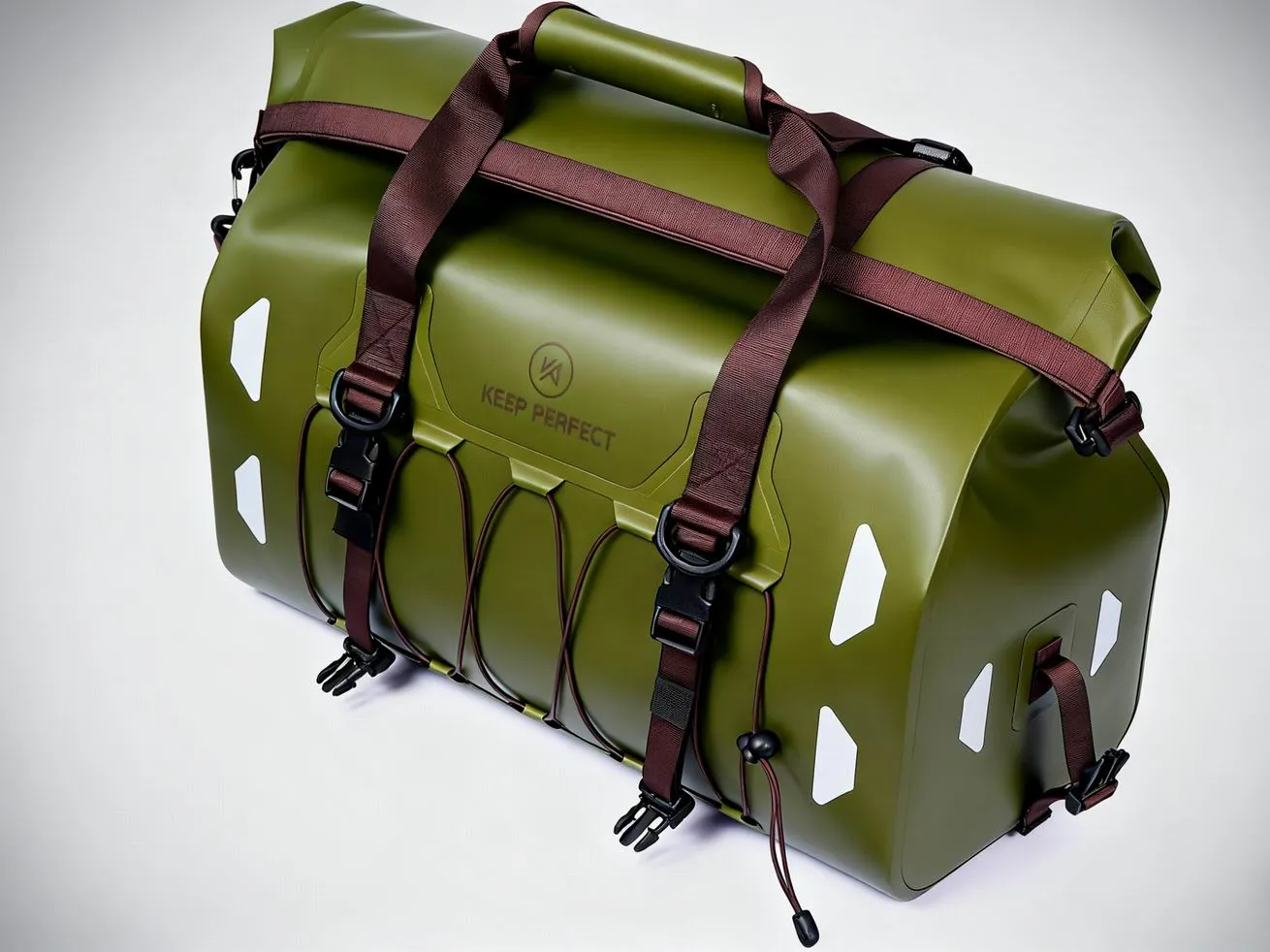
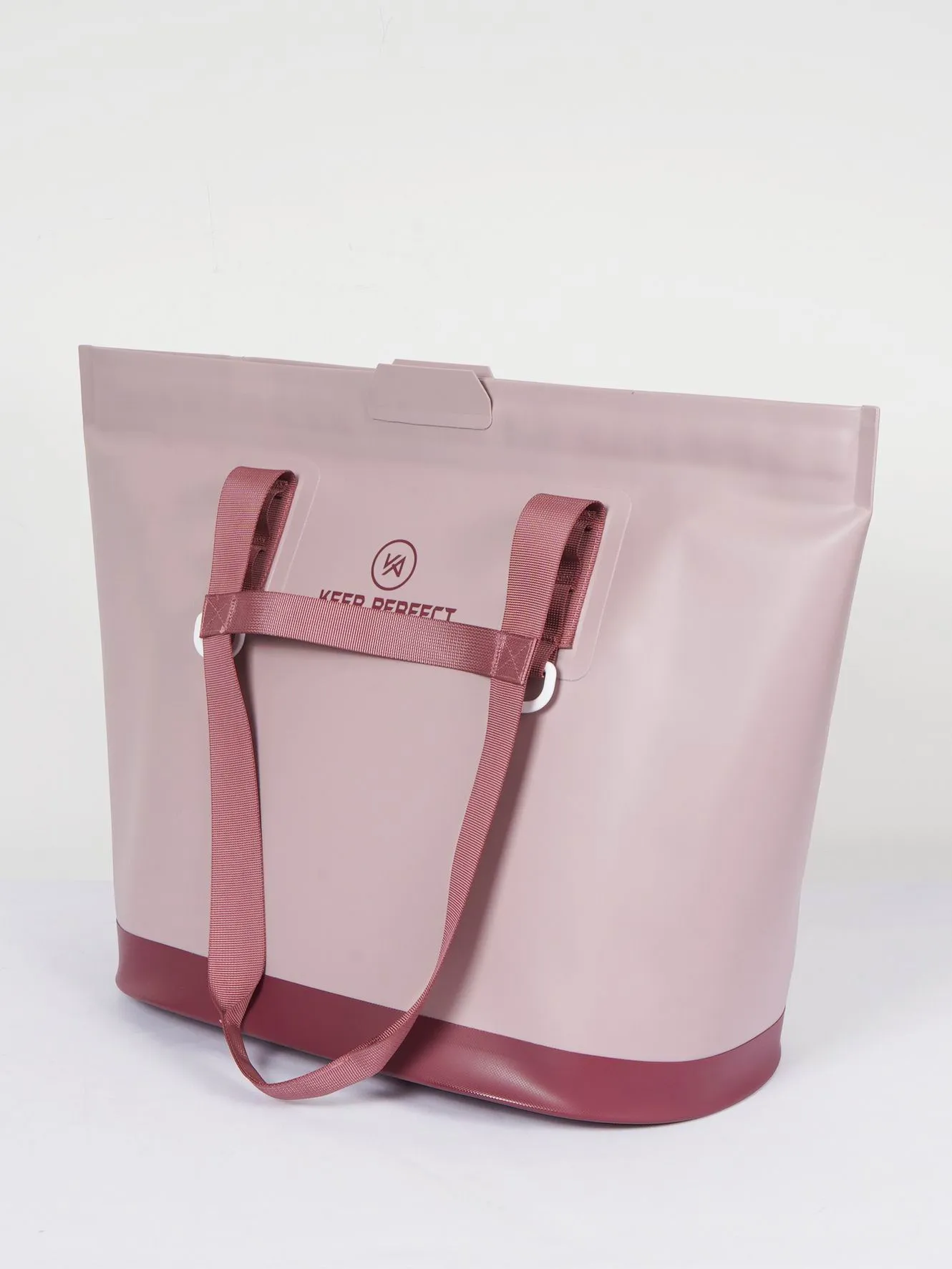
Two-metre oars break the geometry of ordinary bags
Every decision in rowing crew bags starts from shape rather than waterproofing. A sweep oar is roughly 3.7 to 3.8 metres overall, and even a sculling blade exceeds 2.8 metres, with a spoon at one end and a small handle at the other. That object is long, thin, delicate at the tip and heavy at the collar. Good regatta team kit bags for blades are sleeves with a protected spoon pocket and a reinforced handle end, not general dry bags pressed into service with the tip poking through a corner.
Three dimensional rules follow. The sleeve must exceed the blade length by at least 150 mm so the spoon is never loaded in compression at the end cap. The spoon pocket needs a rigid or semi-rigid liner plus a soft face, because a chip at the tip changes how the blade enters and leaves the water and is usually repairable only by a specialist. And the opening must run along the long axis, since threading a 3.7 metre oar into a top-loading sack is a two-person job on a wet pontoon.
Transport adds a second geometry problem: racking. Blade racks, trailer racks and clubhouse walls impose spacing, so the sleeve’s outer diameter matters more than its volume. A sleeve that is 20 mm too fat will not sit in the existing rack and will be left on the floor. Measure the rack pitch before specifying, and quote external diameter alongside length.
Dragon boat programmes have a related but distinct problem: paddles are shorter and far more numerous, often twenty per boat plus spares. A paddle sleeve that holds six to ten with individual dividers beats twenty single sleeves on every practical measure, because crews can count the filled slots at a glance.
Pontoons, slipways and wet aluminium: what the base must survive
Rowing happens at the interface between water and a hard surface. Aluminium pontoons, concrete slipways, wooden landing stages and steel trailer decks are all wet, all abrasive and all shared with boats that are being carried overhead. A bag placed on any of them will be stood on, dragged and splashed within an hour, and its base takes the damage.
| Surface at a regatta venue | Damage mechanism | Design response | What to specify |
|---|---|---|---|
| Wet aluminium pontoon | Low friction plus sharp edges; bags slide into the water | High-friction base panel and low, wide geometry | Base friction and no hard protrusions that catch on grating |
| Concrete slipway with algae | Abrasion with a slick film; high sliding risk | Replaceable base patch and a grab loop at each end | Abrasion cycles on wet concrete and a stated base denier |
| Steel trailer deck | Point contact on ribs and bolt heads; puncture risk | Flat base with an internal stiffener sheet | Puncture resistance figure and a stiffener specification |
| Gravel or grass bank | Grit ingestion into closures and hook-and-loop | Covered closures and minimal hook-and-loop | Closure contamination test with grit, not clean water |
| Clubhouse floor after racing | Standing water and chemical cleaner | Drain eyelet and coated face that tolerates detergent | Colourfastness after diluted cleaner and wet stacking |
Buoyancy is worth specifying deliberately. A sealed roll-top bag with trapped air floats, which turns a dropped bag on a pontoon from a loss into a retrieval. It is not a substitute for tethering and it should never be marketed as a personal flotation device, but as a secondary benefit it is real and it should be stated with its condition: rolled, closed, and not overloaded with dense metal.
Handles should be rated for two-handed carrying with wet gloves and positioned at both ends of a long sleeve. A single central handle on a 3.8 metre blade bag guarantees that someone will drag the tip. Grab loops at quarter points also let a crew of four carry one rack safely, which is how blades actually move.
An eight generates dozens of items, and missing beats wet
Count the kit for a single eight before assuming capacity. Eight seats produce eight unisuits, eight sets of shoes or foot stretchers, eight water bottles, spare blades or sculling riggers, a cox box with a microphone harness, bow numbers, a tool roll, rigging spanners, a first-aid pouch, seat pads and the launch paperwork. Add shared spares and a coach bag and a squad can easily pass forty separate tracked items for one boat.
| Kit class | Typical count for one eight | Failure if missing | Container approach |
|---|---|---|---|
| Cox box and microphone harness | 1, ideally 2 with a spare | Race cannot start or crew cannot hear calls | Padded hard-shell case with a dedicated cable pocket |
| Bow numbers and race paperwork | 1 set | Disqualification or a delayed start | Flat document wallet inside the coach bag |
| Rigging tools and spanners | 1 roll, plus spares | Cannot adjust between rounds | Roll-up pouch in a fixed exterior pocket |
| Uni suits and thermals | 8 to 10 | Discomfort, not failure | Numbered wet bags, one per athlete |
| Foot stretcher and seat spares | 2 to 4 small items | Boat unusable after a breakage | Small parts pouch with dividers |
| Water bottles and nutrition | 8 to 12 | Performance loss in heat | Open crate or mesh bag, not sealed |
| First aid and sunscreen | 1 kit | Compliance and duty-of-care failure | High-visibility pouch with a fixed location |
The counting problem is why a crew bag system needs a manifest. A laminated card inside the coach bag listing every item, with a dry-erase column, converts a chaotic launch into a checklist. The manifest should be part of the product, not an afterthought, because it is what makes numbering meaningful.
Spares deserve their own logic. Anything whose absence stops a boat should exist in duplicate and live in a fixed, labelled, high-visibility pouch carried by the coach rather than by an athlete. Crew sport loses races to missing small parts far more often than to broken large ones.
Race electronics need a dedicated protected container
Modern regatta timing runs on phones and tablets in a coach launch, often with a stopwatch application, a race-management programme, a radio and a power bank. These items are expensive, water-sensitive and, crucially, fail quietly: a tablet that has taken a small amount of humidity into its port may work at breakfast and die at the start line. Electronics should never share a compartment with wet clothing.
- Give the coach launch one hard-shell or semi-rigid waterproof case reserved for electronics, with a foamed divider and a cable pocket.
- Add a desiccant pocket and a humidity indicator card, because closed cases in a warm launch accumulate condensation.
- Use a lanyard or tether point on the case; a launch is a moving, wet, unstable platform.
- Keep a second small pouch for power banks and cables, since a flat tablet is as useless as a wet one.
- Label the case as electronics-only so it does not become the general bag by default.
Condensation is the specific risk people underestimate. A sealed case moved between a cool morning and a warm afternoon boat grows internal moisture from whatever was sealed inside it, and a launch is exactly that environment. The mitigation is a desiccant, a vented or breathable element where submersion is not required, and the discipline of not sealing damp items inside.
For buyers, this is the cheapest high-value accessory in a crew range. A small electronics case with a divider and a printed manifest card costs little, protects the most expensive item at the venue, and is the product clubs reorder because they lose them. General device protection and condensation behaviour are covered further in electronics transport solutions and anti-condensation case design.
Bulk wet kit after racing is a process, not a bag
After a regatta a squad may have twenty or thirty damp unisuits, towels, socks and spray tops. The failure mode is not water ingress during the race; it is what happens in the eighteen hours before the next session. Sealed wet kit grows odour and mildew, and a bag that holds moisture against a technical fabric will degrade it faster than the water did.
The correct sequence is drain, separate, air, then wash. Wet kit goes into a bag with a drain path rather than a fully sealed chamber, and it should be hung open at the clubhouse rather than left zipped in a trailer. A mesh or ventilated wet compartment is therefore the right specification for the return leg, with a sealed compartment reserved for dry spare kit and electronics.
Odour control has an honest hierarchy. Ventilation first, drying second, antimicrobial finish third. Linings with silver-ion or similar treatments measurably reduce odour build-up, but they do not rescue kit that is sealed wet for two days, and they lose effectiveness with abrasion and washing. Specify the active chemistry, its registration in the target market, and its claimed service life under washing rather than in the laboratory.
For clubs, the practical system is a numbered wet bag per athlete plus one large ventilated squad bag for the return journey, and a clubhouse drying rack with numbered positions matching the bags. The rack matters as much as the bag. Programmes that install the rack report far fewer lost items than programmes that only buy bags. Background on treatments is in our note on antimicrobial bag materials.
Numbering, colour and identification that survive a season
Two identical black dry bags on a shared pontoon are a liability. Crew kit needs identity at three distances: from across the pontoon, from the trailer at three metres, and from inside a crowded clubhouse. That means a large number on two opposing faces, a colour zone mapped to function, and a writable name field close enough to read when the bag is on the ground.
| Identification layer | Method | Durability expectation | Best practice |
|---|---|---|---|
| Large crew number | Screen print or welded digit panel | Two to three seasons if placed off fold lines | One size up from what looks necessary; print on two faces |
| Athlete name | Writable panel or heat-transfer name bar | One season; treat as consumable | Use a writable TPU panel and a fresh marker at kit issue |
| Function colour zone | Film colour or a coloured webbing set | Life of the product | Map colour to function, not to squad, so loans still work |
| Club crest | Welded badge or moulded patch | Three seasons or more | Weld rather than embroider on a waterproof chamber |
| Sponsor mark | Print on a protected flat face | Two seasons with UV-stable ink | Keep off fold lines and off the pontoon-contact base |
| Item manifest | Printed card in a clear sleeve | Replaceable | Laminate and reissue each season with the current kit list |
Colour should encode function rather than squad membership. Wet kit red, dry kit blue, electronics yellow, tools grey. Crews swap athletes between boats constantly; if colour means squad, the system breaks the moment someone lends a bag. If colour means function, the system still works.
Method choice matters because chlorine-free freshwater is gentler than a pool, but sun, grit and trailer abrasion are not. Welded badges and moulded patches outlast prints on abrasion faces; screen print is fine on protected flat panels. Embroidery perforates a waterproof chamber and should stay off it unless backed and sealed. Our logo method comparison sets out the trade-offs.
Hardware for freshwater, sun and constant handling
Freshwater is kinder to metal than seawater, but regatta life adds grit, sunscreen, sunscreen-remover and long ultraviolet exposure on open water. Acetal buckles, 316 stainless where metal is unavoidable, and non-corroding rivets or welded loops are the safe defaults. Avoid plated zinc alloy entirely: it dezincifies, looks intact while weakening, and then fails without warning.
- Prefer acetal or similar engineering polymer for buckles that are operated every day with wet hands.
- Specify one alloy throughout wherever metal is needed, and isolate any dissimilar contact.
- Use welded or bar-tacked webbing loops with a generous radius; sharp-cornered hardware concentrates load.
- Choose webbing with a stated retained-strength figure after ultraviolet exposure, because rigging areas are unshaded.
- Avoid long dangling tails on any bag carried near riggers, wheels or trailer doors.
- Provide spare buckles in the original order, because tooling changes without notice.
Closures should be chosen by access frequency rather than by rating. A blade sleeve used once a day can be a drawcord with a cover; a coach bag opened fifty times needs a protected waterproof zip or a fast roll-top; an athlete wet bag needs something that can be closed one-handed while holding an oar. Our comparison of zipper and roll-top closures applies directly.
Zippers in this environment collect grit. A covered zip with a garage, a wipe-clean teeth design and a maintenance instruction to rinse and work the slider under fresh water will outlive an exposed zip of better specification. Crews understand maintenance if it is written on the product; they will not read a manual.
A capacity matrix for a crew programme
A club range should be built from function rather than from a ladder of sizes. Five formats cover almost everything: a blade or paddle sleeve, an athlete wet bag, a coach and electronics case, a squad wet-kit holdall, and a small parts pouch set. Each has a different dominant requirement and each can be specified separately.
| Format | Typical size | Per eight or squad | Dominant requirement | Sourcing note |
|---|---|---|---|---|
| Oar or blade sleeve | Length plus 150 mm, 150 to 250 mm diameter | 8 to 10 plus spares | Spoon protection and rack-compatible diameter | Long-axis opening; measure the rack first |
| Dragon boat paddle sleeve | 6 to 10 paddle capacity | 2 to 3 per boat | Divider slots so count is visible | Highest-volume item for dragon boat clubs |
| Athlete wet bag | 15 to 25 L | One per athlete | Drainable wet compartment and a number | The item clubs reorder every season |
| Coach and electronics case | 10 to 20 L, semi-rigid | 1 to 2 | Electronics divider, desiccant, tether point | Small run, highest perceived value |
| Squad wet holdall | 60 to 90 L, ventilated | 1 to 2 | Drainage and airflow, not sealing | Shares tooling with expedition duffels |
| Small parts pouch set | 1 to 5 L | 3 to 6 | Dividers and high visibility | Cheap attachment product; good margin |
Commercial sequencing follows the same logic. Launch the athlete wet bag first, because it is the highest-volume reorder and it absorbs a 500-piece minimum comfortably across a club network. Add blade sleeves next, since geometry is the differentiator and clubs will pay for a correct one. Finish with the coach case and pouch set, which are lower volume but build attachment.
Colour and numbering strategy should be decided before the first order, because retrofitting identity is expensive. Choose one base colour for the programme, one or two function colours, and a standard placement for the number panel. That keeps each production style above its minimum while presenting ten or more retail variants. The general capacity method in our capacity selection guide supports the sizing arithmetic.
Tests that predict a regatta season
Crew equipment has a bounded season and a known calendar, which makes it unusually testable. The failure modes worth reproducing are abrasion against wet concrete and aluminium, ultraviolet exposure on open water, closure contamination by grit, load on the carry loops of a long sleeve, and colour fastness under repeated wet-dry and detergent cycles.
| Test | How to run it for crew use | Pass criterion worth writing | Failure it prevents |
|---|---|---|---|
| Wet abrasion on concrete and aluminium | Loaded base dragged a stated distance on a wet surface | No base perforation or coating loss exposing substrate | Base failure after a season on slipways |
| Ultraviolet and water cycling | Alternate soak and ultraviolet exposure with interval checks | Stated retained strength and no chalking at the interval | Webbing and print loss on unshaded rigging areas |
| Closure grit contamination | Grit slurry on the closure, then operate and re-test | Operates and still passes ingress after cleaning | Zippers that jam or leak after one regatta |
| Long-sleeve carry load | Two-person and four-person carry at rated load | No seam or loop failure, no tip compression | Blade tip damage and handle-end tear-out |
| Colour fastness to rubbing and detergent | Wet and dry crock plus diluted cleaner exposure | No transfer at the stated grade | Numbers that disappear mid-season |
| Buoyancy check | Closed roll-top with a stated air volume, loaded to a stated weight | Floats for a stated duration with the closure up | A dropped bag lost in the water |
Interval assessment matters more than a single endpoint. Two constructions can both survive five hundred hours and age at completely different rates, and the slope between measurements is what tells a club whether a bag will last one season or three. Ask for results at intervals, not one final verdict.
Independent methods already used across materials programmes form the right reference base: ASTM International and ISO publish the relevant abrasion, light and colour methods, and the World Rowing sets the competition context that shapes what crews carry to a start line. Our related reading on abrasion resistance standards gives the acceptance language.
Running a club or federation programme commercially
Rowing buyers behave differently from retail consumers. They buy on a calendar, they reorder in predictable waves, they care about continuity over novelty, and they are extremely sensitive to whether a supplier can reissue the same colour and number format next season. That last point is the real reason to insist on archived colour standards and a documented numbering specification.
Start with a squad audit: how many athletes, how many boats, what the rack pitch is, what is currently lost, and what the replacement budget cycle looks like. Most clubs can state their annual loss rate once asked, and it is usually higher than they expect. That number is the business case for a numbered system.
- Freeze the colour standard and number placement before the first production run.
- Order spares with the original run, including buckles, sliders and replacement number bars.
- Bundle a laminated manifest card and a drying instruction with every athlete bag.
- Plan reorders around the regatta calendar, not around an arbitrary quarterly cycle.
- Keep one sealed reference sample per style so colour and construction drift can be judged.
- Ask for the product two ways: as specified and as the supplier would build it by default.
Sponsorship changes the arithmetic. A sponsor logo on a crew bag is seen at every regatta by a concentrated, affluent audience, which is why sponsored kit often funds the whole programme. The trade is that sponsor marks must survive the same abrasion and ultraviolet regime as the rest of the bag, so placement on a protected flat face is not negotiable.
Team sport also has a genuine safety dimension that suppliers should not overstate. Bags that float are useful; bags are not personal flotation devices and should never be sold as one. State buoyancy as a secondary benefit with its condition, and keep the safety claim to what the product actually does.
A regatta morning runs on a manifest, not on memory
Regatta mornings compress a large amount of handling into a short window. Trailers are unloaded in the dark, boats are rigged on a pontoon that is already wet and crowded, and crews are counted against a start time that will not move. The bags that work in that window are the ones that can be checked in seconds rather than searched in minutes, which is a design property rather than a crew discipline.
- Give every bag a fixed home in the trailer, marked on the trailer wall, so an empty slot is itself the check.
- Keep one laminated manifest card per boat inside a clear sleeve on the coach bag, with a dry-erase column.
- Colour-code by function so a glance across the pontoon shows whether wet kit is separated from dry spare kit.
- Make the number large enough to read from three metres and place it on two opposing faces.
- Reserve the last five minutes before launch for a single count by the cox, using the manifest, not by eye.
Two bag features make the manifest workable. A clear external sleeve for the card means the card is never inside something that has to be opened, and a dry-erase surface means the card survives a season of wet fingers. Both cost very little and both are the kind of detail clubs remember when they reorder.
The same logic applies at the end of the day. Kit should be counted back into the trailer at the venue, not at the clubhouse, because a missing item discovered at the clubhouse means a return trip. A numbered drying rack with matching positions makes that count visual and quick.
For a supplier, this is a documentation opportunity. A programme that ships with a printed manifest template, a trailer-layout suggestion and a count-in, count-out routine is easier to adopt than a bag alone, and it makes the numbered bag the obvious reason the loss rate fell.
Duty of care, insurance and why a club audits its kit
Clubs, schools and universities carry a duty of care for the athletes they put on the water, and equipment handling is part of that duty. Lost or damaged kit is rarely a legal matter on its own, but a missing first-aid pouch, a misplaced medication or an unlabelled shared water bottle can become one quickly. A bag system that makes those items locatable is a governance asset as much as a convenience.
| Governance need | Bag-system answer | What to document | Why it matters |
|---|---|---|---|
| First aid and medication are locatable | One high-visibility pouch with a fixed position | Pouch location on the manifest and trailer layout | Response time when something goes wrong |
| Shared water bottles are not confused | Named bottles plus an open crate rather than sealed bags | Bottle naming convention and crate location | Hygiene and illness control in a squad |
| Personal kit is not shared by accident | Numbered athlete bags with a writable name field | Issue record at the start of each season | Skin infection control and lost-property disputes |
| Spares exist for anything that stops a boat | Duplicate small parts in a labelled pouch | Spare inventory list checked monthly | A missing spanner should never end a race day |
| Kit condition is reviewed | Seasonal audit with photographs of failures | Failure log by format and by bag age | Turns anecdote into a purchasing specification |
The audit is where a club converts frustration into a specification. Photograph every failure at the end of a season, note the bag age and the venue, and rank by frequency. Clubs that do this for two seasons end up with a purchase specification that suppliers can quote accurately, and they stop rebuying the same failure in a different colour.
There is a safety boundary worth stating plainly. Waterproof bags protect equipment; they do not protect people in the water and they are not flotation aids. Any buoyancy benefit should be described as secondary, with its condition, and crew safety equipment remains a matter for the governing federation and the venue rather than for a bag supplier.
Multi-club and federation buyers should also plan for continuity. Reissue the same colour standards, the same number placement and the same formats for at least three seasons, because a programme that changes identity every year loses the recognition that makes numbering effective in the first place.
What a rowing club should send with the enquiry
- Blade and paddle dimensions, rack pitch, and whether sleeves are stored flat or hung.
- Squad size, boat count and the current annual loss rate for small items.
- Whether the programme is freshwater only or includes coastal and salt exposure.
- Numbering format, colour mapping and sponsor placement requirements.
- Target price band per format and the reorder calendar.
- Required tests: wet abrasion, ultraviolet cycling, closure grit, carry load, colour fastness.
Two requests make the quotation far more useful. Ask the supplier which component they expect to fail first in your venue and why; a specific answer about a buckle polymer, a print method or a base denier indicates real experience. And ask for the product as specified and as they would build it by default, because the difference between those two quotations is the map of where assumptions diverge.
If you are specifying a crew range to sell or issue next season, review our process from first enquiry through sampling into bulk production and send the squad audit, blade dimensions, numbering plan and target volumes. Minimum order quantity is 500 pieces per style, samples take 6–10 working days, bulk production runs 35–50 days, and quotations are issued FOB Xiamen.
Frequently Asked Questions
Q1. Why do ordinary dry bags fail rowing crews?
Because the equipment is long, thin and rigid. A 3.7 m sweep oar needs a sleeve with a protected spoon pocket and a long-axis opening, not a general sack. Clubs also lose items through lack of identification rather than through water ingress.
Q2. How long should an oar sleeve be?
At least 150 mm longer than the blade, so the spoon is never loaded in compression at the end cap. Add a rigid or semi-rigid spoon pocket, because a chipped tip changes how the blade works in the water.
Q3. Should oar sleeves open along the length or at the end?
Along the long axis. Threading a 3.7 m oar into a top-loading sack needs two people on a wet pontoon, which is exactly when crews are in a hurry.
Q4. What is the biggest cause of lost equipment at a regatta?
Unmarked identical bags. A large number on two opposing faces, a colour mapped to function rather than squad, and a writable name field remove most losses.
Q5. Why map colour to function instead of to squad?
Crews swap athletes between boats constantly. If colour means squad, the system breaks when someone lends a bag; if colour means function, it still works.
Q6. How should a coach protect timing electronics?
In a dedicated semi-rigid case with a foamed divider, a cable pocket, a desiccant and a humidity card, kept separate from wet clothing. Electronics fail quietly from humidity rather than dramatically from a splash.
Q7. Why does a sealed electronics case get damp inside?
Condensation. A case sealed in a cool morning and moved to a warm launch accumulates moisture from whatever was inside it. Use a desiccant, avoid sealing damp items, and consider a vented element where submersion is not required.
Q8. Should wet kit be sealed or ventilated on the way home?
Ventilated. Sealed wet kit grows odour and mildew within hours. Drain, separate and air it, and reserve sealed compartments for dry spares and electronics.
Q9. Do antimicrobial linings solve wet-kit odour?
They reduce it, but they do not rescue kit sealed wet for two days and they lose effectiveness with abrasion and washing. Ventilation and drying remain the primary measures.
Q10. Which hardware survives a regatta environment?
Acetal buckles, 316 stainless where metal is needed, and welded or bar-tacked webbing loops with a generous radius. Avoid plated zinc alloy, which weakens internally while looking intact.
Q11. How should crews maintain waterproof zippers?
Rinse in fresh water and work the slider while wet, then dry. Grit is the enemy, so a covered zip with a garage outlives a better-specified exposed zip.
Q12. What capacity does an athlete wet bag need?
Generally 15 to 25 litres, with a drainable wet compartment and a large number. It is the highest-volume reorder in most club programmes.
Q13. Does a closed dry bag float if it goes in the water?
A rolled and closed bag with trapped air usually does, which turns a drop into a retrieval. That is a secondary benefit and a condition, not a safety device, and bags should never be sold as flotation.
Q14. What tests predict a regatta season?
Wet abrasion on concrete and aluminium, ultraviolet and water cycling with interval checks, closure grit contamination, long-sleeve carry load, colour fastness after detergent, and a buoyancy check at a stated load.
Q15. Why ask for test results at intervals?
Because the slope matters more than the endpoint. Two constructions can both pass five hundred hours yet age at very different rates, and only interval data shows which one will last three seasons.
Q16. How should a club sequence its first order?
Launch the athlete wet bag first to absorb volume, add blade sleeves next because geometry is the differentiator, then the coach case and pouch set for attachment. Freeze colour and number placement before the first run.
Q17. Why is the minimum order quantity 500 pieces per style?
It covers tooling, material purchasing and a stable inspection plan for one construction. Concentrating volume on one validated style lowers unit cost and risk compared with fragmenting across many variants.
People Also Ask
What bags do rowing crews need?
A blade or paddle sleeve with a protected spoon pocket, a numbered athlete wet bag, a coach electronics case and a ventilated squad holdall.
Why do crews lose equipment at regattas?
Mostly because identical unmarked bags cannot be counted quickly. Numbering and function colour remove the loss, not better waterproofing.
How do you store a 3.7 m oar?
In a sleeve at least 150 mm longer than the blade, with a rigid spoon pocket and a long-axis opening, stored in a rack measured for the sleeve diameter.
Should wet rowing kit be sealed in a dry bag?
No. Drain and ventilate it. Sealed wet kit grows odour and mildew, and it damages technical fabrics faster than the water did.
What protects a coach timing tablet on a launch?
A dedicated semi-rigid waterproof case with a foamed divider, desiccant, humidity card and tether point, kept away from wet clothing.
Do dry bags float if dropped in the water?
A rolled, closed bag with trapped air usually floats. It is a useful secondary benefit with conditions, not a personal flotation device.