Waterproof bags fail in a small number of predictable places: webbing attachment points, buckles, roll-top stiffeners, drawcord toggles, hook-and-loop panels and, on powered products, batteries and cable glands. The shell fabric almost never fails first. That asymmetry is the whole basis of an aftermarket programme, because it means a modest inventory of cheap parts can rescue expensive products — but only if the design allowed those parts to be replaced in the first place. A bag whose wear parts are permanently welded or bonded into the structure converts a two-currency-unit failure into a whole-product write-off, and generates the kind of complaint that shows up publicly.
This guide sets out how to build the programme. It covers the ranked failure points and the parts that should be stocked, the design decisions that make replacement possible, why non-replaceable wear parts scrap whole products, the three layers of warranty obligation and what each should promise, the finding that the cheapest way to cut aftermarket cost is to fix last generation’s most common failure in the next one, how to convert field data into specification and purchasing requirements, field repair kits and self-service parts, the economics of repair versus replacement, when a parts issue becomes a safety or recall matter, and a ninety-day build plan. Production reference for this guide — QUANZHOU JUNYUAN BAGS, custom waterproof bags since 2014, 4,950 m² SGS-verified facility, MOQ 500 pieces per style, sampling in 6–10 working days, bulk in 35–50 days, FOB Xiamen.

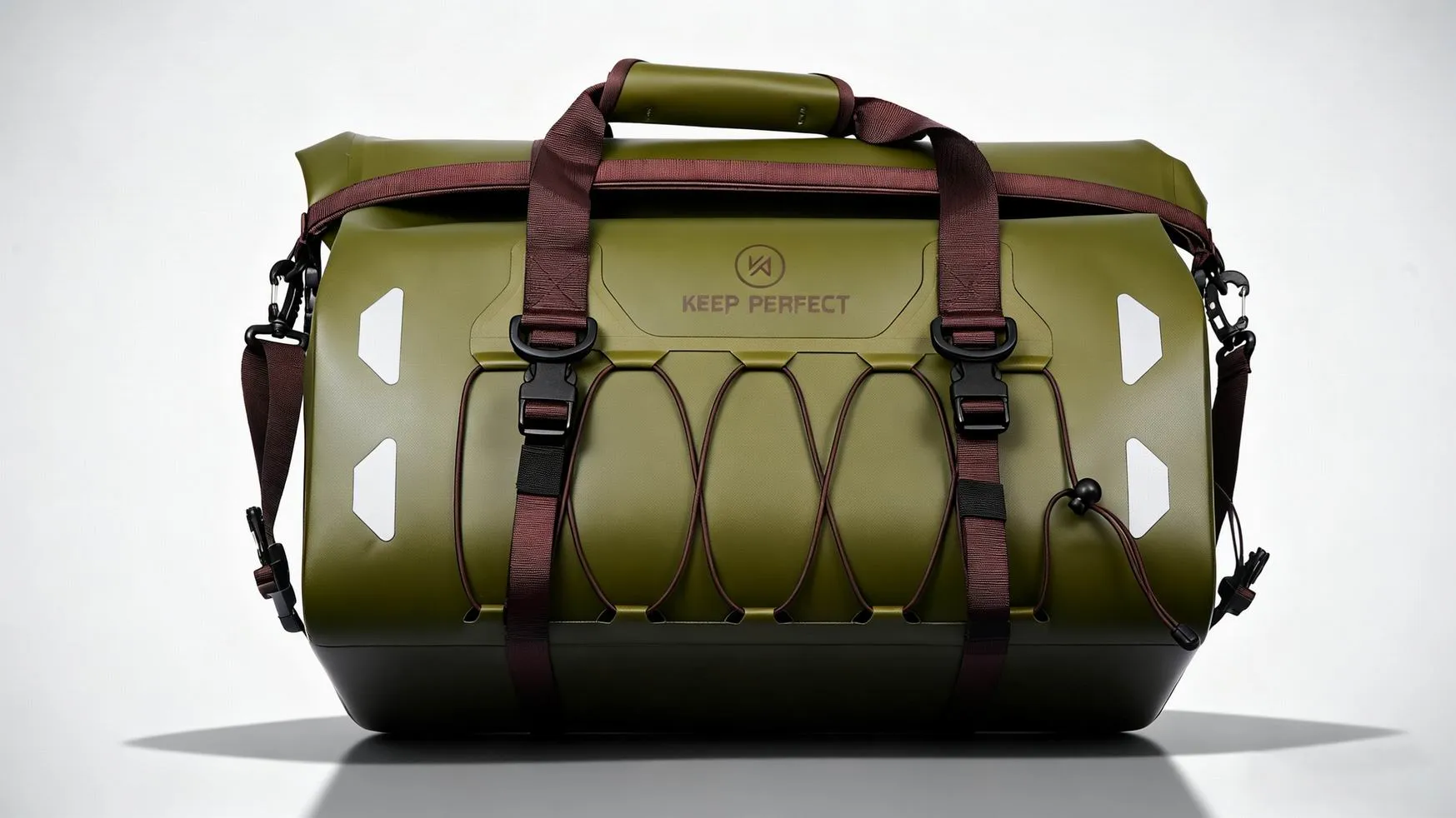
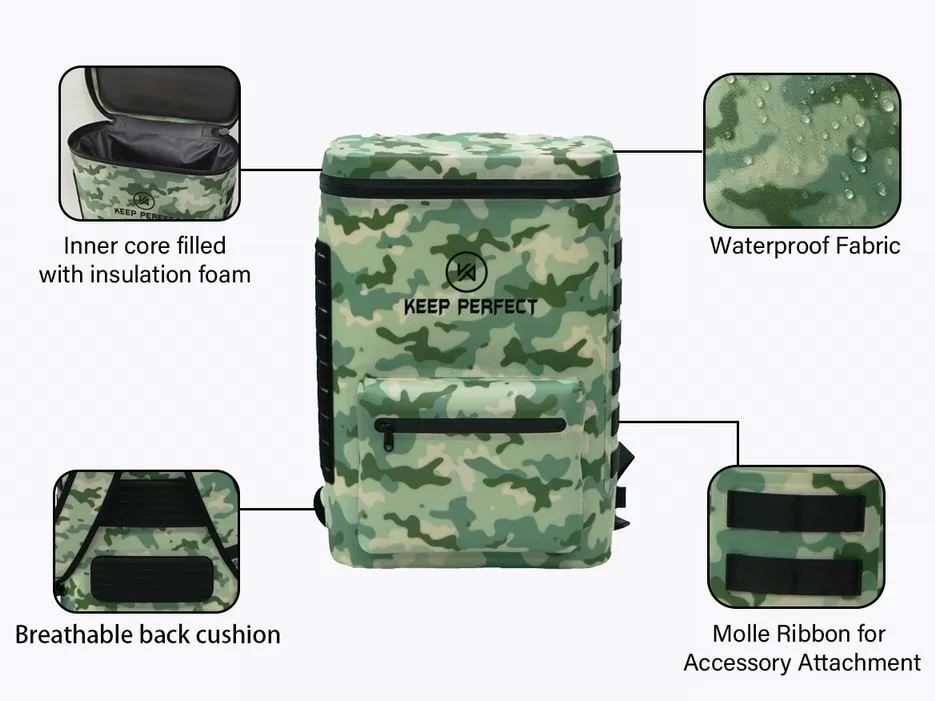
Failures concentrate in a handful of cheap parts
The first step in any service programme is accepting where products actually fail. In waterproof carry the base fabric and the welded or taped seams rarely fail within the warranty period; what fails is the parts that move, flex, rub or are operated repeatedly. Every effective waterproof bag spare parts inventory is built from that observation rather than from a parts catalogue, and every competent aftermarket service programme stocks against observed failure frequency rather than against unit value.
Rank the failures from your own returns before stocking anything. Take one full year of warranty and repair records, code each by component, and count. In most ranges the top three components account for well over half of all service events, and they are usually the same three across styles: a buckle family, a strap attachment, and a closure component. That concentration is what makes a small inventory viable.
| Part | Typical failure mode | Why it fails | Stock guidance | Design remedy |
|---|---|---|---|---|
| Webbing and strap tape | Abrasion at adjustment points, stitching pull-out at the anchor | Repeated load cycling and friction against hardware | Hold the two most used widths in the two main colours | Increase anchor reinforcement and specify a tested load rating |
| Buckles and adjusters | Cracked body, worn gate, release under load | Fatigue cycling, cold-temperature brittleness, UV exposure | Two to five per cent of units shipped, by hardware family | Standardise one family and require fatigue-cycle data |
| Roll-top stiffener strip | Creased, cracked or lost | Repeated rolling and unrolling, cold flex | Three to five per cent, cut to length | Make it a removable sleeve rather than a bonded insert |
| Drawcord and toggle | Cord frays, aglet pulls off, toggle cracks | Abrasion in the channel and repeated tension | Bulk cord by metre, toggles by the hundred | Use a replaceable cord channel with accessible ends |
| Hook-and-loop panels | Hook side clogs, adhesive lifts, stitch line tears | Contamination and peel fatigue | Sew-on lengths in the standard width | Specify peel-cycle performance and a sewn rather than bonded attachment |
| Zippers and sliders | Slider wear, tooth separation, tape delamination | Cyclic operation and grit ingress | Sliders per size, full zippers for the main sizes | Name a cycle-life requirement and a grit test |
| Batteries and cable glands | Capacity loss, gland seal failure | Charge cycling and seal compression set | Match the service life of the product | Make the battery compartment accessible and the gland replaceable |
Two columns in that table matter more than the rest. Stock guidance should be derived from your failure rate multiplied by units in field, not guessed; and the design remedy column is where the cost is actually saved, because a part that stops failing removes both the part cost and the handling cost of the service event.
Weight the ranking by cost, not by count. A failure that happens rarely but requires a full product replacement may dominate total aftermarket cost even though it is fifth by frequency. Rank by total currency cost per thousand units shipped and the priority order often changes.
Design for replaceability before the first production run
Replaceability is decided in the design phase and cannot be added afterwards. If a strap is welded into a seam, no service programme can replace it without destroying the product. If the roll-top stiffener is bonded inside a sealed channel, a cracked stiffener scraps the bag. These are design choices made for manufacturing simplicity or aesthetics, and their cost is deferred to the aftermarket budget where nobody connects them back.
- Every wear part should be removable with common tools and without cutting the shell.
- Attachment should use standard hardware and standard stitch patterns rather than bespoke geometry.
- Anchor points should be reinforced so that replacing the strap does not require replacing the panel.
- Fasteners should be a standard size and finish, sourced from a stocked family rather than made to order.
- The service instruction should be writable in five steps; if it cannot be, the part is not serviceable.
The five-step test in the last item is a useful gate during design review. Ask the engineer to write the replacement procedure for each wear part. If the procedure requires a specialist tool, a destructive step, or more than five steps, the part will not be replaced in the field, and the product will be scrapped for the sake of a component that costs a fraction of it.
There is a tension worth naming honestly: welded and fully sealed construction improves waterproof performance and makes repair harder. That trade-off is legitimate, but it should be made deliberately per product, not inherited across a range. A dry bag intended for immersion can reasonably accept a bonded stiffener; a daily-carry commuter bag should not. The repairability side of the trade-off is explored in the guide to repairability and field fix kit design.
Standardisation does most of the work here. A range using one buckle family, two webbing widths and one closure size can be serviced from a small inventory across every style. A range using six buckle families cannot, and its aftermarket programme will either be expensive or will quietly not exist.
A non-replaceable wear part converts a cheap failure into a write-off
The arithmetic is stark. If a buckle fails at a rate of two per cent and the buckle costs one currency unit, the parts cost per hundred units shipped is two units. If the buckle cannot be replaced and the failure therefore scraps the bag, the cost per hundred units is two whole products — possibly a hundred times more, plus freight, handling, a replacement shipment and the reputational cost of a customer told that a bag with one broken clip is rubbish.
The reputational component is the one that is hardest to recover from and easiest to prevent. A customer whose bag failed at a small part and who cannot get it fixed does not think “the buckle was not serviceable”; they think the product was disposable and say so publicly. Reviews written in that frame are disproportionately damaging because they describe the brand rather than the component.
- Identify the single cheapest part whose failure currently scraps a product. Fix that one first.
- Check whether the failure is a parts problem or a design problem; if the same part keeps failing, replacement is a treatment, not a cure.
- Quote the service cost against the replacement cost for each of the top five failures, using real handling time rather than an estimate.
- Decide deliberately which products are serviceable and which are not, and price and position them accordingly.
- Never let a wear part be held only by a bond that cannot be reversed without destroying the shell.
The fourth item is the honest version of the trade-off. Not every product needs to be repairable; a low-cost promotional dry bag is a reasonable single-use proposition. But that decision should be explicit, reflected in the price and in the warranty, and not discovered by the customer after a failure.
Warranty has three layers, and they are not the same promise
Most warranty confusion comes from treating one word as one obligation. In practice there are three distinct layers. The statutory layer is what the law requires in the market where the product is sold, and it exists whether or not it is written down. The express layer is what the brand promises in writing, and it is a marketing asset with a cost. The goodwill layer is what is done outside both, to protect a relationship.
| Layer | Source of the obligation | What it usually covers | How to manage it |
|---|---|---|---|
| Statutory | Consumer law in the destination market | Conformity with the contract, often for a defined period, sometimes with a burden-of-proof shift in the first months | Map it per market before selling; it cannot be contracted away |
| Express | The brand’s own written promise | Defined defects, defined period, defined remedy | Write it narrowly and honour it broadly; budget the expected cost |
| Goodwill | Commercial judgement | Out-of-warranty failures, borderline cases, high-value accounts | Set a monthly allowance and an approval rule so it is not random |
The statutory layer varies materially by market and cannot be standardised globally. Some jurisdictions imply a conformity period and shift the burden of proof onto the seller for an initial period; others rely on the express warranty almost entirely. This should be mapped before entering a market rather than discovered through a dispute, and the mapping belongs with the rest of the market-entry compliance work.
The goodwill layer is where most uncontrolled cost hides, because it is discretionary and unstructured. Set a monthly allowance, an approval threshold by value, and a reason code for every goodwill action. Goodwill that is recorded becomes data; goodwill that is not recorded becomes an unexplained line in the accounts and an inconsistent customer experience.
Product liability is a separate consideration from warranty and should not be confused with it. Warranty is a promise about defects; liability concerns harm caused by the product. Where a failure could cause injury or damage to other property, insurance and recall planning are the relevant instruments, and they are covered in the guide to product liability insurance requirements.
Write the express warranty around what the product can actually deliver
An express warranty is a specification commitment expressed in commercial language. It should name what is covered, for how long, against which defects, with what remedy and with which exclusions. Vague generosity — “satisfaction guaranteed”, “lifetime warranty” without definition — produces disputes, because the customer and the brand each hold a different interpretation and the customer’s is the one that gets published.
- Name the covered components and the failure modes, not merely “defects in materials and workmanship”.
- Name the period from a defined start event: delivery date, or first use if that can be evidenced.
- Name the remedy: repair, replacement part, replacement product, or refund, and in what order.
- Name the exclusions that matter: abrasion from normal use, misuse, commercial rental use, modification, and damage from solvents or heat.
- Name the process: how to claim, what evidence is needed, and the target turnaround.
Exclusions are not an attempt to avoid responsibility; they are what makes the promise affordable and therefore honourable. A warranty that excludes abrasion on a bag used daily is describing reality. A warranty that silently assumes it will exclude abrasion, without saying so, will be argued about by every customer who experiences it.
Distinguish waterproof performance from general durability in the wording. A commitment that the product will keep contents dry under described conditions is a different promise from a commitment that it will not wear out, and conflating them produces claims about abrasion being treated as claims about leakage. Keeping the two separate also makes the failure data cleaner, which matters for the feedback loop below.
Expected claim cost should be modelled before the warranty is published, using the historical failure rate by component multiplied by the cost of the remedy. A warranty extended from one year to two does not double the cost if most failures occur early, but it can if the dominant failure mode is age-related, such as coating hydrolysis or plasticiser migration. Returns and warranty economics are treated in the article on warranty and return rate analysis.
The cheapest control point is last generation’s top failure
Aftermarket cost is usually attacked at the wrong end: faster dispatch, cheaper parts, stricter claim screening. All three help marginally. The dominant lever is upstream: identify the single most frequent failure in the current generation and eliminate it in the next one. Removing one failure mode removes the parts cost, the handling cost, the freight cost and the complaint cost associated with every future occurrence of it.
- Rank failures by total cost per thousand units shipped, not by count, because rare expensive failures distort the picture.
- For the top failure, ask whether the cause is specification, process, or use. Each has a different fix.
- Specification causes are fixed by changing the part: a higher load rating, a different polymer, a fatigue-tested buckle.
- Process causes are fixed by changing the method or the inspection: weld parameter, stitch pattern, torque or alignment check.
- Use causes are fixed by changing the product or the instruction: a guard, a reinforcement, or an honest usage note.
The distinction in the last three items matters because the wrong fix wastes a product cycle. A buckle that cracks because the specified polymer becomes brittle at low temperature is a specification problem and will not be solved by better assembly. A strap that pulls out because the stitch pattern is too short is a process problem and will not be solved by buying stronger webbing.
Budget the fix against the saving explicitly. If a change adds a small amount per unit and removes a failure that costs several units per hundred shipped, the arithmetic is straightforward and should be presented that way in the range review. These decisions are usually made on feel, and they are among the few in this industry where the numbers are actually available.
Two component categories repay this attention more than any other in waterproof carry: buckles, because fatigue and cold brittleness are specification-addressable, and hardware finishes, because corrosion in marine and salted environments is a purchasing-specification problem. The test methods are covered in the guides to buckle fatigue and lifecycle testing and salt spray testing for hardware.
Convert failure data into a specification change
Field data is only useful if it arrives in a form an engineer can act on. “Strap broke” is not actionable. “Webbing tore at the lower anchor on the left strap after an estimated four months of daily use, at the stitch line, on units from two consecutive production lots” is actionable, and it points at a reinforcement and stitch pattern change.
| Data field | Why it is needed | Who uses it | Common omission |
|---|---|---|---|
| Component and failure mode | Identifies what to change | Engineering | Recorded as “product defective” |
| Production lot and date | Separates a design problem from a process problem | Quality | Often not captured at all |
| Time in service and intensity of use | Distinguishes early failure from wear-out | Product | Only the claim date is recorded |
| Environment of use | Explains corrosion, UV and cold-related failures | Materials | Assumed rather than asked |
| Photograph of the failure | Shows the mode far better than a description | Engineering | Requested but not stored with the record |
| Remedy applied and its cost | Feeds the cost model for the fix | Finance | Captured as a total, not per event |
The lot and date field is the one that changes decisions most often. A failure concentrated in two consecutive lots is a process problem with a bounded fix. The same failure spread evenly across eighteen months of production is a design or specification problem, and no amount of additional inspection will solve it.
Review the data quarterly with engineering, quality and customer service in the same room. Service sees the pattern first, quality knows whether the process changed, and engineering knows which change is feasible in the current platform. Reviews held separately produce three partial interpretations and no decision.
Close the loop publicly where it is appropriate. Telling customers that a specific failure was identified and fixed in a dated production change converts a complaint into evidence of competence, and it is one of the few aftermarket actions with a positive marketing return.
Turn parts performance into purchasing requirements
Once a failure mode is understood, it should become a line in the purchasing specification rather than a preference expressed in an email. Suppliers respond to measurable requirements, and a requirement that is written and tested can be enforced on the next order; a preference cannot.
- Buckles and adjusters: name a fatigue cycle count, a low-temperature performance range and a UV exposure requirement, and test samples from production rather than from a sales sample.
- Webbing: name a load rating with the test method, an abrasion requirement at the adjustment point, and a colour-fastness tolerance.
- Hook-and-loop: name a peel-cycle retention figure and require a sewn attachment rather than an adhesive one on load-bearing panels.
- Zippers and sliders: name a cycle-life figure and a grit-ingress test, and specify the tape and coating compatibility with the shell.
- Coatings and films: name a hydrolysis or low-temperature flex requirement appropriate to the intended climate, and requalify after any substitution.
The clause about testing production samples rather than sales samples is the one that makes the rest enforceable. A supplier can send an excellent sample once. A requirement that is verified against delivered lots is a requirement that holds across reorders, which is where consistency is actually won or lost.
Requalification after substitution is the second clause that matters most in this category. Changing a film, a coating or a hardware supplier changes performance, and a substitution made for cost or compliance reasons without revalidating weld parameters, seam behaviour or cycle life converts a saving into a future failure. Webbing and hardware specification detail is covered in the guides to webbing specification and load ratings and hardware selection.
Record the requirements in one controlled specification document per style, with a revision code. When the next order is placed, the purchase order should reference the revision. That single habit prevents the most common version of this failure: a specification improved after a field problem, then quietly reverted because the buyer attached an older document.
Field repair kits and self-service parts
A meaningful share of service events can be resolved by the customer if the parts and instructions exist. That is the cheapest resolution available by a wide margin, because it removes shipping, handling and inspection. It also converts a complaint into a demonstration of competence, provided the kit is designed honestly around failures that are genuinely field-fixable.
| Option | Best for | Cost per event | Risk |
|---|---|---|---|
| Self-service part posted to the customer | Buckles, toggles, cords, hook-and-loop lengths | Lowest: part plus postage | Requires a clear instruction and a serviceable design |
| Field repair kit sold or included | Users far from service: expeditions, marine, field service | Low per kit, amortised across units | Creates an expectation that all failures are field-fixable |
| Return and repair by the brand | Seam, weld and coating failures | Highest: two-way freight plus inspection labour | Turnaround time drives dissatisfaction more than the repair itself |
| Replace from stock | Low-value products where repair exceeds value | Product cost, but fast | Wastes a recoverable product if used by default |
The risk column shows the design constraint: self-service only works where the design allowed it. A kit containing a spare buckle is useless if the buckle is sewn into a closed strap loop. Decide which failures are field-serviceable during design, and let that decision drive both the kit contents and the warranty wording.
Instructions matter as much as parts. A one-page illustrated procedure with the part name, the tool needed and the steps is what makes self-service succeed. Video helps, but a printed card in the parcel works for customers who are standing in a garage with the bag in front of them.
Where the product is used far from any service point — expedition, marine, field service, disaster response — a field kit is part of the product specification rather than an accessory. The contents should be derived from the failure ranking earlier in this guide, and tested by someone who has not seen the design before.
Repair, replace or credit: make the rule explicit
Without a written rule, service decisions are made case by case by whoever answers the message, which produces inconsistent outcomes and inconsistent cost. A simple decision tree, applied by customer service without escalation in most cases, removes both problems.
- If the failed part is stocked and field-replaceable, send the part. This is almost always the cheapest correct answer.
- If the failure is a seam, weld or coating defect within the warranty period, replace the product and record the lot.
- If the product is out of warranty and repairable, offer a paid repair at a published price rather than a discretionary discount.
- If repair cost exceeds a stated fraction of the product value, replace or credit according to the warranty remedy hierarchy.
- If the same failure has appeared more than a threshold number of times in a quarter, escalate to engineering rather than continuing to replace.
The escalation threshold in the last item is what stops a service programme becoming a permanent subsidy for a design defect. Set the number low: three identical failures in a quarter is enough to justify an engineering look, because the fourth through fortieth will otherwise be handled one at a time at full cost.
Publish turnaround targets and meet them. Customers tolerate a defect far better than they tolerate uncertainty about when it will be resolved, and a service event that takes three weeks with no update generates more dissatisfaction than the original failure. One acknowledgement within a working day and one update per week until resolution is a realistic standard.
Returns policy and warranty policy interact, and the boundary between them should be clear in the customer-facing documents. A return is usually a change of mind within a short window; a warranty claim is a defect over a longer period. Mixing them creates disputes about whether a worn product is returnable. The customer-facing structure is discussed in the article on returns policy design.
When a parts failure stops being a service issue
Most aftermarket events are commercial. A few are not, and the distinction should be recognised early because the response is completely different. A failure becomes a safety matter when it can cause injury or damage to property other than the bag: a strap that releases under load while the user is cycling, a battery compartment that admits water in a powered product, or a closure that fails on a bag carrying medical or safety equipment.
- Classify failures by consequence, not by frequency: a rare failure with a severe consequence outranks a common cosmetic one.
- Any failure with an injury or third-party property consequence goes to a documented incident review, not to the normal claim queue.
- Pattern detection matters: a single report is an incident; several similar reports in a short period may require a field action.
- Keep the records needed for a recall: lot codes, distribution by customer or channel, and contactability.
- Know the reporting obligations in each market before you need them.
Lot traceability is the prerequisite for every item on that list, and it is cheap to establish during production and nearly impossible to reconstruct afterwards. A style code plus a production date code on the product or the label is enough to bound a field action to the affected units instead of replacing an entire shipment.
Two authoritative references are worth keeping to hand: the US Consumer Product Safety Commission for American recall and reporting requirements, and the International Safe Transit Association for transit-packaging test protocols that help distinguish a product failure from a shipping failure.
End-of-life handling is the last piece of the service picture. Products returned as unrepairable still have to go somewhere, and a programme that scraps them without thought creates both a disposal cost and a reputational one. Options and their trade-offs are set out in the guide to end-of-life solutions for waterproof bags.
Build the programme in ninety days
An aftermarket programme can be built from nothing in a quarter, and it should be built from data rather than from a parts catalogue. The sequence below assumes a range already in field and a returns history that can be coded.
- Days 1 to 20: code one full year of returns and complaints by component, failure mode, lot and cost. Rank by total cost per thousand units shipped.
- Days 21 to 40: stock the top three parts at the quantities implied by the failure rate, and write a five-step replacement procedure for each. Any part failing that test is a design item for the next generation.
- Days 41 to 60: publish the express warranty with named coverage, period, remedy and exclusions; set the goodwill allowance and approval rule.
- Days 61 to 75: convert the top failure into a purchasing requirement with a measurable test, and put it into the controlled specification with a revision code.
- Days 76 to 90: launch the self-service parts page and the field kit if relevant, set turnaround targets, and hold the first quarterly review with engineering, quality and service together.
Resist the temptation to stock broadly at the start. A small inventory built from real failure data is more useful than a large one built from a catalogue, because the parts that will actually be needed are a short list and the rest will sit in a box for three years.
The measure of whether the programme works is not the number of claims handled. It is the failure rate per thousand units shipped, falling quarter on quarter. If that number is flat while service efficiency improves, the programme is processing defects rather than removing them, and the money is being spent at the wrong end.
The principle underneath all of it is that service data is product data. Every claim is a free field test conducted by a customer at their own expense, and a brand that codes, counts and feeds those results back into the specification is the one whose next generation fails less. To turn a service finding into a specification change and a production revision, review the process from first enquiry through sampling into bulk production and send the revised requirement. The minimum order quantity is 500 pieces per style, sampling takes 6–10 working days, bulk production runs 35–50 days, and quotations are issued FOB Xiamen.
Frequently Asked Questions
Q1. Which waterproof bag parts fail most often?
Webbing and strap anchors, buckles and adjusters, roll-top stiffeners, drawcords and toggles, hook-and-loop panels, zipper sliders and, on powered products, batteries and cable glands. The base fabric and welded seams rarely fail first.
Q2. How much spare parts inventory should be held?
Derive it from your own failure rate multiplied by units in field. Two to five per cent of units shipped is typical for buckles and three to five per cent for roll-top stiffeners, but observed data should set the figure.
Q3. Why does replaceability have to be designed in?
Because a wear part welded or bonded into the structure cannot be removed without destroying the product. That converts a cheap component failure into a whole-product write-off plus freight, handling and a public complaint.
Q4. What is the five-step replaceability test?
Write the replacement procedure for each wear part during design review. If it needs a specialist tool, a destructive step or more than five steps, the part will not be replaced in the field and the product will be scrapped.
Q5. What are the three layers of warranty?
Statutory obligations imposed by consumer law in the destination market, the express written promise the brand makes, and discretionary goodwill outside both. They are different obligations and should be managed separately.
Q6. Should a warranty cover abrasion?
Usually not, and it should say so. Abrasion from normal use is wear rather than defect, and an unstated exclusion becomes an argument with every customer who experiences it.
Q7. What is the cheapest way to reduce aftermarket cost?
Eliminate the most frequent failure of the current generation in the next one. That removes the part cost, handling cost, freight cost and complaint cost for every future occurrence, unlike faster dispatch or stricter screening.
Q8. How do you tell a design problem from a process problem?
Check the production lots. A failure concentrated in two consecutive lots is a process problem with a bounded fix; the same failure spread evenly across months of production is a specification or design problem.
Q9. What should a spare parts claim record contain?
Component and failure mode, production lot and date, time in service and intensity of use, environment, a photograph, and the remedy cost. Missing lot data is the most common cause of an unresolvable investigation.
Q10. How should purchasing specifications change after a field failure?
Convert the finding into a measurable requirement with a test method, and verify it against production samples rather than sales samples. Requalify after any material or supplier substitution.
Q11. Is a field repair kit worth offering?
Yes where users are far from service or where the failure is genuinely field-fixable. The kit only works if the design allowed the part to be replaced, so the decision belongs in the design phase.
Q12. When should a product be replaced rather than repaired?
When repair cost exceeds a stated fraction of product value, or when the failure is a seam, weld or coating defect within the warranty period. Publish the rule so service decisions are consistent.
Q13. When does a parts failure become a safety issue?
When it can cause injury or damage to property other than the bag: a strap releasing under load, water entering a battery compartment, or a closure failing on safety equipment. Those go to incident review, not the claim queue.
Q14. Why is lot traceability important for an aftermarket programme?
It bounds any field action to the affected units instead of an entire shipment, and it is the prerequisite for distinguishing a process problem from a design one. It is cheap during production and nearly impossible to reconstruct later.
Q15. How should goodwill claims be controlled?
Set a monthly allowance, an approval threshold by value and a reason code for every action. Recorded goodwill becomes data; unrecorded goodwill becomes an unexplained cost and an inconsistent customer experience.
Q16. Does extending a warranty from one to two years double the cost?
Not necessarily. If most failures occur early, the second year adds little; if the dominant failure is age-related, such as coating hydrolysis, it can add substantially. Model it from failure timing rather than assuming.
Q17. How do you know whether the programme is working?
Track failure rate per thousand units shipped, quarter on quarter. If that number is flat while service efficiency improves, the programme is processing defects rather than removing them.
People Also Ask
Which parts of a waterproof bag fail first?
Webbing anchors, buckles, roll-top stiffeners, drawcords and toggles, hook-and-loop, zipper sliders and batteries on powered items. The shell fabric rarely fails first.
Why should wear parts be replaceable?
Because a bonded or welded wear part cannot be changed without destroying the product, turning a cheap failure into a whole-bag write-off and a public complaint.
What are the three warranty layers?
Statutory consumer-law obligations, the express written promise, and discretionary goodwill. Each needs separate management and separate budgeting.
How do you cut aftermarket cost most effectively?
Eliminate the previous generation’s most frequent failure in the next one. That removes parts, handling, freight and complaint cost at once.
How is field failure data used?
Code it by component, lot, time in service and environment, then convert the top finding into a measurable purchasing requirement with a test method.
Should customers repair or replace a failed bag?
Repair when the part is stocked and field-replaceable; replace when the failure is a seam, weld or coating defect, or when repair exceeds a stated fraction of product value.