Salt spray hours are a controlled corrosion-screening result, not a service-life clock. A buckle that survives 96 hours of neutral salt spray cannot honestly be advertised as surviving a particular number of years at sea, because continuous fog suppresses the drying, oxygen gradients, abrasion, crevice concentration and galvanic contacts that dominate real use. The test is still extremely useful when it is applied to a defined substrate, coating system and failure criterion. It quickly exposes porous plating, thin coverage at edges, contaminated pretreatment and weak springs. The central purchasing lesson is therefore simple: never buy hardware against an hour number alone. Buy it against an hour number plus the exact test method, specimen state, corrosion type, permitted area, functional check and post-test inspection interval. That distinction prevents expensive decisions based on false equivalence.
This guide fixes the NSS chamber at 5% sodium chloride, 35°C and near-neutral pH; explains why hours do not convert into years; compares zinc alloy, stainless steel, brass and aluminum; distinguishes white corrosion, red rust, pitting and coating lift; locates failures at springs and riveted interfaces; adds cyclic wet-dry evidence; and turns every decision into procurement language. MOQ 500 pieces per style, sampling in 6–10 working days, bulk in 35–50 days, FOB Xiamen: these are the working terms at QUANZHOU JUNYUAN BAGS, custom waterproof bag production since 2014 in a 4,950 m² SGS-verified facility.
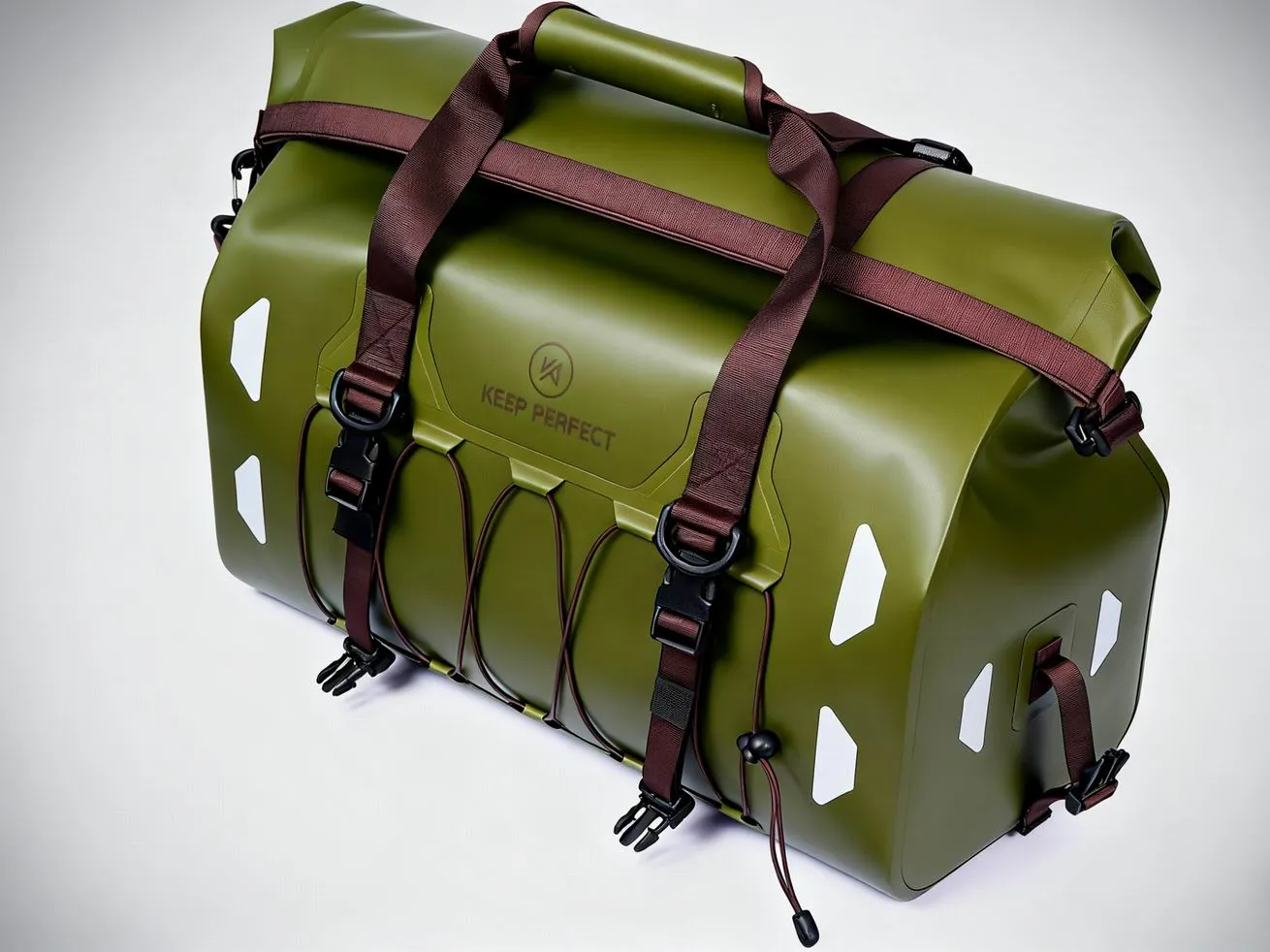


NSS is a coating comparison, not a marine calendar
A buyer gets useful evidence from salt spray testing only when the compared parts share the same geometry and exposure, while hardware corrosion resistance remains a system property of substrate, pretreatment, coating, edges, springs and joints. Neutral salt spray accelerates one stable mechanism: continuous deposition of a chloride solution onto a warm, oxygenated surface. It is excellent at ranking two plating systems for porosity or process consistency. It is poor at predicting calendar life because a coastal buckle alternates between wet and dry, carries hand oils, gets scratched, traps concentrated brine in crevices and touches dissimilar metals.
The mistake begins when an attractive hour count is detached from its endpoint. A plated zinc-alloy hook may show no red rust at 96 hours because zinc alloy does not produce iron oxide, yet it can already have white corrosion under the decorative topcoat and a spring that no longer returns. Conversely, a stainless component can develop a few removable tea stains while retaining full function. A single phrase such as passes 48 hours cannot distinguish these outcomes. The report must name what was observed and what was still required to work.
- Use NSS to compare coating lots, suppliers, pretreatment routes and process drift under one fixed method.
- Do not state one NSS hour as a fixed number of outdoor months, ocean voyages or seasons of ownership.
- Inspect cosmetic surfaces and functional mechanisms separately because their failure clocks are rarely the same.
- Expose final assembled hardware, not only flat plated coupons supplied by the plating contractor.
- Record substrate and every finish layer; the same exterior color can conceal entirely different protection systems.
- Pair continuous fog with a cyclic wet-dry test when the bag will live near saltwater or de-icing salt.
Fix all four chamber conditions before comparing hour claims
Neutral salt spray is commonly run under ASTM B117 or ISO 9227 NSS. The operating concept is similar: atomize a sodium chloride solution in a controlled chamber and collect fallout on exposed surfaces. The practical setpoints normally written into a bag-hardware protocol are 5% sodium chloride by mass, a chamber temperature around 35°C, collected solution pH from 6.5 to 7.2, and a collection rate commonly controlled near 1.0 to 2.0 mL per 80 cm² per hour. The laboratory must use the current edition and report its actual tolerances rather than copying this summary into a certificate.
| Control item | Procurement value to state | Why it changes the result | Evidence to retain |
|---|---|---|---|
| Method | ASTM B117 or ISO 9227 NSS, current contracted edition | Chamber setup and reporting language otherwise remain ambiguous | Method, edition and any deviation |
| Salt solution | 5% NaCl using suitable water and reagent purity | Impurities can accelerate or inhibit specific corrosion reactions | Preparation log and concentration check |
| Temperature | 35°C chamber setpoint within method tolerance | Reaction and evaporation rates shift with temperature | Continuous chamber chart |
| Collected pH | 6.5 to 7.2 for NSS | Acidic drift changes the mechanism and severity | Beginning and end pH records |
| Fallout | Method-compliant collection, commonly 1.0 to 2.0 mL per 80 cm² per hour | Too much washes products away; too little under-exposes parts | Collector results at multiple chamber positions |
| Orientation | Typically 15 to 30 degrees from vertical unless method or geometry dictates otherwise | Horizontal pools create a different local exposure | Photograph of rack and spacing |
Both ASTM International and the International Organization for Standardization publish controlled methods, but citing an organization name is not enough. Ask the laboratory to report chamber temperature, solution concentration, collected pH and fallout for the actual run. A certificate with only method, duration and pass is insufficient for supplier comparison because it does not establish that two tests imposed the same exposure.
Why 48, 96, 240 and 500 hours do not equal years
NSS time is an exposure duration, not an acceleration factor. To turn 96 chamber hours into outdoor years, one would need a validated relationship between one specific material system, one chamber endpoint and one defined field environment. Change the coating thickness, scratch density, coastal distance, washing frequency or joint geometry and the relationship changes. Published conversion claims usually collapse all those variables into a ratio that looks precise but has no defensible mechanism behind it.
Hour bands are still useful as internal gates. For example, a programme may screen decorative hardware at 48 hours, require no basis-metal corrosion through 96 hours, and reserve 240 or 500 hours for severe marine positioning. Those are business choices, not universal quality grades. The longer test can also reverse rankings: one coating may delay first corrosion while another corrodes slowly after an earlier start. Therefore record both time to first defect and condition at the final exposure.
- Use 24 to 48 hours as a fast pretreatment or gross-porosity screen; report first change, location and affected area rather than calling it one outdoor season.
- Use 72 to 96 hours for a routine consumer-hardware comparison only with cosmetic and functional endpoints by component, not as a universal premium grade.
- Use 168 to 240 hours for higher-risk outdoor or repeated-salt screening; record intermediate inspections and final function without assigning marine years.
- Use 500 hours or more as a development comparison for selected systems, supported by corrosion curves, photographs and a cyclic-test companion rather than a maintenance-free claim.
Use the guide on accelerated ageing and durability prediction when a service-life statement is commercially necessary. The correct route is correlation: test several known constructions, expose matching units in the target field, define the same endpoint in both places, and update the relationship as returns accumulate. Until that work exists, NSS supports relative ranking and batch acceptance, not a year claim.
Substrate choice changes both the corrosion product and the risk
Hardware described as metal is not one risk category. Die-cast zinc alloy, stainless steel, brass and aluminum form different corrosion products and fail by different paths. A buyer who specifies only finish color invites substitution because antique brass color can be plated over zinc alloy, applied to real brass, or imitated on steel. Those options can look identical at approval and diverge rapidly once edges, springs and salt are involved.
| Substrate or system | Typical salt response | Hidden weakness | Best purchasing control |
|---|---|---|---|
| Zinc alloy die casting | White zinc products, blistering or under-film attack at pores | Porous casting and thin coverage at corners | State alloy family, pretreatment, layer stack and no white corrosion area above limit |
| Austenitic stainless steel | Tea staining or localized pitting depending on grade and crevices | Unknown grade, embedded iron and chloride trapped at joints | State grade, passivation condition and pitting criterion |
| Brass | Tarnish, green products and possible dezincification in aggressive conditions | Steel spring or pin hidden inside a brass body | State body alloy and internal component materials separately |
| Anodized aluminum | Pitting at cut edges, rack marks or thin anodic coverage | Galvanic contact with stainless fasteners | State alloy, anodize class or thickness, sealed condition and edge rule |
| Plated carbon steel | Red rust after barrier breakdown | Scratch sensitivity and hydrogen effects on high-strength springs | State coating system, thickness, bake requirement and red-rust endpoint |
No row means universally superior. Stainless steel usually provides the most robust small-part option where grade and passivation are controlled, but it costs more and can still pit in stagnant chloride crevices. Brass offers good appearance and workable corrosion behavior but adds mass and may hide a steel mechanism. Aluminum reduces weight but depends heavily on anodic continuity. Zinc alloy supports complex shapes at low cost but makes plating quality and casting porosity decisive.
For the wider selection logic, including load, geometry and replacement consequences, use the existing guide to custom hardware selection for buckles and accessories. Corrosion is only one axis; a beautifully protected casting that fractures under cold impact is not an acceptable substitution for a less decorative, tougher component.
Springs and riveted interfaces fail before broad decorative faces
The first serious corrosion problem is usually not on the large visible face. It appears at a spring turn, rivet shank, hinge pin, crimp, threaded contact or folded edge. These locations combine thin coating, high forming strain, retained salt solution and oxygen gradients. A decorative puller can remain glossy while the carbon-steel return spring inside loses section, binds, or breaks. If inspection photographs show only front faces, the test has documented the least demanding area.
- Cycle every spring-loaded buckle, snap and zipper pull before exposure, at each inspection, and after recovery at room conditions.
- Open or disassemble sacrificial samples after testing so concealed spring turns, rivet shanks and pin bores can be photographed.
- Mark coating cracks created by riveting or crimping; corrosion beginning exactly there indicates assembly damage, not random chamber noise.
- Inspect the contact between stainless and aluminum for a narrow attack ring that indicates galvanic concentration.
- Check whether corrosion debris increases operating force even when the mechanism technically still moves.
- Measure retention or release load after exposure where a buckle or hook protects equipment rather than serving decoration.
A useful functional criterion is quantitative. Record opening force, return travel, latch engagement and retention load on at least five specimens before exposure. Repeat the same measurements after rinsing and a defined recovery period. A part that shows only 2% visible staining but requires twice the release force has failed functionally. A part with removable surface staining and unchanged force may remain acceptable under a functional specification.
Rivets also create a barrier problem in waterproof construction. Corrosion can roughen the interface, damage a washer, or initiate movement that widens the penetration through a coated panel. The inspection should therefore include a water check around mounted hardware, connecting corrosion work with the failure routes described in grommet and penetration design tradeoffs.
Coating architecture matters more than the top color
A finish name such as black nickel, gunmetal or matte brass describes appearance, not protection. Corrosion behavior comes from the complete architecture: cleaning, activation, strike or underplate, barrier layer, decorative layer, conversion or seal, and any organic topcoat. Two parts with the same final color can differ by an order of magnitude in salt performance because one contains a substantial nickel barrier and the other relies on a thin cosmetic deposit over porous zinc alloy.
Thickness must be specified by layer where it matters. A total coating thickness can hide a decorative top layer applied over inadequate barrier metal. Measurement also has to target edges, recesses and high points, not only the easiest flat face. X-ray fluorescence is useful for metallic layers on accessible regions, while cross-section microscopy resolves multilayer disputes and thin edge coverage. Keep approved reference parts because color and thickness numbers cannot show every process difference.
- Request a layer sequence in the technical file rather than accepting a finish trade name.
- Define which layer carries corrosion protection and which layer exists only for color or touch.
- Specify minimum local thickness at agreed measurement points, not merely an average over convenient faces.
- Require post-plating forming or riveting to be represented in the salt-spray specimen state.
- Treat clear electrophoretic or lacquer topcoats as wear-sensitive barriers and add an abrasion-before-salt comparison.
- Freeze approved appearance and corrosion specimens under one revision so a color change cannot conceal a process change.
This is where a combined protocol outperforms a longer chamber duration. Lightly abrade the contact zone, cycle the mechanism, then expose it. If performance collapses, the system depended on an intact thin topcoat and will be vulnerable to ordinary handling. The related guide to abrasion-resistant exterior coatings explains why wear-through position matters more than broad-face gloss retention.
Continuous fog misses the dry half of real salt exposure
NSS keeps surfaces continuously wet. Many real environments do not. A bag gets splashed, dries in sun or heated air, gets damp again, and stores concentrated salt crystals in seams and mechanisms. Drying raises local chloride concentration, changes oxygen access and creates crystallization stress. Rewetting then activates a concentrated electrolyte. For some systems this alternating sequence is more severe and more representative than a longer uninterrupted fog.
A cyclic programme can include salt deposition, controlled humidity, drying and periodic ambient recovery. The exact cycle should match the intended environment rather than borrow a convenient automotive schedule without thought. For a coastal consumer bag, a practical development screen might use a salt-fog segment, several hours of warm humid dwell and a dry segment, repeated for multiple days, followed by functional cycling and a water check. The output is comparative unless the cycle has been correlated with field data.
Continuous NSS and cyclic corrosion answer different questions. NSS is sensitive to coating porosity and process drift under a stable condition. Cyclic exposure adds concentration, drying stress and changing electrochemistry. Run NSS for supplier and lot control because it is widely repeatable; run cyclic exposure during development because it is more likely to reveal the mechanisms seen on an actual bag.
Temperature and humidity sequencing also affect the coated textile around the hardware. Use environmental temperature and humidity testing to define whether corrosion is followed by coating softening, stiffening or water ingress. A metal test that ignores the panel can approve hardware that survives while its mounted interface leaks.
Specimen preparation can accidentally protect the weak locations
Testing pristine loose components is convenient and often misleading. Installation creates the damage that matters: rivet setting cracks deposits, screws scratch bores, hinge assembly rubs pins, sewing or welding contaminants touch the finish, and tools mark edges. The primary specimen should therefore be finished hardware mounted by the production process on the intended coated fabric. Loose components can be included as diagnostic controls, but they should not replace assemblies.
- Photograph and identify each specimen, including lot, supplier, substrate, finish code and assembly date.
- Measure baseline operating force, retention or release load, dimensions and any pre-existing spots under consistent lighting.
- Clean only by the agreed procedure; aggressive solvent wiping can remove protective oils that are part of the supplied system.
- Mount the part with production rivets, washers, screws and torque or setting force, using the intended panel stack.
- Place specimens without contact, drip shielding or pooled solution, and include different chamber positions.
- Inspect at fixed intervals without washing unless the method permits it, then apply one stated final rinse and recovery procedure.
Scribe marks are useful for studying under-film creep on coated panels but should not be added automatically to finished bag hardware. A deliberate scribe creates a damage mode that may be appropriate for a paint-system comparison and inappropriate for a tiny plated slider. If a scribe is used, its tool, depth, position and acceptance metric must be explicit, and scribed results must not be mixed with unscribed pass criteria.
Controls make chamber anomalies visible. Include one known-good reference from the approved lot and, where useful, one known-marginal part. If both change unexpectedly, investigate chamber loading, fallout or solution before blaming production. A report without a reference can identify an obvious failure but cannot distinguish a subtle supplier shift from ordinary test variation.
Separate first corrosion, final corrosion and loss of function
Pass or fail should never be the only observation. At minimum, record time to first visible product, percentage of affected significant area at final exposure, location, corrosion type, blistering or delamination, and every relevant functional result. A significant surface is one visible or operationally important in normal use; an internal spring is significant because it controls function even though the customer cannot see it.
| Endpoint | Example acceptance language | What it prevents |
|---|---|---|
| Basis-metal corrosion | No red rust on significant surfaces through the stated interval | A supplier counting decorative discoloration and structural rust as equivalent |
| White corrosion | No more than a stated area, excluding agreed rack marks | Unlimited zinc corrosion hidden behind a red-rust-only rule |
| Coating integrity | No blister, peel or under-film creep beyond the stated size | A glossy face passing while adhesion has failed |
| Function | All mechanisms latch, release and return; force remains within stated change | A frozen spring receiving a cosmetic pass |
| Retention | Post-exposure load remains above the product minimum | Section loss or weakened joints escaping visual inspection |
| Mounted waterproofing | No leakage at penetrations under the defined water check | Corrosion-induced movement being ignored |
Inspection timing matters. Wet corrosion products look different immediately after removal than after rinsing and drying. Write whether intermediate observations are made in the chamber, after brief access, or on separate sacrificial specimens. For the final result, define rinse water, rinse duration, drying temperature and recovery time. Scrubbing must not be allowed because it can remove the very evidence being graded.
Tie defect categories to action. A first white spot at 72 hours can trigger review without rejecting a lot; a seized spring can be an immediate failure at any interval; red rust at a non-significant hidden steel fixture may be treated differently from rust at a load path. This hierarchy turns the report into a decision instead of a photograph collection.
Sample size and chamber placement decide whether a pass is believable
One perfect component proves almost nothing about a plated batch. Coating defects are spatial: rack position, barrel loading, current density and geometry create tails in the distribution. A development comparison should include enough units to expose that spread, commonly at least five to ten per construction, while a production plan should sample across plating lots and assembly periods. The number must rise when mechanisms contain multiple tiny parts because each interface adds another opportunity for failure.
Chamber position is another hidden variable. Fog fallout, droplet impingement and temperature uniformity are verified by the laboratory, yet heavily loaded racks can still shield parts. Rotate positions only if the method and protocol allow it; otherwise distribute replicates across zones and record each position. Parts must not touch, condensate must not drip from one specimen onto another, and orientation must prevent solution pooling unless pooling is a feature of actual use.
- Pull samples from the beginning, middle and end of a plating lot rather than from one presentation tray.
- Represent every hardware family: large buckle bodies do not stand in for tiny zipper springs.
- Use separately labeled replicates for destructive opening so functional specimens remain intact.
- Retain an unexposed control from the same lot for color, force and microscopy comparisons.
- Do not average away one seized unit; functional failures are counted per unit, not by mean appearance.
- Repeat after a substrate, coating supplier, layer thickness, topcoat or assembly-tool change.
Production sampling belongs inside the wider inspection plan. The existing waterproof bag quality-control guide explains how incoming hardware checks, in-process observations and pre-shipment inspection divide responsibility. Salt spray is too slow for screening every shipment after completion, so the system also needs supplier process records, retained samples and faster incoming checks.
Write the purchase specification as a complete testable sentence
The strongest specification names the finished assembly, substrate and coating architecture before naming the test. It then fixes method, duration, specimen preparation, inspection intervals and criteria. It closes with reporting and change-control requirements. If any element is missing, a supplier can comply literally while supplying something the buyer did not intend. A vague premium anti-rust finish is not a specification because it contains no measurable noun.
A usable clause reads like this: finished buckle assembly, including body, pin, rivet and spring, shall be tested after production assembly to ISO 9227 NSS for 96 hours at method-compliant conditions; no red rust, no blistering or coating peel, white corrosion on significant surfaces not exceeding the agreed visual grade; latch and spring return shall operate on every sample, with release force changing no more than the agreed band from baseline; report photographs at 0, 24, 48 and 96 hours, actual chamber records, component materials and any deviations. The precise duration and limits must suit the product, but the grammar should remain.
- Name every concealed material, especially carbon-steel springs inside stainless, brass or zinc-alloy bodies.
- Attach drawings that mark significant surfaces, excluded rack points and measurement positions.
- Specify whether cosmetic discoloration after gentle water rinse is acceptable and how area is graded.
- Require written approval before changes to substrate, plater, pretreatment, layer stack, thickness or seal.
- Define lot disposition after one functional failure: hold, investigate, retest and trace back to the last accepted lot.
- Require raw photographs and chamber records rather than a pass certificate alone.
Place the clause beside load, color and dimensional requirements in the technical pack, not in a detached email. The existing waterproof bag RFQ template helps buyers keep those linked requirements under one revision. Corrosion protection cannot be approved independently of appearance when the chosen plating system is also the color standard.
Investigate failures by location before increasing test hours
When a part fails, extending the required duration is usually the least informative response. First map where corrosion began. Broad uniform attack suggests an unsuitable substrate or inadequate barrier thickness. Edge-only attack points to coverage geometry. Random pinholes suggest porosity or contamination. A ring around a rivet suggests coating damage or galvanic coupling. A seized spring with a clean body means the bill of materials concealed a weaker metal. Each pattern directs a different corrective action.
| Observed pattern | Probable mechanism | Confirmatory check | Corrective direction |
|---|---|---|---|
| White products at die-cast pores | Porous zinc alloy plus weak pretreatment or thin barrier | Cross-section through a marked pore | Improve casting surface and pretreatment before adding thickness |
| Red rust at spring turns only | Carbon-steel spring under-protected or damaged during forming | Disassemble and compare formed versus unformed wire | Change spring grade or coating and control post-forming protection |
| Attack ring around rivet | Cracked deposit, trapped electrolyte or galvanic couple | Section the joint and identify both metals | Change washer, isolation, setting force or material pairing |
| Blisters on broad face | Adhesion or trapped contamination | Tape pull and cross-section after exposure | Correct cleaning and activation |
| Pitting where stainless touches aluminum | Galvanic and crevice concentration | Separate materials in a repeat exposure | Electrically isolate and improve drainage |
| Only lower rack positions fail | Chamber pooling, drip or loading artifact | Review rack photographs and collector data | Correct setup before changing product |
Corrosion products should be identified when appearance is ambiguous. Red-brown deposits can come from a hidden steel spring and spread across a stainless body, falsely accusing the body material. White deposits can be salt residue or zinc corrosion. Gentle rinsing, microscopy and elemental analysis on disputed cases prevent the wrong corrective action. Keep the failed part intact until the failure map and component materials are documented.
The same discipline applies to customer returns. Log environment, cleaning practice, time in use and exact location, then compare with chamber patterns. The guide to warranty and return-rate analysis shows how location-coded returns reveal whether a lab endpoint predicts the field. A repeated spring failure demands a spring-specific test, not a more severe cosmetic-face rule.
A release plan that joins NSS, cyclic exposure and field evidence
A balanced programme uses three layers. First, qualify the complete hardware system with NSS and a cyclic wet-dry exposure during development. Second, control production through coating records, rapid incoming inspection, retained samples and periodic NSS audits. Third, compare field returns against the same location and function codes. No layer replaces another: development finds mechanisms, production control holds the process, and field evidence checks whether the chosen mechanisms were relevant.
- Freeze the substrate, concealed components, coating stack, minimum local thickness and approved appearance reference.
- Run baseline dimensions, operating force and retention tests on production-representative assemblies.
- Expose replicates to the contracted NSS duration with fixed interim inspections and chamber records.
- Run a separate wet-dry cyclic sequence on mounted parts, then repeat function, retention and water checks.
- Approve only when cosmetic, corrosion, mechanical and waterproof endpoints all meet their separate limits.
- Audit after material or process changes and review field corrosion by component location every season.
MOQ remains 500 pieces per style, so the practical route is to resolve substrate, finish and test clause during sampling rather than after the bulk hardware has been plated. Use approval samples from the intended production route, retain them, and do not permit a visually matching alternate finish without repeating the defined corrosion checks. That protects both appearance consistency and mechanism performance.
For programme sequencing, read how a bag moves from sample approval to bulk production. Submit the use environment, hardware bill of materials, intended finish, significant surfaces, required NSS interval and functional endpoints together. The result should be a testable purchase clause, not an unsupported promise that one chamber hour equals any number of days at sea.
Frequently Asked Questions
Q1. What is neutral salt spray testing for bag hardware?
Neutral salt spray is a controlled chamber exposure commonly referenced to ASTM B117 or ISO 9227 NSS. It deposits a near-neutral 5% sodium chloride fog at about 35°C. It compares coating systems and process consistency, but it does not directly reproduce years of coastal service. Keep the component lot, substrate, coating stack, inspection interval and post-exposure functional result together in the report so another laboratory can reproduce the decision.
Q2. Can 96 hours of salt spray be converted into outdoor years?
No universal conversion is defensible. The relationship changes with substrate, coating, scratches, dry periods, temperature, chloride concentration, crevice geometry and maintenance. Use hours as a comparative gate unless the exact system has been correlated with defined field exposure and the same endpoint. A valid decision also requires photographs of significant surfaces and concealed springs before exposure, at fixed inspection intervals, and after the defined rinse and recovery.
Q3. What pH should an NSS test use?
Collected neutral salt spray solution is generally controlled between pH 6.5 and 7.2. The laboratory should follow the contracted edition of ASTM B117 or ISO 9227 and report actual beginning and ending values, because pH drift changes corrosion severity and mechanism. For procurement, attach the result to the exact substrate, plating stack, thickness and assembly method; a visually similar substitute needs a fresh qualification.
Q4. Which salt spray duration should a waterproof bag specify?
Choose duration from the use risk and validated history, not from a universal grade. Short screens such as 48 or 96 hours often compare consumer hardware; longer intervals may support marine development. Every duration needs corrosion-type, area, function and post-test criteria. When a result is marginal, locate the corrosion mechanism and repeat controlled specimens before raising the hour requirement or accepting a cosmetic explanation.
Q5. Why does the buckle face pass while its spring fails?
Springs have tight radii, forming strain, thin coating and crevices that retain concentrated salt. They are often carbon steel hidden inside a more resistant body. Inspect and function-test concealed springs separately instead of judging only the large decorative face. Keep the component lot, substrate, coating stack, inspection interval and post-exposure functional result together in the report so another laboratory can reproduce the decision.
Q6. Is stainless steel immune to salt corrosion?
No. Stainless steel can tea-stain or pit where chlorides concentrate, especially in crevices, under deposits or near dissimilar metals. Grade, surface condition and passivation matter. It usually performs well, but stainless is a controlled material description, not an immunity claim. A valid decision also requires photographs of significant surfaces and concealed springs before exposure, at fixed inspection intervals, and after the defined rinse and recovery.
Q7. How does zinc-alloy hardware fail in salt spray?
Zinc alloy commonly develops white corrosion, under-film attack and blistering at pores or thin edges. A red-rust-only criterion can miss serious deterioration because the substrate contains no iron. Specify white-corrosion area and coating adhesion as separate endpoints. For procurement, attach the result to the exact substrate, plating stack, thickness and assembly method; a visually similar substitute needs a fresh qualification.
Q8. Should loose hardware or assembled bags be tested?
Test finished mounted assemblies as the primary evidence because riveting, crimping, screws and handling create coating damage and galvanic contacts. Loose components are valuable controls for diagnosing whether a failure came from plating or from the assembly operation. When a result is marginal, locate the corrosion mechanism and repeat controlled specimens before raising the hour requirement or accepting a cosmetic explanation.
Q9. Why can wet-dry cycling be harsher than continuous fog?
Drying concentrates chloride, changes oxygen access and forms crystals in crevices. Rewetting activates a concentrated electrolyte. Continuous fog is reproducible and useful for coating comparison, but it misses the repeated concentration and drying stresses of many real coastal environments. Keep the component lot, substrate, coating stack, inspection interval and post-exposure functional result together in the report so another laboratory can reproduce the decision.
Q10. What should count as failure after salt spray?
Define separate failures for basis-metal corrosion, white corrosion, blistering, coating peel, operating force, spring return, retention strength and leakage at mounted penetrations. A part can pass cosmetically while failing functionally, so one visual pass rule is insufficient. A valid decision also requires photographs of significant surfaces and concealed springs before exposure, at fixed inspection intervals, and after the defined rinse and recovery.
Q11. How many hardware samples should enter a salt spray test?
Development comparisons commonly need at least five to ten units per construction, with more where several concealed parts can fail. Pull from different lot positions, distribute replicates in the chamber and never average away one seized mechanism. For procurement, attach the result to the exact substrate, plating stack, thickness and assembly method; a visually similar substitute needs a fresh qualification.
Q12. Should tested parts be rinsed before inspection?
Follow the contracted method and state the final rinse and recovery procedure. Intermediate inspections and final grading are not equivalent. Do not scrub, polish or chemically clean deposits, because that removes evidence and makes results impossible to compare. When a result is marginal, locate the corrosion mechanism and repeat controlled specimens before raising the hour requirement or accepting a cosmetic explanation.
Q13. Can a decorative finish name specify corrosion resistance?
No. Terms such as gunmetal or black nickel mainly describe appearance. The technical pack should state substrate, pretreatment, barrier layer, decorative layer, seal or organic topcoat, minimum local thickness and change-control requirements. Keep the component lot, substrate, coating stack, inspection interval and post-exposure functional result together in the report so another laboratory can reproduce the decision.
Q14. How often should production salt spray audits be repeated?
Set frequency from supplier history and risk, then repeat after any change to substrate, plater, pretreatment, coating thickness, seal or assembly tooling. Slow chamber tests work best as periodic audits supported by faster incoming checks and retained samples. A valid decision also requires photographs of significant surfaces and concealed springs before exposure, at fixed inspection intervals, and after the defined rinse and recovery.
Q15. What evidence should accompany a salt spray certificate?
Require specimen identification, component materials, method and edition, duration, chamber temperature, salt concentration, collected pH, fallout, rack photographs, inspection times, raw defect photographs, corrosion classifications, functional results and every deviation from the agreed protocol. For procurement, attach the result to the exact substrate, plating stack, thickness and assembly method; a visually similar substitute needs a fresh qualification.
Q16. How should a buyer order corrosion-resistant custom hardware?
Provide the full bill of materials, finish stack, significant-surface drawing, test method, duration, cosmetic and functional endpoints, sample size, reporting package and change-control clause. Approve production-representative parts during sampling; the programme minimum is 500 pieces per style. When a result is marginal, locate the corrosion mechanism and repeat controlled specimens before raising the hour requirement or accepting a cosmetic explanation.
People Also Ask
What is the standard salt spray condition for hardware?
NSS commonly uses a 5% sodium chloride solution at about 35°C with collected pH from 6.5 to 7.2, under the detailed controls of ASTM B117 or ISO 9227. The report should retain the exact method and endpoint.
Does salt spray testing predict years of corrosion resistance?
No. Salt spray hours rank specific systems under continuous fog. Service life also depends on drying, scratches, crevices, temperature, maintenance and galvanic contacts, so no universal hours-to-years conversion exists. Record duration, specimen state and functional acceptance together.
Why do bag buckle springs rust first?
Small spring turns combine forming strain, thin coatings and retained brine, and they are often carbon steel concealed inside a more resistant buckle body. Do not convert chamber hours into outdoor service years.
Is cyclic corrosion testing better than NSS?
It is more representative for many wet-dry environments, while NSS is generally more repeatable for supplier and coating comparison. Strong programmes use each for the question it answers. The report should retain the exact method and endpoint.
What should a salt spray purchase specification include?
State substrate, finish layers, method, duration, assembled specimen condition, significant surfaces, corrosion-area limits, functional checks, sample count, reporting, deviations and change-control requirements. Record duration, specimen state and functional acceptance together.
Can zinc alloy pass if there is no red rust?
Not necessarily. Zinc alloy can suffer extensive white corrosion, blistering and under-film attack without red iron oxide, so those products need explicit acceptance limits. Do not convert chamber hours into outdoor service years.