Custom waterproof bags for schools cost $2.90–$6.80 per unit at MOQ 500, ship with CPSIA-compliant test reports for kids’ programs, match official school colors to Delta E ≤2, and take 8–12 weeks from inquiry to delivery — so an August school year means a March inquiry. They solve the three realities of school life: rain-soaked commutes that destroy paper textbooks, swim and sports programs that send wet kit home daily, and bags that must survive years of locker floors, bus aisles and asphalt. This guide gives school business managers, PTA committees and camp directors the format choices, the compliance checklist, the budget models and the procurement calendar.
We have produced school, university and camp programs since 2014 at QUANZHOU JUNYUAN BAGS — 4,950 m² SGS-verified facility, 7 production lines, 149 machines, 137 staff, 200,000 pieces monthly capacity. MOQ 500 per design (splits across house colors and sizes), samples 6–10 working days, bulk 35–50 days, AQL 2.5 inspection, 30/70 T/T, FOB Xiamen, delivery to 100+ countries.
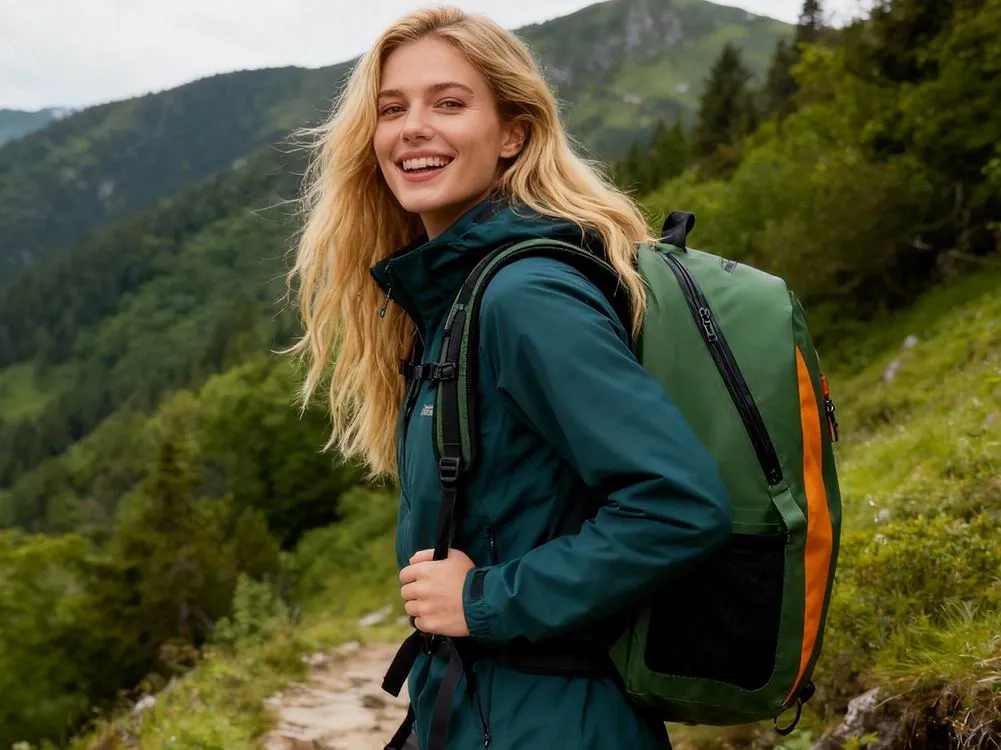
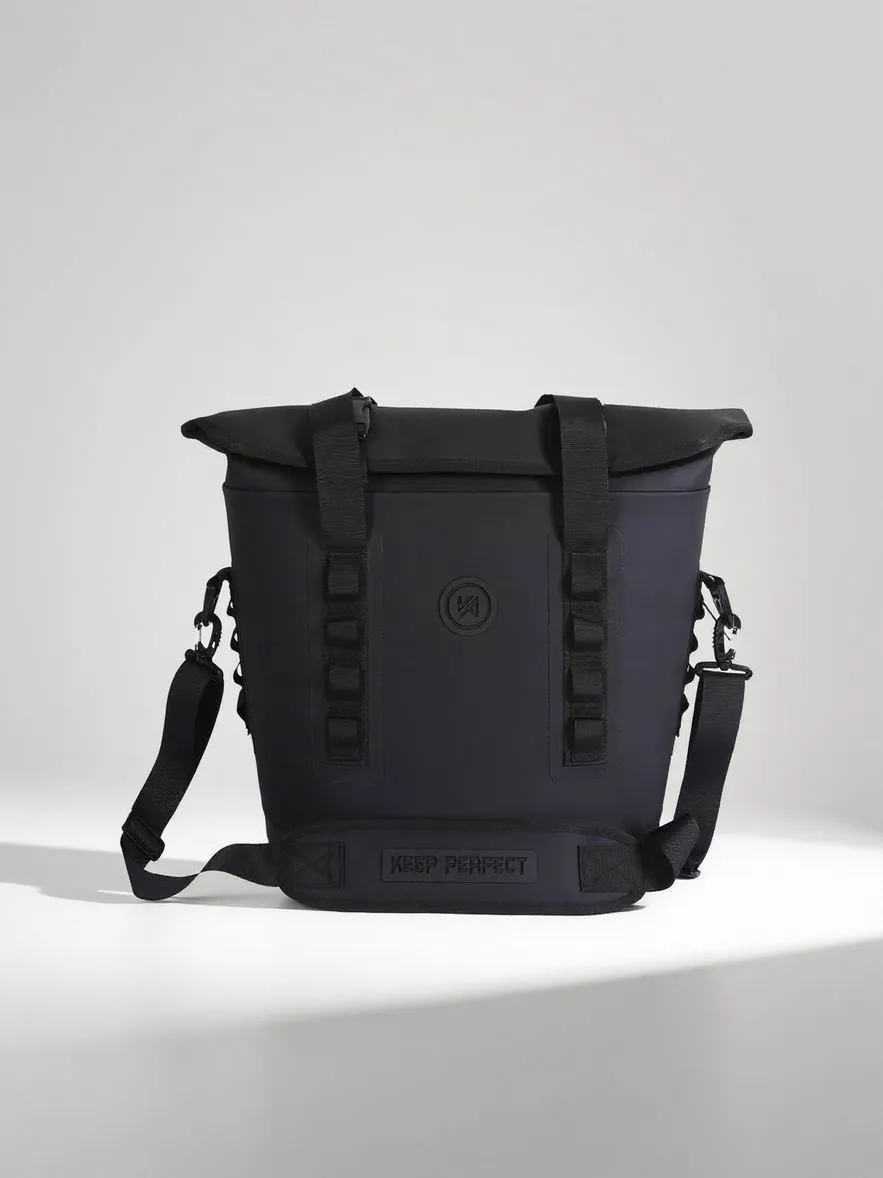
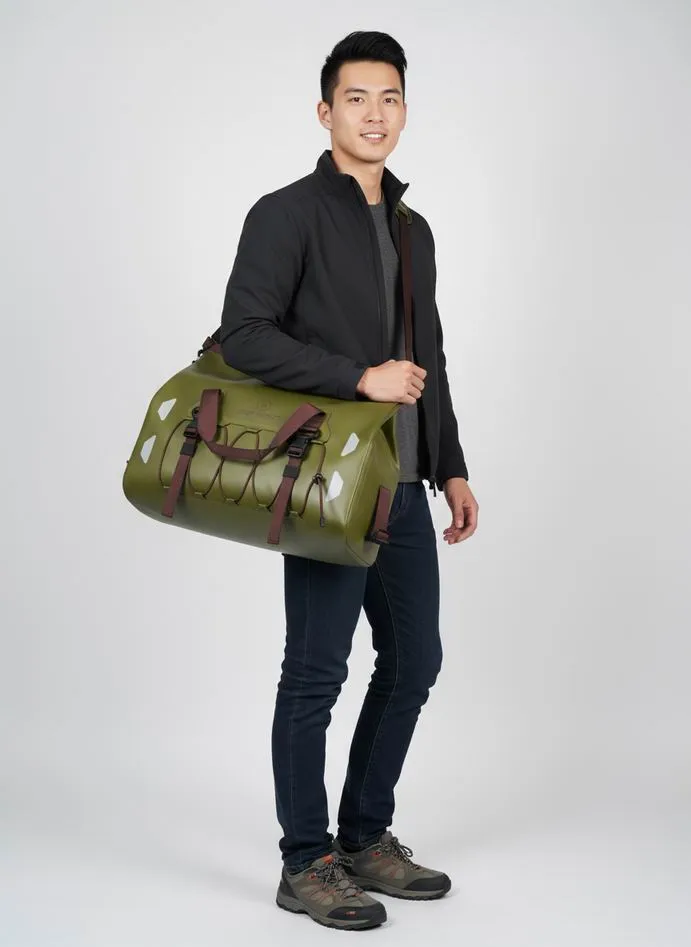
Which waterproof bags do schools actually order?
Four formats cover roughly 90% of education orders. The differences are age group, load and abuse level — pick the format first, then engineer the durability:
| Format | Age group | Typical size | Spec focus | Unit price (500+) |
|---|---|---|---|---|
| Waterproof backpack | K-12 daily use | 16–22L | Back panel comfort, reflective strips | $4.20–$6.80 |
| Drawstring sports sack | PE / swim lessons | 8–12L | Wet kit separation, quick dry | $2.90–$4.10 |
| Waterproof tote | Library / art / teacher | 14–20L | Flat base, wipeable interior | $3.40–$5.20 |
| Swim & wet kit bag | Swim programs | 5–10L | IPX6+ wet compartment, drain grommet | $3.10–$4.60 |
The K-12 backpack is the volume driver and the engineering challenge: it carries 4–7 kg of books daily, gets dragged across asphalt and must survive a minimum of 180 school days per year for several years. We build school backpacks on 600D–840D polyester with 0.35 mm TPU lamination, bartacked stress points (14 bartacks on a standard student pack) and #8 SBS zippers rated for 10,000+ cycles.
Child safety compliance is not optional
Bags marketed for children 12 and under fall under CPSIA in the United States and equivalent regimes elsewhere. That means third-party tested reports — not factory declarations — for lead in surface coatings (≤90 ppm), lead in substrates (≤100 ppm) and eight regulated phthalates (≤0.1% each). Budget $150–$600 per material per standard and 7–10 days of lab time inside the sampling phase.
| Market | Regime | Key limits | Test cost (per material) |
|---|---|---|---|
| USA (kids ≤12) | CPSIA + ASTM F963 | Pb ≤90/100 ppm, 8 phthalates ≤0.1% | $250–$600 |
| European Union | REACH + EN 71-3 | SVHC ≤0.1% w/w, migration limits | $300–$550 |
| UK | UKCA (EN 71) | As EN 71-3 | $250–$500 |
| Australia/NZ | AS/NZS ISO 8124 | Heavy metal migration | $200–$450 |
Two practical rules keep school programs safe and fast. First, use materials from our pre-tested school stock library — fabrics and films with valid reports already on file, cutting lab cost to verification-only. Second, put the tracking-label requirement on the artwork checklist from day one: CPSIA wants permanent tracking information (batch, date, source) on children’s products, and retrofitting labels after production is the expensive way to learn that. For the full regulatory map see our compliance and safety guide.
School colors, crests and house systems
A school bag is a walking uniform. Color accuracy matters the same way it does on blazers and ties: we match fabric to your official palette by Pantone code with Delta E ≤2 tolerance, and where the school crest is involved, embroidery reproduces fine heraldic detail that printing flattens.
- Embroidery — the default for crests: 9,000–15,000 stitches for a 7–9 cm crest, $0.80–$1.80 per position, survives the full life of the bag
- Screen print — house names, year-level marks, sponsor logos: $0.30–$0.90 per color per position
- Woven labels — school name tape inside, $0.12–$0.28 each; doubles as the CPSIA tracking-label carrier
- Reflective elements — not branding, but the most requested safety add-on: 3M-grade reflective piping $0.15–$0.35 per bag
House systems (4–8 colors sharing one design) split the MOQ 500 across colorways at no extra tooling cost — 4 houses × 125 pieces is a standard configuration. Pantone matching details live in our Pantone matching guide, and the method-by-method branding comparison is in the logo options guide.
Budgets and funding models that actually work
School procurement runs on three funding models, and the bag spec should match the model. Direct-purchase uniform programs (school buys, issues to students) optimize for durability-per-dollar. Resale programs (school buys, parents purchase through the school shop) can carry a slightly higher spec because the unit economics close at retail. Sponsor-funded programs (local business logo on the bag funds the purchase) need a branding layout that accommodates a sponsor mark without crowding the school crest.
| Program model | Typical budget/student | Recommended spec | Notes |
|---|---|---|---|
| Uniform issue (public) | $3–$5 | 600D, screen print, reflective piping | Durability-first spec |
| School shop resale | $5–$8 cost, retails $15–$25 | 840D, embroidered crest, padded straps | Retail-grade finish |
| Sponsor-funded | $0 net to school | 600D + sponsor print position | Sponsor funds 60–100% |
| Camp / excursion kit | $3–$4 | Drawstring or 10L dry bag | One-per-student event kit |
On a 500-piece uniform-issue order at $4.20 average, the all-in program cost lands near $2,100 plus freight — inside the discretionary budget of most school districts, and below the per-student cost of one lost textbook cart. Sponsor-funded variants change the arithmetic entirely: a local business paying $2,000–$3,000 for a tasteful print position on 500 daily-carried bags receives genuine community visibility, and the school receives the bags at zero net cost. We supply the sponsor-layout mockups that make that pitch easy to sell.
The school-year procurement calendar
Education procurement is ruthlessly seasonal: bags must be on the premises before the first day of term. Work backwards from delivery week, and the calendar writes itself. For a Northern Hemisphere school year starting late August, the safe schedule is: inquiry and artwork in March, samples approved by mid-April, bulk production May–June (35–50 days), sea freight July, delivery and distribution in early August.
- T-20 weeks: finalize format, quantities per year level, colorway split; request quotation with Pantone codes attached
- T-18 weeks: strike-off / sample approved; compliance documents verified (CPSIA reports, tracking label layout)
- T-16 weeks: PO signed, 30% deposit; materials lock into the production schedule
- T-10 to T-6 weeks: bulk production window (35–50 days) with AQL 2.5 inspection at completion
- T-6 to T-1 weeks: freight and customs; air-freight a 20–50 piece advance box for the welcome event
- T-0: distribution day — bags tagged by year level in cartons, ready for class-by-class issue
Miss the March inquiry window and the options narrow in order: air freight the whole order (adds $1.80–$2.60 per unit), simplify the spec (stock colorways ship 2 weeks faster), or split delivery (first 60% by term start, balance 3 weeks later). All three are survivable; none is free.
Durability: engineering for five school years
The difference between a school bag that lasts one year and one that lasts five is a short list of construction details, none of them expensive. We specify them as standard on education programs because warranty claims from 500 parents is a headache nobody wants:
- Bartacked stress points — 14 on a student backpack (strap roots, handle, pocket corners)
- #8 SBS zippers with metal sliders — 10,000+ open/close cycles vs 3,000 for #5 coil
- Double-layer base panel — the surface that meets floors, puddles and bus aisles
- 600D+ fabric on high-abrasion zones even when the main body is 420D
- Stitch density 8–9 SPI on load seams; welded construction on wet compartments
- Reflective piping sewn into seams (not glued tape) — survives washing and abrasion
Our in-house QC runs the same battery on school bags as on outdoor-brand orders: seam strength ≥150 N, hydrostatic head ≥5,000 mm on wet compartments, zipper cycle testing and a drop test at rated load. Colorfastness to rubbing (dry and wet, grade 4+) matters on school bags more than most products — a bag that crock-dyes onto a white school shirt generates more complaints than a broken zipper. Strap-pull testing at 25 kg for 500 cycles simulates the "carry it by one strap" habit every student has. AQL 2.5 final inspection is included; third-party inspection (SGS, BV, TÜV) is welcome at buyer’s cost of $200–$350 per man-day.
Three real education programs, anonymized
| Program | Qty | Spec | Timeline | Outcome |
|---|---|---|---|---|
| International school, SE Asia | 1,400 | 600D backpack, embroidered crest, 4 house colors | Inquiry Mar → delivery Jul | Year-2 reorder 1,600 + sibling school added |
| Swim academy chain | 2,500 | 10L wet kit bag, IPX6, drain grommet, print | 6-week turnaround | Reorders every term; zero seam-failure claims |
| School district camp program | 5,000 | Drawstring sack, screen print 2 colors | PO May → 3 waves Jun–Aug | Sponsor-funded; renewed 3 consecutive years |
The pattern across all three: the first order is the hard one (artwork, approvals, compliance). From the second order, the program runs on reorders that skip sampling and ship in 30–35 days — the exact fast lane described in our reorder process guide.
Mistakes schools make on first orders
- Specifying adult bag hardware on kids’ bags — heavy metal fittings add cost and weight; child-appropriate polymer hardware performs better
- Artwork in RGB without Pantone references — the school maroon arrives burgundy; always supply Pantone codes
- Ordering one size for K-12 — a 22L pack fits a 15-year-old, not a 7-year-old; split sizes by key stage (adds zero cost, huge fit improvement)
- Forgetting the tracking label — CPSIA permanent tracking info must be designed in, not stickered on
- Inquiring in June for August delivery — physically impossible with sea freight; the March window exists for a reason
Every one of these has happened on a real program, most of them more than once. All five are completely free to avoid at the spec stage — which is exactly why we run a thirty-minute spec review call before quoting any education order over 1,000 pieces.
Working with school procurement: quotes, tenders and POs
School buying has its own paperwork culture, and a supplier who speaks it fluently saves the business manager hours. We issue formal quotations on letterhead with itemized specs, validity windows (typically 30 days, extendable for board-approval cycles), HS codes and incoterms stated explicitly — the format that drops straight into a tender response or board paper. For districts running competitive-quote policies (three quotes over a threshold), our quotation includes the spec detail that makes like-for-like comparison possible: fabric denier, lamination thickness, zipper grade, seam construction and test standards, not just a unit price.
Purchase orders from public bodies carry terms we accommodate as standard: net-30 invoicing against shipping documents where district policy requires it (in place of the balance T/T), vendor registration documents, W-8BEN-E equivalents for US districts, and supplier declarations for audit files. If your tender requires bid samples, we produce them inside the standard 6–10 working day sampling window — the sample that wins the tender is made on the same line that will run the bulk order, so what the committee approves is what the school receives.
Shipping, customs and delivery to schools
Most education orders move FOB Xiamen by sea: 4–6 weeks to the US West Coast, 5–7 to Europe, 1–2 to Southeast Asia. Schools without a freight forwarder can use ours on CIF/DDP terms — DDP (delivered duty paid) is the option business managers prefer because the price that arrives on the invoice is the final price, with customs clearance and duties handled. Budget freight at roughly $0.40–$0.90 per backpack by sea depending on volume and season; the 20–50 piece advance box by air ($4–$7 per kg) covers the welcome-week photo opportunity while the bulk follows by sea.
Customs classification for school bags runs under HS 4202.92 (bags with outer surface of textile/plastic), attracting duty of 17.6–20% into the US depending on construction and 0–12% into most of the EU under standard tariffs — we state the exact classification on the commercial invoice so your customs entry is a formality, not a negotiation. Every shipment includes the documentation pack schools’ auditors ask for later: commercial invoice, packing list, test reports and certificate of origin where tariff preferences apply.
Kit out your school program
QUANZHOU JUNYUAN BAGS — school and education programs since 2014, produced in our 4,950 m² SGS-verified facility (7 lines, 149 machines, 137 staff, 200,000 pieces monthly). MOQ 500 per design (colorway splits welcome), samples 6–10 working days, bulk 35–50 days, AQL 2.5 inspection, 30/70 T/T, FOB Xiamen, delivery to 100+ countries. See how institutions work with us from first inquiry.
Send your crest artwork, Pantone codes and quantities per year level through the inquiry form. We reply within 24–48 hours with a quotation, a compliance document checklist and a production calendar mapped to your school year. For programs above 3,000 pieces, ask about staggered delivery waves aligned to your enrollment schedule — and if you are comparing supplier types first, our OEM vs ODM guide explains the two ways schools structure these programs.
Frequently Asked Questions
Q1. What is the minimum order for school bags?
MOQ is 500 pieces per design, which can split across house colors or year-level colorways (e.g., 4 houses × 125). Sizes for different key stages can also share the order.
Q2. Are the materials safe for children?
Yes — kids’ programs ship with third-party CPSIA test reports (lead ≤90/100 ppm, 8 phthalates ≤0.1%), and we maintain a pre-tested school stock material library to cut lab time and cost.
Q3. How much do custom school bags cost?
Budget $2.90–$6.80 per unit depending on format: drawstring sacks $2.90–$4.10, K-12 backpacks $4.20–$6.80, totes $3.40–$5.20, swim kit bags $3.10–$4.60, all at MOQ 500.
Q4. Can you match our exact school colors?
Yes — Pantone-coded matching with Delta E ≤2 tolerance, verified by Lab-dip strike-off approval before bulk dyeing. Send Pantone references with your inquiry.
Q5. Embroidery or printing for a school crest?
Embroidery for crests (9,000–15,000 stitches reproduces heraldic detail and outlasts the bag); screen printing for text marks and sponsor logos. Most programs use both.
Q6. How long does the whole process take?
Samples 6–10 working days, bulk 35–50 days, sea freight 4–6 weeks. For an August school year start, inquire in March — the calendar is mapped in the article.
Q7. Can sponsor logos go on the bags?
Yes — a dedicated sponsor print position at $0.30–$0.90 per color. Sponsor funding commonly covers 60–100% of program cost; we have run this model for districts three years running.
Q8. Do bags come with a warranty?
Construction defects are covered under AQL 2.5 inspection terms with remake-or-credit resolution. School-spec construction (14 bartacks, #8 zippers, double base) is engineered for multi-year daily use.
Q9. Can we reorder smaller top-up quantities later?
The production MOQ is 500, but established programs can schedule annual top-ups at 500 across mixed sizes and colors. Repeat orders skip sampling and ship in 30–35 days.
Q10. Do you supply universities and camps too?
Yes — universities (orientation kits, society merch, athletics) and camp programs (per-camper kit bags) are standard education segments with the same MOQ 500 and calendar logic.
Q11. What sizes do school backpacks come in?
Standard splits: 16–18L for ages 5–9, 18–22L for ages 10–14, 22L+ for senior students. Mixed sizes share one MOQ 500 order at no extra tooling cost.
Q12. Can reflective safety elements be added?
Yes — 3M-grade reflective piping sewn into seams at $0.15–$0.35 per bag. Sewn-in reflective survives washing and abrasion; glued tape does not.
Q13. How are the bags packed for distribution?
Class-by-class or year-level packed cartons are standard: each carton labeled with quantity, size and colorway so distribution day runs without sorting.
Q14. What payment terms do schools get?
30% deposit with PO, 70% against shipping documents (30/70 T/T) — the same terms we extend to all institutional buyers. Public-sector procurement frameworks can be accommodated on request.
Q15. Can you help if we only have a rough idea, not a design?
Yes — most school inquiries start as a logo and a budget. We propose two or three format-and-spec options with visuals and prices inside 48 hours, you pick a direction, and the sample makes it real. No tech pack required to start.
Q16. How do we handle students who lose or damage bags mid-year?
We recommend ordering 3–5% above enrollment as attrition stock — on a 500-piece order that is 15–25 spare bags at the same unit price, far cheaper than an emergency top-up run later. Spares also cover new mid-term enrollments.
People Also Ask
How much does it cost to put a school logo on bags?
Embroidery of a 7–9 cm crest costs $0.80–$1.80 per bag; screen printing $0.30–$0.90 per color per position; woven name tapes $0.12–$0.28. On a $4.20 backpack, full branding typically adds under $1.50.
What is the best waterproof bag for school kids?
A 16–22L backpack in 600D–840D TPU-laminated polyester with bartacked straps, #8 zippers, double-layer base and sewn-in reflective piping — engineered for 4–7 kg daily loads and multi-year use.
Are waterproof school bags worth it?
Yes for daily commuters and wet climates: TPU-laminated bags keep books and electronics dry in rain that soaks through standard polyester in minutes, and welded wet compartments isolate swim kit and lunch spills.
When should schools order custom bags?
For a late-August school year: inquire in March, approve samples by mid-April, produce May–June, deliver early August. June inquiries for August delivery require air freight or spec simplification.
Can school bag orders be split across colors?
Yes — MOQ 500 splits across house colors, year-level colorways and sizes at no extra tooling cost. A 4-house × 125-piece configuration is standard practice.
What safety standards apply to kids’ school bags?
In the USA, CPSIA: lead ≤90 ppm in coatings and ≤100 ppm in substrates, plus 8 phthalates ≤0.1% each, verified by third-party lab reports with permanent tracking labels on the product.