A profitable Amazon FBA waterproof bag business in 2026 works like this: source a differentiated custom bag at $4.80–$11.20 landed cost (MOQ 500), sell into the $21.99–$49.99 price bands where referral fees and FBA fulfillment still leave $5–$12 contribution per unit, and win the listing with images and reviews rather than price. The category is not saturated — undifferentiated white-label dry bags are. Sellers who bring a custom colorway, a feature the top 10 listings lack, and a proper launch budget still enter profitably, because waterproof bags sit in the rare intersection of light weight (cheap fulfillment), high perceived value, and year-round demand. This guide runs the complete math — landed cost, Amazon fees, PPC, break-even units — plus the FBA prep rules that get shipments rejected when ignored, per Amazon's own FBA requirements.
The sourcing side of this guide comes from daily work with FBA sellers at QUANZHOU JUNYUAN BAGS — producing custom waterproof bags since 2014 in a 4,950 m² SGS-verified partner facility with 7 lines, 149 machines, 137 staff and 200,000 pieces monthly. We prep FBA-compliant shipments weekly: polybagging, suffocation warnings, FNSKU labeling, carton specs. MOQ 500 per design, samples 6–10 working days, bulk 35–50 days, 30/70 T/T, FOB Xiamen or DDP to your prep center.
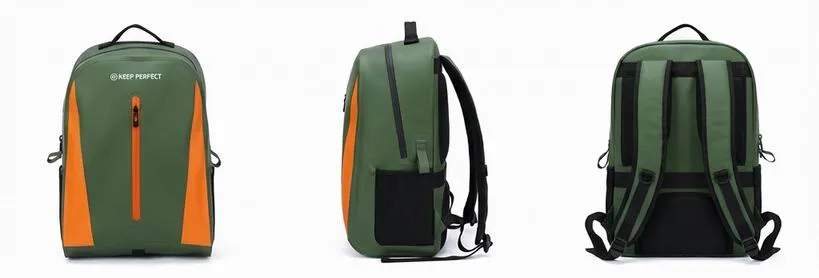
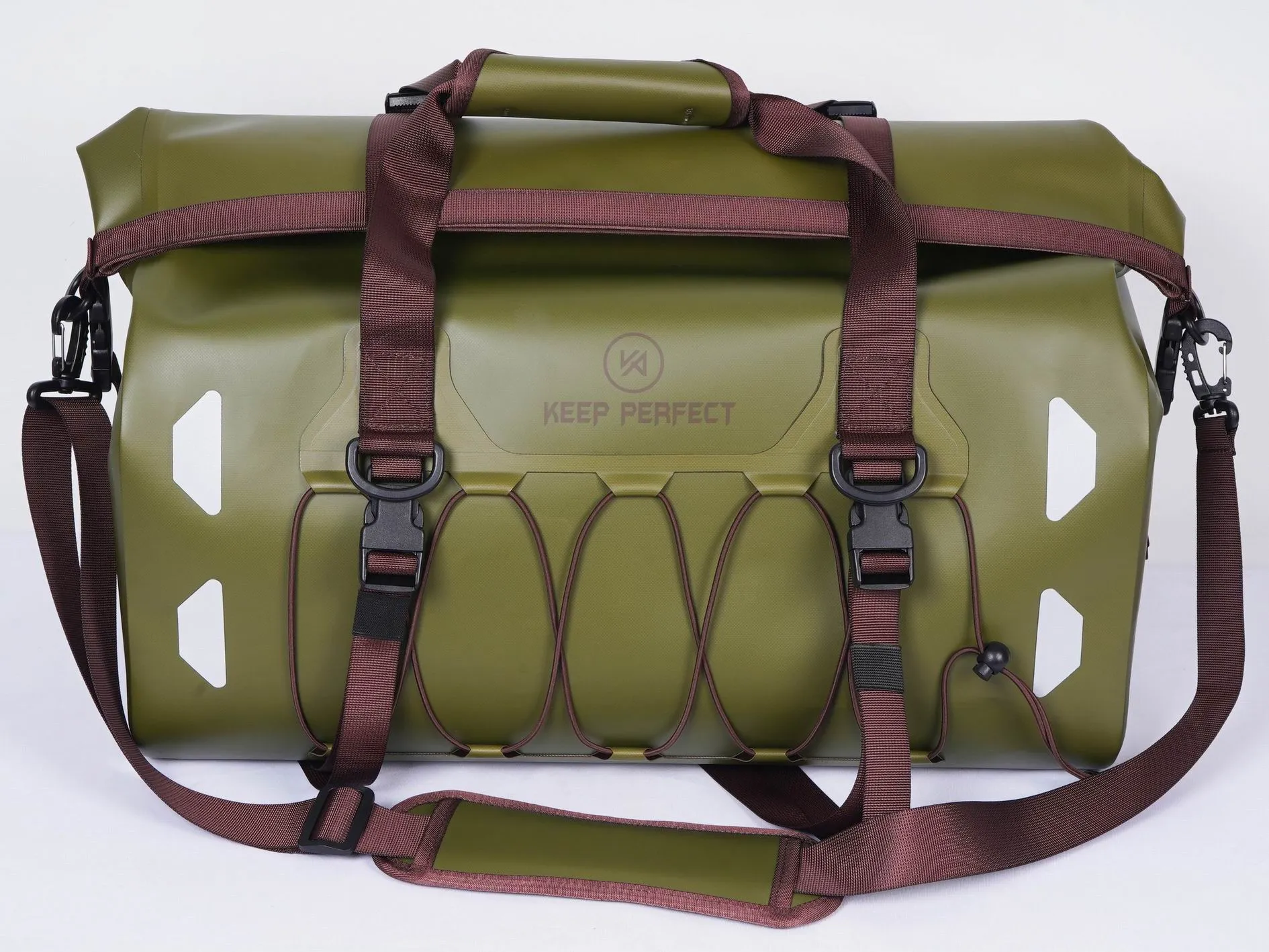
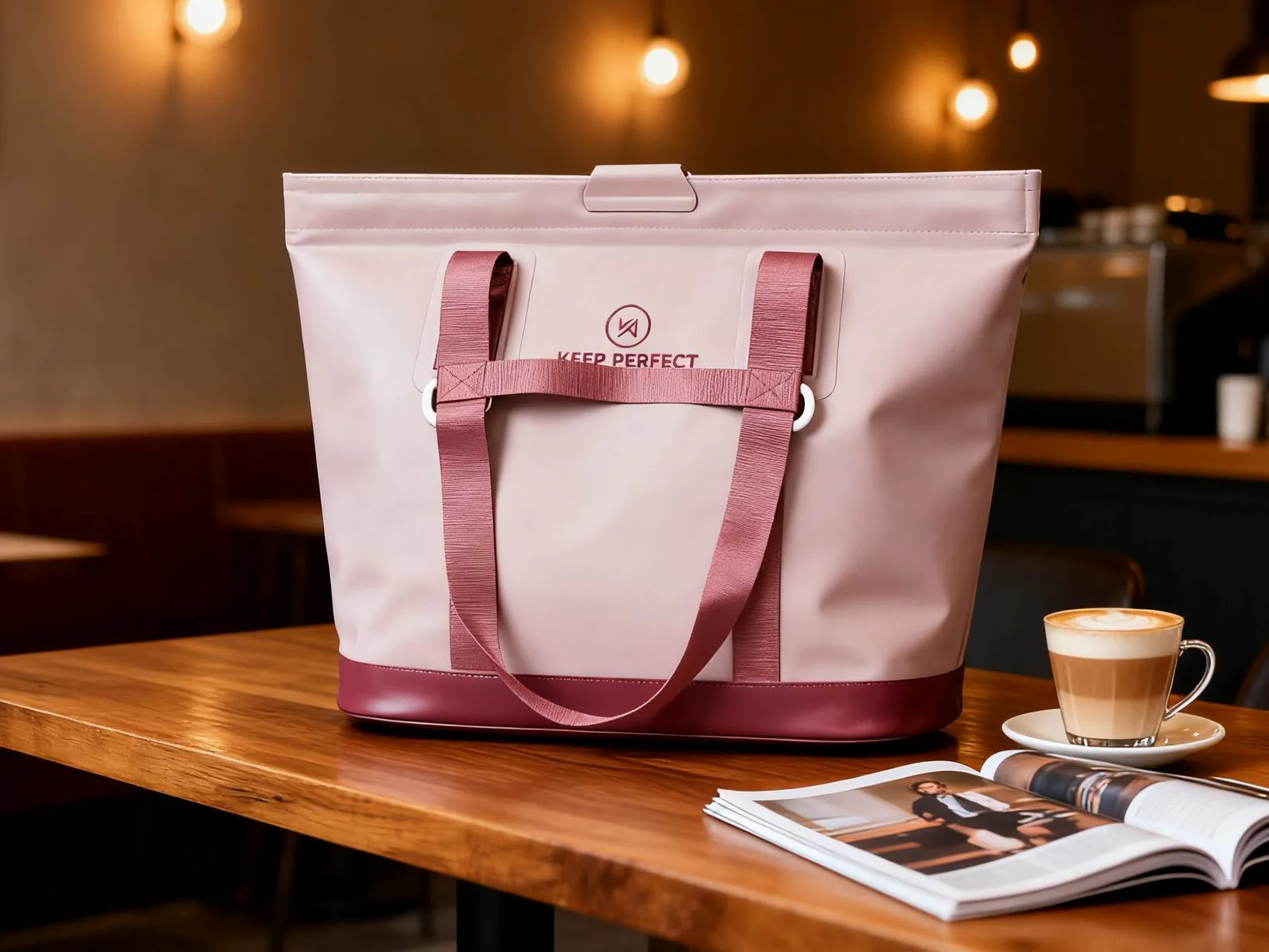
The unit economics: where the money actually goes
Private-label sellers scaling on Amazon FBA live and die by listing economics — and the waterproof category rewards sellers who run the unit math before committing e-commerce inventory. Take the category workhorse: a differentiated 20 L dry bag backpack retailing at $29.99. The cost stack: custom production $6.20 FOB (Pantone colorway, patch logo), freight and duty $1.40, landed $7.60. Amazon takes its cut first: referral fee 15% = $4.50. FBA fulfillment for a 550 g, 35 × 25 × 8 cm packed unit (large standard-size) runs roughly $5.80–$6.40. Storage averages $0.30–$0.60 per unit-month — call it $0.45 at healthy velocity. PPC at launch realistically consumes $4.00–$6.00 per sale in months 1–3, settling to $2.50–$3.50 at maturity.
| Line item | Amount | Notes |
|---|---|---|
| Retail price | $29.99 | Category sweet spot band $21.99–$34.99 |
| Landed cost | -$7.60 | $6.20 FOB + $1.40 freight/duty allocation |
| Referral fee (15%) | -$4.50 | Amazon's commission, non-negotiable |
| FBA fulfillment | -$6.10 | Large standard-size, ~550 g packed |
| Storage (avg) | -$0.45 | Healthy 45–60 day velocity |
| PPC (mature) | -$3.00 | TACoS ~10%; launch phase is 2× |
| Contribution | $8.34 | 27.8% — before overhead and returns (~3%) |
Two truths hide in this table. First, fulfillment fee is the silent killer: a packed dimension crossing into the next size tier adds $1.50–$2.50 per unit forever — design packaging (and the bag's packed profile) to stay inside the tier. Second, PPC is a launch investment, not a permanent tax — but only if the listing converts, which brings us to differentiation: without it, PPC never settles because you are buying every sale against five identical competitors.
Why custom beats white-label on Amazon specifically
Amazon's algorithm rewards conversion rate and punishes sameness. A white-label dry bag identical to six other listings competes on exactly two axes: price and ad spend. Both are races to zero. A custom product — unique Pantone colorway, a feature the top listings lack (an external waterproof phone pocket, a reflective safety strip, a laptop sleeve in a category of bucket bags) — competes on the image carousel, where the click is won before price is read.
The numbers make the case. Custom differentiation costs surprisingly little: a Pantone-matched film colorway adds $0.10–$0.25 per unit plus a one-time $150–$300 setup; a feature modification to a proven platform runs $60–$150 in sampling. Against that, the returns compound: a conversion rate of 12% versus the white-label seller's 8% means your PPC buys 50% more sales per dollar — permanently. Our OEM vs ODM guide covers how modified-platform development gets this differentiation for hundreds, not thousands, of dollars.
There is also a review-asset argument: on Amazon, reviews attach to your listing. A custom product means the review base you build cannot be cloned onto an identical competing listing next quarter. Three years of 4.6-star reviews on a product only you sell is a moat; three years on a white-label product is a public good.
The MOQ 500 launch strategy: inventory math for first orders
MOQ 500 scares first-time sellers unnecessarily. Run the cash math on the example above: 500 × $7.60 landed = $3,800 inventory investment. At a validated 15 units/day velocity, that is 33 days of stock — Amazon restock limits and storage math actually prefer this depth. The real risk is not 500 units; it is 500 units of an unvalidated product. The mitigation sequence: validate the niche with keyword research (search volume, review counts of top 10, price distribution), validate your differentiation with a small audience test (even a $200 ad test to a landing page tells you if the colorway converts), then commit.
Variant strategy multiplies the safety of 500: one design in three colorways (170/165/165) on a single parent listing shares reviews across all variants while letting you discover which color the market wants — reorders then concentrate on the winner. Custom color per colorway does not multiply MOQ: 500 pieces covers the design, split across your color choices.
Cash timing: 30% deposit at PO ($1,140 on the example), 70% at B/L about 6 weeks later, first revenue roughly week 10–12 (production + ocean + receiving). Budget the full cycle before ordering, and keep a reorder trigger: when stock hits 35 days of cover at current velocity, reorder — ocean replenishment takes 30–40 days door-to-door. Our reorder streamlining guide shows how repeat orders compress to 30 days with archived tooling.
FBA prep: the rules that get shipments rejected
Amazon's prep requirements are mechanical and unforgiving. Bags sold as individual units need polybagging if the fabric is exposed (it is) — and any polybag with a 5-inch+ opening needs a suffocation warning printed or labeled, minimum font sizes specified. Every unit needs an FNSKU barcode covering any other visible barcode (manufacturer UPCs must be covered or absent). Cartons: max 23 kg (50 lb) unless a single unit exceeds it, dimension limits on any side, and content labels on every carton matching the shipping plan exactly.
The error that costs sellers real money is treating prep as an afterthought. A non-compliant shipment gets refused, or worse, receives "prep service" charges at Amazon rates ($0.55–$1.10 per unit for bagging and labeling) plus receiving delays of 2–4 weeks in Q4. The professional route is factory-side prep: we polybag with printed suffocation warnings ($0.08–$0.12/unit), apply FNSKU labels from your Seller Central PDF ($0.05–$0.08), pack to your carton plan, and photograph the finished cartons before sealing. Units arrive at the fulfillment center scan-ready.
- Polybag with suffocation warning (5"+ opening rule) — factory-side at $0.08–$0.12/unit
- FNSKU label applied, all other barcodes covered
- Cartons ≤23 kg, within dimension limits, content labels matched to shipping plan
- No marketing inserts violating Amazon policy (review-bait cards are account-risk items)
- Photos of packed cartons archived before shipment
Listing construction: images and copy that convert
Waterproof bags sell on proof, and the image stack is the proof. Slot 1: hero on white, bag at 85% of frame. Slot 2: the waterproof demonstration — water beading on the shell, or the submerged-with-dry-contents shot; this is the category's conversion king. Slot 3: capacity proof — the actual items inside (laptop, jacket, bottle) with dimension callouts. Slot 4: in-use scene (kayak, bike commute, beach). Slot 5: feature callouts (closure mechanism, pocket layout, weld seams). Slot 6: size/scale reference on a person. Slot 7: the differentiation comparison — your feature versus the generic alternative.
Copy discipline: the title carries the primary keyword phrase, the differentiator, and the capacity ("Waterproof Dry Bag Backpack 20L — [differentiator] — Roll Top Floating Dry Sack for Kayaking, Beach, Hiking"). Bullet one answers the question every waterproof-bag buyer actually asks: does it actually keep things dry — answered with the rating and the construction (IPX6, welded seams, roll-top closure). A+ content extends the proof: the construction story, the material spec, the brand promise. Spend the photography budget before the ad budget — listings convert on images, and ads only amplify what the images do.
Price positioning within the band: enter at $24.99–$27.99 with a launch coupon (10–15%) rather than $21.99 naked pricing. Coupons show as a green badge (click-through lift), preserve your anchor price, and can be switched off as reviews accumulate — price increases on a bare price are far harder to execute without rank damage.
Compliance and account safety for bag sellers
Waterproof bags are a low-regulation category, which makes sellers sloppy in exactly the wrong places. Three obligations matter. Material safety documentation: California Prop 65 applies to any bag sold into California — phthalate-containing PVC without warning is a bounty-hunter lawsuit magnet; TPU shells with current test reports are the clean route. Claims discipline: "100% waterproof" invites trouble unless your construction supports it; "IPX6 waterproof" is a testable claim, and we supply the supporting construction documentation. And children’s products: bags marketed for kids trigger CPSIA (tracking labels, testing) — a deliberate configuration, not a default, per our compliance guide.
Account safety extends to the insert card: Amazon prohibits inserts that divert reviews or transactions off-platform. A warranty card ("register for your 2-year warranty") is permissible and builds your email list legitimately; a "leave a review for a gift" card is an account-suspension item. When in doubt, the insert sells the brand, not the review.
Keep the paperwork chain: commercial invoice, packing list, and material test reports filed per shipment. Amazon can request documentation at any time, and sellers who produce it in hours survive checks that suspend sellers who cannot.
Picking the right niche inside the category
Waterproof bags are not one market; they are a stack of micro-niches with different competition levels and price ceilings. The evaluation framework: search volume tells you demand, top-10 review counts tell you the wall you must climb, and review content tells you the unmet need — the complaints in 3-star reviews are your differentiation brief, written by the market for free. A niche where the top 10 hold 5,000+ reviews each is a trench war; one where leaders hold 400–1,500 with visible complaint themes is an open door.
| Micro-niche | Competition | Price band | Entry angle |
|---|---|---|---|
| Generic dry bags | Brutal | $14.99–$24.99 | Avoid — race to the bottom |
| Dry bag backpacks (20–30 L) | Moderate | $24.99–$39.99 | Colorway + laptop sleeve + phone pocket |
| Waterproof cooler bags | Moderate | $39.99–$69.99 | Insulation hours + leakproof warranty |
| Waterproof totes (beach/boat) | Low-moderate | $27.99–$44.99 | Fashion colors, interior organizers |
| Waterproof duffels (travel) | Low | $34.99–$59.99 | Carry-on sizing + wet/dry separation |
| Fishing/tactical specialties | Low but expert | $39.99–$89.99 | Only with genuine niche knowledge |
The portfolio sequence that works: enter with one differentiated dry-bag backpack (the demand center), validate conversion and gather 100+ reviews, then extend into the adjacent micro-niche the reviews point to — buyers literally write your roadmap ("wish it came in a tote version"). Each extension rides the brand's review equity and costs only the development delta, not a new launch. This is how single-listing sellers become category sellers inside 18 months on three production orders.
Launch timeline: from PO to first sale in 10–12 weeks
| Week | Milestone |
|---|---|
| 0 | PO + 30% deposit; differentiation spec locked (colorway, features) |
| 1–2 | Digital proofs + sample production (6–10 working days) |
| 2–3 | Sample approval; listing build starts in parallel (photography brief) |
| 3–8 | Bulk production with FBA prep (polybag, FNSKU, cartons) |
| 8–11 | Ocean freight + customs; listing live in "coming soon" mode |
| 11–12 | FC receiving, first PPC campaigns live, launch coupon active |
The parallel-track discipline: photography and listing copy are built during production weeks 3–8 using the approved sample, so the listing is ready when inventory lands. Sellers who start the listing at receiving add 3 dead weeks to every launch. For the production-side detail of weeks 0–8, our production team shows exactly what happens to your order inside the factory.
Start the conversation with three inputs: the niche you are targeting (or the top-3 listings you want to beat), your differentiation hypothesis, and your budget band. We return a spec recommendation, tiered quote (500/1,000/2,500), and a launch-feasible timeline within 48 hours. QUANZHOU JUNYUAN BAGS — supplier to FBA sellers since 2014, MOQ 500, samples 6–10 days, bulk 35–50 days with full FBA prep, 30/70 T/T, FOB Xiamen or DDP.
Frequently Asked Questions
Q1. Is selling waterproof bags on Amazon FBA still profitable in 2026?
Yes for differentiated products: landed cost $4.80–$11.20, retail bands $21.99–$49.99, contribution $5–$12 per unit after Amazon fees and mature PPC. The saturated segment is undifferentiated white-label dry bags; custom colorways and features still enter profitably.
Q2. How much money do I need to start an FBA bag business?
A realistic entry: 500 units × $7.60 landed ≈ $3,800 inventory, plus $800–$1,200 photography and listing assets, plus $1,000–$1,500 launch PPC — about $6,000–$7,000 all-in. Under $3,000 total means cutting the inventory depth that the algorithm rewards.
Q3. What is the best price point for waterproof bags on Amazon?
$21.99–$34.99 for dry bags and waterproof daypacks — below $21.99 the fee stack eats contribution, above $34.99 conversion needs premium differentiation. Premium structured backpacks work at $39.99–$49.99 with the feature set to justify it.
Q4. Can I start with fewer than 500 units?
Custom production runs MOQ 500 — the economic floor for film lamination and weld-die setup. The 500-unit order is roughly $3,800 landed on a standard build, which is about 33 days of stock at 15 units/day: a launch depth Amazon actually rewards, not a burden.
Q5. How do I differentiate against established dry bag listings?
Cheapest-first: custom Pantone colorway (+$0.10–$0.25/unit), then a feature the top 10 lacks (external waterproof phone pocket, reflective strip, laptop sleeve), then packaging and A+ content. Price is the last lever, not the first — it is the only one competitors match in a day.
Q6. What FBA prep do waterproof bags need?
Polybag with suffocation warning (5-inch opening rule), FNSKU label covering all other barcodes, cartons ≤23 kg within dimension limits, and content labels matching the shipping plan. We do all of it factory-side at $0.13–$0.20 per unit so shipments arrive scan-ready.
Q7. How long from factory order to first Amazon sale?
10–12 weeks: 2–3 weeks sampling and approval, 35–50 days production with FBA prep, 3–4 weeks ocean freight and customs, plus receiving. Build the listing and photography in parallel during production or add three dead weeks.
Q8. What margin should I expect per unit?
On a $29.99 20 L backpack: roughly $8.30 contribution (27.8%) after landed cost, 15% referral fee, FBA fulfillment, storage and mature PPC — before ~3% returns and your overhead. Launch-phase PPC halves that temporarily; conversion quality decides how fast it recovers.
Q9. Do I need Prop 65 warnings on waterproof bags?
Selling into California, yes unless your materials test clean — phthalate-containing PVC is the classic exposure. TPU-laminated shells with current test reports are the clean route, and we supply the documentation per production lot.
Q10. Can one factory handle production and FBA prep together?
Yes — that is the efficient structure: units polybagged, FNSKU-labeled and carton-planned on the production line, photographed before sealing. Prep at the factory costs $0.13–$0.20 per unit; Amazon's non-compliance prep charges run $0.55–$1.10 plus weeks of Q4 delay.
Q11. Should I launch one color or several?
One design in three colorways (170/165/165 split) on a single parent listing: reviews pool across variants, and sales data tells you where to concentrate reorders. The 500-piece MOQ covers the design — colorway splits are included.
Q12. When should I reorder?
At 35 days of cover at current velocity — ocean replenishment takes 30–40 days door-to-door. Repeat orders compress: archived tooling and drawdown cards cut reorders to about 30 days production, and unit costs drop 8–12% at 1,000 pieces.
Q13. Is "100% waterproof" a safe claim on Amazon?
Only if construction supports it and you can document it. The defensible pattern is a rated claim — "IPX6 waterproof, welded seams" — with construction documentation on file. Absolute claims invite both customer disputes and competitor challenges.
Q14. What kills most FBA bag launches?
No differentiation (competing on price against clones), photography that does not prove waterproofness, and stockouts during launch momentum — running dry at week 6 resets the ranking you just paid to build. All three are planning failures, not market failures.
Q15. Do I need my own barcode (UPC) for FBA?
An FNSKU label is what Amazon scans, and it can cover everything else — so a GS1 UPC is optional for FBA-only sellers. Buy GS1 barcodes anyway if you plan any off-Amazon retail later; retail chains require them, and retrofitting barcodes into a product line costs more than the $30 GS1 single-code fee you skipped.
People Also Ask
Can you make money selling dry bags on Amazon?
Yes — a differentiated 20 L dry bag backpack at $29.99 contributes roughly $8.30 per unit after all Amazon fees and mature PPC, on a $3,800 inventory investment at MOQ 500. The money is in differentiation and conversion, not in being cheapest.
How much does it cost to private label a waterproof bag for Amazon?
$4.80–$11.20 landed per unit depending on type, plus one-time setups of $300–$750 (color, molds, sampling). A 500-unit launch order of a standard build lands around $3,800.
What are FBA packaging requirements for bags?
Polybag with suffocation warning for 5-inch+ openings, FNSKU barcode covering other barcodes, cartons ≤23 kg with content labels matching the shipping plan. Factory-side prep at $0.13–$0.20/unit beats Amazon's non-compliance charges of $0.55–$1.10.
How many units should a first Amazon order be?
500 — the custom production MOQ — equals about 33 days of stock at 15 units/day, which matches healthy launch velocity and restock economics. Split across 2–3 colorways on one parent listing to pool reviews and test the market.
What sells better on Amazon: dry bags or waterproof backpacks?
Waterproof backpacks carry higher prices ($29.99–$49.99) and better contribution per unit; simple dry bags sell more units at thinner margins. The strong play is a differentiated backpack first, dry bag variants as listing extensions later.